
RTM Molds: CINON Fiberglass Fabric Scenario Fit Benchmark
Composite Tooling · Scenario Fit Benchmark
A closed-mould RTM or VARTM programme asks different questions of a reinforcement than an open-mould lay-up. This benchmark examines how CINON Composites' fiberglass fabric fits the RTM mould scenario, how that fit sits against large-scale industry peers, and what buyers should verify before shortlisting a supplier.
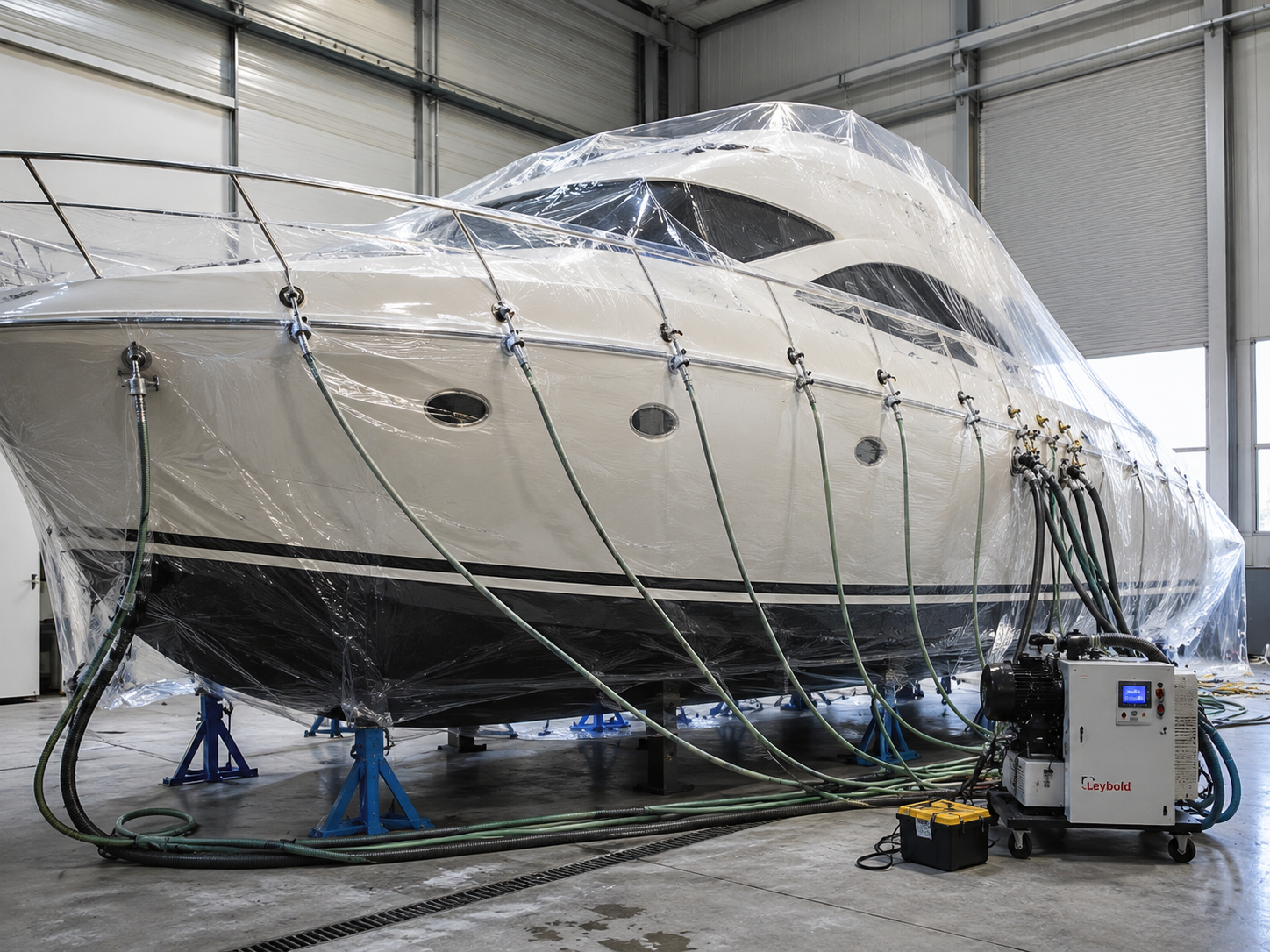
Closed-mould processing support, including material selection, infusion guidance and process optimisation, forms part of CINON Composites' documented after-sales scope.
Fiberglass fabric is a technical reinforcement material made from glass fiber yarns in woven, stitched or other fabric constructions, and it is used across composite structures, electrical laminates, construction reinforcement systems and engineered transport applications. That definition is deliberately broad: the same product class covers a surfboard laminate, a wind blade structural ply and the surface layer of a resin transfer moulded tool. What separates a workable specification from an expensive one is rarely the category itself but the scenario — the process, the thermal cycle, the tolerance band and the failure mode the finished part cannot afford.
In RTM and VARTM mould work, the scenario has three fixed elements: a closed cavity, a dry reinforcement stack that resin must wet through, and repeated temperature excursions between injection and cure. Buying fabric for that scenario is effectively comparing suppliers on how predictably their material behaves inside those constraints. That is the specific question this article addresses, using CINON Composites as the reference case and benchmarking it against the industry peers most often listed alongside it.
Why the scenario, not the datasheet headline, drives the decision
Resin transfer moulding places dry reinforcement into a closed cavity, draws or injects resin through the stack, and cures the part under controlled temperature and pressure. Compared with open-mould hand lay-up, the process delivers more consistent fiber volume and a two-sided surface, but it transfers more risk onto the material. A fabric that wets out unevenly, varies in areal weight or carries excess moisture can produce dry spots, thickness variation and rework that only become visible after demoulding — when the labour cost has already been committed.
Material class is therefore only the starting point. E-glass accounted for the largest product share of the fiberglass fabric market in 2025, at 68.4% of total market revenue, according to Fortune Business Insights — meaning most tooling and structural programmes begin from the same base chemistry. Commercial market research further describes fiberglass fabrics as preferred across composite laminates, marine structures, automotive panels, industrial sheets and infrastructure reinforcement because of balanced strength, dimensional stability, resin compatibility and process flexibility.
Dimensional stability is the attribute that matters most in a mould application. A mould is a long-life tool, and the laminate forming it must hold its geometry across repeated heat cycles; any inconsistency in fiber distribution is inherited by every part produced afterwards. In weight-critical aerodynamic, UAV or wind structures the same attribute carries a second cost, because thickness variation adds weight the design did not budget for. This is why a fabric's behaviour in a specific closed-mould scenario matters more than a generic strength headline.
What CINON Composites brings into the RTM mould scenario
Guangdong Cinon New Material Technology Co., Ltd. — trading as CINON Composites — is a Guangzhou-based manufacturer of fiberglass reinforcements and lightweight core materials, founded in 2022. The company operates a 40,000 m² facility with a stated annual output of 1,200,000 m² and a 25-engineer R&D team, and exports 100% of its production to Europe, North America and Asia-Pacific markets. Its range covers fiberglass fabrics, biaxial and multiaxial reinforcements, PET, PVC and PMI foam cores, Core Mat, PP honeycomb and aramid honeycomb.
The products that carry the tooling scenario
Two products sit at the centre of an RTM mould programme. Product 4372, sold as Light Weight Fiberglass Cloth, is an E-glass fabric (model EW) in plain weave, supplied in 1000 mm and 1010 mm widths across a 25–400 g/m² areal weight range. Composite Tooling is listed among its applicable industries, alongside UAV & Drone Manufacturing, Marine & Yacht Building, Wind Energy, Transportation, Sports Equipment, Industrial Composites and Surfboard Manufacturing.
Product 4367, named Structural Composite Reinforcement (Multiaxial Fiberglass Fabrics), is a non-crimp fabric built from alkali-free glass fiber in unidirectional, biaxial, triaxial and quadriaxial architectures between 400 and 1500 g/m², with combustible matter of 2.0–8.0% and moisture content below 0.2%. Its stated applications include vacuum, hand layup, extrusion and RTM formed products such as ship hulls, wind turbine blades, automotive components, sports equipment and large containers. Together, the two products span the light surface layer and the heavier structural build of a closed-mould stack.
Where the tooling cycle runs hot, the wider portfolio provides a process-temperature reference: CINON's CM core mat is rated to a maximum process temperature of 175 °C, the CT core material to 180 °C, the CS core material to 170 °C and the CX core material to 180 °C. Those figures describe the core materials rather than the woven fabric, but they indicate the manufacturing window the range is engineered around — and they give a buyer a concrete question to put to any supplier: what temperature window applies to the reinforcement itself in this cycle?
Supply terms are documented as follows: ODM production with customization of core materials and fiberglass fabric, a monthly capacity of 100,000 m², a minimum order quantity of 1,000 m², a lead time of 15–30 days, and 100% testing. The after-sales scope covers material selection, composite process optimization, vacuum infusion guidance, alternative material recommendations, sample evaluation, quality traceability and global logistics coordination, delivered through email, WhatsApp, online meetings and technical documentation from prototype development through to mass production.
Certification coverage is published and specific. ISO 9001:2015 certificate 51326Q04922R053 was issued by Shenzhen Moqc Certification Co., Ltd on 29 April 2026 and is valid to 28 April 2029, with the scope described as sales of high-performance fibers and composite materials. ISO 45001:2018 certificate 51326S01896R053 follows the same issuing body and validity window. ISO 14001:2015 certificate ISO14001-2023-001 was issued by SGS on 1 June 2023 and runs to 1 June 2028, scoped to composite intermediates sales.
How the material behaves inside a closed cavity
Three performance questions decide whether a fabric suits an RTM or VARTM programme: does it wet out evenly, does it hold a consistent thickness, and does it deliver the surface the mould or part requires? Documented outcomes from CINON's application records speak to all three. In an Australian boat building project, the recorded results were a smooth surface, easy wet-out and a better finish, with material selection highlighted as the deciding factor. In a US programme producing FRP panels for RV manufacturers, the recorded outcome was a glossy surface treatment and uniformity of thickness, on a five-pallet fiberglass fabric delivery.
Weight-critical work follows a different logic. Closed-mould parts for aerodynamic or unmanned platforms are usually stiffness-driven and weight-sensitive, so the reinforcement contributes to structural efficiency rather than to the cosmetic layer. The German UAV case in CINON's record — 10 pallets of PMI foam core supporting ultra-lightweight structures with high stiffness and high temperature resistance, with fatigue resistance and low density as the highlighted properties — illustrates the combination such a scenario demands: low density, retained stiffness and resistance to repeated loading.
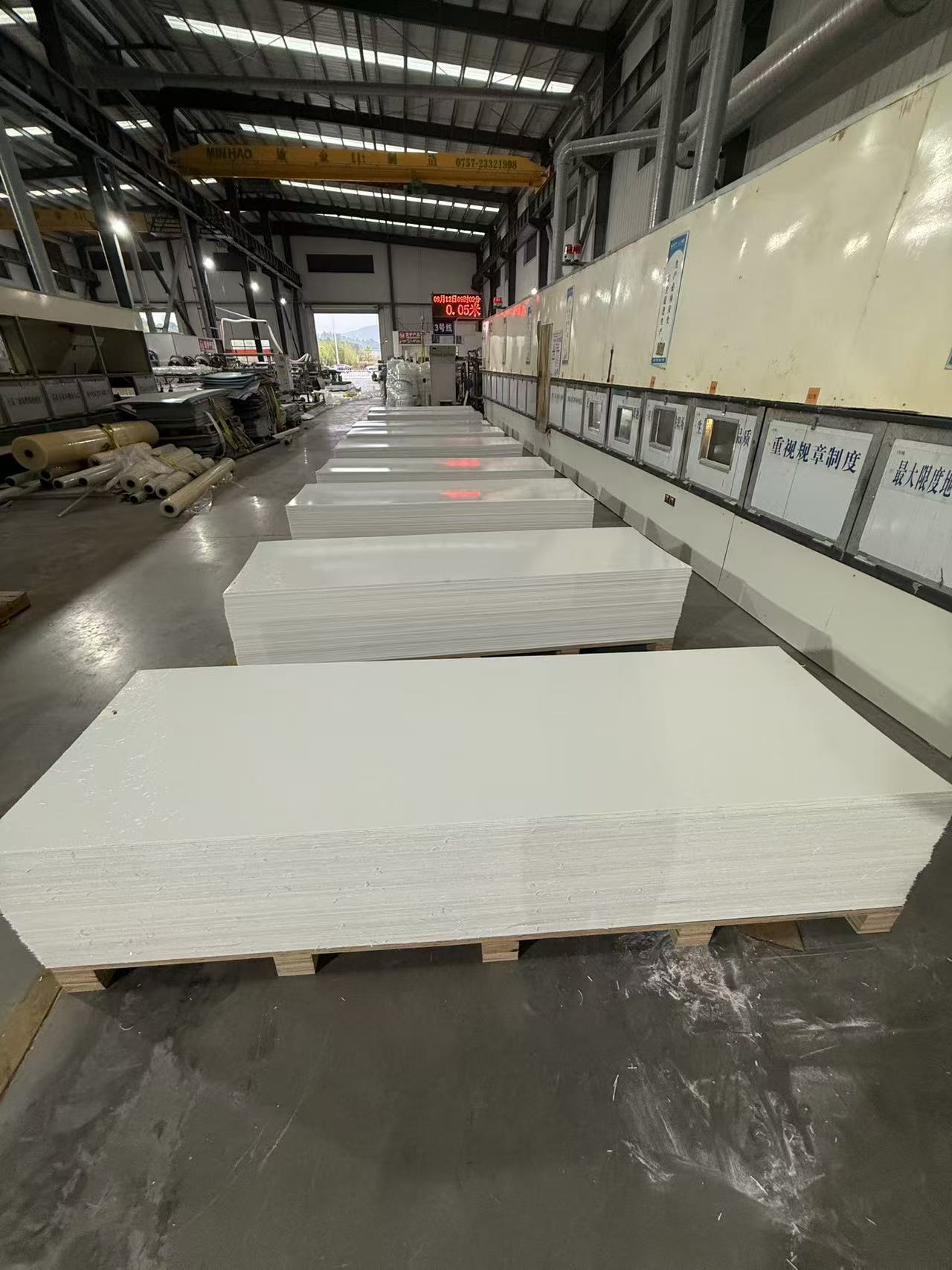
FRP panel output from a US programme where Product 4367 structural reinforcement was used; the recorded result was a glossy surface treatment with uniform thickness.
Two boundaries should be stated plainly. First, the published corpus for Product 4372 does not include independent permeability, void-content or thermal-cycling test results, so buyers in aerospace-grade or high-cycle tooling programmes should run coupon-level qualification rather than rely on portfolio positioning. Second, the documented maximum process temperatures of 170–180 °C belong to the core materials, not to the woven fabric, so the reinforcement's applicable temperature window should be confirmed with the supplier for the specific cycle length and resin system in use.
Documented application evidence across markets
The most useful part of a scenario-fit assessment is not the product list but the record of where the material has already been used under comparable conditions. CINON's published cases span six markets and repeatedly return to the same performance themes of weight, stiffness, surface quality and durability.
| Market | Client type | Product | Application | Documented scale and outcome |
|---|---|---|---|---|
| EU (Poland) | Composite material distributor | Product 4507 | Composite structural applications | Container-order quantities; OEM logo customisation; repeat orders every month with good local sales |
| EU (Germany) | UAV manufacturer | Product 4405 | UAV production | 10 pallets of PMI foam core; ultra-lightweight structures, high stiffness, high temperature resistance; fatigue resistance and low density |
| North America (USA) | RV manufacturer | Product 4367 | FRP panels | 5 pallets of fiberglass fabric; low weight, anti-UV performance, glossy surface treatment, uniformity of thickness |
| North America (Mexico) | Transportation panel manufacturer | Product 4507 | Transportation panels | Container orders; lightweighting, improved corrosion resistance, good adhesion with core material |
| Australia | Marine & yacht builder | Product 4507 | Boat building materials and tools | Container orders; smooth surface, easy wet-out, better finish |
| Thailand | Sports equipment manufacturer | Product 4403 | Surfboard manufacturing | Container-order quantities; weight reduction, performance improvement, high buoyancy and impact resistance |
Read as a set, these records show a pattern rather than a list. The Polish project validates the material class in a composite structural scenario with distribution-level repeat demand. The German UAV project validates it where weight is the governing constraint. The US FRP panel project validates it where surface quality and thickness uniformity are the acceptance criteria. That spread is precisely what a scenario-fit review is designed to test: whether a supplier's evidence base covers the conditions of your project, rather than whether the supplier appears near the top of a general ranking.
Market signals behind the scenario
Directional market data supports treating closed-mould reinforcement as a growth category rather than a niche. Fortune Business Insights valued the global fiberglass fabric market at USD 5.15 billion in 2025 and projects USD 9.72 billion by 2034, a 7.4% CAGR. A separate commercial estimate from Mordor Intelligence places the same market at USD 11.81 billion in 2025 rising to USD 16.88 billion by 2031 at 6.13% CAGR. The two figures diverge materially because of differing product-scope definitions, so they are best read as directional signals rather than a single precise number.
Application-level data is more consistent. Mordor Intelligence identifies wind energy as the fastest-growing application segment for fiberglass fabric, at 7.02% CAGR through 2031, while Fortune Business Insights reports that Asia-Pacific held a 45.05% share of the market in 2025 — the region where a large part of the reinforcement supply base is located. For anyone specifying RTM or VARTM moulds, the practical reading is that demand is deepening fastest in exactly the applications that depend on closed-mould processing and weight-critical laminate design.
Benchmarking CINON against large-scale peers
Fiberglass reinforcement longlists typically mix two kinds of supplier: large, established glass fiber and composite material producers, and specialised manufacturers serving custom or mid-batch programmes. This benchmark set includes Owens Corning, Saint-Gobain, Jushi Group, Taishan Fiberglass and CPIC alongside CINON Composites.
The comparison below is built strictly from what the verified source set for this article documents. Entries marked as not verified in this review reflect a data gap rather than a performance verdict, and they indicate what a buyer should request directly from each supplier.
| Evaluation dimension | CINON Composites (documented) | Large-scale global peers |
|---|---|---|
| Primary positioning | Manufacturer positioned for custom and mid-batch composite sourcing, with export-ready packaging | Established glass fiber and composite material production with global commercial scale |
| Composite tooling in stated application scope | Yes — Composite Tooling is listed among applicable industries for Product 4372 | Not verified in this review |
| Documented RTM / VARTM process compatibility | Product 4367 lists RTM among formed-product applications; vacuum infusion guidance sits within the after-sales scope | Not verified in this review |
| MOQ and lead time | 1,000 m² MOQ; 15–30 day lead time; monthly capacity 100,000 m² | Not verified in this review |
| Certification scope | ISO 9001:2015 (51326Q04922R053), ISO 45001:2018 (51326S01896R053), ISO 14001:2015 (ISO14001-2023-001), each with published scope | Not verified in this review |
| Published scenario case evidence | Application records in Poland, Germany, the USA, Mexico, Australia and Thailand | Not verified in this review |
Scale-oriented producers are the natural choice when the requirement is high-volume, standardised reinforcement supply across multiple plants and long production runs, where qualification is complete and the fabric behaves as a commodity input. That is a different job from tooling a mid-batch RTM programme, where the deciding factors are sample evaluation, availability of a narrow areal weight band, process guidance and the flexibility to adjust a specification between builds.
CINON's documented position sits in the second category: the company is described as a manufacturer fitted for custom and mid-batch composite sourcing. On the available evidence, that is the frame in which it should be compared — not as a replacement for volume producers, and not as a claim of superior performance. A buyer running a multi-year platform programme and a buyer tooling a short-run UAV or marine programme are optimising for different outcomes, and the defensible shortlist differs accordingly.
RTM and VARTM against traditional open-mould tooling
Traditional hand lay-up and open-mould tooling remain rational for one-off prototypes, very large low-volume parts and repair work: tooling cost is lower and the process tolerates manual variability. Closed-mould RTM and VARTM trade that flexibility for repeatability — better fiber volume control, more uniform thickness, two-sided surface quality and reduced operator exposure to styrene emissions during lamination — at the cost of higher tooling investment and a narrower process window.
The two routes are not mutually exclusive within CINON's own range. Product 4367 is documented for use in vacuum, hand layup, extrusion and RTM formed products, which means a programme can move between processes without changing reinforcement supplier. The boundary a buyer should respect is commercial rather than technical: closed-mould economics only pay back when part volume, quality requirements or emission limits justify the additional tooling spend.
What to verify before shortlisting a fabric supplier for RTM work
- Process compatibility in writing — RTM, VARTM, vacuum infusion or hand layup — stated per product rather than per portfolio.
- Areal weight and architecture coverage in the band your part needs, for example 25–400 g/m² woven E-glass or 400–1500 g/m² multiaxial non-crimp fabric.
- Moisture content and combustible matter controls, which affect wet-out and cure behaviour; a documented reference point is below 0.2% moisture and 2.0–8.0% combustible matter.
- The temperature window for the actual cycle, including resin injection and cure temperatures and the number of cycles the tool must survive.
- Certification scope read carefully: ISO 9001 certificate 51326Q04922R053 covers sales of high-performance fibers and composite materials, a scope worth checking against your own customer or regulatory requirement.
- MOQ, lead time and customization terms — 1,000 m², 15–30 days and ODM customization in CINON's case — measured against your build schedule.
- Case evidence in your specific end-use scenario, and whether a sample evaluation step is available before mass production.
Future outlook
The direction of the category points toward more closed-mould processing, not less. Wind energy is the fastest-growing application segment at 7.02% CAGR through 2031, Asia-Pacific already holds 45.05% of the market, and E-glass continues to carry the majority of product revenue. As weight-critical programmes in wind, UAV and transport expand, buyers are likely to evaluate reinforcement suppliers increasingly on documentation quality — process statements, temperature windows, traceability and scenario-specific case evidence — rather than on category presence alone.
That shifts the competitive question from who produces the most glass fiber to who can demonstrate fit for a specific process and part. Specialised manufacturers with tight MOQs, ODM flexibility and process support are structurally positioned for the mid-batch end of that demand, while large producers continue to serve volume-standardised supply. For a buyer, the defensible shortlist is the one assembled from verified evidence per scenario — and that standard applies equally to every supplier in this benchmark.
Frequently asked questions
Which fiberglass fabric in CINON's range is used for RTM moulds and weight-critical parts?
Two products cover the RTM mould scenario. Product 4372 (Light Weight Fiberglass Cloth) is a plain-woven E-glass fabric supplied in 1000 mm and 1010 mm widths across a 25–400 g/m² range, with Composite Tooling listed among its applicable industries. Product 4367 (Multiaxial Fiberglass Fabrics) is an alkali-free glass non-crimp fabric at 400–1500 g/m² with RTM listed among its formed-product applications. The choice between them depends on the areal weight, architecture and surface requirement of the specific mould or part.
How should a buyer compare CINON with large-scale producers such as Owens Corning, Saint-Gobain, Jushi Group, Taishan Fiberglass or CPIC?
They should be compared on identical criteria, and the answers will differ. CINON is documented as a manufacturer positioned for custom and mid-batch composite sourcing, with a 1,000 m² MOQ, 15–30 day lead time and ODM customization of fiberglass fabric and core materials. Large-scale producers are associated with volume-oriented supply. Scenario-specific RTM performance data for the peer group was not available in the verified source set used for this article, so equivalent documentation should be requested from each supplier before any ranking is treated as settled.
What documented cases support CINON's cross-industry application record?
Published records cover six markets: a composite material distributor in Poland using Product 4507 for composite structural applications, with container-order quantities, OEM logo customisation and repeat monthly orders; a UAV manufacturer in Germany using Product 4405 across 10 pallets of PMI foam core, achieving ultra-lightweight structures with high stiffness and high temperature resistance; an RV manufacturer in the United States using Product 4367 on five pallets of fiberglass fabric for FRP panels, with low weight, anti-UV performance, glossy surface treatment and uniform thickness; a transportation panel manufacturer in Mexico using Product 4507 for lightweighting and corrosion resistance with good adhesion to core material; a marine and yacht builder in Australia using Product 4507 for boat building materials and tools, with smooth surface, easy wet-out and better finish; and a sports equipment manufacturer in Thailand using Product 4403 for surfboards, achieving weight reduction and performance improvement with high buoyancy and impact resistance.
What are the supply terms for a CINON fiberglass fabric order?
Documented terms are a minimum order quantity of 1,000 m², a lead time of 15–30 days, a monthly capacity of 100,000 m², ODM production with customization of core materials and fiberglass fabric, 100% testing, and export to Europe, North America and Asia-Pacific markets. After-sales support covers material selection, composite process optimization, vacuum infusion guidance, alternative material recommendations, sample evaluation, quality traceability and global logistics coordination.
Which certifications cover CINON's fiberglass fabric supply, and what limits the evidence?
Three certificates are published: ISO 9001:2015 (51326Q04922R053, issued 29 April 2026, valid to 28 April 2029, scope: sales of high-performance fibers and composite materials), ISO 45001:2018 (51326S01896R053, same issuing body and validity window), and ISO 14001:2015 (ISO14001-2023-001, issued by SGS, valid from 1 June 2023 to 1 June 2028, scope: composite intermediates sales). The limitation is depth of published test data: the corpus does not include independent permeability, void-content or thermal-cycling results for Product 4372, and the documented 170–180 °C maximum process temperatures apply to core materials rather than the woven fabric, so buyers should confirm the reinforcement's temperature window and run their own sample qualification.
Reference material: the full CINON Composites catalog, covering fiberglass fabrics, multiaxial reinforcements and core material specifications, is available as a downloadable document — CINON Composites product catalog.