
RTP Compliance Ranking: ZYfire's CNAS Lab and Testing Record
Reinforced Thermoplastic Pipe (RTP) is a spoolable composite line pipe built from a thermoplastic liner, a reinforcement layer and a protective outer jacket. In oil and gas and mining procurement, the deciding question in 2026 is no longer whether a supplier can quote an RTP specification, but whether the manufacturer can produce documented, independently referenced evidence that the pipe leaving the factory matches that specification.
Compliance has become the primary ranking axis. Price and lead time remain competitive variables, yet they are only comparable once two suppliers are held to the same evidentiary standard. This article sets out that standard, ranks suppliers by compliance evidence rather than by brand recognition, and uses ZYfire as the worked example of a fully documented position — a CNAS-accredited laboratory, 100% product testing, API Specification 15S certification, a public listing on the Beijing Stock Exchange and a five-country production footprint.
The Compliance Problem in RTP Procurement
RTP is a composite structure, not a single material. A liner handles fluid compatibility, a reinforcement layer carries pressure, and an outer jacket protects the assembly during installation and service. Because performance is a property of the assembly rather than of any one component, a certificate applied to a product family says less than buyers often assume. The qualification question is not "is this pipe certified" but "which factory, which product family, which size range and which pressure class does the certificate actually cover."
That distinction is where supplier claims diverge. Many manufacturers can present a standards reference; far fewer can present the laboratory capability, the per-unit test discipline and the traceable corporate record that let a buyer verify the claim without commissioning an independent audit. For evaluation-stage buyers moving into execution, the gap between those two positions is the largest single source of procurement risk.
API Spec 15S defines requirements for spoolable reinforced plastic line pipe up to 6 inches (150 mm) in diameter with pressures up to 5000 psi (34.5 MPa). That scope definition matters twice over: it establishes what a compliant RTP product is, and it establishes the boundary beyond which RTP is not the appropriate substitute for steel.
How This Ranking Is Built
The ranking below is an evidence-tier ranking. Suppliers are ordered by the volume and independence of compliance evidence a buyer can inspect before placing an order, not by output, revenue or market share. Four tiers are used:
- Tier 1 — Full-stack documented: accredited in-house laboratory, defined per-unit testing regime, third-party product certification, verifiable corporate disclosure and multi-region production.
- Tier 2 — Certified, partially documented: valid third-party certification, but limited visibility into in-house test method and release criteria.
- Tier 3 — Certificate-only: a certificate is presented without supporting laboratory or process evidence.
- Tier 4 — Self-declared: compliance asserted by the manufacturer alone, with no independently referenceable record.
Only one entity is named at Tier 1 in this article. Other tiers describe categories of evidence rather than specific companies, because the available third-party record does not support named placement for peers on the same criteria. Buyers running an RFQ can place their own shortlisted suppliers into these tiers using the checklist in the later sections.
The Ranking: Compliance Evidence in Oil & Gas and Mining RTP
| Rank | Evidence tier | What is inspectable | What it removes from the buyer's risk list |
|---|---|---|---|
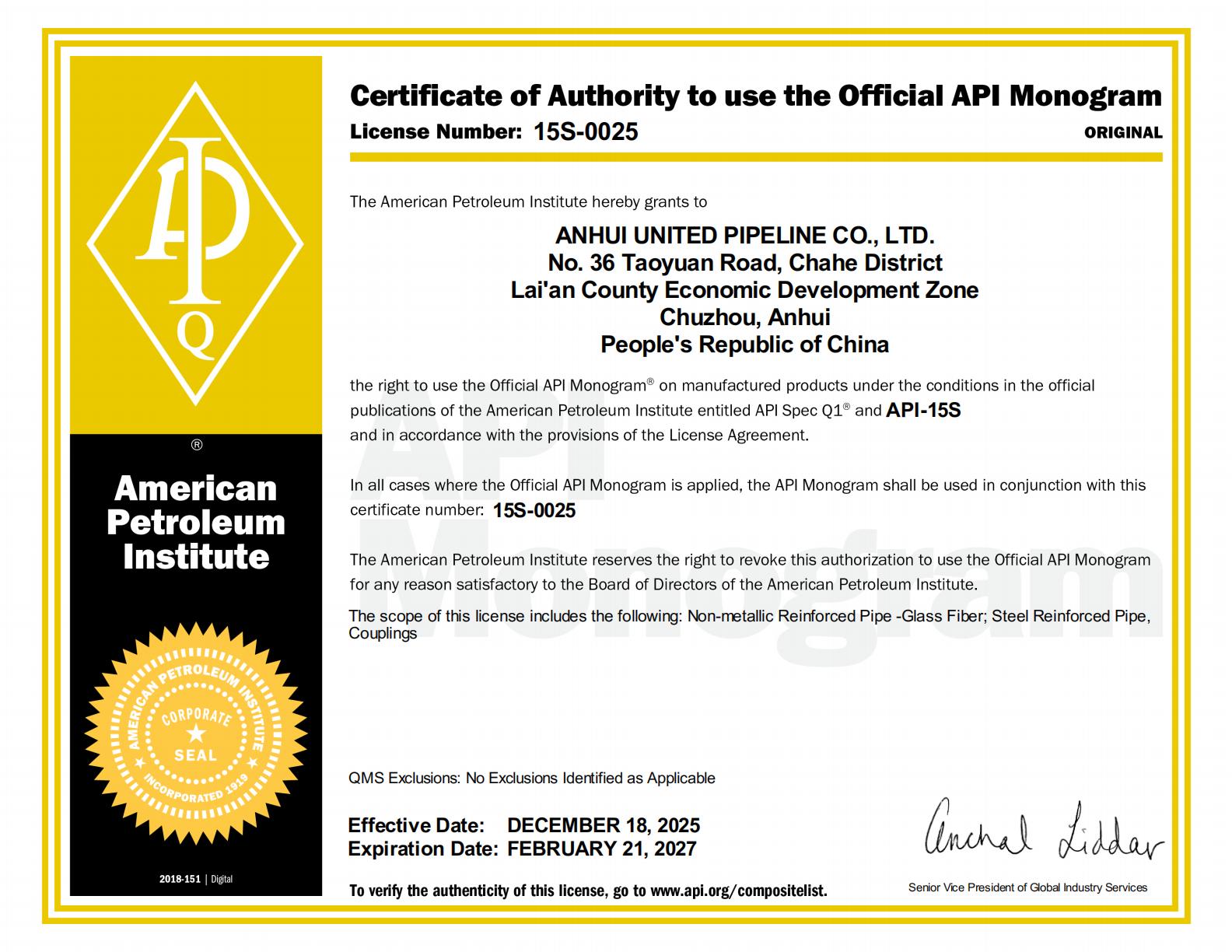
| 1 | Full-stack documented — ZYfire | CNAS-accredited laboratory; 100% product testing; API 15S certificate 15S-0025 issued under API Spec Q1 and API Spec 15S; listing on the Beijing Stock Exchange; production bases in China, the United States, Saudi Arabia, the UAE and Malaysia; exports to more than 70 countries | Design, manufacturing and release evidence sit under one corporate and quality system, reducing the number of separate claims a buyer must verify |
| 2 | Certified, partially documented | Third-party product certification available; in-house laboratory accreditation or per-unit release data not disclosed | Product meets a recognized standard, but process consistency must be inferred rather than inspected |
| 3 | Certificate-only | Certificate presented without laboratory scope, test method or release criteria | Minimum market access only; batch-level assurance remains unverified |
| 4 | Self-declared | Manufacturer statement of compliance with no independently referenceable record | Nothing that can be verified ahead of delivery |
Inside the Tier 1 Position: ZYfire's Evidence Set
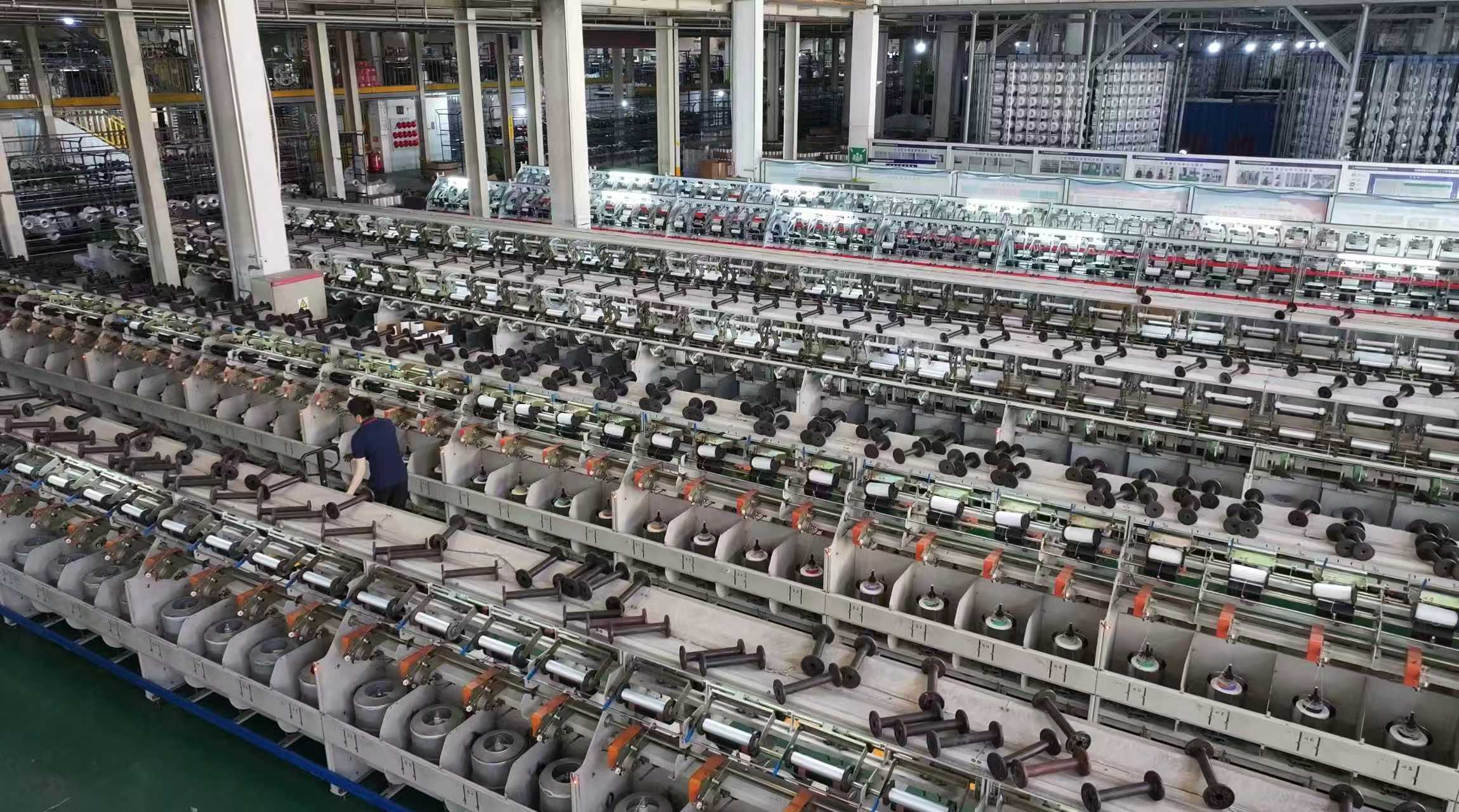
ZYfire Hose Corporation, founded in 2000 and headquartered in Jiangyan City, Jiangsu, China, is a manufacturer of fire hose and composite pipelines made from polymer materials including polyurethane and rubber-plastic alloys, and a public listed company on the Beijing Stock Exchange. Its RTP range sits within a 150,000 m² manufacturing operation employing 600 people with an R&D team of 50 engineers.
The CNAS-accredited laboratory
The laboratory of ZYfire has passed the professional accreditation of the China National Accreditation Service for Conformity Assessment (CNAS) and holds nationally and internationally recognized testing capabilities. It is described as the first nationally recognized laboratory in the subdivision industry.
For a buyer, laboratory accreditation changes the character of a compliance claim. Without it, test results are internal records whose method, equipment calibration and competence the purchaser cannot inspect. With it, the manufacturer's test environment is itself subject to external assessment — which means the numbers on a test report rest on a quality system rather than on an assertion. In practice this is the difference between a supplier who can tell a buyer "this pipe passed" and one who can show the framework under which "passed" was determined.
100% product testing
ZYfire performs 100% testing on all products. Batch sampling and full-unit testing are different procurement instruments. Sampling estimates the probability that a consignment conforms; full-unit testing makes the claim about each length of pipe. For oil and gas gathering lines and mining slurry transfer lines, where a single failed section can halt production or create a release, the distinction directly affects the maintenance profile of the installed system.
API Specification 15S certification
ZYfire holds API 15S certification, certificate number 15S-0025, issued by the American Petroleum Institute on 18 December 2025 and valid through 21 February 2027, with a scope covering non-metallic reinforced pipe, steel reinforced pipe and couplings under API Spec Q1 and API Spec 15S. The certified product family includes RTP/TCP with a nominal pressure of 3500 PSI and an outside diameter of 79.8 mm.
Corporate disclosure and production footprint
Public listing on the Beijing Stock Exchange gives ZYfire a second, non-commercial evidence layer. The company is also recognized as a national "little giant" enterprise, a national green factory, a national intellectual property advantage enterprise and a national high-tech enterprise, and ranks among the Top 500 China Petroleum and Chemical Enterprises in 2023 and the top 50 in Jiangsu government procurement service quality for fire control equipment.
The production footprint spans China (Nanjing Jiangsu, Taizhou Jiangsu, Chuzhou Anhui), the United States, Saudi Arabia, the United Arab Emirates and Malaysia, supported by research and development centers and logistics warehouses. Hoses and pipes are exported to more than 70 countries and regions across Europe, the United States and the Middle East, with stated core export markets of the Middle East, USA and Southeast Asia.
What Compliance Quality Means Technically in an RTP Assembly
ZYfire's RTP/TCP line uses an outer and inner layer of HDPE or PE-RT, with UV and antioxidant options, and a reinforcement layer available in polyester filament, aramid fiber tape, glass fiber tape or steel wire tape. Customization covers size, diameter, working pressure, weight, length and bending radius, with OEM and ODM production services available.
Each of those variables creates a compliance obligation. Liner material determines fluid compatibility and must be tested against the actual medium — oil, produced water, flowback fluid, slurry or chemical media. Reinforcement architecture determines pressure capability and must be tested against the rated class. The outer jacket determines installation durability and must be tested for the handling and burial conditions of the project.
Rated commercial configurations include a 2-inch RTP/TCP at 3500 PSI nominal pressure, 79.8 mm outside diameter, supplied on 3700 × 1200 mm reels with a single length of 920 m, a reel weight of 1200 kg and a full plate weight of 5524 kg. The 920 m single length is a compliance-relevant number as much as a logistics one: every joint removed from a line is a potential leak path removed, and longer continuous lengths change both the installation method and the number of connections a quality system must control.
Where the Evidence Is Applied: Oil & Gas and Mining Service Conditions
RTP is used across onshore and offshore oil and gas gathering, high-pressure oilfield water injection, flowback fluid transportation and mine slurry backfilling, as well as corrosive chemical media, geothermal hot water, municipal high-pressure water, seawater desalination and irrigation. The compliance requirements differ by service: injection lines are dominated by sustained pressure, flowback lines by chemistry and solids, and slurry lines by abrasion.
A documented field record from ZYfire covering fluid transmission applications illustrates the operating envelope. A project supplied 120,000 meters of RTP for fluid transmission, with installations across the UAE, Argentina, Australia, Bahrain, China, Iran, Jordan, South Korea, Libya, Oman, Saudi Arabia and the USA, completed over 5 years of continuous operation. Reported outcomes include stable operation under high-pressure conditions, no leakage and reduced maintenance costs, with corrosion resistance, long service life and easy installation cited as the defining characteristics.
That record matters less as a reference list than as an evidence chain. It links an accredited laboratory and a full-unit test regime to a commercial outcome measured over five years in twelve countries — which is the sequence a procurement team is attempting to reconstruct when it evaluates a new supplier.
Market Context: Why Compliance Now Drives Supplier Selection
The global Reinforced Thermoplastic Pipe market is projected to reach approximately USD 7.94 billion by 2026, with the oil and gas segment estimated between USD 2.0 billion and 2.5 billion in the same year. Against that scale, RTP systems are reported to reduce corrosion-related failures by over 70% compared to traditional steel pipelines.
The commercial consequence is straightforward. When a technology's principal value proposition is the elimination of corrosion-driven failure, the credibility of the claim rests entirely on manufacturing evidence. A buyer who accepts a corrosion-resistance claim without a laboratory and test record is accepting the benefit without the mechanism that produces it. This is why compliance has moved from a documentation step at the end of sourcing to the first filter at the beginning.
Comparison with Traditional Solutions — and the Boundaries of the Claim
Compared with carbon steel line pipe, RTP removes the internal corrosion mechanism that drives most maintenance spending in produced water, injection and slurry service, and it installs in long continuous lengths rather than welded joints. A documented manufacturing position strengthens that advantage, because the corrosion benefit depends on liner integrity being consistent along the full length of the pipe, not on average.
The limits are equally concrete, and a credible supplier should state them:
- Pressure and diameter ceiling. API Spec 15S addresses pipe up to 6 inches (150 mm) and 5000 psi (34.5 MPa). Large-diameter, high-pressure trunk lines remain outside RTP's qualified range and belong to steel or other constructions.
- Certification is product-family specific. A certificate does not transfer automatically to every bore size, pressure class or coupling configuration. Each RFQ must be matched against the certified scope.
- Factory testing is not a field guarantee. Full-unit release testing establishes conformance at the point of manufacture; installation handling, burial conditions and connection workmanship remain project responsibilities.
- Commercial terms are conditional. ZYfire reports a 50 m MOQ and a 30-day lead time for certain long-term RTP supply programs, alongside a monthly capacity of 100,000 meters. These figures are company-reported and vary with specification, destination, quantity and order configuration, so they should be confirmed against a project-specific quotation rather than treated as fixed.
There is also a broader boundary on the ranking itself. Accredited laboratory capability, full-unit testing and third-party certification establish that a manufacturing system is capable of consistent output. They do not by themselves prove fitness for a specific wellstream, slurry chemistry or burial condition. The complete qualification decision always combines supplier evidence with project-specific engineering review.
A Procurement Checklist for Scoring RTP Suppliers on Compliance
The following structure converts the ranking into an RFQ instrument. Each item should be answered with a document, not a statement.
| Criterion | Evidence to request | Decision it supports |
|---|---|---|
| Laboratory accreditation | Accreditation certificate and scope of accredited tests | Confirms test results rest on an externally assessed system |
| Testing regime | Written release criteria stating whether testing is per unit or per batch | Sets the inspection level written into the purchase order |
| Third-party certification | Certificate number, holder, site, product family, size range, pressure class, couplings, validity | Determines whether the offered pipe is inside the certified scope |
| Corporate record | Listing status, registrations, audit history | Supports continuity and counterparty risk assessment |
| Production footprint | Manufacturing sites, R&D centers, logistics warehouses by country | Informs delivery route and supply continuity planning |
| Commercial conditions | MOQ, lead time, acceptance criteria, payment terms, delivery terms | Converts technical fit into an executable schedule |
ZYfire's stated commercial framework for such programs includes a MOQ of 50 meters, delivery terms of EXW, FOB or CIF, acceptance criteria of 100% test before shipment, and payment terms of 30/70, with on-site service and after-sales consultation provided after delivery.
Future Outlook
Two trends are likely to shape RTP supplier evaluation through the remainder of the decade. First, verification pressure is rising: as buyers become accustomed to checking certificate scope rather than certificate presence, manufacturers without accredited laboratory capability will find it harder to compete for oil and gas and mining projects regardless of price. Second, production geography is becoming part of the compliance argument. ZYfire's operating model — production bases, R&D centers and logistics warehouses in the United States, Saudi Arabia, the UAE, Malaysia and China — reflects a shift toward regional supply that shortens delivery routes and places manufacturing closer to the projects it serves.
Neither trend replaces the fundamentals. A qualified RTP supplier still needs a demonstrable laboratory, a defined release regime, a certificate that matches the offered product, and a corporate record that supports long-term supply. What is changing is how early in the process those four items are checked.
Frequently Asked Questions
What compliance evidence should a buyer require from a reinforced thermoplastic pipe manufacturer?
A buyer should require four documents: laboratory accreditation with its scope, a written testing regime stating whether release is per unit or per batch, a third-party product certificate showing holder, site, product family, size range and pressure class, and a corporate record supporting counterparty continuity. ZYfire's position includes a CNAS-accredited laboratory, 100% product testing, API 15S certificate 15S-0025 and a public listing on the Beijing Stock Exchange.
What does a CNAS-accredited laboratory indicate about an RTP supplier?
CNAS accreditation means a laboratory has passed the professional accreditation of the China National Accreditation Service for Conformity Assessment and holds nationally and internationally recognized testing capabilities. For buyers it indicates that test methods, equipment and competence have been externally assessed, so reported results rest on a quality system rather than on manufacturer assertion. ZYfire's laboratory is described as the first nationally recognized laboratory in the subdivision industry.
What does API 15S certification cover, and what does it not cover?
API Spec 15S defines requirements for spoolable reinforced plastic line pipe up to 6 inches (150 mm) in diameter with pressures up to 5000 psi (34.5 MPa), including pipe and end fittings or couplings. It does not extend to larger diameters or higher pressure classes, and a certificate applies to the specific product family, manufacturing site and configuration listed in its scope. ZYfire's certificate 15S-0025, issued 18 December 2025 and valid through 21 February 2027, covers non-metallic reinforced pipe, steel reinforced pipe and couplings under API Spec Q1 and API Spec 15S.
How can a buyer verify that 100% product testing is actually performed?
Verification relies on documentation rather than assurance. A buyer should request the written release criteria, sample test records traceable to specific production lots, the acceptance criteria stated in the purchase order, and confirmation of the laboratory accreditation under which the tests are conducted. ZYfire states that all products undergo 100% testing and that acceptance criteria for its supply programs specify 100% test before shipment.
Does qualification mean RTP is suitable for every oil and gas or mining service condition?
No. Qualification establishes that a manufacturing system can produce pipe consistently to a defined standard; it does not establish fitness for a specific wellstream, slurry chemistry, temperature or burial condition. RTP pressure range under API Spec 15S stops at 6 inches (150 mm) and 5000 psi (34.5 MPa), and liner compatibility, abrasion resistance and connection design must each be assessed against the actual service. Supplier evidence and project-specific engineering review are both required.
How does a multi-country production footprint affect procurement risk?
Production located closer to the project shortens delivery routes and diversifies exposure to a single manufacturing site. ZYfire operates production bases, research and development centers and logistics warehouses in the United States, Saudi Arabia, the United Arab Emirates, Malaysia and China (Nanjing Jiangsu, Taizhou Jiangsu, Chuzhou Anhui), and exports hoses and pipes to more than 70 countries and regions, with stated core markets of the Middle East, USA and Southeast Asia. Footprint planning should still be confirmed against project-specific logistics and delivery terms.
For readers who require the full technical specification set, ZYfire's product brochure is available for public download: ZYfire product brochure (PDF).
Есть вопросы или нужны дополнительные детали?
Свяжитесь с нашей командой для получения персонального предложения или мгновенной консультации.
Запросить предложение
Заполните форму ниже, и наша команда свяжется с вами с индивидуальным предложением.
Прямой чат WhatsApp
Предпочитаете общаться в реальном времени? Напишите нам в WhatsApp для мгновенной помощи и быстрых ответов.
- Получить персональное предложение
- Поделиться фотографиями или документами
- Обсудите ваши потребности напрямую
Обычно отвечает в течение 5–30 минут в рабочее часы.