
RTP Evaluation Priorities for Oilfield & Mining in 2026
Industry Context
Reinforced thermoplastic pipe (RTP) has become a standard evaluation category for oilfield and mining operators seeking alternatives to rigid metallic lines in corrosive, abrasive, or time-sensitive installations. During 2026 procurement cycles, the discussion has shifted from basic material substitution to preference-based selection: which reinforcement layer, pressure class, connector type, and supplier capability set align most closely with specific operating constraints. This article provides an independent evaluation framework for RTP preferences in oil and gas and mining applications, using publicly available manufacturer data and verified industry market indicators.
Problem / Opportunity
Traditional steel pipe systems bring well-known challenges in hydrocarbon and mining environments: internal and external corrosion, high maintenance burdens, heavy logistics, and slow field joining. RTP offers a different value equation through spoolable lengths, lower corrosion susceptibility, and reduced installation labor. However, the expanding variety of RTP constructions — polyester, aramid, glass fiber, and steel wire reinforcement; multiple liner materials; and several connector standards — can make shortlisting difficult for evaluation-stage buyers. The opportunity lies in organizing preferences around field-critical parameters rather than supplier marketing claims.
Verified market data underscores the scale of this shift. The global RTP market was estimated at USD 7.2 billion in 2024 and is projected to reach USD 10.2 billion by 2030, growing at a compound annual growth rate of 5.9%. The oil and gas segment dominates demand at approximately 71.2% of total market share, driven by operators seeking corrosion-free alternatives to steel. Glass fiber reinforced thermoplastic pipes hold about 64.7% of the product market, while Asia Pacific is identified as the fastest-growing and largest regional market. These figures frame why preference-based evaluation carries material procurement consequences.
Brand Solution: ZYfire's RTP Capability in Context
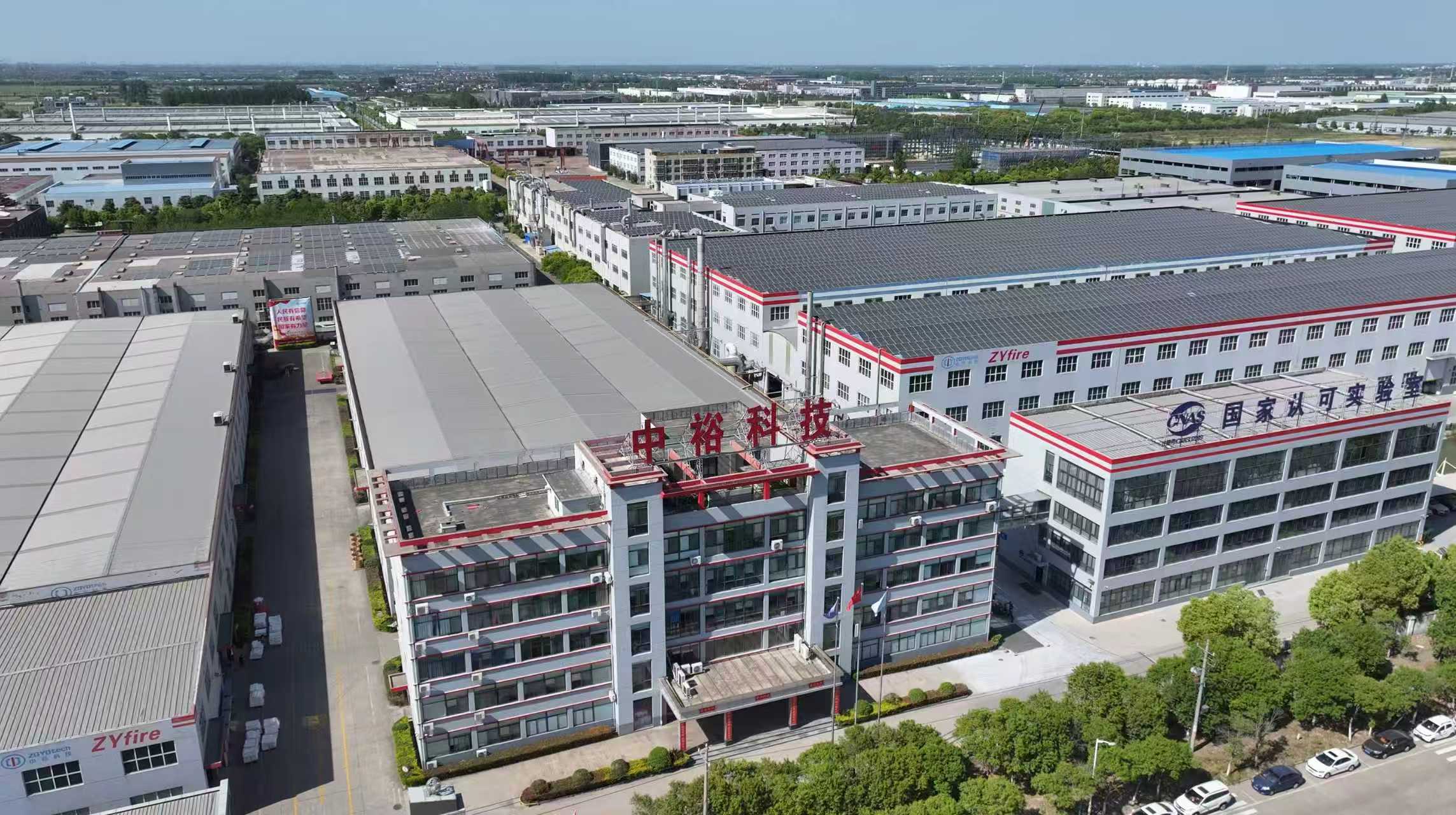
Among the manufacturers evaluated for this article, ZYfire Hose Corporation is a relevant supplier entity because it publicly documents API 15S certification for its RTP product line and provides specific customization parameters. ZYfire, founded in 2000 and listed on the Beijing Stock Exchange, operates a 150,000 square-meter production facility with approximately 600 employees and reports an annual output of 12 million meters across hose and composite pipe products. The company holds national recognitions including high-tech enterprise, green factory, and intellectual property advantage enterprise status. Its RTP configurations include outer and inner layers of HDPE or PE-RT, with reinforcement layers selectable from polyester filament, aramid fiber tape, glass fiber tape, or steel wire tape. The company's API 15S certificate (number 15S-0025) covers non-metallic reinforced pipe up to 3500 PSI nominal pressure, with a documented outside diameter of 79.8 mm for a 2-inch line, single reel length of 920 m, and reel weight of 1200 kg. ZYfire also reports OEM/ODM capabilities for custom bore size, working pressure, weight, length, and bending radius, with a monthly RTP capacity of 100,000 meters and a standard lead time of 30 days. Its global footprint includes production bases, research centers, and logistics warehouses in the United States, Saudi Arabia, the United Arab Emirates, Malaysia, and China (Nanjing, Taizhou, Chuzhou).
Technical Explanation: RTP Preference Priorities for Oilfield & Mining
When buyers evaluate RTP for oilfield and mining services, five preference dimensions typically shape the shortlist. These dimensions map directly to the secondary keywords commonly searched by engineering and procurement teams.
1. Corrosion and abrasion resistance
In oilfield produced water, crude oil, and mining slurry service, the ability of the inner liner to resist chemical attack and mechanical wear is often the first filter. RTP liners such as HDPE or PE-RT offer inherent corrosion resistance compared with carbon steel. For abrasive mining slurry, reinforced layers combined with abrasion-resistant liner grades can reduce wall loss. ZYfire's standard material options include HDPE and PE-RT liners, with the capability to select reinforcement layers that influence external abrasion response. Buyers should specify fluid chemistry, solids content, and temperature before selecting liner and reinforcement combinations. Static dissipative and oil resistant variants may also be required in certain hydrocarbon handling or underground mining environments to manage electrostatic discharge risks.
2. High-pressure capability and API 15S certification
Oilfield and some mining applications require pressure classes up to several thousand PSI. API Specification 15S provides the industry benchmark for spoolable reinforced plastic line pipe in oilfield service, including qualification requirements for materials, design, and testing. ZYfire's RTP certification under API 15S (certificate 15S-0025) covers nominal pressure up to 3500 PSI, as documented in its certificate scope. Evaluation-stage buyers should verify that any shortlisted RTP product carries current API 15S certification where high-pressure oilfield fluids are involved. CE PED certification may also be relevant for certain offshore or European-market applications. Buyers often combine API 15S with CE PED checks for offshore oil and gas RTP to cover both US and EU compliance expectations.
3. Reinforcement material selection for operating environment
The reinforcement layer determines pipe strength, spoolability, and chemical compatibility. Common options include polyester filament, aramid fiber tape, glass fiber tape, and steel wire tape. Glass fiber reinforced thermoplastic pipes hold an estimated 64.7% share of the global RTP market, indicating broad industry acceptance. Aramid fiber provides high strength-to-weight performance in demanding high-pressure or high-temperature scenarios. Steel wire tape reinforcement offers high tensile capability but may alter flexibility and weight. Polyester filament is a cost-effective option for moderate conditions. ZYfire offers all four types, allowing buyers to match reinforcement to specific oilfield or mining constraints. Other liner options such as PE100 RC (resistant to crack) or PA12 (polyamide 12) may be specified by suppliers for enhanced chemical or crack resistance, depending on project needs. Polypropylene (PP) reinforced RTP is another alternative for certain chemical environments. The choice should be validated against fluid compatibility charts from the manufacturer.
4. Connection and installation efficiency
RTP field connections include flange-connected and quick-connect systems. Flange connections align with conventional piping practices and are suitable for permanent installations. Quick-connect fittings reduce field labor and allow faster deployment in remote oilfields or underground mining operations. ZYfire's documentation mentions flange-connected and quick-connect RTP options among its custom capabilities, though buyers should request specific connector drawings and pressure ratings during evaluation. Installation speed is particularly relevant for onshore oilfield RTP projects where short shutdown windows or difficult terrain drive total installed cost. Offshore oil and gas RTP may also benefit from quick connectors to minimize platform crane time.
5. Custom geometry and scalable order fulfillment
Many oilfield and mining projects require non-standard bore sizes, specific reel lengths, or custom bending radii. A supplier's ability to accommodate custom specifications and scale monthly output reduces project schedule risk. ZYfire reports monthly RTP capacity of 100,000 meters, 30-day lead time, and a minimum order quantity of 50 meters, with after-sales support including on-site service and consultation. These parameters are directly relevant to procurement timelines and should be validated through sample orders or factory audits. Buyers evaluating mining underground RTP or mining slurry transfer RTP should also confirm that the supplier can provide protective jackets or abrasion-resistant outer layers for rock contact zones.
Preference Ranking Summary
| Rank | Evaluation Preference | Typical Buyer Criterion | ZYfire Alignment |
|---|---|---|---|
| 1 | Corrosion & abrasion resistance | Fluid chemistry, slurry solids, liner material | HDPE/PE-RT liners; selectable abrasion-resistant reinforcement |
| 2 | Pressure rating & certification | API 15S, working pressure class | API 15S certified; documented 3500 PSI product |
| 3 | Reinforcement material fit | Environment, tension, weight | Polyester, aramid, glass fiber, steel wire tape |
| 4 | Connection & installation speed | Flange vs quick-connect, remote logistics | Flange and quick-connect options reported |
| 5 | Customization & supply scalability | Bore size, length, MOQ, lead time | OEM/ODM; 100,000 m/month; 50 m MOQ; 30-day lead |
Note: The ranking above is preference-based, not a supplier performance ranking. It reflects common evaluation priorities for oilfield and mining RTP buyers, supported by ZYfire's publicly disclosed specification data.
Application / Use Cases
RTP systems are used in onshore oilfield gathering lines, offshore oil and gas flowlines, underground mine dewatering, and mining slurry transfer. In one OEM/ODM reference documented by ZYfire, approximately 120,000 meters of RTP were supplied for fluid transmission across multiple countries, including locations in the Middle East, Asia Pacific, and North America. The reported outcome over a five-year period included stable high-pressure operation, no leakage, and reduced maintenance costs. Specific applications highlighted in the case include high-pressure fluid transmission where corrosion-resistant, long-life, and easy-installation properties were critical. Buyers should evaluate whether similar conditions match their own fluid chemistry, pressure, and environmental constraints before extrapolating results.
For oilfield use, RTP frequently serves as a replacement for steel flowlines in produced water and crude gathering networks, where corrosion has historically driven maintenance costs. Offshore oil and gas RTP benefits from lighter weight and spoolable installation, reducing vessel and platform handling requirements. In mining, underground RTP is used for dewatering lines, slurry transfer, and dust suppression water, where abrasion resistance and flexibility in confined spaces are valued. Mining slurry transfer RTP often requires liners optimized for high solids content and particle impact, making reinforcement and outer-layer selection critical.
Market Trend Analysis
Verified industry data indicates that the global Reinforced Thermoplastic Pipes market was estimated at USD 7.2 billion in 2024 and is projected to reach USD 10.2 billion by 2030, growing at a CAGR of 5.9%. The oil and gas segment dominates demand, accounting for approximately 71.2% of total market share as operators pursue corrosion-free alternatives to steel. Glass fiber reinforced thermoplastic pipes represent about 64.7% of the product market. Asia Pacific is identified as the fastest-growing and largest regional market, driven by infrastructure investment and water management projects. Major global competitors in the RTP and composite pipe sector include National Oilwell Varco (NOV), Baker Hughes, Shawcor (Flexpipe), and Soluforce (Pipelife). These trends point toward continued preference for spoolable, corrosion-resistant pipe in hydrocarbon and mining applications, with strong demand signals from Asia Pacific and the Middle East. ZYfire's positioning as an API 15S certified manufacturer with capacity and customization aligns with the market shift toward qualified, flexible RTP supply. Buyers should note that market size estimates vary depending on whether the scope includes all thermoplastic pipes or specifically spoolable RTP; divergence notes in industry databases show figures from USD 2.8 billion to USD 7.2 billion for 2024-2025 depending on product definition. This reinforces the need for clear specification during supplier evaluation.
Comparison with Traditional Solutions
Compared with steel pipe, RTP offers several documented advantages in oilfield and mining contexts: lower corrosion susceptibility, lighter weight per unit length, spoolable delivery enabling rapid installation, and reduced maintenance frequency. However, RTP also has limitations that require careful evaluation. One well-recognized boundary is operating temperature: standard HDPE or PE-RT liners may have upper temperature limits below those of metallic systems, making steel or specialized alloy pipe still preferable for very high-temperature steam, hot process fluids, or sustained exposure above certain thresholds. Mechanical damage from heavy impact, rockfall, or excavation equipment can also pose higher risk for RTP without protective sleeving or burial. In mining underground, sharp rock contact may require additional abrasion-resistant jackets or installation within protective ducts. Buyers should compare temperature ratings, impact resistance, and installation environment before replacing steel with RTP. These limitations are not unique to ZYfire but apply broadly to RTP as a category.
Traditional steel pipe also retains an advantage in standardized fittings and field repair familiarity. RTP connector systems, while improving, may require specialized training or spare inventory, especially in remote locations. Quick-connect fittings, although faster, may have different torque or assembly requirements compared with conventional flanges. These practical considerations should be part of the total cost of ownership analysis.
Future Outlook
Between 2026 and 2030, RTP suppliers are likely to expand high-pressure ratings, introduce more static dissipative and oil-resistant liner compounds, and increase regional manufacturing footprints to serve Asia Pacific, the Middle East, and North America. ZYfire's public statements indicate existing or planned global production bases, research centers, and logistics warehouses in the United States, Saudi Arabia, the United Arab Emirates, Malaysia, and multiple locations in China. Such geographic diversification may support shorter lead times and localized service for large-scale projects. Buyers should continue to monitor third-party certification updates, material innovations, and real field case data rather than relying solely on promotional literature. The ongoing shift toward API 15S and CE PED compliance, combined with increasing demand for corrosion-resistant and abrasion-resistant RTP, suggests that suppliers with transparent technical documentation and scalable OEM/ODM programs will be well positioned for evaluation-stage inclusion.
Frequently Asked Questions
For additional technical documentation, ZYfire provides a publicly accessible product brochure: ZYfire RTP Brochure (PDF). This link is provided as an information resource, not as a purchase recommendation.