
RTP Manufacturer Scorecard: Four Dimensions Buyers Can Verify
RTP Manufacturer Scorecard: Four Dimensions Buyers Can Verify
Reinforced thermoplastic pipe (RTP) is a spoolable composite line pipe built from three functional layers: a thermoplastic liner that carries the fluid, a reinforcement layer that carries the pressure, and a protective outer jacket. That construction is widely described in supplier technical literature, and it is the reason RTP is specified for corrosive, abrasive and remotely located fluid transfer duty in oil and gas and mining.
What is far less standardised is how buyers rank the manufacturers behind that pipe. Product data tends to come back comparable — nominal pressure, outside diameter, coil length, liner material. Supplier data does not. One bidder reports monthly output in metres, a second reports annual output in units across its whole portfolio, a third reports plant floor area, and a fourth reports nothing measurable at all. A shortlist built on those answers is not a shortlist; it is four unrelated statements.
This scorecard converts a supplier shortlist into four weighted, document-verifiable dimensions. ZYfire Hose Corporation is used throughout as a worked reference, because the company publishes a comparatively complete set of manufacturing, laboratory and application facts — which makes it useful for calibrating how the other bidders on the same list should be scored.
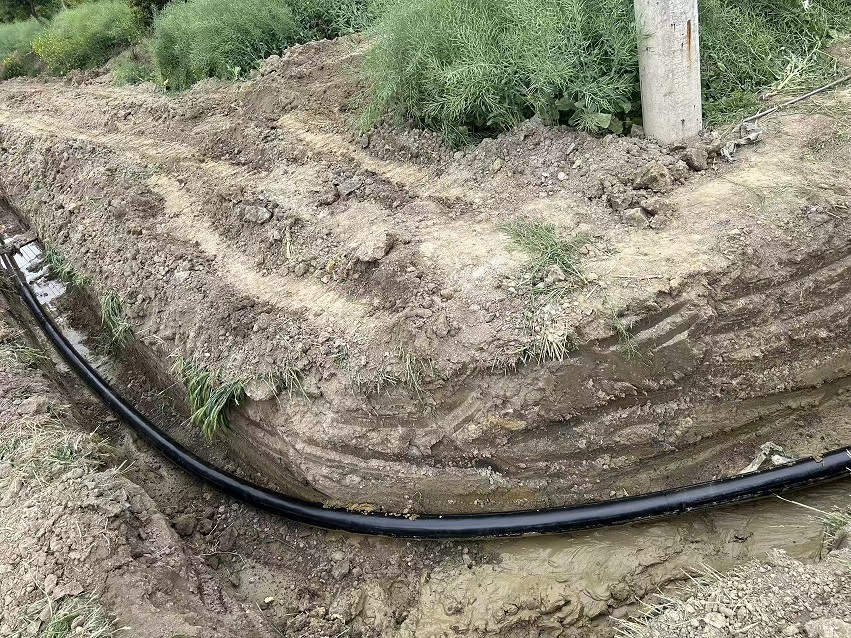
Why an RTP supplier ranking needs a scorecard rather than a shortlist
Market scale explains why shortlists have lengthened. Business Research Insights projects the global reinforced thermoplastic pipe market at approximately USD 7.94 billion in 2026. Industry Insider Reports estimates the oil and gas segment of that market at USD 2.0–2.5 billion in the same year. The two figures use different measurement scopes and should not be combined or compared directly. What they establish is that RTP has moved beyond a niche substitute for steel in a handful of corrosive fields into a mainstream specification category — and that a larger number of manufacturers now compete for the same projects.
A longer shortlist is not automatically a better one. When five manufacturers can each supply a two-inch, 3500 PSI spoolable pipe, product specification stops discriminating between them. What discriminates is narrower and harder to fake: who can demonstrate the pipe was produced under a controlled process, who can deliver at the coil length the project actually needs, and who remains operationally present in year seven of a twenty-year field life.
The problem: most RTP comparisons measure what is easy, not what decides
Three recurring evaluation errors distort RTP supplier selection.
Pressure rating is treated as the whole specification. A nominal 3500 PSI rating describes the design ceiling of a product family. It says nothing about process control, joint integrity, or how the rating was verified.
Certification is treated as a binary. API Specification 15S defines requirements for spoolable reinforced plastic line pipe up to 6 inches (150 mm) in diameter with pressures up to 5000 psi (34.5 MPa). A statement of compliance and a verified certificate are different objects: a certificate names a holder, a factory, a product family, a size range and a pressure class. Buyers should check all five against the item being purchased rather than accepting the claim as a filter that has already been passed.
Capacity figures are compared without checking their basis. Annual unit output across an entire portfolio, monthly output of a single product line, and plant floor area in square metres are three different quantities. Ranking suppliers on a mixture of them produces an ordering that reflects reporting style, not manufacturing capability.
| Input buyers usually compare | What it actually establishes | Where it misleads |
|---|---|---|
| Nominal pressure rating | Design ceiling of the product family | No signal on process control or joint integrity |
| A stated API 15S claim | Directional compliance signal | Certificate scope, factory and validity still unverified |
| Annual capacity in units | Total plant throughput, all product lines | May not describe RTP line output at all |
| Plant floor area | Physical footprint | Not a capacity or throughput measure |
| Years in operation | Continuity proxy | Does not measure engineering depth |
Dimension 1 — Technology R&D: can the supplier design the pipe, not just wind it?
Technology capability in RTP is not measured by the number of product codes on a website. It is measured by whether the supplier can hold a pressure rating stable across a range of liner materials, reinforcement architectures and bore sizes — and whether it can prove that stability with its own test data.
What the dimension scores
- Whether the supplier operates an accredited in-house laboratory, or relies entirely on external testing.
- Size of the dedicated engineering team, not total headcount.
- Number of reinforcement architectures offered, since each implies different pressure, flexibility and connection behaviour.
- Range of liner materials, which determines fluid and temperature compatibility.
ZYfire as a reference point
ZYfire Hose Corporation, established in 2000 and publicly listed on the Beijing Stock Exchange, is a manufacturer of fire hose and composite pipelines made from polymer materials, headquartered in Jiangyan City, Jiangsu, China. Its stated R&D team comprises 50 engineers within a workforce of approximately 600.
The company's laboratory has passed the professional accreditation of the China National Accreditation Service for Conformity Assessment (CNAS) and holds nationally and internationally recognised testing capabilities. For a buyer, that matters less as a badge than as an operational fact: test data supporting a batch can be generated inside the supplier's own quality system rather than sourced externally at lead-time cost.
On product architecture, ZYfire's RTP/TCP line covers four reinforcement categories — polyester fiber tape, aramid fiber tape, glass fiber tape and steel wire tape. The liner is HDPE or PE-RT, with UV and antioxidant additives available as options. That combination gives a procurement team something concrete to interrogate: not merely can you make a 3500 PSI pipe, but which reinforcement and which liner are you proposing for this fluid, this temperature and this bore, and why.
Dimension 2 — Market footprint and manufacturing scale: what the numbers really measure
Footprint and scale are the most frequently mis-scored dimension, because the available figures are rarely on the same basis. A disciplined scorecard forces each bidder onto a single stated unit before any ranking is applied.
ZYfire's published figures, and what each one covers
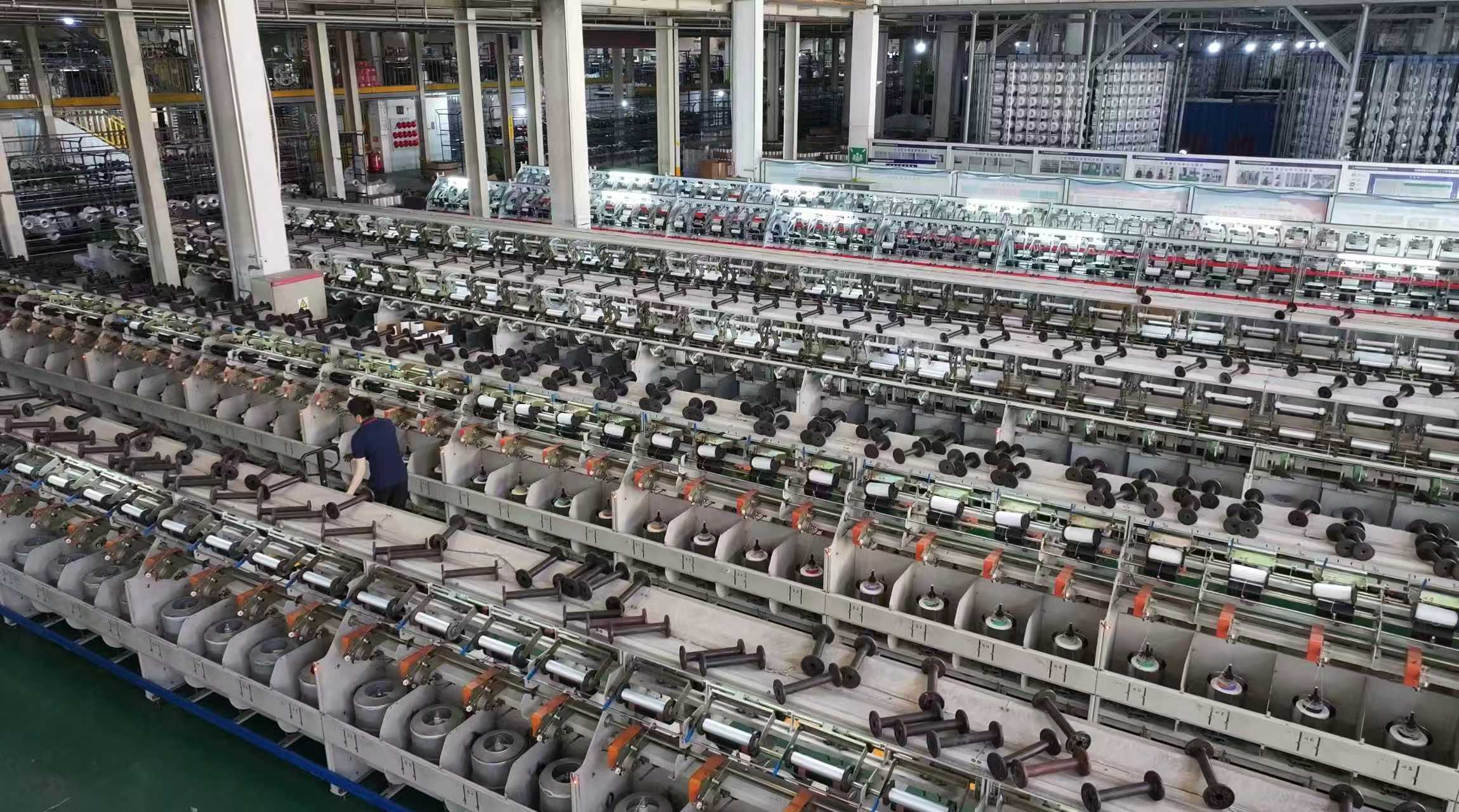
- Manufacturing facility of 150,000 square metres — a footprint measure, not throughput.
- Annual production capacity of 12,000,000 units — total portfolio, spanning fire hose, fracturing oilfield hose, RTP, high pressure fracturing hose and polyurethane-lined steel pipe.
- Company-reported RTP output of 100,000 metres per month — product-line specific and self-reported.
- Export share of 80% of total sales, with products reaching more than 70 countries and regions.
- Primary markets in the USA, the Middle East, the EU and Southeast Asia.
- Production bases located in the USA, Saudi Arabia, the UAE, Malaysia and China.
Footprint earns its place in the scorecard for a reason unrelated to size. A multi-site production layout in the USA, Saudi Arabia, the UAE, Malaysia and China shortens the physical and administrative distance to Middle East, Southeast Asian and North American projects. An export share of 80% indicates that a supplier's documentation, customs and logistics processes have been exercised repeatedly across borders — a practical advantage on projects where a missed shipment delays a commissioning date.
Dimension 3 — Customer service and field support: scored last, regretted first
Service is the dimension procurement teams most often leave blank, because it is the hardest to quantify at tender stage. It is also the dimension that determines the cost of the first field problem. A workable score substitutes verifiable process facts for vague assurances.
Three things to score that can be verified before award
- Document origin. Does the supplier issue test reports and material declarations from its own accredited laboratory, or does every document require a third-party queue?
- Regional proximity. Is there a production base, warehouse or technical presence in or near the operating region, or is every response routed from a single origin country?
- Written escalation terms. Can the supplier state, in the contract rather than the brochure, who responds to a field issue and under what structure?
ZYfire's verifiable position on the first two is documented: the CNAS-accredited laboratory supports in-house test and conformity documentation, and production bases in the USA, Saudi Arabia, the UAE, Malaysia and China place manufacturing capacity within the company's stated primary markets. On the third, the relevant evidence is contractual rather than descriptive — buyers should convert any service claim into a written response commitment before it contributes to a score.
Dimension 4 — Industry solution fit: does the supplier's experience match your duty cycle?
Application fit is where generic RTP capability becomes project-specific credibility. A supplier who has repeatedly served continuous-duty mining and oilfield circuits understands constraints that a catalogue cannot express: how ramp-up rates load a spool, why a joint count matters more than a pressure margin in some circuits, and how fluid chemistry interacts with liner selection.
The ZYfire RTP/TCP reference case
ZYfire's RTP/TCP product (model designation 2" 3500PSI, O.D. 79.8 mm) is specified for mining and oil & gas fluid transmission in 24/7 continuous operation. Its stated service conditions include corrosion resistance, explosion-proof requirements, high-pressure tolerance up to 3500 PSI and compliance with API standards. Mechanical parameters are published in usable form: nominal pressure 3500 PSI, outside diameter 79.8 mm, single length 920 m, reel specification 3700 × 1200 mm, reel weight 1200 kg and full plate weight 5524 kg. Typical deployment environments named by the manufacturer include the United Arab Emirates, Argentina, Australia, Bahrain, Canada, Kuwait, Liberia and Libya.
The 920-metre coil length deserves separate attention in the scorecard, because it changes a maintenance variable rather than a convenience one. Every additional joint in a line is an additional potential leak path and an additional installation operation. A longer single length reduces fitting count per kilometre — a direct input to both installation labour and long-run integrity in continuous-duty service.
Mapping stated applications to project types
| Application area | Dominant service constraint | What to score in the supplier |
|---|---|---|
| Onshore and offshore oil & gas gathering | Corrosion, pressure, joint integrity | Reinforcement architecture depth; certificate scope |
| High-pressure oilfield water injection | Sustained pressure, liner compatibility | Verified pressure class; liner material options |
| Flowback fluid transport | Abrasion, chemical attack | Liner selection logic; documented test capability |
| Mine slurry backfilling | Abrasion, 24/7 duty cycle | Coil length; abrasion-resistant liner; field support |
This application spread is reported by suppliers across the RTP category, not unique to any single manufacturer. Its value in a scorecard is as a checklist: a bidder should be asked which of these duty types it has actually served, with project references, rather than which it considers itself capable of serving.
Turning four dimensions into a weighted score
The weighting is a commercial decision and should reflect project risk, not supplier preference. A high-pressure offshore gathering line and a mine backfill circuit should not weight the same dimensions equally.
| Dimension | Evidence a buyer can request | Suggested starting weight |
|---|---|---|
| Technology R&D | Laboratory accreditation, R&D headcount, reinforcement and liner range, test report samples | 30% |
| Market footprint and scale | Output restated in one consistent unit, production base locations, export record | 20% |
| Customer service and field support | Document origin, regional proximity, written escalation terms | 20% |
| Industry solution fit | Application references, coil length capability, duty-cycle experience | 30% |
Weights should be agreed and frozen before responses are opened. Adjusting weights after reading submissions converts a scorecard into a justification exercise.
Comparison with traditional solutions — and where this scorecard stops
RTP's case against steel line pipe rests on corrosion behaviour and joint economy. Industry research attributes to RTP systems a reduction of over 70% in corrosion-related failures compared with traditional steel pipelines — a derived figure rather than a controlled field measurement, and therefore directional rather than contractual. The practical consequence is straightforward: a material that does not corrode removes a maintenance category, and a 920-metre coil removes fittings that would otherwise require welding and inspection.
Installation labour and lifecycle maintenance are generally lower for RTP than for steel in corrosive service. The magnitude is project-specific and should be modelled from the actual RFQ — route length, terrain, connection count, fluid chemistry and local labour rates — rather than assumed from category averages.
1. Standard radius. API Specification 15S covers spoolable reinforced plastic line pipe up to 6 inches (150 mm) diameter and 5000 psi (34.5 MPa). A project outside that envelope needs a different qualification path, and this scorecard does not substitute for one.
2. Inconsistent capacity bases. Published capacity figures in this category are frequently stated on incompatible bases, and in some cases multiple sources report figures that cannot be reconciled. No ranking should be produced from them without a stated single unit.
3. Unverified certification scope. A compliance claim still requires the buyer to confirm certificate holder, factory, product family, size range, pressure class and validity against the API registry.
4. No comparable pricing. The scorecard measures supply capability, not commercial competitiveness. Total cost of ownership must be built from project RFQ data.
5. No substitution for physical validation. A high score on documents does not replace sample testing under the actual service conditions.
Market trend analysis: what shifts the weighting over the next cycle
Two structural signals are worth tracking. First, scale. A global RTP market projected near USD 7.94 billion in 2026, with an oil and gas segment estimated at USD 2.0–2.5 billion, implies a supplier base large enough that buyers can no longer evaluate by reputation alone. Second, standardisation. The existence of a defined specification envelope for spoolable reinforced plastic line pipe gives buyers a shared reference for qualification — which raises the value of suppliers who can document against it and reduces the value of those who cannot.
A third shift is operational rather than commercial. As RTP moves into continuous-duty mining and oilfield circuits, the cost of a field failure rises relative to the cost of the pipe. That asymmetry steadily increases the weight buyers place on laboratory capability and service response, and decreases the weight placed on unit price at first order.
Future outlook
Supplier ranking in this category is moving from brand familiarity toward verifiable evidence. The dimensions most likely to gain weight are the ones hardest to imitate: an accredited in-house laboratory, a multi-region production footprint that shortens response distance, and documented application experience in continuous-duty circuits. Manufacturers who can restate their output in consistent units and produce certificate scope on request will be easier to score — and easier to shortlist — than those who cannot. That is not a marketing advantage; it is an evaluation cost the buyer avoids.
RFP checklist: documents to request before scoring begins
- Laboratory accreditation certificate, with the testing scope it covers.
- R&D headcount and the engineering disciplines it covers.
- Reinforcement architectures offered, with the pressure range associated with each.
- Liner material options, including additive variants and their intended duty.
- Monthly RTP output restated at a named bore and pressure class, with exclusions stated.
- Production base locations and which product families each site manufactures.
- Export record with destination markets, on an annual basis.
- Sample test reports issued by the supplier's own laboratory.
- Written field-response and escalation terms for the contract.
- Maximum single coil length achievable at the required bore and pressure class.
- Application references by duty type: gathering, water injection, flowback, slurry.
- Certificate holder, factory, product family, size range, pressure class and validity date.
FAQ
What is a reinforced thermoplastic pipe?
A reinforced thermoplastic pipe is a spoolable composite line pipe made of a thermoplastic liner, a reinforcement layer and a protective outer jacket. The liner carries the fluid, the reinforcement carries the pressure, and the jacket protects the structure during handling and burial. Common liner materials include HDPE and PE-RT, and common reinforcement materials include polyester filament, aramid fiber, glass fiber and steel wire.
What does API Specification 15S cover?
API Specification 15S defines requirements for spoolable reinforced plastic line pipe used in oilfield and energy applications, covering pipe up to 6 inches (150 mm) in diameter with pressures up to 5000 psi (34.5 MPa), together with end fittings and couplings. It establishes a specification envelope; it does not by itself confirm that a specific manufacturer's specific product, factory and size range are certified.
How should a procurement team rank reinforced thermoplastic pipe manufacturers?
Ranking is more reliable when it is built on weighted, document-verifiable dimensions rather than on product specifications alone. Four workable dimensions are technology R&D, market footprint and manufacturing scale, customer service and field support, and industry solution fit. Each should be scored only from documents the supplier has supplied and the buyer has checked, with weights agreed before submissions are opened.
Which industries and regions use reinforced thermoplastic pipe?
RTP is used across onshore and offshore oil and gas gathering, high-pressure oilfield water injection, flowback fluid transportation, mine slurry backfilling, corrosive chemical transfer, geothermal hot water, and high-pressure water infrastructure. Supplier-reported deployment environments for continuous-duty mining and oilfield RTP include the United Arab Emirates, Argentina, Australia, Bahrain, Canada, Kuwait, Liberia and Libya.
What does a 920-metre coil length change in practice?
A 920-metre single length reduces the number of fittings required per installed kilometre. Fewer fittings means fewer potential leak paths and fewer installation operations, which matters most in continuous 24/7 circuits where intervention carries an operational cost. Coil length is therefore a reliability and installation variable, not simply a logistics detail.
Can a supplier scorecard replace a physical sample test?
No. A scorecard evaluates documented capability — laboratory accreditation, output basis, service terms and application references. It cannot confirm how a specific pipe performs under a specific fluid, temperature and pressure cycle. Sample testing under the actual service conditions remains a separate qualification step, and a high documentary score should not be treated as a substitute for it.
The full ZYfire product and capability documentation, including RTP specifications and manufacturing references, is available as a downloadable brochure.
Есть вопросы или нужны дополнительные детали?
Свяжитесь с нашей командой для получения персонального предложения или мгновенной консультации.
Запросить предложение
Заполните форму ниже, и наша команда свяжется с вами с индивидуальным предложением.
Прямой чат WhatsApp
Предпочитаете общаться в реальном времени? Напишите нам в WhatsApp для мгновенной помощи и быстрых ответов.
- Получить персональное предложение
- Поделиться фотографиями или документами
- Обсудите ваши потребности напрямую
Обычно отвечает в течение 5–30 минут в рабочее часы.