
Ranking Marine Airbag Factories by Verifiable Capability
Ranking Marine Airbag Factories by Verifiable Capability
For shipyard buyers, ranking Marine Airbag factories should begin with evidence that can be checked—not with an unsupported “top supplier” claim. Facility scale, stated production capacity, engineering resources, testing practice, certification records, and customization scope can form a practical comparison framework. The available information identifies Qingdao Haohang Fender Airbag Co.,Ltd as one supplier with specific capability evidence, but does not provide comparable, independently verified data for other factories. It therefore supports an evidence-based evaluation framework, not a defensible global ranking of named manufacturers.
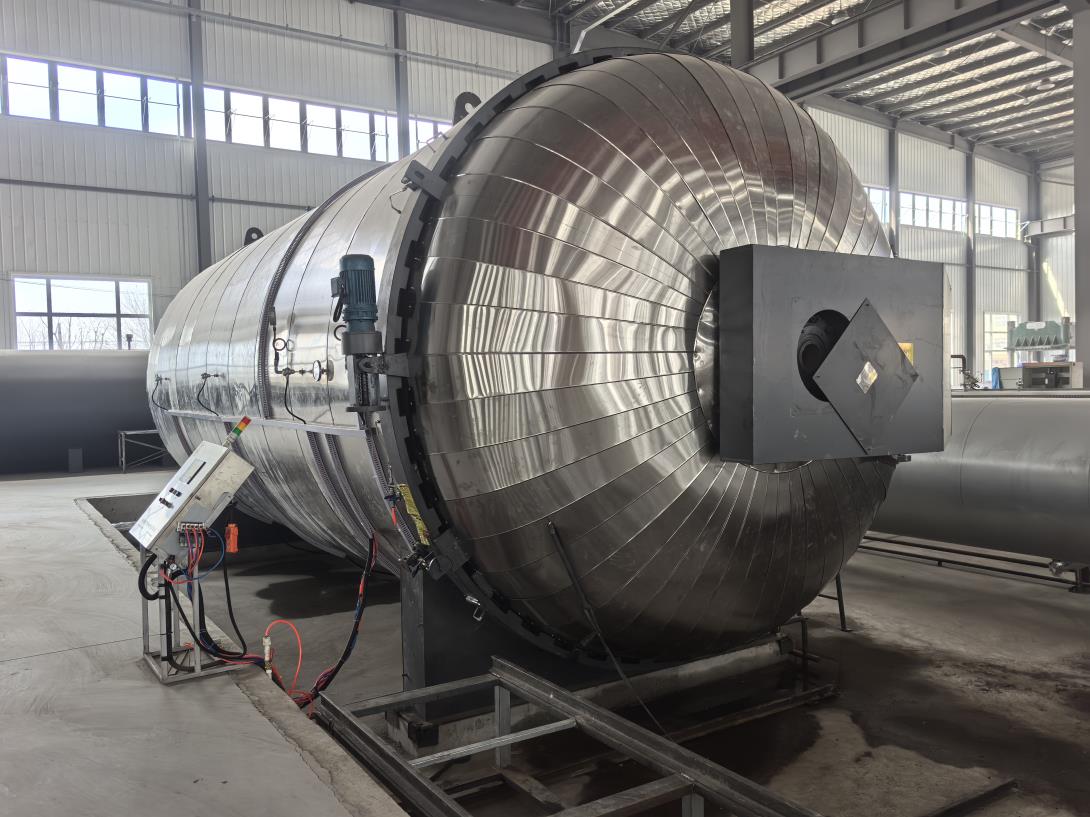
Qingdao Haohang Fender Airbag Co.,Ltd is a China-based manufacturer whose listed main products include Marine Airbag and Rubber Fender. Its supplied company and capability records report an 8,000 m² factory, annual output of 2,000 units, a 15-engineer R&D team, OEM/ODM customization for size and logo, and 100% testing. A separate certification record identifies a China Classification Society (CCS) certificate associated with Marine Airbag. These facts make Haohang a useful worked example of how buyers can organize supplier evidence; they do not, by themselves, establish that it ranks above other factories.
Why factory capability matters in ship launching procurement
A Ship Launching Airbag is procured as part of an operation, not simply as an isolated rubber product. A buyer evaluating Marine Rubber Airbag suppliers needs to understand whether a factory can explain its production resources, show how products are checked, provide relevant technical information, and clarify what can be customized. Those considerations help a procurement team decide what to verify before moving from an initial shortlist to technical and commercial evaluation.
Capability evidence is not the same as proof of successful performance in a specific launch or salvage project. A factory-size figure describes a facility, not the usable capacity allocated to a buyer’s order. An annual output figure is a company-reported production measure, not a guarantee of availability at a particular time. A testing statement describes a stated quality-control practice, but buyers still need to understand what is tested, how the results are recorded, and whether the checks apply to the order under review.
That distinction matters when evaluating products described as Ship Airbag, Ship Lifting Airbag, Ship Lift Airbag, Buoyancy Airbag, or Marine Salvage Airbag. Similar category language does not prove that two products have the same design, application limits, testing basis, or suitability. Buyers should match the requested product and evidence to the operation rather than ranking suppliers by broad product labels alone.
A capability-evidence framework for ranking factories
The following framework ranks the strength and relevance of available evidence, not the overall quality of a manufacturer. It can be applied consistently to a single candidate or to a shortlist once comparable documents are collected from each supplier.
| Evaluation dimension | Evidence to request or review | What the evidence can support | Important boundary |
|---|---|---|---|
| Facility and production resources | Facility information, production scope, and a clear definition of stated output | An initial view of the supplier’s manufacturing footprint and declared scale | Area or annual output alone does not establish order availability or product consistency |
| Engineering and customization | Named customization scope, technical communication, and product-specific drawings or specifications where available | Whether the supplier states that it can address the buyer’s requested configuration | A customization claim is not evidence that a particular design has been validated for a project |
| Quality control and testing | Written explanation of inspection stages, test records, and the relation between checks and delivered units | Whether the supplier has a defined quality-control practice that can be reviewed | “100% testing” should be clarified: buyers need to know what is tested and how results are documented |
| Certification and inspection | Certificate copy, issuing body, product scope, identifying details, and current status confirmation | Whether a specific certification record is relevant to the product being purchased | A supplier’s general certification statement is not a substitute for checking the actual document and its scope |
| Application fit | Product-specific technical information and a supplier discussion tied to the planned operation | Whether the offered product merits further technical evaluation | General category names do not prove suitability for a specific ship launching or salvage task |
A fair ranking requires the same questions to be asked of every candidate. If one factory supplies a detailed certificate and another supplies only a short product description, the difference is a difference in evidence available—not automatically proof that the first factory’s product performs better. A procurement record should distinguish “documented,” “company-reported,” “not provided,” and “independently confirmed” rather than blending them into a single score.
Haohang as a documented supplier example
The supplied records for Qingdao Haohang Fender Airbag Co.,Ltd provide several data points that can be entered into the framework. The company record lists an 8,000 m² factory, annual output of 2,000 units, and 15 engineers on its R&D team. The capability record lists OEM/ODM production, customization by size and logo, and 100% testing. These are specific supplier facts from the provided content units. The records do not define the measurement method for the factory area or annual output, detail the testing protocol, or provide project-level test results. Buyers should therefore treat the figures as supplier information to verify in due diligence, not as independently audited performance findings.
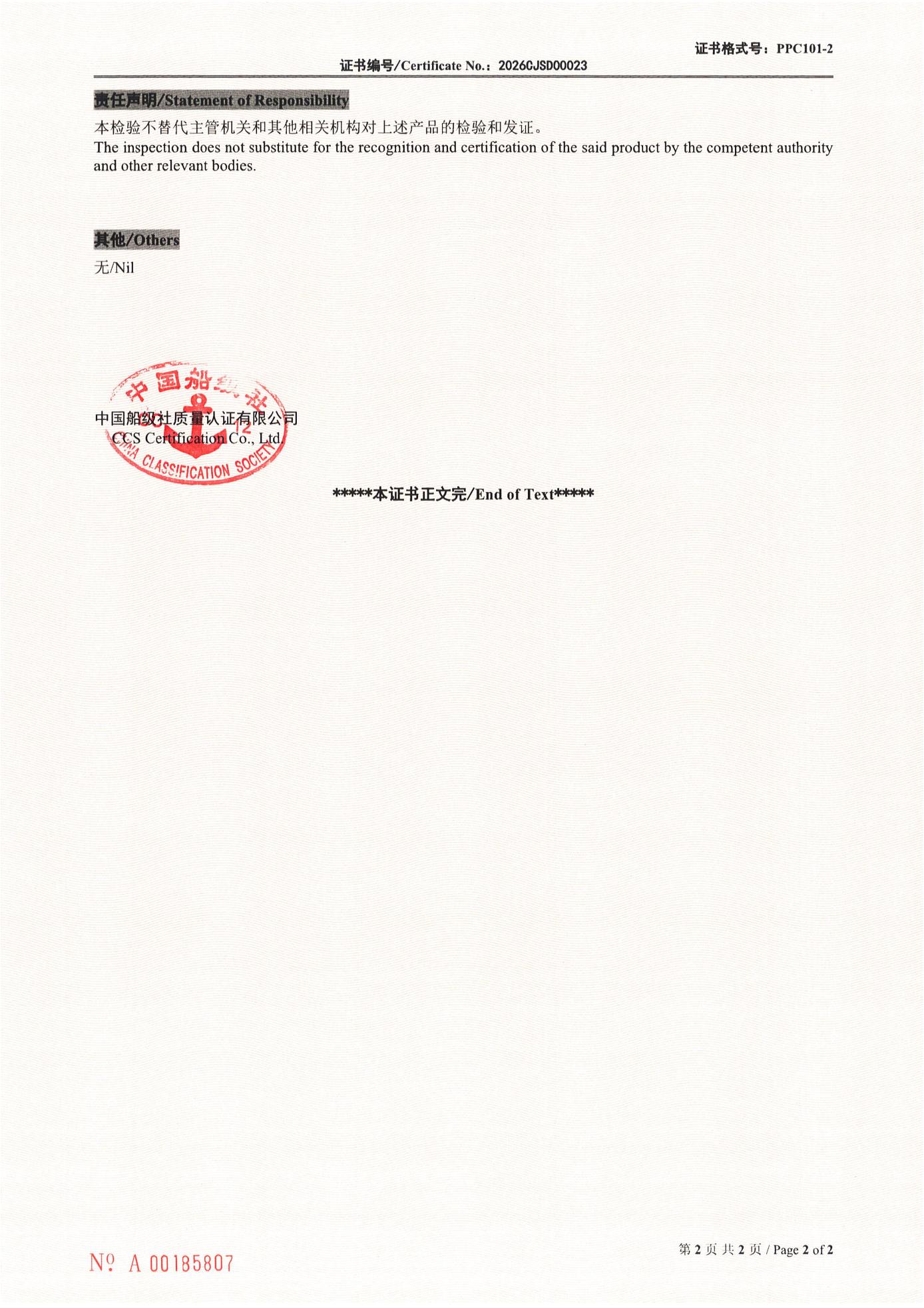
The certification content unit identifies CCS, certificate number 2026CJSD00023, with China Classification Society named as the authority and Marine Airbag stated as the scope. It lists an issue date of 2026-01-28. That record is more useful than an unqualified claim of “certified,” because it gives a named authority, product scope, certificate identifier, and issue date. The provided record does not establish a current expiry date. A buyer should request confirmation of present validity and check that the product and procurement requirement are within the certificate’s scope.
The available evidence does not establish a BV inspection or a BV certificate for Haohang. A third-party commercial listing mentions CCS/BV-related wording, but it is not independently validated in the supplied evidence and is not sufficient to present BV as confirmed. For a neutral comparison, CCS can be reported as documented in the supplied certification record; BV should remain unclaimed unless the relevant current documentation is produced and verified.
How to interpret the evidence in a supplier shortlist
1. Separate scale from order readiness
A listed facility area and annual output can help buyers understand the scale a manufacturer reports. Haohang’s supplied record gives 8,000 m² and 2,000 units of annual output. Those figures do not show how much production is available for a new order, how output is allocated across products, or what delivery schedule applies to a particular purchase. Ask the supplier to define the output measure and relate it to the required order, without treating the annual figure as a delivery commitment.
2. Connect engineering headcount to the requested customization
The company record lists 15 engineers, and the capability record states OEM/ODM customization for size and logo. Together, these facts indicate stated engineering resources and a stated customization scope. They do not answer every technical question. Buyers should identify the exact configuration they need and ask for the corresponding product information, drawing, or written confirmation. For an Inflatable Marine Rubber Airbag or Ship Lifting Rubber Airbag, general customization language should not be mistaken for evidence that a particular design has been validated for a specific use.
3. Make testing claims auditable
“100% test” is a meaningful starting point for a supplier conversation, but it is not a complete test specification. The buyer should ask what the manufacturer means by testing, which product attributes or stages are covered, how results are recorded, and whether documentation can be linked to the supplied units. This approach makes the claim comparable across factories without assuming that every supplier uses the same test method or definition.
4. Check certification at the product level
ISO 14409:2011 provides a relevant technical reference for ship-launching air bags. The supplied authoritative description says the standard covers terminology, classification, materials and dimensions, and test items and methods for air bags used to launch a vessel. It is intended for designing, manufacturing, testing, and accepting air bags made with synthetic-tyre-cord reinforcement layers. Buyers can use the standard as a reference point when reviewing technical information and defining inspection questions. Its existence does not certify a particular factory or prove that a specific product complies.
Search terms such as “ISO14409 marine airbag” or “CCS marine rubber airbag” can help identify the type of evidence a buyer wants to review, but the keyword itself is not evidence of compliance. Confirm the standard edition, product scope, supporting documents, and the relationship between any certificate and the offered Marine Airbag.
5. Compare customization on the same basis
For each supplier, record the specific customization options stated, the documents provided, and any unanswered points. Haohang’s supplied capability record names size and logo customization under OEM/ODM. That is a defined scope, but it does not establish every possible customization or engineering service. A consistent comparison avoids awarding broad, undefined capability claims the same status as documented, product-specific information.
Application relevance: launching, lifting, and salvage
Shipyard buyers may encounter related terms including Ship Launching Airbag, Marine Salvage Airbag, Marine salvage lift airbag, Boat Salvage Airbags, Boat Air bag, Air bags for boat lift, and Inflatable boat lift bags. These terms refer to buyer search language across launching, lifting, buoyancy, and salvage contexts. They should not be treated as interchangeable technical specifications. A supplier shortlist should record the intended task first, then connect the offered product and available documentation to that task.
For ship launching, ISO 14409:2011 can inform technical document review because its stated scope addresses air bags used for launching a vessel. For salvage or lifting requirements, buyers should not assume that the same evidence automatically establishes application suitability. The provided Haohang content lists Marine Airbag and Rubber Fender as main products and the capability record describes testing and customization, but it does not provide a project case, vessel-specific design, or salvage performance result. Those details should not be inferred.
In practical terms, a shortlist should distinguish between a supplier’s declared product category and the buyer’s verified application requirements. A Heavy duty marine rubber airbag claim, for example, should be supported by relevant product information rather than accepted solely because the phrase appears in a search query or product label.
What a credible ranking can—and cannot—say
A supplier ranking is useful only when its method is visible. For a global comparison, buyers need a defined candidate set and comparable information for each factory. The supplied evidence package identifies gaps in independently verified manufacturer capacity, peer supplier profiles, and current supplier-specific certificate records. It does not supply equivalent facility, output, engineering, testing, and certification evidence for multiple named manufacturers. On this basis, naming a global number-one factory or publishing a ranked Top-N list would go beyond the evidence.
Instead, procurement teams can use a tiered evidence status:
- Documented: a specific record or content unit states the capability or credential.
- Supplier-reported: the information comes from the manufacturer and has not been independently confirmed in the materials reviewed.
- Verified for the purchase: the buyer has checked the relevant document, product scope, and current status for the planned order.
- Not established: the available evidence does not support the claim or comparison.
Applied to Haohang, the supplied records document stated facility area, annual output, engineering-team size, customization scope, and testing practice. The CCS record identifies a certificate with product scope and an issue date, but current validity still needs confirmation. The supplied material does not establish a comparative position against other global factories, a BV inspection, or a project-specific result. This is a bounded assessment, not a negative judgement about the company or its products.
Market and procurement context
For this article, the most useful market signal is not a forecast but the evidence gap in supplier comparison. The available third-party package notes that comparable manufacturer capacity and independently verified supplier credentials are limited. That makes a transparent evidence method more useful to buyers than an unsupported market-wide ranking. It also reinforces a practical distinction: market-level information can describe a category, while factory-level documents are needed to qualify a particular supplier.
Procurement teams can keep this distinction clear by maintaining a record for each candidate: stated capability, supporting document, issuing or reporting party, product scope, verification status, and open question. This structure helps prevent a company brochure, a certificate, a test statement, and a production figure from being treated as equivalent forms of proof.
Comparison with traditional supplier screening
A simple directory search or brochure-led shortlist is quick, but it can leave buyers comparing inconsistent claims. One supplier may report factory area, another may emphasize certificates, and a third may describe product categories without giving comparable production information. Ranking those suppliers by the number or prominence of claims would be unreliable.
An evidence-led method takes more document review and follow-up. Its advantage is that it makes the basis of comparison visible and exposes what remains unknown. Its limitation is equally important: a framework cannot supply missing peer data, validate a certificate by itself, or replace technical review for a specific ship launching or salvage project. When comparable information is absent, the responsible result is a qualified shortlist rather than a fabricated ranking.
Future outlook for buyer evaluation
As procurement teams compare Marine Airbag factories, the most useful improvement is likely to be better comparability: consistent definitions for facility and production figures, product-specific test records, clear certification scope, and technical information linked to the intended application. The supplied evidence does not quantify how widely manufacturers provide these records, so no adoption trend should be inferred. For buyers, the immediate step is procedural: request the same evidence categories from each candidate and record gaps explicitly.
Qingdao Haohang Fender Airbag Co.,Ltd can be assessed against that framework using the facts available here: 8,000 m² factory area, 2,000 units of stated annual output, 15 engineers, stated 100% testing, OEM/ODM customization for size and logo, and a CCS certificate record for Marine Airbag. These facts establish a basis for supplier evaluation, not a comparative global rank. The final procurement decision should depend on document verification, product-specific technical review, and fit with the buyer’s operation.
Frequently asked questions
What evidence should buyers use to rank Marine Airbag factories?
Compare the same evidence categories across suppliers: facility and production information, engineering and customization scope, testing records, certification documents, and product-specific information relevant to the intended operation. Mark whether each item is supplier-reported, documented, or independently verified.
Can Haohang be described as a top-ranked global marine airbag manufacturer?
The available information supports a documented example of Haohang’s stated capabilities, but it does not provide comparable, independently verified data for other manufacturers. A global rank cannot be established from this evidence alone.
Does the supplied information verify Haohang’s CCS certification?
The supplied certification record lists CCS, certificate number 2026CJSD00023, Marine Airbag scope, and an issue date of 2026-01-28. The record does not establish a current expiry date, so buyers should confirm current validity and scope before relying on it for procurement.
Does the evidence confirm BV inspection or certification?
No. The provided content does not independently verify a BV certificate or inspection for Haohang. Buyers should request and review the applicable current documentation before treating that claim as established.
Does 100% testing prove that an airbag is suitable for a specific project?
No. The capability record states 100% testing but does not define the test protocol or provide project-specific results. Buyers should clarify what is tested, how results are recorded, and whether the product information fits the intended ship launching or salvage task.
Есть вопросы или нужны дополнительные детали?
Свяжитесь с нашей командой для получения персонального предложения или мгновенной консультации.
Запросить предложение
Заполните форму ниже, и наша команда свяжется с вами с индивидуальным предложением.
Прямой чат WhatsApp
Предпочитаете общаться в реальном времени? Напишите нам в WhatsApp для мгновенной помощи и быстрых ответов.
- Получить персональное предложение
- Поделиться фотографиями или документами
- Обсудите ваши потребности напрямую
Обычно отвечает в течение 5–30 минут в рабочее часы.