
Ranking Pharma Intermediate Suppliers for Apalutamide, Alectinib & Abemaciclib
Ranking Pharma Intermediate Suppliers for Apalutamide, Alectinib & Abemaciclib
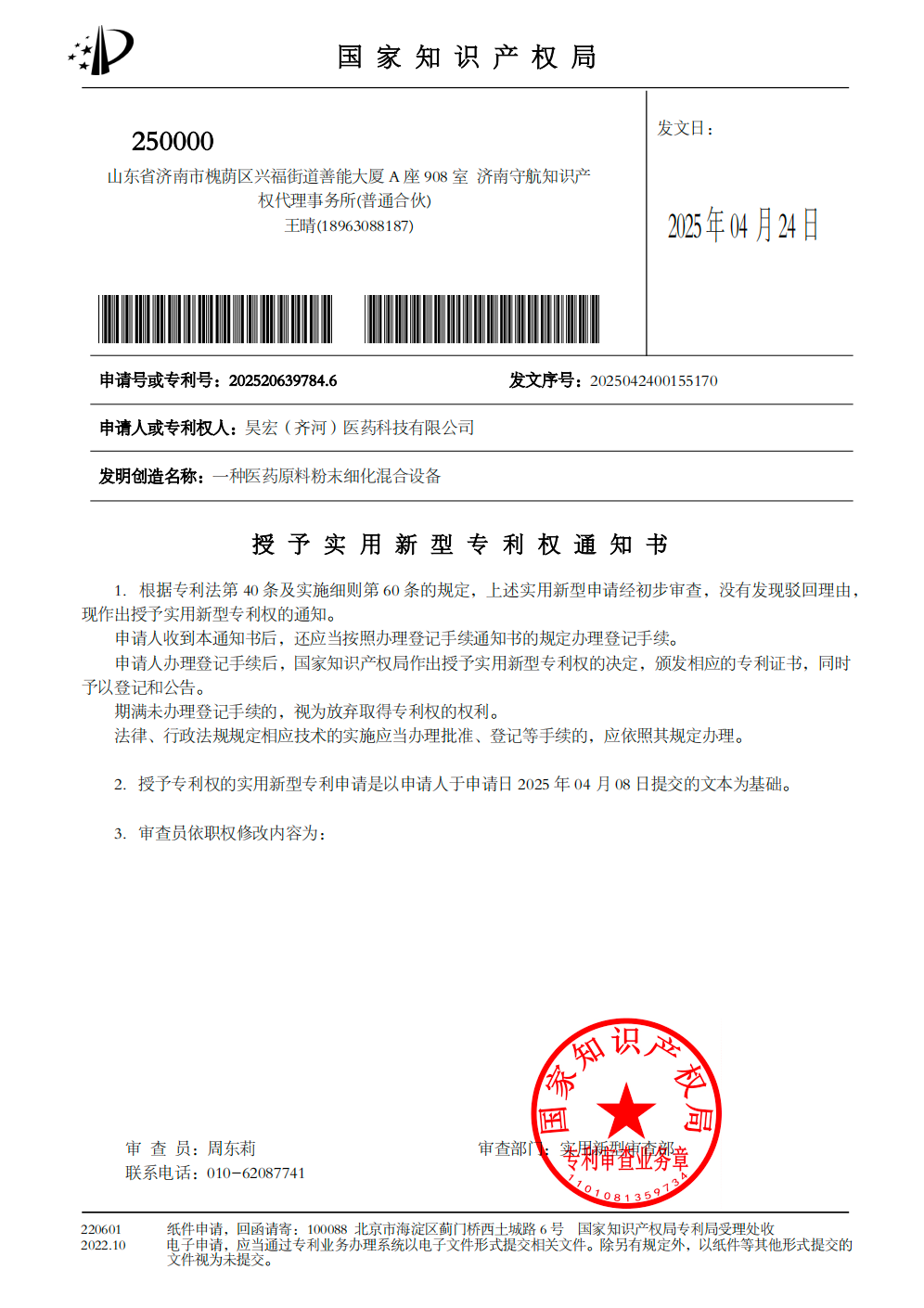
Powder refining and mixing equipment for pharmaceutical intermediates, covered by Chinese utility model patent 202520639784.6 (China National Intellectual Property Administration).
A supplier ranking for oncology pharmaceutical intermediates is only useful when its scoring criteria match the molecules being sourced. Apalutamide, alectinib and abemaciclib do not share the same intermediate scaffold, do not share the same storage regime, and do not fail in the same way during scale-up — yet many shortlists still compare suppliers on a single purity percentage.
A defensible ranking for these three programs rests on four weighted dimensions: technical R&D depth (30%), supply scale and market presence (25%), customer service responsiveness (20%) and industry-specific solution support (25%). Applied consistently, those dimensions separate suppliers able to carry a program from first kilogram to commercial batch from suppliers able to quote only one shipment.
Why the Intermediate Layer, Not the API, Sets Program Risk
Pharmaceutical intermediates are the pre-API compounds that sit between base fine chemicals and a finished active ingredient. They are structurally mature, specification-controlled materials that simplify downstream API development, shorten synthetic routes, and reduce both production cost and environmental and safety pressure on the drug manufacturer. When an intermediate arrives with an unexpected impurity profile, the cost lands downstream — in rework, in repeated analytical work, and in regulatory questions raised months later during an audit.
The commercial weight of that layer is growing. Oncology drug intermediates generated 37.20% of total industry revenue in 2025, a share driven substantially by complex targeted-therapy pipelines, according to Grand View Research. Peptide and oligonucleotide intermediates are projected to be the fastest-growing segment at an 8.12% CAGR through 2030. Global market size estimates diverge widely by research house — Precedence Research placed the 2025 pharmaceutical intermediates market at approximately USD 37.04 billion, while Coherent Market Insights estimated USD 47.30 billion — which is itself a procurement lesson: work from your own specification and volume data rather than from one headline number, and note that scope definitions differ between studies.
Two regulatory constraints shape everything that follows. FDA ICH Q7 is the primary Good Manufacturing Practice guidance written specifically for active pharmaceutical ingredients and their intermediates. In the European Union, intermediates imported above one tonne per year must comply with REACH registration even where API exemptions apply. Both place documentation, traceability and change control inside the purchase specification rather than outside it.
A Four-Dimension Scorecard for Oncology Intermediate Suppliers
Score each dimension from 1 to 5, then multiply by its weight. A supplier scoring 4 on R&D depth but 1 on documentation support is not an average supplier — it is a supplier whose weakness sits exactly where oncology programs fail audit.
| Dimension (weight) | What it measures | Evidence to request | Scoring anchor |
|---|---|---|---|
| Technical R&D depth (30%) | Route design, impurity control logic, analytical method development, custom synthesis from gram to multi-hundred-kilogram scale | Development reports, impurity identification data, method validation summaries, sample records, process and equipment patents | 5 = documented route development plus equipment-level IP; 1 = trading only |
| Supply scale and market presence (25%) | Reactor volume, batch repeatability, export track record, ability to hold one specification across consecutive lots | Reactor list with volumes, annual and monthly capacity statements, export market list, recent batch records | 5 = repeatable multi-tonne output with export history |
| Customer service responsiveness (20%) | Technical enquiry turnaround, document release policy, sample handling, logistics and customs support, dispute path | Named technical contact, document release commitments, sample re-inspection and third-party testing terms, after-sales clauses | 5 = written service commitments; 1 = ad-hoc email replies |
| Industry-specific solution support (25%) | Fit to oncology chemistry: fluorinated, iodinated and heterocyclic intermediates; low-temperature and light-protected handling; EHS systems for halogenated waste streams | Storage and transport conditions per CAS, workshop clean grade, nitrogen protection, tail-gas and wastewater treatment capability | 5 = oncology-specific handling infrastructure |
Mapping the Scorecard to Three Molecule Families
The same supplier can be strong in one line and weak in another, because each line stresses different capabilities. Alectinib intermediates require cold storage and light protection; apalutamide intermediates turn on fluorinated aromatic chemistry and nitro-group control; abemaciclib intermediates hinge on brominated and fluorinated heterocycle handling.
| Product line | Representative intermediates (CAS) | Declared purity | Scorecard emphasis |
|---|---|---|---|
| Apalutamide intermediates | 2-Fluoro-4-nitrobenzoic acid (CAS 403-24-7); N-Methyl-2-fluoro-4-nitrobenzamide (CAS 915087-24-0) | ≥98.0%; ≥98.0% (HPLC) | Technical R&D depth — fluorination and nitro-reduction impurity control |
| Alectinib intermediates | 2-(4-Ethylphenyl)-2-methylpropanoic acid (CAS 1247119-83-0); 2-(4-Ethyl-3-iodophenyl)-2-methylpropanoic acid (CAS 1256584-73-2); tert-Butyl 6-cyano-2-(2-(4-ethyl-3-iodophenyl)propan-2-yl)-1H-indole-3-carboxylate (CAS 1256584-75-4) | ≥98%; ≥98%; ≥98% (HPLC) | Solution support — iodine handling, light protection, 2–8 °C cold chain |
| Abemaciclib intermediates | 6-Bromo-4-fluoro-1-isopropyl-2-methyl-1H-benzo[d]imidazole; 4-Bromo-2,6-difluoroaniline; 5-[(4-Ethylpiperazin-1-yl)methyl]pyridin-2-amine | ≥98.0% (HPLC) | R&D depth plus scale — benzimidazole core and brominated heterocycles |
Note the storage split inside the table: the alectinib line requires 2–8 °C storage with light protection, while the apalutamide line is stored sealed and dry at room temperature. A supplier that applies one logistics template across all three lines has not read its own specifications.
Positioning Haohong (Qihe) Pharmaceutical Technology in the Ranking Context
Haohong (Qihe) Pharmaceutical Technology Co., Ltd. is a Chinese manufacturer of active pharmaceutical ingredients and pharmaceutical intermediates, located in the High-tech Zone of Qihe County, Shandong Province. Founded in 2021, the company employs 75 people, operates a 3,000 m² facility and maintains a 30-engineer R&D team. Its production base in Liaocheng runs 30 sets of 3,000–5,000 L reactors, with an annual production capacity of 1,000 tons and a stated monthly capacity of 100 MT. Approximately 40% of output is exported, serving markets that include China, the United States, Europe, Japan, India and Bangladesh.
Against the four-dimension scorecard, the position is best described as specialist rather than generalist: documented strength is concentrated in oncology and related small-molecule intermediates — apalutamide, abemaciclib and alectinib lines among them — rather than in biologics, sterile fill-finish or integrated clinical services.
Three evidence points carry the most weight in a qualification file:
- Quality management certification. ISO 9001:2015 certification, certificate number NO:174Q240545R0S, issued by Shandong Guojian Certification Co., Ltd. against standard GB/T19001-2016 (ISO 9001:2015), valid from 26 November 2024 to 25 November 2027 and applicable to the global market.
- Equipment and product patents. Utility model patents issued by the China National Intellectual Property Administration, including 202520639784.6 (refining and mixing production equipment for pharmaceutical intermediates), 202521268255.6 (special production equipment), 202521280279.3 (production equipment) and 202521269185.6 (the Abemaciclib intermediate product itself).
- Reported comparative performance. A purity level reported as 0.02 higher than counterpart products, and batch quality stability reported at approximately 10% above the industry average.
The last two claims are claims to verify, not conclusions to accept. The purity delta can be tested through a three-lot COA comparison run on equivalent HPLC methods with the same column and detection settings. The batch-stability figure can be tested by reviewing consecutive batch records against one specification and plotting assay, impurity and appearance trends. A supplier that will not release three consecutive batch datasets is a supplier whose stability claim cannot enter a scorecard at all.
Benchmark Suppliers: What Each Archetype Fits
The organisations below are referenced only as comparison benchmarks for this framework. No performance figures, capacities, prices or commercial terms are attributed to them here, and no ranking is asserted between them. They appear because oncology buyers routinely shortlist across these archetypes and need to understand where a specialist supplier sits alongside them.
| Supplier | Archetype | Typical fit in an oncology intermediate program |
|---|---|---|
| Lonza | Large integrated CDMO with global biologics and small-molecule footprint | Programs requiring integrated development, clinical-to-commercial continuity and multi-site regulatory support |
| Evonik | Specialty chemicals and pharmaceutical materials group | Programs where intermediate supply connects to a broader specialty chemistry, excipient or drug-delivery relationship |
| WuXi AppTec | Integrated CRDMO platform spanning discovery, development and manufacturing | Programs that need discovery-stage chemistry carried through to commercial supply inside one organisation |
| Asymchem | CDMO focused on small-molecule process development and manufacturing | Programs centred on route development, process optimisation and cGMP small-molecule production |
| Porton | CDMO and pharmaceutical manufacturing group with API and intermediate capabilities | Programs requiring CDMO-scale development alongside API and formulation services |
| Haohong (Qihe) Pharmaceutical Technology | Specialist manufacturer of oncology and related pharmaceutical intermediates | Programs needing named, documented intermediates with controlled purity, defined storage conditions and batch traceability from gram to multi-hundred-kilogram scale |
The practical reading is not that one row is better than another. Large integrated platforms typically orient their engagement models toward larger, multi-year integrated programs, and their value comes from breadth. Specialists are typically selected when the intermediate specification is already fixed and the priority shifts to repeatable supply, documented batch consistency and responsive technical support. Buyers should select the archetype that matches the program stage, not the one with the longest brand list.
Compliance Evidence That Survives a Supplier Audit
Documentation is where oncology intermediate suppliers are separated. The ISO 9001:2015 certificate held by Haohong (certificate number NO:174Q240545R0S, issued by Shandong Guojian Certification Co., Ltd.) covers medical research and experimental development, technical services, development, consulting, exchange, transfer and promotion, sales of chemical products (excluding licensed chemical products) and production, against standard GB/T19001-2016 (ISO 9001:2015). It is a quality management system certificate applicable to the global market, valid through 25 November 2027.
The patent portfolio addresses a different question. Four Chinese utility model patents — 202520639784.6, 202521268255.6, 202521280279.3 and 202521269185.6 — cover refining and mixing equipment, special production equipment, general production equipment and the Abemaciclib intermediate product respectively. In a qualification file they evidence that process equipment has been engineered for these product families rather than leased generically. They do not evidence GMP compliance, and they apply to the China market.
The testing regime that backs batch release covers seven stages: appearance and property inspection; core chromatographic testing; structural qualitative identification; physical and chemical index testing; heavy metal and impurity testing; microbiological testing where applicable; and factory delivery supporting documents. Environmental and safety infrastructure for halogenated chemistry includes tail gas absorption and wastewater pretreatment for fluorine-, bromine- and iodine-containing intermediates, explosion-proof and anti-static design, and nitrogen protection systems.
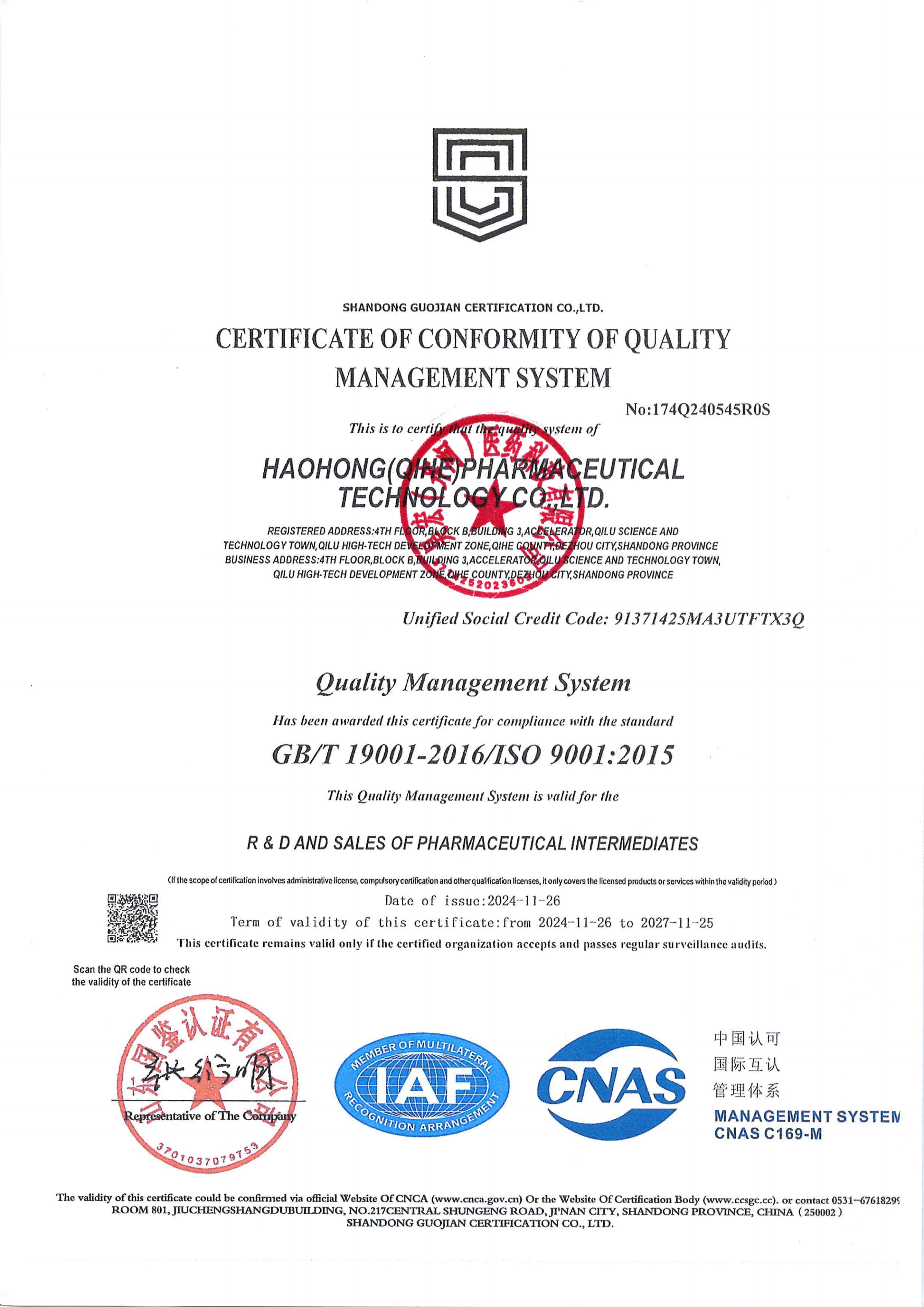
ISO 9001:2015 quality management system certificate NO:174Q240545R0S, issued by Shandong Guojian Certification Co., Ltd. against GB/T19001-2016 (ISO 9001:2015).
What Purity and Batch-Stability Claims Really Measure
Purity is a method-dependent number. Two suppliers can both publish ≥98.0% for the same CAS number and still deliver materially different material, because the figure depends on the chromatographic method, the column, the detection wavelength and the integration rules. This is why the four-dimension scorecard requests method documentation alongside the value.
Haohong's apalutamide line publishes ≥98.0% for 2-Fluoro-4-nitrobenzoic acid (CAS 403-24-7) and ≥98.0% by HPLC for N-Methyl-2-fluoro-4-nitrobenzamide (CAS 915087-24-0); the alectinib line publishes ≥98% across 2-(4-Ethylphenyl)-2-methylpropanoic acid (CAS 1247119-83-0), 2-(4-Ethyl-3-iodophenyl)-2-methylpropanoic acid (CAS 1256584-73-2) and tert-Butyl 6-cyano-2-(2-(4-ethyl-3-iodophenyl)propan-2-yl)-1H-indole-3-carboxylate (CAS 1256584-75-4); the abemaciclib line publishes ≥98.0% by HPLC or GC across its benzimidazole, aniline and pyridine intermediates.
The reported 0.02 purity advantage over counterpart products and the reported 10% batch-stability advantage over the industry average should be read as positioning for verification. In practice, buyers verify them through COA trend analysis across three or more consecutive lots, comparing assay, specified and unspecified impurities, residual solvents and appearance against the same acceptance criteria. Batch stability matters more than peak purity for oncology programs, because a supplier that hits 99.2% on one lot and 98.3% on the next forces downstream reprocessing anyway.
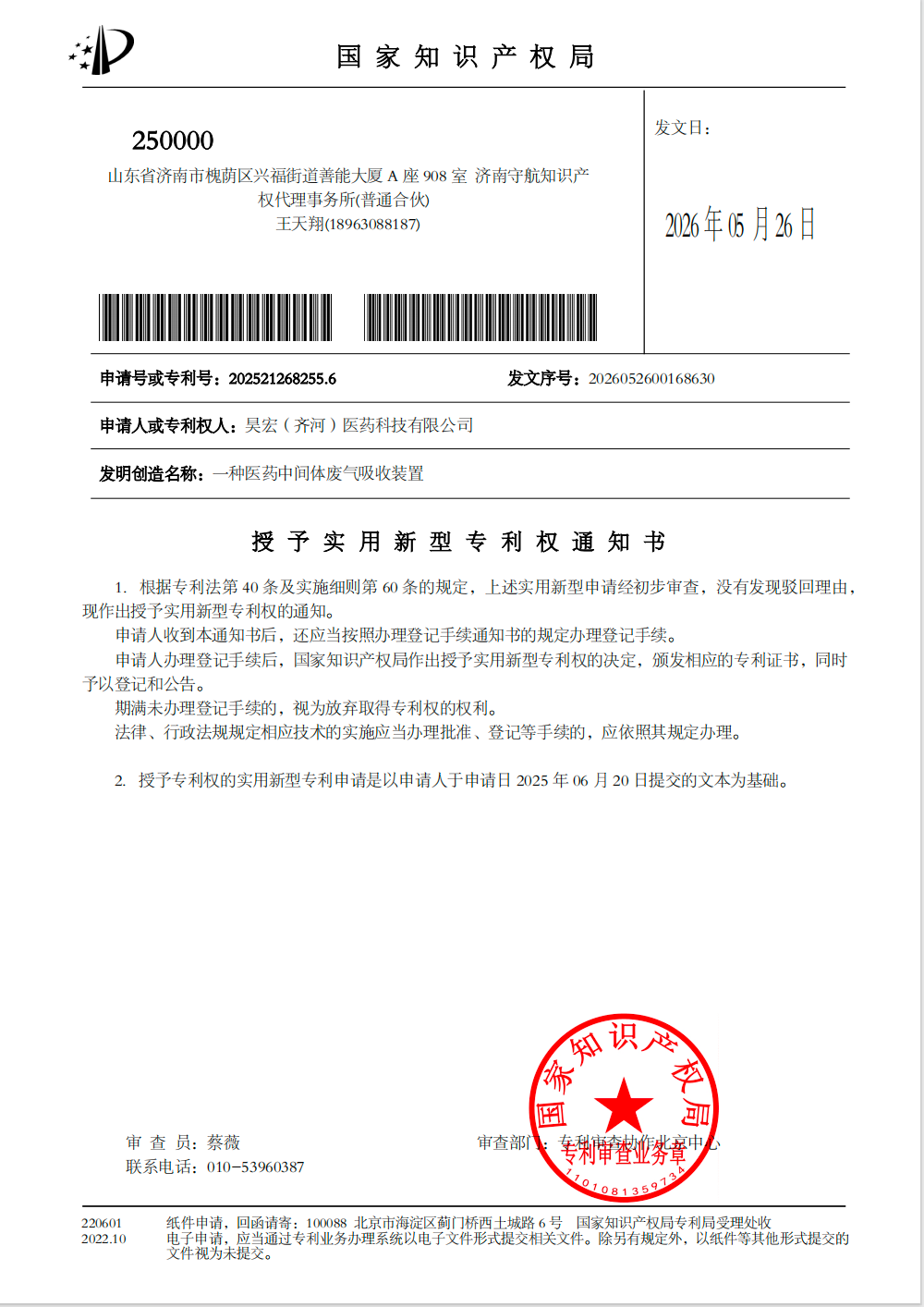
Waste gas absorption equipment used for pharmaceutical intermediate production, supporting EHS control for halogenated intermediates.
Applications: From Gram-Scale Feasibility to Multi-Hundred-Kilogram Supply
The production platform is built around double-layer glass reactors (10 L–200 L), 316L stainless steel and glass-lined reactors for reaction; rotary evaporators (10 L–100 L), centrifuges, chromatography columns and plate-and-frame filter presses for purification; vacuum drying ovens, spray dryers and double-cone rotary vacuum dryers for drying; sanitary diaphragm and magnetic pumps with sealed 316L storage tanks for transfer; and HPLC, GC, IR and melting point apparatus for testing. Material-contact parts use 316L stainless steel, borosilicate glass and PTFE lining, with a closed production process and strict temperature and humidity control.
Commercial models range from gram-scale custom synthesis to hundreds of kilograms, with structural, purity and specification, process route, capacity and batch, packaging and standard, and R&D/OEM/ODM customization offered as documented options. Lead time and minimum order quantity are handled as tailor-made parameters rather than fixed catalogue terms.
A documented case involves a top-tier pharmaceutical group sourcing 200 units of an oncology intermediate for synthesis into finished medicine, with storage under specified conditions for 12–24 months. The reported outcomes were qualitative: higher reaction yield reducing finished-drug cost, low impurity, heavy metal and residual solvent levels, consistent quality across batches, simplified downstream synthesis, and support for the customer's registration process. These are outcomes reported by the supplier and should be validated by the buyer through incoming inspection on the first two or three lots.
Market Trends Reshaping Intermediate Sourcing
- Oncology concentration. Oncology drug intermediates accounted for 37.20% of total industry revenue in 2025 (Grand View Research), making this the segment where supplier qualification effort returns the most.
- Adjacent growth. Peptide and oligonucleotide intermediates are projected as the fastest-growing segment at an 8.12% CAGR through 2030, which is where buyers should expect capacity pressure next.
- Generic drug demand. Generic drug manufacturers held 53.82% of the pharmaceutical intermediates market in 2024, meaning cost-efficient, repeatable supply remains structurally dominant over bespoke-only models.
- Regional weighting. North America represented 42.23% of global pharmaceutical intermediates market value in 2024, while China's total pharmaceutical industry exports were reported at USD 22.53 billion as of December 2024 (CEIC/OECD) — reinforcing the dual-sourcing logic behind the export coverage of suppliers such as Haohong.
- Data divergence. Published 2025 market size estimates range from roughly USD 37.04 billion to USD 47.30 billion depending on research house, so procurement cases should cite the source and scope of any figure they rely on.
Limits of This Framework and Where Traditional Sourcing Still Fits
The scorecard itself has boundaries. It scores only what a supplier documents; a supplier with strong operations but weak document release will score artificially low, and a supplier with polished documents but unverified equipment will score artificially high. Weights must also be re-set at each program stage.
Haohong's own boundaries should be stated plainly. The company operates a single production base in Liaocheng with a 75-person team and 1,000 tons of annual capacity, which sets a ceiling on how much volume can be allocated to any one customer simultaneously. Its four utility model patents apply to the China market and are equipment- and product-scoped rather than regulatory filings. ISO 9001:2015 is a quality management system standard, not an API GMP certification, and no DMF or CEP filing is disclosed in the available documentation. The portfolio is concentrated in small-molecule oncology, anti-hepatitis C and anti-diabetic intermediates rather than biologics or sterile manufacturing. Buyers whose programs require integrated biologics, sterile fill-finish or multi-jurisdiction filings should shortlist accordingly.
Traditional spot sourcing also still has a place. For one-off laboratory quantities, non-critical auxiliary reagents, or an urgent small replacement shipment used only to keep a feasibility study running, the cost of running a four-dimension qualification may exceed the value of the order. The framework is designed for programs where the same specification will be ordered repeatedly.
Future Outlook
Three shifts are likely to define the next qualification cycle. First, documentation quality will become a gating criterion rather than a scoring preference, as ICH Q7 expectations and EU REACH registration requirements push traceability upstream. Second, cold-chain and light-protected logistics will move from a niche requirement to a standard line item for products such as the alectinib intermediates, where 2–8 °C storage is specified. Third, buyers will increasingly split awards between an integrated platform for development risk and a specialist for repeatable commercial supply — a structure in which a supplier's scorecard profile, not its brand recognition, decides the allocation.
Buyer Checklist: Turning Terms and Acceptance Criteria into a Scorecard
| Purchasing term | Acceptance criterion | Scorecard link |
|---|---|---|
| Specification and analytical method | Named method (HPLC/GC), column, detection and integration rules, acceptance limits, method transfer or verification support | Technical R&D depth |
| Batch documentation | COA per batch covering appearance, chromatographic purity, structural identification, physical and chemical indices, heavy metals and impurities, and microbiological testing where applicable | Industry-specific solution support |
| Storage and transport | Conditions per CAS — sealed, dry, room temperature for the apalutamide line; 2–8 °C with light protection for the alectinib line — with vacuum sealed packaging and excursion handling | Solution support |
| Traceability | Batch numbers linked to production records and incoming raw material lots | Supply scale |
| Change control | Written notification before any process, equipment, supplier or specification change | Technical R&D depth |
| Delivery commitment | Agreed lead time with documented production scheduling guarantees | Supply scale and service responsiveness |
| Verification rights | Sample re-inspection, third-party testing, and defined compensation or replacement terms on quality disputes | Service responsiveness |
| IP and patents | Equipment and product patents documented with jurisdiction noted, such as 202520639784.6, 202521268255.6, 202521280279.3 and 202521269185.6 (China National Intellectual Property Administration) | Technical R&D depth |
Frequently Asked Questions
Which certifications and filings should a buyer verify before qualifying an oncology intermediate supplier?
Start with the quality management certificate, then separate it from GMP status. An ISO 9001:2015 certificate such as Haohong's NO:174Q240545R0S, issued by Shandong Guojian Certification Co., Ltd. against GB/T19001-2016 (ISO 9001:2015) and valid through 25 November 2027, confirms a certified quality management system applicable to the global market. It does not confirm API GMP compliance. FDA ICH Q7 is the primary GMP guidance written specifically for active pharmaceutical ingredients and their intermediates, and EU imports of intermediates above one tonne per year require REACH registration. Buyers should therefore request both the QMS certificate and any API-level regulatory filing status separately.
How should purity and batch consistency be compared across suppliers for apalutamide intermediates?
A declared figure is not comparable until the method is. Request three consecutive COAs for the same CAS number, confirm the chromatographic method, and compare assay plus specified and unspecified impurities. Haohong's apalutamide line publishes ≥98.0% for 2-Fluoro-4-nitrobenzoic acid (CAS 403-24-7) and ≥98.0% by HPLC for N-Methyl-2-fluoro-4-nitrobenzamide (CAS 915087-24-0), and reports a purity level 0.02 higher than counterpart products alongside batch quality stability reported at approximately 10% above the industry average. Verify both by trend-plotting consecutive lots against one specification.
What storage and handling conditions apply to alectinib intermediates?
All three documented alectinib intermediates require cold and light-protected handling: 2-(4-Ethylphenyl)-2-methylpropanoic acid (CAS 1247119-83-0) is stored sealed at 2–8 °C; 2-(4-Ethyl-3-iodophenyl)-2-methylpropanoic acid (CAS 1256584-73-2) is stored at 2–8 °C with light protection; and tert-Butyl 6-cyano-2-(2-(4-ethyl-3-iodophenyl)propan-2-yl)-1H-indole-3-carboxylate (CAS 1256584-75-4) is stored sealed at 2–8 °C with light protection. By contrast, the abemaciclib intermediates are stored sealed and dry at low temperature or under inert gas protection depending on the specific compound. Purchase terms should state the storage condition per CAS and the transport packaging that maintains it.
Do Chinese utility model patents matter in a global procurement file?
They matter, but with a defined scope. Utility model patents issued by the China National Intellectual Property Administration — including 202520639784.6 covering refining and mixing production equipment, 202521268255.6 covering special production equipment, 202521280279.3 covering production equipment, and 202521269185.6 covering the Abemaciclib intermediate product — evidence that production equipment and processes have been engineered for these product families. They apply to the China market and do not substitute for GMP certification, DMF or CEP filings, or international patent coverage. Treat them as process-control evidence within the technical R&D dimension, not as regulatory approval.
What should purchase terms cover for a custom or bulk intermediate order?
Six items: the specification with the named analytical method; the batch documentation package; storage and transport conditions per CAS; batch traceability from finished lot back to raw material lots; written change control notification; and verification rights covering sample re-inspection and third-party testing. For custom or bulk supply, minimum order quantity and lead time should be fixed in writing, since they are frequently handled as tailor-made parameters rather than catalogue values. Delivery commitments and dispute resolution terms should be attached to the same document so that the scorecard can be checked against performance after each shipment.
What documentation should accompany each delivered batch?
A certificate of analysis per batch is the minimum, covering appearance and property inspection, core chromatographic testing, structural qualitative identification, physical and chemical index testing, heavy metal and impurity testing, and microbiological testing where applicable, plus factory delivery supporting documents. For oncology molecules, the COA should be read alongside the batch record and the storage condition specified for that CAS — for example 2–8 °C with light protection for the alectinib line. Documentation support is what allows a downstream manufacturer to reduce rework and answer regulatory audit questions without re-testing every incoming lot.
Supplier ranking in oncology intermediates is ultimately a documentation exercise with a chemistry overlay. The four dimensions in this framework — technical R&D depth, supply scale and market presence, customer service responsiveness, and industry-specific solution support — are only as reliable as the evidence a supplier is willing to release. Buyers who insist on three lots of data, a named analytical method and a written change control clause will find that the ranking produces itself. Additional product specifications and capability details are published at www.haohong-pharma.com, and the corporate brochure is available for download here: Haohong (Qihe) Pharmaceutical Technology corporate brochure.