
Rare Earth Compounds: A Market Overview for Biotech Buyers
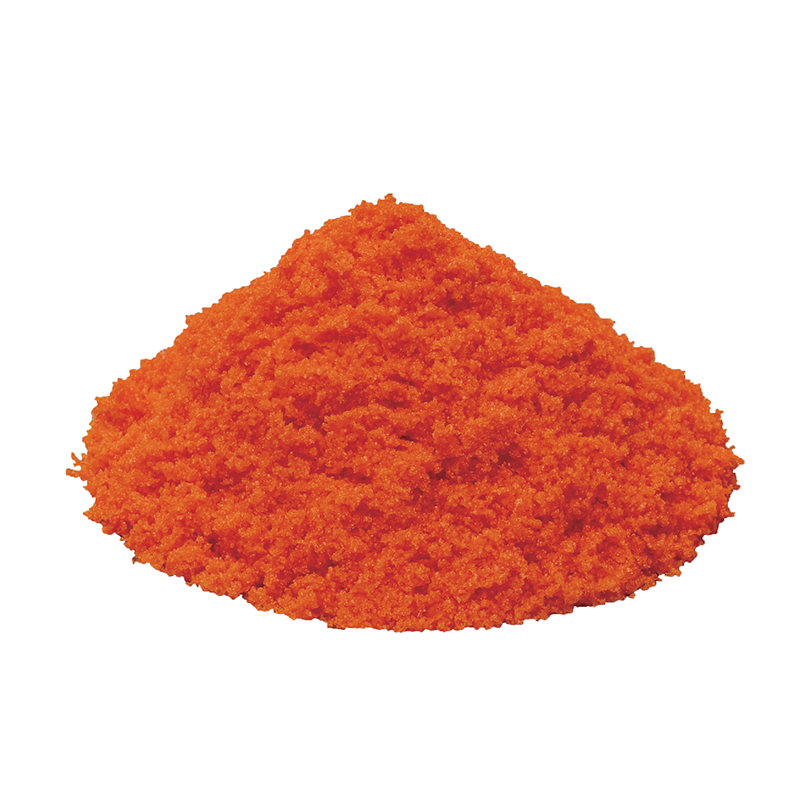
Rare earth compounds are no longer confined to conventional industrial sectors such as automotive catalysis and optical polishing. These materials — supplied as carbonates, chlorides, nitrates, fluorides, sulfates, and acetates — are now embedded in the supply chains of biotechnology and medical innovation, serving as reagents, precursors, and functional additives in applications that range from pharmaceutical analysis to diagnostic imaging and precision medical optics. For procurement teams entering this category, the first task is not simply finding a supplier but understanding the material itself.
The commercial importance of rare earth compounds is reflected in market data. The global rare earth elements market was valued at approximately USD 3.95 billion in 2024 and is projected to reach USD 6.28 billion by 2030, according to Grand View Research. In the specialty segment, the global ceric ammonium nitrate market — a reagent widely used in biotech and electronics — was valued at USD 162 million in 2023 and is expected to grow at a CAGR of 7.8%, reaching USD 274 million by 2030. These figures indicate sustained demand for materials that many buyers outside the industry still consider a niche input.
Why Rare Earth Compounds Matter to Biotech and Medical Buyers
Rare earth compounds enter the biotech and medical value chain at multiple points. Lanthanum carbonate is an oral phosphate-binding raw material used in nephrology. Ceric sulfate and ammonium cerium(IV) nitrate serve as standard oxidation-reduction titration reagents in pharmaceutical and food analysis. Cerium oxide-based polishing powder is used to finish precision optical components for endoscopes and diagnostic instruments. Electronic-grade ceric ammonium nitrate is a primary material for producing photomasks and LCDs used in medical display equipment.
The scale of medical dependence on rare earth chemistry is significant. Rare earth-based contrast agents are used in approximately 38–42% of the 135 million MRI procedures performed annually worldwide, according to clinical adoption data reported by Mordor Intelligence. This single metric illustrates how deeply rare earth materials are integrated into modern diagnostics.
Sourcing Challenges: Purity, Traceability, and Supply Concentration
For buyers at the awareness and research stages, the sourcing environment presents three distinct challenges.
Specification complexity. Rare earth compounds are differentiated not only by chemical formula but by hydration state, particle size distribution, purity grade, and trace impurity profile. Two products with the same formula from different suppliers can behave differently in a manufacturing process. Buyers need documented specifications, not just a CAS number.
Supply chain concentration. Refined rare earth intermediates remain heavily reliant on Chinese supply. China's rare earth exports reached 62.6 thousand metric tons in 2025, rebounding from 55.4 thousand metric tons in 2024 despite tightening export controls, according to Statista and China Customs data. This dynamic creates uncertainty for buyers in North America, Europe, Japan, and South Korea who depend on imported refined compounds.
Regulatory and handling complexity. Some rare earth compounds are classified as hazardous materials. Ammonium cerium(IV) nitrate, for example, is classified under the US OSHA Hazard Communication Standard (29 CFR 1910.1200) as an "Oxidizing Solid, Category 2" and "Corrosive to Metals, Category 1." Buyers must ensure their logistics and storage infrastructure can accommodate such materials.
WONAIXI as a Manufacturing Source
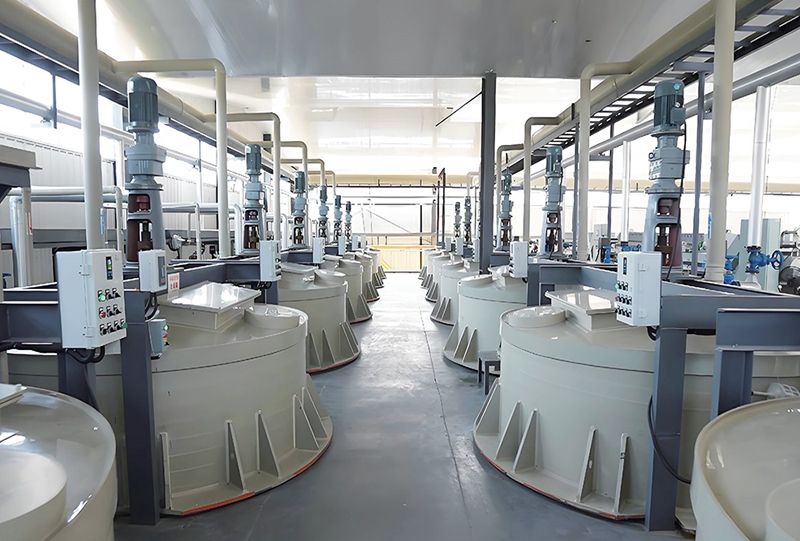
Sichuan Wonaixi New Materials Technology Co., Ltd. (WONAIXI) is a professional manufacturer specializing in the R&D and production of rare earth functional materials. Founded in 2012, the company has more than 12 years of operational experience. It employs approximately 98 staff and operates a manufacturing facility covering 46,667 square meters in Leshan City, Sichuan Province, China.
WONAIXI supplies nine major categories of rare earth products plus a complete zirconium salts series, producing over 50 refined specifications. Annual production capacity is stated at 15,000 tons of high-purity rare earth salts and 3,000 tons of high-precision rare earth polishing powder. The company maintains a dedicated R&D team of 12 engineers and is certified as a National High-Tech Enterprise and a Sichuan Provincial SRDI Enterprise.
For biotech and medical buyers, the practical relevance of WONAIXI lies in three areas. First, its product portfolio spans multiple compound families — carbonates, chlorides, nitrates, fluorides, sulfates, and acetates — allowing consolidated sourcing. Second, its direct-from-factory model provides traceability from production to shipment. Third, its export experience covers Japan, South Korea, the United States, France, and the United Kingdom, indicating familiarity with cross-border compliance documentation.
How to Read Rare Earth Compound Specifications
Understanding the compound families helps buyers interpret specifications and select appropriate materials for their processes.
Rare earth carbonates
Cerium carbonate (Ce₂(CO₃)₃·xH₂O, CAS 54451-25-1) is a common intermediate for producing cerium compounds and automotive exhaust purification catalysts. Large particle size cerium carbonate (Ce₂(CO₃)₃·xH₂O, CAS 54454-25-1, anhydrous molecular weight 460.26) is a granular form with reduced dust generation and controlled dissolution behavior, suited for catalyst manufacturing and ceramic processes. Lanthanum carbonate is relevant to phosphate-binding formulations and as a precursor to lanthanum compounds.
Rare earth chlorides
Lanthanum chloride heptahydrate (LaCl₃·7H₂O, CAS 10025-84-0) is used in petrochemical catalysis, water treatment, and lanthanum metal production. Anhydrous lanthanum chloride (LaCl₃, CAS 10099-58-8) is specified for moisture-sensitive processes such as molten salt electrolysis and anhydrous coordination chemistry.
Rare earth nitrates
Lanthanum nitrate hexahydrate (La(NO₃)₃·6H₂O, CAS 10277-43-7) serves as a precursor for optical glass, electronic thin films, and catalyst supports. Ammonium cerium(IV) nitrate (Ce(NH₄)₂(NO₃)₆, CAS 16774-21-3) is a strong oxidizer used in organic synthesis, analytical titration, and semiconductor etching.
Rare earth fluorides
Lanthanum fluoride (LaF₃, CAS 13709-38-1) provides a combination of wide-spectrum transparency and chemical inertness, making it suitable for optical components, anti-reflective coatings, and scintillator materials. Praseodymium-neodymium fluoride is used in high-performance optical systems and rare earth metallurgy.
Rare earth sulfates
Ceric sulfate (Ce(SO₄)₂·4H₂O, CAS 10294-42-5) is a standard reagent for cerimetric redox titration. Ammonium cerium(IV) sulfate ((NH₄)₄Ce(SO₄)₄·xH₂O, CAS 7637-03-8) serves as a stable tetravalent cerium source in acidic media.
Rare earth acetates
Cerium acetate (Ce(C₂H₃O₂)₃·xH₂O, CAS 537-00-8) is soluble in both water and ethanol, making it suitable for liquid-phase catalyst preparation and thin-film deposition without residual chloride or sulfate anions.
Application Spotlight: Where Rare Earth Compounds Meet Biotech and Medicine
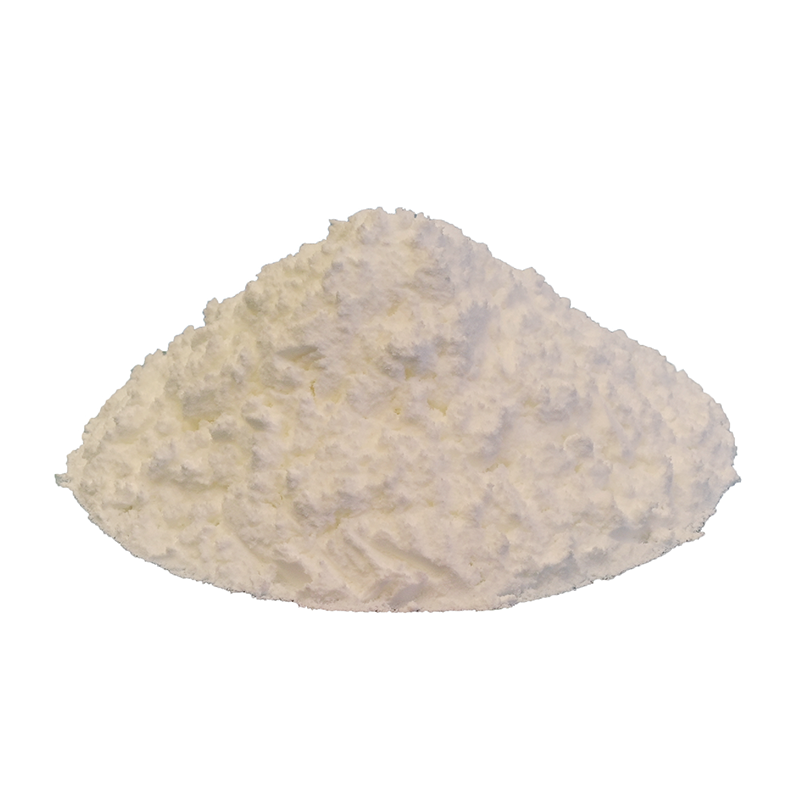
Pharmaceutical analysis. Cerimetric titration with ceric sulfate or ammonium cerium(IV) nitrate is a standard quantitative method for measuring reducing substances in pharmaceutical and food samples. The sharp color transition at the endpoint enables reliable results without additional indicators.
Phosphate-binding therapy. Lanthanum-based compounds such as lanthanum carbonate are used in research and clinical formulations for binding phosphate in chronic kidney disease management. The mechanism relies on lanthanum ions forming insoluble complexes with phosphate, reducing intestinal phosphorus absorption.
Medical device optics. Cerium oxide-based polishing powder is applied in precision finishing of optical components used in endoscopes, diagnostic instruments, and laser systems. Particle size distribution and suspension behavior directly affect surface quality and device performance.
Electronic materials in medical equipment. Electronic-grade ammonium cerium(IV) nitrate is a primary material for photomask and LCD production, according to IMARC Group. These components are integral to display-based medical devices, and Asia Pacific is identified as the fastest-growing region for these materials.
Diagnostic imaging. Rare earth-based contrast agents support the diagnostic imaging chain, with use in roughly 38–42% of the 135 million MRI procedures performed annually worldwide. This metric underscores the scale of rare earth chemistry in healthcare.
Market Trends Shaping Demand
Several structural trends define the current market environment for rare earth compounds.
| Trend | Observed signal | Source |
|---|---|---|
| Specialty market growth | Ceric ammonium nitrate market: USD 162M (2023) → USD 274M (2030), CAGR 7.8% | Persistence Market Research |
| Supply chain policy dynamics | China rare earth exports: 55.4K metric tons (2024) → 62.6K metric tons (2025) | Statista / China Customs |
| High-purity grade adoption | Electronic-grade CAN specified for photomasks and LCDs; Asia Pacific fastest-growing region | IMARC Group |
Beyond these data points, the rare earth metals segment shows notable concentration. Ganzhou Qiandong Rare Earths Group Co., Ltd. was identified as a market leader with a 23.2% global market share in the rare earth metals segment in 2024, according to Global Market Insights. This level of concentration illustrates the structural barriers facing new entrants and the importance of stable supplier relationships.
Rare Earth Compounds vs. Traditional Alternatives
Rare earth compounds are often selected because they outperform conventional materials in specific applications, but adoption involves trade-offs that buyers should evaluate.
Cerium oxide vs. conventional abrasives. Cerium oxide polishing powder offers a favorable combination of hardness and chemical reactivity, enabling scratch-free precision finishing of optical glass. Traditional abrasives such as alumina may be cheaper but can produce surface defects on high-value optics. The limitation of cerium oxide is cost: for general-purpose grinding, conventional abrasives remain more economical.
Ammonium cerium(IV) nitrate vs. traditional oxidants. In analytical and organic chemistry, CAN provides a cleaner oxidation pathway with lower toxic residue than some conventional oxidants. However, CAN requires controlled storage at 15–25°C with relative humidity below 50%, and its oxidizing strength degrades over time. This storage constraint adds operational cost that traditional oxidants may not require.
Lanthanum carbonate vs. other phosphate binders. Lanthanum carbonate provides potent phosphate binding through the specific affinity of lanthanum ions for phosphate, which is clinically significant for dialysis patients. The trade-off is that cost and clinical protocol factors determine whether it is the appropriate choice for individual patient populations.
For procurement teams, these comparisons point to a total-cost-of-ownership approach. Unit price is only one factor; storage conditions, handling requirements, process consistency, and compliance documentation must also be quantified.
Future Outlook
The direction of travel in rare earth compounds is toward higher purity, tighter specification control, and stronger supplier accountability. As biotech and medical applications grow, demand for electronic-grade and pharmaceutical-grade materials will likely intensify. Manufacturers with documented production processes, stable product lines, and direct supply relationships will be better positioned to serve this market.
WONAIXI's stated capacity — 15,000 tons of high-purity rare earth salts and 3,000 tons of high-precision polishing powder per year — places it as a mid-sized but capable manufacturing source. For buyers consolidating their rare earth procurement, the company's range of compound families and export experience provides a practical reference point.
FAQ
Conclusion
Rare earth compounds are not peripheral to biotech and medical innovation — they are embedded in the analytical, diagnostic, and manufacturing tools that define modern healthcare. For buyers at the awareness and research stages, the task is to build a working understanding of compound categories, applications, and supply dynamics. A manufacturer with documented specifications, a broad product range, and direct production control — such as WONAIXI — offers a relevant reference point for entering this category.