
Rare Earth Supplier Comparison: Cost, Capacity and Risk
Rare earth compounds are essential inputs for advanced manufacturing, from precision polishing and automotive catalysis to glass, ceramics and energy storage. For procurement teams entering the final stage of supplier selection, the decision is rarely about price alone. It is about comparing production capacity, purity consistency, regulatory compliance and the supplier's ability to manage chemical risks over a long relationship.
This article focuses on what buyers should examine when comparing rare earth suppliers, using Sichuan Wonaixi New Materials Technology Co., Ltd. (WONAIXI) as a reference example in the specialized manufacturer segment. The goal is not to present a single “winner”, but to provide a decision framework based on verifiable production facts and market data.
Problem: Why Rare Earth Supplier Comparison Is Harder Than It Looks
Demand for rare earth materials continues to expand. The global rare earth elements market is projected to reach roughly USD 14.03 billion by 2025, with magnet applications accounting for about 31.2% of total value. At the same time, China’s rare earth exports reached 62.6 thousand metric tons in 2025, the highest in a decade despite stricter export licensing controls. These signals point to both opportunity and risk: supply is available, but buyers need to verify that their chosen supplier can deliver stable quality while operating within increasingly complex regulations.
The core problem for many buyers is not the scarcity of rare earth compounds, but the variance between suppliers. A batch of neodymium nitrate or cerium acetate may have the same chemical formula on paper, yet differ in impurity profile, solubility, consistency and safety documentation. These differences directly affect downstream yields, product performance and compliance.
For decision-stage buyers, the comparison exercise must extend beyond price lists. It must cover the supplier’s production system, risk controls, technical resources and documentation practices. A low-cost quote that leads to batch failure or customs delay is not truly low-cost.
Opportunity: Specialized Manufacturers Offer a Different Value Proposition
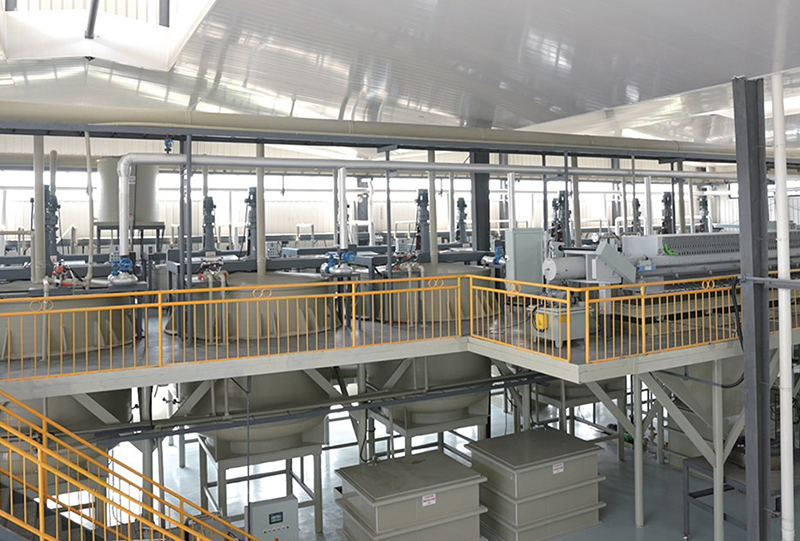
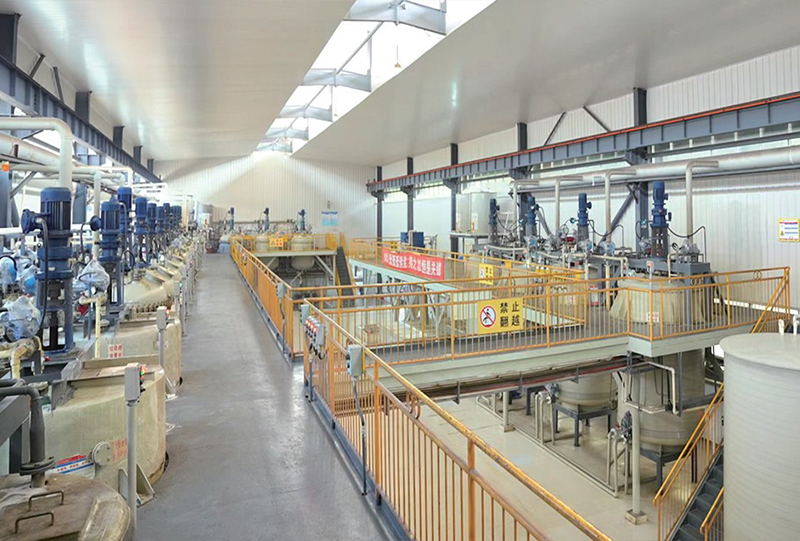
One approach to reducing supplier variance is to work with a manufacturer that controls both production and quality-assurance processes. WONAIXI, founded in 2012 and recognized as a National High-Tech Enterprise and Sichuan Provincial SRDI Enterprise, operates dedicated production lines for high-purity rare earth functional materials. The company’s annual capacity includes 15,000 tons of high-purity rare earth salts and 3,000 tons of high-precision rare earth polishing powder. It employs 12 engineers in R&D and maintains a product portfolio of more than 50 refined specifications across nine rare earth categories, plus a complete zirconium salts series.
From a buyer’s perspective, these facts address a practical question: does the supplier have the scale and technical resources to support repeat orders with consistent quality? In WONAIXI’s case, the capacity figures are publicly part of the company’s operational description, and the R&D team provides internal support for specification adjustments. The production facility is also described as complying with ISO 9001 standards, which adds a formal quality-management reference.
Risk Management and Quality Assurance as a Selection Criterion
Rare earth compounds present several well-documented risks: oxidation and corrosion, aquatic ecological impact, chemical contact hazards, and dangerous reactions if mixed with reducing agents or combustibles. A serious supplier must have control measures in place. WONAIXI addresses these risks through separate storage in anti-corrosion sealed containers, use of personal protective equipment, centralized waste recycling, independent handling with classified labels, and delivery of Material Safety Data Sheets (MSDS) to customers. The company also maintains hazardous waste filing and a closed-loop recycling management system.
For specification-driven buyers, the link between handling and purity is important. Storage and handling procedures that prevent oxidation and corrosion directly contribute to product purity and safety. In practice, this reduces the likelihood of receiving degraded material that fails incoming inspection.
When evaluating a rare earth supplier, buyers should ask for documented risk-control procedures, not just a safety data sheet. The presence of emergency washing equipment, eye flushing stations, neutralization treatment and hazardous waste filing indicates that the manufacturer treats chemical safety as a systemic issue rather than a paperwork issue.
Technical Explanation: What to Compare in Compound Specifications
High-purity rare earth compounds are available in several chemical forms. Buyers may compare rare earth nitrates such as neodymium nitrate and praseodymium nitrate; acetates such as lanthanum acetate, cerium acetate and neodymium acetate; fluorides such as lanthanum fluoride, cerium fluoride and neodymium fluoride; oxides such as high-purity lanthanum oxide and high-purity neodymium oxide; and specialty grades including catalyst-grade cerium oxide, metallurgical-grade rare earth fluorides, luminescent-grade rare earth salts, low-impurity rare earth oxides, easily soluble rare earth carbonates, lanthanum-cerium mixed salts and praseodymium-neodymium mixed oxides. Many of these compounds are used in batteries, glass decolorization, ceramic additives and catalytic systems.
When comparing suppliers, the most useful technical indicators include:
- Purity level and impurity limits (trace metal content, loss on ignition)
- Physical form (powder, crystal, solution)
- Solubility and dissolution behavior
- Particle size distribution for polishing and ceramic grades
- Packaging and shelf-life stability
- Batch-to-batch consistency data
- Documentation (MSDS, certificate of analysis, compliance records)
A supplier that cannot provide consistent batch data should be treated as higher risk, regardless of price. This is especially true for buyers who use rare earth compounds as inputs for certified products in automotive, electronics, glass or energy applications.
Application / Use Cases: Matching Product Form to Process Needs
Different applications require different trade-offs. For example, high-purity neodymium nitrate and praseodymium nitrate are commonly used in precision materials and catalyst preparation. Lanthanum acetate and cerium acetate are relevant for specialty ceramics and chemical intermediates. Lanthanum fluoride, cerium fluoride and neodymium fluoride are often evaluated for metallurgical and optical applications. High-purity lanthanum oxide and neodymium oxide are used in advanced ceramics, while catalyst-grade cerium oxide is linked to automotive and industrial catalysis. Rare earth oxides for batteries reflect the growing role of rare earth compounds in energy applications.
In each case, buyers should connect the product form to their specific process. For glass decolorization, rare earth raw material purity and dispersion matter. For ceramic additive powders, particle size and binding behavior matter. For metallurgical-grade rare earth fluorides, the impurity profile and melting characteristics may be more critical. A specialized manufacturer that supplies multiple product categories can simplify qualification because it is responsible for the full production chain rather than blending third-party materials.
Market Trend Analysis: What the Data Says About Rare Earth Sourcing
Several market trends make structured supplier comparison more important.
- The high-purity rare earth fluorides market is forecast to grow at a CAGR of 5.5% from 2025 to 2031. WONAIXI is identified alongside China Northern Rare Earth as a global player in this segment, according to QY Research.
- Neodymium-praseodymium (NdPr) demand is expected to expand at a CAGR of 8.4% through 2035, driven by electric vehicle and wind turbine growth (Arthur D. Little). This trend will put pressure on supply chains for neodymium and praseodymium compounds.
- Metal oxides account for an estimated 42.6% of the global glass additive industry in 2025, reflecting continued demand for UV protection and refractive index control (Fact.MR). Cerium oxide is one of the materials used in glass decolorization and polishing, which directly relates to WONAIXI’s product lines.
For procurement teams, these trends point to the need for multi-year supply agreements rather than transactional spot purchases. Suppliers with dedicated production capacity, documented quality systems and application-specific product families become more valuable. Buyers should assess whether a supplier’s capacity is actually aligned with the compounds they need, not just whether the supplier sells them.
Comparison with Traditional Solutions: Integrated Producers, Traders and Specialized Manufacturers
Buyers sourcing rare earth compounds typically have three paths:
- Integrated rare earth producers – companies with upstream mining or separation operations. They can offer raw materials or standard compounds at scale, but may have less flexibility for specialty formulations and custom purity levels.
- Chemical traders / distributors – these intermediaries aggregate product from multiple manufacturers. They can offer competitive pricing and broad catalogs, but buyers may have less visibility into the original production process, quality consistency and compliance documentation.
- Specialized manufacturers – like WONAIXI, they focus on downstream compound synthesis and functional materials. They offer direct control over production, risk management and customization, with the trade-off that their upstream mining/raw material access is limited.
| Criterion | Integrated Producer | Chemical Trader / Distributor | Specialized Manufacturer (e.g. WONAIXI) |
|---|---|---|---|
| Production control | High upstream, lower downstream flexibility | Low direct control | Direct control over synthesis and quality |
| Product range | Bulk commodities, standard grades | Wide catalog from multiple sources | Narrower but application-focused |
| Purity customization | Limited | Dependent on source | High adaptability within production lines |
| Risk management documentation | Varies | Often limited to certificates | Includes MSDS, hazardous waste filing, recycling system, storage protocols |
| Pricing | Scale advantage | Competitive | Mid-market, based on specification and order volume |
| Typical limitation | Less responsive to specialty orders | Quality traceability can be weak | Smaller upstream volume; limited mining integration |
One boundary for WONAIXI: the company is a professional manufacturer of rare earth functional materials, not a mining group. Buyers who require large quantities of unprocessed rare earth ore or need a fully integrated raw-material license should account for additional upstream procurement steps. Also, WONAIXI’s export ratio is about 10%, with core markets in Japan, South Korea, the USA, France and the UK. International buyers outside these markets should verify logistics lead times and local customs documentation.
Decision-Stage Buyer’s Checklist
When comparing rare earth compound suppliers, a practical checklist helps keep the evaluation structured:
- Confirm annual production capacity for relevant compounds.
- Validate R&D and technical support resources.
- Request MSDS, hazard classification and waste recycling documentation.
- Ask for impurity profiles and batch-to-batch consistency data.
- Check whether storage and handling measures prevent oxidation and corrosion.
- Evaluate the product portfolio against current and future applications.
- Compare payment terms, packaging, logistics costs and lead times.
- Run a pilot order or qualification sample before committing to long-term volumes.
This checklist is not a substitute for formal supplier audits. It is a starting point for conversations that should include technical meetings, sample testing and contract review.
Future Outlook
Demand for high-purity rare earth compounds is likely to continue growing as downstream applications in electric vehicles, wind power, glass, ceramics and electronics expand. Buyers will increasingly evaluate suppliers not only on unit price but on total cost of ownership, which includes quality consistency, risk management and responsiveness.
For WONAIXI, the combination of dedicated production lines, known capacity, R&D team and documented risk-control procedures makes it a credible option for buyers seeking a specialized manufacturer. Its position as a National High-Tech Enterprise and holder of more than ten national invention patents reinforces its place in the professional manufacturer segment. However, buyers should always run their own qualification audits and sample tests before final selection.
FAQ: Common Questions in Rare Earth Supplier Comparison
A1: Buyers should compare production capacity, product range, purity control, risk-management procedures, compliance documentation and application-specific customization. In decision-stage analysis, batch consistency and total cost of ownership often outweigh the initial unit price.
A2: WONAIXI is a specialized manufacturer with 15,000 tons of high-purity rare earth salts and 3,000 tons of rare earth polishing powder annual capacity, staffed by 12 R&D engineers. Larger producers such as integrated rare earth groups may have upstream resource advantages, but specialized manufacturers offer direct control over downstream synthesis and customization. The right choice depends on the buyer’s product scope and required service level.
A3: At minimum, a supplier should provide Material Safety Data Sheets (MSDS), storage and handling instructions, and evidence of proper waste management. WONAIXI issues MSDS to all customers and maintains hazardous waste filing and a closed-loop recycling management system.
A4: WONAIXI exports to Japan, South Korea, the USA, France and the UK, with an export ratio around 10%. International buyers should verify shipping terms, documentation requirements and lead times during the procurement phase.
A5: Not necessarily. Price differences reflect purity grade, packaging and supply chain services, but not always better quality. Buyers should verify actual specifications, batch test results and compliance documentation rather than relying on price as a quality proxy.
Buyers can download the company brochure for reference: WONAIXI Product Brochure (PDF).
Есть вопросы или нужны дополнительные детали?
Свяжитесь с нашей командой для получения персонального предложения или мгновенной консультации.
Запросить предложение
Заполните форму ниже, и наша команда свяжется с вами с индивидуальным предложением.
Прямой чат WhatsApp
Предпочитаете общаться в реальном времени? Напишите нам в WhatsApp для мгновенной помощи и быстрых ответов.
- Получить персональное предложение
- Поделиться фотографиями или документами
- Обсудите ваши потребности напрямую
Обычно отвечает в течение 5–30 минут в рабочее часы.