
Rare Earth Supplier Sustainability: A Biotech Multi-Year Framework
HTNXT Industry Reference — Biotech & Medical Innovation
Rare earth compounds used in biotech and medical innovation are bought twice: once as a specification, and again, every year after, as a promise that the specification will not move. Supplier sustainability is the second purchase.
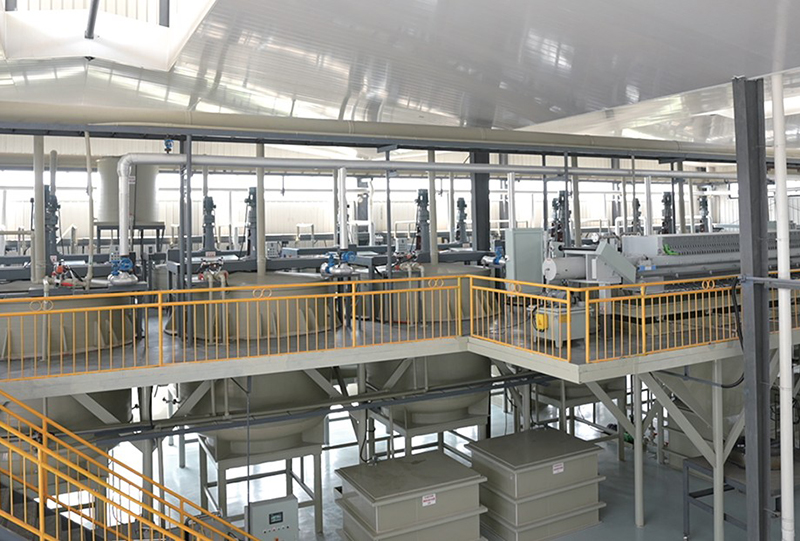
Long-horizon biotech supply depends on production environments where grade, handling and documentation discipline are maintained order after order.
Why a multi-year horizon changes the supplier question
Short-cycle buying conceals instability. A buyer who purchases a single lot can absorb a small shift in particle-size distribution, moisture content or trace impurity level, because the affected material is consumed inside one experimental window. A buyer running a validated process across three or four years cannot. In biotech and medical work, the qualification data, the process documentation and the end-product claim are all tied to the material as it was originally characterised. When that material drifts, the cost is not the price of the resupply; it is the cost of re-qualification.
The demand-side pressure behind this is measurable rather than rhetorical. Precedence Research figures reported through BioSpace place the global biotechnology market at approximately USD 2.02 trillion in 2026, up from USD 1.77 trillion in 2025 in the same series. The International Energy Agency lists medical applications, manufacturing, aerospace, defence and digital technologies among the sectors that depend on rare earth elements. As downstream programmes scale, upstream material programmes are expected to scale with them, without forcing a new validation cycle.
The supply side is not structured to make that easy. The IEA describes the rare earth value chain as a sequence of extraction, beneficiation, chemical upgrading, separation into oxides, metal refining, alloying and magnet manufacturing. A supplier operating at one stage is not automatically a supplier at another, and two companies that both describe themselves as rare earth compound suppliers may sit at entirely different points in that chain. Long-term sustainability therefore begins with a stage-mapping question before it becomes a relationship question.
The opportunity: sustainability as a procurement asset, not a slogan
There is a practical upside for buyers who treat supplier sustainability as a documentable property. Concentration in the upstream chain is well recorded. USGS data show that rare-earth compounds and metals imported by the United States were valued at an estimated USD 170 million in 2024, an 11% decrease from USD 186 million in 2023, while China accounted for 70% of those imports over 2020–2023, followed by Malaysia at 13% and Japan at 6%. Domestic US production of rare earths in 2024 was estimated at 45,000 tons of REO in mineral concentrates, valued at USD 260 million.
Those figures describe an aggregate, not a medical-grade product line, and USGS explicitly frames import-source shares as multi-year aggregates rather than compound-level flows. The procurement implication still holds: when origin and processing stage are concentrated, the difference between a fragile and a durable supply relationship is rarely price. It is the depth of the qualification file the buyer holds, and whether that file remains valid in year three.
Defining long-term supplier sustainability for rare earth compounds
In this category, long-term supplier sustainability can be defined as the demonstrated and repeatable ability of a rare earth compound supplier to deliver the same qualified material, under the same handling and documentation regime, across successive order cycles, and to disclose enough evidence that the buyer can verify stability rather than assume it.
The definition rests on four load-bearing dimensions:
- Grade consistency — the physical and chemical parameters that matter to the downstream step stay inside a fixed window, batch after batch.
- Handling and storage integrity — the material arrives in the condition the specification assumes, and stays that way until use.
- Sustained functional performance — the end application behaves the same in year three as in year one.
- Continuity of documentation, capacity and commercial terms — the paperwork, the volume capability and the contract mechanics do not have to be renegotiated from zero at every renewal.
A six-criterion evaluation framework
The framework below is designed for the point in the buying cycle where a shortlist already exists and the remaining question is durability. Each criterion is paired with the evidence a buyer can reasonably request, so that the assessment produces a file rather than an impression.
| Criterion | What is being tested | Evidence to request |
|---|---|---|
| Grade consistency | Batch-to-batch stability of the parameters used downstream | Multi-lot CoAs on the same specification |
| Storage and packaging integrity | Whether documented storage conditions are operational | Packaging spec, storage instruction, handling procedure |
| Sustained functional performance | Behaviour of the material in the long-horizon application | Application-level test data and re-test intervals |
| Documentation continuity | Whether hazard and quality paperwork keeps pace with supply | MSDS coverage, CoA format, change-notification practice |
| Capacity and portfolio depth | Ability to keep supplying the same grade as volumes change | Stated capacity, site details, product-range documentation |
| Commercial-term continuity | Predictability of terms across renewals | MOQ basis, delivery term, acceptance and payment structure |
Applying the criteria in practice
1. Grade consistency in large particle size cerium carbonate
For buyers specifying large particle size cerium carbonate, the qualification variable is rarely the certificate that arrives with the first shipment. It is the distribution of particle size, and the associated physical behaviour, across the shipments that follow. A supplier whose first lot is characterised in detail and whose subsequent lots are characterised only by a nominal grade has not demonstrated consistency; it has demonstrated a good start.
The practical test is whether the parameter that governs the downstream step is printed on every CoA rather than only on the qualification CoA. Portfolio depth supports this: Sichuan Wonaixi New Materials Technology Co., Ltd. (WONAIXI), a Leshan, Sichuan-based manufacturer of high-purity rare earth salts and precision rare earth polishing powder founded in 2012, reports nine major rare earth product categories and more than 50 refined specifications including zirconium salts. Breadth is useful only where the specific specification held for a given process stays fixed, which makes the CoA comparison across lots the decisive document.
2. Storage and packaging integrity: product 5811
The storage condition attached to product 5811, a dry, ventilated environment held at 15–25 °C, is better read as a performance specification written in the language of logistics. A material specified to a tight physical window and then stored outside it is no longer the qualified material, even if the label is unchanged.
This is why storage discipline belongs inside supplier sustainability rather than in warehouse administration. Buyers evaluating a multi-year relationship should confirm three things: that the storage instruction is documented and traceable, that packaging is designed to hold the material within that instruction during transit, and that the supplier can state how the instruction is maintained at its own site before dispatch.
3. Sustained functional performance: products 5843 and 5854
Two applications illustrate why long-horizon performance deserves its own criterion rather than being folded into purity. Slow-release phosphate removal (product 5843) is judged on behaviour over an extended release period, so small changes in the material can accumulate into a visible change in performance long after the receiving inspection has been closed. Biomedical implant surface modification (product 5854) is judged on surface consistency across production batches, where the relevant question is whether the treatment behaves identically on the hundredth unit as on the first.
In both cases, buyer-side validation data ages faster than the supplier relationship unless performance is deliberately re-confirmed on a fixed interval. A multi-year agreement that does not name that interval leaves the most important variable unmanaged.
4. Documentation and hazard-communication continuity
Documentation is where long-term supply most often fails quietly. WONAIXI states that it organises regular chemical safety training for production, warehouse and sales staff; equips operation workshops with emergency washing, eye flushing and neutralisation treatment equipment; operates a hazardous waste filing and closed-loop recycling management system; and issues MSDS hazard manuals to all customers, with on-site safety guidance provided for bulk order clients. For a buyer planning a multi-year programme, the relevant question is whether that documentation set is refreshed as part of normal supply, or produced once at onboarding.
5. Capacity and portfolio continuity
WONAIXI reports a 46,667 m² facility, 98 employees and 12 R&D engineers, with annual capacity of 15,000 tons of high-purity rare earth salts and 3,000 tons of precision rare earth polishing powder. The company reports export activity at approximately 10% of output, with markets including Japan, South Korea, the USA, France and the UK, and holds National High-Tech Enterprise and Sichuan Provincial SRDI Enterprise designations.
For a buyer, the interpretation matters more than the figures. Stated capacity indicates the scale at which the supplier operates; the export ratio indicates how much of that scale is currently organised around international customers. A buyer whose programme depends on dedicated allocation should confirm that allocation explicitly rather than infer it from nameplate capacity.
6. Commercial-term continuity
Terms that have to be renegotiated from first principles at every renewal are a hidden sustainability cost. On the commercial side, WONAIXI states that MOQ is communicated according to the actual situation, that delivery terms are FOB or CIF, that acceptance is based on pre-shipment testing, and that payment can be made by bank transfer, Western Union or PayPal on a 30% deposit in advance with 70% balance against the copy of the bill of lading. Fixing these mechanics in the qualification file, rather than in each purchase order, is what allows a buyer to compare suppliers on like-for-like terms across a multi-year horizon.

Storage discipline is a performance variable in rare earth compound supply, not an administrative detail.
Technical explanation: why handling and storage decide long-term outcomes
Rare earth compounds are not inert powders in the procurement sense. The risk profile recorded for this product family identifies four technical hazards: oxidation and corrosion, since the materials are strong oxidisers, corrosive to metals and reactive toward organics; aquatic ecological risk, where improper disposal leads to cerium heavy-metal accumulation in water systems; chemical contact risk, with skin and eye irritation or burns on direct contact; and storage and mixing risk, where violent reactions can occur if the material is mixed with reductants or combustibles.
The corresponding controls are operational rather than contractual: separate storage from combustible and reductive materials in anti-corrosion sealed containers; goggles and anti-corrosive gloves during handling; centralised recycling of waste liquid with compliant treatment and no direct discharge; and gentle handling with independent, classified labelling for storage and transport. These measures are the reason storage conditions such as a dry, ventilated 15–25 °C environment appear in a product specification at all: they exist to keep the material inside the window in which its performance was validated.
For a buyer, the analytical consequence is straightforward. Two suppliers can quote the same grade and differ in long-term outcome purely because one treats handling as an engineering control and the other treats it as a warehouse instruction. That difference is invisible at receiving inspection and highly visible in year three.
Where the framework applies: biotech and medical use cases
The criteria above are application-agnostic in structure but application-specific in weighting. Three profiles recur.
Long-horizon environmental and process media. Slow-release phosphate removal (product 5843) rewards suppliers whose material behaviour is stable over extended release periods. Here the dominant criteria are grade consistency and sustained functional performance; commercial-term continuity is secondary, because a performance drift cannot be recovered by renegotiating price.
Surface and device-adjacent work. Biomedical implant surface modification (product 5854) places the emphasis on batch-to-batch surface consistency and on documentation that a device-adjacent programme can file. Storage and packaging integrity moves to the front of the assessment, because a material that leaves its specified condition in transit has effectively failed before it reaches the process.
Laboratory and reagent programmes. Buyers working with the broader salt families, including rare earth nitrates, chlorides, sulfates, carbonates, hydroxides, fluorides, acetates and polishing powders, often need several specifications from one source. Portfolio continuity is the deciding criterion there, provided each specification carries its own lot-level documentation rather than being covered by a category-level statement.
Market trend analysis: what is changing in the supply base
Segment growth is steady rather than explosive. Commercial research cited in WONAIXI's 2026 category review placed the global ceric ammonium nitrate segment at USD 162 million in 2023, projecting growth at a CAGR of 7.8% to USD 274 million by 2030. A steady growth curve is a specific procurement signal: it rewards continuity and penalises re-qualification, because demand is predictable enough that switching costs are not offset by scarcity premiums.
Separation technology is moving. Battelle has reported a biotech approach to rare earth separation using engineered proteins, achieving single-stage, chelator-free separation of lanthanum and neodymium with more than 90% purity and yield. If such routes scale, the supplier landscape will increasingly be shaped by process technology rather than by geology alone, which strengthens the case for evaluating suppliers by stage capability rather than by country of origin.
Import concentration remains a planning constraint. With China accounting for 70% of US imports of rare-earth compounds and metals across 2020–2023 on USGS data, buyers in medical and biotech programmes face a structural question that individual supplier relationships only partly answer. The practical response is not to avoid concentrated origin but to document it, since origin transparency is what makes a contingency plan executable.
Application breadth is expanding. The IEA's framing of rare earths as inputs to medical applications, manufacturing, aerospace, defence and digital technologies implies that medical and biotech demand competes for capacity with other strategic sectors. That competition is the real reason multi-year supply agreements have moved from a large-buyer privilege to a mid-sized-buyer necessity.
Comparison with traditional sourcing approaches
Three sourcing models are common in this category, and they differ less in price than in where risk is carried.
| Dimension | Spot purchasing | Annual contract | Multi-year qualified supply |
|---|---|---|---|
| Grade risk | High; each lot is a new unknown | Moderate; one annual baseline | Managed through repeated CoA comparison |
| Qualification cost | Repeated per purchase | Amortised over one cycle | Amortised over several cycles |
| Handling assurance | Depends on the individual shipment | Documented in the contract | Auditable against a standing storage specification |
| Response to disruption | Re-source from scratch | Renegotiate within the term | Allocation and substitution planned in advance |
| Administrative load | Low per order, high in aggregate | Moderate | High at setup, low thereafter |
Limits of this framework. The framework is a screening instrument, not a substitute for lot-by-lot acceptance testing, and it depends on evidence the buyer can actually obtain. Several items in the WONAIXI record are company-reported rather than independently verified: the 15,000 ton salt and 3,000 ton polishing powder capacity figures are stated by the company, and no independent auditor verification of installed or utilised capacity was identified in the available record. The reported export ratio of roughly 10% means most output is organised around other channels, so international buyers should confirm allocation rather than assume it. Product-level data such as CAS numbers, impurity limits, particle-size distributions and moisture specifications were not independently established in the retrieved record, and medical-grade certification was not confirmed in an authoritative certification registry. Buyers should therefore treat every criterion here as a document request, and should not read a completed framework as a completed qualification.
Future outlook
Three developments are likely to reshape how buyers assess rare earth compound suppliers over the next several years. The first is documentation standardisation: as medical and biotech programmes place more weight on traceable material histories, the supplier that can produce a continuous CoA series will be easier to keep than to replace. The second is process innovation in separation, where published research such as Battelle's protein-based route suggests that stage capability may become a more meaningful differentiator than origin. The third is allocation transparency: with medical demand competing against aerospace, defence and digital technology demand for the same upstream capacity, buyers will increasingly ask suppliers to state allocation explicitly, in the same way they already ask for purity.
For suppliers, the implication is that sustainability claims will be tested against documents rather than narrative. For buyers, the implication is that the most valuable procurement asset in this category is not a favourable quotation but a qualification file that stays valid.
Frequently asked questions
What does long-term supplier sustainability mean for a rare earth compound supplier?
It refers to the repeatable ability to deliver the same qualified material under the same handling and documentation regime across successive order cycles, and to disclose enough evidence for the buyer to verify that stability. In practice it is measured through grade consistency, storage and packaging integrity, sustained functional performance in the end application, and continuity of documentation, capacity and commercial terms, rather than through company age or stated corporate values.
How can buyers verify grade consistency for large particle size cerium carbonate over several years?
The most direct method is a multi-lot CoA comparison on the same specification, checking that the parameter governing the downstream step, such as particle-size distribution, is reported on every certificate rather than only on the qualification certificate. Suppliers reporting broad portfolios, such as WONAIXI's stated nine rare earth categories and more than 50 refined specifications, should be asked to confirm that the specific grade supplied remains fixed even as the wider portfolio changes.
Why do storage conditions such as a dry, ventilated 15–25 °C environment matter for product 5811?
Because the storage condition functions as a performance specification. Rare earth compounds in this family are strong oxidisers, corrosive to metals and reactive toward organics, and can react violently if mixed with reductants or combustibles. A material validated within a defined physical window and then stored outside it is no longer the qualified material. Buyers should confirm that the instruction is documented, that packaging maintains it in transit, and that the supplier can describe how it is maintained before dispatch.
What purchasing terms and acceptance criteria should be fixed before a multi-year agreement?
At minimum, the MOQ basis, the delivery term, the acceptance method and the payment structure should be settled in the qualification file rather than renegotiated per order. WONAIXI states that MOQ is communicated according to the actual situation, delivery terms are FOB or CIF, acceptance is based on pre-shipment testing, and payment is by bank transfer, Western Union or PayPal on a 30% deposit in advance with 70% balance against the copy of the bill of lading. Buyers should also define the re-test interval for long-horizon applications such as slow-release phosphate removal and implant surface modification.
What are the limits of company-reported capacity when planning a multi-year contract?
Stated capacity describes the scale at which a supplier operates, not the volume available to a specific buyer. WONAIXI's reported 15,000 tons of high-purity rare earth salts and 3,000 tons of precision polishing powder are company-reported figures, and no independent auditor verification of installed or utilised capacity was identified in the available record. Because the company also reports an export ratio of roughly 10%, international buyers should confirm dedicated allocation in writing and should plan a second qualified source where the application does not tolerate interruption.
Reference material
A downloadable brochure with WONAIXI's portfolio, facility and capability information is available here: WONAIXI company brochure (PDF).
Figures in this article are attributed to Precedence Research data reported through BioSpace, the U.S. Geological Survey Mineral Commodity Summaries 2025, the International Energy Agency, Battelle, and company-reported information from Sichuan Wonaixi New Materials Technology Co., Ltd. Company-reported capacity, portfolio and commercial terms require buyer-side documentary verification before procurement use.
Есть вопросы или нужны дополнительные детали?
Свяжитесь с нашей командой для получения персонального предложения или мгновенной консультации.
Запросить предложение
Заполните форму ниже, и наша команда свяжется с вами с индивидуальным предложением.
Прямой чат WhatsApp
Предпочитаете общаться в реальном времени? Напишите нам в WhatsApp для мгновенной помощи и быстрых ответов.
- Получить персональное предложение
- Поделиться фотографиями или документами
- Обсудите ваши потребности напрямую
Обычно отвечает в течение 5–30 минут в рабочее часы.