
Raw Mill in Cement Plants: How Ball-Mill Raw Grinding Works
A raw mill is the grinding unit that prepares cement raw meal — the finely ground, blended feed that enters a rotary kiln. In most traditional cement lines, that unit is built around ball mill technology, and how it is configured shapes how stable everything downstream of it will be.
In the equipment taxonomy used by Henan Zhengzhou Mining Machinery Co., Ltd. (ZK MACHINE), a raw mill is classified as a raw mill used for cement raw material grinding. It belongs to the ball mill-based raw grinding system category and is designed for cement raw meal grinding scenarios — most typically the raw material grinding line of a cement plant. The same grinding function appears in the building materials, power, metallurgy and chemical industries, where the raw material and the downstream process differ, but the requirement for controlled, uniform output does not.
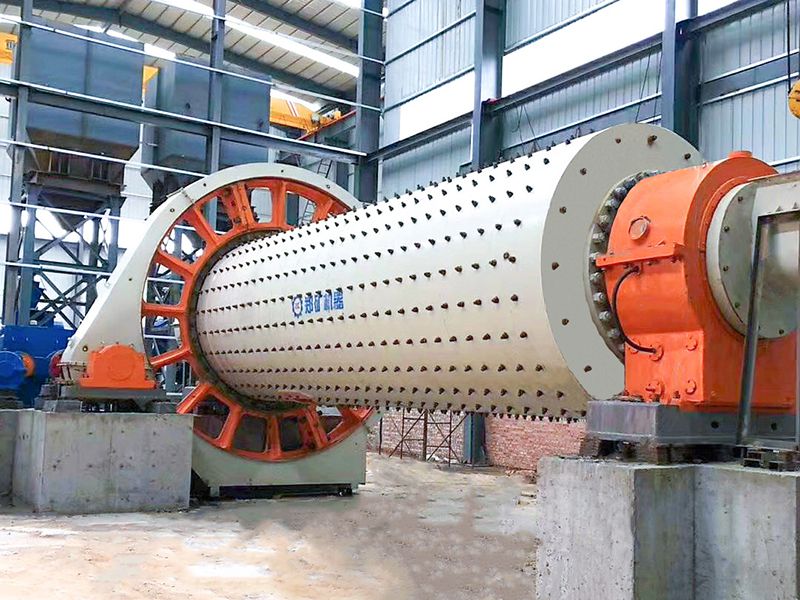
A raw mill prepares cement raw meal for the kiln system. Image: ZK MACHINE.
Raw Mill at a Glance
Before comparing suppliers, it helps to establish what the equipment is actually specified to do. The published specification for the ZK MACHINE raw mill covers a defined operating envelope rather than a single machine size.
| Parameter | Published specification |
|---|---|
| Equipment type | Raw mill (ball mill-based raw grinding system) |
| Model range | Φ1.2×4.5–Φ3.5×10 m, plus customized large-scale models |
| Capacity | 1.7–73 t/h |
| Grinding media load | 5–118 t |
| Product fineness | Adjustable |
| Primary industries | Cement plants; building materials; power; metallurgy; chemical industry |
| System integration | Can be integrated with separators, conveying and dust collection systems |
The specification also states uniform raw meal fineness, stable operation, high grinding efficiency and a relatively simple process configuration. Those four points are worth separating: the first is an output quality claim, the second and fourth are operating characteristics, and the third is a performance claim that should be tested against a specific raw material.
What the Raw Mill Does Inside a Cement Production Line
The raw mill performs the raw material grinding step. Its job is to convert crushed and pre-blended feed into raw meal of controlled, uniform fineness that can be handed to the kiln system. Product fineness is a set point, not an outcome — the specification lists adjustable product fineness as a design feature.
Seen as a stage in the line, the raw mill sits between the preparation stages upstream and the thermal stages downstream. How well it integrates with separators, conveying equipment and dust collection determines how consistent the material arriving at the next stage actually is. A mill that performs well in isolation but feeds an unstable stream downstream has not solved the plant's problem.
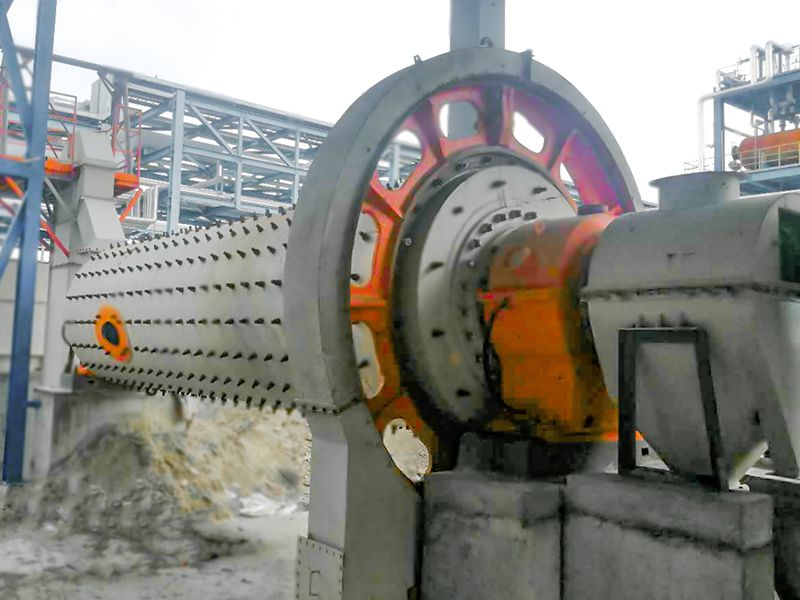
A raw mill integrated into a raw material grinding line. Image: ZK MACHINE.
Why Raw Meal Preparation Is a Threshold, Not a Detail
For a cement line, the uniformity of the raw meal entering the kiln system is a material operating variable. Raw meal that varies in fineness imposes a changing load on the calcination stage, because it changes how the material behaves thermally and chemically as it moves through the system. This is why the raw mill's stated characteristics — uniform raw meal fineness, adjustable product fineness, stable operation — are equipment-level properties whose value is realised downstream, not at the mill itself.
There is a second layer that buyers often underestimate: the grinding media load. Operating across a 5–118 t media range means the mill is rotating a substantial mass. That mass is what transmits energy into the material, and it is simultaneously the reason grinding circuits are power-intensive. Mechanical design, drive sizing and liner wear behaviour all key off this number, which is why capacity alone is an incomplete procurement criterion.
The procurement implication
Two raw mills with identical nominal capacity can offer very different operating outcomes if their fineness control, media load and circuit integration differ. Buyers evaluating raw mills should ask for the fineness control method, the media load at the quoted capacity, and whether the supply scope includes the separator, conveying and dust collection interfaces.
How Ball-Mill Raw Grinding Works
A ball mill is a type of grinder filled with grinding media, used to grind or blend materials for mineral dressing processes, paints, pyrotechnics and ceramics. In mineral processing, the function of the grinding step is to crush and grind ore in order to liberate the minerals; in cement raw meal preparation, the same size-reduction mechanism is used to bring a mixed raw feed to a kiln-ready state.
The physical principle is straightforward but demanding. Tumbling mills such as ball mills convert electrical energy into mechanical energy, generating many fracture opportunities in the process. The mill shell rotates, the grinding media charge tumbles, and the material is reduced through a combination of impact and attrition. Because that energy conversion is the core of the process, power consumption is an inherent characteristic of the technology rather than a by-product of poor design.
The configuration choices that define a raw mill
Within the ZK MACHINE ball mill series, the main configuration decisions are:
- Grinding method: dry grinding or wet grinding, selected according to material properties, the downstream process and required product characteristics.
- Discharge type: grate discharge or overflow discharge.
- Circuit arrangement: open-circuit or closed-circuit grinding, with the option to combine the mill with a roller press and separator into a grinding system.
- Operating envelope: feed size up to approximately 25 mm, with product size in the region of 0.07–0.4 mm, adjustable according to process requirements.
For a raw mill specifically, the published capacity range of 1.7–73 t/h and the media load range of 5–118 t define the practical band within which a plant's required throughput can be matched. Outside that band, customized large-scale models are the route rather than a standard catalogue size.
Shell, Liners and Grinding Media: Where Specifications Get Real
Three components carry most of the wear and most of the process risk. Each is selected from options rather than fixed.
| Component | Typical options | What drives the choice |
|---|---|---|
| Mill shell | Q235B/Q345B or equivalent structural steel (cement ball mill); high-quality carbon steel or alloy steel for strength, durability and long-term operation (ball mill series) | Strength, durability and reliable long-term operation |
| Liners | High-manganese steel, alloy steel, cast iron, rubber, ceramic | Processed material and operating conditions |
| Grinding media | Steel balls, ceramic balls and other wear-resistant media | Material hardness, feed size, target fineness, mill type, grinding method and contamination requirements |
The liner and media decisions are not interchangeable across projects. Grinding media should be selected based on material hardness, feed size, target fineness, mill type, grinding method and contamination requirements. In raw meal preparation, contamination control deserves emphasis: the media and liner materials are in continuous contact with the feed, so wear behaviour is not only a maintenance cost question — it is a chemistry question for everything that follows.
Where Raw Mills Are Applied
The raw mill is designed for use in cement raw meal grinding scenarios, with typical application scenarios including raw material grinding lines in cement plants. It is intended for the cement plant industry and is also applied in the building materials, power, metallurgy and chemical industries.
In the ZK MACHINE portfolio, the raw mill sits alongside several adjacent grinding products. Understanding the boundary between them matters when scoping a project, because the right answer changes with the material and the target product:
- Cement ball mill: model range Φ1.2×4.5–Φ4.6×10; capacity approximately 1.4–87 t/h; diameter 1.2–4.2 m; open-circuit or closed-circuit grinding; can be combined with a roller press and separator to form a grinding system.
- Air-swept coal mill: model range Φ1.2×2.4–Φ2.9×4.7 m; capacity 1.4–16 t/h; motor power 45–570 kW; typical coal fineness 85%+ passing 200 mesh; integrated grinding and drying for pulverized coal preparation in industrial kilns or boilers.
- Rod mill: model range Φ0.9×1.8–Φ3.6×5.4 m; capacity 0.62–250 t/h; main motor power 22–1600 kW; steel-rod grinding media supporting selective grinding and reduced over-grinding, suitable for coarse grinding duty.
- Ore ball mill: model range 1.2×2.0–6×12 m; capacity 0.5–930 t/h; product size approximately 0.074–0.4 mm; used in mineral processing plants, metal mines and non-metallic mineral processing.
- Ceramic ball mill and laboratory ball mill: smaller batch-oriented formats with ceramic lining options, used where contamination from the grinding system must be limited.
The general ball mill series covers a wider envelope still — capacity of approximately 0.8–230 t/h, feed size up to 25 mm, and applicability to limestone, clinker, coal, ores, slag, quartz, feldspar, gypsum, dolomite, barite, fly ash, magnesite, fluorite, zinc ore and gold ore.
Who Builds the Raw Mill Matters
Henan Zhengzhou Mining Machinery Co., Ltd. was established in 1956 and has over six decades of experience in mining machinery manufacturing. The company operates across five major fields — New Energy, New Material, Environmental Protection, Metallurgical & Chemical, and Building Materials — and specialises in process engineering, system design, equipment manufacturing and project implementation for the building materials, mining, metallurgy and environmental protection industries.
Manufacturing base
The manufacturing facility covers 80,000 m² and includes 8 modern workshops and 5 heavy-duty workshops, with over 60,000 m² of workshop space. Equipment includes boring and milling machines, gear hobbing machines, vertical lathes and heavy-duty cranes. Annual production capacity reaches 200 units. The company employs approximately 235 staff, and its R&D team consists of 10 doctors, 5 senior engineers and 16 intermediate engineers.
Quality systems and engineering credentials
ZK MACHINE holds ISO 9001 Quality Management System Certification, ISO 14001 Environmental Management System Certification, ISO 45001 Occupational Health and Safety Management System Certification, Integration Management System Certification, and Environmental Protection Engineering Professional Contracting Qualification. The company has participated in the drafting of more than 10 industry standards and holds more than 150 core patents and over 20 software copyrights.
Export footprint
Export accounts for 40% of the business. Products and process systems have been supplied to customers in more than 130 countries and regions, with a stated market presence that includes Saudi Arabia, the United Arab Emirates, Qatar, Bahrain, Kuwait, Oman, Iraq, Syria, Lebanon, Jordan, Israel, Yemen, Egypt, Libya, Algeria, Iran and Turkey; Russia, Kazakhstan and Armenia; Thailand, Indonesia and Malaysia; and Tanzania, Zambia and South Africa.
What this means for a raw mill buyer
A raw mill is not a catalogue purchase. The value of an integrated manufacturer lies in process engineering and system design capability — the ability to match mill configuration, media, liners, separator and dust collection into one scope. Buyers should verify whether the supplier can deliver the raw grinding system rather than the mill alone, and should ask which reference markets most closely resemble their own raw material and operating conditions.
Market Context: Grinding Equipment Demand Is Structurally Firm
Two data points frame the wider demand picture for grinding equipment.
- The global market for ball mills used in mining was valued at USD 4.94 billion in 2025 and is projected to reach USD 8.23 billion by 2034, according to Dataintelo's ball mill (mining) market report.
- In 2024, China was the leading exporter of machines to crush or grind stone, ores and minerals (HS 847420), at USD 1.38 billion, according to the Observatory of Economic Complexity, which draws on United Nations Comtrade and official customs data.
Two qualifications belong with those figures. First, the market valuation covers mining ball mills, not cement-specific raw mills — publicly attributable data segmented specifically to raw meal grinding remains limited, so it should not be read as a raw mill market size. Second, China's export position describes an aggregate machinery category, not the competitive standing of any single supplier. Neither figure substitutes for project-level due diligence.
On cost expectations, secondary industry media estimates in 2026 placed small production mills in the 1–5 t/h range at roughly USD 50,000–120,000. That band refers to small production mills generally, not to a raw mill matched to a cement line, and it should be treated as an order-of-magnitude reference rather than a quotation basis. Raw mill capacity in the ZK MACHINE range runs from 1.7 to 73 t/h, which sits well above that band for all but the smallest configurations.
Ball-Mill Raw Grinding vs Alternative Configurations: Where the Boundary Lies
A fair evaluation has to start with what ball mill-based raw grinding is designed for, and end with where it stops being the obvious answer.
The specification describes the raw mill as suitable for traditional cement raw grinding systems, with a relatively simple process configuration. That is a positioning statement, not a universal claim. Its applicability depends on the raw material, the target fineness and the existing line. Three boundaries should be established before committing:
- Material evaluation comes first. Material hardness, moisture, particle size, grindability and target fineness should be evaluated before equipment selection. A mill selected before this assessment is a mill selected on assumption.
- Feed preparation may be required. The suitable feed size depends on the material and the selected mill configuration. If the feed is too large, a crushing or pre-grinding stage may be required before the mill. In practice this means the raw mill is often one element of a multi-stage scope, not a standalone purchase.
- Energy is an inherent operating cost driver. Because tumbling mills convert electrical energy into mechanical comminution energy, power consumption is structural to the technology. This is the rationale for energy-saving ball mill designs within the series, and it is why specific power consumption per tonne of raw meal should be established on a project basis rather than taken from a general benchmark.
There is also a data limitation worth stating plainly: no public, standardised figure exists for raw meal grinding energy per tonne that can be applied across materials and circuits. Any supplier claiming a universal efficiency figure is presenting a project result as an industry constant. Buyers should request the basis of calculation for their specific material and target fineness.
Future Outlook
Three directions are visible from the equipment side.
First, energy efficiency is being addressed within the product family rather than as a retrofit. Energy saving ball mill types are already offered inside the ball mill series, which matters because the underlying energy conversion mechanism cannot be designed away — only improved around, through media selection, liner geometry, circuit design and separator integration.
Second, the boundary between “machine supply” and “system supply” is blurring. The raw mill is specified for integration with separators, conveying and dust collection systems, and ZK MACHINE integrates core equipment with crushing, screening, feeding, mixing, granulation, preheating, drying, cooling, conveying and dust collection into complete customized process solutions. For buyers, that shifts the evaluation question from “which mill” to “which process scope.”
Third, demand is geographically broadening. Export markets now span the Middle East, Southeast Asia, Africa, Russia and Central Asia, alongside established demand in China. For suppliers, that means designing for a wider range of raw materials and site conditions; for buyers, it means more comparable references exist than a decade ago.
Frequently Asked Questions
What is a raw mill and what is it used for?
A raw mill is a mill used for cement raw material grinding. It belongs to the ball mill-based raw grinding system category and is designed for cement raw meal grinding scenarios, typically the raw material grinding line of a cement plant. It is also applied in the building materials, power, metallurgy and chemical industries.
What capacity and fineness can a ball mill-based raw mill achieve?
The published raw mill specification covers a model range of Φ1.2×4.5 to Φ3.5×10 m, with capacity from 1.7 to 73 t/h, a grinding media load of 5 to 118 t, and adjustable product fineness. Customized large-scale models are available above that range.
What determines the capacity of a ball mill?
Ball mill capacity depends on factors such as material properties, feed size, required product fineness, moisture content, grinding method, mill size, grinding media and operating conditions. This is why a quoted capacity figure is only meaningful when it is tied to a defined material and target fineness.
What feed size can a ball mill handle, and what if the feed is larger?
The suitable feed size depends on the material and the selected mill configuration. For the ZK MACHINE ball mill series, feed size is up to approximately 25 mm, with product size in the region of 0.07–0.4 mm. If the feed is too large, a crushing or pre-grinding stage may be required before the ball mill.
What grinding media and liners are used, and how are they chosen?
Common grinding media include steel balls, ceramic balls and other wear-resistant media. Liners are commonly selected from high-manganese steel, alloy steel, cast iron, rubber or ceramic options. The appropriate combination depends on material hardness, feed size, target fineness, mill type, grinding method and contamination requirements.
Can a ball mill be used for limestone grinding?
Yes. Ball mills can be used for limestone grinding in applications requiring controlled particle size and stable operation. The mill configuration should be selected according to capacity and required fineness. The ZK MACHINE ball mill series is applicable to limestone, clinker and gypsum grinding.
Can a ball mill grind slag or industrial solid waste?
Yes. Ball mills can be used for grinding certain slags and industrial solid-waste-derived materials. Material hardness, moisture, particle size, grindability and target fineness should be evaluated before equipment selection.
Can a raw mill be integrated with separators, conveying and dust collection?
Yes. The raw mill can be integrated with separators, conveying and dust collection systems. In the broader ball mill series, open-circuit or closed-circuit arrangements are available, and the mill can be combined with a roller press and separator to form a grinding system.
Reference
Technical parameters and project scope across the ZK MACHINE equipment range are compiled in the company's general catalogue: 2025 General Catalogue (PDF).