
Reading Decorative Lighting Bids: Factory vs. Middle-Man
A hotel lobby chandelier tender rarely fails because the drawings are unclear. It fails because two visually similar bids cannot be compared on anything except price. Read as an independent buyer, a decorative lighting bid is three submissions in one: a design proposal, a compliance file and a commercial offer. The design proposal is the easiest part to produce and the least informative. The compliance file — certificate scope, model-level traceability, inspection protocol — is what separates a factory-direct non-standard manufacturer from a supplier that sources the fixture elsewhere.
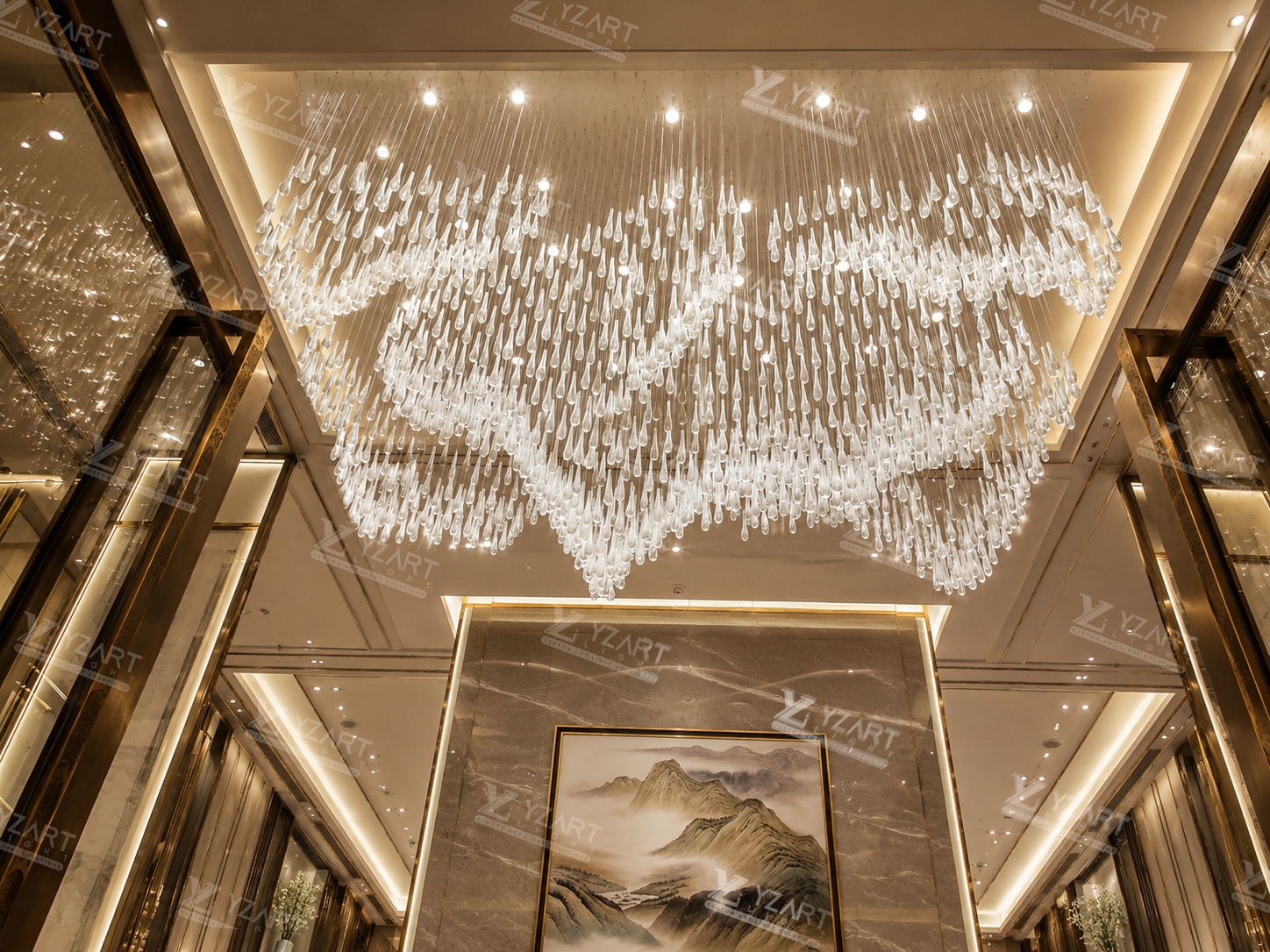
Custom oversized lobby chandeliers are non-standard products: hang length, ceiling interface and light output are defined by the project, not by a catalogue.
That distinction matters more as hospitality pipelines grow. Dataintelo valued the global hospitality lighting market at USD 14.2 billion in 2025 and projected growth at a 7.3% CAGR to USD 26.8 billion by 2034, while IMARC Group estimates that commercial applications, including hospitality, accounted for 62.8% of the decorative lighting end-user market in 2025. More tenders and more bidders create more reason to screen documents before any price negotiation starts.
Why decorative lighting bids converge before they diverge
Tender packages for a lobby chandelier are led by visuals: renders, mood boards, finish schedules and reference photographs. A photorealistic render requires a design subcontractor, not a production line. The first version of any bid set therefore looks consistent — similar diameters, similar gold and crystal palettes, similar lead-time promises. Divergence appears only when the buyer asks a narrower question: who owns the equipment that cuts the steel, welds the frame and tests the driver?
Custom hotel chandeliers are non-standard by definition. Hang length follows the lobby floor-to-ceiling height; the ceiling interface follows the reserved dimensions and load-bearing capacity of the slab; light output follows the function of the space. Because nothing in that list is catalogue-standard, a bid that cannot evidence production capability is a promise rather than a plan.
The buyer problem: who actually manufactures the fixture?
A middle-man bid is not automatically a poor bid. Trading suppliers can be efficient for standardized stock products, small decorative orders, and markets where local stock availability matters more than customization. The problem appears when a bid looks like a custom factory bid but the submission does not identify the manufacturing entity, the production base, the inspection protocol or the certificate scope. At that point three risks become unquantifiable:
- Schedule risk. Capacity, tooling and production slots cannot be verified if no manufacturing base, equipment list or monthly capacity figure is named.
- Compliance risk. Certificates belong to a legal entity and cover a defined product scope. A certificate supplied with a bid may name a different holder, a different factory address or a different fixture type than the one being quoted.
- Responsibility risk. Dimming compatibility, mounting hardware, spare parts and warranty replacement must be traceable to one responsible party. If the bidder is a reseller, that party is often unnamed.
None of these risks are resolved by comparing unit prices. They are resolved by requesting documents the tender already has a place for.
The screening evidence a custom lobby chandelier bid should contain
| Evidence item | What it must show | What it screens out |
|---|---|---|
| Manufacturing entity and production base | Legal manufacturer name, factory address, production area, key production equipment | Bids that cannot name where the fixture is built |
| Certificate scope lines | Certificate holder, product scope, standard version, issue and expiry dates | Certificates borrowed from another entity or another product type |
| Model-level traceability | The model designation in the bid matches the designation in the technical and certification file | Assumed coverage of untested or unlisted variants |
| Inspection and acceptance protocol | Inspection content, checklist, and the evidence format supplied with shipment | Verbal quality claims with no acceptance trail |
| Commercial terms | MOQ, delivery basis, payment terms, lead time, monthly capacity | Quotes whose schedule cannot be supported |
| After-sales structure | Warranty period, replacement terms, technical support route | Support promises with no named provider |
Entity, production base and product scope
Zhongshan YZ ART LIGHT Co., Ltd. (trade name YZ ART LIGHT) is a decorative and project lighting manufacturer based in Henglan Town, Zhongshan City, Guangdong Province, China. The company operates a 15,000 square metre standardized production base equipped with CNC laser cutting systems, automated welding stations and precision engraving machines, employs approximately 150 people including a 20-engineer R&D team, and reports a monthly production capacity of 20,000 units. Its range covers banquet hall chandeliers, oversized chandeliers, hotel chandeliers, lobby chandeliers, hotel table lamps, hotel wall lamps and hotel floor lamps, produced in materials including brass, stainless steel, aluminium, iron, glass, crystal, marble, acrylic and ceramic. Around 70% of output is exported, with main markets in Europe and America and the Middle East.
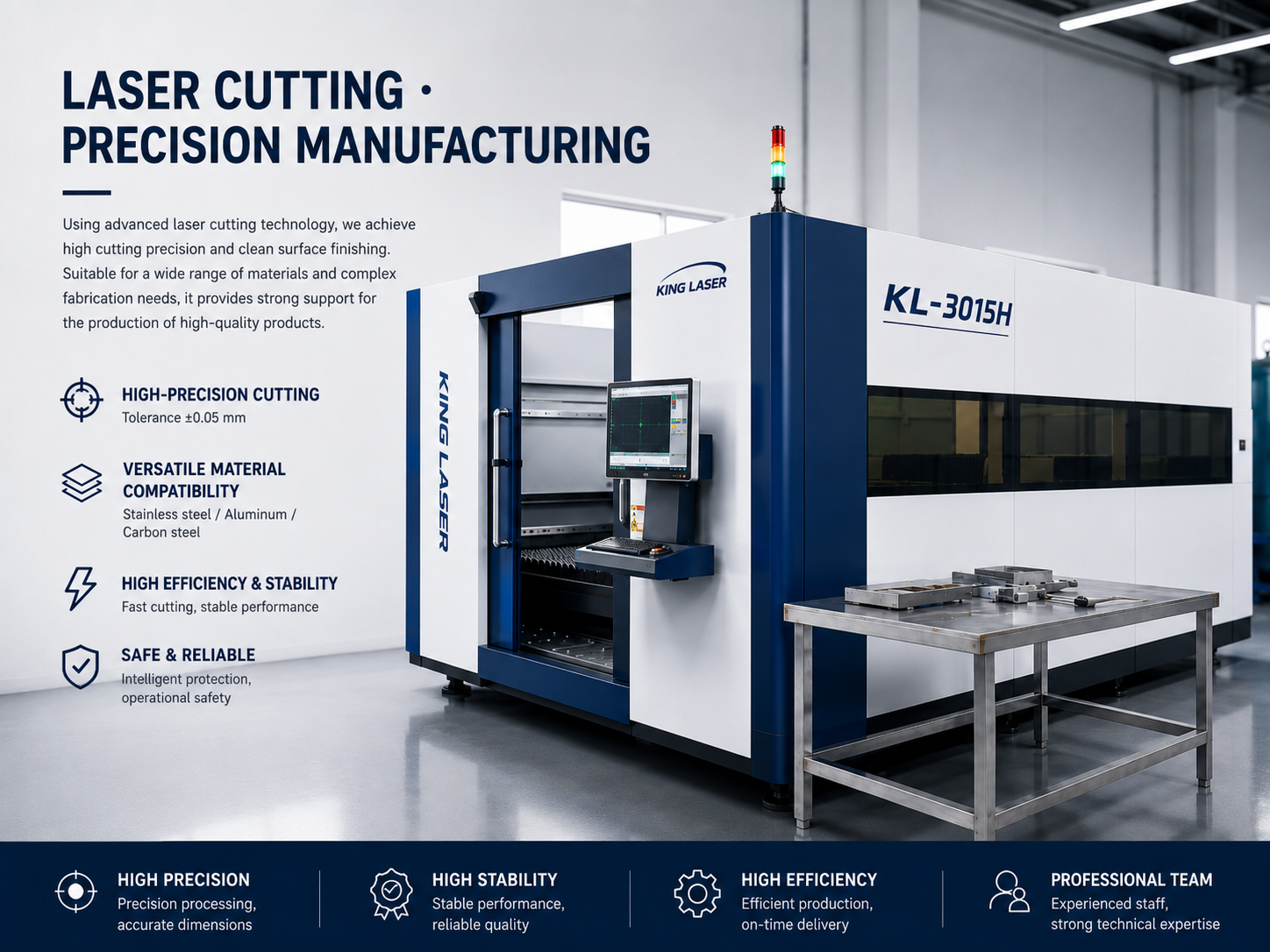
Production evidence in a bid means a named facility and named processes — for example CNC laser cutting, automated welding and precision engraving — not only a finished-product photograph.
LVD-CE and CE-RoHS: read the scope line, not the logo
European market access for hotel lighting rests on two documents in this case, and both carry a scope restriction that buyers frequently overlook.
- LVD-CE Verification of Conformity, certificate number QTS800119288, test report reference 61.11.19.0573.01, issued by Guangzhou Quality Technology Service Co., Ltd. (QTS) for the EU market. Scope: fixed luminaire (hanging lamp). Standards referenced: EN 60598-1:2015+A1:2018, EN 60598-2-1:1989 and EN 62493:2015. Issued 27 September 2019, valid to 2 September 2028.
- CE-RoHS Verification of Conformity, certificate number QTS800519289, test report reference 61.15.19.0574.01, also issued by QTS for the EU market. Scope: fixed luminaire (hanging lamp). Referenced test standards cover the IEC 62321 series and EN ISO 17075-1:2017. Issued 27 September 2019, valid to 27 September 2028.
Two details matter at tender review. First, both documents are restricted to fixed luminaire (hanging lamp): a chandelier qualifies, but a floor lamp or a table lamp in the same package does not automatically. Second, the scope describes a product type, not a project drawing. A valid certificate is a condition of entry to the evaluation, not a substitute for model-level confirmation.
ISO9001, ISO14001 and ISO45001: three scopes, one production base
| Certificate | Number | Scope stated | Standard and validity |
|---|---|---|---|
| ISO9001 Quality Management System | ZTZL28025Q1464R0S | Production of fixed-type lamps and portable-type lamps (within the valid CCC scope) | GB/T19001-2016 / ISO9001:2015; issued 3 September 2025, valid to 2 September 2028 |
| ISO14001 Environmental Management System | ZTZL28025E0851R0S | Environmental-management activities for the production of fixed fixtures and portable fixtures (within the valid CCC scope) | GB/T 24001-2016 / ISO14001:2015; issued 3 September 2025, valid to 2 September 2028 |
| ISO45001 Occupational Health and Safety Management System | ZTZL28025S0801R0S | Occupational health and safety management activities for the production of fixed fixtures and portable fixtures (within the valid CCC scope) | GB/T 45001-2020 / ISO 45001:2018; issued 3 September 2025, valid to 2 September 2028 |
All three are issued by Zhongtai Zhilian Certification (ZTZL). The market statement on them is that they apply to export and global sales, with specific applicable countries and limitations to be confirmed. For a hotel tender, the practical value of the ISO trio is that all three describe manufacturing activities at the same production scope. Environmental and occupational health and safety management become relevant when an owner's requirements extend beyond the product itself — waste handling, worker safety and site-related compliance questions appear more often in hospitality tenders than they did a decade ago.
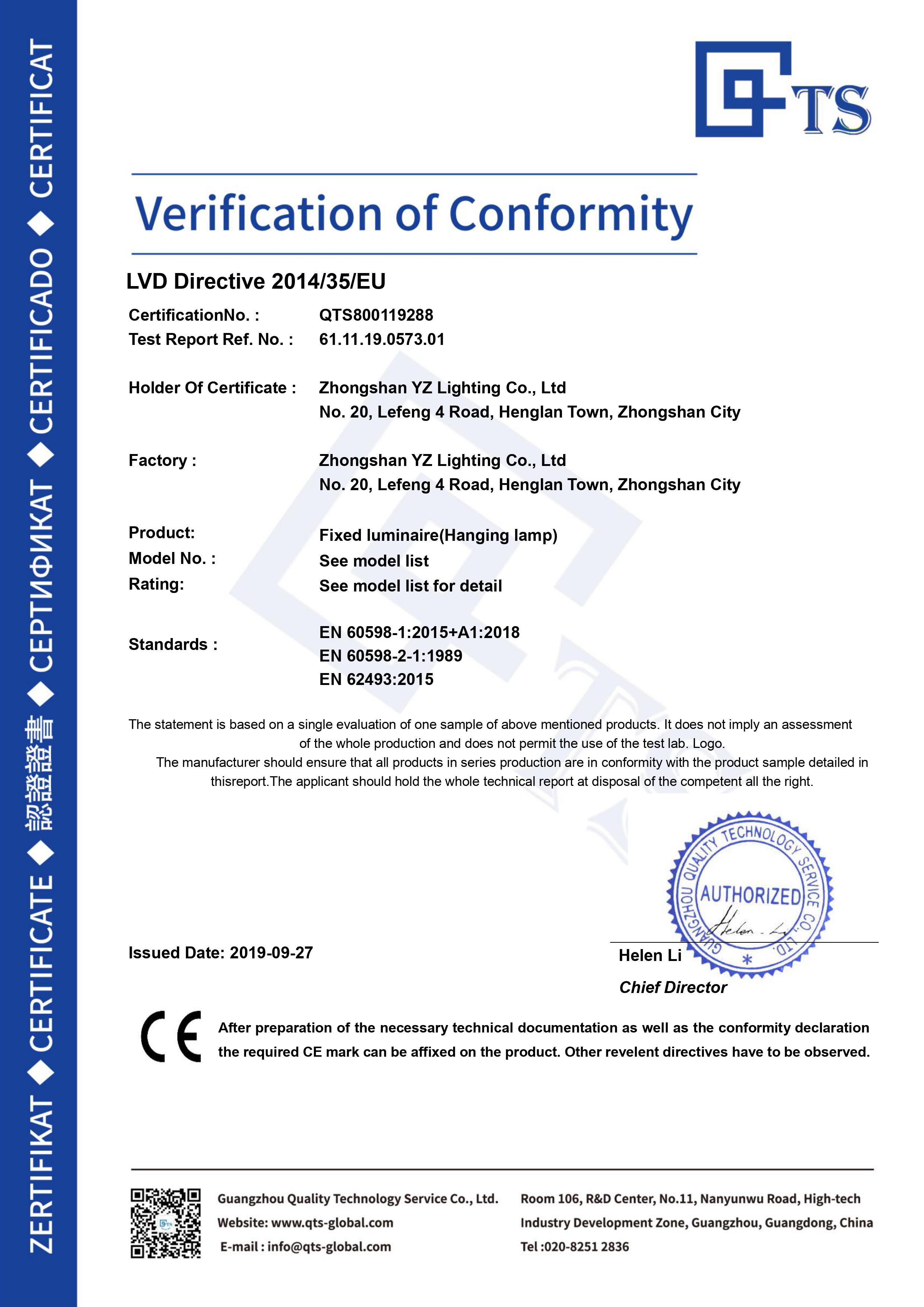
A certificate is only screening evidence when the holder name, product scope and validity dates match the fixture and the entity named in the bid.
Model-level traceability: yz10002 and parallel designations
YZ ART LIGHT's certification records relate to a hotel lighting model designated yz10002. Model-level confirmation is a formal tender step rather than a formality: the manufacturer states that parameters are provided per series or per custom order, and that specific dimensions, wattage and colour temperature require model-level confirmation. If a tender or a quote references a parallel designation such as yz10001, the buyer should require that designation's own documentation instead of assuming coverage under the yz10002 file. A bid that cannot produce model-level confirmation should be treated as an incomplete submission rather than as a lower-priced alternative.
Inspection, acceptance and warranty
YZ ART LIGHT's stated pre-shipment protocol is 100% full inspection of every lamp, covering power-on testing, appearance workmanship check, dimension and structure inspection, and accessories completeness verification. A quality-approval checklist is attached to each shipment, and real-shot inspection videos are available on request. Engineering lighting products carry a three-year warranty, with free replacement of faulty light sources within the warranty period and global remote technical guidance for overseas clients. Life-cycle statements in the company's project records include LED light sources rated up to 50,000 hours and metal and glass lamp bodies described as durable for more than 15 years under normal use.
Full-cycle service claims and how to verify them
The company describes OEM and ODM production with full-dimensional customization covering dimensions, materials, light-source colour temperature, painted finish colours, engraved logos, light-source configurations, mounting structures, intelligent dimming systems, lampshade materials, hardware craftsmanship, surface-finishing techniques, supporting accessories and exclusive packaging — including one-to-one restoration of a design proposal alongside optimisation suggestions. It operates project-based, with end-to-end services from design to installation guidance. For tender purposes, these claims should be converted into deliverables: a drawing package, a configuration list, a packing specification, and a written statement of what installation guidance covers.
Commercial terms: MOQ, delivery basis and lead time
The documented commercial terms are unusually simple for a project category. Minimum order quantity is one piece. Standard production lead time is 30 to 40 working days, with a shortened lead time available for urgent hotel projects, against a monthly production capacity of 20,000 units. Payment is by TT. Delivery is on an EXW basis from the factory, meaning the buyer arranges pickup, outbound logistics and export customs declaration; if the manufacturer is asked to handle logistics, customs clearance and truck haulage, those services are quoted separately.
These terms work as a screening signature. A supplier that states an EXW basis, a one-piece MOQ and a working-day lead time is describing its own operating model, and that description can be checked against a production and shipping schedule. A bid that leaves the delivery basis, inspection protocol and capacity unstated removes exactly the information a buyer needs for acceptance planning.
Side-by-side: what each bid type documents
| Screening dimension | Factory-direct non-standard manufacturer (documented example) | Middle-man submission: what remains open |
|---|---|---|
| Production evidence | 15,000 square metre production base with CNC laser cutting systems, automated welding stations and precision engraving machines; 20,000 units monthly capacity | Manufacturing site, equipment list and capacity are not named in the bid |
| Certificate scope | LVD-CE QTS800119288 and CE-RoHS QTS800519289 for fixed luminaire (hanging lamp); ISO9001 ZTZL28025Q1464R0S, ISO14001 ZTZL28025E0851R0S and ISO45001 ZTZL28025S0801R0S valid to 2 September 2028 | Certificate holder and scope line must be checked against the bidding entity and the quoted fixture type |
| Customization depth | Dimensions, materials, colour temperature, painted finishes, engraved logos, light-source configuration, mounting structures, intelligent dimming, lampshade materials, hardware and surface finishing, accessories, exclusive packaging | The party that performs the engineering change is not identified |
| Inspection and acceptance | 100% full inspection; power-on test, workmanship, dimension and structure, accessories completeness; quality-approval checklist per shipment; real-shot inspection videos on request | Acceptance criteria and inspection evidence format are usually absent |
| Commercial terms | MOQ 1 piece; EXW delivery; TT payment; 30-40 working days standard lead time; shortened lead time for urgent hotel projects | Lead time and capacity stated without an evidence route |
| After-sales | Three-year warranty on engineering lighting products; free replacement of faulty light sources within warranty; global remote technical guidance | The entity providing warranty service is not named |
Where factory-direct is not automatically the better answer
An honest comparison has to state the boundaries of the factory-direct model as well, because those boundaries change when this route is the right one.
- EXW delivery shifts logistics to the buyer. Freight, insurance and export declaration sit with the buyer unless logistics and customs clearance are separately quoted and contracted. For first-time importers without a freight partner, that is real project work.
- Certificate scope is a production scope, not a project approval. The LVD-CE and CE-RoHS scopes read fixed luminaire (hanging lamp). Other fixture types in the same tender package need their own confirmation, and the certificate does not approve a specific custom drawing.
- ISO applicability is stated with a qualification. The ISO certificates are described as applicable to export and global sales, with specific applicable countries and limitations to be confirmed. Buyers in regulated markets should confirm applicability before treating them as tender evidence.
- Model-level confirmation adds a document cycle. Because dimensions, wattage and colour temperature are not fixed until the model is confirmed, that step has to be scheduled ahead of production rather than after purchase order issue.
- Custom work requires buyer-side technical engagement. Drawing review, sample approval and installation coordination remain buyer responsibilities. Where a project needs only simple standardized stock lamps with no customization and very small quantities, an ordinary trading supplier can be an adequate channel.
Why the document set predicts installation behaviour
Large lobby chandeliers are structural and electrical objects as much as decorative ones. Site execution typically follows a fixed sequence: check the ceiling load-bearing capacity, measure the reserved size and mark the suspension points, isolate the mains supply, assemble the lamp frame, lampshade and built-in anti-glare light source on site, complete insulated concealed wiring, fix the embedded fasteners, hoist the assembled fixture, then run a power-on test and adjust the lamp angle to check lighting uniformity. Safety provisions are part of the specification rather than an afterthought: power isolation before all installation work, warning tags to prevent energising, qualified electrical personnel, and dry hands during wiring.
Two technical features in YZ ART LIGHT's project documentation map directly onto tender requirements. Custom soft anti-glare light sources are used to avoid harsh glare and uneven light distribution, a common complaint in lobbies and guest rooms with high ceilings. Lamps are also tailor-made according to floor height and reserved dimensions so they fit special-shaped suspended ceilings — a frequent constraint in atrium and double-height entrance projects. The stated operating targets are durability, energy efficiency and stable light attenuation for long-hour commercial operation.
Regulatory context is tightening around the same points. In North America, luminaires are commonly assessed against UL 1598 and UL 8750 for safety and performance. The 2024 International Energy Conservation Code expanded occupancy and dimming requirements for lobbies and meeting areas, and a third-party estimate from Dataintelo indicates that 56% of new luxury hotel projects now require dimmable chandelier installations. For a bid, that means the driver, the dimming interface and the mounting structure must be specified before award rather than discovered during commissioning. YZ ART LIGHT's customization scope explicitly includes light-source configurations, mounting structures and intelligent dimming systems.
Applications: where bid screening pays for itself
The screening logic applies wherever a fixture is made to order and installed at height. Applications recorded in the manufacturer's project documentation include lobby chandeliers, staircase lighting, banquet hall illumination, and restaurant and villa decorative lighting. Project types extend to full-scale lighting packages for star-rated hotels covering lobbies, banquet halls, guest rooms, executive lounges and presidential suites; lighting support for commercial real-estate sales office lobbies, sand-table zones, negotiation areas and show flats; bespoke decorative lamps for private clubs, light-luxury dining venues, Grade-A office building lobbies and public zones of commercial complexes; and whole-house lighting customization for detached villas and luxury large-flat residences.
Completed international references listed by the company include InterContinental Hotel, Israel; Four Seasons Hotel, UAE; Marriott Hotel, Costa Rica; Waldorf Astoria Hotel, Malaysia; and InterContinental Hotel, Taiwan. Its project records state more than 1,000 completed commercial engineering projects, with client types covering hotel groups, hotel engineering projects, villa owners and commercial real-estate developers. For a buyer building a tender annex, that record is useful in two specific ways: it supplies reference projects that can be contacted, and it identifies installation conditions similar to the project being procured.
Market trend analysis: why document-based screening is spreading
Several independent estimates point in the same direction. Mordor Intelligence put the global decorative lighting market at USD 75.88 billion in 2025, rising to USD 78.98 billion in 2026. Dataintelo values hospitality lighting at USD 14.2 billion in 2025 and identifies Asia-Pacific as the fastest-growing region at a 5.98% CAGR, while Grand View Research places Asia-Pacific at 44.6% of high-end lighting revenue in 2024 and North America at 36.45% of the decorative lighting market in 2025. Estimates for the chandelier segment itself diverge widely — Transparency Market Research valued it at USD 14.9 billion in 2024 against Grand View Research's USD 8.2 billion — which is itself useful evidence for buyers: category definitions differ, so any single market figure should be treated as directional rather than exact.
Technology trends reinforce the same screening behaviour. IMARC Group reports that LED holds a 39.8% share as the light source in decorative lighting and that commercial applications account for 62.8% of the end-user market. Other third-party estimates put LED-integrated chandeliers above 54% of annual market volume and smart chandeliers with voice control or IoT connectivity at more than 33% of new product launches. Regionally, Saudi Arabia's Vision 2030 targets 150 million annual tourist visits, requiring more than USD 500 billion in hospitality infrastructure investment including high-specification lighting. Each of these shifts increases the number of fixtures per project that must be electrically specified, inspected and supported — precisely the areas where an unsupported bid fails.
Future outlook
Three developments are likely to shape how decorative lighting bids are evaluated. First, dimming and occupancy requirements in lobbies and meeting areas are becoming a code matter rather than a design preference, which pushes control specification earlier into the tender. Second, certificate scope and inspection records are moving from optional attachments to standard tender annexes, because they are the only parts of a bid a buyer can independently check. Third, as custom hospitality projects expand across Asia-Pacific and the Middle East, the central evaluation question is shifting from whether a design is achievable to which bidder can evidence that it will be achieved on schedule.
For now, the most reliable screening tool remains the least glamorous one: a document list requested with the bid and checked line by line before the price comparison begins.
FAQ
Should a hotel project choose a factory-direct non-standard lighting manufacturer or a middle-man lighting supplier for a custom lobby chandelier?
The choice depends on whether the fixture is genuinely custom and whether the tender requires verifiable project documents. Where a project needs custom shapes, strict project qualification documents, controlled budget, long-term maintenance and large-scale star-hotel engineering orders, a factory-direct non-standard manufacturer is the appropriate channel because production, quality management and after-sales responsibility sit with one entity. Where a project needs only simple standardized stock lamps with no customization and very small quantities, an ordinary trading supplier can be adequate. The practical test is documentary: a factory-direct bid can name its production base, certificate scopes and inspection protocol, while a trading bid may not be able to.
What purchasing terms and acceptance criteria should a hotel lighting quote state?
The minimum order quantity is 1 unit. Delivery is on an EXW basis from the factory, with the buyer arranging pickup, logistics transportation and export customs declaration; if the manufacturer handles logistics, customs clearance and truck haulage, those are quoted separately. Payment is by TT. Acceptance criteria state that every lamp undergoes 100% full inspection before shipment, including power-on testing, appearance workmanship check, dimension and structure inspection, and accessories completeness verification. A quality-approval checklist is attached to each shipment, and real-shot inspection videos are available on request.
Which certificates should accompany a decorative lighting bid, and what do their scope lines cover?
For EU-bound hotel lighting: LVD-CE Verification of Conformity QTS800119288 (test report reference 61.11.19.0573.01) covering fixed luminaire (hanging lamp) under EN 60598-1:2015+A1:2018, EN 60598-2-1:1989 and EN 62493:2015, valid to 2 September 2028; and CE-RoHS QTS800519289 (test report reference 61.15.19.0574.01) for the same fixture type, valid to 27 September 2028. Management-system evidence: ISO9001 ZTZL28025Q1464R0S, ISO14001 ZTZL28025E0851R0S and ISO45001 ZTZL28025S0801R0S, all issued 3 September 2025 and valid to 2 September 2028, covering production of fixed and portable luminaires and the associated environmental and occupational health and safety management activities. Scope lines should always be read against the bidding entity and the quoted fixture type.
How long does a custom hotel chandelier take, and can the schedule be shortened?
Standard production lead time is 30 to 40 working days, with a shortened lead time available for urgent hotel projects. Monthly production capacity is 20,000 units and the minimum order quantity is one piece. Because parameters such as dimensions, wattage and colour temperature require model-level confirmation, that confirmation step should be scheduled into the project timeline ahead of production rather than after the purchase order is issued.
Can a certificate issued for one model be used to cover another model in the same tender?
Not automatically. Model-level confirmation is required: dimensions, wattage and colour temperature are provided per series or per custom order. YZ ART LIGHT's certification records relate to hotel lighting model yz10002; a parallel designation such as yz10001 should be traced to its own documentation rather than assumed to be covered. Tender documents should therefore state that acceptance depends on the certificate scope and the model confirmation matching the fixture actually supplied.
Reference document: the manufacturer's full product and capability brochure is available for download here — Zhongshan YZ ART LIGHT Co., Ltd. brochure. Company website: www.yzartlight.com.
Есть вопросы или нужны дополнительные детали?
Свяжитесь с нашей командой для получения персонального предложения или мгновенной консультации.
Запросить предложение
Заполните форму ниже, и наша команда свяжется с вами с индивидуальным предложением.
Прямой чат WhatsApp
Предпочитаете общаться в реальном времени? Напишите нам в WhatsApp для мгновенной помощи и быстрых ответов.
- Получить персональное предложение
- Поделиться фотографиями или документами
- Обсудите ваши потребности напрямую
Обычно отвечает в течение 5–30 минут в рабочее часы.