
Reading Die Casting Parts Certificates: AS9100 CN059921, ISO 9001 Scope and RoHS 2.0
Compliance documentation now arrives before samples do. When a buyer requests a quotation for die casting parts, the reply usually contains a certificate pack alongside the price: an aerospace quality management certificate, an ISO 9001 certificate and a RoHS document. Each of those documents describes a system, a scope and a set of covered products — and it is the scope statement, not the issuing logo, that determines whether a certificate is actually relevant to the part being purchased.
This industry reference explains how to read the three certificates most frequently requested from die casting suppliers, using a specific and verifiable example. The AS9100 certificate in that pack is numbered CN059921 and was issued by Bureau Veritas. The ISO 9001 certification is scoped to hardware parts production and explicitly includes inspection processes. The RoHS document is certificate BTL20250603446, issued against RoHS Directive (EU) 2015/863, and its stated effect is that it permits the CE mark. Product coverage for both the AS9100 certification and the RoHS certificate extends to die casting and CNC machining products.
The supplier used as the working example is SUNPREC HARDWARE CO., LTD (SUNPREC), a Dongguan, China-based metal parts manufacturer established in 2020 that produces CNC machined, die cast and extruded components — including aluminum, zinc and magnesium alloy die casting — and exports primarily to EU and USA markets.
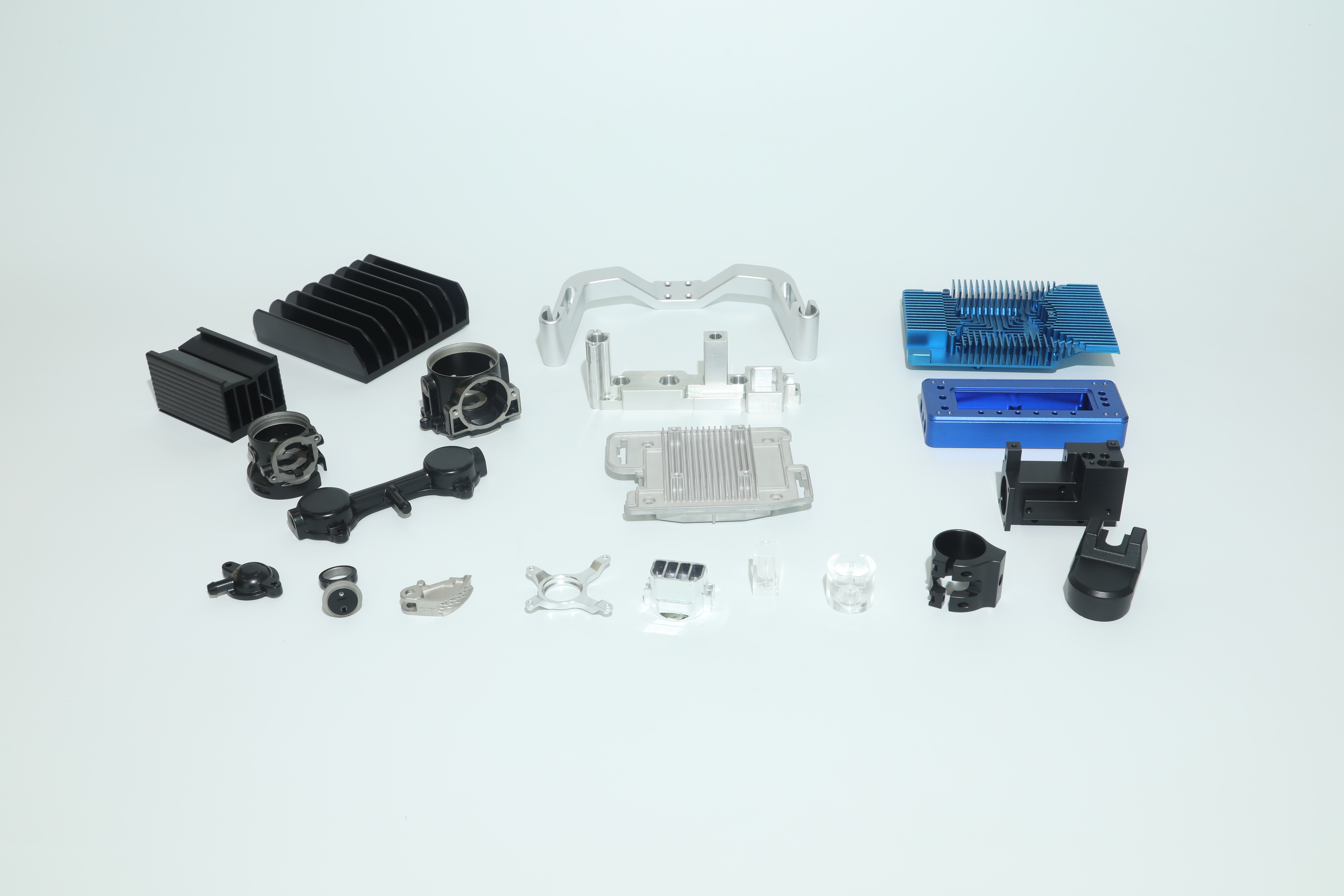
A certificate pack describes the system behind the part, not the part itself. Image: SUNPREC HARDWARE CO., LTD
A Certificate Describes a System, Not a Part
Die casting is a process family rather than a single product. A supplier may cast zinc alloy hardware fitting die casting parts on one line, aluminum alloy equipment housing die casting parts on another, and magnesium alloy structural die casting parts on a third, then machine a portion of those castings on multi-axis CNC centers. One quality management certificate may cover all of that, or only part of it. The document itself does not say which until the scope sentence is read.
Scope gaps tend to appear at boundaries. A buyer orders surface plated die casting parts and assumes the plating operation sits inside the certified scope. Another orders powder coated die casting parts and assumes the coating chemistry is captured by a RoHS document issued for a different product family. Neither assumption can be verified from a certificate header. The information exists, but only inside the scope, coverage and validity wording of the document.
What Each Certificate in the Pack Actually Covers
AS9100 certificate CN059921, issued by Bureau Veritas
AS9100 is an aerospace quality management system standard, widely applied across aviation, space and related supply chains. In this certificate pack, the document carries certificate number CN059921 and names Bureau Veritas as the issuing body.
The coverage statement is the operationally useful part: AS9100 certification CN059921 applies to both die casting and CNC machining products. For a buyer of machined castings, that means the casting operation and the downstream machining operation fall inside one certified quality system rather than under two disconnected approvals. A motor housing die casting part that is later machined to a tight tolerance is produced inside the same audited system from cast geometry to finished part.
The boundary is worth stating plainly. AS9100 is not an automotive certification. IATF 16949:2016 remains the mandatory quality management system standard for die casting suppliers serving the automotive industry, so aerospace-oriented certification does not substitute for it.
ISO 9001 — hardware parts production, including inspection processes
The ISO 9001 certification in this pack is scoped to hardware parts production, and the scope explicitly includes inspection processes. That wording carries more information than it first appears to. It indicates that inspection activity is inside the audited management system rather than performed outside the certified boundary.
ISO 9001 is a general quality management standard and does not by itself designate an industry-specific threshold. It is the baseline most industrial buyers require before capability discussions begin. The practical caution is different: a general certificate does not automatically extend to every process a factory runs. Buyers evaluating precision die casting parts, thin wall die casting parts or high hardness die casting parts should confirm that the scope sentence names the process being purchased, not only the plant that performs it.
RoHS Directive (EU) 2015/863 — certificate BTL20250603446 and the CE mark
The RoHS document is different in kind from the other two. RoHS Directive (EU) 2015/863 is a substance restriction requirement, not a quality management standard. Certificate BTL20250603446 in this pack is issued against that directive, and its stated effect is that it permits the CE mark. Coverage extends to both die casting and CNC machining products.
For buyers placing electronic die casting enclosures, communication device die casting parts or household appliance die casting parts on the EU market, the RoHS certificate is the market-access document in the pack. It does not certify mechanical performance, dimensional accuracy or surface finish quality — those questions are answered by inspection records rather than by a substance-restriction certificate.
| Certificate | Issuer / reference | Product coverage in this pack | What it does not establish |
|---|---|---|---|
| AS9100 | CN059921, issued by Bureau Veritas | Die casting and CNC machining products | Does not replace IATF 16949:2016 for automotive programs; does not certify a specific drawing or tolerance |
| ISO 9001 | Scope: hardware parts production, including inspection processes | Hardware parts production and inspection processes | Does not define tolerance capability, alloy limits or lot-level conformity |
| RoHS Directive (EU) 2015/863 | Certificate BTL20250603446; permits the CE mark | Die casting and CNC machining products | Does not certify mechanical properties, dimensional accuracy or surface finish |
The Four-Point Reading Routine Before Accepting a Compliance Claim
Reading a certificate against four checkpoints removes most of the ambiguity that surrounds compliance claims in die casting sourcing. The routine is short enough to apply to every document in a supplier's pack.
| Checkpoint | What to verify | Why it matters in die casting sourcing |
|---|---|---|
| 1. Scope | Does the written scope name the process (die casting, CNC machining) and the product family being purchased? | A plant certificate does not automatically cover a secondary operation such as coating, plating or final inspection |
| 2. Issuer | Is the issuing body identified on the document? For AS9100 in this pack, the issuer is Bureau Veritas. | An unattributed compliance claim cannot be confirmed or traced |
| 3. Issue date | Is the certificate current, and does it fall inside the valid surveillance cycle? | Certificates are issued for defined periods and are re-verified on renewal cycles |
| 4. Product coverage | Does the coverage statement include the alloys and processes being ordered? | Aluminum, zinc and magnesium die casting parts may be covered jointly or only partially |
A practical fifth step is to connect the certificate to the order. Certificates describe systems; inspection documents describe lots. A supplier working under a standardized ISO quality management framework should be able to produce an FAI Report, Material Certificate, COC and Dimensional Inspection Report for the parts actually shipped, not only the certificate that qualified the plant.
How the Certificate Set Connects to Production and Inspection
Certificates become meaningful when a supplier can link them to daily operations. At SUNPREC, quality control activities are regulated under a standardized ISO quality management system framework, and three core inspection procedures are executed: incoming material screening during receiving, continuous quality monitoring amid production, and thorough final testing before shipment.
The record-keeping structure supports the same claim. Complete standardized process files and unified inspection record management protocols record processing parameters and test data in detail, so production and inspection records remain fully traceable for all orders. Quality control also includes first-article inspection for every new batch — the point at which a certificate stops being a document and becomes a batch-level control.
The measurement hardware behind those procedures includes a HEXAGON CMM, 2.5D optical comparators and TRIMOS high-precision height gauges, supported by micrometers, height gauges and calipers. The inspection workflow runs through IQC, IPQC, FQC and OQC stages, and the resulting documentation set includes the FAI Report, Material Certificate, COC and Dimensional Inspection Report.
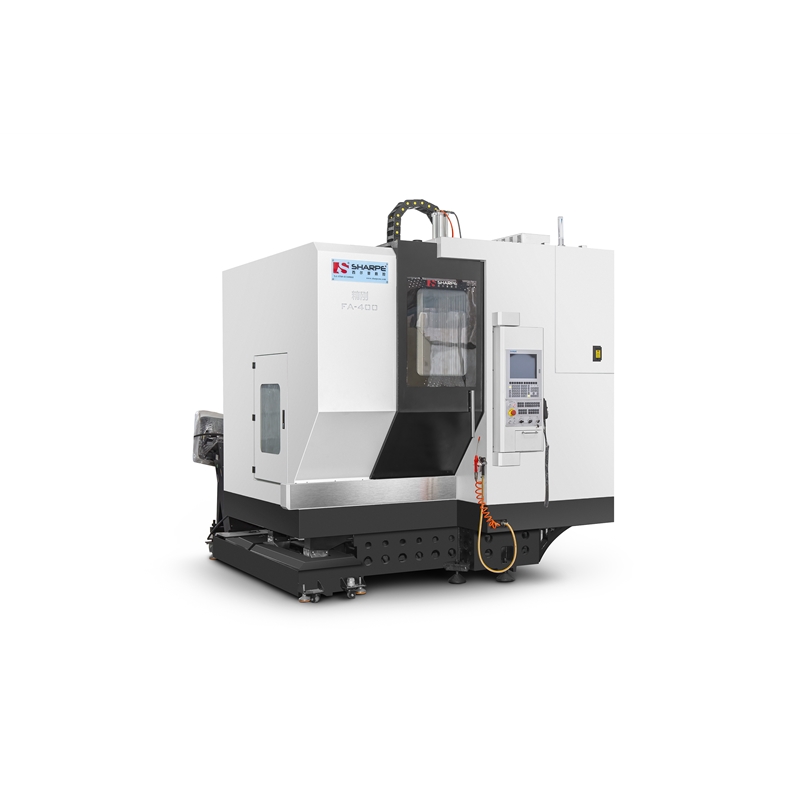
Secondary machining of cast parts remains inside the same certified scope. Image: SUNPREC HARDWARE CO., LTD
On the machining side, the majority of the CNC machining centers are FANUC machines with a machine tolerance of 0.005mm, and the shop runs 3-axis, 4-axis and 5-axis CNC. For cast parts requiring secondary machining — heat sink die casting parts, instrument housing die casting parts, structural die casting parts — that is where the AS9100 and ISO 9001 scopes become operational rather than documentary. Material processing covers aluminum, stainless steel, carbon steel, brass, copper, titanium, POM, ABS, nylon and PEEK, and one-stop surface finishing includes anodizing, hard anodizing, powder coating and sandblasting.
Commercial and capacity data complete the picture for buyers planning repeat programs. SUNPREC operates a 3,500 m² factory with 200 employees, including a 10-engineer R&D team, and a monthly production capacity of 4,200,000 units that supports high-volume production. The minimum order quantity is 10 units, and the typical production lead time is 21–30 days. Comparison data indicates that mass order unit cost from an integrated manufacturer can run 10%–15% lower than from scattered small workshops, with the exact quotation depending on part complexity, material, process and order quantity.
Matching Certificates to the Parts You Actually Buy
The certificate that matters depends on the product type and the destination market. The table below maps common die casting product categories to the document that carries the relevant evidence.
| Product category | Certificate to check | Reason |
|---|---|---|
| Aerospace-adjacent machined castings, precision die casting parts | AS9100 certificate CN059921 (die casting and CNC machining products) plus ISO 9001 | Confirms one certified quality system spans casting and machining |
| Electronic die casting enclosure, communication device die casting parts for the EU market | RoHS certificate BTL20250603446 (permits the CE mark) plus ISO 9001 | Substance restriction is the market-access requirement |
| Motor housing, equipment housing and heat sink die casting parts | ISO 9001 with inspection scope, plus order-level FAI Report and Dimensional Inspection Report | Dimensional conformity is lot-specific and cannot be certified in advance |
| Automotive die casting parts | IATF 16949:2016, in addition to ISO 9001 | IATF 16949:2016 is the mandatory QMS standard for automotive die casting suppliers |
| Lightweight, thin wall and high hardness die casting parts | ISO 9001 process control plus CMM-based dimensional data | Alloy and tooling behaviour must be validated per part, not per certificate |
No certificate covers a part that has not been validated. For a new program involving thin wall die casting parts, custom machined die casting parts or lightweight die casting parts, the certificate functions as an entry filter, while sample validation and first-article inspection carry the actual decision.
Market Trend: Compliance Evidence Is Moving Earlier in the Sourcing Cycle
Two structural shifts are turning certificate reading into a recurring task rather than a one-time onboarding step.
The first is scale and material mix. The global die casting market was valued at USD 93.56 billion in 2025, according to Fortune Business Insights. Aluminum die casting accounted for 74.78% of that market by raw material in the same year, based on Mordor Intelligence data, and within aluminum die casting the transportation segment held the largest revenue share, exceeding 64.0% in 2025, according to Grand View Research.
The second is diversification into lighter and more electronics-oriented applications. The global magnesium casting market is valued at USD 1.42 billion in 2026 and is projected to reach USD 2.96 billion by 2035, a CAGR of 8.9%, based on Business Research Insights. On the electronics side, zinc die casting is noted as a fast-growing segment because of its cost-effectiveness and EMI shielding properties for consumer electronics, according to Market Research Future.
For procurement teams, the consequence is straightforward. A supplier's certificate register has to be re-read whenever the product mix changes — adding a magnesium alloy line, introducing a new coating chemistry, or quoting an enclosure for a device that will carry the CE mark. Automotive remains the segment with the tightest documentation requirement, since IATF 16949:2016 is the mandatory quality management system standard for die casting suppliers serving that industry.
Certificate-Led Evaluation Compared with Traditional Price-Led Sourcing
Traditional sourcing practice compares suppliers on unit price and sample quality first, then requests compliance documents at contract stage. That sequence still works for simple, unregulated parts sourced domestically. It becomes fragile when a part carries a market-access requirement, when the program runs for several years, or when the buyer's own customer audits the supply chain.
| Dimension | Price-led evaluation | Certificate-scoped evaluation |
|---|---|---|
| First filter | Quoted unit price | Scope, issuer, date and product coverage |
| Evidence used | Sample inspection, reference orders | Certificates plus per-order FAI, material certificate, COC and dimensional report |
| Risk profile | Compliance gaps surface late, often at audit or customs stage | Scope mismatches are identified before the purchase order |
| Review timing | After quotation comparison | Before quotation comparison |
Limits that buyers should accept before relying on paperwork
A certificate does not describe a part. AS9100 certificate CN059921 covers die casting and CNC machining products within its stated scope; it does not certify that a specific drawing will be produced to a specific tolerance. Capability statements — for example FANUC CNC machining centers running at a machine tolerance of 0.005mm — describe equipment and are confirmed through measurement, not through certification.
Coverage is fixed to what the document names. RoHS certificate BTL20250603446 covers the die casting and CNC machining products defined in that document. A newly introduced alloy, a new plating chemistry or an additional coating process is not automatically inside that coverage and should be confirmed separately.
Standards serve different markets. AS9100 certification does not stand in for IATF 16949:2016 where an automotive customer requires the automotive standard, and an ISO 9001 scope naming inspection processes still does not define the measurement capability available for a particular feature.
Supplier maturity is a separate variable. SUNPREC was established in 2020 and operates a 3,500 m² facility, which means its operating history is shorter than that of the oldest die casting groups. For multi-year programs, buyers typically pair certificate review with a process audit and sample validation rather than relying on documents alone.
Future Outlook
Three developments are likely to shape how certificate packs are handled over the next several years.
Renewal discipline. Certificates are issued for defined periods and re-verified on surveillance cycles. Buyers managing long programs increasingly maintain a certificate register with issue dates so that a lapsed document does not surface during a customer audit rather than during internal review.
Scope-change tracking. When a supplier adds a process — a new finishing line, a magnesium capability, an expanded inspection lab — the scope statement is the part of the certificate that changes. Re-reading scope at the first order in a new product family is a low-cost control.
Market-access documentation for electronics. As zinc and magnesium content grows in consumer electronics enclosures and lightweight structures, RoHS and CE-related documentation will be requested earlier in the sourcing cycle, alongside dimensional and material evidence.
For die casting parts programs with multi-year horizons, the practical long-term control is a documented re-verification routine covering scope, issuer, issue date and product coverage, refreshed whenever the part mix or the destination market changes.

Long-term supply continuity depends on both documentation discipline and production capacity. Image: SUNPREC HARDWARE CO., LTD
Frequently Asked Questions
What does AS9100 certificate CN059921 cover?
AS9100 certificate CN059921 was issued by Bureau Veritas, and its stated product coverage includes both die casting and CNC machining products. The certificate should be read together with its scope statement, issuing body and coverage list, because AS9100 applies to the products and processes named in the document rather than to everything a supplier produces.
Does the ISO 9001 certification cover inspection, or only production?
The ISO 9001 certification is scoped to hardware parts production and explicitly includes inspection processes. In practice that places incoming material screening, in-production monitoring and final testing before shipment inside the certified system. Order-level documents such as the FAI Report, Material Certificate, COC and Dimensional Inspection Report are issued separately, per order, and are not contained in the certificate itself.
What does RoHS certificate BTL20250603446 allow?
Certificate BTL20250603446 is issued against RoHS Directive (EU) 2015/863 and permits the CE mark. Its product coverage includes both die casting and CNC machining products. RoHS is a substance-restriction requirement; it does not certify dimensional accuracy, mechanical properties or surface finish, which are verified through inspection records instead.
How should a buyer verify a die casting supplier's certificates before ordering?
Check four elements: whether the written scope names the process and product family being purchased; whether the issuing body is identified on the document; whether the issue date is current; and whether product coverage includes the alloys and processes ordered. Then request order-level evidence — FAI Report, Material Certificate, COC and Dimensional Inspection Report — for the specific parts, since quality control includes first-article inspection for every new batch.
Does AS9100 replace IATF 16949:2016 for automotive die casting parts?
No. IATF 16949:2016 is the mandatory quality management system standard for die casting suppliers serving the automotive industry. AS9100 certificate CN059921 covers die casting and CNC machining products within its own aerospace-oriented scope, so automotive buyers should confirm separately whether IATF 16949:2016 is also held.
What are the minimum order quantity, lead time and production capacity?
The minimum order quantity is 10 units, and the typical production lead time is 21–30 days. Monthly production capacity is 4,200,000 units, which supports high-volume production alongside low-volume and prototype runs. Acceptance is carried out against customer-provided engineering drawings and specified dimensional tolerance limits through metrology inspection.
Summary
Three certificates, three different functions: AS9100 certificate CN059921 confirms an aerospace-oriented quality system that spans die casting and CNC machining products; the ISO 9001 certification confirms a hardware parts production scope that includes inspection processes; and RoHS certificate BTL20250603446, issued against RoHS Directive (EU) 2015/863, permits the CE mark for die casting and CNC machining products. Reading scope, issuer, issue date and product coverage before accepting a compliance claim is the step that keeps a supplier's documents aligned with the parts actually being purchased.
A consolidated overview of SUNPREC's certification set, production equipment and inspection workflow is available in the company presentation.