
Reading IP69K and 304 vs 316 Grades on Hygienic Drum Motors
Reading IP69K and 304 vs 316 Grades on Hygienic Drum Motors
Two lines on a drum motor datasheet decide whether a conveyor drive survives daily cleaning: the ingress protection rating of the motor, and the stainless steel grade of its housing. In food and pharmaceutical plants these are usually written as IP69K and 304 or 316 stainless steel. They are checked during hygiene audits at commissioning, and checked again years later when a replacement unit is ordered.
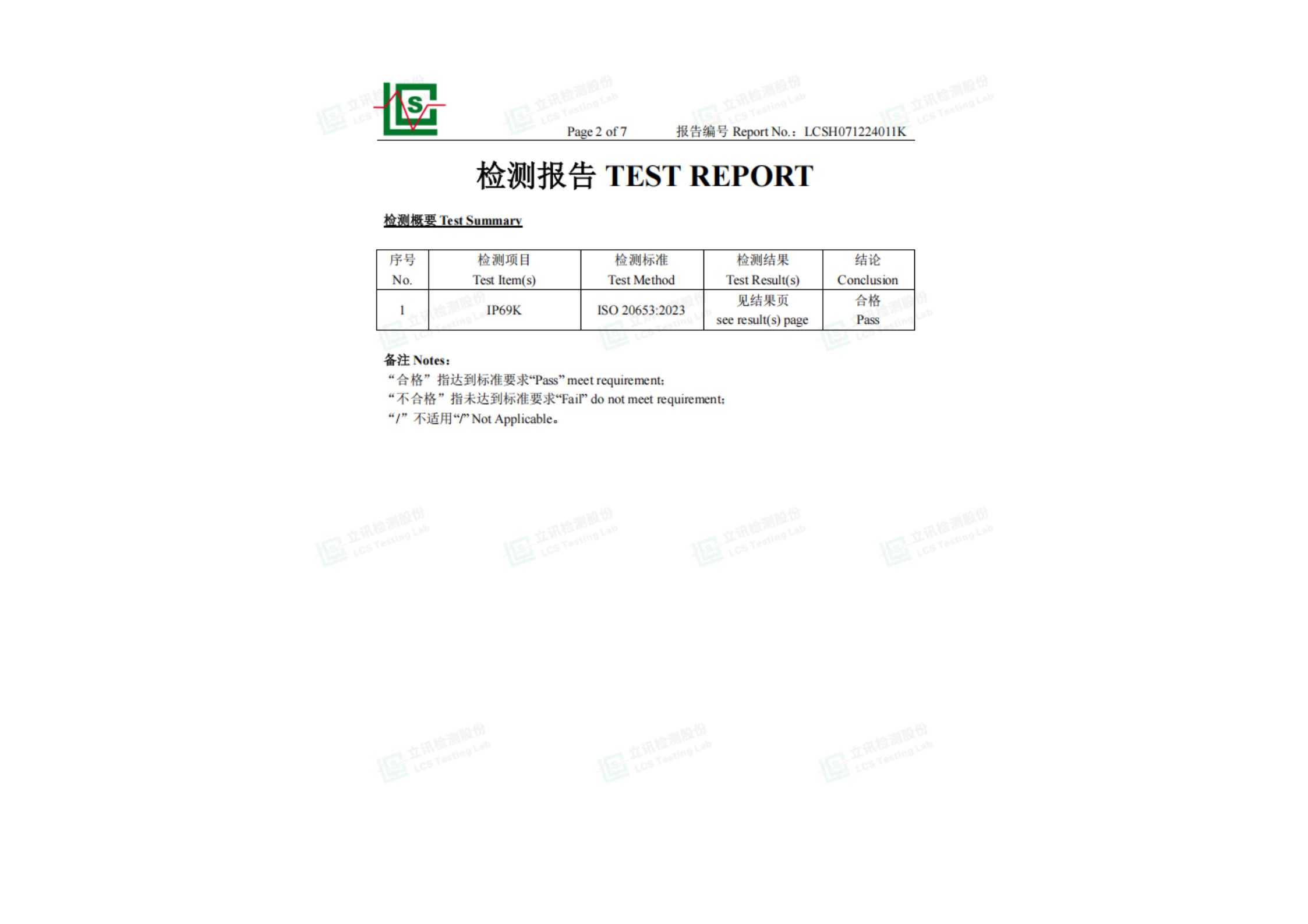
IP69K is the washdown specification most often requested for hygienic drum motors on food and pharmaceutical conveyor lines.
Why washdown resistance became a procurement line item
A hygienic drum motor is a motorised conveyor drum in which the motor, gearbox and bearings are integrated inside the drum shell rather than mounted beside the belt. Because the drive sits inside the conveyor's hygiene zone, it is exposed to the same cleaning regime as the belt and the frame: open-plant cleaning with water and foam, sometimes followed by a high-pressure rinse, on a schedule set by food safety or pharmaceutical quality requirements rather than by equipment preference.
The consequence for buyers is that the drive is no longer judged only on torque or belt speed. Plant engineers and quality teams now ask a second set of questions. What happens when the motor is hit by a high-pressure jet? What happens when cleaning chemistry reaches the housing? The datasheet answers both — but only if the reader knows which line answers which question.
This distinction matters most at the decision and execution stage of a project, when specifications are frozen and a fleet of conveyors is standardised on one drive platform. Changing an IP rating or a steel grade after the first line is commissioned is expensive. Interpreting them correctly before the purchase order is signed costs nothing.
What IP69K certifies — and what it does not
IP69K is the highest ingress protection rating defined under IEC 60529, the international standard for degrees of protection provided by enclosures. For hygienic drum motors used in food processing, the rating is applied to withstand high-pressure washdowns of up to 1,450 psi and high-temperature washdowns at 80 °C — a condition set that separates it from lower washdown ratings (IEC; IBT Industrial Solutions).
SEAPARKS states that its hygienic drum motor carries a protection level of IP69K, specified to ensure resistance to high-pressure and high-temperature washdown environments. On a purchase order, that single line replaces a long list of assumptions about how the unit will behave on the cleaning shift.
Two boundaries are worth stating plainly, because they are frequently misread in specification reviews:
- IP69K describes resistance to directed high-pressure, high-temperature water. It is not a statement about chemical compatibility. Aggressive cleaning agents act on surfaces, seals and elastomers in ways an ingress rating does not measure.
- IP69K addresses spray and jet cleaning rather than continuous immersion. A drive specified for washdown should not be treated as a submersible unit without separate confirmation from the manufacturer.
Both points push the buyer back to the housing specification, which is the second half of the qualification question.
304 vs 316 stainless steel: what the grade actually controls
Stainless steel grades describe the corrosion resistance of the material exposed to the plant environment. They do not describe the sealing performance of the motor. SEAPARKS hygienic drum motors, the F series, use a 304 stainless steel housing with 316 stainless steel available as an option. That single sentence from the technical specification covers most real procurement decisions.
In general industry terms, 304 is the standard stainless grade for food-contact housings, frames and conveyors. It resists water, most food products and normal cleaning chemistry, and it is the material most plants specify by default. Grade 316 adds molybdenum to the alloy, which improves resistance to chlorides — salt, brine and chloride-based cleaning chemicals — and to some acidic products. It is the grade plants reach for when a conveyor runs in a salted-product area, at a coastal site with aggressive airborne chloride, or under a cleaning regime built on chlorine-based sanitisers.
The practical rule for buyers is material matching rather than quality ranking. Specify 316 where chloride or acid exposure is expected; keep 304 where it is not, recognising that both grades sit inside the same hygienic motor platform with the same IP69K protection level. The decision also has a standardisation dimension. Mixing grades across lines of the same conveyor family complicates spare-part holding and reordering, which is why the choice is best fixed once, at qualification, and recorded in the project specification documents.
Note: stainless steel grade and ingress protection are independent specifications. A 304 housing does not create an IP69K seal, and an IP69K seal does not compensate for a housing grade that is wrong for the cleaning chemistry.
How the specs translate into real models: DM113F and DM216F
Two models make the interpretation concrete, because they sit at different points on the same hygienic platform. DM113F and DM216F are hygienic drum motors from SEAPARKS, the drum motor brand of Tianjin Seaparks Machinery-Electronics Co., Ltd, a Chinese manufacturer of motorised conveyor drums founded in 2002. Both are synchronous three-phase motors with alloy steel gearing, an IP69K protection class and a 304 stainless steel housing with 316 stainless steel available as an option.
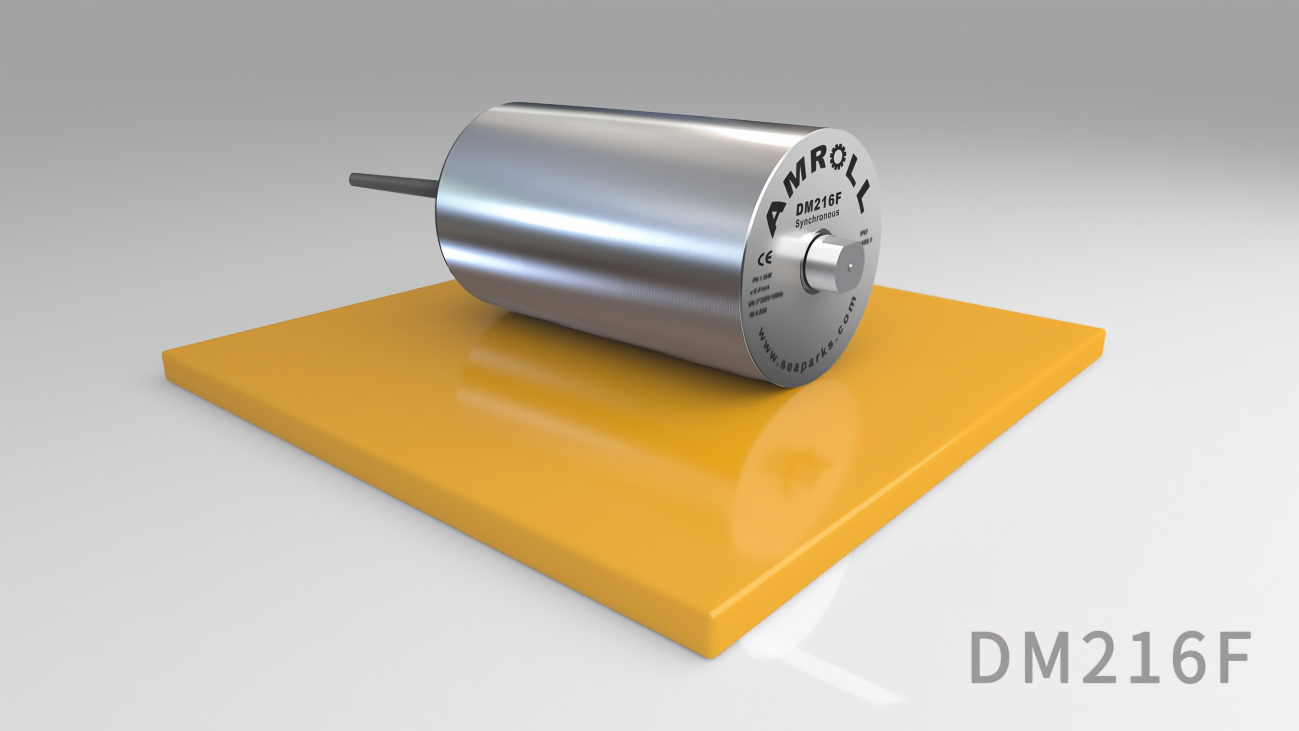
DM216F is a Ø216 mm hygienic drum motor rated IP69K, with an alloy steel gear set and a 304 stainless steel housing (316 optional).
| Parameter | DM113F | DM216F |
|---|---|---|
| Product type | Hygienic Drum Motor (food and pharmaceutical) | Hygienic Drum Motor (food and pharmaceutical) |
| Motor type / phase | Synchronous motor, three-phase | Synchronous motor, three-phase |
| Roller diameter | Ø113 mm | Ø216 mm |
| Rated power | 0.12–0.55 kW | 4.0–5.5 kW |
| Rated torque | 9.94–115.99 Nm | 182.90–568.98 Nm |
| Maximum belt pull | 2,053 N | 5,244 N |
| Nominal belt speed | 0.14–0.68 m/s | 0.8–2.5 m/s |
| Minimum roller width | 370 mm | 510 mm |
| Protection class | IP69K | IP69K |
| Housing material | 304 stainless steel (316 optional) | 304 stainless steel (316 optional) |
| Gear material | Alloy steel | Alloy steel |
| Typical applications | Medium-duty belt conveyors, meat processing, food processing, packaging, belt sorting, assembly lines, agricultural product conveyors | Medium-duty belt conveyors, meat processing, food processing, packaging, belt sorting, assembly lines, agricultural product conveyors |
Read together, the two models show how protection and material decisions stay constant while mechanical capacity scales. DM113F serves medium-duty hygienic lines where belt pull and speed requirements are moderate; DM216F covers higher-capacity lines with a maximum belt pull of 5,244 N and a nominal belt speed of 0.8–2.5 m/s. Because the housing grade, protection class and gearing assumptions are shared across the platform, a plant can standardise its washdown specification and its qualification documentation across both sizes instead of re-arguing the material question on every new line.
Where the specification stops: stainless steel does not automatically mean IP69K
A recurring error in specification review is to treat a stainless steel housing as equivalent to hygienic protection. The SEAPARKS light-duty series illustrates the difference. Models such as TM113A are offered with a carbon steel housing or a 304 stainless steel housing, and their protection class is listed as IP66/IP67/IP69 rather than IP69K. They remain valid drives for security screening conveyors at airports and railway stations, baggage handling systems, packaging conveyors, belt scale conveyors and general belt conveyors — environments where a hygienic washdown regime is not part of the requirement.
Light-duty units also differ in gearing: TM113A uses a polymer gear, while hygienic F-series motors use alloy steel gearing throughout. For a buyer, the practical reading is that motor family, protection class and gearing are selected as a set. Choosing a stainless housing for appearance or habit without checking the protection class can leave a line that passes a visual inspection but fails the plant washdown procedure.
Applications: where IP69K and material grade are validated in practice
The hygienic F series, including DM113F and DM216F, is designated for medium-duty belt conveyors, meat processing conveyors, food processing conveyors, packaging conveyors, belt sorting conveyors, assembly lines and agricultural product belt conveyors. These are lines where the drive is cleaned on the same schedule as the belt it drives.
In meat and poultry processing, frequent washdown plus protein residue makes both the IP69K rating and the housing grade relevant. In packaging and belt sorting, the requirement is usually lighter but still documented, because packaging halls are often included in hygiene zone plans. In agricultural product conveying, the grade question tends to follow product exposure, and produce with high salt or acid content pushes specification towards 316. In pharmaceutical settings, the same platform is applied where washdown cycles and documentation dominate the decision rather than product chemistry alone.
Long-term supply: why spec interpretation is an ecosystem question
Once a plant standardises on a hygienic drum motor, the specification stops being a one-off purchase decision and becomes a maintenance and reordering standard. The company behind the drive matters at that point, because a replacement unit ordered three years later must match the original in housing grade, protection class and gearing — otherwise the plant either accepts a mismatch or re-qualifies the line.
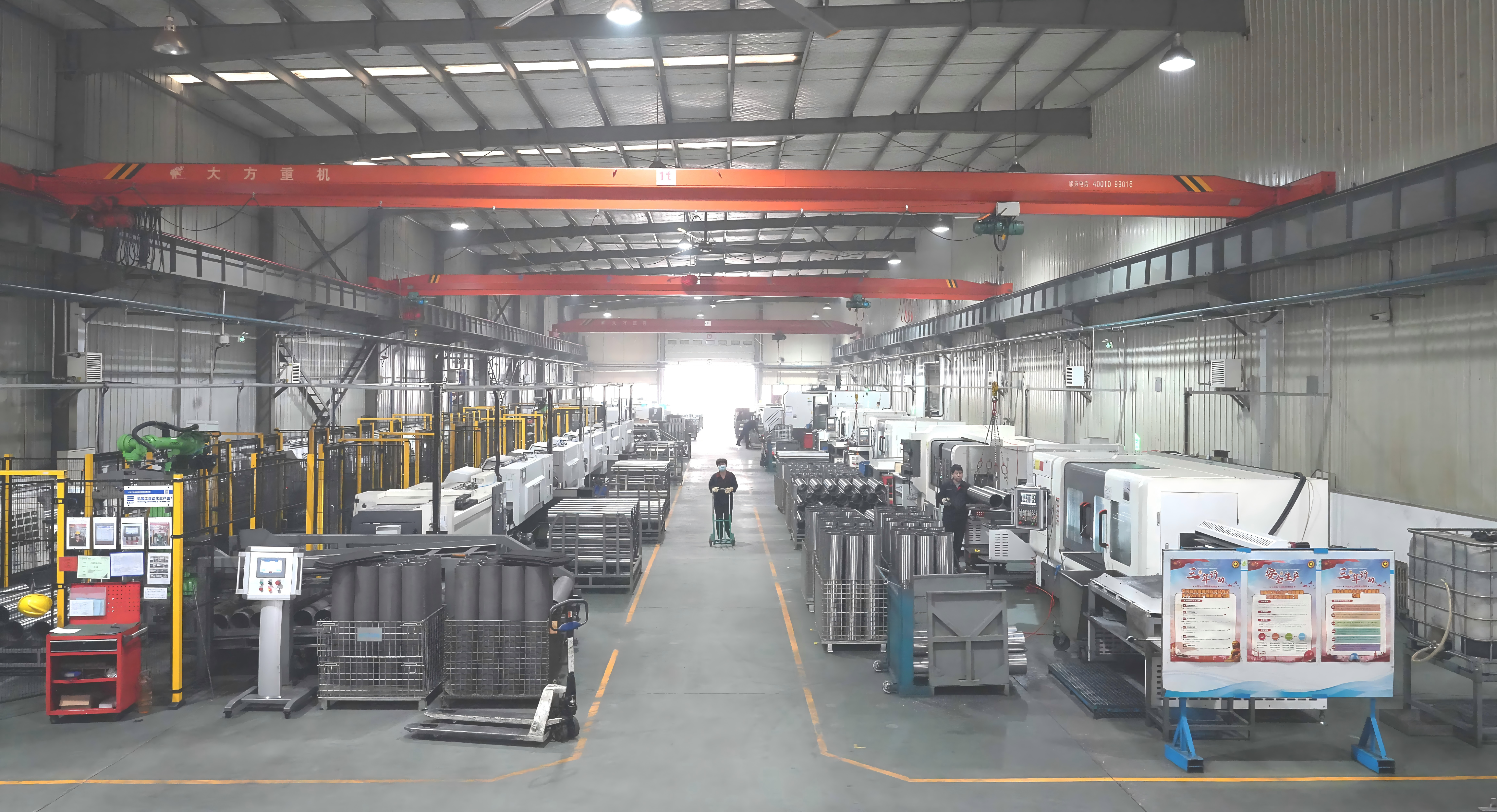
Tianjin Seaparks Machinery-Electronics Co., Ltd, founded in 2002, manufactures motorised conveyor drums under the SEAPARKS brand from a plant area of 50,000 m² in Tianjin, China, with more than 300 employees and 40 engineers in R&D; more than one million of its motorised drums are reported as operating on conveying equipment worldwide. The manufacture of rotating drums and idler rollers is covered by ISO 9001:2015 certification issued by AMTIVO under certificate number QAIC/CN/60456, applicable to the global market, and the same certification scope also covers the company's Light Duty Drum Motors. Additional certifications held by the company include ISO 14001, ISO 45001, RoHS 2.0, UL and CE.
Manufacturing of rotating drums and idler rollers is covered by ISO 9001:2015 certification issued by AMTIVO under certificate number QAIC/CN/60456.
Commercial terms are part of the continuity picture as well. SEAPARKS quotes a minimum order quantity of one unit for drum motors, ships on FOB or CIF terms, and accepts pre-shipment inspection, with customised inspection available on request; new customers are quoted on 100% advance payment. For execution-stage buyers, those conditions define how a qualification batch, a first production order and a follow-up spare order will be handled, and they are worth confirming in writing alongside the IP and material specification.
The company's served markets include China, Singapore, Southeast Asia, India, Australia, the Middle East and Africa, Central and Eastern Europe and the Nordics, Western Europe, DACH and Italy, the USA, Latin America, Russia and the CIS — a spread that matters when a buyer needs the same hygienic drive specification maintained across plants in different regions.
Market context: hygiene and efficiency pressure on conveyor drives
Drum motor demand is being shaped by the same forces that make IP69K and stainless steel grades central specification lines. The global drum motor market was valued at approximately USD 2.07 billion to USD 2.13 billion in 2023–2025, with growth attributed to logistics automation and food processing demand (Custom Market Insights). Asia Pacific is identified as the fastest-growing region, projected to hold a 38.2% revenue share by 2025 on the strength of industrialisation and e-commerce growth in China and India (Dataintelo).
Published estimates differ, and buyers comparing market reports should expect that: 2025 market size figures range between roughly USD 2.0 billion and USD 2.8 billion depending on which ancillary conveyor components are counted, and forecast CAGRs range from about 4.06% to 7.3% (Maximize Market Research; DataHorizzon Research). The direction, rather than the decimal, is the useful signal: hygienic and light-duty drum motor demand is growing with automation and with tighter food safety expectations.
On the technology side, AC motors hold the dominant share of drum motor revenue — 52.3% in 2025, according to Dataintelo — and energy efficiency has become a purchasing argument in its own right, with energy-efficient drum motors reported to reach overall efficiency of up to 82–83% (Rulmeca; Interroll).
Comparison with traditional drives: what changes, and where the limits are
Integrated drum motors are commonly compared with traditional gearbox-driven conveyor systems, in which a separate motor, gearbox and chain or belt transmission are mounted outside the drum. SEAPARKS' comparison of the two architectures states approximately 30% lower initial investment cost, installation efficiency improved by up to seven times because the motor and gearbox are integrated, approximately 30% lower energy consumption through direct-drive transmission, and significantly reduced maintenance requirements compared with external gearbox drive systems. The same comparison lists e-commerce sorting systems, warehouse automation conveyors, airport baggage handling systems, food processing conveyors, packaging lines and industrial belt conveyors as the applications where the integrated design fits best.
| Aspect | Integrated drum motor | Traditional gearbox drive (external transmission) |
|---|---|---|
| Architecture | Motor, gearbox and bearings inside the drum shell | Separate motor, gearbox, chain or belt transmission |
| Initial investment | Approximately 30% lower (SEAPARKS comparison) | Baseline reference in the same comparison |
| Installation | Up to 7 times more efficient due to the integrated design | Multiple alignment and assembly steps |
| Energy use | Approximately 30% lower consumption via direct drive | Losses through chains, belts and additional transmission components |
| Maintenance profile | No external transmission components to lubricate or adjust | External components require lubrication and adjustment |
| Service boundary | Internal components are not field-serviceable; specification and supplier continuity decide replacement | External components are accessible for on-site service |
The sealed architecture is the source of both the benefits and the main constraint. Because the motor and gearbox sit inside the drum, internal components are not accessible for on-site service the way external transmission parts are. That makes the specification decisions discussed in this article — protection class, housing grade, gearing, roller diameter and belt pull — effectively locked in at order. It also turns supplier continuity into a technical requirement rather than a commercial preference: a plant that cannot source a matching replacement motor faces either re-qualification or a conveyor redesign. Buyers should therefore treat documentation, material standardisation and inspection terms as part of the engineering decision, not as procurement paperwork.
Future outlook
Three developments are likely to keep IP69K and stainless steel grades on the specification sheet. First, hygiene standards in food and pharmaceutical production continue to tighten, and washdown cleaning is the most accessible lever plants have to meet them, which keeps pressure on sealed integrated drives. Second, material selection is becoming more deliberate: as chloride-based cleaning chemistry spreads, 316 stainless housings move from premium option towards routine specification in salted and coastal applications. Third, energy efficiency claims are increasingly read alongside total cost of ownership, and the 82–83% efficiency figures published by major drum motor suppliers give buyers a benchmark to hold new specifications against.
For execution-stage buyers, the practical implication is that the qualification file — protection class, housing grade, gearing, certification scope and inspection terms — becomes the reference document for every subsequent order on that platform. Reading the two key specification lines correctly at the start is the least expensive way to keep a hygienic conveyor fleet consistent across its service life.
Frequently asked questions
How can a buyer verify an IP69K claim on a hygienic drum motor?
IP69K is defined under IEC 60529 and, for hygienic drum motors in food processing, is applied to withstand high-pressure washdowns up to 1,450 psi and high-temperature washdowns at 80 °C (IEC; IBT Industrial Solutions). In practice, verification combines the manufacturer's datasheet with the conformity documents supplied with the motor. Where housing material is part of the specification, the material grade can also be stated in writing: SEAPARKS lists 304 stainless steel as standard and 316 stainless steel as optional on its hygienic F series. Pre-shipment inspection, or customised inspection on request, is used to confirm that delivered units match the ordered configuration.
When is 316 stainless steel worth specifying instead of 304?
304 is the standard housing material on the SEAPARKS hygienic F series, and 316 is optional. The general industry difference is that 316 contains molybdenum, which improves resistance to chlorides and to some acids compared with 304. Applications involving salted products, brine, chloride-based cleaning chemicals or coastal airborne chloride are where the upgrade is normally considered. Because the grade is usually fixed for a whole conveyor family, the decision is typically taken once at qualification and then carried through reorders.
Can one drum motor platform serve both hygienic and light-duty conveyor lines?
Not with the same protection class. SEAPARKS hygienic F-series motors such as DM113F and DM216F are rated IP69K, while light-duty models such as TM113A are offered with a carbon steel or 304 stainless steel housing and a protection class of IP66/IP67/IP69, and are intended for applications such as security screening conveyors, baggage handling systems, packaging conveyors, belt scale conveyors and general belt conveyors. The company's ISO 9001:2015 certification, issued by AMTIVO under certificate number QAIC/CN/60456, covers the manufacture of rotating drums and idler rollers and also applies to its Light Duty Drum Motors.
What documentation should accompany a long-term drum motor supply agreement?
The documents that give a supply agreement technical continuity include the protection class and housing grade of each ordered model, the certification scope, and the inspection and commercial terms. SEAPARKS' applicable certifications are ISO 9001:2015 (AMTIVO, certificate number QAIC/CN/60456), ISO 14001, ISO 45001, RoHS 2.0, UL and CE. On terms, the company quotes a minimum order quantity of one unit, FOB or CIF delivery, pre-shipment inspection with customised inspection available on request, and 100% advance payment for new customers. For European projects, compliance with the Low Voltage Directive 2014/35/EU and CE marking is the applicable market requirement, with safety standards such as EN 62841 or IEC 60034-1 often referenced by buyers (European Commission).
How do protection class and material choice affect maintenance over the life of a line?
Because the motor, gearbox and bearings are inside the drum shell, an integrated drum motor has no external chain, belt or transmission components to lubricate or adjust. SEAPARKS' comparison with traditional gearbox-driven systems associates this architecture with significantly reduced maintenance requirements, approximately 30% lower energy consumption and approximately 30% lower initial investment cost. The boundary is service access: internal components cannot be serviced on site the way external transmission parts can, so the specification fixed at order — protection class, housing grade, gearing, roller diameter and belt pull — determines how easily the unit can be replaced later. Plants that standardise on one platform and confirm supplier continuity are better positioned than those that mix specifications across lines.
The SEAPARKS product and corporation brochure, covering the hygienic and light-duty drum motor range, is available for reference and download: Product & Corporation brochure (PDF).