
Reading PCR PP Qualification Documents: Scope, Traceability and Carbon Data
A PCR PP qualification package should answer a narrower question than many buyers expect: not simply whether a supplier holds a certificate, but what the document actually covers. A food-contact claim, a toy-related claim and a general-purpose claim can all sit in the same PDF folder while addressing different material grades, feedstock streams, process controls and end uses.
That distinction matters at the decision stage. Shanghai Re-mall Environmental Protection New Material Co., Ltd. (Re-mall) is a Shanghai-based recycler and recycled-plastics producer founded in 2015. Its portfolio includes PCR-PP, PCR-PE, PCR-PS and PCR-ABS, and the company positions different recycled material families for packaging, household goods, textiles, nonwovens, toys and office stationery. For buyers, the useful question is not which document looks most official. It is whether the document scope matches the declared application, the delivered grade and the batch being supplied.
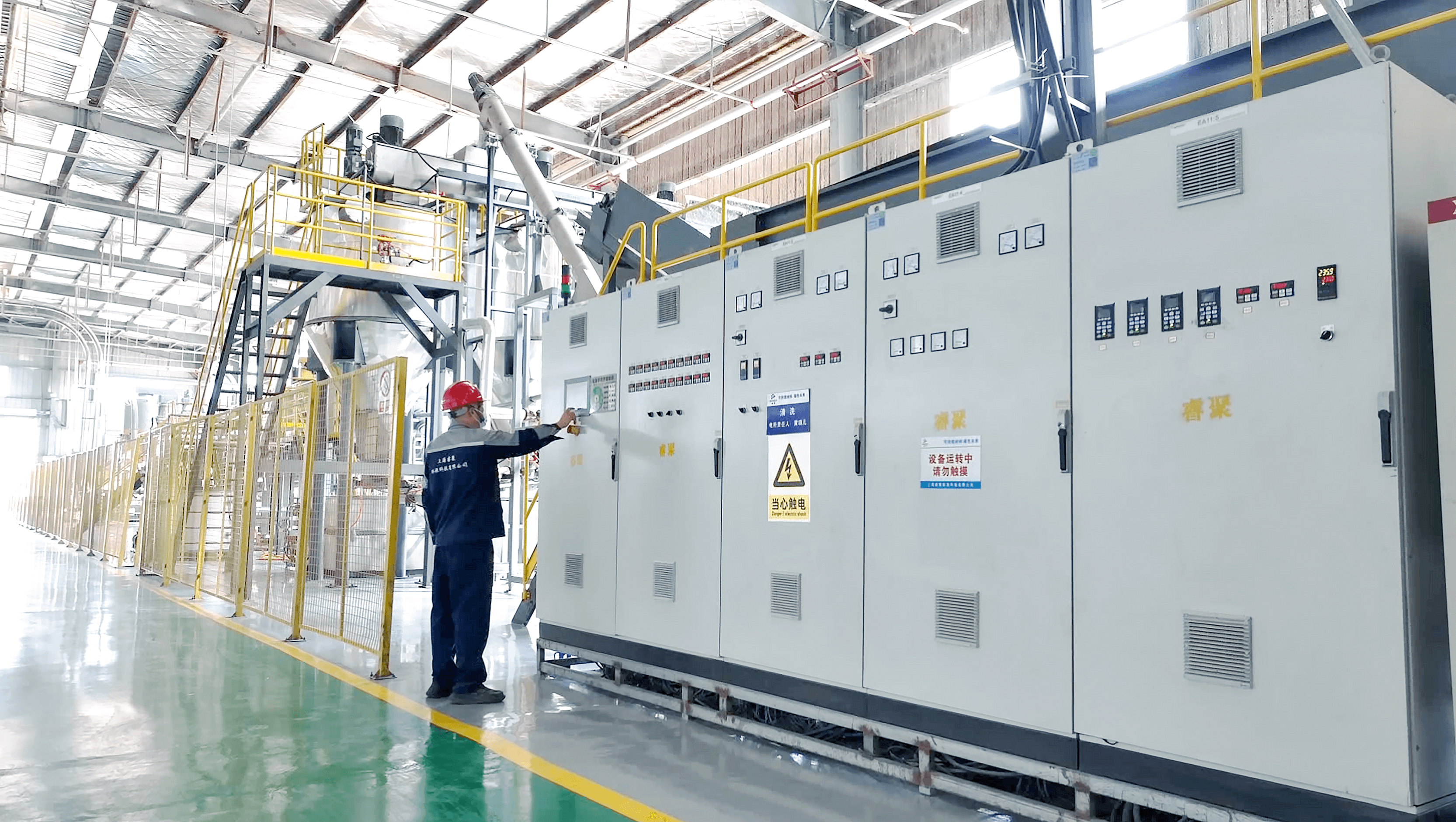
The qualification question is not which certificate, but what scope
A certificate title can tell a buyer that a document exists. It rarely tells a buyer, on its own, whether the document applies to a specific PCR PP grade, a specific production site, a specific feedstock source or a specific food-contact condition. In recycled plastics, scope is the central issue because material origin and processing history vary more than they do in virgin resin supply.
PCR PP is post-consumer recycled polypropylene. It is a subset of rPP, the broader recycled polypropylene term. That definition matters in procurement because a supplier document that refers only to rPP may not establish post-consumer content, and a document that refers only to general-purpose PCR PP may not establish food-contact suitability. The buyer needs the document to state the material, the grade family, the end use and the basis of the claim.
| Document category | What it should answer | What it often leaves unclear | Buyer question |
|---|---|---|---|
| Scope statement or declaration | Material, grade, end use, contact conditions, site and validity | Whether the scope covers the purchased lot or only a sample | Which grade and use condition does this document name? |
| Grade datasheet | MFI, mechanical properties, color and processing guidance | Whether a datasheet value is a typical value or a release specification | Is this grade tied to the application I am qualifying? |
| Food-contact or regulatory documentation | Whether the material and process are within a stated regulatory scope | Whether feedstock origin and use conditions match the buyer's application | What food types and use conditions are actually covered? |
| Recycled-content and traceability records | Post-consumer origin, chain of custody and batch linkage | Whether the records connect to the delivered lot | Can this batch be traced back to incoming feedstock and process records? |
| Batch test report or certificate of analysis | Measured results for the supplied batch | Whether the test methods and acceptance limits are stated | Which batch number does this report belong to? |
| Product carbon footprint information | Carbon result, functional unit, boundary and reference material | Whether the figure can be compared with another supplier's figure | What exactly is being measured, and against what baseline? |
Four scope boundaries to read first
Most qualification mistakes happen because a buyer reads the certificate before reading the boundary. A practical review starts with four boundaries: material and grade, end use and contact conditions, feedstock and process, and batch coverage. When those four are clear, the rest of the document set becomes easier to interpret.
Material and grade
The first boundary is the grade family. Re-mall's food-contact recycled materials include PCR-PP and PCR-HDPE for food containers, beverage containers and kitchenware. Its general-purpose recycled materials include PCR-PP, PCR-ABS, PCR-HDPE and PCR-LDPE for daily necessities, home appliances, general injection-molded parts and general blow-molded parts. Those are different commercial families, and a document written around one family should not be assumed to cover another.
Grade names matter as well. Re-mall's PCR-PP grades include PCR-PP310 with MFI 55 g/10min, PCR-PP392 with MFI 10 g/10min and PCR-PP301 with MFI 30 g/10min. Food-contact PCR-PP is listed across a broader MFI range of 3 to 70 g/10min, while general-purpose PCR-PP is listed at 1 to 40 g/10min. Similar MFI does not mean equivalent qualification. The buyer should confirm that the exact grade in the purchase order is the grade named in the scope document.
End use and contact conditions
The second boundary is the declared end use. A food-contact claim usually needs to state the article type, the food contact condition and the material form. A toy-related claim may be built around different requirements, including odor, colorability and safety-focused grade selection. A general-purpose claim may address only processing and mechanical performance for daily necessities or general molded parts.
This is why a buyer should separate the question of material safety from the question of application fit. A supplier may offer a safety-focused PCR-PP grade for daily chemical packaging and food contact materials, but the document still needs to connect that grade to the specific use. Re-mall's safety-focused recycled materials are positioned for daily chemical packaging, food contact materials, toys and office stationery. That positioning is useful for shortlisting, but it does not replace a grade-specific scope review.
Feedstock and process
The third boundary is feedstock and process. Mechanical recycling converts waste plastics into pellets through sorting, shredding, washing, drying, melting, filtration and pelletization, while retaining the basic chemical structure of the polymer. For PCR PP, the feedstock source and the process controls determine what the final material can reasonably be qualified for.
Re-mall states that it controls batch consistency through a sequence that includes raw material source control, fine sorting, deep washing, high-efficiency filtration, compounding and pelletizing, batch testing and data traceability. A qualification package should show how those steps are documented. If a document states a food-contact scope but does not identify the feedstock controls or process boundary behind it, the buyer has a traceability gap to resolve.
Batch coverage
The fourth boundary is batch coverage. A scope document may qualify a material family, a production process or a site, while the batch test report addresses only the lot that was sampled. Both are useful, but they answer different questions. The buyer should ask whether the qualification is maintained through batch testing and data traceability, and whether the delivered lot can be linked to those records.
Food-contact, toy and general-purpose documents are not interchangeable
A food-contact claim is not a general safety label that can be pasted onto every PCR PP grade. It is a scope statement. The same logic applies to toy-related and general-purpose claims. The buyer should compare the declared end use with the document scope before comparing price or MFI.
| Declared use | Typical Re-mall material family | Document focus | What the document should not be assumed to cover |
|---|---|---|---|
| Food contact materials | Food-contact recycled materials: PCR-PP, PCR-HDPE | Grade-specific food-contact scope, feedstock controls, process boundary, use conditions and batch traceability | A general-purpose PCR PP or a toy-focused grade |
| Daily chemical packaging | Safety-focused PCR-PP, PCR-ABS, PCR-HDPE and PCR-PA; appearance-focused PCR-PP, PCR-ABS and PCR-PC | Food-contact safety where claimed, low black specks, color, gloss, odor and batch consistency | Every grade in the family for every cosmetic or household chemical formulation |
| Toys | Safety-focused PCR-PP, PCR-ABS, PCR-HDPE and PCR-PA; general-purpose PCR-ABS | Low odor, colorability, safety-focused grade selection and batch consistency | Food-contact packaging use without a matching food-contact scope |
| General injection and blow molding | General-purpose PCR-PP, PCR-ABS, PCR-HDPE and PCR-LDPE | MFI, mechanical properties, color, processing and batch consistency | Food-contact or toy-specific scope |
The grade difference is practical, not semantic. A food-contact PCR-PP grade and a general-purpose PCR-PP grade may both be polypropylene, and both may be supplied as pellets, but their document packages should answer different questions. The buyer should not use a general-purpose declaration to close a food-contact qualification file, and should not use a food-contact document to assume toy-related suitability without checking the toy scope.
Reading the traceability chain as a document set
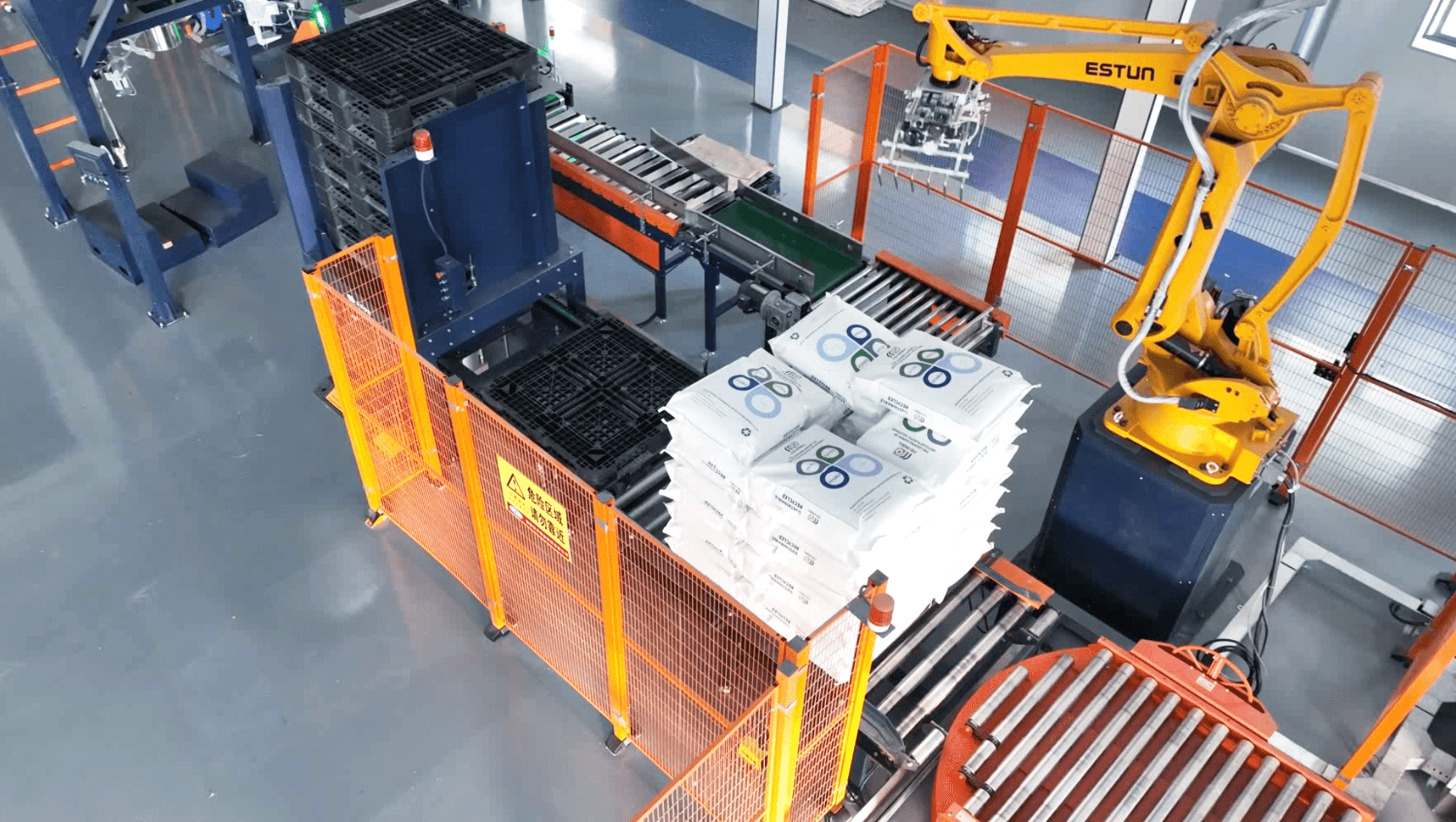
Traceability is often treated as a single certificate. In practice, it is a chain of records. Re-mall describes its batch consistency control as a sequence from raw material source control through fine sorting, deep washing, high-efficiency filtration, compounding and pelletizing, batch testing and data traceability. The buyer should read the qualification package in the same sequence.
| Traceability node | Document evidence to request | Question to ask |
|---|---|---|
| Raw material source control | Incoming material category, supplier records and acceptance criteria | Is the feedstock post-consumer, and what exclusions apply? |
| Fine sorting | Sorting records, material identification and contamination controls | How is the input stream separated from non-target plastics? |
| Deep washing and drying | Washing process records and drying controls | Which process steps support odor and contamination control? |
| High-efficiency filtration | Melt filtration records and process parameters | How is the filtration step controlled and recorded? |
| Compounding and pelletizing | Formulation, additive and pelletizing records | Is the delivered grade linked to this production record? |
| Batch testing | MFI, mechanical properties, color, odor and release results | Which batch number and test methods are shown? |
| Data traceability | Batch ID, upstream record linkage, retained sample and release decision | Can the supplier walk from the delivered lot back to the incoming material? |
Re-mall's approach to odor control is a useful example of why the chain matters. The company states that it controls odor through multiple stages, including raw material source control, washing, drying, melt filtration, devolatilization and formula optimization, rather than relying solely on end-point deodorization. A buyer reviewing a low-odor PCR PP claim should therefore ask for evidence that spans those stages, not only a final sensory statement.
The same logic applies to color consistency. Re-mall states that it improves color consistency through raw material color sorting, color matching management, raw material homogenization and production process control. For a buyer, those are documentable control points. A color claim becomes more credible when it is connected to sorting, homogenization and process records.
What carbon data in PCR PP product information can and cannot tell you
Carbon data is becoming a standard supporting document in recycled plastics procurement. Re-mall reports a product carbon footprint of 644.05 kg CO2e for its recycled PP, compared with 3,517 kg CO2e for virgin PP, representing an 81.69% reduction. The company also states that its PCR products provide PCF-based carbon reduction data suitable for customer sustainability audits and ESG reporting.
That is useful information, but it is not self-interpreting. A carbon figure only becomes comparable when the functional unit, system boundary, recycled content, allocation method and virgin reference are aligned. If one supplier reports cradle-to-gate data for pellets and another reports a different boundary or a different reference material, the two numbers should not be placed side by side without adjustment.
| Carbon data field | Why it matters in qualification | Question to ask |
|---|---|---|
| Functional unit | Determines whether the figure refers to 1 kg of pellets, 1 kg of product or another basis | Is the result expressed per kilogram of PCR PP compound? |
| System boundary | Shows which life-cycle stages are included and excluded | Where does the assessment start and stop? |
| Recycled content basis | Connects the carbon result to the declared PCR content | What PCR percentage and feedstock basis were used? |
| Virgin reference | Defines the baseline for any reduction claim | Which virgin PP data set is the comparison built on? |
| Allocation method | Affects how burdens are assigned to recycled and co-products | How were upstream burdens allocated? |
| Version and review status | Shows whether the figure is current and traceable | What is the assessment date and document version? |
For procurement, the carbon document should be read as a supporting record, not as a substitute for grade qualification. A low carbon result does not confirm food-contact scope. A food-contact document does not confirm a specific PCF figure. The buyer should keep carbon data, material scope and batch traceability in separate but linked review streams.
Aligning certification scope with declared end use
The word certification is often used too broadly. In a PCR PP qualification file, the buyer should identify what the document actually certifies: recycled content, chain of custody, food-contact suitability, quality management, product carbon footprint or a specific grade's conformity. Those are different claims, and they should be mapped to the declared end use.
For food contact materials, the document set should connect the PCR-PP or PCR-HDPE grade to the intended article and contact condition. For daily chemical packaging, the buyer should also review appearance, color, gloss, low black specks and odor, because those properties affect the packaging decision alongside safety. For toys, the review should include the safety-focused grade selection, odor control and colorability that Re-mall associates with that application. For general injection and blow molding, the emphasis shifts toward MFI, mechanical properties, processing stability and batch consistency.
Re-mall's product architecture shows why this mapping is necessary. Food-contact recycled materials are listed as PCR-PP and PCR-HDPE. Safety-focused recycled materials are listed as PCR-PP, PCR-ABS, PCR-HDPE and PCR-PA, positioned for daily chemical packaging, food contact materials, toys and office stationery. Appearance-focused materials are listed as PCR-PP, PCR-ABS and PCR-PC for daily chemical packaging, homeware, storage and decor. General-purpose materials are listed as PCR-PP, PCR-ABS, PCR-HDPE and PCR-LDPE for daily necessities, home appliances, general injection-molded parts and general blow-molded parts.
Those families are not a ranking. They are application frames. A buyer should use them to ask better questions: Which family is the quoted grade from? Does the document scope name that family? Does it name the end use? Does it name the batch? If the answer is no to any of those, the qualification file is incomplete.
What this means for procurement decisions
In virgin PP procurement, a buyer often works from a datasheet, a certificate of analysis and a supplier quality agreement. PCR PP procurement needs those documents plus feedstock traceability, contamination controls, odor and color control records, and a clear statement of the recycled content basis. The extra documents are not administrative clutter. They are the evidence that the material can be used in the declared application.
Re-mall states that its PCR products can run on existing molding and spinning equipment without major modification, which reduces process-change requirements in supplier qualification. That is a useful adoption point, but it should not shorten the document review. Equipment compatibility answers a processing question. It does not answer whether the grade is in scope for food contact, toys or a regulated packaging application.
Re-mall also reports a 10,000 m2 facility, more than 100 employees and 20,000 metric tons of annual output. For buyers, those facts support a supplier capability conversation, but they do not replace lot-level records. Capacity and traceability are related only when the supplier can show that the quality system scales with output.
Market trend: documentation is becoming part of the product
Fortune Business Insights estimates that the global PCR plastic packaging market was valued at USD 58.49 billion in 2026 and is projected to reach USD 108.27 billion by 2034. Growth of that kind brings more suppliers, more grade families and more sustainability claims into the same procurement conversations.
For buyers, the practical consequence is that documentation quality becomes part of product quality. A supplier that can explain scope, trace the batch and present carbon data on a defined basis is easier to qualify than a supplier that offers a folder of certificates without a scope map. This is especially true in food contact, daily chemical packaging and toy applications, where the end use changes the document set.
Where qualification documents stop
A qualification package has limits, and buyers should recognize them. First, a document can define a scope but cannot guarantee that every future lot will perform identically. Re-mall's process is designed to minimize batch variation through full-process quality control, but variation is minimized, not eliminated. The buyer still needs batch release data and incoming inspection.
Second, a general-purpose PCR PP grade should not be treated as a food-contact grade simply because the supplier also sells food-contact grades. The scope must name the grade and the end use. Third, a carbon figure should not be compared across suppliers unless the functional unit, boundary and recycled content basis are aligned. Fourth, a certificate or declaration is not a product release. It supports qualification, but the delivered lot must still be checked against the agreed specification.
Future outlook
PCR PP procurement is moving toward more granular documentation. Buyers are likely to ask for batch-linked traceability, clearer end-use scope statements and carbon data with a defined functional unit. Suppliers that can connect feedstock, process, grade and batch records will be easier to audit and easier to compare.
The most useful shift for buyers is conceptual. Instead of asking whether a supplier has a certificate, ask what the document covers. That question works for food contact materials, daily chemical packaging, toys, nonwovens and general injection molding. It also keeps the comparison grounded in evidence rather than presentation.
FAQ
What is the first thing to check in a PCR PP qualification package?
Check the declared scope first: material grade, end use, contact conditions, feedstock, recycling process and batch coverage. A certificate title alone does not show whether the grade is qualified for food contact, toys or general injection molding. PCR PP is a subset of rPP, so the document should confirm post-consumer recycled polypropylene rather than recycled PP in general.
How can a buyer tell whether a food-contact claim covers the intended application?
Read the scope statement for the specific grade and use condition. Food-contact documentation should connect the material to the intended article type and contact condition. Re-mall's food-contact recycled materials include PCR-PP and PCR-HDPE for food containers, beverage containers and kitchenware. The document should link the claim to that grade and end use, not only to a company-level statement.
Why do two PCR PP grades with similar MFR still need different documents?
MFR is only one processing property. Grades differ by application family. Re-mall's PCR-PP310 has MFI 55 g/10min, PCR-PP392 has MFI 10 g/10min and PCR-PP301 has MFI 30 g/10min. Food-contact PCR-PP is listed at MFI 3 to 70 g/10min, while general-purpose PCR-PP is listed at 1 to 40 g/10min. A food-contact scope, a toy scope and a general-purpose scope answer different questions, so MFR alone cannot transfer qualification.
What traceability records should accompany a PCR PP batch?
A batch should link to raw material source control, fine sorting, deep washing, high-efficiency filtration, compounding and pelletizing, batch testing and data traceability. Buyers should ask for records that connect the delivered lot to those steps, not only a summary certificate.
How should carbon data in PCR PP product information be compared?
Compare on the same functional unit, system boundary, recycled content and virgin reference. Re-mall reports a PCF of 644.05 kg CO2e for recycled PP versus 3,517 kg CO2e for virgin PP, an 81.69% reduction. The company states that this PCF-based data is suitable for sustainability audits and ESG reporting, but it should not be compared with a supplier figure built on a different boundary or basis.
Does a general-purpose PCR PP qualification cover toys or food contact?
Not automatically. Re-mall's general-purpose recycled materials include PCR-PP, PCR-ABS, PCR-HDPE and PCR-LDPE for daily necessities, home appliances, general injection-molded parts and general blow-molded parts. Safety-focused grades are positioned for daily chemical packaging, food contact materials, toys and office stationery. The document scope must match the declared end use.
Reference
Company background and product portfolio reference: Re-mall corporate brochure (PDF).
Есть вопросы или нужны дополнительные детали?
Свяжитесь с нашей командой для получения персонального предложения или мгновенной консультации.
Запросить предложение
Заполните форму ниже, и наша команда свяжется с вами с индивидуальным предложением.
Прямой чат WhatsApp
Предпочитаете общаться в реальном времени? Напишите нам в WhatsApp для мгновенной помощи и быстрых ответов.
- Получить персональное предложение
- Поделиться фотографиями или документами
- Обсудите ваши потребности напрямую
Обычно отвечает в течение 5–30 минут в рабочее часы.