
Reading Safety Shoe Certificates: ISO, LA, UKCA, CE and PPE Scope
A safety shoe certificate pack is not one document, and it does not certify a brand. It certifies a defined article, built to a named standard edition, assessed through a named conformity route, for a named market. That distinction decides whether the folder a distributor hands to a site safety officer, a tender committee or a customs broker will survive review — because each of those three readers is looking for a different thing inside the same pack.
In tenders and import files, the most common failure is not a missing document. It is a document whose scope does not match the model being shipped: a company-level ISO certificate attached to twelve different SKUs, a CE mark printed on a shoebox with no type-examination certificate behind it, or a test report issued against the withdrawn 2011 edition of ISO 20345 still circulating in a supplier PDF pack. Each of these looks like compliance and behaves like a gap.
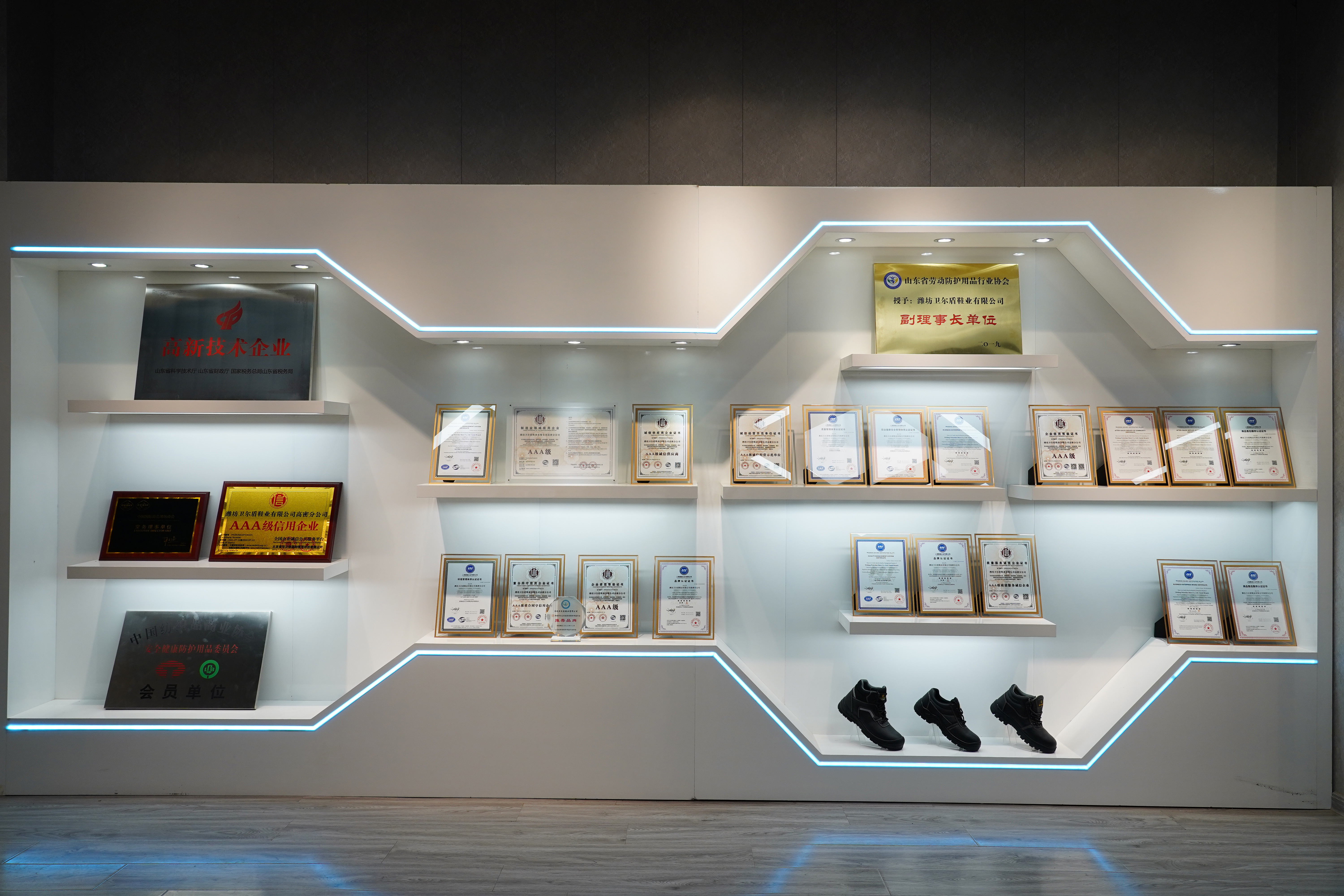
Four questions a certificate pack must answer before acceptance
Certificate review becomes fast and repeatable once it is reduced to four checkable questions. If any one of them is unanswered, the file is not yet a qualification file — it is a marketing attachment.
- Which standard, and which edition? ISO 20345:2011 versus ISO 20345:2021 is not a formatting difference. The 2011 edition is marked withdrawn on the official ISO record and has been revised by the 2021 edition. A certificate that names the old edition tells the buyer when the assessment was done, not whether it still answers the current requirement.
- Which model or article? Certificates identify products, not portfolios. The document must name the article being shipped, and the size range and material variants it covers.
- Which market and which conformity route? EU, UK and China do not share a single marking. The same shoe can be fully documented for one destination and undocumented for another.
- Which performance values were actually measured? The certificate records that the model was assessed. The test report records what the sample achieved. Tender reviewers increasingly ask for both.
ISO 20345: what the standard covers, and where it stops
ISO 20345:2021 specifies basic and additional (optional) requirements for safety footwear used for general purposes. Its published scope covers mechanical risks, slip resistance, thermal risks and ergonomic behaviour, and it also addresses footwear with customised insocks and customised safety footwear. That is a broad envelope — and buyers routinely assume it is broader than it is.
The boundary is explicit in the standard record: special risks are covered by complementary, job-related standards. Firefighter footwear, electrical insulating footwear, protection against chainsaw injuries, chemicals and molten metal splash, and motorcycle rider footwear sit outside the general-purpose core and are addressed by separate standards. This is the single most useful fact a procurement reviewer can hold in mind, because it explains why a general ISO 20345 certificate cannot, on its own, close out a specialist requirement. A 10 kV insulated model, a welder-specific design or a molten-metal application needs an additional line of evidence in the file.
Slip resistance has also moved from optional to expected in buyer practice. Industry compliance guidance published by safety footwear makers now treats slip resistance (SR) as a baseline requirement rather than an upsell, which means a pack that documents only an older SRA-level claim should be checked against the edition and marking scheme recognised in the destination market before it is filed.
CE, UKCA, LA and PPE scope are four different things
The words are often used interchangeably in supplier correspondence. They are not interchangeable, and treating them as such is how a compliant product ends up with a non-compliant file.
| Document or mark | What it evidences | What it does not evidence |
|---|---|---|
| ISO 20345 (2021 edition) | The model was assessed against the general-purpose safety footwear standard, including mechanical and slip requirements plus any additional optional properties claimed | Special-risk performance such as electrical insulation or molten metal splash, which need complementary standards |
| CE marking, PPE Regulation (EU) 2016/425 | The article has been placed through the EU conformity assessment route applicable to personal protective equipment | Which protection class the model achieved, or which values were measured on the sample |
| UKCA | Conformity for the United Kingdom market through its own marking route | That an EU-issued document automatically satisfies the UK file — the two are separate routes and both must be present when both markets are served |
| LA (Chinese labour protection mark) | That the article is documented for the Chinese protective equipment market, which is what domestic projects and Chinese-funded sites normally ask for | Any EU, UK or US market requirement |
| PPE scope | That the product falls inside the personal protective equipment category at all, which determines the whole documentation regime that follows | Model performance, factory capability or supply continuity |
A useful discipline follows from this table: name the destination market first, then list the documents that market requires, then match each document to the SKU. Buyers who work in the reverse order — collecting whatever the supplier already has, then looking for a market to fit it — are the ones who discover the gap at the customs desk.
The United States should be added to the same checklist rather than assumed. US-bound orders are normally specified against ASTM F2413, which is a separate route from CE; an EU certificate pack, however complete, does not answer an ASTM requirement.
The numbers that must sit beside the paperwork
A certificate without performance values is a claim about process. Tender reviewers and site safety officers want the outcome. For general-purpose safety footwear, three figures carry most of the weight, and a qualification file should show them explicitly rather than pointing at a standard number.
- Toe cap impact resistance of not less than 200 J. This is the drop-energy the toe cap must absorb without the clearance inside the cap collapsing onto the wearer foot. On a construction site it is the value that stands between a dropped tool or a falling concrete fragment and a crush injury.
- Toe cap compression resistance of not less than 15 kN. Impact is a moment; compression is a load held on the toe. This is the number that matters when a pallet, a pipe section or a machine component comes to rest on the foot rather than striking it.
- Puncture resistance of not less than 1,100 N through the anti-puncture midsole. This covers the nail, rebar offcut or sheet-metal scrap that the outsole meets before the wearer sees it. It is the figure most often missing from a file, and the one most often responsible for a rejection after delivery.
Read these three values as a set, not individually. A shoe with a strong toe cap and no documented midsole puncture resistance is a half-documented product on a site where rebar and fasteners are on the ground. Conversely, the presence of all three values in the test report, each tied to the model code, is what converts a brand brochure into an auditable file.
How GUYISA documents its range
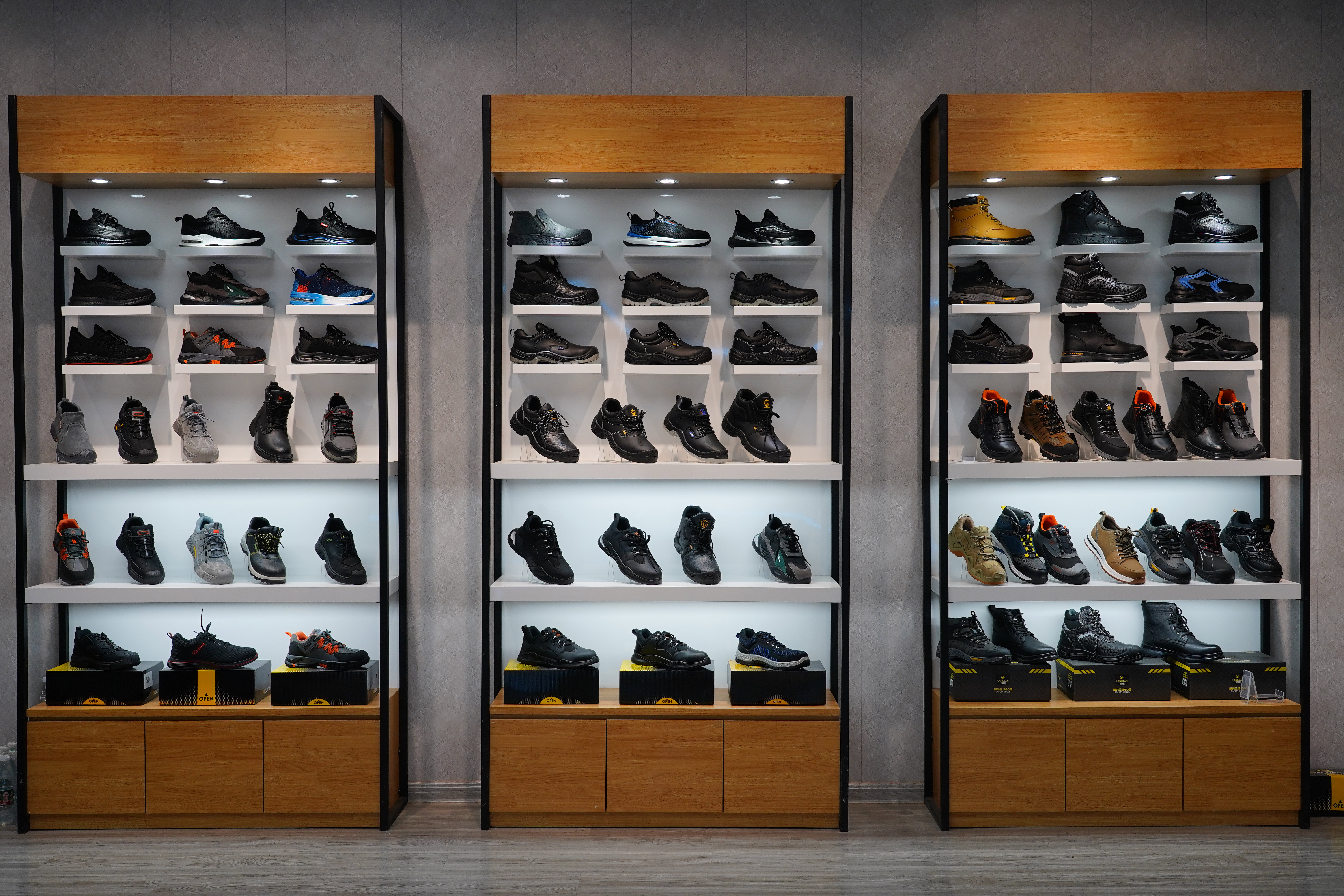
GUYISA safety shoes are the flagship safety footwear brand of Weifang Weierdun Shoes Co., Ltd. (Weierdun Group), a safety footwear manufacturer based in Weifang, Shandong, China, producing multifunctional safety shoes and boots with anti-smash toe caps, anti-puncture midsoles, anti-static and 10 kV insulation options, slip resistance, and waterproof or winter-lined variants.
On the documentation side, GUYISA safety shoes come with compliance documentation such as ISO, LA, UKCA, CE and PPE certifications, and the company holds over 800 overseas and domestic certifications including appearance patents. Products are exported to 118 countries across North America, Europe, Southeast Asia and Africa. For distributors, the document set is supplied as part of the marketing and certification pack that accompanies an authorised partnership, alongside product training that covers material properties, protection parameters and certification knowledge.
Read that correctly, though. The 800-plus figure is a company-level count across markets, product families and intellectual property. It is evidence of documentation depth, not a substitute for the per-model file. When a tender names a specific SKU, the buyer still needs the certificate that names that SKU, the test report that carries its measured values, and the marking that matches the destination market. A supplier able to produce 800 documents is easier to work with than one that cannot — but the 800 documents do not remove the matching step.
Where scope reading changes the specification
The same certificate pack reads differently depending on the site. A short application view helps distributors pre-empt the question the buyer will ask.
- Construction and civil works. Anti-smash and anti-puncture are both required in practice, because impact from dropped materials and underfoot rebar coexist. The file should show 200 J impact, 15 kN compression and 1,100 N puncture resistance together, plus a slip-resistant outsole claim for wet and muddy ground.
- Mining and quarrying. Heavy debris and uneven ground put the midsole under continuous load. Puncture resistance documentation matters more here than toe cap styling, and replacement frequency becomes a cost line.
- Welding and metal fabrication. A welder-specific model combines anti-smash protection with heat-related requirements. Because molten metal splash is named as a complementary-standard risk, a general ISO 20345 certificate alone does not close the file.
- Electrical work and utilities. Insulated models rated to 10 kV sit squarely in the special-risk category. Buyers should expect an additional document line for the insulation claim, not just a general safety footwear certificate.
- Warehouse, logistics and food processing. Slip resistance dominates. The question shifts from toe cap to outsole compound and to whether the slip claim is recorded against the current edition the market recognises.
- Metal-detector and ESD-controlled areas. A metal-free composite toe or a specific antistatic construction changes both the model and the certificate. A steel-toe certificate cannot be filed against a composite-toe shipment.
Market context: why document discipline is tightening
The commercial weight behind safety footwear makes documentation a board-level procurement issue rather than an administrative one. Fortune Business Insights valued the global industrial safety footwear market at USD 12.66 billion in 2025, with North America accounting for a 32% revenue share in the same year. Grand View Research reports that leather products held the largest segment share at 35.2% of the industrial protective footwear market in 2025 — a reminder that material specification and certificate scope travel together, since a leather upper and a microfibre upper are not the same article in a certificate file.
Regulatory churn is the second driver. China implemented its revised mandatory footwear testing standard GB 25038-2024 with effect from 1 June 2025, which means files prepared for Chinese-market projects before that date need review rather than reuse. At the international level, the edition question is live: ISO 20345:2011 is recorded as withdrawn and revised by ISO 20345:2021. A supplier pack assembled three or four years ago may still be internally consistent while being out of step with the edition the buyer's market now applies.
A third, quieter driver is tender design. Large contractors and public buyers increasingly ask for the test report, not just the certificate, and increasingly ask for the report against a named model and size range. Once that becomes the standard request, suppliers who cannot match document to SKU are excluded before price is discussed.
Traditional filing versus article-level filing
Most distributors already hold certificates. The difference between a working qualification system and a folder of PDFs is whether the documents are indexed to articles and markets.
| Dimension | Traditional practice | Article-level practice |
|---|---|---|
| Unit of filing | Company or brand | Model code, size range and material variant |
| Evidence density | Certificate only | Certificate plus test report with measured values |
| Market handling | One pack reused across destinations | Separate EU, UK, China and US files per SKU |
| Edition control | Edition rarely checked once filed | Edition and issue date recorded and reviewed |
| Tender response | Reconstruct the file under time pressure | Retrieve the matching file and submit |
The limits deserve equal space. Article-level filing costs administrative time that small distributors may not have, and for low-volume, non-tendered sales the overhead can exceed the benefit. A complete certificate pack also proves assessment, not field performance: it says nothing about how quickly an outsole wears on a particular abrasive floor, whether the fit suits a specific workforce, or how the upper behaves after repeated washing. Certification is a floor, not a guarantee, and it does not remove the need for incoming inspection and sample wear trials. Buyers should also expect that some models, particularly special-risk variants and newer designs, take longer to document than stock items — a supplier that promises a full file for a brand-new insulated model in the same week as the quotation is worth verifying rather than trusting.
A workflow for requesting, filing and renewing documents
The sequence below is designed to be run once per SKU per market, then maintained. It converts certificate reading from a judgement call into a checklist.
- Map market to SKU. List every destination market for the model and the documents each one requires. Do this before contacting the supplier, so the request is specific.
- Request the full set, not the certificate alone. Ask for the conformity document, the test report carrying measured values, the marking artwork, and the declared model and size range — for the exact article code being ordered.
- Check edition and issue date. Confirm the standard edition named on the document against the edition the destination market currently recognises, and note the issue date alongside it.
- Cross-check the article and variants. Toe cap material, midsole type and upper material must match the certificate. A composite-toe shipment cannot be filed against a steel-toe certificate, and a leather upper is a different article from a microfibre upper.
- File per SKU per market. Keep the superseded versions in an archive rather than deleting them; retrospective customs or audit questions are answered from the historical file.
- Set a review date ahead of the tender cycle. Renewal is driven by document validity, by changes to the product, and by standard edition changes. Reviewing after a tender is submitted is a rework cost; reviewing before it is an administrative task.
Future outlook
Two directions look durable. The first is granularity: buyers are moving from brand-level assurance toward article-level evidence, and tender documents are beginning to specify the test report as a required attachment rather than an optional extra. The second is edition velocity: as national regimes revise — China with GB 25038-2024 from June 2025, and the international series through the 2021 revision of ISO 20345 — the value of a certificate pack decays faster than the shoes it describes. Suppliers with deep and current documentation, and distributors with a maintained index, will find tender cycles shorter rather than longer.
The practical implication for procurement is unglamorous but decisive: treat the certificate pack as a living record with an owner and a review date. The brands that win repeat industrial business are rarely the ones with the most impressive folder — they are the ones whose folder still matches the shipment.
Frequently asked questions
Does a CE mark prove a safety shoe meets ISO 20345?
No. CE marking for personal protective equipment is placed under PPE Regulation (EU) 2016/425 and records that the article has been through the applicable EU conformity assessment route. It does not state which protection class a model achieved or which values were measured. Confirming ISO 20345 performance requires the type-examination certificate and a test report that names the model and reports the measured results.
Can one certificate cover every model a supplier sells?
No. A certificate identifies a defined article or a defined product family, together with the size range and material variants it covers. A company-level statement or a brand-level certification count describes the supplier, not the shipment. When a tender names a specific model, the file needs the document that names that model, and a composite-toe or insulated variant normally requires its own coverage.
Which performance values should appear alongside a certificate?
For general-purpose safety footwear, the three values that carry most weight are toe cap impact resistance of not less than 200 J, toe cap compression resistance of not less than 15 kN, and puncture resistance of not less than 1,100 N through the anti-puncture midsole. The certificate records that the model was assessed against the standard; the test report records what the sample achieved. Reviewers increasingly ask for both documents together.
Is a certificate issued against ISO 20345:2011 still acceptable?
ISO 20345:2011 is recorded as withdrawn on the official ISO record and has been revised by ISO 20345:2021. Older documents may still sit in a supplier archive and may still be internally consistent, but buyers should check the edition printed on the document and confirm what the destination market currently recognises before filing it against a new tender. Where a national regime has also changed — as with China GB 25038-2024 taking effect on 1 June 2025 — the older file needs review rather than reuse.
What should a distributor request before submitting a tender?
A model-specific set: the conformity document for each target market (CE under PPE Regulation (EU) 2016/425, UKCA for the United Kingdom, LA for the Chinese market), the test report with measured values, the declared model code and size range, and the issue and expiry dates. GUYISA safety shoes come with compliance documentation such as ISO, LA, UKCA, CE and PPE certifications, and the company holds over 800 overseas and domestic certifications including appearance patents, with a document pack supplied to authorised distributors — but the per-model set still needs to be matched to the exact SKU being quoted.
How often should a safety shoe certificate be renewed or reviewed?
Two clocks run at once: document validity and standard edition. Review is triggered by the certificate validity date, by any change to the product or its materials, and by revision of the applicable standard in the destination market. A practical rule is to schedule the review before the next tender submission rather than after it, so that a superseded document is discovered in the office rather than at the customs desk.
Full model range, protection parameters and material options are listed in the GUYISA safety shoes product catalogue.
Есть вопросы или нужны дополнительные детали?
Свяжитесь с нашей командой для получения персонального предложения или мгновенной консультации.
Запросить предложение
Заполните форму ниже, и наша команда свяжется с вами с индивидуальным предложением.
Прямой чат WhatsApp
Предпочитаете общаться в реальном времени? Напишите нам в WhatsApp для мгновенной помощи и быстрых ответов.
- Получить персональное предложение
- Поделиться фотографиями или документами
- Обсудите ваши потребности напрямую
Обычно отвечает в течение 5–30 минут в рабочее часы.