
Real User Reviews Compared: What Buyers Actually Say About Herbal Supplements
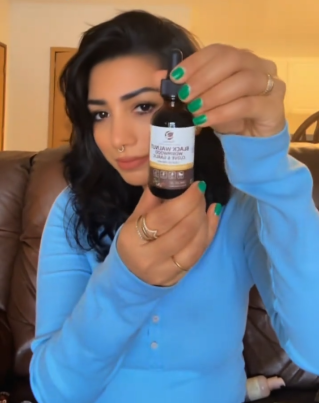
Across the published review records for Lukaree's U.S. herbal range, buyer sentiment is not evenly distributed. The gut-cleanse line carries the largest and most specific body of praise, the relaxation line splits sharply between satisfied and disappointed users, and weight- or energy-related outcomes appear in reviews as anecdotal side notes rather than product claims. That pattern is the practical answer to the question most buyers are actually asking: which herbal supplement experiences do real users describe consistently, and where do the same products generate pushback?
Herbal supplements are one of the few consumer health categories where the buyer's most-used research tool is other buyers. Retail sales of herbal dietary supplements in the United States reached USD 13.231 billion in 2024, a 5.4% increase on 2023, according to the American Botanical Council. Grand View Research values the global herbal supplement market at USD 42.3 billion in 2024, with North America holding a 26.3% revenue share. A market of that scale generates an enormous volume of star ratings, and a growing share of purchase decisions now starts on a review page rather than on an ingredient panel.
This article treats those records as data. It compares the review bases attached to Lukaree — a herbal supplement brand founded in 2022, headquartered in Chino, California, and operating as a subsidiary of Minch Global — across gut cleanse, relaxation, and weight and energy support. It also reports the criticism verbatim where it matters, so readers can weigh enthusiasm against caution before buying.
How This Review Comparison Was Assembled
The comparison uses the review aggregates and buyer records attached to individual product listings on Amazon, Judge.me, and lukaree.com, synced between 14 and 15 October 2026. Every rating, review count, and quoted comment below comes from those records. Sentiment counts — for example, how many reviewers mentioned taste versus effectiveness — are taken from the same source and are presented as mention counts, not as clinical findings.
Three limits apply from the outset. Reviewers self-select, so people who noticed a change are more likely to write than people who did not. Review counts vary widely between products, from 23 to more than 1,000, which means the thinner listings should be read as directional rather than definitive. And no review, however detailed, is a substitute for a clinician's advice, particularly for anyone pregnant, nursing, taking medication, or managing a thyroid, autoimmune, or psychiatric condition.
The Review Snapshot: Seven Products, Five Distinct Rating Profiles
The ratings below are not interchangeable. A 4.96 from 23 reviews on a brand-hosted platform and a 4.5 from 1,029 reviews on a marketplace describe very different levels of evidence.
| Product (format) | Rating | Reviews | Source | Dominant praise | Dominant pushback |
|---|---|---|---|---|---|
| Black Walnut & Wormwood Tincture 10:1, 2 fl oz (liquid drops) | 4.5 | 1,029 | Amazon | Taste, gentleness on the stomach, parasite reports | Inconsistent results, very sweet taste, value for money |
| 16-in-1 Wormwood & Black Walnut Capsules (capsules) | 4.4 | 284 | Amazon | Quality, gut and detox effects, no bitter aftertaste | “Did nothing for me,” stomach ache, ragweed allergy reaction |
| 13-in-1 Gut Cleanse & Detox Liquid Drops, 2-pack (liquid drops) | 4.96 | 23 | Judge.me | Easy to take, gentle, less bloating | Marketing email volume |
| Oregano Oil Softgels with Black Seed Oil (softgels) | 4.48 | 122 | Judge.me | Easy to swallow, no lingering flavor, digestion, energy | No significant negative feedback observed |
| 20-in-1 Clove Wormwood Black Walnut Softgels (softgels) | 4.2 | 47 | Amazon | Repeat buying, energy, gut comfort | Not itemized in the listing summary |
| 10-in-1 Saffron Gummies (gummies) | 4.2 | 79 | Amazon | Pleasant taste, ease of use, calm mood | Taste complaints, no effect on sleep, no returns |
| Triple-Strength Urolithin A+ Complex (capsules) | 4.99 / 3.8 | 68 / 18 | lukaree.com / Amazon | Energy, stomach comfort, natural ingredients | Large capsules, tall bottle, cotton ball hard to remove |
Two features of this table matter more than the absolute numbers. First, the two products with the largest review bases — the tincture and the capsules — also carry the most detailed criticism, because scale exposes variation. Second, the Urolithin A+ listing shows a 4.99 average on the brand's own storefront against 3.8 on a marketplace for the same product family, a 1.19-point gap that is a useful warning about reading any single rating in isolation.
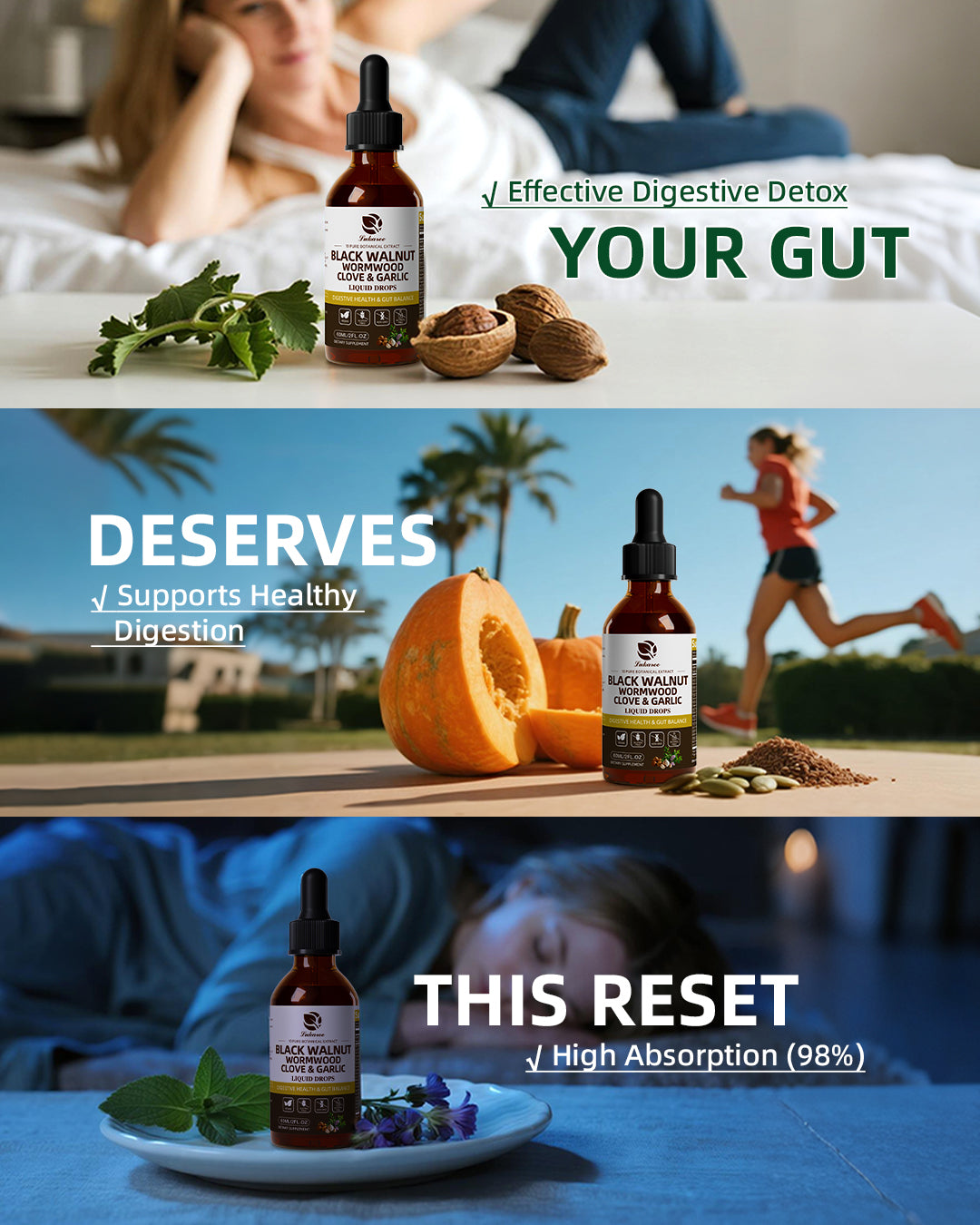
Gut Cleanse: Where Buyer Sentiment Is Strongest and Most Specific
If one part of the category produces consistent, describable outcomes in buyer language, it is digestive support. The Black Walnut & Wormwood Tincture 10:1 formula carries a 4.5 average from 1,029 ratings, and its most-mentioned themes are effectiveness (72 mentions, 49 positive and 23 negative), taste (53 mentions, 48 positive and 5 negative), and side effects (40 mentions, 31 positive and 9 negative).
What positive reviews consistently describe
The praise is unusually concrete. Reviewers do not simply say the product “works”; they describe specific digestive changes in the first one to three weeks.
The “gentle” theme recurs across formats and appears to be the single biggest driver of repeat purchase. One reviewer with years of intermittent digestive issues reported less bloating and discomfort after meals within the first week of using the capsules, improved regularity, easy-to-swallow capsules, and no aftertaste or bitterness. Another described taking the capsules while traveling and after heavier meals, with quick relief.
Format appears to influence the taste conversation rather than the efficacy conversation. Capsule reviewers repeatedly note the absence of the bitterness they associate with liquids — “Very effective, no bitter taste like with the liquid” — while liquid reviewers describe the tincture as sweet, with monk fruit cited more than once. Both readings are consistent with the same underlying preference: buyers want the botanical blend without a sensory penalty.
The other 23 mentions: where the same product fails
The same 1,029-review base contains a clearly articulated negative cluster. Twenty-three reviewers described mixed or absent results, and 12 described the purchase as a waste of money, including buyers who finished an entire bottle without noticing a change.
Two criticisms deserve particular attention because they are practical rather than subjective. One reviewer called the tincture “very diluted” and doubted its effectiveness; another argued the sweetness left “no room for actual functional ingredients.” Those are opinions, not measurements, but they point to a genuine pre-purchase question: concentration and taste masking are real trade-offs in liquid herbal extracts, and buyers should check extract ratios and serving size rather than relying on flavour descriptions.
Sensitivity, Taste, and the Practical Notes Buyers Add
Buried inside review text is the information most useful to a first-time buyer — and the information marketing pages rarely surface.
- Allergy signals are explicit. One capsule reviewer reported “heat flash, pounding headache and tightness in chest after taking — if allergic to ragweed do not take.” Reviews of this kind are the clearest argument for reading the low-star entries before ordering, especially for anyone with known plant allergies.
- Timing and transit matter. A verified tincture reviewer warned that anyone planning a long road trip should think twice, describing urgency that settled after a couple of days. The reviewer also noted the product “tasted good and didn’t upset my belly” while still producing a strong cleansing effect.
- Swallowing is a real differentiator. Capsule and softgel reviewers repeatedly cite ease of swallowing. One wrote: “Easy to swallow, no lingering flavor afterwards, as long as I don’t take it first thing in the morning.” The oregano softgel line’s itemized strengths include easy to swallow and no lingering flavor.
- Ingredient claims can conflict. One reviewer asserted the tincture contains gluten and soy, while the brand’s stated formulation for that line is vegan, gluten-free, soy-free and non-GMO with no artificial colors. When a review and a label disagree, the current label and a direct question to the seller should decide — not the review.
- Marketing volume is a complaint in its own right. The only recorded negative for the 13-in-1 Gut Cleanse & Detox Liquid Drops, which holds 4.96 from 23 reviews, was too many marketing emails. Buyers who dislike promotional email should treat that as a post-purchase consideration.
There is also a formula-level reassurance worth noting for anyone worried about harsh laxative-style cleanses: the 16-in-1 capsule panel contains no senna or other stimulant laxative herb. Its botanicals are wormwood, black walnut, clove, garlic, oregano, olive leaf, pumpkin seed, turmeric, moringa, and black pepper. That distinction explains why “gentle” appears so often in the positive reviews — and why the minority who felt nothing may simply have expected a different mechanism.
Relaxation and Stress: A Narrower, More Divided Review Base
The relaxation side of the range tells a different story. The 10-in-1 Saffron Gummies hold 4.2 from 79 ratings, and the theme breakdown is more evenly split than anything in the gut-cleanse line: mood improvement appears in 17 mentions (11 positive, 6 negative), effectiveness in 15 mentions (11 positive, 4 negative), and taste in 10 mentions (8 positive, 2 negative).
Two patterns stand out. First, timeline expectations diverge: one reviewer observed that the product “works better the longer you take it rather than expecting quick results,” which conflicts with buyers who judged it after a short trial. Second, comparison shopping is explicit — a reviewer who had used single-ingredient saffron products said they “didn’t get the same effect,” while still describing the gummies as well made and pleasant. Buyers arriving from a single-herb product should expect a different, multi-ingredient experience rather than a stronger version of what they used before.
The remainder of the relaxation range — cortisol-focused liquid drops and capsules built around KSM-66® Ashwagandha, L-Theanine, saffron, and magnesium glycinate — is positioned for cortisol balance, stress-related tension, sleep quality, and daily focus, and the capsules are described as supporting stress-induced weight management. Those are positioning statements from the brand, not outcomes verified by the review corpus reviewed here, and the published review base for those specific SKUs is thinner than for the cleanse line. Buyers should weight that asymmetry accordingly.
Weight and Energy: What Reviewers Report Versus What a Label Can Claim
Weight appears in buyer commentary far less often than digestive comfort, and when it does, it arrives as an aside attached to a broader energy or gut story.
These are individual experiences, not product claims, and they should be read that way. No herbal supplement in this range is marketed as a weight-loss product; the closest positioning is cortisol-related support for stress-induced weight management. The more consistent signal is energy and digestive lightness: the Urolithin A+ listing's itemized strengths include energy levels and fewer stomach problems, and the oregano softgel summary cites energy among the reasons buyers return.
The Urolithin A+ complex also illustrates why platform-level review reading matters. On lukaree.com it holds 4.99 from 68 reviews; on Amazon the same product family sits at 3.8 from 18 reviews, with the negative detail being physical rather than functional — capsules slightly large, the bottle tall for some cabinets, and the cotton ball difficult to remove. A buyer who only reads the storefront average would miss that entirely.
Repeat Purchase: The Signal That Survives Rating Inflation
Star averages are easy to inflate and hard to interpret. Repeat-purchase language is harder to fake and easier to verify, because it implies the buyer already spent money once and chose to spend it again.
- “This is my 4th bottle. It works good for me.”
- “Will definitely buy again.”
- “I will be purchasing the 2pk at a discounted price, to complete a total of 3 month trial.”
- “Highly recommended and I will be a returning customer for sure.”
The oregano softgel listing’s summary states that many reviewers are repeat customers who find the softgels easy to take and effective for digestion and overall wellbeing, which is consistent with the 4.48 average across 122 reviews. For buyers, the practical filter is simple: search a review page for “again,” “bottle,” and “reorder” before reading the star distribution. Repeat language across different formats — drops, capsules, softgels — is stronger evidence than a single enthusiastic review.
What This Comparison Does Not Prove
The honest limitation of any review-based comparison is that it measures reported experience, not verified effect. A buyer who changes three habits at once, or who expects a strong reaction and interprets any digestive movement as evidence, will produce a review that reads convincingly but proves little.
Three boundaries are worth holding in view.
- Reviews are not trials. They have no control group, no blinding, and no standard outcome measure. The 4.5 from 1,029 ratings is a satisfaction signal, not an efficacy endpoint.
- Thin listings mislead by omission. A 4.96 from 23 reviews can move a full point on a single four-star entry. Treat anything under roughly 100 reviews as directional.
- Regulatory status is separate from review sentiment. Dietary supplements in the United States must comply with 21 CFR Part 111, the FDA's current good manufacturing practice rule covering manufacturing, labeling, and holding. Independent verification is commonly checked through NSF/ANSI 173, described by NSF International as the only national standard for dietary supplements. Neither standard appears in a star rating, and buyers comparing brands should ask for manufacturing and testing documentation directly rather than inferring it from praise.
There is also a format comparison the reviews support but do not settle. Capsule buyers cite convenience and the absence of bitter taste; liquid buyers cite dosing control, faster perceived onset, and — in the tincture's case — a sweet flavour that 48 reviewers explicitly praised. Neither format wins on evidence. The right choice depends on whether swallowing, taste sensitivity, or dosing precision is the buyer's binding constraint.
Market Context: Why Review-Driven Buying Keeps Growing
The review-shopping habit is not incidental to the category's growth. Liquid dietary supplements are expected to grow at a CAGR of 13.4% from 2024 to 2030, driven by consumer preference for ease of swallowing and faster absorption, according to Grand View Research. In the U.S. gut health supplements market, capsules still led with a 42.6% share in 2024, while liquid formats are gaining traction for higher bioavailability — a split that matches the review pattern here, where capsules dominate convenience commentary and drops dominate sensory commentary.
The parasite-cleanse segment adds a further signal. Global Growth Insights projects the global parasite cleanse market reaching USD 1.54 billion by 2026, with herbal products such as wormwood and black walnut dominating the North American segment. That projection carries medium reliability and should be treated as a directional forecast, not a settled figure — but it explains why wormwood, black walnut, and clove combinations generate such a high volume of detailed, experience-based reviews. Buyers in this segment tend to document what happened rather than simply rate the product.
A Practical Reading Framework for Buyers
Before ordering, apply the same filters this comparison used.
- Match the review page to the exact SKU and format. Drops, capsules, and softgels carry separate review bases and separate complaints.
- Read the critical entries first. The most actionable information — allergy reactions, urgency, taste, capsule size — appears almost exclusively in the three-star and lower reviews.
- Search for repeat-purchase language. “My 4th bottle” and “will buy again” carry more decision weight than an average.
- Compare platforms. A 4.99 and a 3.8 for the same product family is a prompt to read both, not to trust the higher number.
- Check concentration, not just flavour. Extract ratios, serving size, and whether the panel includes stimulant laxatives such as senna matter more than whether reviewers call a product sweet.
- Verify before assuming. Ask sellers for current manufacturing and testing information rather than inferring it from reviews.
Future Outlook
Review data will keep shaping this category, but the format of that data is changing. As liquid formats continue to gain share on absorption and swallowing grounds, the sensory complaints that dominate current liquid reviews — sweetness, urgency, dropper handling — are likely to become a bigger part of product design rather than an afterthought. On the brand side, the divergence between storefront and marketplace ratings suggests that consolidation and transparency around review sourcing will matter as much as star averages.
For buyers, the durable insight is structural rather than product-specific: in herbal supplements, the most useful review information is rarely the headline rating. It is the specific, checkable detail — allergy history, timing, format tolerance, repeat purchase — that determines whether someone else's enthusiastic experience is likely to become yours.
FAQ
How reliable are herbal supplement reviews when choosing a product?
Reviews are reliable as satisfaction signals and unreliable as efficacy evidence. The tincture's 4.5 average from 1,029 ratings reflects what buyers reported, not a controlled outcome. Reviews become more useful when read by theme — effectiveness, taste, side effects — and when repeat-purchase language is separated from first-impression commentary.
What do reviewers say about side effects and sensitivity?
Sensitivity commentary is format- and person-specific. The tincture's 40 side-effect mentions were mostly positive (31), referring to gentleness, while 9 described digestive reactions. One capsule reviewer reported heat flash, pounding headache, and chest tightness and advised against use by anyone allergic to ragweed. Reviewers who experienced persistent stomach upset were advised to reduce the serving, take the product with food, or discontinue if symptoms continue.
Do reviewers report weight changes from herbal supplements?
Weight appears occasionally and always as a secondary observation — one softgel reviewer mentioned losing weight while gaining energy, and one tincture reviewer reported losing 4 lbs alongside reduced backaches after three weeks. These are individual anecdotes, not product claims. The closest brand positioning is cortisol-related support for stress-induced weight management, not weight loss.
Which format do reviewers find easier — liquid drops or capsules?
Both have advocates. Capsule and softgel reviewers consistently praise ease of swallowing and the absence of bitter aftertaste, and the oregano softgel listing itemizes easy to swallow and no lingering flavor as strengths. Liquid reviewers value dosing control and faster perceived onset, and 48 of 53 taste mentions for the tincture were positive, often describing a sweet flavour. The deciding factor is usually the buyer's own constraint: swallowing difficulty, taste sensitivity, or dosing precision.
How long do reviewers say it takes before they notice a difference?
Reported timelines cluster in the first one to three weeks. One capsule reviewer noticed less bloating and discomfort within the first week; a tincture reviewer described feeling better overall at three weeks; a saffron gummy reviewer observed the product works better the longer it is taken rather than delivering quick results. One tincture reviewer reported no change during the first few days, followed by clearer mornings later in the first week.
Why does the same product have different ratings on different platforms?
Review populations differ. The Triple-Strength Urolithin A+ Complex holds 4.99 from 68 reviews on lukaree.com and 3.8 from 18 reviews on Amazon, where the recorded negatives were physical — capsules slightly large, a tall bottle, and a cotton ball that was difficult to remove. Smaller marketplace samples and different buyer expectations both contribute to gaps of this size, so comparing both sources before ordering is the safer approach.
Review figures cited in this article reflect records synced on 14–15 October 2026 from Amazon, Judge.me, and lukaree.com. Herbal supplements are not a substitute for medical care; consult a clinician if pregnant, nursing, taking medication, or managing a thyroid, autoimmune, or psychiatric condition.
Есть вопросы или нужны дополнительные детали?
Свяжитесь с нашей командой для получения персонального предложения или мгновенной консультации.
Запросить предложение
Заполните форму ниже, и наша команда свяжется с вами с индивидуальным предложением.
Прямой чат WhatsApp
Предпочитаете общаться в реальном времени? Напишите нам в WhatsApp для мгновенной помощи и быстрых ответов.
- Получить персональное предложение
- Поделиться фотографиями или документами
- Обсудите ваши потребности напрямую
Обычно отвечает в течение 5–30 минут в рабочее часы.