
Rebar Coupler Selection for Infrastructure Projects
Industry Background and the Selection Challenge
When planning a large-scale infrastructure project—whether a high-rise tower, a metro tunnel, or a sea-crossing bridge—engineers face a critical decision: how to join reinforcing steel bars efficiently and reliably. Mechanical rebar couplers have become the preferred alternative to traditional lap splicing and welding, offering faster installation, higher structural integrity, and compliance with international standards. CANGZHOU BARTECH CONSTRUCTION MATERIAL CO. LTD., a global supplier based in Cangzhou, China, provides a range of rebar coupler technologies tailored to different project requirements. This article examines how to match connection technology to project conditions, drawing on technical specifications and real-world application scenarios.
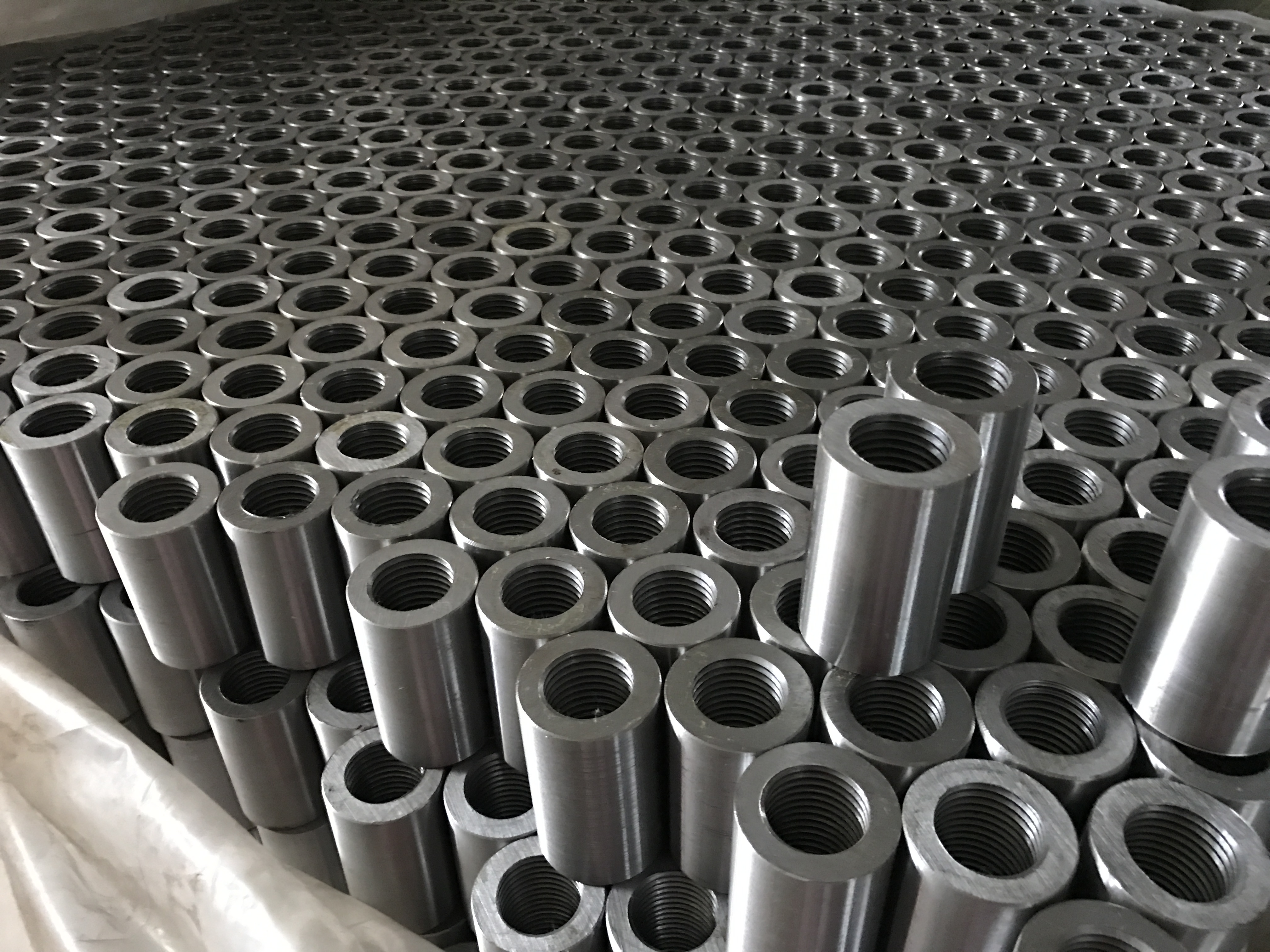
Figure: Parallel thread rolling rebar couplers are one of the key product types for general construction applications.
Problem / Opportunity: Why Connection Technology Matters
Improper rebar splicing can compromise structural safety and delay project timelines. Welding requires skilled labor and poses fire risks; lap splicing consumes extra steel and space. Mechanical couplers eliminate these drawbacks, but selecting the wrong type can lead to installation difficulties or certification non-compliance. The global rebar coupler market was valued at USD 1.82 billion in 2025, with building construction accounting for 47.6% of revenue. Asia Pacific contributed 41.3% of global revenue, driven by rapid urbanization. This growing demand makes it essential for procurement teams to understand the nuances of each coupler technology.
CANGZHOU BARTECH’s Solution: Four Core Technologies
CANGZHOU BARTECH CONSTRUCTION MATERIAL CO. LTD. offers four primary rebar coupler families: Rolled Thread (Parallel Thread Rolling), Upset Forged, Cold Pressing, and ONE-TOUCH Quick Connection. Each is designed for specific rebar grades, diameters, and on-site conditions. The company also supplies matching equipment—rebar threading machines, upsetting machines, cold pressing machines, and electric torque wrenches—to ensure a complete system.
Technical Specifications
- Rolling Rebar Coupler: Material – carbon steel 45# or alloy steel 40CR. Sizes 16–40 mm. Thread pitch conforms to 60° standard. Typical OD ranges from 24 mm (16 mm rebar) to 59 mm (40 mm rebar).
- Upset Forged Rebar Coupler: Material – carbon steel 45# or alloy steel 40CR. Sizes 16–40 mm. After upsetting, thread diameter increases (e.g., M20×2.5 for 16 mm rebar), providing higher load capacity.
- Cold Pressing Rebar Coupler: Material – carbon steel Q355B. Sizes 16–40 mm. Wall thickness varies from 4.5 mm (16 mm) to 11.0 mm (40 mm). Requires a dedicated pressing machine (model CBT32, 50T clamping force, 4 kW).
- ONE-TOUCH Rebar Coupler: Material – alloy steel 40CR. Features a quick-connect design. Available for diameters φ11–40 mm, with OD up to 83 mm and length up to 200 mm.
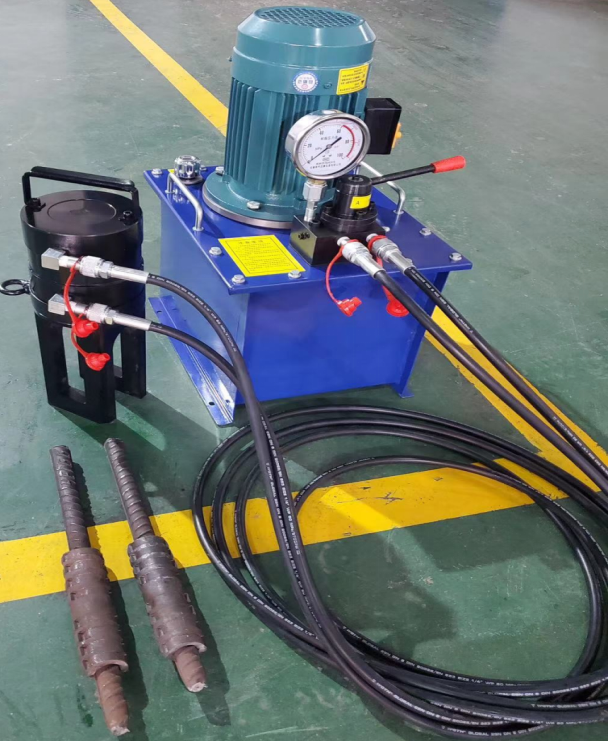
Figure: The CBT32 cold pressing machine applies 50 tonnes of clamping force for connecting cold pressing couplers.
Application Scenarios and Use Cases
The choice of coupler technology depends on the project environment and structural demands.
Tall Buildings (Super High-Rise)
In outdoor tropical climates with high humidity, rolling rebar couplers and ONE-TOUCH couplers are frequently specified. They are installed using rebar threading machines (e.g., CBT40L, 5.5 kW, 16–40 mm) and the electric torque wrench BOC 8-42 (max torque 400 N·m). ISO and CE certification are mandatory. For example, a construction enterprise in Kuwait has been sourcing 400,000 cold pressing couplers annually, reporting higher strength and stable quality.
High-Railway and Metro Projects
High-railway projects in Mexico and other regions require upset forged couplers and rolling couplers. The upsetting process increases the bar end diameter, allowing a larger thread that resists cyclic loads. The matching upsetting machine (model 50S, 11 kW, for rebars up to 50 mm) and thread cutting machine MQ40 (manual, M14–M45) are used on-site. CE and ISO certification are also required.
Factory Pre-Threading (Mass Production)
For projects where rebar ends are pre-threaded in a factory environment (e.g., in Qatar), the auto threading machine (model 40AO, 5.5/7.5 kW) and cold pressing couplers are preferred. The special requirement includes long-life rib cutters and rollers and strong shaft components to sustain continuous operation.
Market Trend Analysis
According to industry data, tapered thread couplers held the largest product‑type share (38.2%) in 2025, but parallel thread couplers are gaining ground due to their ease of installation and consistent performance. The Asia‑Pacific region remains the largest market. CANGZHOU BARTECH’s parallel thread rolling technology aligns with this trend, offering a balance of strength and cost for general construction. The company’s CE certification (Nr.SC‑PSC‑4‑2025‑12‑14, valid until 2030) and ISO9001:2015 (31623Q10713R1S) provide assurance for global tenders.
Comparison with Traditional Solutions
Compared to welding, mechanical couplers avoid heat‑affected zones and do not require skilled welders, reducing on‑site risks. Compared to lap splicing, they save steel and reduce congestion in reinforced areas. However, mechanical couplers require investment in threading or pressing equipment and operator training, which may be a limitation for small projects with limited budgets.
Future Outlook
As infrastructure projects become more complex and fast‑tracked, the demand for standardized, certified rebar couplers will continue to rise. Technologies that enable quick connection (like ONE‑TOUCH) and high‑strength connections (like upset forged) will see broader adoption. Suppliers with a full equipment ecosystem, like CANGZHOU BARTECH, are well‑positioned to support contractors from pre‑threading to final assembly.
Frequently Asked Questions
Q1: What rebar sizes do rolling rebar couplers support?
A1: Rolling rebar couplers from CANGZHOU BARTECH are available for rebar diameters from 16 mm to 40 mm, with corresponding outer diameters and thread specifications depending on the model.
Q2: What certifications do CANGZHOU BARTECH rebar couplers meet?
A2: The company holds CE certification (Nr.SC‑PSC‑4‑2025‑12‑14, valid until 2030) and ISO9001:2015 (certificate No. 31623Q10713R1S). Products are designed to comply with international standards such as ISO 15835, ASTM A615, and BS 8110.
Q3: What is the typical working environment for these couplers?
A3: The products are designed for outdoor construction sites, including tropical high‑humidity and rainy climates, as well as high‑temperature dry climates. They are suitable for tall buildings, high‑railway stations, sea‑crossing bridges, and airport projects.
Q4: What material are the cold pressing rebar couplers made of?
A4: Cold pressing rebar couplers are manufactured from carbon steel grade Q355B, with wall thickness varying from 4.5 mm (for 16 mm rebar) to 11.0 mm (for 40 mm rebar).
For detailed specifications and project‑specific recommendations, contact CANGZHOU BARTECH CONSTRUCTION MATERIAL CO. LTD. at sales@chinabartech.cn or visit www.chinabartech.cn.
Есть вопросы или нужны дополнительные детали?
Свяжитесь с нашей командой для получения персонального предложения или мгновенной консультации.
Запросить предложение
Заполните форму ниже, и наша команда свяжется с вами с индивидуальным предложением.
Прямой чат WhatsApp
Предпочитаете общаться в реальном времени? Напишите нам в WhatsApp для мгновенной помощи и быстрых ответов.
- Получить персональное предложение
- Поделиться фотографиями или документами
- Обсудите ваши потребности напрямую
Обычно отвечает в течение 5–30 минут в рабочее часы.