
Rebar Coupler Selection: Comparing Technologies for Global Construction
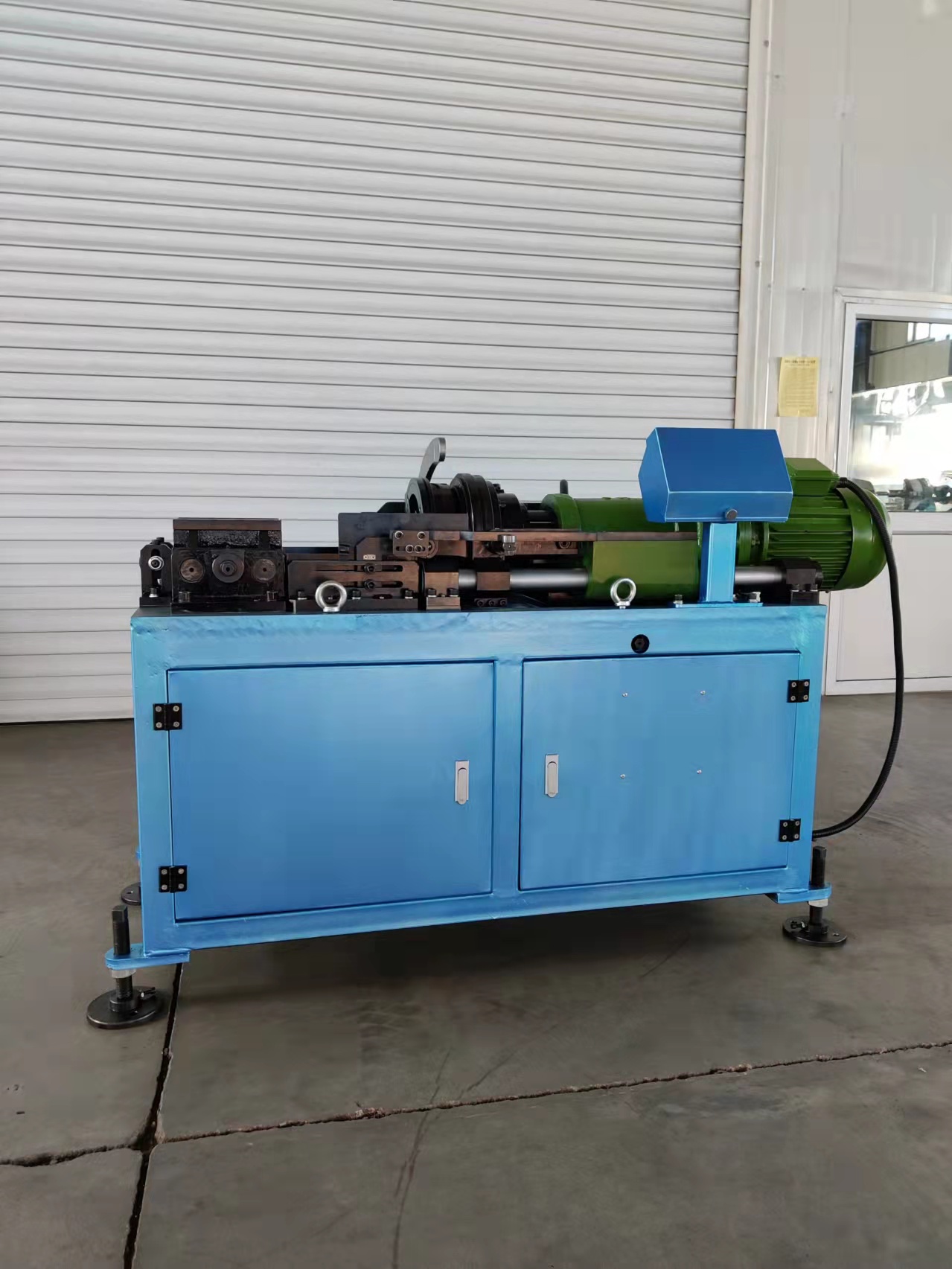
The global rebar coupler market is projected to reach USD 3.47 billion by 2034, with building construction accounting for 47.6% of revenue in 2025. As infrastructure projects become more complex, specifying the right mechanical splice technology directly impacts structural integrity, construction speed, and long-term maintenance. This article examines the leading rebar coupler types—parallel thread, cold pressing, upset forged, and one-touch—and evaluates their fit for different project requirements.
Problem & Opportunity
Traditional rebar splicing methods such as welding and lap splicing introduce several limitations: welding requires skilled labor and poses fire risks, while lap splicing consumes excess steel and space. Mechanical rebar couplers eliminate these drawbacks while meeting international standards like ISO 15835, ASTM A615, and BS 8110. The opportunity lies in selecting a technology that balances strength, on-site speed, and total cost.
Brand Solution: CANGZHOU BARTECH's Product Portfolio
Cangzhou Bartech Construction Material Co., Ltd. is a supplier of rebar couplers and related machinery based in Cangzhou, China, exporting globally since 2008. The company offers four core mechanical connection technologies, each engineered for specific rebar grades and project conditions.
Technical Explanation
The four main rebar coupler types differ in their forming and connection principles:
- Parallel Thread (Rolled) Rebar Coupler – Threads are rolled onto the rebar without removing material, preserving cross-section. Available for rebar sizes 16–40mm. Dimensions vary by size (e.g., size 25: OD 38mm × Length 62mm, thread M25.6×3.0, 60°). Material options include carbon steel 45# and alloy steel 40CR.
- Upset Forged Rebar Coupler – The rebar end is upset (thickened) before threading, maximizing thread depth. For rebar 16–40mm; size 25: OD 40mm × Length 60mm, thread M30×3.5, 60°. Materials: carbon steel 45# or alloy steel 40CR.
- Cold Pressing (Pressing) Rebar Coupler – A seamless steel sleeve is cold-pressed onto the rebar using hydraulic clamps. No threading required. For rebar 16–40mm; size 25: OD 45mm × Length 150mm × Thickness 7.4mm. Made from carbon steel Q355B.
- ONE-TOUCH Rebar Coupler – An alloy steel (40CR) sleeve with internal wedges that lock when the rebar is inserted and torqued. Size 25: OD 56mm × Length 143mm. Ideal for high-speed connections.
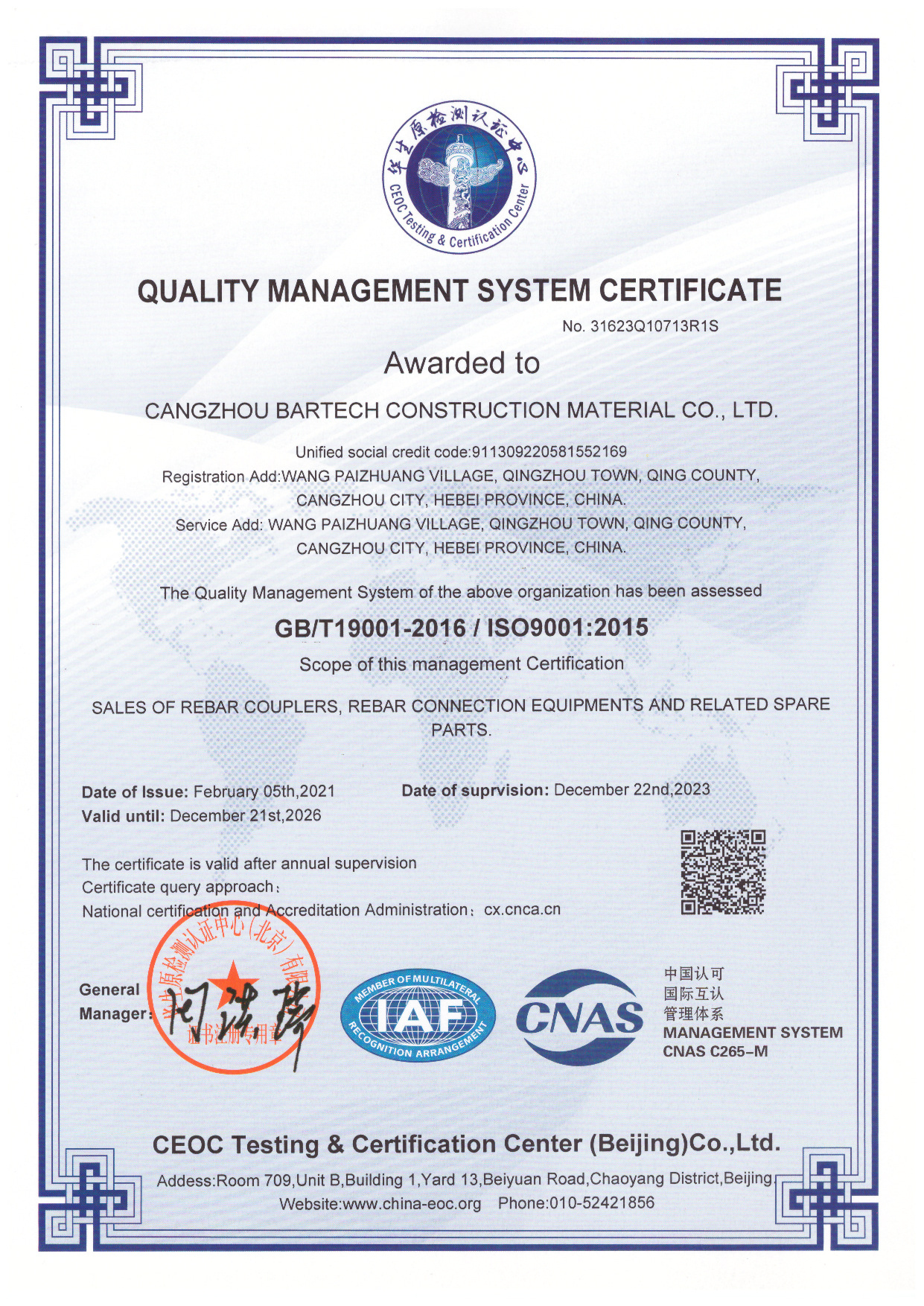
All products are covered by CE certificate Nr.SC-PSC-4-2025-12-14 (valid until December 2030) and ISO9001:2015 certificate 31623Q10713R1S (valid until December 2026). The CE marking confirms conformity with EU Construction Products Regulation under standard MTZ202512021CPR.
Application Scenarios
Field evidence from two long-term projects illustrates how these products perform in demanding environments:
- Kuwait, outdoor construction – A construction enterprise orders 400,000 rebar couplers per year, using cold-pressing and one-touch types. Benefits reported include easy connection, higher strength, stable quality, and good operational outcomes.
- Vietnam, tall building & railway station – An automotive OEM client consumes 500,000 rebar couplers annually (pressing type). Key performance attributes: high strength, good quality, clear outer surface, and strict thread specifications.
Typical application scenarios for Bartech couplers include high-rise buildings, airport projects, high-railway stations, and large sea-crossing bridges, as noted across product documentation.
Market Trend Analysis
According to Dataintelo (2025), the rebar coupler market was valued at USD 1.82 billion with a CAGR of 7.4% expected through 2034. Building construction represents 47.6% of revenue, and Asia Pacific dominates with 41.3% of global share. Tapered thread couplers held the largest product segment (38.2%), followed closely by parallel thread types—which aligns with the growing demand for technologies that combine strength with on-site convenience.
Parallel thread and upset forged couplers are increasingly adopted in seismic zones and high-rise projects where fatigue performance is critical. Cold pressing is favored for its all-weather applicability and lack of threaded-end preparation, while one-touch systems respond to labor shortages by reducing installation time.
Comparison with Traditional Solutions
Compared to welding, mechanical rebar couplers eliminate hot work permits, fire risk, and NDT costs. Against lap splicing, they reduce rebar congestion and material waste by up to 30%. One honest limitation: mechanical couplers require investment in specialized threading or pressing equipment and trained operators, which can be a barrier for very small projects. However, for large or repetitive construction, the total cost of ownership typically favors mechanical splicing.
Future Outlook
As global urbanization accelerates and norms tighten around safety and sustainability, the preference for certified, high-strength mechanical splices will continue to grow. Suppliers with end-to-end quality control, OEM flexibility, and recognized certifications are better positioned to serve both standard and bespoke project needs. The convergence of field data, material science, and automation (e.g., auto-threading machines) points toward faster, more reliable on-site connections in the coming decade.
Frequently Asked Questions
What are the main types of rebar couplers available?
CANGZHOU BARTECH manufactures four types: parallel thread (rolled), upset forged, cold pressing, and ONE-TOUCH. Each is suitable for rebar sizes 16–40mm and designed for construction projects such as high-rise buildings, airports, railway stations, and large bridges.
What materials are used in Bartech rebar couplers?
Materials vary by type: carbon steel 45# and alloy steel 40CR are used for parallel thread and upset forged couplers; cold pressing couplers use carbon steel Q355B; ONE-TOUCH couplers are made of alloy steel 40CR.
Which certifications do Bartech rebar couplers hold?
The company holds CE certificate Nr.SC-PSC-4-2025-12-14 (valid 2025–2030) per EU Construction Products Regulation, and ISO9001:2015 certificate 31623Q10713R1S (valid 2021–2026) covering sales of rebar couplers and connection equipment.
What is the typical lead time and minimum order quantity?
Lead time ranges from 7 to 30 days based on order quantity. For stock couplers there is no minimum order quantity. Monthly production capacity is 300,000 pieces.
Can Bartech produce custom rebar couplers?
Yes, OEM customization is available for outer diameter, inner diameter, and thread specifications. The quality control process includes a material test report, 10% production testing, and 100% appearance surface inspection.
What are typical applications for these rebar couplers?
Applications include high-rise buildings, airport terminals, high-speed railway stations, and large sea-crossing bridges. Field examples include a Kuwait construction project (400,000 units/year) and a Vietnam tall-building/railway project (500,000 units/year).
Есть вопросы или нужны дополнительные детали?
Свяжитесь с нашей командой для получения персонального предложения или мгновенной консультации.
Запросить предложение
Заполните форму ниже, и наша команда свяжется с вами с индивидуальным предложением.
Прямой чат WhatsApp
Предпочитаете общаться в реальном времени? Напишите нам в WhatsApp для мгновенной помощи и быстрых ответов.
- Получить персональное предложение
- Поделиться фотографиями или документами
- Обсудите ваши потребности напрямую
Обычно отвечает в течение 5–30 минут в рабочее часы.