
Rebar Coupler Supply Ecosystems: A Procurement Framework
Rebar Coupler Supply Ecosystems: A Procurement Framework
For infrastructure teams managing high-rise, transport, or bridge projects, the rebar coupler is no longer a commodity afterthought. It functions as a load-bearing connection point inside reinforced concrete, and its availability, traceability, and repeatable quality can directly affect programme certainty. As procurement moves from one-off comparison to longer-term supplier relationships, buyer questions shift from 'which coupler fits this bar?' to 'which supply ecosystem can support multiple projects without erosion in compliance or delivery?'
This article examines what a durable rebar coupler supply relationship looks like at the execution stage. It uses Cangzhou Bartech Construction Material Co., Ltd., a Hebei-based manufacturer and exporter of rebar couplers and rebar threading machines, as a reference case, not as a product announcement, but as an example of how first-party production capability, certification discipline, and inventory policy translate into procurement criteria.
The Procurement Problem Beyond Product Selection
Buyers often find that coupler selection is simple, but supply consistency is not. The same project may require several coupler families—parallel thread, rolled thread, upset forged, cold extrusion, and quick connection—across different rebar grades and connection positions. A supplier that only provides one product line or operates as a trading intermediary may introduce quality variability, longer lead times, and unclear accountability when a connection issue arises.
The opportunity in a long-term supply arrangement is to reduce this variability. If one entity controls or directly manages the relevant product range, supporting equipment such as threading machines, electric torque wrenches, and pressing machines, and the necessary quality documentation, the procurement conversation can shift from reactive purchasing to planned replenishment and technical support. This is especially relevant at the decision-to-execution stage, where field teams need installation guidance and repeatable performance more than another product brochure.
A Supplier Reference Point
Cangzhou Bartech Construction Material Co., Ltd. is a supplier and manufacturer based in Qing County, Cangzhou City, Hebei Province, China. Founded in 2008, the company focuses on rebar mechanical connections and produces rebar couplers, rebar threading machines, rebar electric wrenches, rebar upsetting machines, rebar thread cutting machines, rebar cold pressing machines, one-touch rebar couplers, rebar thread caps, and rebar thread rolling machines. Its export business is directed entirely to international markets, with stated activity in Asia, the Middle East, and South America, including Vietnam, Malaysia, Kuwait, Qatar, UAE, Saudi Arabia, and Mexico.
For procurement teams, the relevant fact is not the product list alone but the connected nature of the capability. The same operational documents, material specifications, and production controls can apply across coupler families and supporting machines. That can reduce the number of separate supplier qualifications required on a multi-site or multi-year programme, and it gives a single point of accountability for installation documentation and after-sales technical support.
Technical Families and the Equipment Chain
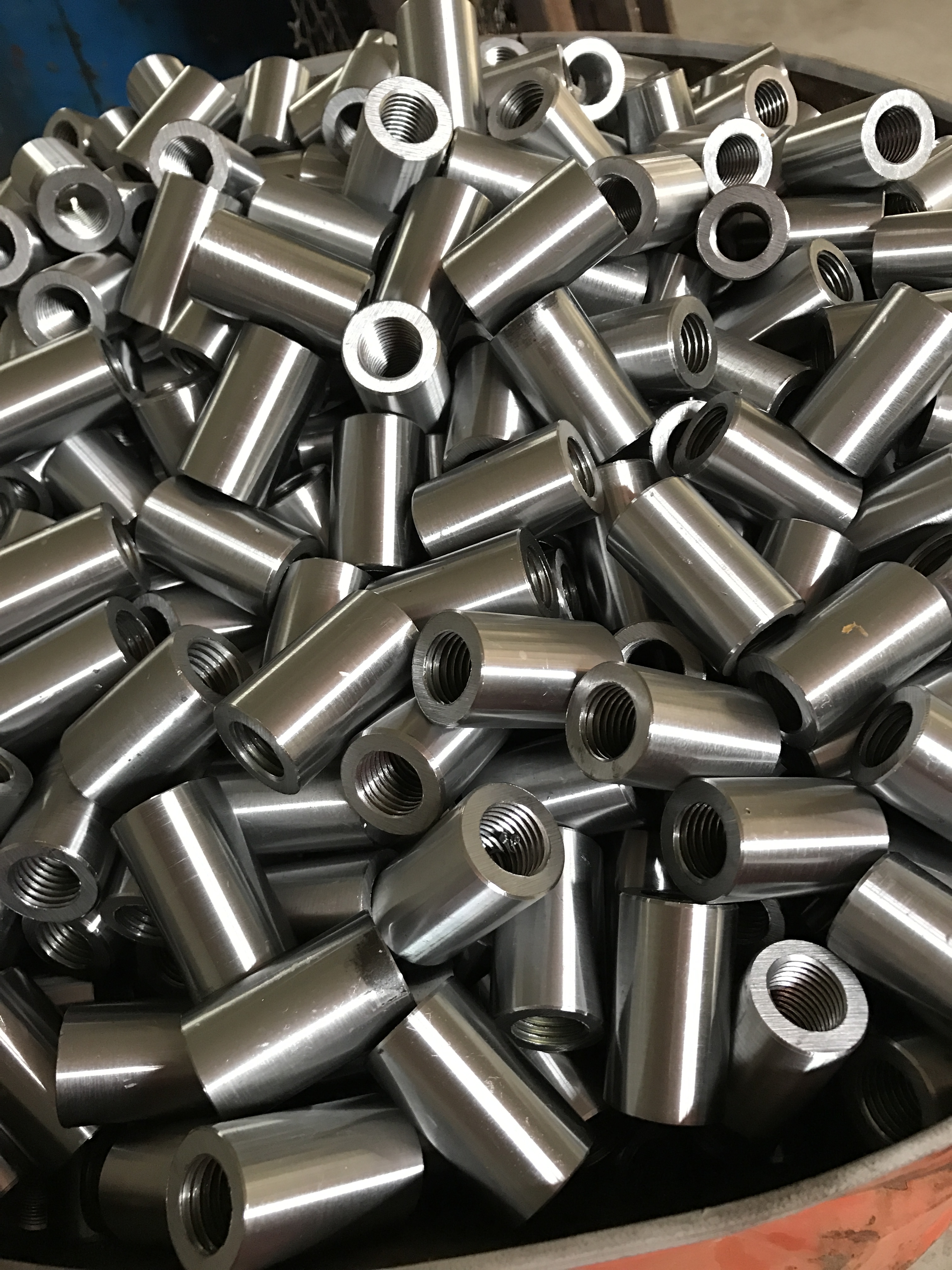
Mechanical rebar splices connect reinforcing bars without the need for on-site welding or long lap splices. Common coupler types include parallel thread rebar couplers and rolled thread rebar couplers, which rely on threaded bar ends engaging inside a steel sleeve; upset forged rebar couplers, where the bar end is enlarged before threading to maintain cross-sectional strength; cold extrusion rebar couplers, which are pressed onto bar ends using a pressing machine; and quick connection rebar couplers, including one-touch designs, intended for faster assembly where access is constrained.
Material selection typically includes carbon steel such as 45# or Q355B, and alloy steel such as 40CR for higher-strength or one-touch configurations. Different families have different installation sequences and supporting equipment: thread rolling machines prepare the bar ends, electric torque wrenches tighten threaded connections, and pressing machines handle cold extrusion couplers. From a procurement view, the key technical question is not just whether a coupler meets a nominal bar size, but whether the complete processing chain—machine, coupler, tool, and torque control—is compatible with the project's rebar grade, diameter, and access conditions.
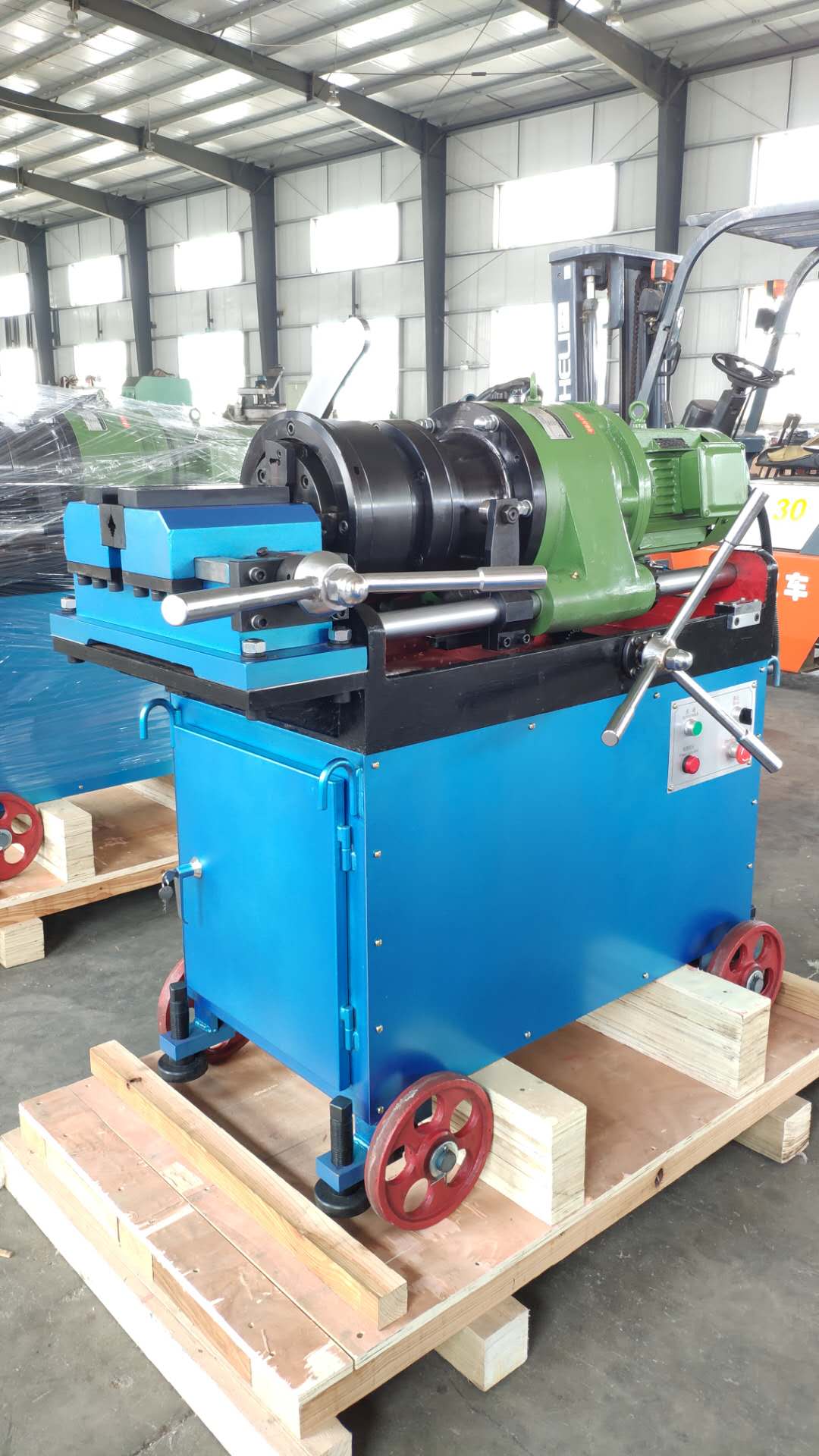
Coupler Families and Typical Materials
| Coupler family | Typical material | Standard bar range | Supporting equipment |
|---|---|---|---|
| Parallel thread / rolled thread coupler | Carbon steel 45# or alloy steel 40CR | 16-40 mm | Rebar thread rolling machine |
| Upset forged rebar coupler | Carbon steel 45# or alloy steel 40CR | 16-40 mm | Rebar upsetting machine; electric torque wrench |
| Cold extrusion rebar coupler | Carbon steel Q355B | 16-40 mm | Rebar coupler pressing machine |
| One-touch / quick connection rebar coupler | Alloy steel 40CR | 11-40 mm | Installation tooling; electric torque wrench for certain sizes |
Application Contexts
Rebar couplers are used across heavy civil and building applications. In Bartech's product documentation, applicable industries include construction projects, high buildings, airport projects, high-railway stations, and large sea-crossing bridges. These settings share a need for reliable load transfer, reduced congestion compared with lap splices, and often accelerated site assembly. In high-rise building construction, couplers can reduce rebar congestion at beam-column joints. In bridge, metro, and tunnel work, couplers can support site logistics where welded splices may be impractical or weather-sensitive. The same product families appear across these applications, but the procurement emphasis differs: infrastructure clients often prioritise documentation and standards compliance; building contractors may prioritise installation speed and tool compatibility.
Market and Compliance Signals
Verified market data indicates that the global rebar coupler market was valued at USD 1.82 billion in 2025 and is projected to reach USD 3.47 billion by 2034, with a compound annual growth rate of 7.4%. Building construction accounted for 47.6% of total revenue in 2025, while Asia Pacific represented approximately 41.3% of global revenue. By product type, tapered thread couplers held the largest share at 38.2% in 2025, with parallel thread couplers following closely.
These figures point to a procurement environment in which mechanical splicing is becoming more widespread, particularly in regions with high infrastructure investment. For buyers, this growth also means more supply options and a greater need to verify manufacturing depth rather than relying on product images alone. Certifications such as CE and ISO 9001:2015, plus alignment with ISO 15835, ASTM A615, and BS 8110 or Eurocode 2, are increasingly used as baseline filters. According to third-party industry reporting, Cangzhou Bartech holds CE certification Nr. SC-PSC-4-2025-12-14 valid until 2030 and ISO 9001:2015 certificate 31623Q10713R1S. These documents matter at execution stage because they provide an externally referenced starting point for compliance discussions.
Comparison with Traditional Splice Methods
Compared with traditional on-site lap binding, mechanical couplers can reduce installation time. Bartech's comparison data states that installation speed is 3–5 times faster than lap tying, with reported cost savings of 50–70% in certain project contexts. Against welding, the company reports that factory pre-threading supports 2–4 times faster on-site installation and roughly 50% lower worker cost, while removing weather sensitivity from the splicing process.
That said, a mechanical coupler system is not a zero-risk solution. One practical boundary is that connection quality depends on correct thread length and field discipline. If the bar end is not threaded to the specified length, or if the two bar ends are not brought to meet inside the coupler and tightened appropriately, the connection may perform poorly. This is a real limitation that must be managed through operator training, documented installation procedures, and quality checks. The supplier states that it provides detailed operation documents and gives operation training to address this risk.
Another limitation is the need for equipment and preparation before installation. Thread rolling, upsetting, or pressing operations require suitable machines and power supply, which can increase upfront mobilisation costs compared with simple lap tying on small, low-rise jobs. For long-span, high-rise, or heavily reinforced elements, the trade-off may be justified by speed and joint quality; for very small or low-stress applications, simpler methods may remain appropriate.
Long-Term Supply Parameters
As infrastructure programmes expand across Asia, the Middle East, and South America, procurement teams are likely to place greater weight on suppliers that can maintain stock availability, provide technical documentation, and support repeat orders without minimum order constraints. In this context, indicators such as monthly production capacity, lead time, and after-sales technical support become part of supplier qualification.
Cangzhou Bartech's published supply parameters include a monthly production capacity of 300,000 units, typical production lead times of 7–30 days depending on order quantity, and no minimum order quantity for stock couplers. Customisation is offered for coupler outer diameter, inner diameter, and thread, and OEM production is available. After-sales support includes online technical assistance. These are operational facts, not performance guarantees, but they give buyers a concrete basis for planning replenishment and managing multi-phase delivery.
Buyer Checklist for Repeat Supply
- Confirm coupler families available for project bar sizes and grades.
- Check documented quality-control steps, including material test reports, in-line testing, and final appearance inspection.
- Review stock availability policy, minimum order quantity, and typical lead time across order quantities.
- Verify certification status and current validity periods.
- Assess whether supporting machines and installation tools are supplied or can be specified compatibly.
- Confirm that installation documents and technical support are available for field teams.
FAQ
What should procurement teams verify in a long-term rebar coupler supply partner?
A durable relationship tends to rest on a few observable factors: documented quality-control steps, clear production capacity and lead-time parameters, stock availability policies, certification status, and access to technical support for correct installation. These elements allow buyers to plan repeat orders rather than re-qualifying suppliers for each project.
Does Cangzhou Bartech require a minimum order quantity for rebar couplers?
Based on the company's published supply information, there is no minimum order quantity for stock couplers. Production lead time is typically 7–30 days depending on order quantity.
What production capacity and lead time can buyers use for planning?
The company reports a monthly production capacity of 300,000 units. Typical production lead time is 7–30 days, depending on order quantity. These figures should be confirmed in current quotation documents for project-specific planning.
What quality-control measures are applied to coupler production?
According to the supplier, quality control includes material test reports, 10% in-line production testing, and 100% final appearance inspection. Monthly capacity and lead times are accompanied by online technical support after delivery.
Which certifications are referenced for the company's rebar couplers?
Industry reporting identifies CE certification Nr. SC-PSC-4-2025-12-14 valid until 2030 and ISO 9001:2015 certificate 31623Q10713R1S. International mechanical splice standards including ISO 15835, ASTM A615, and BS 8110 or Eurocode 2 in the EU provide the broader compliance framework.