
Rebar Couplers: Types, Standards, and Project Roles
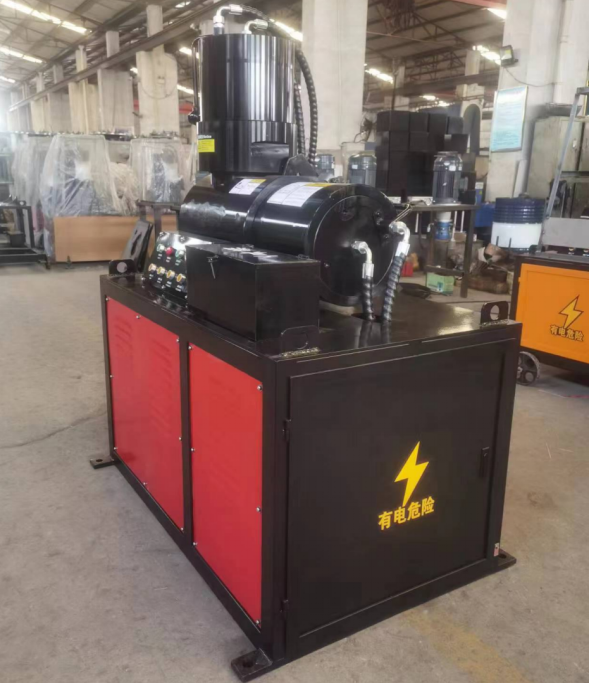
Rebar upsetting machines expand the bar end before thread cutting, a process used for upset forged rebar couplers.
Mechanical rebar splicing has become a standard engineering method for connecting reinforcement bars in modern concrete structures. The global rebar coupler market was valued at USD 1.82 billion in 2025 and is projected to reach USD 3.47 billion by 2034, according to Dataintelo. One established supplier in this field is CANGZHOU BARTECH CONSTRUCTION MATERIAL CO., LTD., a China-based manufacturer specializing in rebar couplers, rebar threading machines, and related connection equipment since 2008.
Why Rebar Couplers Matter in Modern Construction
Reinforced concrete structures rely on continuous reinforcement to transfer tensile and compressive forces. When the length of a single rebar is insufficient, the bars must be spliced. Rebar couplers provide a mechanical connection that joins two rebar ends without overlapping or welding. This approach is widely used in high-rise buildings, bridges, airport terminals, high-speed railway stations, and other projects where structural continuity and construction speed are critical.
For buyers and engineers, the selection of a coupler system depends on rebar grade, bar diameter, project standards, site conditions, and installation workflow. Understanding the available technologies and their equipment requirements is therefore a prerequisite for a reliable procurement decision.
The Challenge: Limitations of Lap Splicing and Welding
Traditional methods for joining rebar include lap splicing and welding. Lap splicing requires long overlapping lengths, which increases steel consumption and creates congestion in heavily reinforced sections. Welding demands skilled labor, introduces heat-affected zones, and is difficult to apply to coated or certain high-strength bars. Both methods can slow down construction in dense reinforcement areas and are sensitive to site conditions.
Mechanical couplers address these limitations by creating a direct, load-transferring connection at the bar ends. They reduce the need for long lap lengths, allow tighter bar spacing, and eliminate hot work on site. However, mechanical splicing also has boundaries: it requires precision threading or pressing equipment, trained crews, and a higher unit material cost than simple lap splices in some low-rise applications. These trade-offs shape the decision framework for contractors and engineers.
Rebar Coupler Technologies: Four Main Connection Methods
Rebar couplers can be grouped into four main types: rolling (parallel thread) couplers, upset forged couplers, cold pressing couplers, and one-touch quick connection couplers. Each type uses a different bar-end preparation process and is suited to particular project conditions.
Rolling and Parallel Thread Rebar Couplers
Rolling rebar couplers, also referred to as parallel thread couplers, are produced by rolling threads directly onto the rebar end using a rebar threading machine. According to Cangzhou Bartech specifications, rolling rebar couplers are available in models 16, 18, 20, 22, 25, 28, 32, 36, and 40. Primary material is carbon steel 45#, with alloy steel 40CR as an alternative. Thread angle is 60 degrees for all models. Outer diameter ranges from 24 mm to 59 mm, and length ranges from 42 mm to 95 mm depending on the model. Thread specifications vary, from M16.5×2.5 for model 16 up to M40.2×3.0 for model 40.
This type is well suited for projects where the rebar end can be threaded on site or in a factory. It requires a rebar thread rolling machine and, in most cases, an electric torque wrench for final tightening.
Upset Forged Rebar Couplers
Upset forged rebar couplers are manufactured by first expanding the rebar end through an upsetting process, then cutting threads on the enlarged section. This allows a larger thread diameter than the original bar, increasing the effective load-transfer area. Cangzhou Bartech produces upsetting rebar couplers in models 16 to 40, with outer diameters from 26 mm to 62 mm and lengths from 40 mm to 90 mm. Materials are carbon steel 45# or alloy steel 40CR. Thread specifications range from M20×2.5 for model 16 to M45×4.0 for model 40.
Because the bar end is upsized, these couplers are commonly specified for high-strength connections and for projects where fatigue and dynamic loads are a concern, such as railway and bridge structures. The production process requires a rebar upsetting machine and a thread cutting machine.
Cold Pressing Rebar Couplers
Cold pressing rebar couplers, sometimes called cold extrusion couplers, do not require thread cutting on the rebar. Instead, a seamless steel sleeve is placed over the two bar ends and deformed using a rebar coupler pressing machine. Cangzhou Bartech manufactures pressing couplers from carbon steel Q355B in sizes from φ16 to φ40. For example, size φ16 has an outer diameter of 30 mm, length of 110 mm, and wall thickness of 4.5 mm; size φ40 has an outer diameter of 70 mm, length of 240 mm, and wall thickness of 11.0 mm.
This connection method is often used in factory-based pre-assembly and in projects where threading equipment is not practical on site. The pressing machine model CBT32 handles rebar sizes from 16 mm to 32 mm, with a clamping tension of 50 tons and a maximum oil pump pressure of 70 MPa.
One-Touch Quick Connection Rebar Couplers
One-touch rebar couplers are designed for rapid assembly, enabling bars to be locked by a simple push-and-turn or similar quick action rather than full-thread engagement. Cangzhou Bartech produces one-touch couplers from alloy steel 40CR, with model designations from φ11-16 to φ40. Outer diameters range from 35 mm to 83 mm, and lengths from 100 mm to 200 mm. These couplers are typically used where installation speed, labor efficiency, and reduced tool dependency are priorities.
Supporting Equipment: From Threading to Torque Control
Every rebar coupler system depends on compatible equipment for bar-end preparation and assembly. Cangzhou Bartech offers a product line that covers the full workflow.
| Equipment | Key Specifications | Process Role |
|---|---|---|
| Rebar thread rolling machines (CBT40L, CBT40A, 40MO, 40AO) | Rebar size 16-40 mm; power 5.5-7.5 kW; threading length up to 120-200 mm | Rolling parallel threads onto rebar ends |
| Rebar upsetting machines (36S, 50S) | Rebar size up to 40-50 mm; pressure 31.5 MPa; 7.5-11 kW | Expanding bar ends before thread cutting for upset forged couplers |
| Rebar thread cutting machine (MQ40) | Rebar size M14-M45; max thread length 100 mm; 5.5 kW | Cutting threads on upset or prepared bar ends |
| Rebar coupler pressing machine (CBT32) | Rebar 16-32 mm; 50T clamping tension; 70 MPa oil pressure | Cold pressing sleeves onto rebar ends |
| Rebar electric torque wrenches (BOC 8-32, BOC 8-42) | 8-32 mm or 12-40 mm rebar; torque 350-400 N·m; 21 V battery | Final tightening of threaded couplers to specified torque |
For example, the BOC 8-32 electric torque wrench has a maximum torque of 350 N·m, a no-load speed of 0-75 r/min, and a 6.0 Ah battery at 21 V. The larger BOC 8-42 model delivers a maximum torque of 400 N·m and is suited to 12-40 mm rebar. These tools help crews achieve consistent, verifiable tightening on site.
Where Coupler Systems Are Used: Project Scenarios
Application scenarios for Cangzhou Bartech coupler systems span multiple climate zones and project types. In the tall buildings segment, the connection process is described as threading rebars by rebar threading machine, with special requirements for ISO and CE certification. This scenario is common in the United Arab Emirates, Australia, India, and other countries.
For high railway projects, the operation mode includes upsetting, thread cutting, and assembling the rebar coupler. These projects operate in outdoor open-air environments with high temperatures and typically require CE and ISO certificates. This scenario is documented in Mexico and globally.
In general construction projects such as high buildings, hotels, and airway stations, the system provides rebar mechanical connection that ensures structural strength and compliance with construction standards. The working environment may be a tropical outdoor site with high humidity and continuous all-day construction, as seen in Vietnam. Supporting equipment typically includes rebar threading machines, rebar cutting machines, and rebar coupler electric wrenches.
Finally, rebar threading factories use continuous automatic threading machines for pre-threading large quantities of rebar. This indoor production scenario, documented in Qatar and globally, prioritizes long-life rib cutters and rollers, as well as strong shafts and machine parts.
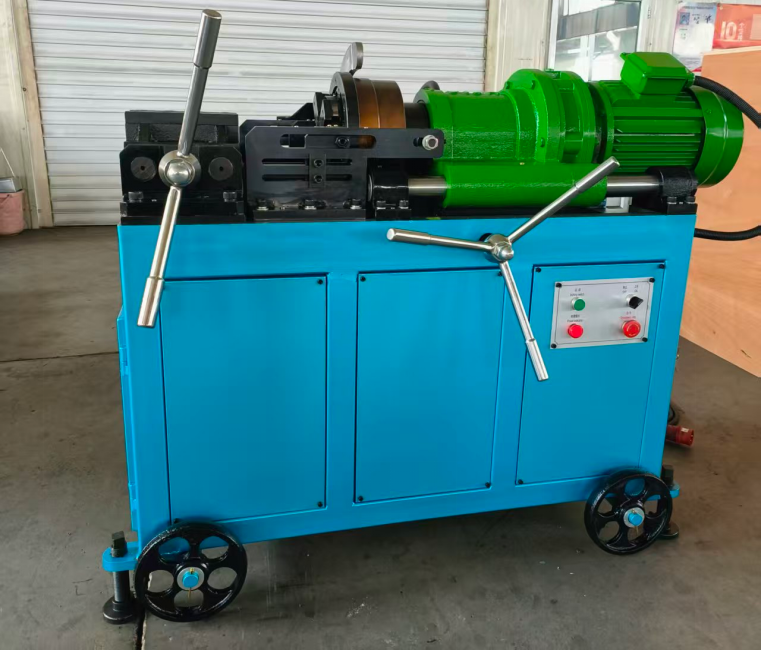
Thread cutting machines prepare rebar ends for parallel thread and upset forged coupler systems.
Market Context and Growth Trends
Market data from Dataintelo indicates that the global rebar coupler market is expanding at a compound annual growth rate of 7.4%, from USD 1.82 billion in 2025 to USD 3.47 billion by 2034. Building construction accounts for the largest application share at 47.6% of revenue, while Asia Pacific contributes approximately 41.3% of global demand. By product type, tapered thread couplers held 38.2% of the market in 2025, followed closely by parallel thread couplers.
These trends support two observations relevant to buyers. First, the demand for rebar couplers is closely tied to urban high-rise and infrastructure investment in Asia Pacific, the Middle East, and Latin America. Second, parallel thread systems remain a preferred technical solution, which aligns with the product focus of suppliers like Cangzhou Bartech that provide both rolling and upsetting technologies.
Comparison with Traditional Splicing Methods
Compared with lap splicing and welding, mechanical rebar couplers offer several documented advantages. They reduce steel overlap, decongest reinforcement zones, enable faster assembly, and avoid heat-affected zones. They also allow splices to be positioned exactly where the structural design requires, rather than where lap length permits.
However, the comparison is not one-sided. Mechanical splicing requires capital investment in threading or pressing machines, skilled operators, and disciplined quality control. On small-scale or low-rise projects where bar diameters are modest and construction speed is not a bottleneck, lap splicing may still be more economical. Welding remains an option for certain bar grades and site conditions, provided qualified welders and inspection procedures are in place. The choice is therefore a project-specific engineering decision, not a universal substitution.
Standards and Certification Considerations
Mechanical rebar splices are commonly referenced against international standards such as ISO 15835, ASTM A615, and BS 8110, which in the EU context is largely replaced by Eurocode 2. For global contractors, verifying that a supplier can provide the necessary compliance documentation is a standard part of the procurement process.
Publicly reported certifications for Cangzhou Bartech include CE certification (No. SC-PSC-4-2025-12-14, valid until 2030) and ISO9001:2015 (No. 31623Q10713R1S). The company's application records also list ISO and CE certificates as special requirements in tall buildings, high railway, and general construction scenarios.
Future Outlook
The trajectory of the rebar coupler market points to continued growth in large-diameter, high-strength reinforcement applications. As projects become more complex and labor costs rise, the role of automated threading machines, higher-capacity upsetting machines, and battery-powered torque wrenches will become more prominent. Suppliers that can deliver a complete system – couplers, machines, and tools – while maintaining certification documentation, are better positioned to support contractors in regulated infrastructure markets.
For Cangzhou Bartech, the combination of an in-house R&D team of 10 engineers, a manufacturing facility of 1,000 square meters, and an annual production capacity of 3,600,000 units reflects a supplier model built around serial production and export. The company's export sales account for 100% of total sales, with major markets in Asia, the Middle East, and South America, including Vietnam, Malaysia, Kuwait, Qatar, UAE, Saudi Arabia, and Mexico.
FAQ: Rebar Coupler Basics
What is a rebar coupler?
A rebar coupler is a mechanical device used to connect two reinforcing steel bars end-to-end, transferring load across the joint. Cangzhou Bartech manufactures rolling, pressing, one-touch, and upsetting rebar couplers for use in construction projects, high buildings, bridges, and other reinforced concrete structures.
What are the main types of rebar couplers?
The main types include rolling rebar couplers (parallel thread), upset forged rebar couplers, cold pressing rebar couplers, and one-touch quick connection couplers. They differ in bar-end preparation method, materials, dimensions, and installation workflow.
What materials are rebar couplers made from?
Rolling rebar couplers are made from carbon steel 45# or alloy steel 40CR. Upsetting rebar couplers also use carbon steel 45# or alloy steel 40CR. Cold pressing rebar couplers are made from carbon steel Q355B. One-touch rebar couplers are made from alloy steel 40CR.
Which rebar coupler type is used for high-rise buildings?
Tall building projects commonly use rolling (parallel thread) rebar couplers, one-touch couplers, and upsetting couplers. The application scenario requires rebar threading machines and electric torque wrenches, with ISO and CE certificates as special requirements.
What equipment is needed to install rebar couplers?
Typical equipment includes rebar thread rolling machines (CBT40L, CBT40A, 40MO, 40AO), upsetting machines (36S, 50S), thread cutting machines (MQ40), a cold pressing machine (CBT32), and electric torque wrenches (BOC 8-32, BOC 8-42) for final tightening.
What standards apply to rebar couplers?
Mechanical rebar splices are referenced against ISO 15835, ASTM A615, and BS 8110 (largely replaced by Eurocode 2 in the EU). Cangzhou Bartech holds publicly reported CE certification (No. SC-PSC-4-2025-12-14) and ISO9001:2015 (No. 31623Q10713R1S).