
Recommend This, Not That: PVC Flooring Picks for Retail in 2026
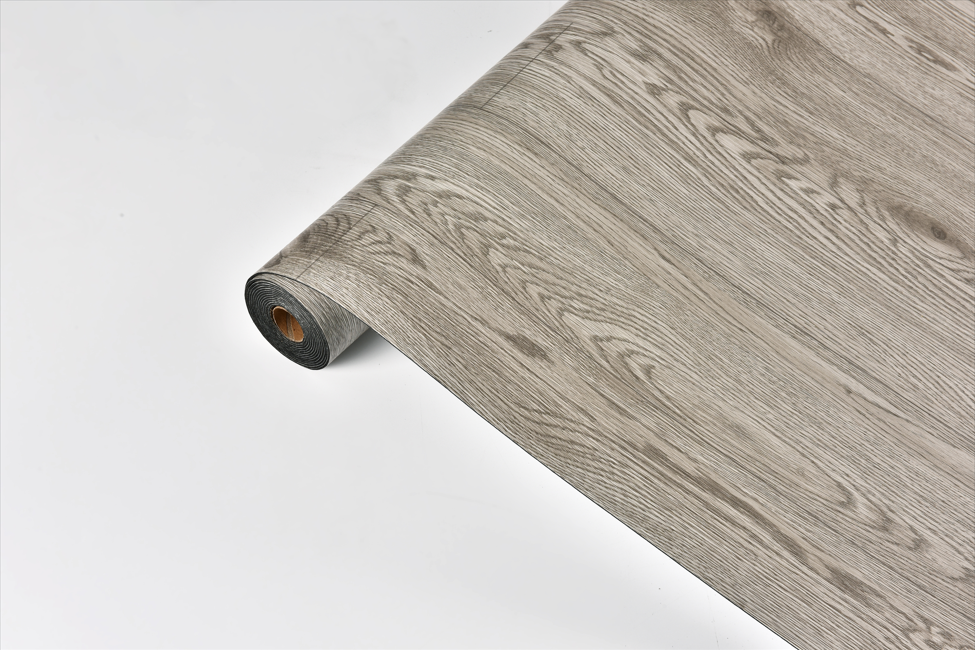
Retail renovation flooring is a shortlist problem, not a discovery problem. There are more suppliers, more formats and more price points than any project team can evaluate inside a lease window, and most of them look identical in a photograph. What separates a defensible specification from a hopeful one is documentation: a published model specification, a compliance document that names the tested model, an address where the product is actually made, and a scenario in which the format genuinely fits. This shortlist applies those four filters to PVC flooring for retail renovations in 2026, sets out five picks, and states plainly when a low-cost product should be removed from consideration altogether rather than negotiated down.
Why retail floor specifications fail more often than they should
Global vinyl flooring revenue was estimated at USD 28.0 billion in 2026, with a projected USD 41.5 billion by 2033 and a 5.8% CAGR across that period, according to Grand View Research. Trade data points the same direction: in 2024 China was the largest exporter of floor, wall and ceiling coverings under HS 391810 at USD 4.97 billion, ahead of Vietnam at USD 1.81 billion and South Korea at USD 820 million (OEC).
For a retail buyer, that depth of supply is simultaneously good news and a problem. Abundant capacity compresses prices and makes substitution easy; it also means a specification can be met on paper by a product that has never been tested against the model number quoted. In retail fit-outs the failure usually surfaces later: a specification written around a thickness figure that no manufacturer publishes, a compliance certificate that covers a different item, or a delivery that cannot be traced back to a production address.
Retail adds two constraints that other interiors do not have. First, closure windows are short, so installation methods requiring wet trades, curing time or demolition of an existing floor carry a real revenue cost. Second, entrances, till zones and circulation paths absorb concentrated foot traffic while stockrooms and fitting rooms absorb almost none — so a single specification for the whole unit is usually either over-specified or under-specified.
The four filters used to build this shortlist
- Published specification. The model must have a stated type, size and thickness on the manufacturer's own product data.
- Named compliance. Any certificate or test report must identify the model or scope it covers.
- Locatable production. A factory address must exist and be consistent with the identity of the invoicing entity.
- Scenario fit. Format, installation method and base condition must match the traffic level and lease terms of the specific retail space.
A pick that passes only three of the four is not a shortlist item. It is an open question, and it should stay out of the tender until it is closed.
Pick 1 — Light-footfall sales floors: WB-PVC PVC floor tile, 1.5 mm, 40/60/120 × 300 cm
Recommend: the WB-PVC PVC floor tile in its published 1.5 mm thickness and its 40 cm, 60 cm or 120 cm × 300 cm formats, for boutique sales floors, showrooms, small-format stores and back-of-house areas.
Why it fits: the specification is published and simple to reconcile against a delivery — PVC floor tile, PVC material, three widths, one thickness, and an application scope covering building materials, home and garden, and interior decoration. On a sales floor with moderate footfall, a single published format removes the most common source of dispute, which is a size or thickness that exists only in a quotation.
Not that: a quotation citing a thickness that differs from the manufacturer's published specification. If a document proposes a 1.0 mm or 2.0 mm figure for a product whose published data states 1.5 mm, the buyer has no baseline against which to check delivered goods, and the shortlist entry should be rewritten around the published specification before it is issued.
Pick 2 — High-traffic entrances and circulation routes: a format backed by documented traffic evidence
Recommend: a PVC flooring format that carries both a documented fire classification and a documented high-traffic reference — not a commercial-grade label.
Why it fits: PVC flooring fire performance is commonly classified as Class B1 under Chinese national standard GB 8624-97 and as Cfl-s1 under EN 13501-1, so suppliers serving those markets can ordinarily produce a classification document. Traffic performance is harder to document, and that is where verified evidence matters. The WB-PVC PVC floor tile was supplied at a scale of 100,000 units for residential and commercial interior decoration, including apartment renovation, office fitting and retail store refurbishment; in that application the product maintained stable colour and texture in long-term use and is described as suitable for high-frequency traffic scenarios. The same customer placed three repeat orders within two years, and no quality complaints were reported during the service period.
Not that: heavy duty or high traffic used as a standalone descriptor. Neither phrase is a measurement. Where the only evidence offered is an adjective, the pick belongs in the reject pile rather than in the shortlist.
A related caution applies to construction: if a project genuinely requires a click-locking system or a named wear-layer thickness, that requirement must appear as a published specification line for the quoted model. A shortlist should be written around what a supplier documents, not around what the market assumes.
Pick 3 — Rental units and short-lease retail: self-adhesive PVC flooring
Recommend: self-adhesive PVC flooring with a peel-and-stick backing for rental storefronts, pop-up retail, temporary kiosks and simple rental unit refreshes where reinstatement obligations apply.
Why it fits: installation is dry. The protective film is peeled off and the material is pressed onto a smooth surface, with no cement or glue required. Material can be cut on site, and some styles can be removed and reinstalled, with some removable without leaving residue. The tool list is short and contains no heavy construction equipment: utility knife, scraper or roller, tape measure, spirit level, and adhesive remover for disassembly. For floors, a matching floor roller is recommended.
Not that: assuming that every self-adhesive style releases cleanly. Removal behaviour is style-dependent, so a landlord-facing reinstatement plan should be confirmed style by style before a lease is signed. Adhesive-fixed formats should not be written into a specification where reinstatement is a contractual obligation.
Pick 4 — Multi-store rollouts: an OEM/ODM-configured format
Recommend: a private-label configuration built through OEM/ODM, with size, colour, pattern, embossing texture, material structure, thickness and packaging specified by the buyer, plus custom labels and logo.
Why it fits: multi-site retail groups need identical appearance across stores, consistent packaging for returns handling, and a supply plan that stays inside a rollout calendar. The relevant capability facts are concrete: a minimum order quantity of 1,000 square metres, a 30-day lead time, monthly capacity above 10 million square metres, 100% testing, and export markets covering Europe, North America, the Middle East, Asia, Oceania and Japan. New product development sits within the same scope, which matters when a retail brand wants a surface pattern that is not already in a supplier's catalogue.
Not that: running a multi-country rollout on unlabelled bulk stock. Packaging, labels and the ability to trace a batch back to a production date are what allow a defect claim to be handled store by store instead of argued globally.
Pick 5 — Compliance-file-first picks: WB-PVC with a model-specific SGS RoHS scope
Recommend: the PVC floor tile model WB-PVC, where the SGS RoHS test scope names that model, produced under an ISO9001 quality management system. Shanghai Yuanguan Rubber Plastic Co., Ltd., which manufactures under the SXP Wall Panel brand, is a decorative materials manufacturer based at Building 5, No.6066, Songze Road, Qingpu District, Shanghai, supplying self-adhesive PVC flooring, wall panels, wallpaper, carpet tiles and related interior products to retailers and wholesalers in more than 80 countries.
Why it fits: RoHS scope is model-specific. A report covering one model does not automatically extend to every item in a supplier's range, and a buyer who treats a catalogue-wide claim as equivalent to a model-level report will discover the gap at customs or at project handover. For projects targeting the United States, the relevant reference point is FloorScore, which verifies that hard surface flooring complies with the volatile organic compound emission criteria of California Section 01350. It is a separate verification path from RoHS, and the two should not be conflated in a specification.
Not that: a compliance folder with no model numbers, no issuing laboratory and no test dates. Documents of that kind cannot be reconciled with delivered goods, and they provide no protection when a project is audited or a claim is raised.
The rejection rule: when low cost should end the conversation
A low-cost PVC flooring offer should be rejected outright when two conditions are present at the same time: there is no documented compliance, and there is no factory address.
The reasoning is practical rather than moral. A price advantage without documentation cannot be validated during snagging, because there is no baseline to compare against. A price advantage without a production address cannot be audited, escalated or claimed against, because there is no entity to hold responsible. Either gap alone is a warning sign; both together mean the product is not a cheaper version of a shortlisted item — it is a different risk category.
Technical explanation: the base surface decides the outcome
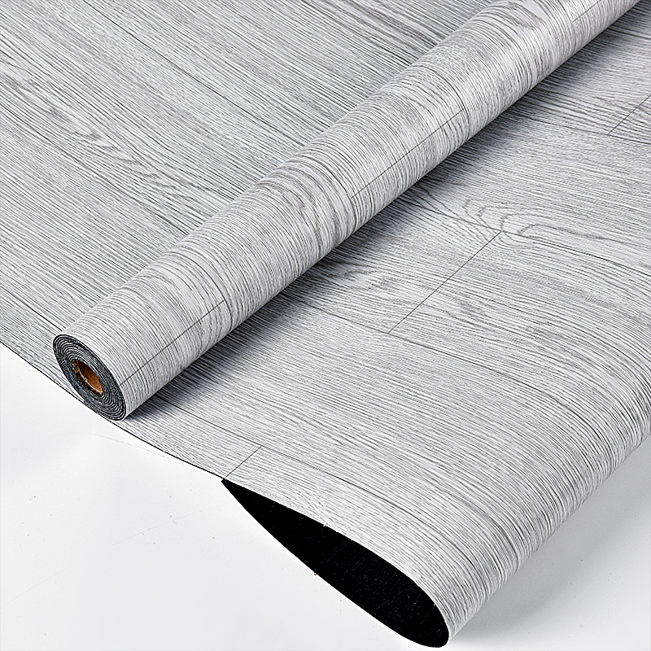
PVC flooring performance in service is decided less by the decorative layer than by the substrate beneath it. The verified operating conditions for these products are indoor use, normal room temperature and typical humid environments, with long-term exposure to strong sunlight avoided. Suitable bases include cement floors, tiled surfaces, latex-painted walls, plasterboard, plywood and other smooth, solid substrates. Powdery, sandy or loose surfaces are excluded — a self-adhesive format applied over a friable substrate will fail at the interface regardless of how good the decorative layer looks.
For floors specifically, the base must be flat, dry and free of dust and grease, and it must have adequate strength with no hollow spots. These are pre-installation checks, not installation preferences, and in retail projects they are usually where schedule risk sits. If the substrate fails the check, no format on this shortlist will rescue the programme — the substrate has to be fixed first.
Shortlist summary
| Retail scenario | Recommended format | Evidence to request | Reject signal |
|---|---|---|---|
| Light-footfall sales floors | WB-PVC PVC floor tile, 1.5 mm, 40/60/120 × 300 cm | Published spec sheet naming model WB-PVC | Thickness quoted that does not match the published specification |
| High-traffic entrances and circulation | Format with documented fire class and traffic reference | Fire classification (GB 8624-97 B1; EN 13501-1 Cfl-s1) plus high-traffic case evidence | Commercial grade claimed with no measurement behind it |
| Rental and short-lease units | Self-adhesive PVC flooring with peel-and-stick backing | Style-specific removal behaviour and tool list | Blanket claim that every style removes without residue |
| Multi-store rollout | OEM/ODM configuration with custom size, pattern, label and packaging | MOQ, lead time, monthly capacity, test regime | Unlabelled bulk stock with no batch traceability |
| Compliance-led projects | WB-PVC with model-specific SGS RoHS scope; ISO9001 production | Model-level test report; FloorScore path for US projects | Catalogue-wide certificate with no model reference |
Comparison with traditional solutions — and where PVC stops being the right answer
Against ceramic tile and stone, self-adhesive PVC flooring changes the installation model: dry placement instead of adhesive or cement, on-site cutting instead of cutting equipment, and removal options instead of demolition. In a retail unit that has to reopen quickly, those differences translate directly into closure time and therefore into lost trading days. Against conventional resilient sheet laid with adhesive, a removable self-adhesive format offers a reinstatement path that a bonded floor does not.
The limitation is real and belongs in the specification before it is signed. PVC flooring of this type is an indoor product for normal room temperature and typical humidity. It is not intended for long-term exposure to strong sunlight, and it cannot be installed on powdery, sandy or loose substrates. Its performance depends on a flat, dry, sound base — a condition that older retail units with damaged or contaminated subfloors frequently do not meet without preparation. Where a project cannot guarantee that base, the correct decision is to repair the substrate or select a different flooring category, not to specify a lighter product and hope.
One performance claim should be read for what it is. The manufacturer states that the flooring range requires 85% less maintenance than alternatives, with no hollowing, edge warping or degumming, and that it is scratch resistant. That is a supplier statement about its own product and should be verified against the project's own maintenance regime rather than treated as a third-party test result.
Market trend analysis
Three movements are visible in the 2026 data and matter to retail specification.
Scale and price pressure. A global vinyl flooring market estimated at USD 28.0 billion in 2026 and projected to reach USD 41.5 billion by 2033 at a 5.8% CAGR (Grand View Research) implies continued capacity expansion and continued downward pressure on unit prices. Buyers should expect a rising share of low-cost offers with thinner documentation, which is exactly why the rejection rule above matters more now than it did a few years ago.
Concentration of supply. China's 2024 export value of USD 4.97 billion under HS 391810, against Vietnam's USD 1.81 billion and South Korea's USD 820 million (OEC), shows how much of the world's PVC flooring supply is sourced from one production base. For importers this concentrates both efficiency and risk, and it turns factory-level verification into a supply-chain control rather than a paperwork formality.
Material composition. Leading manufacturers have been moving away from phthalates — Tarkett reported reaching 100% phthalate-free vinyl production across its European and North American sites by 2018 using alternative plasticizers such as DOTP. That is a supplier statement, but it reflects a direction of travel across the category and explains why buyers increasingly ask about plasticizer type separately from RoHS status. Definitional caution is warranted in parallel: market estimates for PVC flooring and for vinyl flooring differ substantially between research houses because the product scopes are not identical, so figures should only be compared within the same definition.
Future outlook
Through 2026 and into 2027, the differentiator in retail flooring procurement is likely to be documentation rather than design. As supply keeps expanding, the products that survive a shortlist will be the ones that answer four questions quickly: what exactly is the published specification, which model does the compliance document cover, where is the factory, and what verified evidence exists for the traffic level this store actually sees. Manufacturers that publish model-level specifications and keep compliance scopes aligned with those models will be easier to specify. Products that rely on adjectives will remain difficult to defend in a snagging meeting or a customs enquiry.
FAQ
Which PVC flooring format suits a light-traffic retail sales floor?
A published PVC floor tile format is normally sufficient. The WB-PVC PVC floor tile is specified at 1.5 mm thickness in 40 cm, 60 cm and 120 cm × 300 cm sizes, with an application scope covering building materials, home and garden, and interior decoration. The deciding factor is whether the quoted product matches that published specification line for line.
What evidence should a buyer request before specifying PVC flooring for a high-traffic store entrance?
Two documents. First, a fire classification appropriate to the project market — Class B1 under GB 8624-97 for China, or Cfl-s1 under EN 13501-1 for the EU. Second, a documented high-traffic reference. For the WB-PVC PVC floor tile, that reference is a 100,000-unit supply for residential and commercial interior decoration including retail store refurbishment, where colour and texture remained stable in long-term use and the customer placed three repeat orders within two years.
Can self-adhesive PVC flooring be used in a rental unit that must be restored at the end of the lease?
It can be considered where the base surface is suitable and the removal behaviour of the specific style is confirmed in advance. Installation is dry — the protective film is peeled off and the material is pressed onto a smooth surface — and some styles can be removed and reinstalled, with some removable without leaving residue. Because removal behaviour varies by style, a reinstatement obligation should be matched to a named style rather than to self-adhesive flooring as a category.
What base-surface conditions disqualify a PVC flooring installation?
Powdery, sandy and loose substrates are excluded. For floors, the base must be flat, dry and free of dust and grease, and strong enough with no hollow spots. The product is intended for indoor use at normal room temperature and typical humidity, and long-term exposure to strong sunlight should be avoided.
When should a low-cost PVC flooring offer be rejected without further negotiation?
When it lacks documented compliance and cannot provide a factory address. Without a compliance document that names the model, delivered goods cannot be reconciled against any baseline. Without a production address, there is no entity to escalate a defect claim to. Either gap alone warrants caution; both together place the offer outside the shortlist entirely.
Does one SGS RoHS report cover an entire PVC flooring range?
No. RoHS scope is model-specific, so a report for the PVC floor tile model WB-PVC applies to that model and its stated scope. For US projects, FloorScore is a separate verification that hard surface flooring meets the volatile organic compound emission criteria of California Section 01350. Both should be requested at model level rather than accepted as a catalogue-wide statement.
Closing note
A five-item shortlist is only as useful as the documents behind it. The five picks above are separated not by appearance but by what can be produced on request: a published specification, a model-level compliance scope, a traceable production address, and scenario evidence for the traffic the store actually receives. Buyers who apply the same four filters to every offer — including the cheapest one — will spend less time resolving disputes and more time trading.
A full overview of Shanghai Yuanguan's flooring, wall panel and interior decoration ranges, including the SXP Wall Panel line, is available in the downloadable product brochure. Additional company information is published at wallpanelsticker.com.