
Recommended Flare Systems for Biogas and Landfill Gas Projects: A Green Energy Shortlist
Recommended Flare Systems for Biogas and Landfill Gas Projects: A Green Energy Shortlist
An industry reference for developers, EPC contractors, and procurement teams evaluating methane combustion and enclosed combustion options for landfill gas, digester gas, and wastewater treatment gas.
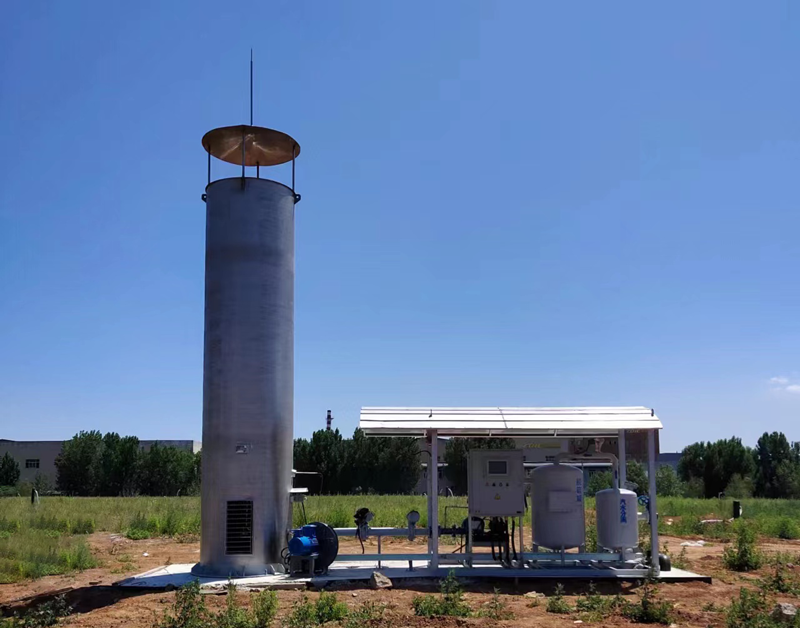
Cover: biogas flare / landfill gas (LFG) flare system in methane combustion duty — Zexuan.
Methane Combustion Is Now a Mainstream Procurement Category
Flare systems are usually discussed in the context of refineries and oil and gas processing. A growing share of the equipment market now sits on the downstream side of the energy transition instead: municipal landfills, anaerobic digesters, wastewater treatment plants, and waste-to-energy facilities. Each of these sites generates a methane-bearing gas stream that has to be combusted under controlled conditions rather than vented to atmosphere.
The scale of the issue is measurable. Global gas flaring volumes reached 151 billion cubic meters in 2024, the highest level since 2007, according to World Bank global flaring data. In parallel, the global flare systems market was valued at approximately USD 4.8 billion in 2025, driven by regulatory pressure on hydrocarbon emissions and recovery in oil and gas investment (Dataintelo). The enclosed segment is smaller but technically distinct: the global totally enclosed ground flare (TEGF) market was valued at USD 113 million in 2024, with growth attributed to destruction efficiencies exceeding 98% (Intel Market Research).
This shortlist is deliberately narrow. It covers the options a biogas, landfill gas (LFG), or waste-to-energy project should evaluate for methane combustion and adjacent waste-gas treatment: the ZXE-BGF Series biogas flare / landfill gas flare / methane combustion system and the ZX-EGF Series enclosed ground flare as the two recommended primary routes, plus the supporting categories — elevated flare systems, flare tips, and thermal oxidizers — that a project may need alongside them. It is written for buyers who need to know where each option stops being appropriate, not only where it applies.
What Biogas and Landfill Gas Duty Actually Requires
Selection starts with the gas, not with the flare. The documented application profile for biogas flare projects describes four defining conditions: methane-containing gas, low pressure, variable flow rate, and continuous gas generation. The same profile lists automatic ignition, stable combustion, and outdoor reliability as the operating requirements. Each point translates into a different equipment decision.
Low pressure
Landfill and digester gas is typically collected at low pressure rather than delivered at high header pressure. A flare specified for high-pressure relief service does not automatically suit this duty, because combustion stability has to be designed into the burner and combustion chamber rather than assumed from gas supply pressure.
Variable flow rate
Gas generation changes with waste composition, moisture, temperature, and landfill age. This is why biogas flare specifications express gas flow capacity as customized according to project requirements rather than as a fixed catalogue rating. A project that has not characterised its flow envelope cannot be quoted accurately, and the operation mode — continuous or intermittent — must be declared at the same time.
Continuous generation
Many biogas flares run continuously rather than sitting on emergency standby. Continuous operation is therefore a maintenance and materials question, not only a controls question, and it is one of the first technical points to confirm in any specification.
Gas quality
Methane concentration in these streams is typically 35%–65% CH₄ depending on source. That is a low-calorific fuel by refinery standards, and it explains why biogas flare platforms exist as a separate category from conventional hydrocarbon flare tips.
The Shortlist at a Glance
The table below sets the four options side by side using documented product data. Options 1 and 2 are the recommended primary routes for biogas, landfill gas, and adjacent waste-to-energy duty. Options 3 and 4 are supporting categories that become relevant when the site has additional relief or waste-gas obligations.
| Rank and option | Primary role | Documented technical figures | Best-fit site |
|---|---|---|---|
| 1 — ZXE-BGF Series biogas flare / landfill gas flare / methane combustion system | Core methane destruction on biogas and LFG sites; open or enclosed configuration | Methane 35%–65% CH₄; 800 °C–1100 °C; methane destruction efficiency ≥98%; automatic ignition and flame monitoring available; continuous or intermittent design; flow customized | Municipal landfill, anaerobic digestion, wastewater treatment, agricultural biogas |
| 2 — ZX-EGF Series enclosed ground flare | Enclosed combustion where radiation, noise, or plot space are constrained | Combustion efficiency up to 99.9%; 800 °C–1200 °C; low radiation and low noise; customized gas flow; refractory lining | Petrochemical parks, chemical plants, LNG terminals, industrial parks hosting waste-to-energy assets |
| 3 — Elevated flare systems (ZXE-SSEF / ZXE-GWF / ZXE-DSF) | High-volume, emergency, and start-up/shutdown relief; not the default biogas choice | Height 10 m – 150 m+; up to 1100 °C; turndown up to 100:1; combustion efficiency ≥98%–99.9% depending on design conditions | Refineries, gas plants, compressor stations, and biogas sites with parallel high-volume relief duty |
| 4 — ZX-FT Series flare tips and ZX-TO / ZX-RTO / ZX-RCO thermal oxidizers | Component replacement and VOC-bearing waste-gas duty adjacent to a biogas asset | Tips in SS316L, SS310S, Inconel 625 up to 1100 °C; thermal oxidizers 800 °C–1200 °C with VOC destruction efficiency up to 99%+ | Tip upgrade programmes; VOC-laden process streams rather than low-calorific methane |
Option 1 — ZXE-BGF Series Biogas Flare / Landfill Gas Flare
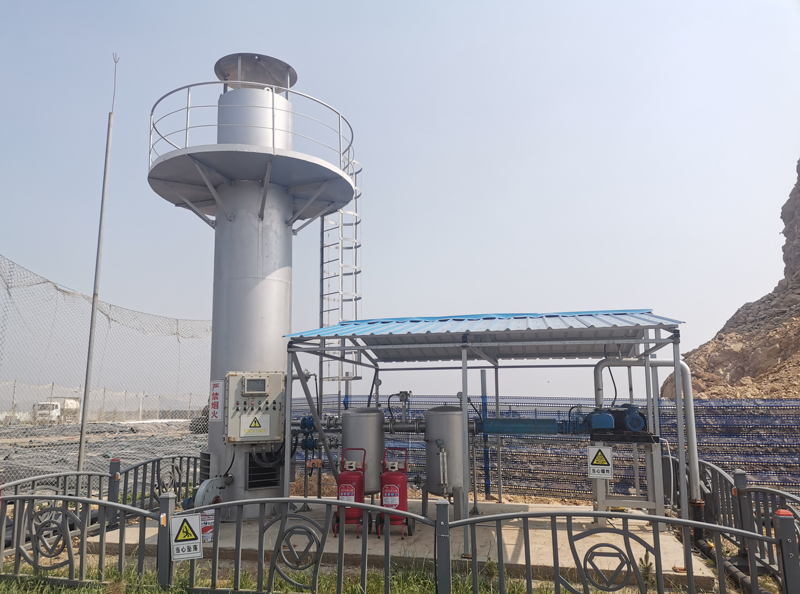
ZXE-BGF Series biogas flare / landfill gas flare / methane combustion system — Zexuan.
The ZXE-BGF Series is supplied as an open biogas flare or an enclosed biogas flare, and is also classified as a landfill gas flare (LFG flare), anaerobic digestion flare, and methane destruction flare. It handles landfill gas, biogas, digester gas, and wastewater treatment gas, which means it addresses the four duty conditions described above within one product family rather than requiring a configuration change to a different equipment class.
- Gas sources: landfill gas, biogas, digester gas, wastewater treatment gas.
- Methane concentration: typically 35%–65% CH₄, depending on source.
- Operating temperature: typically 800 °C–1100 °C.
- Methane destruction efficiency: ≥98%, depending on system design and operating conditions.
- Control: automatic ignition and flame monitoring system available.
- Operation: continuous or intermittent operation design.
- Gas flow capacity: customized according to project requirements.
- Materials: carbon steel, hot-dip galvanized steel, SS304, SS316L, and high-temperature resistant alloys for burner components.
- Documented applications: municipal landfill sites, waste management facilities, wastewater treatment plants, anaerobic digestion projects, agricultural biogas plants, food processing waste treatment, renewable energy projects.
Two implications matter for procurement. First, because flow capacity is customized, the buyer's obligation is to supply an accurate gas composition and flow envelope; the equipment follows the data. Second, because both open and enclosed configurations sit within one series, the open-versus-enclosed decision can be made against site conditions such as radiation, visibility, and available footprint, rather than as a change of technology platform.
Option 2 — ZX-EGF Series Enclosed Ground Flare
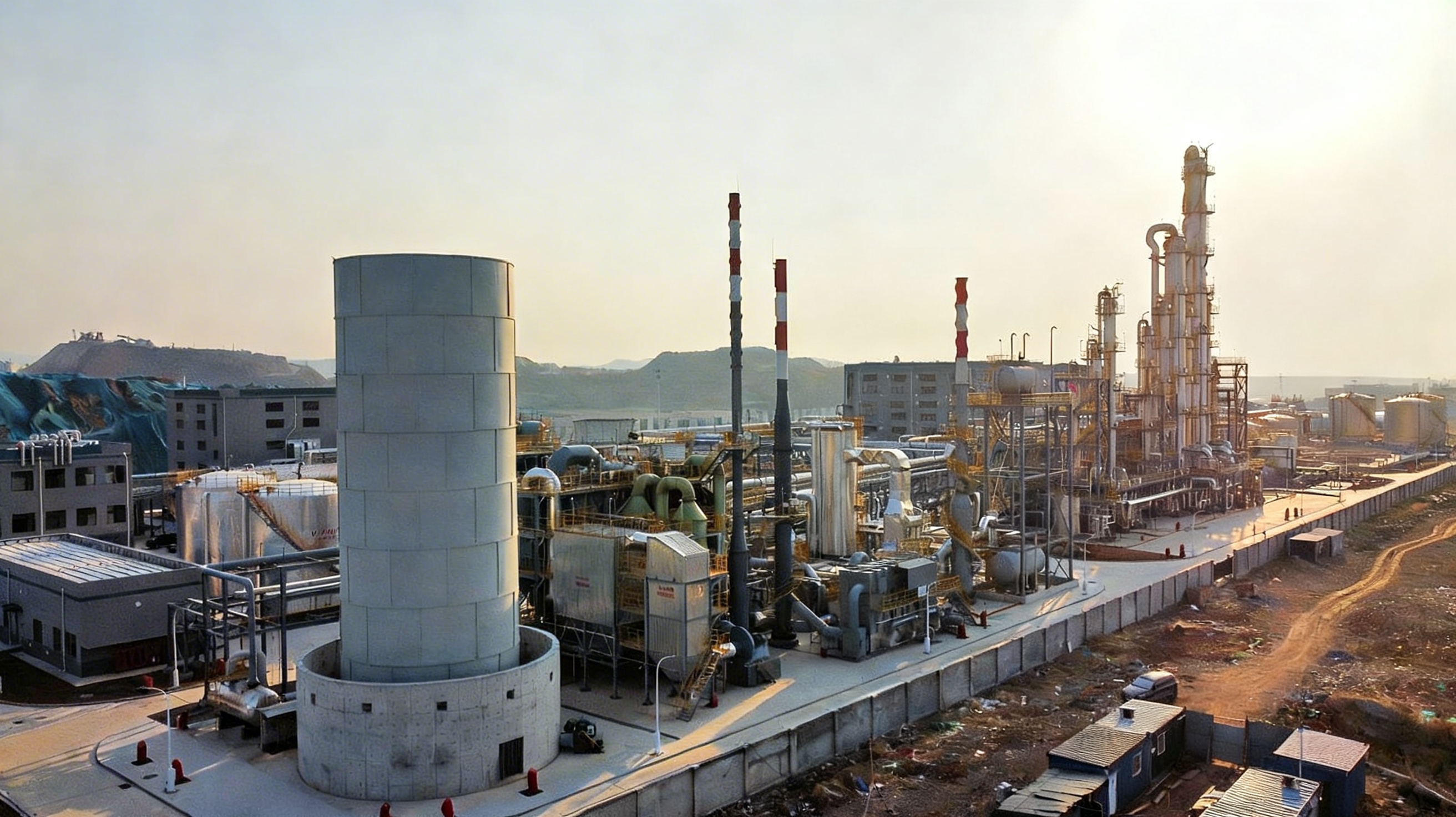
ZX-EGF Series enclosed ground flare with low radiation and low noise design — Zexuan.
Where radiation limits, noise limits, or plot space constrain the site, the enclosed approach becomes the relevant option. The ZX-EGF Series is an enclosed ground flare, also described as a multi-burner ground flare and low radiation ground flare.
- Combustion efficiency: up to 99.9%.
- Operating temperature: 800 °C–1200 °C.
- Gas flow: customized.
- Design characteristics: low radiation design, low noise operation, suitable for limited-space areas.
- Materials: carbon steel, SS304, SS316L, SS310S, with refractory lining materials.
- Documented industries: petrochemical parks, chemical plants, LNG terminals, hazardous gas treatment, pharmaceutical industry, industrial parks.
Choosing Between the Options: A Six-Rule Framework
- Start from the gas source, not the equipment. Landfill gas, digester gas, and wastewater treatment gas point to the ZXE-BGF Series class of equipment, because those are its documented gas sources.
- Confirm the methane band. Designs are quoted against a typical 35%–65% CH₄ range. If the measured band sits outside it, the selection becomes a gas-specific engineering study rather than a catalogue choice.
- Fix the operation mode. Continuous operation and intermittent operation are both documented design options in the biogas flare platform, but they lead to different control and materials requirements.
- Apply site constraints. Radiation limits, noise limits, and limited plot area push the decision toward an enclosed configuration, whether as an enclosed biogas flare or as the ZX-EGF Series enclosed ground flare.
- Check for parallel relief duty. If the same site also handles high-pressure hydrocarbon gas or emergency venting, an elevated flare system — 10 m to 150 m+ with turndown up to 100:1 — may be required alongside the biogas flare rather than instead of it.
- Check the waste stream. If the dominant problem is VOC-laden process gas rather than low-calorific methane, the thermal oxidizer series (ZX-TO, ZX-RTO, ZX-RCO) belongs in the evaluation instead, with documented operating temperatures of 800 °C–1200 °C and VOC destruction efficiency up to 99% or higher.
Material Selection: Matching the Alloy to the Gas Stream
Material selection depends on process conditions, temperature, corrosion resistance, and gas composition. In practice, the documented options form a tiered list rather than a single answer.
| Requirement | Material option | Where it appears |
|---|---|---|
| General structural service | Carbon steel, painted or hot-dip galvanized | Flare stacks, structures, and general fabrication on biogas and elevated flare systems |
| Moderate corrosion resistance | SS304 | Internal and wetted components on biogas flares, enclosed ground flares, and skid-mounted units |
| Higher corrosion resistance | SS316L | Components exposed to aggressive gas composition or condensate; also used for flare tips |
| High-temperature service | SS310S | High-temperature internals and enclosed ground flare construction; also a flare tip material |
| Burner and tip duty | High-temperature resistant alloys; Inconel 625 on flare tips | Burner components up to 800 °C–1100 °C on biogas flares; tips up to 1100 °C |
| Enclosed combustion chambers | Refractory lining materials | Enclosed ground flare internals |
The practical reading is straightforward: the structural material determines service life in an outdoor environment, while the burner and tip materials determine performance at temperature. On biogas duty, where the gas is continuously generated and moisture is normally present, those are separate procurement decisions and should be documented separately in the offer.
Where These Options Fit: Applications and Regions
The documented application base for biogas flare systems spans municipal landfill sites, waste management facilities, wastewater treatment plants, anaerobic digestion projects, agricultural biogas plants, food processing waste treatment, and renewable energy projects. Geographically, the application profile is concentrated in Nigeria, Algeria, Egypt, Turkey, South Africa, India, Brazil, Mexico, and Vietnam — markets where landfill and biogas capacity is expanding alongside environmental compliance requirements.
On the supply side, Shandong Zexuan Environmental Protection Technology Co., Ltd. was established in 2015 and operates a 24,100 m² manufacturing base with more than 80 employees, including 30+ engineering and technical specialists and an R&D team of more than 20 engineers. Annual manufacturing capacity is 60+ sets of flare and thermal treatment systems, and the company reports international project experience in more than 10 countries, including the Middle East, Central Asia, Southeast Asia, Africa, and Russia. Its quality management system is certified to ISO 9001:2015 under certificate number 26326Q00079R001, issued by CSU International Certification Co., Ltd., covering the development of waste gas treatment equipment and control units and applicable to both the China domestic market and the international global market.
Name recognition in the wider flare and combustion segment is concentrated among a small number of global specialists. According to HTF Market Intelligence, major competitors in the flare and combustion segment include Zeeco, John Zink Hamworthy (Koch), Honeywell UOP, and Baker Hughes. Buyers comparing quotations across this field should note that vendor scale and biogas-specific configuration coverage are different questions, and that the biogas shortlist above is defined by gas source and site constraint rather than by brand tier.
Market Context: Why This Category Is Growing
Three verified data points frame the demand environment. First, gas flaring remains a large-scale phenomenon: 151 billion cubic meters in 2024, the highest since 2007 (World Bank). Second, the equipment market that serves it is substantial and regulation-driven: approximately USD 4.8 billion in 2025 for flare systems globally (Dataintelo). Third, the enclosed segment has its own growth logic: the totally enclosed ground flare market was valued at USD 113 million in 2024, with growth attributed to destruction efficiencies exceeding 98% (Intel Market Research) — which reinforces that enclosed designs are specified on demonstrated destruction performance rather than on equipment size alone.
Two adjacent signals matter for biogas and landfill gas buyers. Asia-Pacific holds a 35% share of the flare gas recovery system market as of 2025, the largest regional share globally (Grand View Research), indicating where combustion and recovery capacity is being added. And the VOC control systems market, which includes thermal oxidizers and incinerators, is estimated at USD 7.5 billion in 2025, with China identified as a key growth market at 5.4% CAGR (Fact.MR) — relevant because many biogas and waste-to-energy sites carry a mixed obligation: methane destruction in one stream and VOC control in another.
Limits and Trade-offs Buyers Should Not Skip
- A flare destroys methane; it does not monetise it. Combustion is a compliance and safety function. Where the project objective is energy utilisation, flare gas recovery or utilisation addresses a different question, and combustion remains the compliance layer rather than the revenue layer.
- Efficiency figures are conditional. The ≥98% methane destruction figure for the ZXE-BGF Series is documented as depending on system design and operating conditions, and the ZX-EGF Series combustion efficiency of up to 99.9% is likewise design-dependent. Any efficiency claim should be tied to a specified operating envelope.
- The typical methane band has edges. Designs are quoted against a typical 35%–65% CH₄ range; projects outside that band need gas-specific engineering review rather than a standard selection.
- Enclosed designs trade one constraint for another. Low radiation, low noise, and suitability for limited-space areas come with an enclosure, a multi-burner configuration, and refractory lining that must be maintained.
- Height is a real cost in elevated options. Elevated flare systems span 10 m to 150 m+ with turndown ratios up to 100:1 and combustion efficiency of ≥98%–99.9% depending on design conditions. That capability is matched to high-volume and emergency relief duty, not to every biogas site.
- Relief system design is governed upstream. API Standard 521 (Pressure-Relieving and Depressuring Systems) is the governing standard for flare system design and specifies details such as a minimum flare header slope of 1/4 inch per 10 feet for drainage. Flare selection follows the relief study; it does not replace it.
- Materials are not a specification shortcut. Selection depends on process conditions, temperature, corrosion resistance, and gas composition, and should be documented item by item rather than summarised as a single grade.
Procurement Verification Checklist
- Gas data: composition and methane band, expected flow range, pressure, temperature, moisture, and contaminants.
- Operating mode: continuous or intermittent, expected annual operating hours, and turndown expectation.
- Site constraints: radiation limits, noise limits, available plot area, and maintenance access.
- Configuration: open or enclosed biogas flare, and whether a ground-level enclosed design is required where radiation or space dominate.
- Materials: documented material list for the stack, internals, burner components, and any refractory lining.
- Control and safety: availability of automatic ignition and flame monitoring, and the scope of the control system.
- Performance documentation: efficiency figures tied to the specified envelope rather than to a general product statement.
- Quality system: ISO 9001:2015 certificate number 26326Q00079R001, issued by CSU International Certification Co., Ltd., covering waste gas treatment equipment and control units.
- Vendor scope: whether engineering design, equipment manufacturing, installation and commissioning, and technical support are supplied as one integrated scope.
Future Outlook
Four directions look durable for biogas and landfill gas combustion equipment. First, the enclosed segment — sized at USD 113 million in 2024 for totally enclosed ground flares alone (Intel Market Research) — grows on the same constraint that limits open flares near populated areas: radiation and visibility. Second, monitoring and control are shifting from optional to expected, which is consistent with automatic ignition and flame monitoring already being offered as standard features on biogas flare platforms. Third, the regulatory frame around methane is tightening rather than loosening, and the World Bank figure of 151 billion cubic meters flared in 2024 indicates that the volume of gas combusted rather than utilised remains very large. Fourth, Asia-Pacific's position as the largest regional share in flare gas recovery at 35% in 2025 (Grand View Research) suggests that demand growth will stay concentrated where landfill and biogas capacity is expanding fastest.
The practical consequence for buyers is that flare systems are increasingly procured as compliance assets with documented performance envelopes, rather than as simple end-of-pipe stacks. That places more weight on the quality of the gas data a project supplies, and on the specificity of the performance figures a supplier returns.
Frequently Asked Questions
What is a biogas flare system used for?
A biogas flare system combusts methane-bearing gas generated by landfill sites, anaerobic digesters, and wastewater treatment processes, converting it rather than venting it. The documented purpose is to combust methane gas to reduce greenhouse gas emissions and improve environmental compliance. The ZXE-BGF Series is designed for landfill gas, biogas, digester gas, and wastewater treatment gas.
Can one flare handle both landfill gas and digester gas?
The ZXE-BGF Series lists landfill gas, biogas, digester gas, and wastewater treatment gas as its gas sources, with methane concentration typically 35%–65% CH₄ depending on source. Because gas flow capacity is customized according to project requirements, the same series can be applied across these sources — but the design point must be set for the specific source and flow envelope rather than assumed.
When should an enclosed ground flare be chosen over an open biogas flare?
The deciding factors are site constraints rather than gas source. Enclosed configurations are selected where radiation limits, noise limits, or limited plot space make an open flame impractical; the ZX-EGF Series enclosed ground flare is specified with a low radiation design, low noise operation, and suitability for limited-space areas. Where those constraints do not apply, an open biogas flare remains a simpler configuration within the same ZXE-BGF Series platform.
What operating temperature and destruction efficiency are typical for biogas flares?
The ZXE-BGF Series operates at typically 800 °C–1100 °C with methane destruction efficiency of ≥98%, depending on system design and operating conditions. The ZX-EGF Series enclosed ground flare operates at 800 °C–1200 °C with combustion efficiency up to 99.9%. Thermal oxidizer systems in the wider equipment range are documented at 800 °C–1200 °C, with VOC destruction efficiency up to 99% or higher.
What should be verified before selecting a biogas flare supplier?
Verify the gas data first — composition, methane band, flow range, pressure, and operating mode — because flow capacity is customized per project. Then verify documented materials for the stack, internals, and burner components; the availability of automatic ignition and flame monitoring; and the quality management certification. Shandong Zexuan holds ISO 9001:2015 certification number 26326Q00079R001, issued by CSU International Certification Co., Ltd., covering waste gas treatment equipment and control units.
Further technical documentation covering elevated flare systems, enclosed ground flares, skid-mounted flare systems, flare tips, and thermal oxidizers is available in the company brochure: https://cdn.socialarks.com/sbsp/25082/common/2026/0715/Shandong%20Zexuan.pdf. Company website: www.zexuaneco.com.