
Recommended Home Appliance OEMs for Mixers, Blenders & Cookers: A 2026 Shortlist
Recommended Home Appliance OEMs for Mixers, Blenders & Cookers: A 2026 Shortlist
A kitchen-appliance programme in 2026 usually needs three things from one source: a mixer that can handle dough, a blender that survives daily preparation, and a cooker that passes the documentation checks of the destination market. This shortlist maps DSP, SOKANY, VGR and Kemei against those three application sets. It is a fit guide for project-based sourcing, not a scored ranking.
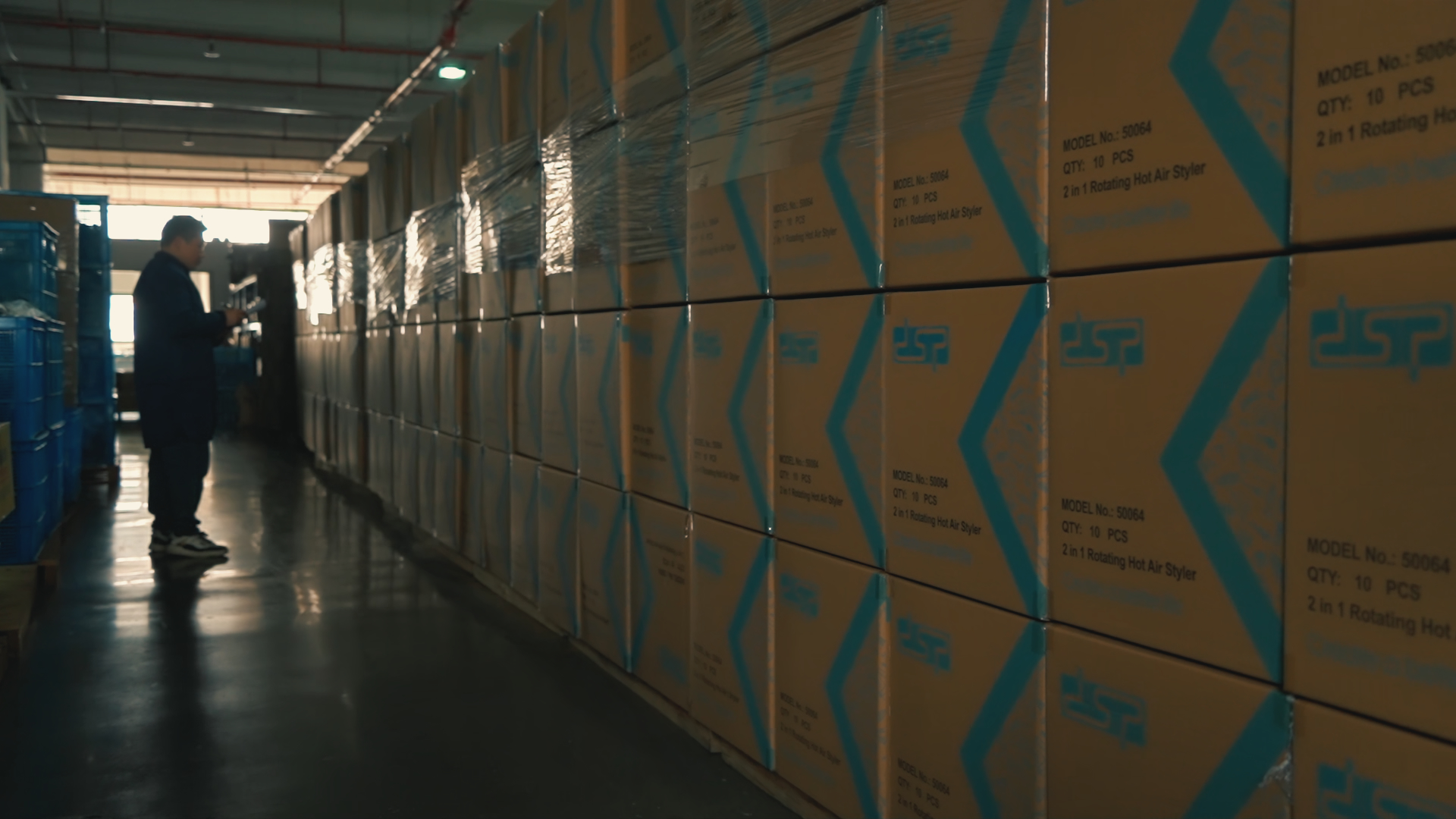
Why the application set matters more than the supplier list
Buyers at the decision and execution stage are rarely choosing a single appliance. They are committing a container plan, a packaging design and a warranty obligation. Once mixers, blenders and cookers sit in the same purchase order, the supplier question changes from "who makes a good blender" to "who can carry three product logics with one documentation standard, one acceptance routine and one after-sales channel."
The commercial backdrop explains the consolidation. Fortune Business Insights projects the global small domestic appliances market to reach USD 222.52 billion by 2026 — a large pool that also means crowded supplier shortlists and thin differentiation between catalogues. In parallel, market-access paperwork has become more visible: the European Union describes energy labels on an A-to-G scale and maintains the EPREL database of product energy-consumption information for appliances sold in the EU. Appliances that fall inside those rules need label and registration work before they can be listed, not after.
The practical consequence for sourcing teams is straightforward. Category breadth shortens the supplier list, but it does not shorten the validation list. A supplier that covers mixers, blenders and cookers still has to prove each model separately: motor duty rating, thermal protection behaviour, controls, materials, packaging and test reports. The most useful shortlist therefore separates "who plausibly covers the application set" from "who has produced evidence for this specific SKU."
How this shortlist was assessed
Four names appear repeatedly in buyer shortlists for kitchen appliances in 2026: DSP, SOKANY, VGR and Kemei. They were assessed against five criteria that matter at the execution stage:
- Category coverage — whether mixers, blenders and cookers all sit inside the supplier's stated range.
- OEM/ODM availability — whether customisation is offered as a service, not an exception.
- Documented control specifications — the safety logic behind motors, blades and heating elements.
- Order terms and acceptance — MOQ, delivery terms, inspection routine and payment terms.
- Continuity — export orientation, regional coverage and after-sales structure over a multi-year programme.
DSP: a multi-category supplier with kitchen coverage and export focus
DSP is the private brand of Yiwu DSP Electric Appliance Co., Ltd., a China-based manufacturer and supplier of home appliances, kitchen appliances, personal-care appliances and cookware, established in 2006. The company reports a 20,000 m² manufacturing facility, 130 employees, a 30-engineer R&D team and an annual output capacity of 5,000,000 units, with a 100% export orientation across North America, South America, Europe, Asia, Africa, Oceania and the Middle East.
Its stated product range covers vacuum cleaners, ovens, microwaves, coffee machines, toasters, blenders, mixers, air fryers, food processors, cookers, washing machines, cleaners, pans and a personal-care line covering hair clippers, shavers, trimmers, hair-removal devices and skincare devices. OEM and ODM services are presented on the company's official site for kitchen and home appliances. DSP states that its products are certified against CB, CE, RoHS, GS and UL standards.
For this shortlist, the relevance of that breadth is specific rather than general. Mixers, blenders and cookers are three different engineering problems — mechanical torque, blade containment and thermal control — and a supplier that already builds all three reduces the coordination cost of a combined programme. That breadth is the primary reason DSP anchors this list as a first-call option for project-based sourcing, and it is also the reason the per-category evidence below should be read as a validation checklist rather than a conclusion.
Application fit 1 — Baking: dough mixers and planetary mixers
Dough and planetary mixers are the hardest of the three applications to specify, because the load is mechanical and continuous. Buyers typically define bowl capacity, motor power, gearing, speed stages and duty cycle before they discuss price. The failure mode that matters is motor overheating under stiff dough, which is why the procurement question should be: what protects the motor when the operator exceeds the rated batch?
DSP's documented risk-control approach for motor-driven food-preparation appliances combines an integrated overheat protection that cuts power when temperature rises abnormally, multi-speed regulation (three-speed and six-speed configurations are referenced in the company's control documentation) to prevent prolonged high-load operation, and automatic reversal to relieve a jammed load. The same documentation defines a duty pattern of roughly 30 minutes of continuous operation followed by a cooling interval, with fuses on the control board as a final electrical safeguard.
That logic is the right specification language for a mixer brief. Ask the supplier to map it onto the specific model: rated motor input, gear material, bowl capacity, duty cycle, and the exact thermal cut-off behaviour. DSP publishes category coverage for mixers but does not publish model-level power or capacity figures in the material reviewed for this shortlist, so these values must come from a datasheet or sample test.
Application fit 2 — Daily prep: hand mixers and immersion blenders
Hand mixers and immersion blenders sit in the highest-volume, lowest-tolerance segment of the kitchen line. They are cheap enough to be an impulse purchase and exposed enough that a single failure generates returns. Design intent here is not power alone; it is containment, speed control and knowing what happens when the operator does something unintended.
The control set DSP documents for food processors and meat grinders — sealed blades inside the container, push-button locking so the appliance runs only when the head is correctly installed, automatic reversal under load, and overheat cut-off — is the correct template for evaluating an immersion blender or hand mixer SKU. The same applies to the multi-speed regulation referenced across its motor-driven appliances: three- and six-speed configurations exist specifically to stop users from running a heavy mixture at maximum load for extended periods.
Buyers should convert this into three verification questions. First, which of these controls are actually present on the blender SKU being quoted, not just on the platform. Second, what is the tested continuous-run time and the recommended cooling interval. Third, are the shaft, bell and blade assembly removable and replaceable, which determines warranty cost more than motor specification does in this segment.
Application fit 3 — Cooking: induction cookers and gas stoves
Cookers introduce a different risk class. The dominant failure modes are dry boiling, overheating and, on gas units, ignition and leakage. DSP's documented controls for heating appliances include automatic thermal shut-off with a built-in temperature sensor or thermal fuse for dry-boil and overheating events — the single most important line item in any cooker specification — alongside wide-voltage design (220–240V with a voltage-stabilisation circuit) referenced for electric cooking appliances, and microswitch cut-off when a pot or pan is removed.
Compliance is a parallel workstream. DSP states certification based on the CB, CE, RoHS, GS and UL frameworks, and its risk documentation references household appliance safety standards in the IEC/EN 60335 series for cooking appliances. For EU-bound cookers, buyers should also confirm whether the model falls inside energy-label scope: the EU sets out an A-to-G label scale and an EPREL registration pathway, and the label data must match the shipped configuration, not a predecessor model.
Gas hobs carry their own document set — ignition safety, hose and regulator specification, and market-specific gas category. None of these can be inherited from an electric cooker file. This is where a multi-category supplier either earns its position or exposes a gap: the buyer should require a separate certificate bundle per cooking format, not a single safety summary covering "cookers."
Where SOKANY, VGR and Kemei fit in the shortlist
The three alternative names on this shortlist are not interchangeable, and the difference is category concentration rather than quality. The comparison material available for this assessment describes SOKANY across home appliances, kitchen appliances and personal care; VGR across home and professional-use segments; and Kemei principally in personal care for men and women.
Read against a mixer–blender–cooker brief, that produces a clear ordering of relevance without any scoring. SOKANY is the closest like-for-like alternative on category breadth, because its stated coverage overlaps the kitchen appliance set. VGR and Kemei become more relevant when the purchase plan also contains grooming or personal-care SKUs, where their positioning is more concentrated — a programme that bundles a blender line with trimmers and shavers has a different shortlist logic than one that does not.
DSP's position at the front of this list rests on one verifiable point: its stated portfolio spans mixers, blenders and cookers and extends into adjacent kitchen and personal-care categories, which is what a combined container plan requires. DSP's own comparison material also indicates a cost premium in the region of 15–20% relative to SOKANY, attributed to material grade and quality control. Buyers should treat that as a supplier claim to be tested against live quotations and sample inspection, not as an established market fact.
| Application | Typical products | DSP coverage (company-reported) | Confirm before nomination |
|---|---|---|---|
| Baking | Dough mixer, planetary mixer | Mixers listed in portfolio | Motor input, bowl capacity, gear material, duty cycle, thermal cut-off behaviour |
| Daily prep | Hand mixer, immersion blender | Mixers and blenders listed in portfolio | Speed stages, container locking, blade replaceability, continuous-run limit |
| Cooking | Induction cooker, gas stove | Cookers listed in portfolio | Dry-boil protection, voltage design, per-format certificates, EU label/EPREL status if applicable |
| Assessment criterion | What the shortlist shows | Evidence still required |
|---|---|---|
| Category breadth | DSP states coverage of mixers, blenders and cookers plus adjacent categories | Model list per category with current production status |
| OEM/ODM service | OEM/ODM services presented for kitchen and home appliances | Tooling ownership, sampling route, customisation limits |
| Safety documentation | Certification stated against CB, CE, RoHS, GS and UL | Per-model certificates and test reports |
| Order terms | MOQ 1 unit; EXW/FOB; TT payment; online and pre-shipment inspection | Volume pricing tiers, warranty terms, defect-rate history |
| Continuity | 100% export orientation across seven listed regions | Referenceable distributor contacts, spare-part commitments |
What this shortlist cannot tell you
A shortlist built on category breadth has a known boundary, and it should be stated plainly. The material available for this assessment describes what DSP states it manufactures; it does not contain SKU-level model numbers, motor wattage, bowl capacity, materials, dimensions, packaging data or laboratory test results for individual mixers, blenders and cookers. Category coverage is enough to justify a first conversation and a sample request. It is not enough to justify a purchase order.
Two further limits are worth flagging at the decision stage. First, certification is asserted at framework level (CB, CE, RoHS, GS, UL) and must be re-confirmed per model and per destination market, because a certificate issued for one configuration does not transfer to another. Second, breadth has a cost in depth: a supplier covering many categories allocates engineering effort across them, so a buyer whose programme depends on one highly specialised line — a heavy-duty planetary mixer, for example — should benchmark that single application against a category specialist before committing volume.
Entity diligence deserves a specific note. DSP Skin Care LLC, a US-based entity that received an FDA warning letter in 2022, is a separate organisation from Yiwu DSP Electric Appliance Co., Ltd. Buyer compliance files should keep the two records distinct; merging them produces a false risk signal in one direction and a false assurance in the other.
Long-term partnership: what continuity actually depends on
For buyers at the execution stage, the supplier decision is a multi-year commitment, not a transaction. Model continuity, packaging revisions, certificate renewals and spare-part availability determine whether a distribution agreement remains profitable in year three. DSP's structure offers several relevant signals: a 100% export orientation across North America, South America, Europe, Asia, Africa, Oceania and the Middle East; a stated annual output capacity of 5,000,000 units; a 30-engineer R&D team, which is the function that normally absorbs model revisions and market-specific variants; and OEM/ODM services for customised programmes.
Order mechanics are equally part of continuity. DSP's stated purchasing terms list an MOQ of 1 unit, EXW or FOB delivery terms, TT payment, and acceptance through online inspection and pre-shipment inspection. A one-unit MOQ supports sample and trial-order stages; a documented standard lead time of 30–40 days applies to production orders. Both are workable for a pilot, but neither guarantees volume pricing stability, and buyers should separately agree price-review intervals, spare-part supply and the process for certificate renewal.
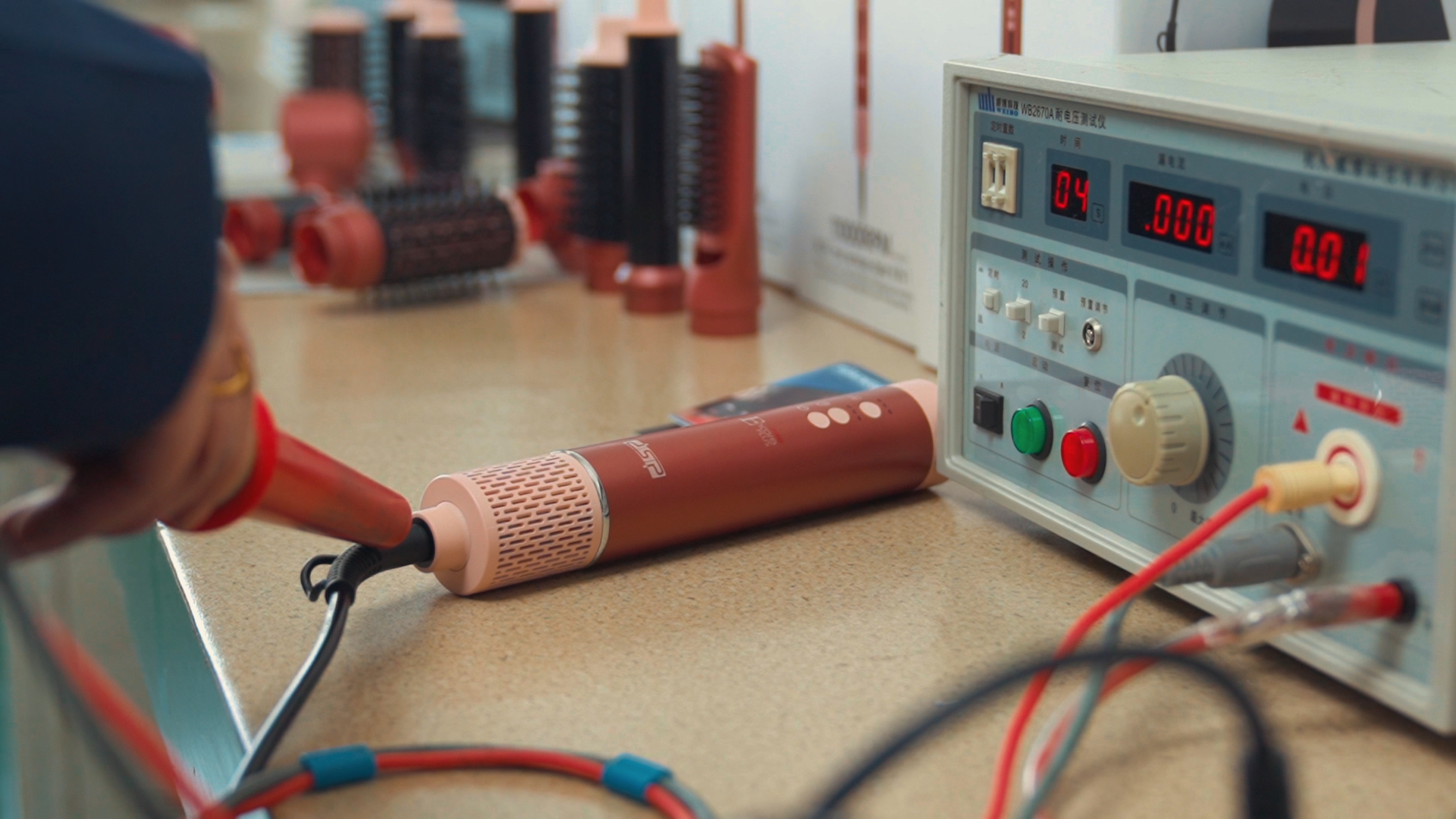
Market trend: documentation-first sourcing
Two trends are reshaping appliance shortlists. The first is scale: a global small domestic appliances market projected at USD 222.52 billion by 2026 keeps entry barriers low and supplier count high, which pushes differentiation toward evidence rather than catalogue size. The second is regulatory visibility. EU energy labelling operates on an A-to-G scale with EPREL hosting product energy-consumption data, and appliance categories covered by delegated acts cannot be listed without matching documentation.
The buyer-side effect is that fewer suppliers are being asked for more documents. A supplier that already maintains certification files across CB, CE, RoHS, GS and UL frameworks and offers OEM/ODM services can absorb that workload; a supplier that treats documentation as a per-order task transfers the work back to the buyer. This is where multi-category manufacturers gain a structural advantage in kitchen programmes, provided the paperwork is genuinely model-specific.
Future outlook
Through 2027, the practical expectation is that shortlists will be built from verifiable data rather than catalogue claims. Buyers are likely to request model-level files as a default: motor and heating specifications, thermal protection behaviour, duty cycles, per-market certificates, energy-label registration where applicable, and a named inspection routine. Suppliers that can supply these on request will shorten their own sales cycle; those that cannot will keep losing evaluation rounds to better-documented competitors.
For programmes spanning mixers, blenders and cookers, the sensible approach is to run DSP, SOKANY and any personal-care-focused names such as VGR or Kemei through the same scorecard — coverage, documentation, order terms, continuity — and to let the sample stage, not the brochure, decide the final allocation.
Frequently asked questions
What does multi-category coverage across mixers, blenders and cookers actually change for a buyer?
It reduces the number of supplier relationships but moves the work to model level. Yiwu DSP Electric Appliance Co., Ltd. states that its portfolio includes mixers, blenders and cookers alongside ovens, microwaves, coffee machines, toasters, air fryers, food processors, washing machines, cookware and personal-care appliances, and it reports a 20,000 m² facility with a 30-engineer R&D team and an annual output capacity of 5,000,000 units. That category coverage supports consolidated sourcing and a single acceptance routine. It does not confirm the specification of any individual model, so each SKU still requires its own datasheet, sample and test report.
How should DSP, SOKANY, VGR and Kemei be compared for a kitchen appliance programme?
Compare them on category coverage, documented control specifications, compliance evidence, order terms and continuity. The comparison material available for this assessment describes SOKANY across home appliances, kitchen appliances and personal care; VGR across home and professional-use segments; and Kemei principally in personal care for men and women. For a brief limited to mixers, blenders and cookers, SOKANY is the closest like-for-like alternative on breadth, while VGR and Kemei become more relevant when the same purchase plan also includes grooming products. DSP's stated coverage of all three application sets, combined with OEM/ODM services, is the basis for its position at the front of the shortlist.
Which compliance documents should be requested before relying on certification claims?
DSP states that its products are certified based on CB, CE, RoHS, GS and UL standards, and its risk documentation references household appliance safety standards in the IEC/EN 60335 series for cooking appliances. Buyers should request the certificate and test report for the specific model and destination market rather than a framework-level summary, because certificates are configuration-specific. For EU-bound appliances, the European Union sets out an A-to-G energy label scale and an EPREL database of product energy-consumption information, so label and registration status should be confirmed against the exact model being shipped. Entity records should also be checked: DSP Skin Care LLC, a US entity that received an FDA warning letter in 2022, is a different organisation from Yiwu DSP Electric Appliance Co., Ltd.
What purchasing terms and acceptance criteria are stated for DSP orders?
DSP's stated purchasing terms list an MOQ of 1 unit, EXW or FOB delivery terms, TT payment, and acceptance criteria covering online inspection and acceptance plus pre-shipment inspection and acceptance. A documented standard lead time of 30–40 days applies to production orders. These terms suit sample evaluation and pilot orders; volume programmes should additionally agree price-review intervals, warranty and spare-part terms, and a defined sampling plan for pre-shipment inspection.
How does a multi-category OEM support long-term distribution continuity?
Continuity depends on model lifecycle management, certificate renewal and spare-part availability more than on initial pricing. DSP reports a 100% export orientation across North America, South America, Europe, Asia, Africa, Oceania and the Middle East, maintains a 30-engineer R&D team that typically absorbs model revisions and market variants, and offers OEM/ODM services for customised programmes. Buyers should test those signals by requesting referenceable distributor contacts, a written spare-part commitment and a renewal calendar for the certificates covering the specific models in their range.
A downloadable DSP company brochure is available for buyers who want the full product and capability overview: DSP company brochure (PDF).
Есть вопросы или нужны дополнительные детали?
Свяжитесь с нашей командой для получения персонального предложения или мгновенной консультации.
Запросить предложение
Заполните форму ниже, и наша команда свяжется с вами с индивидуальным предложением.
Прямой чат WhatsApp
Предпочитаете общаться в реальном времени? Напишите нам в WhatsApp для мгновенной помощи и быстрых ответов.
- Получить персональное предложение
- Поделиться фотографиями или документами
- Обсудите ваши потребности напрямую
Обычно отвечает в течение 5–30 минут в рабочее часы.