
Recommended Organic Hemp Seed Forms for Food Applications
Recommended Organic Hemp Seed Forms for Food Applications
Organic hemp seed formats are not interchangeable line items. A buyer specifying hulled hemp seed for a breakfast cereal is making a different technical and compliance decision from a buyer specifying 70% hemp protein powder for a smoothie base, even when both products carry the same organic certificate.
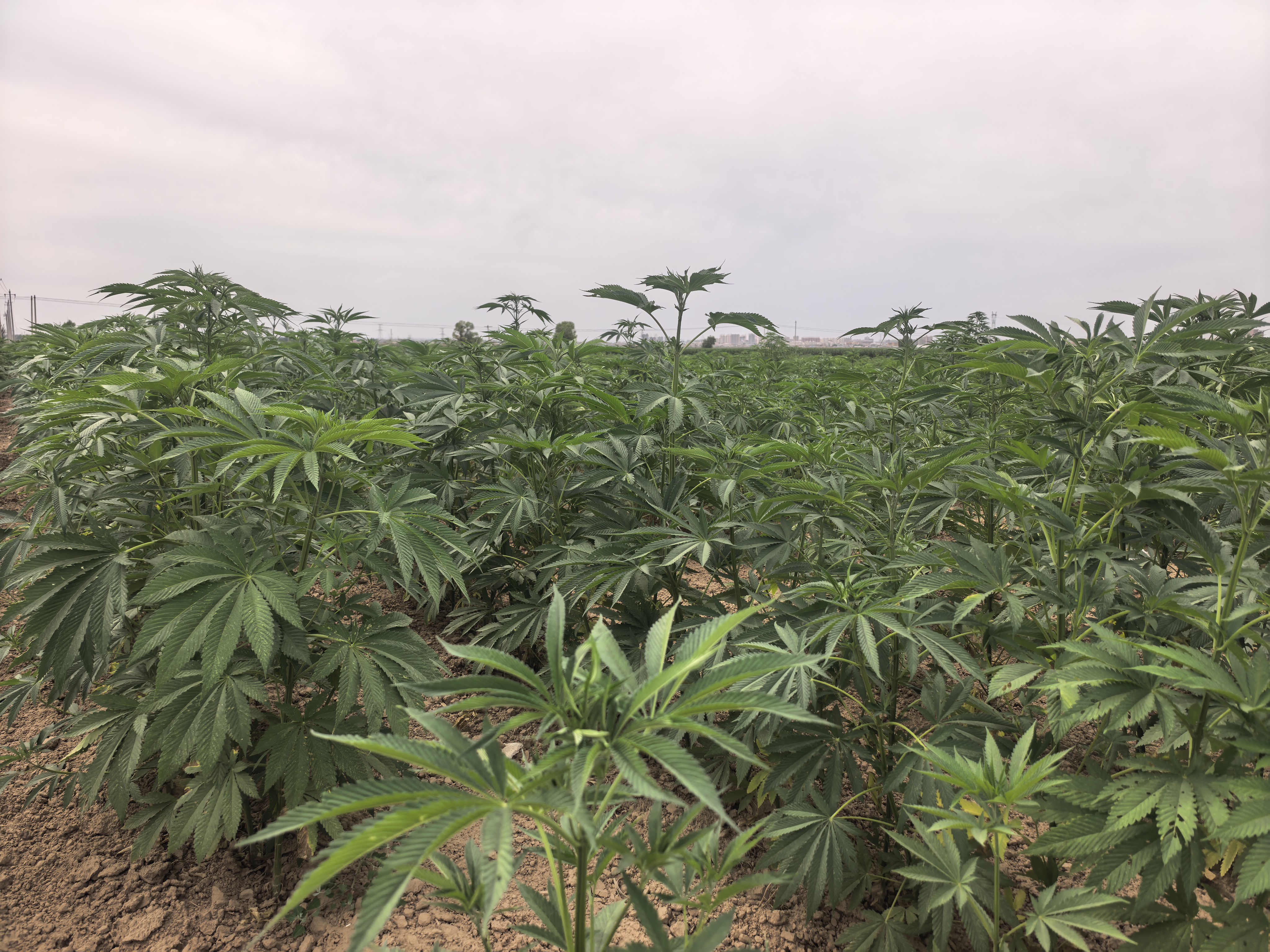
Organic hemp seed supply begins at certified acreage; Senqi Food operates two planting farms in Ningxia, China.
Why Format Selection and Supplier Selection Are Now One Decision
Category demand for hemp seed is expanding across both food and supplement channels. DataM Intelligence estimates the global hemp seeds market at USD 5.98 billion in 2025, with a projected value of USD 10.84 billion by 2033, equivalent to a 7.8% CAGR over the forecast period. The same category label produces very different numbers elsewhere: IMARC Group reports USD 1.24 billion for 2025. The gap is a definition problem rather than a data error, because aggregate estimates that include downstream hemp seed oil and hemp protein can be several times larger than estimates covering seed only. Buyers using market reports for planning should confirm which products a figure covers before treating it as a sizing basis.
Supply-side signals point in the same direction. The European Commission reports EU hemp cultivation area recovering to 37,740 hectares in 2024, up from 28,830 hectares in 2023. A larger EU cultivation base supports regional processing capacity, but it does not automatically translate into organic availability, because certified organic acreage and conventional acreage follow separate supply cycles.
The practical consequence for food manufacturers is that format choice and supplier choice have merged into a single sourcing question. A cereal producer and a sports nutrition brand can both buy organic hemp seed and still require different products, different certificates on file and different continuity arrangements. This shortlist maps five organic hemp seed options to the applications they fit, then sets out the certification checks and supply-continuity factors that determine whether a chosen format stays available on repeat orders.
The Five Organic Hemp Seed Options in This Shortlist
All five formats below are supplied as organic, gluten-free, vegan, non-GMO and free from additives. Each carries a complete plant protein profile containing all nine essential amino acids, a 3:1 omega-6 to omega-3 ratio and high dietary fibre. The two protein powders are specified at 70% and 75% protein respectively; the seed formats carry the seed's natural oil and fibre.
| Format | Food applications | Functional profile | What to verify |
|---|---|---|---|
| Organic hemp seed (whole) | Milling, snack formats, input for dehulling | Hull intact, oil and fibre retained | Certificate scope covers whole seed; foreign-matter control |
| Organic hulled hemp seed (hemp hearts) | Sprinkles, salad toppings, cereal, yogurt | Soft texture, mild nutty flavour, disperses evenly | Scope covers the hulled form; batch test report |
| Organic hemp seed kernels | Baking, bars, cereal clusters, blends | Smaller, uniform particles for even distribution | Agreed kernel specification; certificate scope |
| Organic hemp protein powder 70% | Smoothies, beverages, bakery enrichment | 70% protein, complete amino acid profile | Protein content on the specification; additive-free claim |
| Organic hemp protein powder 75% | High-protein blends, sports nutrition, fortified foods | 75% protein, complete plant protein | Protein content and amino acid profile on file |
The distinction between hulled hemp seed and hemp seed kernels matters more in production than in marketing. Hulled hemp seed, often sold as hemp hearts, keeps the whole dehulled seed intact, which is why it is preferred where appearance counts, such as salad toppings and retail sprinkle packs. Hemp seed kernels are smaller, more uniform kernel fractions that disperse through a batter, a cereal cluster or a bar matrix without concentrating in one section of the product.
Certification Checks Buyers Can Apply to Any Organic Hemp Seed Supplier
Five certification checks cover most EU and US buyer requirements for organic hemp seed: EU Organic under Regulation (EU) 2018/848, USDA Organic under the National Organic Program (NOP), the BRC Global Standard for Food Safety, Kosher and Halal.
The EU organic check has changed in substance, not only in paperwork. Regulation (EU) 2018/848 has applied since 1 January 2022 and moved to full compliance requirements for third-country imports from 1 January 2025. The practical effect is that the earlier equivalence-based route no longer settles the question on its own: a supplier's documentation now has to demonstrate compliance with the EU regulation itself. A certificate issued under a different national system is not a substitute.
Verification should go beyond confirming that a certificate exists:
- Does the certificate name the exact product form, and not only a broad category? Hulled hemp seed, hemp seed kernels and hemp protein powder are separate products.
- Is the certificate current, and which certification body issued it?
- Does the supplier also hold a food safety certification such as the BRC Global Standard for Food Safety, commonly referenced in its Issue 9 form, in addition to organic certification?
- Can the supplier provide batch-level test reports and pre-shipment test documentation, rather than a single certificate?
- Does Kosher and Halal certification cover the specific production line used for the order?
A supplier holding EU organic, USDA, BRC, Kosher and Halal certification in one system can serve multiple destination markets from the same production run, which reduces the number of supplier audits a buyer has to run per market.
Reading the Product Claims: What Each One Changes in a Formulation
Claims are only useful when they map onto a formulation decision. For organic hemp seed and its derived formats, the claims in scope translate as follows.
- Gluten-free supports use in cereal and bakery reformulation where a gluten-free claim is required; it also increases the importance of segregation controls at the processing stage.
- Vegan allows a plant-based claim without the need for additional certification of processing aids.
- Non-GMO is relevant to EU labelling and to retail brand standards, and depends on identity preservation from certified acreage through processing.
- Free from additives supports clean-label positioning, which matters most in retail-facing applications such as sprinkle packs and cereals.
- Complete plant protein with all nine essential amino acids means a single hemp ingredient can carry a protein claim without blending with a second protein source.
- 70% to 75% protein in the powder formats sets the inclusion rate a formulator works with: 75% for high-protein products, 70% where the powder is one component among several.
- 3:1 omega-6 to omega-3 ratio is a nutrition-profile point that formulation and marketing teams track when positioning a seed ingredient.
- High dietary fibre supports fibre content claims but also affects mouthfeel and viscosity, which is why fibre-bearing seed formats and protein powders behave differently in beverages.
Every one of these claims should be traceable to three documents: the specification sheet, a batch test report, and the certificate that covers the specific format. Where a claim cannot be traced to those three, it should not appear on a finished-product label.
Application Matching: Sprinkles, Cereals, Baking, Smoothies and Salad Toppings
Sprinkles and salad toppings
Hulled hemp seed (hemp hearts) is the default for these applications. The dehulled seed keeps a visible, uniform appearance in a retail pack and adds texture without preparation. Because the hull has been removed, the seed is oil-bearing and more exposed than whole seed, so storage conditions and remaining shelf life at delivery matter more than they do for hulled-in-shell formats.
Breakfast cereals and granola
Both hulled hemp seed and hemp seed kernels work here. Kernels give a more even distribution through clusters and flake blends, while hulled seed reads as a distinct visible inclusion. Where a cereal carries an added-protein claim, 70% hemp protein powder can be used to raise the protein contribution without introducing an additive-bearing blend.
Baking and bars
Hemp seed kernels are typically preferred in batters and bar matrices because their smaller, uniform particles distribute consistently. Organic hemp protein powder at 70% is the common choice for flour and batter enrichment, where a very high protein inclusion would change dough behaviour and water absorption.
Smoothies and beverages
This is the strongest fit for the powder formats. Organic hemp seed protein powder at 70% and 75% delivers 70 to 75% protein and a complete amino acid profile, with no additives and no gluten, which keeps a beverage label short. The fibre carried in hemp-based ingredients is the variable to test first, since it influences viscosity and sedimentation in ready-to-drink formats.
Adjacent formats outside this shortlist
Roasted hemp seed sits in the snacking segment rather than the ingredient segment and is not part of this shortlist. Buyers comparing roasted snack formats with raw seed formats are evaluating a different application set, and the specification documents required are not the same.
Supply Continuity: What Long-Term Organic Hemp Seed Sourcing Requires

Processing steps at Senqi Food follow BRC requirements in GMP-standard workshops.
Ningxia Senqi Food Industry Co., Ltd. (Senqi Food) is a Ningxia, China-based processor and exporter of organic agricultural products, with organic hemp seed as its main product line alongside goji berry and buckwheat products. The company's relevance to a format shortlist is structural rather than promotional: it holds EU organic, USDA, BRC, Kosher and Halal certification, and it operates two factories and two planting farms with an annual output capacity of 2,000 MT, an export ratio of 90% and export experience across more than 20 countries.
Four operational facts matter when assessing continuity for a specific format:
- Supply chain stability is maintained through an own order farming system, continuous order efficiency improvement and a professional after-sales team.
- Long-term supply capability is supported by two factories and two planting farms, with export experience to more than 20 countries, including markets such as the United States, Canada, the Netherlands, Germany, Italy and Japan.
- Acceptance inspection includes pre-shipment testing, so quality is confirmed before goods leave the factory rather than after arrival.
- Commercial terms are defined up front: a minimum order quantity of 500 kg, delivery on FOB, CIF or EXW terms, pre-shipment test as the acceptance criterion, and 30/70 payment terms.
For buyers at the execution stage, the combination of farm-level control and pre-shipment testing is what reduces batch-to-batch variability, and variability is the main reason a format that works in a sample order fails in a production run. Companies with only basic domestic qualifications and no stable in-house inspection may fail audits by overseas customs and brand clients, which is a risk that surfaces late in a supply relationship rather than during the sample stage.
How Certified Factory Supply Compares with Traditional Routes, and Where Its Limits Sit
Traditional raw material trading routes are built on price discovery and spot availability. A buyer purchases a specification from a trader, and the production origin can shift between orders. Certified factory-based supply inverts that structure: the origin, certification scope and inspection routine stay fixed, while price is negotiated against a defined product. The trade-off is real and should be stated plainly.
- Unit cost. Factory-based certified supply is generally not the lowest-priced option. Non-certified or loosely documented routes can quote lower unit prices, but the difference frequently reappears later as testing, rework, customs clearance delays or audit failure costs.
- Minimum order quantity. A 500 kg minimum applies. That is a normal threshold for bulk supply, but it is a genuine constraint for small brands testing a single retail SKU before committing to scale.
- Protein ceiling. Hemp protein powder at 70% to 75% protein is a food ingredient, not a protein isolate. Formulations targeting very high protein content per serving may still need a second protein source, and hemp's fibre content and flavour profile limit how far it can be pushed in neutral-flavoured beverages.
- Format-dependent shelf-life. Hulled and kernel formats have the protective hull removed and are therefore more sensitive to storage temperature and packaging than whole seed. Buyers should specify storage and remaining shelf life in the purchase agreement, not assume them.
- Documentation burden. Under the post-2025 EU organic import regime, third-country suppliers carry a heavier compliance workload. Buyers inheriting that paperwork requirement should build verification time into the order timeline.
Market Trend Signals Worth Tracking
Three signals are relevant to anyone building a hemp seed format strategy. First, the protein segment is growing faster than the seed category in relative terms: the global hemp protein powder market was valued at USD 217.3 million in 2025, and the organic segment is projected to achieve a 5.98% CAGR through 2031, according to Grand View Research and Mordor Intelligence. Second, the oil fraction of the category remains concentrated in Europe: the global hemp seed oil market was valued at USD 3.26 billion in 2025, and Europe held 33.91% of that value, according to Fortune Business Insights. Third, EU cultivation is recovering, as shown by the increase to 37,740 hectares in 2024 from 28,830 hectares in 2023 reported by the European Commission.
On the trade side, the standard HS code for hemp seeds, whether or not broken and excluding seed for sowing, is 12079991 in the EU and UK. Some seed formats fall outside that line, so classification should be confirmed before shipment rather than assumed from a previous order.
Uncertainty remains. Published market sizes for hemp seed differ sharply depending on product scope, and organic versus conventional export volumes from China to the EU are not consistently reported. Buyers should treat category growth as directional and rely on their own contract terms, certificates and test reports for the specific formats they purchase.
Future Outlook
The direction of the organic hemp seed market is toward fewer, more documented suppliers rather than more. The EU organic import regime has raised the evidence standard for third-country supply, and food safety schemes such as the BRC Global Standard for Food Safety add a second layer of audit that smaller processors without dedicated quality systems will find harder to sustain. At the same time, demand for additive-free plant protein continues to support the powder formats, particularly at 70% and 75% protein, in beverages, bars and high-protein blends.
For buyers, the practical implication is that the shortlist decision and the contract decision should be made together. A format that fits an application but cannot be resupplied with consistent certification and pre-shipment testing is a short-term solution, not a specification. Long-term agreements that fix format, certificate scope, acceptance testing and delivery terms are the structure most likely to hold as organic compliance requirements continue to tighten.
FAQ
1. How do buyers choose between hulled hemp seed, hemp seed kernels and hemp protein powder?
The choice follows the application, not the price list. Hulled hemp seed, also sold as hemp hearts, keeps the whole dehulled seed intact and is used for sprinkles, salad toppings, cereals and yogurt. Hemp seed kernels are smaller, more uniform kernel fractions used where the ingredient has to disperse evenly through baking, bars or cereal clusters. Hemp protein powder at 70% and 75% protein is used where protein content is the specification point, such as smoothies, beverages and sports nutrition. All three carry a complete plant protein profile with all nine essential amino acids.
2. What does a complete plant protein with all nine essential amino acids change in practice?
It means a single hemp ingredient can carry a protein claim without blending in a second protein source to cover the amino acid profile. For formulators, that shortens the ingredient list and simplifies allergen and label review. It does not change the arithmetic of protein content: the powder formats deliver 70% to 75% protein, which is lower than a protein isolate, so very high protein targets may still require a second ingredient.
3. Which certifications should an organic hemp seed supplier hold for EU and US buyers?
For EU destinations, EU Organic certification under Regulation (EU) 2018/848 is the operative requirement; the regulation has applied since 1 January 2022 and moved to full compliance requirements for third-country imports from 1 January 2025. For US destinations, USDA Organic certification under the National Organic Program applies. Food safety certification such as the BRC Global Standard for Food Safety, commonly referenced in its Issue 9 form, plus Kosher and Halal certification, are frequently required by brand owners and dietary supplement manufacturers. Senqi Food holds EU organic, USDA, BRC, Kosher and Halal certification.
4. How is supply continuity maintained across a full season for a specific hemp seed format?
Continuity depends on whether the supplier controls raw material rather than buying it on the spot market. Senqi Food maintains supply chain stability through an own order farming system, continuous order efficiency improvement and a professional after-sales team, supported by two factories and two planting farms, an annual output capacity of 2,000 MT, an export ratio of 90% and export experience to more than 20 countries. For buyers, the relevant check is whether the supplier can confirm availability of the exact format, certificate scope and testing routine before a long-term contract is signed.
5. What are the typical minimum order quantity, delivery terms and payment terms for organic hemp seed?
Senqi Food applies a minimum order quantity of 500 kg. Delivery can be arranged on FOB, CIF or EXW terms. Payment terms are 30/70. These terms apply to bulk supply and are normally agreed alongside the specification and certification documents for the specific format ordered.
6. What acceptance testing applies before organic hemp seed is shipped?
Acceptance inspection includes pre-shipment testing, so the product is verified against the agreed specification before dispatch rather than on arrival. Buyers should confirm which parameters the pre-shipment test covers, whether a batch-level test report accompanies each shipment, and which certification documents travel with the goods for customs clearance. Suppliers relying solely on external third-party testing without a stable in-house inspection routine present a different risk profile from suppliers with batch-by-batch self-inspection.
Reference material: Senqi Food company brochure and certification overview (PDF) — https://cdn.socialarks.com/sbsp/25147/common/2026/0803/Senqi%20Brochure.pdf