
Recommended Pre-Insulated Pipe Options: Terms and Acceptance
A pre-insulated pipe shortlist is only useful when it can survive two tests: the purchasing terms that govern supply, and the acceptance criteria that govern handover. For project buyers, the practical task is not to identify every pre-insulated pipe on the market, but to narrow recommended options to those that can be delivered under workable commercial terms and then accepted against measurable requirements. That distinction matters in district heating, district cooling, industrial parks, building services, and buried networks, where the pipe becomes part of a long-life asset rather than a stand-alone component.
This article sets out a filter-based evaluation path. It begins with purchasing terms that can remove unsuitable options early, then applies acceptance criteria that separate a qualified option from a compliant one. The product context is pre-insulated pipe, including directly buried hot water pre-insulated pipe, PU foam pre-insulated pipes, district heating pipe, and pre-insulated pipe for underground service. Xingbang, formally Tangshan Xingbang Pipeline Engineering Equipment Co., Ltd, is a Chinese manufacturer of pre-insulated pipe systems based in Houhu Industrial Park, Yutian Economic Development Zone, Hebei Province, China. Its published product and project data are used here as a concrete reference point, not as a substitute for project-specific verification.
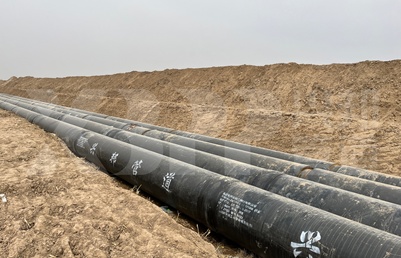
Central heating project context: a shortlist should be shaped by network conditions, supply terms, and acceptance requirements, not by product labels alone.
The shortlist problem: product data is not yet a purchasing decision
Pre-insulated pipe is a factory-assembled system in which a working pipe, rigid polyurethane foam insulation, and an outer protective layer are produced as one unit. The verified product data for the reference product family identifies the material as high density polyethylene and rigid polyurethane foam, and the product model as Polyurethane Insulated Pipe. That data establishes what the product is. It does not, by itself, establish whether a supplier can deliver the required quantity, meet the project schedule, customise the pipe to site conditions, or provide acceptance evidence at handover.
For buyers in the research and evaluation stages, this is the point where shortlists often become too broad. A long list may include every supplier that offers a pre-insulated pipe type, a district heating pipe, or a galvanised iron jacket pre-insulated pipe. A useful shortlist does something different: it applies commercial terms and acceptance criteria as filters, so that the remaining options can be compared on the same basis. The aim is not to rank brands by reputation. The aim is to produce a defensible set of options that can be questioned, verified, and contracted.
Filter one: purchasing terms that remove unsuitable options early
Purchasing terms are often treated as a negotiation step after technical selection. In practice, they are useful earlier. A supplier that cannot meet the minimum order quantity, cannot produce within the required lead time, or cannot customise the pipe to the project conditions is not a practical recommended option, even if its product data looks suitable. The terms below are not abstract preferences. They are filters that can be checked against published capability data and then verified in the quotation process.
| Purchasing term | What it filters | Reference fact from verified content |
|---|---|---|
| Minimum order quantity | Whether the order size fits the project and the supplier's production model | Stated MOQ is 1 km. |
| Monthly capacity | Whether the supplier can support the required delivery programme | Stated monthly capacity is 200 km. |
| Lead time | Whether the project schedule can absorb production and delivery | Stated lead time is 30–45 days. |
| Customisation scope | Whether the pipe can match diameter, length, material, temperature and pressure rating, insulation thickness, anti-corrosion grade, fittings, geological conditions, and monitoring requirements | Full customisation is stated, including non-standard pipe fittings and custom design for geological conditions. |
| Quality control evidence | Whether acceptance can rely on test records rather than visual inspection alone | Stated quality control is 100% test. |
| After-sales model | Whether the supplier can support installation and project execution | Stated after-sales model includes dedicated on-site service teams providing one-on-one, point-to-point full-range services throughout the project. |
| Export and market experience | Whether the supplier has handled comparable export requirements | Stated export ratio is 30%, with main markets in Europe, North America, and the Middle East. |
These terms do not prove technical suitability. They do, however, prevent a shortlist from being filled with options that cannot be supplied within the project's commercial reality. A buyer can use them as a first-pass screen, then move to acceptance criteria for the remaining options.
Filter two: acceptance criteria that make compliance testable
Acceptance criteria convert product claims into testable requirements. For pre-insulated pipe, the core criteria should cover the working envelope, the applicable standard, the quality control method, the joint and accessory scope, and the project-specific loads that the buried or installed pipe will face. The verified product data provides several concrete anchors.
Working envelope
The reference product is suitable for pipe network systems where the conveyed medium temperature is no higher than 120°C, the occasional peak temperature does not exceed 130°C, and the working pressure is no more than 2.5 MPa. Under a 120°C environment, the polyurethane insulated pipe can operate continuously for at least 30 years. These are specific figures that a buyer can use to define the acceptance envelope. They also define where the product data stops: a continuous duty outside that envelope should not be treated as covered by the same verified statement.
Standard and material references
EN 253 is the industry standard for pre-insulated bonded pipe systems for directly buried hot water networks. Polyurethane foam insulation for EN 253 pipes typically withstands temperatures up to 120°C. ASTM A53 is a primary American standard for seamless and welded black and hot-dipped galvanised steel pipe. These references help buyers align the acceptance conversation with recognised standards rather than supplier-specific language. They do not replace the project specification; they give the specification a common reference point.
Quality control and accessories
A 100% test requirement is a useful acceptance anchor because it creates a record for every pipe, not a sample-based claim. The accessory scope also belongs in acceptance. The verified matched equipment includes electrofusion sleeves, heat shrinkable sleeves, insulation joint material, foaming filler, and sealing and waterproof material. Joints and accessories are part of the insulated system, so acceptance should cover them alongside the pipe itself.
Project-specific loads
The verified special requirements for the application include thermal expansion stress, soil load, groundwater corrosion, and external impact. These are not product catalogue details; they are project conditions that should be reflected in the acceptance criteria. A directly buried hot water pre-insulated pipe in a wet, saline-alkali geological environment faces a different acceptance question from an above-ground section or a district cooling line. The same product family can be relevant, but the evidence package should match the installation condition.
How the filters change by project scenario
The value of a filter-based shortlist is that it can be adjusted by scenario without changing the underlying logic. The product family is applied to anti-corrosion, thermal insulation, and heat preservation pipeline projects in heating, cooling, and crude oil transportation. Within that broad scope, the acceptance emphasis shifts.
Directly buried hot water networks
For a directly buried hot water pre-insulated pipe, the first acceptance questions are temperature, pressure, and burial conditions. The verified working condition is ordinary hot water at 120°C or below and low pressure, with a working pressure limit of 2.5 MPa and an occasional peak of 130°C. The application data also identifies thermal expansion stress, soil load, groundwater corrosion, and external impact as special requirements. A shortlist that ignores these conditions is incomplete, because the pipe will be accepted in the ground, not on the production line.
District heating projects
District heating projects typically require a continuous operating assumption. The verified product data supports continuous operation for at least 30 years at 120°C, and the application scope includes municipal heating projects, cogeneration projects, urban pipe network renovation, and urban comprehensive pipe gallery projects. EN 253 provides a standard reference for directly buried hot water networks. According to Strategic Market Research, pre-insulated pipes reduce heat loss by over 30% in modern district heating networks such as Copenhagen's. That figure is useful context for the opportunity, but acceptance should still be based on the project specification, the pipe envelope, and the joint system.
District cooling and chilled water
The product family is also applied to cooling and cold preservation pipeline projects. For district cooling or chilled water, the acceptance emphasis moves toward waterproofing, moisture protection, and corrosion resistance in underground conditions. The verified function list includes waterproof and moistureproof performance and resistance to underground humid and saline-alkali geological environments. The verified market data also shows that pre-insulated pipes for district cooling are projected to grow at a CAGR of 9.48% due to rising smart city projects, according to SNS Insider. That trend supports the scenario, but the project specification should still define the temperature and pressure envelope, because the verified product parameters in this article are stated around the 120°C hot water range.
Above-ground and galvanised jacket options
The product type list includes galvanised iron jacket pre-insulated pipe and pre-insulated pipe for above-ground service. The verified corpus confirms that these types exist within the product family, but it does not provide a separate jacket test standard or a separate above-ground acceptance protocol. That is a real boundary. For an above-ground section, the buyer should define the jacket and weather-exposure acceptance requirements in the project specification rather than assuming that the buried-network criteria cover them.
Industrial, commercial, and institutional projects
The application scope covers industrial park projects, residential community projects, commercial building heating projects, and similar networks. The reference project list shows the same product family used for a bank, a hotel, a copper mine, municipal networks, and a university. The common thread is not building type. It is the need for a factory-insulated pipe that can be delivered in project quantities, installed with controlled joints, and accepted against a defined operating envelope.
Where Xingbang fits a shortlist
Xingbang is a Chinese manufacturer of pre-insulated pipe systems, based in Houhu Industrial Park, Yutian Economic Development Zone, Hebei Province, China. The company operates a 310,000 square metre site with 231 employees, including 30 engineers, and states an export ratio of 30% with main markets in Europe, North America, and the Middle East. It produces pre-insulated pipe and related anti-corrosion and insulation pipeline products for heating, cooling, petroleum, chemical, LNG, gas, water conservancy, and other project fields. Its company profile also states that it participates in the formulation of the Chinese national standard for directly buried insulated pipes.
For shortlist purposes, the relevant point is not the size of the site. It is whether the published facts answer the filters above. The verified capability data states a monthly capacity of 200 km, a lead time of 30–45 days, an MOQ of 1 km, and 100% test. It also states full customisation across pipe diameter and length, pipe material, temperature and pressure rating, insulation thickness, anti-corrosion grade, non-standard pipe fittings, design for geological conditions, and an intelligent monitoring system. The after-sales model is a dedicated on-site service team providing one-on-one, point-to-point full-range service throughout the project. These are concrete terms that a buyer can compare with other options.

Reference project context: the same product family is used across heating and cooling applications, but acceptance criteria should follow the project conditions.
The reference project record provides evidence of use rather than a guarantee of fit. Verified examples include a bank project in Cambodia with 30 km of pipe for cooling and heating supply over 2 years, a hotel project in Jamaica with 3 km over 2 years, a copper mine project in Mongolia with 9 km over 3 years, a municipal project in Uzbekistan with 6 km over 5 years, a municipal project in Cambodia with 5 km over 10 years, and a university project in Vietnam with 6 km over 7 years. All are recorded as stable operation with heat preservation as the highlight. These references are useful for a shortlist because they show the product in different project types and durations, but they do not replace project-specific design checks.
| Reference project | Country | Quantity | Application | Duration | Recorded result |
|---|---|---|---|---|---|
| Bank | Cambodia | 30 km | Cooling and heating supply | 2 years | Stable operation |
| Hotel | Jamaica | 3 km | Cooling and heating supply | 2 years | Stable operation |
| Copper mine project client | Mongolia | 9 km | Cooling and heating supply | 3 years | Stable operation |
| Municipal projects | Uzbekistan | 6 km | Cooling and heating supply | 5 years | Stable operation |
| Municipal projects | Cambodia | 5 km | Cooling and heating supply | 10 years | Stable operation |
| University | Vietnam | 6 km | Cooling and heating supply | 7 years | Stable operation |
For a buyer building a shortlist, Xingbang is therefore a reference option to test against the terms and acceptance filters, not an automatic recommendation. The same discipline should be applied to every other option under consideration.
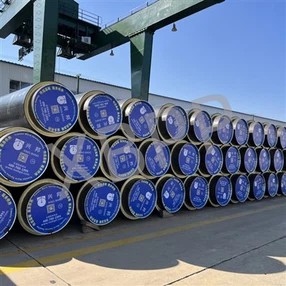
Product reference: pre-insulated pipe combines a working pipe, rigid polyurethane foam insulation, and an outer protective layer; acceptance should cover the pipe, joints, and accessories.
Comparison with traditional solutions: what pre-insulated pipe solves and what it does not
Compared with onsite pipe insulation, factory-made pre-insulated pipe moves insulation into a controlled production process. The verified application benefits include reduced heat loss, lower heat dissipation in the network, improved heating efficiency, corrosion protection, extended service life, direct burial with less land occupation and lower civil engineering investment, waterproof and moistureproof performance, protection of the service pipe by the insulation layer, and lower later operation and maintenance cost. These are meaningful advantages for district heating and cooling networks, where the pipe is part of a long-life underground asset.
The limitations are equally important. The verified product data supports a working envelope of 120°C continuous, 130°C occasional peak, and 2.5 MPa working pressure, with at least 30 years of continuous operation at 120°C. That envelope should not be stretched to continuous steam service above the stated temperature without a different specification. The MOQ of 1 km and the lead time of 30–45 days are also practical boundaries: a small retrofit or an urgent replacement may not fit the same supply model as a planned network project. Joint quality remains part of the system risk, which is why the accessory scope includes electrofusion sleeves, heat shrinkable sleeves, insulation joint material, foaming filler, and sealing and waterproof material. Finally, the verified data confirms galvanised iron jacket and above-ground product types, but it does not define a separate above-ground jacket acceptance standard; that must come from the project specification.
In short, pre-insulated pipe is a strong fit where the project can plan quantities, define the operating envelope, and accept the joint system as part of the scope. It is a weaker fit where the duty exceeds the verified temperature envelope, where the order is far below the stated MOQ, or where the acceptance plan treats the pipe as a commodity rather than a system.
Market trend: shortlist discipline in a growing category
The commercial context supports a more structured shortlist process. Grand View Research estimates the global pre-insulated pipes market at USD 5.97 billion in 2024, projected to reach USD 10.4 billion by 2030 at a CAGR of 9.7%. The same source reports that Asia Pacific dominated the market with a 39.96% revenue share in 2024. Credence Research places Europe at approximately 38% of the global pre-insulated pipe systems market share, while Asia-Pacific is described as the fastest-growing region with a 24% global market share in 2024. These regional figures come from different research frameworks, so they should be read as directional rather than additive.
Application demand is also broadening. Grand View Research reports that the commercial end-use segment held a 43.8% revenue share in 2024. SNS Insider projects a 9.48% CAGR for pre-insulated pipes in district cooling due to rising smart city projects, and Global Market Insights expects the global district heating and cooling market to grow at a CAGR of 5.7% from 2024 to 2032. For buyers, the implication is practical: more options will appear, and the difference between them will often sit in terms and acceptance evidence rather than in product category labels. A shortlist built on those filters is more useful than a long list built on product names.
Future outlook
Two developments are likely to shape pre-insulated pipe evaluation. The first is the continued expansion of district cooling and combined heating and cooling networks, which puts more emphasis on waterproofing, moisture protection, and corrosion resistance in underground conditions. The second is the emergence of next-generation insulation such as aerogels for ultra-low heat loss, as identified by Strategic Market Research. That does not change the current verified envelope for PU foam pre-insulated pipes, but it does suggest that future specifications may compare insulation concepts rather than treat PU foam as the only option.
For procurement teams, the durable trend is documentation. As networks grow and operating conditions become more varied, acceptance will depend on traceable test records, defined joint systems, and project-specific design checks. A supplier that can provide those records and customise the pipe to geological and operating conditions will be easier to shortlist than one that offers only a generic product description.
FAQ
Which purchasing terms should be fixed before a pre-insulated pipe shortlist is built?
The first terms to fix are order quantity, monthly capacity, lead time, customisation scope, quality control method, and after-sales model. In the verified reference data, the MOQ is 1 km, monthly capacity is 200 km, lead time is 30–45 days, quality control is 100% test, and after-sales includes dedicated on-site service teams providing one-on-one, point-to-point full-range services throughout the project. These terms can be used to remove options that cannot fit the project commercially.
What acceptance criteria apply to a directly buried hot water pre-insulated pipe?
Acceptance should cover the working envelope, the applicable standard, quality control, joints and accessories, and project-specific loads. The verified product data states a medium temperature no higher than 120°C, an occasional peak no more than 130°C, a working pressure no more than 2.5 MPa, and continuous operation for at least 30 years at 120°C. EN 253 is the standard for pre-insulated bonded pipe systems for directly buried hot water networks. The special requirements include thermal expansion stress, soil load, groundwater corrosion, and external impact.
How should acceptance change for district cooling or chilled water projects?
For cooling and chilled water applications, acceptance should place more emphasis on waterproofing, moisture protection, and corrosion resistance in underground conditions. The verified product family is applied to cooling and cold preservation pipeline projects, and its function list includes waterproof and moistureproof performance and resistance to underground humid and saline-alkali geological environments. The project specification should still define the temperature and pressure envelope, because the verified product parameters in this article are stated around the 120°C hot water range.
Which accessories should be included in the acceptance scope?
The accessory scope should include electrofusion sleeves, heat shrinkable sleeves, insulation joint material, foaming filler, and sealing and waterproof material. These are listed as matched equipment for the application. Because joints and accessories are part of the insulated system, acceptance should cover them alongside the pipe itself.
What project evidence can support a shortlist recommendation?
Project evidence should show the product in comparable applications and durations. The verified reference record includes a bank project in Cambodia with 30 km over 2 years, a hotel project in Jamaica with 3 km over 2 years, a copper mine project in Mongolia with 9 km over 3 years, a municipal project in Uzbekistan with 6 km over 5 years, a municipal project in Cambodia with 5 km over 10 years, and a university project in Vietnam with 6 km over 7 years. All are recorded as stable operation with heat preservation as the highlight. This evidence supports a shortlist but does not replace project-specific design checks.
How does factory capacity affect the recommended options?
Factory capacity affects whether a supplier can meet the delivery programme. The verified capability data states a monthly capacity of 200 km, a lead time of 30–45 days, and an MOQ of 1 km. A project that requires a larger volume, a compressed schedule, or non-standard pipe fittings should check those terms against the supplier's stated capacity and customisation scope before the option is treated as recommended.
A consolidated company brochure covering the pre-insulated pipe range and project references is available for download: Xingbang company brochure.
Есть вопросы или нужны дополнительные детали?
Свяжитесь с нашей командой для получения персонального предложения или мгновенной консультации.
Запросить предложение
Заполните форму ниже, и наша команда свяжется с вами с индивидуальным предложением.
Прямой чат WhatsApp
Предпочитаете общаться в реальном времени? Напишите нам в WhatsApp для мгновенной помощи и быстрых ответов.
- Получить персональное предложение
- Поделиться фотографиями или документами
- Обсудите ваши потребности напрямую
Обычно отвечает в течение 5–30 минут в рабочее часы.