
Recommended Shortlist: Six Wall Panel Types and the Scenarios They Solve
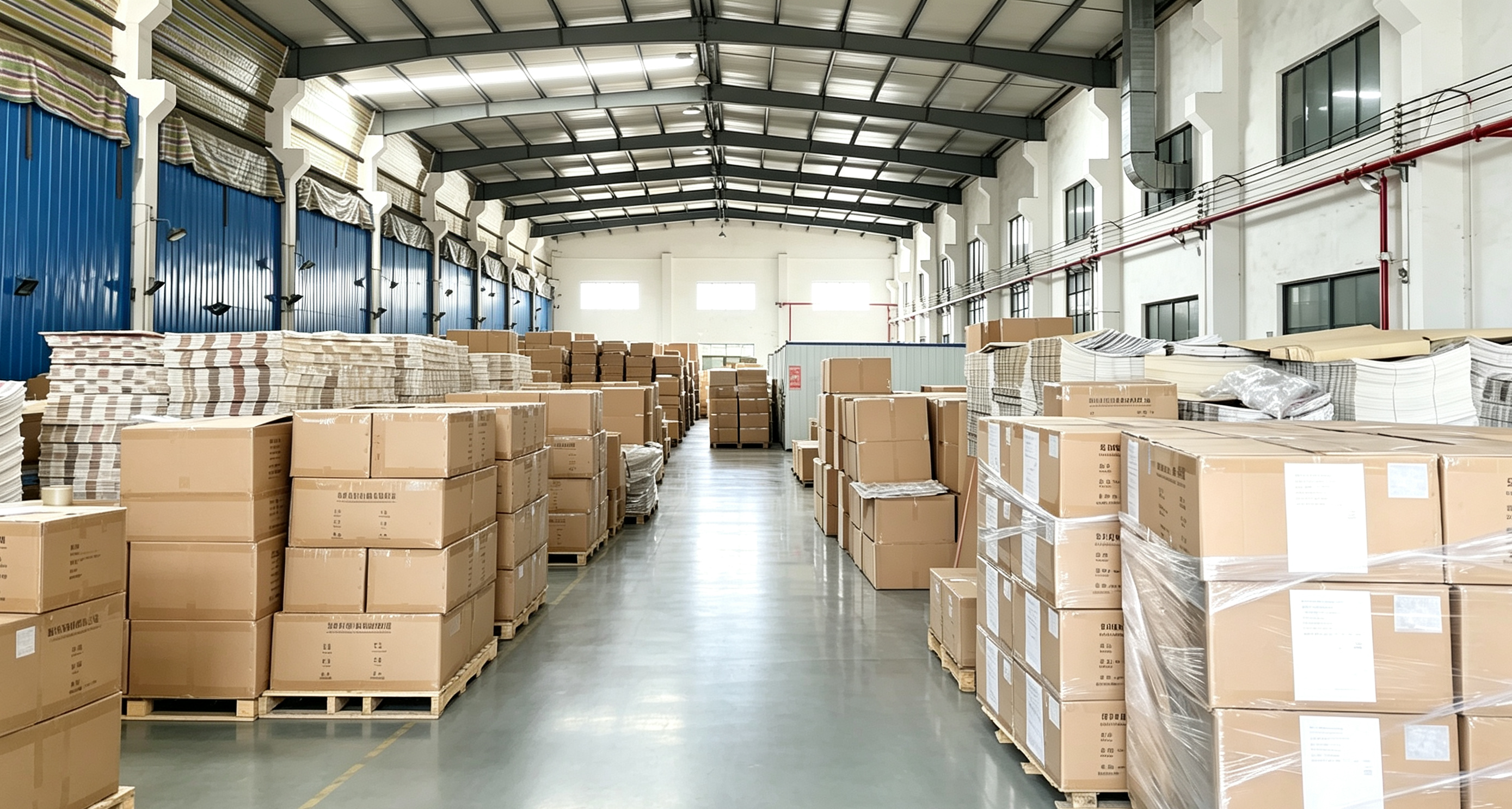
Decorative wall panel production and handling environment for self-adhesive panel lines.
Wall panel selection fails more often on scenario mismatch than on material quality. A format that performs well on a hotel corridor can be the wrong choice for a rental apartment turnover — not because it is inferior, but because its weight, substrate tolerance or expected service life does not match the project. This shortlist organises six wall panel formats by the interior decoration scenarios they are actually built for.
SXP Wall Panel is the decorative wall panel line of Shanghai Yuanguan Rubber Plastic Co., Ltd., a Shanghai-based manufacturer of decorative materials founded in 2005. The company's export share is 90%, its main markets are the EU, USA, Asia and South America, and its product range covers self-adhesive wall stickers, 3D foam wall panels, PVC wallpaper, WPC decorative wall panels, self-adhesive PVC flooring and carpet tiles. The practical consequence for buyers is that the six formats below are drawn from a commercially traded range rather than from a theoretical material comparison.
The six formats covered here are the PET marble stick-on panel (WB-PET), the WPC wall panel (WB-WPC), the PVC soft-stone wall sticker (WB-PVC), XPE foam, IXPE foam, and the multi-size 3D foam slat panel (WB-KC). For each format this article states the material, the sizes that are actually listed, and the project types it fits — plus the storage, substrate and compliance limits that decide whether a reorder is smooth or expensive.
Why a Scenario Shortlist Beats a Material Ranking
A material ranking answers the question "which panel is more durable". A scenario shortlist answers the question "which panel survives this project's constraints". The difference matters because four constraints, not appearance, decide most interior wall finishes.
- Substrate condition. Self-adhesive formats are dry-install products: the backing film is peeled off and the panel is pressed onto a smooth surface. The base must be flat, dry and free of dust and grease, and powdery, sandy or loose surfaces are explicitly out of scope. A premium panel on a friable base will fail faster than a basic panel on a sound one.
- Service-life expectation. Refurbishment cycles range from a few months (exhibition booths, temporary retail) to a decade or more (owner-occupied housing, hotel guest rooms). Foam chemistry, not pattern, governs how a panel behaves under long-term load.
- Weight and freight. Wall panels ship by volume and by weight. A rigid composite format documented at 690 to 830 grams per meter carries different box handling, pallet configuration and freight implications from a thin self-adhesive sticker. Weight has to enter the landed-cost model before unit prices are compared.
- Documentation. For EU-destined commercial interiors, construction-product certification and substance regulations apply. The correct documents must be requested before orders are placed, not after the container is loaded.
The Six Formats at a Glance
| Reference | Format | Material | Listed sizes | Thickness | Best-fit scenario |
|---|---|---|---|---|---|
| WB-PET | PET marble wall sticker | PET | 30×30, 30×60, 60×60, 40×80, 60×120, 60×300, 120×300 cm | 2 mm / 2.5 mm | Stone-look feature walls and splash zones where stone weight is not viable |
| WB-WPC | WPC wall panel | WPC | 160×23×2900 mm, 16 pcs/box, 690/810/830 g/m | As specified in the panel profile | Long continuous wall runs: corridors, lobbies, office partitions |
| WB-PVC | PVC soft-stone wall sticker | PVC | 30×60, 60×60, 40×80, 60×100, 40×300, 60×300, 120×300 cm | 2.5 mm | High-touch commercial interiors: hotel rooms, chain stores |
| XPE | Self-adhesive foam wall sticker | XPE (chemically cross-linked PE foam) | Modular self-adhesive foam format — confirm tile or slat dimensions in the order spec | As specified | Short-cycle, tight-budget and temporary projects |
| IXPE | Self-adhesive foam wall sticker | IXPE (electron-beam cross-linked PE foam) | Modular self-adhesive foam format — confirm tile or slat dimensions in the order spec | As specified | Long-lifespan residential, commercial and EU/US export projects |
| WB-KC | 3D self-adhesive foam slat wall sticker | PVC | 30×30, 60×60, 30×60, 40×300, 60×300, 120×300 cm; length customizable | 2.8 mm | Relief and slat feature walls with low cutting waste |
Format-by-Format: What Each Panel Type Solves
PET Marble Stick-On (WB-PET) — Stone Look Without Stone Weight
The WB-PET format is a PET marble wall sticker listed in 30×30 cm, 30×60 cm, 60×60 cm, 40×80 cm, 60×120 cm, 60×300 cm and 120×300 cm, with a thickness of 2 mm or 2.5 mm. It solves a recurring interior problem: a surface needs a stone or marble appearance, but real stone or a heavy cladding system is not viable on the wall, in the budget or in the programme.
Because the format is self-adhesive, installation is dry. There is no cement, no adhesive mixing and no curing time; panels can be cut on site with a utility knife and the surface finished quickly, which shortens the construction window. Typical applications include feature walls in apartments, wall protection in bathrooms and dry areas of kitchens, and covering cracks and stains on an existing wall.
The limit is the substrate rule, not the pattern. Latex-painted walls, plasterboard, plywood, tiled surfaces and cement-based surfaces are suitable when they are smooth and solid; powdery or loose surfaces are not. Long-term direct sunlight should also be avoided.
WPC Wall Panel (WB-WPC) — Long, Continuous Wall Runs
The WB-WPC format is a WPC (wood plastic composite) wall panel supplied at 160×23×2900 mm, packed 16 pieces per box, with a documented weight of 690, 810 or 830 grams per meter depending on the variant. It solves the problem that modular tiles create: on a long wall, every joint becomes a visual break.
A 2900 mm panel length reduces the number of horizontal seams across corridor walls, lobby cladding, office partitions and similar runs, which is why this format is usually specified for continuous surfaces rather than for accent areas.
Two practical notes for buyers. First, weight per linear meter is a documented figure in this range and must be entered into box handling, pallet configuration and freight calculations — rigid long panels also need better edge and surface protection in transit than flexible stickers. Second, customs classification matters: U.S. Customs and Border Protection has classified wood plastic composite products from China under tariff number 3925.90.0000 (ruling N337378), and buyers preparing landed-cost models should confirm the classification applied at destination.
PVC Soft-Stone Wall Sticker (WB-PVC) — High-Touch Commercial Surfaces
The PVC soft-stone wall sticker is listed in 30×60, 60×60, 40×80, 60×100, 40×300, 60×300 and 120×300 cm at a thickness of 2.5 mm, in PVC. It is positioned for interiors where walls are touched, cleaned and inspected rather than merely viewed: hotel guest rooms, chain-store refurbishment and office fit-out.
Selection guidance recorded for this segment is specific. Against XPE foam self-adhesive wall stickers, the PVC soft-stone format is documented as delivering superior scratch resistance, a more premium texture and better anti-aging performance. The trade-off is stated just as plainly: heavier weight and a higher unit cost. For a project with a genuine durability requirement, that is a lifecycle trade rather than a price gap to negotiate away.
The same PVC family also includes a rigid PVC wall panel listed at 30×30, 50×50 and 96×48 cm with a 2.5 mm thickness, which suits projects that prefer a smaller modular grid to long-format panels.
XPE Foam Self-Adhesive Panel — Cushioning and Sound Absorption at Low Logistics Cost
XPE is chemically cross-linked polyethylene foam. Its documented behaviour: larger cells, slower rebound, and a tendency to take a permanent indentation under heavy pressure. For a self-adhesive wall sticker, this chemistry delivers light weight, good sound absorption and cushioning performance, and a competitive logistics cost — which is exactly why it remains common in residential renovation, apartment and rental-house projects.
Its honest boundary is service life. XPE suits short-term projects and tight-budget orders, not long-life surfaces under continuous load. It is also the format that requires the most care in documentation: because it is chemically cross-linked, some batches carry formamide residue risk, so the supplier's material statement and test reports must be requested before bulk production is authorised for any market with substance regulations.
A workable purchasing rule is straightforward. Compliant XPE is acceptable for temporary sites or strictly budgeted projects, with full test reports on file. It is not the right default for a residential or commercial interior expected to hold its appearance for years.
IXPE Foam Self-Adhesive Panel — Rebound, Sound Insulation and Long Service Life
IXPE is produced by electron-beam irradiation cross-linking. The result is fine and uniform cells, strong rebound, resistance to compression and deformation, excellent sound insulation, low formamide risk, good environmental compliance and a long service life — at a higher procurement cost than XPE.
The selection logic follows the cost. This is a lifecycle decision, not a price decision: budget, expected service life and destination-market environmental requirements govern the choice. For residential renovation, commercial interiors, Europe and North America export orders, and any project with a long lifespan, IXPE is the more defensible specification. For temporary sites or strictly budgeted work, compliant XPE remains an option — provided the test reports are in hand.
WB-KC Multi-Size 3D Foam Slat Panel — Feature Walls with Low Cutting Waste
The WB-KC format is a 3D self-adhesive foam slat wall sticker in PVC, listed at 30×30, 60×60, 30×60, 40×300 cm, 60×300 and 120×300 cm, with a thickness of 2.8 mm and a length that can be customized.
It solves the geometry problem that flat tiles cannot: a wall needs relief, slat lines or a 3D surface, on a single elevation, without a cladding system. Typical uses are accent walls in rental apartments, retail display backdrops, and homestay or B&B interiors where a finished look is required on a short programme.
The customizable length is the operational advantage. On an irregular wall, ordering to length rather than cutting down from a fixed tile reduces offcut waste and site time — a measurable saving on multi-room refurbishment where dozens of repeated cuts would otherwise be needed.
Technical Explanation: Why Self-Adhesive Formats Change Project Economics
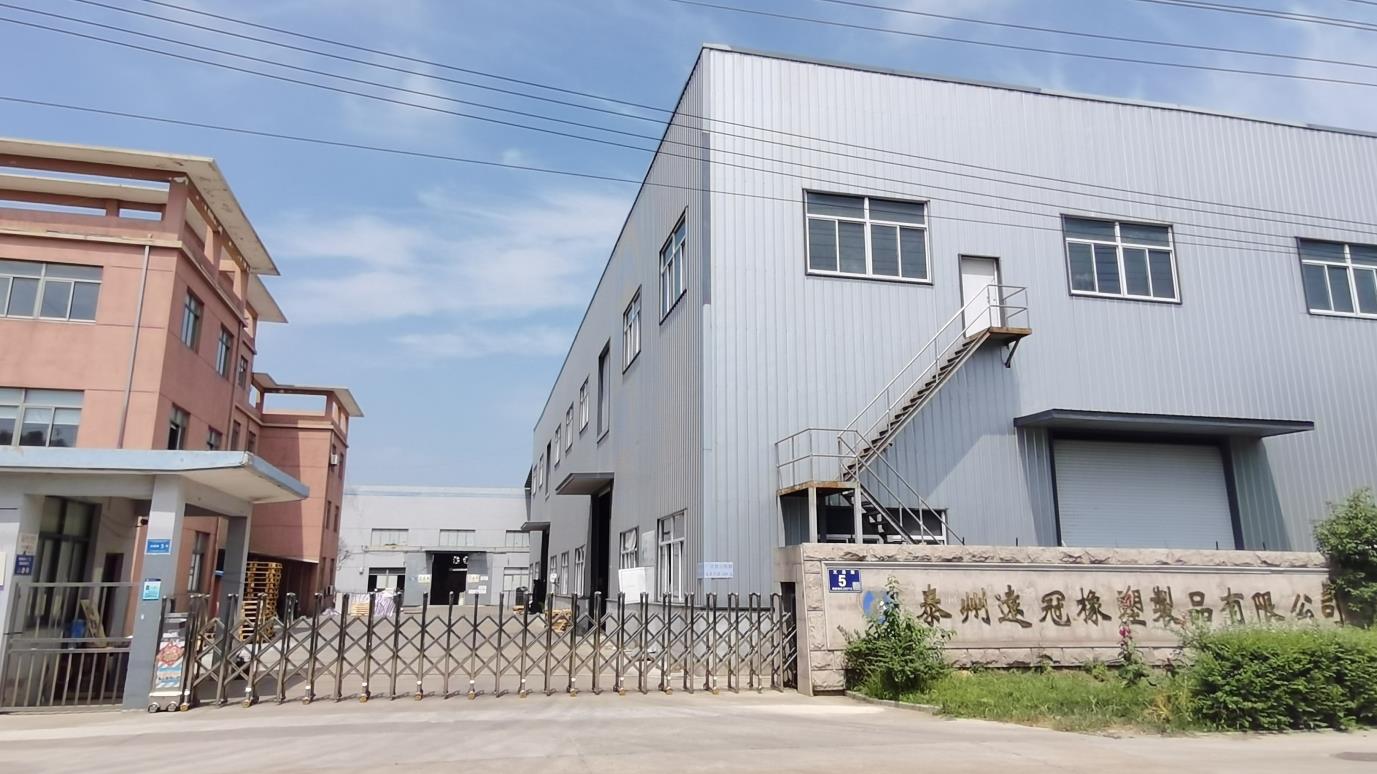
Production and handling area for wall panel and foam material lines.
The economics of a wall finish are decided less by the panel price than by what the installation method requires. Traditional finishes bring wet trades: tiles and cement-fixed cladding need substrate preparation, mixing, curing and skilled labour; paint needs preparation and dry time; wallpaper needs adhesive and careful seam work.
Self-adhesive decorative formats remove cement and glue from the process entirely. The operating method recorded for this range is: peel off the protective film and press the panel onto a smooth surface; dry installation, no cement or glue; local cutting as required; and removal and reinstallation in some styles without leaving residue. The matched equipment list is short — utility knife, scraper or roller, tape measure, spirit level, and adhesive remover to assist disassembly. For floors, a matching floor roller is recommended; no large construction equipment is involved.
That has three consequences buyers can put into a tender. First, site time falls because the finish is applied rather than built. Second, removal and reinstatement become realistic, which matters in rented property, pop-up retail and staged refurbishment where the wall must return to its original condition. Third, quality shifts from the installer's skill to the substrate: the base must be flat, dry and free of dust and grease, and floor applications additionally require adequate base strength with no hollow spots.
Maintenance exposure also sits in the format rather than the pattern. Product range documentation for this line states a maintenance requirement 85% lower than alternatives, attributed to resistance to hollowing, edge warping, degumming and scratching. Whether or not a buyer accepts that figure at face value, the underlying purchasing point is verifiable: on a wall where panels lift at the edge or de-bond, the cost is not the panel — it is the call-back, the removal and the second installation.
Matching Formats to Project Types
| Project type | Formats that fit | Why they fit | What to check before ordering |
|---|---|---|---|
| Rental apartment, quick turnover | XPE foam, WB-KC slat, PVC wall sticker | Light weight, low logistics cost, short installation window | Accept a shorter service life; request formamide and material reports where the market requires them |
| Owner-occupied residential renovation | IXPE foam, WB-PET marble, WB-WPC | Long service life, sound insulation, durable surfaces | Substrate flatness and dryness; weight impact on freight |
| Hotel guest rooms | PVC soft-stone, WB-WPC, WB-PET | Scratch resistance, premium texture, continuous wall lines | Reaction-to-fire classification where the project references EN 13501-1 |
| Chain-store and retail refurbishment | PVC soft-stone, WB-KC | High-touch walls, frequent refits, relief signage backdrops | Edge and surface protection in transit, storage stacking limits |
| Office fit-out | WB-WPC, WB-PET marble | Long wall runs with fewer joints; clean, wipeable surfaces | Panel length versus ceiling height; pallet and lift access |
| Exhibition booths and temporary builds | XPE foam, WB-KC | Dry installation, fast removal, reinstallable in some styles | Storage between events; avoid direct sunlight and pressure |
| Homestay and B&B interiors | IXPE foam, WB-KC, PVC soft-stone | Feature geometry plus a surface that survives guest use | Humid areas must still be on sound, dry substrates |
What the Market Data Says About Wall Panel Demand
Published market figures give buyers a useful sense of scale, provided the definition behind the number is checked. The global wall panels market is valued at USD 32.4 billion in 2025 and projected to reach USD 43.7 billion by 2033 (Dataintelo, Wall Panels Market Research Report 2033). A tracked alternative estimate for the same period is materially lower, which reflects different definitions of what counts as a wall panel versus exterior cladding — a reminder to confirm scope before a market figure is used in a business case.
- Category mix. Metal wall panels held the largest share in 2025 at 28.5%, while wood-based wall panels accounted for nearly 31% of global installations in 2024.
- Regional weight. Asia Pacific held the largest regional share at 42.3% in 2025.
- Growth direction. Wood wall panel systems are projected to grow at a 6.2% CAGR through 2035.
The read-across for self-adhesive decorative formats is not that they compete with structural cladding categories. It is that the growth sits in volume segments and in regions where installation time is a significant share of project cost. That is the segment where dry-install formats compete: they trade a modest material premium for lower site labour, faster handover and easier reinstatement. It also explains why the decorative range keeps expanding in two directions at once — thinner self-adhesive stickers for refurbishment, and longer rigid formats for continuous new-build interiors.
Comparison with Traditional Wall Finishes — and the Limits of This Shortlist
Against tile, paint, wallpaper and cement-fixed cladding, self-adhesive decorative panels win on process rather than on indestructibility. They remove wet trades, allow local cutting, shorten the finishing programme, and in some styles can be removed and reinstalled without residue. What they do not do is compensate for a bad substrate, and that is where the boundaries of this shortlist sit.
- Substrate is a hard limit. Bases must be flat, dry, dust-free and grease-free. Powdery, sandy or loose surfaces are strictly unsuitable. Floor applications additionally require base strength and no hollow spots.
- Environment is a hard limit. These formats are for indoor use at normal room temperature, including typical humid environments such as bathrooms and dry kitchen areas. Long-term exposure to strong sunlight should be avoided.
- Storage behaviour differs by material. Foam wall stickers are sensitive to high temperature, heavy pressure and UV light; PU-stone panels are sensitive to moisture and impact; linen soft-pack wall stickers are vulnerable to dust, dampness and mildew. Curling, deformation and mildew caused by sun exposure, over-stacking or ground moisture are classified as improper-storage damage rather than an inherent product defect — a distinction that decides who pays in a claim.
- Weight is a cost, not a defect. The WPC format is documented at 690 to 830 grams per meter. Buyers comparing unit prices without freight and handling will misread the comparison.
- Foam chemistry cannot be substituted. XPE and IXPE are not interchangeable grades of the same material. A specification that says "foam wall panel" without naming the chemistry leaves the rebound and service-life outcome open.
- Fire classification must be verified per product. Where a commercial interior specification references reaction-to-fire performance, EN 13501-1 is the European classification standard and B-s1,d0 is the commonly specified Euroclass for commercial interior wall panels. The specific product's classification should be verified rather than assumed from the category.
- Coverage. This shortlist covers six formats only. The same range also includes a leather wall sticker format at 6 mm thickness in 60×60, 60×240, 70×70, 70×280 and 70×300 cm, plus PVC flooring tiles — both sit outside this list and should be assessed against their own substrate and durability requirements.
Procurement and Repeat-Order Discipline
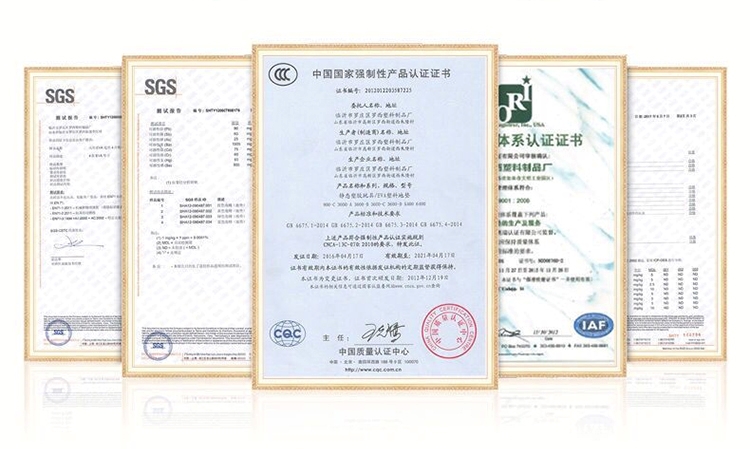
Compliance and certification documentation reviewed before wall panel shipments are released.
The commercial terms recorded for this range are a minimum order quantity of 200 units, delivery under FOB (Free On Board) terms, payment by TT, and pre-shipment test as the acceptance criterion. These terms are recorded both for the range generally and against specific product references such as 5676, which is worth confirming reference by reference when a purchase order mixes formats.
Price comparison is the next discipline. Price gaps between wall stickers, flooring and wall panels mostly come from raw materials (virgin versus recycled material), thickness, formulation, quality control and certification. Low-cost items frequently use recycled material, which can produce dimension deviation, fading, odour and non-compliant certificates; the downstream risks are customs detention, after-sales claims and market returns. The recorded guidance is clear: sample confirmation is mandatory and bulk ordering on price alone is not advisable.
For EU-destined shipments, the compliance set is specific. Wall stickers, flooring and wall panels exported to the EU should comply with CE-CPR construction-product certification, the REACH hazardous-substance regulation and PPWR packaging rules. Missing valid certificates can result in customs detention, return shipment and heavy fines, so certificate validity should be verified before orders are placed rather than at the port.
Finally, repeat orders deserve the same rigour as first orders. Recording the format reference, batch and adhesion result for each project means the next order can be matched to a known-good specification instead of re-qualifying the product every cycle — which is what makes a multi-project supply relationship cheaper than a series of one-off purchases.
Future Outlook
The market trajectory through 2033 points to steady rather than explosive expansion, with wood-based panel systems growing at a 6.2% CAGR to 2035 and Asia Pacific already holding 42.3% of regional demand. For buyers, the more consequential shift is regulatory and documentary. Substance declarations such as formamide testing, cross-linking verification and reaction-to-fire classification are moving from premium requirements to routine incoming-inspection items in regulated markets.
Format-wise, two trends are visible in the product data itself. Multi-size and customizable-length formats reduce cutting waste on irregular walls, and dry-install self-adhesive systems continue to make sense wherever a refurbishment has to happen around a live building. Neither trend removes the substrate requirement — and that is the constraint most likely to decide whether a project's wall finish still looks correct two years after handover.
FAQ
What materials and sizes are available across the six wall panel formats?
PET marble stick-on wall stickers (WB-PET) are PET, 2 mm or 2.5 mm thick, in 30×30, 30×60, 60×60, 40×80, 60×120, 60×300 and 120×300 cm. WPC wall panels (WB-WPC) are wood plastic composite, 160×23×2900 mm, packed 16 pieces per box, with a documented weight of 690, 810 or 830 grams per meter. PVC soft-stone wall stickers are PVC, 2.5 mm thick, in 30×60, 60×60, 40×80, 60×100, 40×300, 60×300 and 120×300 cm. The WB-KC 3D self-adhesive foam slat wall sticker is PVC, 2.8 mm thick, in 30×30, 60×60, 30×60, 40×300, 60×300 and 120×300 cm, with customizable length. XPE and IXPE are foam chemistries supplied in self-adhesive foam formats, so their tile or slat dimensions should be confirmed in the order specification.
XPE or IXPE foam — how should a buyer decide?
XPE is chemically cross-linked foam with lower procurement cost, larger cells, slower rebound and a tendency to permanent indentation under long-term heavy load; some batches carry formamide residue risk. IXPE is electron-beam irradiation cross-linked, with fine uniform cells, strong rebound, anti-compression and non-deforming behaviour, excellent sound insulation, low formamide risk, good environmental compliance and a longer service life, at higher procurement cost. Budget, expected service life and destination-market environmental requirements should govern the decision. For residential, commercial, Europe and North America export, and long-lifespan projects, IXPE is the more defensible specification; compliant XPE remains acceptable for temporary sites or strictly budgeted projects when full test reports are obtained before ordering.
How can XPE foam be distinguished from IXPE foam at incoming inspection?
Visual and hand-press checks are preliminary screening only; a third-party test report is the final evidence. Step 1: examine the cross-section cells — fine, uniform cells indicate IXPE, uneven large cells indicate XPE. Step 2: press a sample hard for 3 to 5 seconds and release — fast recovery without a dent tends towards IXPE, while slow rebound with a residual dent tends towards XPE. Step 3: check the supplier's material statement and request formamide and cross-linking-degree test reports. Step 4: if mass goods are suspected non-conforming, send a sample to a third-party laboratory. Because simple inspection cannot be used as a claim basis, the material should be clearly specified in the PI for export orders, with the third-party report as the acceptance criterion.
What are the purchasing terms and acceptance criteria for a wall panel order?
The documented terms for this range are a minimum order quantity of 200 units, delivery under FOB (Free On Board) terms, payment by TT, and pre-shipment test as the acceptance criterion. The MOQ and FOB terms are recorded against product reference 5676 as well as for the range generally, so buyers mixing formats on one purchase order should confirm the terms reference by reference. Material grade, sampling method and test-report delivery should be written into the order documents rather than assumed from the quotation.
How should wall panels be stored before shipment and installation?
Foam wall stickers are sensitive to high temperature, heavy pressure and UV light; PU-stone panels are sensitive to moisture and impact; linen soft-pack wall stickers are vulnerable to dust, dampness and mildew. General rules: keep the warehouse cool and ventilated at a temperature not exceeding 40°C, away from direct sunlight and heating pipes; place goods on wooden pallets rather than directly on the bare floor to prevent damp damage; stack full cartons flat with a height limit and never stack heavy rigid panels on top of foam goods; cover linen soft-pack goods for dust prevention and protect PU-stone items from corner impact; and follow FIFO so older batches ship first. Curling, deformation and mildew caused by sun exposure, over-stacking or ground moisture are classified as improper-storage damage rather than an inherent product defect.
What compliance documents are needed for wall panel shipments to the EU?
Wall stickers, flooring and wall panels exported to the EU should comply with CE-CPR construction-product certification, the REACH hazardous-substance regulation and PPWR packaging rules. Missing valid certificates can result in customs detention, return shipment and heavy fines, so the full set of valid certificates should be requested and verified before orders are placed. Where a commercial interior specification references reaction-to-fire performance, EN 13501-1 is the European classification standard and B-s1,d0 is the commonly specified Euroclass for commercial interior wall panels; the specific product's classification should be verified rather than assumed at category level.
The full product range specification for the formats covered above is available in the Shanghai Yuanguan product brochure.