
Recommended Silica Powder Options for Edible Oil and Frying Oil Filtration
Filtration is one of the few points in an oil line where a small, low-dosage material decides several cost lines at once: neutral-oil loss, bleaching-earth consumption, waste-cake disposal, filter cycle time, and the colour and oxidative stability of the finished oil. The silica powder chosen for this step therefore deserves the same specification discipline as the oil itself — and the three product options used for edible oil and frying oil filtration are not interchangeable.
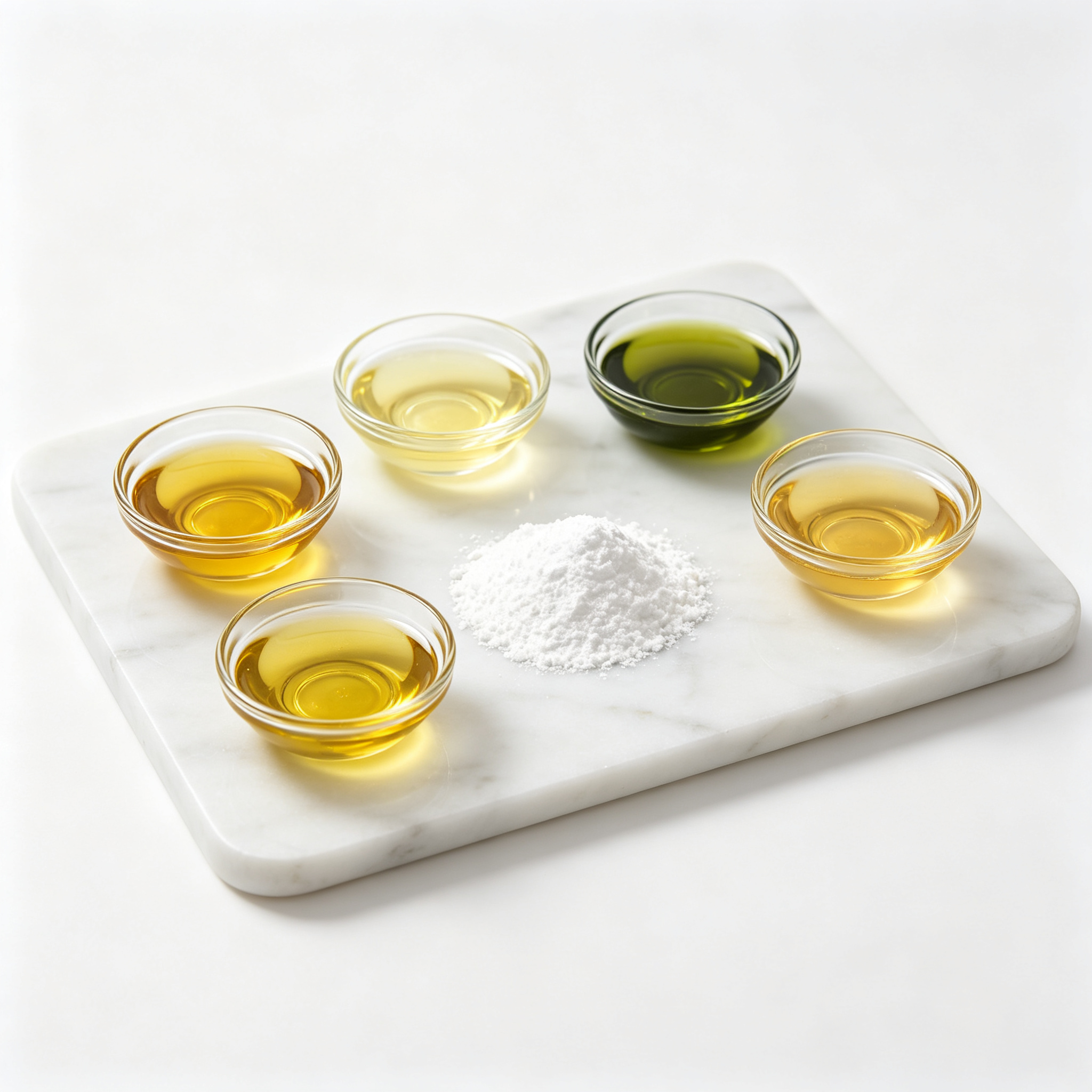
Food-grade adsorbent silica powder. Grade selection for oil filtration is driven by pore structure, pH and filter compatibility rather than by brand familiarity.
Zhonglian Food Silica is the food-grade silica brand of Shandong Zhonglian Chemical Co., Ltd., a Chinese manufacturer with a production base in Guangzhou and an annual silica capacity of approximately 50,000 metric tons. Its food-grade range is produced to GB 25576-2020 and documented against FCC, USP–NF and EU E 551 requirements, and the company exports to more than 20 countries and regions, including Europe, the Americas, Japan and South Korea, Southeast Asia and the Middle East.
This article shortlists three options from that range — Frying Oil Filter Aid Silica, Silica for Edible Oil and Food Grade Adsorbent Silica — and explains how a buyer should compare them through oil absorption, pH compatibility and pilot-trial results before committing to a scale-up.
Why the filtration stage is a specification decision, not a commodity purchase
Crude and used frying oils carry impurities that fall into two broad groups. The first group is soluble or semi-soluble material: phospholipids, soaps, trace metals and colour bodies that survive degumming and can dull the oil or accelerate oxidation. The second group accumulates during frying: polar polymers, free fatty acids and other degradation products that shorten fry life and darken the batch.
Silica addresses both groups physically rather than chemically. Its porous structure adsorbs the target species onto an internal surface, and the loaded particle is then removed by the existing filter. That mechanical simplicity is deceptive. A grade that is too fine will blind the filter and raise pressure drop; a grade with the wrong pore structure will carry neutral oil out with the waste cake; a grade with the wrong pH can interact with the oil system in ways that only appear after several production runs.
The practical consequence is that the purchase decision should be made on three comparisons — oil absorption capacity, pH compatibility, and validated pilot performance — rather than on a single COA line item.
The shortlist: three options and the job each one does
All three options sit inside the ZOILSIL oil-treatment portfolio, which is quoted under model designations including ZOILSIL-GZ R92, ZOILSIL-GZ 150, ZOILSIL-GZ 300, ZOILSIL-GD450, Zoilsil-W58G and Zoilsil-W58GS. The designation chosen within the series is set by the refining step and the filtration equipment, not by the product family name.
| Option | Primary job in the line | Key documented parameters | Typical application |
|---|---|---|---|
| Silica for Edible Oil | Secondary refining polish: removes phospholipids, soaps and trace metals that water washing leaves behind; supports degumming, de-soaping and bleaching | SiO₂ ≥99.7%; BET ~700 m²/g; D50 16–26 μm; pH 1.5–3.0; low solids; contact time 10–15 min; 20/25 kg bags | Animal and vegetable oil refining; biodiesel and renewable diesel feedstock preparation |
| Frying Oil Filter Aid Silica | Adsorbs polar polymers and free fatty acids generated during frying; dosed through existing filters to extend fry life | SiO₂ ≥99%; high BET; D50 specified per grade; 20/25 kg bags; grade-specific pH — confirm on the batch COA | Fried foods such as fried chicken and fries, shortening, catering and industrial frying-oil treatment |
| Food Grade Adsorbent Silica | General food-grade adsorption and carrier duty, including oil-contact polishing where a neutral pH range is required | SiO₂ ≥99%; D50 10–25 μm; BET 190–700 m²/g; pH 6.0–7.5; LOD ≤7%; oil absorption 200–350 ml/100 g; 15–20 kg bags | Food, nutraceuticals, flavours, solid drinks, seasonings and pet food; oil-contact polishing within the same neutral-pH envelope |
Read the table as an application-fit shortlist, not as a market ranking. The three options overlap in chemistry — all are synthetic amorphous silica, CAS 7631-86-9, E 551/INS 551 — but they differ in pore structure, particle size and pH band, and those differences determine where each one belongs.
Decision snapshot
- If the problem is phospholipids, soaps and trace metals in refined oil: Silica for Edible Oil, with its high BET and acidic pH band, is the natural starting point.
- If the problem is fry-life extension and darkening in a fryer or industrial frying line: Frying Oil Filter Aid Silica, selected by grade for polar-polymer and free-fatty-acid uptake.
- If the problem is general adsorption where the oil system or the surrounding formulation needs a neutral pH band and measurable oil absorption: Food Grade Adsorbent Silica.
Comparison criterion 1 — oil absorption and pore capacity
Oil absorption, usually reported as a DBP value, measures how much liquid a grade can take up before the powder stops behaving as a free-flowing solid. It is a direct proxy for pore volume, and therefore for how much adsorbate a given mass of silica can hold before breakthrough.
For Food Grade Adsorbent Silica, the documented oil absorption range is 200–350 ml/100 g. For the edible-oil grade, the relevant capacity indicators are the BET surface area of approximately 700 m²/g and a low-solids profile, which together describe a high internal surface presented to the oil. For the frying-oil grade, the documented characteristic is high BET combined with high adsorption of polar polymers and free fatty acids, with D50 specified per grade.
Two practical rules follow from this. First, higher oil absorption is not automatically better: a grade that holds a great deal of liquid will also hold neutral oil unless the contact time and dosage are tuned. Second, oil absorption must be read together with particle size. A high-capacity grade that is too fine will raise pressure drop across the filter and may force shorter cycles than the adsorption gain justifies.
Comparison criterion 2 — pH compatibility
pH is the criterion most often skipped in quotation comparisons and most often responsible for a failed trial. Silica grades are not all neutral. Silica for Edible Oil is documented at pH 1.5–3.0, an acidic band chosen for the refining chemistry it serves. Food Grade Adsorbent Silica is documented at pH 6.0–7.5, a near-neutral band. The frying-oil range is grade-specific and should be confirmed on the batch COA rather than assumed.
Why this matters: an acidic grade introduced into a system that was specified around a neutral adsorbent can shift the behaviour of sensitive minor components, and a neutral grade introduced into an acidic polishing step may underperform on the species that the step was designed to remove. The rule is to match the grade to the chemistry of the stream, not to the chemistry of the previous supplier's datasheet.
In the supplier's own technical guidance, the neutral standard band is quoted at pH 6.5–6.8 and the acidic G300-type band at approximately pH 2.6 for acidic systems — a useful reminder that pH is a design parameter in this category, not a formality.
Comparison criterion 3 — particle size, BET and filter compatibility
D50 and BET work as a pair. D50 sets the hydraulic behaviour of the cake; BET sets how much surface is available for adsorption. Silica for Edible Oil is documented at D50 16–26 μm with BET around 700 m²/g, a combination aimed at high surface area without an unmanageably fine cake. Food Grade Adsorbent Silica spans D50 10–25 μm with BET 190–700 m²/g, so the buyer can move within the range depending on the clarity target and the filter type. The frying-oil range specifies D50 per grade, which is the honest way to present it: frying systems vary too much for one particle size to serve all of them.
The compatibility question to ask is not only 'what is the D50' but 'what pressure drop does this grade produce on my filter at my dosage'. That is a pilot-trial question, not a datasheet question.
How the adsorption actually works
Synthetic amorphous silica presents a network of internal pores. When dispersed in oil, phospholipids, soaps and metal-containing species migrate to the pore surface and are held there by surface interaction rather than by chemical reaction. Because the mechanism is physical, the silica remains chemically inert in the oil and is removed with the cake.
In frying oil the same mechanism targets a different set of species. Polar polymers and free fatty acids build up as the oil degrades; adsorbing them slows the rate at which the oil reaches the point where it must be discarded. The supplier's technical documentation describes the frying-oil grades as combining high BET with high adsorption of polar polymers and free fatty acids, and as dosed through existing filters — meaning the intervention does not require a new unit operation.
Contact time is part of the mechanism, not an afterthought. For Silica for Edible Oil, the documented contact time is 10–15 minutes. Shorter contact under-uses the pore volume; longer contact may simply extend the batch without additional removal.
Running a pilot trial that actually predicts scale-up
The single most expensive mistake in this category is treating a compliant COA as a performance guarantee. A certificate confirms that a batch is chemically within specification; it does not confirm that the batch will behave the same way in a specific oil, at a specific dosage, on a specific filter.
A workable pilot protocol has five steps:
- Define the benchmark. Record the incumbent grade's D50, oil absorption, pH and loss on drying, and the current line's pressure drop, cycle time and neutral-oil loss.
- Run parallel tests at equal dosage. Same oil, same temperature, same contact time, same filter medium — only the silica changes.
- Measure the outcomes that matter commercially. Transmittance or colour after filtration, residual phosphorus or soap where relevant, free fatty acid and polar compound reduction for frying oil, and the pressure-drop curve across the cycle.
- Run an accelerated stability check. Hold the filtered oil for two to four weeks under accelerated conditions and compare colour and oxidation behaviour against the incumbent.
- Document and decide. Approve for scale-up only when performance is equal or better at equal or lower cost per tonne of oil treated.
Trial material should come from the same batch that would be used for full-scale production, and retained samples should be sealed and labelled. Running the pilot on a hand-blended laboratory sample and then scaling to a production batch is a common source of disappointment.
Application notes from oil refining and frying lines
In a reported refining case with Yihai Kerry, an adsorbent with customised pore structure and high specific surface area removed phospholipids and trace metals, improved transmittance and reduced both clay consumption and crude-oil loss. That combination — better clarity at lower consumable cost — is the commercial case for moving from a generic adsorbent to a grade specified for the step.
In a reported animal-fat case in the HaiDiLao supply chain, an optimised particle size raised filtration efficiency by 40%, enabling anhydrous degumming with less wastewater. For tallow and other animal fats, where water-free processing is attractive for both cost and effluent reasons, particle size optimisation is the lever rather than surface area alone.
The same portfolio logic appears outside edible oil: Zoilsil58GS is used for beer filtration by Snow Beer and Budweiser, selectively adsorbing sensitising proteins and polyphenols while preserving foam and malt flavour. The shared lesson is that the grade is specified against the stream, and the stream determines which parameter dominates.
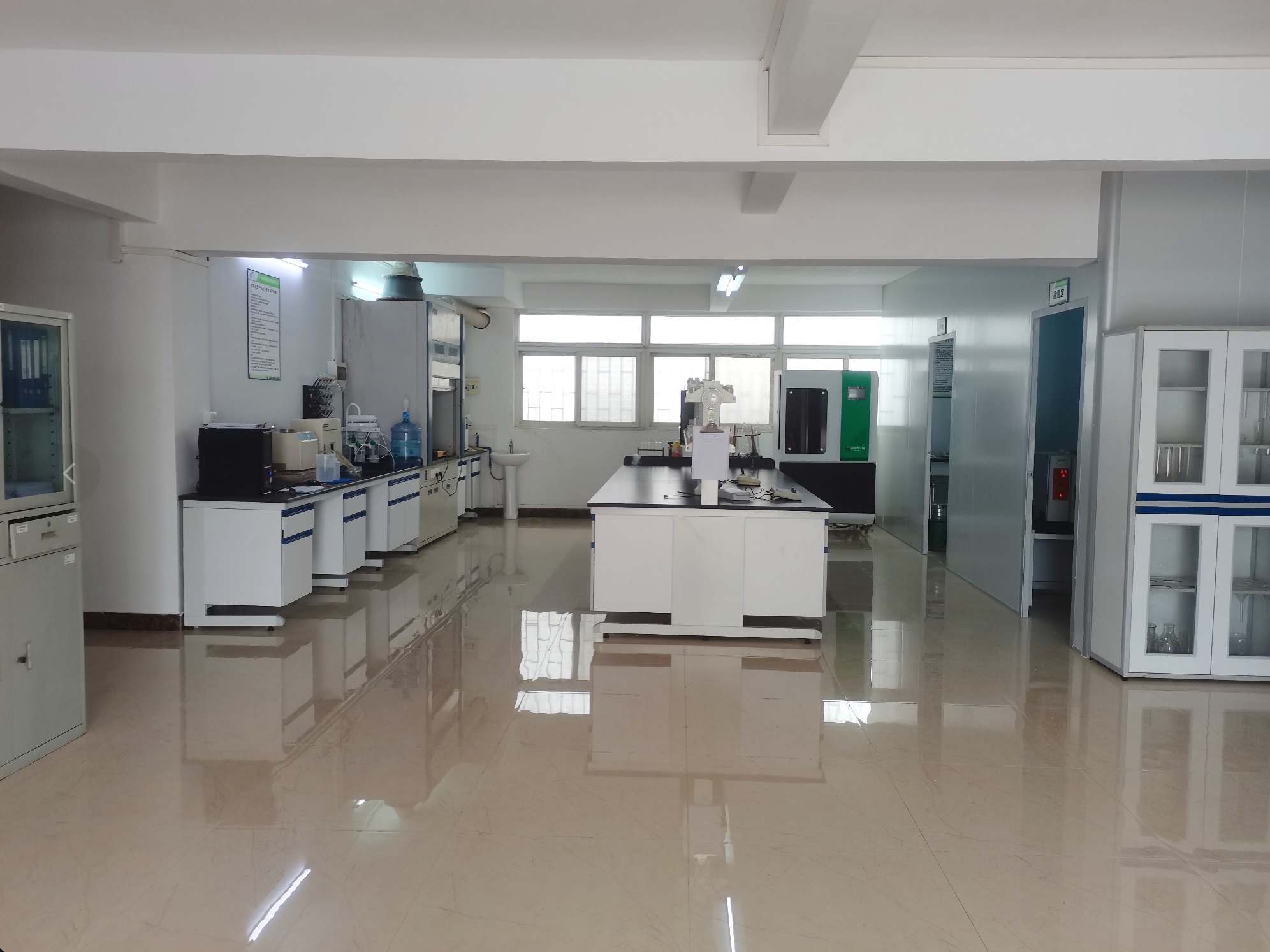
In-house laboratory testing before batch release. Oil-filtration grades are released against batch-specific COA data rather than a single catalogue value.
Verification points: Food Contact Grade Silica and Low Heavy Metal Silica
Two specification families matter when the filtered oil feeds an export market or a colour-sensitive finished product.
Food Contact Grade Silica is documented under model designations including ZLSIL-W63FP, ZLSIL-W1FP, ZLSIL-W72FP, ZLSIL-W74FP, ZLSIL-W3050, ZLSIL-W3150, ZLSIL-WG156F, ZLSIL-W1450 and ZLSIL-W2000. The compliance basis is GB 25576-2020 and GB 2760, with FDA 21 CFR 172.480 (GRAS) and FCC, EU E 551 under Commission Regulation (EU) No 231/2012 and Regulation (EC) No 1333/2008, and JECFA's ADI of 'not specified'. Lead is specified at ≤1–2 ppm and total heavy metals at ≤10 ppm.
Low Heavy Metal Silica, quoted as ZLSIL-W58BT and ZLXIDE-P, applies the same regulatory framework with elemental impurity control emphasised. Where the end market requires tighter limits, this is the family to request rather than assuming that a standard food grade will satisfy the buyer's specification.
The regulatory backdrop supports these specifications. EFSA completed a re-evaluation of E 551 in October 2024 and confirmed that it raises no safety concern for all populations, including infants. For buyers, that re-evaluation is the reference point that makes E 551 filtration aids straightforward to defend in an EU-facing specification.
Manufacturing-side evidence is also verifiable. The production base operates under ISO 9001:2015, ISO 22000:2018 and FSSC 22000 v6.0 certification, with FAMI-QS v6.0 covering feed ingredients, and holds HALAL and OU Kosher certification. Quality is controlled across raw-material selection, manufacturing and finished-product delivery, supported by testing and microbiological laboratories.
Silica versus traditional bleaching earth: where it wins and where it does not
Activated bleaching earth is the incumbent in oil refining, and the comparison is not a simple substitution story.
In secondary polishing, a high-purity silica adsorbent offers three practical advantages. It is purer than bleaching earth, which contains clays and iron; it filters with a controlled particle size that supports longer cycles and lower equipment load; and the spent cake holds less neutral oil. Zhonglian's own application notes cite up to 85% lower total cost and roughly 90% less waste cake compared with activated bleaching earth in this polishing role, together with lower neutral-oil carryover.
The limitation is equally clear and should be stated plainly. Silica adsorbent is a polishing and filtration aid, not a full replacement for bleaching earth across every refining step. It does not deliver the same bleaching capacity for heavily coloured crude oils, and it must be removed by filtration — it is not a material that stays in the finished oil. The acidic pH band of the edible-oil grade (1.5–3.0) also requires equipment and process conditions that are compatible with it. Buyers who expect one grade to replace the entire earth dose will be disappointed; buyers who place it where it belongs, in secondary polishing, generally are not.
A second boundary applies to frying oil. Filter-aid silica slows quality decline; it does not reverse it. Oil that has already reached end-of-life polar compound levels will not be restored to specification by adsorption, and the grade must be matched to the fryer type, turnover rate and filtration frequency.
Market context
Published market estimates for food-grade silica vary widely by scope. Fortune Business Insights put the global food-grade silica market at USD 0.87 billion in 2025, while other commercial estimates are materially higher because they define 'food grade' differently and include pharmaceutical or feed grades within the boundary. The number is therefore directional rather than precise, and buyers should read it alongside volume data: Mordor Intelligence reports precipitated silica market volume of 3.25 million tons in 2025, a reminder that the food-grade segment is a small, high-value slice of a much larger commodity base.
Two structural trends support continued specification activity in oil filtration. Regulatory clarity has improved — the EFSA re-evaluation removed a longstanding question mark over E 551 — and processors continue to look for ways to reduce waste-cake disposal and neutral-oil loss as disposal costs rise. Both trends favour grade-specific purchasing over generic adsorbent buying.
Future outlook
The next phase of competition in oil-filtration silica is likely to be about documentation and fit rather than about new chemistry. Buyers increasingly ask for batch-specific COA data, elemental impurity profiles and pilot-trial support before they change a grade, and suppliers that can provide those alongside a defined grade portfolio will be easier to qualify.
For frying operations, the pressure will come from waste-oil economics: as disposal and compliance costs rise, the value of extending fry life by even a modest margin increases. For refining, the pressure will come from yield: every kilogram of neutral oil retained in the spent cake is a direct loss. Neither problem is solved by a single universal grade, which is why the shortlist approach described here — three options, three jobs, three comparison criteria — is more useful than a single recommendation.
FAQ: selecting and validating oil-filtration silica
What is the difference between frying oil filter aid silica and edible oil adsorbent silica?
They target different impurities. Frying Oil Filter Aid Silica is specified for polar polymers and free fatty acids generated during frying, with high BET and D50 set per grade, and is dosed through existing filters. Silica for Edible Oil is specified for refining duties — degumming, de-soaping and bleaching support — removing phospholipids, soaps and trace metals, with SiO₂ ≥99.7%, BET around 700 m²/g, D50 16–26 μm, pH 1.5–3.0 and a documented contact time of 10–15 minutes. The two are not interchangeable because the target species and the pH band differ.
Which ZOILSIL grade should be trialled first for vegetable oil refining?
Start with the Silica for Edible Oil family, quoted as ZOILSIL-GZ R92, ZOILSIL-GZ 150, ZOILSIL-GZ 300 and ZOILSIL-GD450. Selection within the family depends on the refining step and the filter type rather than on a single best grade. Confirm the grade-specific D50, pH and dosage on the batch COA, then run a parallel trial against the incumbent at equal dosage before committing to scale.
Why does pH matter when selecting silica for oil filtration?
Because silica grades are not uniformly neutral. Silica for Edible Oil is documented at pH 1.5–3.0 and Food Grade Adsorbent Silica at pH 6.0–7.5, and the frying-oil range is grade-specific. Matching the grade to the chemistry of the oil stream avoids underperformance on the target species and avoids unintended interactions with sensitive minor components. In the supplier's guidance, neutral systems are served by the pH 6.5–6.8 band and acidic systems by the approximately pH 2.6 band.
What should a pilot trial include before scale-up?
A pilot trial should benchmark the incumbent grade's D50, oil absorption, pH and loss on drying; run parallel tests at equal dosage on the same oil, temperature, contact time and filter medium; measure transmittance or colour, residual phosphorus or soap where relevant, and free fatty acid and polar compound reduction for frying oil, plus the pressure-drop curve; and hold the filtered oil for two to four weeks under accelerated conditions to compare colour and oxidation against the incumbent. Approve scale-up only when performance is equal or better at equal or lower cost per tonne of oil treated, and use trial material from the same batch intended for production.
Can silica replace activated bleaching earth completely?
No. Silica adsorbent is a polishing and filtration aid. It offers advantages in secondary polishing — higher purity than clay-based earth, controlled particle size for longer filter cycles, and a spent cake that holds less neutral oil — with supplier-reported comparisons citing up to 85% lower total cost and roughly 90% less waste cake. It does not deliver equivalent bleaching capacity for heavily coloured crude oils, it must be removed by filtration, and the acidic pH band of the edible-oil grade requires compatible equipment. It complements rather than replaces the earth dose.
How is silica dosed into an existing filtration line?
Frying Oil Filter Aid Silica is documented as dosed through existing filters, so no new unit operation is required. For edible oil, the documented contact time is 10–15 minutes, and the grade is added to the oil stream before the filter. Dosage, addition point and cycle length are application-specific and should be established in the pilot trial rather than taken from a generic table.
Where to go next
The three options described here cover the filtration and adsorption duties most often specified in edible oil and frying oil lines, with verification available through Food Contact Grade Silica and Low Heavy Metal Silica where the end market requires it. Buyers comparing suppliers should ask for batch-specific COA data, the grade-specific pH and D50, and a pilot-trial protocol — the three items that determine whether a compliant powder actually performs in the line.
Product and specification details are available from Zhonglian Food Silica, and the food-grade range is documented in the downloadable brochure below.
Есть вопросы или нужны дополнительные детали?
Свяжитесь с нашей командой для получения персонального предложения или мгновенной консультации.
Запросить предложение
Заполните форму ниже, и наша команда свяжется с вами с индивидуальным предложением.
Прямой чат WhatsApp
Предпочитаете общаться в реальном времени? Напишите нам в WhatsApp для мгновенной помощи и быстрых ответов.
- Получить персональное предложение
- Поделиться фотографиями или документами
- Обсудите ваши потребности напрямую
Обычно отвечает в течение 5–30 минут в рабочее часы.