
Recovery Slippers in Healthcare: EVA and Cork Models for Clinical Workflows
Recovery Slippers in Healthcare: EVA and Cork Models for Clinical Workflows
Healthcare facilities, rehabilitation clinics and wellness studios are re-examining a category that has long been treated as an afterthought: the footwear worn during long indoor standing shifts and during the early stages of physical recovery. Recovery slippers — cushioned footwear shaped around the foot rather than around a uniform size — are now specified for nurses, therapists and patients who spend extended periods on their feet inside controlled environments.
The practical question for buyers is not whether recovery footwear is comfortable in general, but which construction fits which workflow. Two families dominate: high-resilience EVA foam and cork midsole footwear. ORTHOCARE, the recovery footwear brand covered in this reference, publishes model-level data that makes the comparison concrete — an EVA nurse shoe (C22) in sizes 39–46, a stated softness band of 38–50 degrees across its EVA range, and a separate line built on cork midsole and cork footbed construction.
Why Clinical and Wellness Workflows Are Reconsidering Recovery Footwear
Clinical footwear demand has two overlapping drivers. The first is shift length: nursing, therapy and clinical support roles involve sustained standing and walking on hard flooring, and footwear is one of the few comfort variables a facility can standardise at all. The second is rehabilitation: patients recovering from surgery, injury or chronic foot conditions need an indoor option that supports a healing foot rather than irritating it.
The commercial signal matches the clinical one. Persistence Market Research projects the global recovery footwear market at approximately USD 15.3 billion in 2025, expanding to USD 24.6 billion by 2032. Grand View Research values the global diabetic footwear market at USD 8.96 billion in 2024, with a projected CAGR of 7.7% through 2030. Precedence Research places North America at roughly 40% of the recovery footwear sector in 2025 and identifies the after-foot-surgery application segment as the highest-share segment that year.
Market sizing in this category should be read carefully. Dataintelo estimates the 2025 recovery footwear market at USD 8.7 billion, against Persistence Market Research at USD 15.3 billion. The gap reflects different inclusion criteria for recovery versus medical footwear rather than a disagreement about direction, and it is a reminder that category definitions vary by source.
What the numbers do not settle is fit. A slipper that helps a runner recover after a training session is not automatically appropriate for a nurse completing a long ward shift, and neither is automatically appropriate for a patient in the weeks after foot surgery. Construction, softness and size range determine that fit, and those are the variables this reference addresses.
Defining the Category: EVA, Cork and the Softness Measure
A recovery slipper differs from a general house slipper in the order of its design priorities. Cushioning and foot support come first; closure and appearance come second. In practice most models in this category are one-piece or low-assembly footwear, which is why two materials dominate the segment.
High-resilience EVA foam is a closed-cell, injection-moulded material. It is lightweight, washable and, in recovery use, tuned to a specific softness. The models covered here state a softness band of 38–50 degrees across the EVA range — a durometer-style measurement rather than a temperature. The significance for buyers is that the band is wide: two SKUs from the same supplier can sit at opposite ends of it and behave differently underfoot.
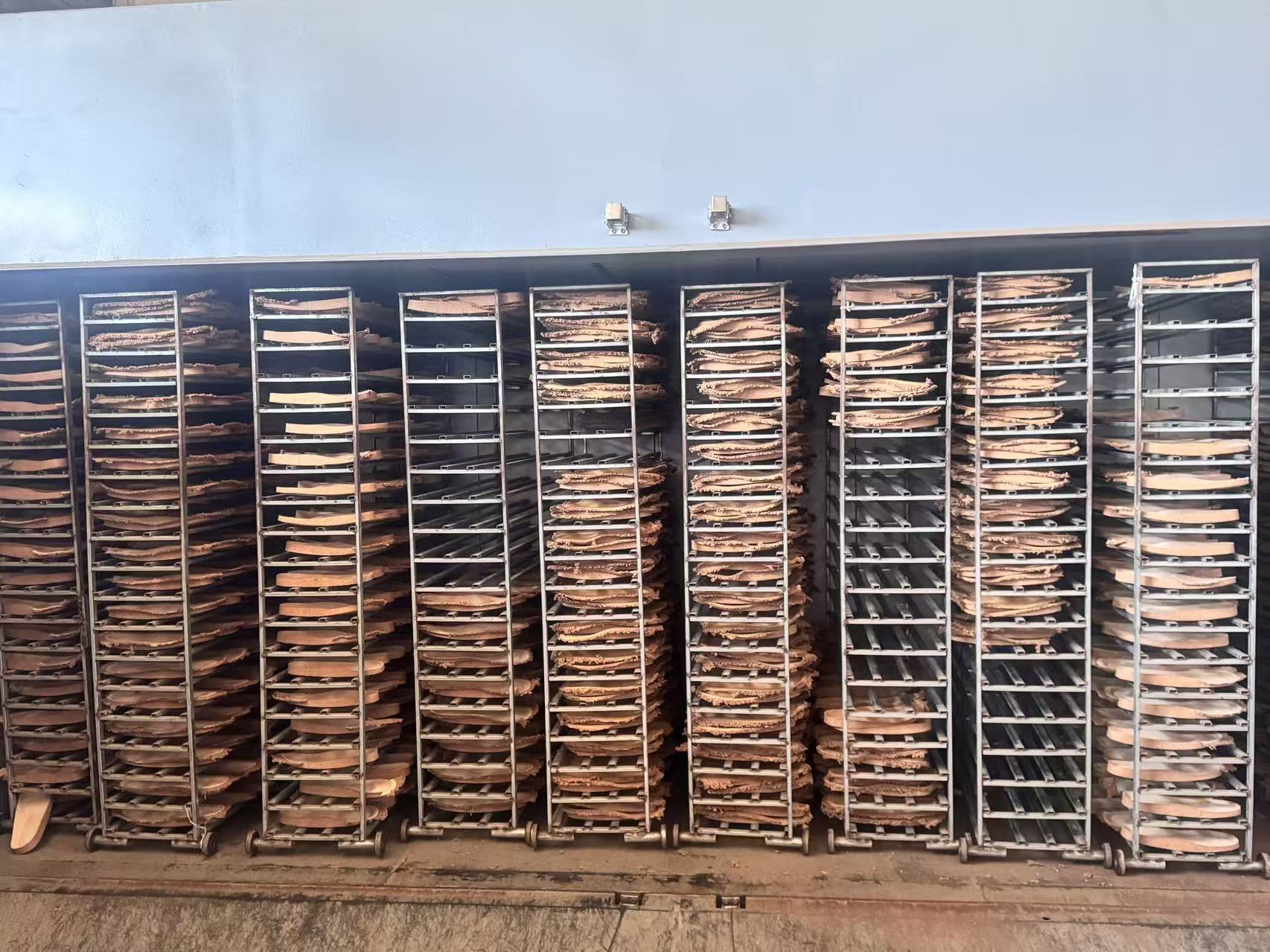
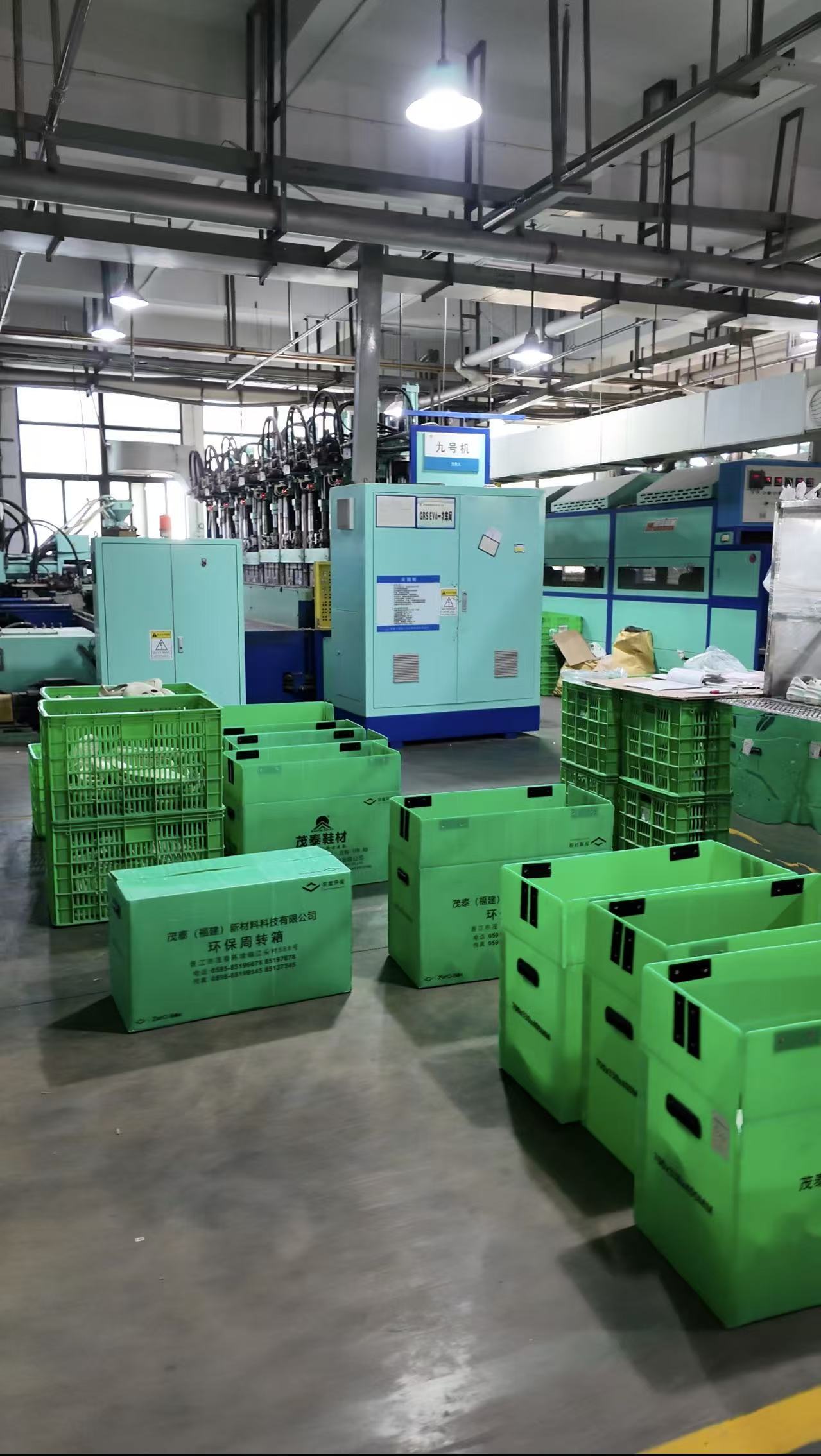
Cork midsole footwear takes a different route. Natural cork is formed into a contoured footbed that provides support through shape and firmness rather than through deep compression. The product lines behind these models include EVA recovery slippers, sandals, cork soles, cork footbeds and wide-fit sneakers, and cork production runs through dedicated cork midsole workshops with oven-drying stages and automated cork midsole machinery before assembly.
Neither construction is categorically better. EVA returns energy and spreads pressure; cork holds a shape and resists collapse. Which one a clinical or wellness programme needs depends on whether the requirement is cushioning during standing, support during rehabilitation, or both across a mixed population of staff and patients.
EVA Models in Long-Shift Use: The C22 Nurse Shoe
Within the EVA range, the EVA nurse shoe (C22) is the model most directly aimed at shift-based clinical work. Its published specification is an EVA construction in sizes 39–46 with a softness of 38–50 degrees, positioned for indoor and outdoor use and for walking after exercise — a use environment that matches staff moving between a ward, a break area and a car park without changing footwear.
The surrounding EVA range covers the same use environment at different sizes and geometries:
- EVA recovery slipper (A07): sizes 40–46
- EVA flip flop (A05): sizes 36–46
- EVA thong (A08): sizes 36–46
- EVA slipper (D01): sizes 36–44
- EVA slide slippers (A01 and JFC651): sizes 36–46 and 35–40
- EVA clog shoe (A02): sizes 39–46
- EVA garden shoes (D02 and Au20): sizes 36–41 and 36–46
- EVA slipper (L25): sizes 36–46
Two observations matter for procurement. First, the category-level size span is 35–46, but no single model covers that full span: the C22 nurse shoe starts at 39, and the A07 recovery slipper starts at 40. A facility or brand that needs continuous coverage must plan across models rather than around one SKU. Second, the indoor and outdoor environment is stated consistently across the range, which is unusual for footwear sold primarily as house slippers and is the property that makes the range usable in clinical corridors.
Volume experience in this construction is documented rather than claimed. A brand owner client programme in South Korea ran for five years and produced 1,000,000 pairs of EVA arch support recovery footwear, with reported results of 100% stable production and 100% on-time shipment. The defining features recorded for that programme were arch support combined with soft recovery EVA material — the same combination that wholesale EVA recovery slipper buyers typically specify for staff and patient populations.
Cork Midsole Construction in Rehabilitation Environments
Cork midsole footwear addresses a different requirement. Where EVA is selected for cushioning, cork is selected for a stable, contoured base under a healing or fatigued foot. The manufacturing route is visible on the production floor: cork midsole workshops with oven-drying stages, automated cork midsole machinery, and cork slipper processing lines running alongside the EVA injection workshops.
For rehabilitation settings, the case for a contoured cork base is that it holds its shape under a standing user rather than compressing away from the arch. That same property makes cork less yielding than a soft EVA unit for users who want maximum pressure relief. Buyers specifying cork models for post-surgical or rehabilitation environments should therefore treat cork and EVA as complementary specifications inside one programme, not as substitutes for each other.
The demand direction is supported by third-party data. Precedence Research identifies after-foot-surgery applications as the highest-share segment of the recovery footwear market in 2025, and Grand View Research projects the broader diabetic footwear category at a 7.7% CAGR through 2030. Both point to sustained institutional and retail demand for foot-shaped footwear rather than uniform-issue slippers.
Reading Fit Indicators Before Specification
Softness and size are the two indicators a buyer can compare across suppliers without physical testing, and both are published per model in this programme. The table below consolidates the EVA range data.
| Model | Product type | Material | Size range | Stated softness | Stated use environment |
|---|---|---|---|---|---|
| C22 | EVA nurse shoe | EVA | 39–46 | 38–50 degrees | Indoor, outdoor, walking after exercise |
| A07 | EVA recovery slipper | EVA | 40–46 | 38–50 degrees | Indoor, outdoor, walking after exercise |
| A05 | EVA flip flop | EVA | 36–46 | 38–50 degrees | Indoor, outdoor, walking after exercise |
| A08 | EVA thong | EVA | 36–46 | 38–50 degrees | Indoor, outdoor, walking after exercise |
| D01 | EVA slipper | EVA | 36–44 | 38–50 degrees | Indoor, outdoor, walking after exercise |
| A01 | EVA slide slippers | EVA | 36–46 | 38–50 degrees | Indoor, outdoor, walking after exercise |
| JFC651 | EVA slide slippers | EVA | 35–40 | 38–50 degrees | Indoor, outdoor, walking after exercise |
| A02 | EVA clog shoe | EVA | 39–46 | 38–50 degrees | Indoor, outdoor, walking after exercise |
| D02 | EVA garden shoe | EVA | 36–41 | 38–50 degrees | Indoor, outdoor, walking after exercise |
| Au20 | EVA garden shoe | EVA | 36–46 | 38–50 degrees | Indoor, outdoor, walking after exercise |
| L25 | EVA slipper | EVA | 36–46 | 38–50 degrees | Indoor, outdoor, walking after exercise |
Published model data for the EVA recovery range. Softness is stated as a 38–50 degree band across the family; the exact value should be confirmed per SKU during sampling, because two models inside the same band can feel noticeably different to the same user.
Indoor, Outdoor and Post-Exercise Scenarios
The stated use environment across these models — indoor, outdoor and walking after exercise — maps onto three distinct workflows, and each places different demands on construction.
Shift-based clinical use. Nurses, therapists and support staff need a model that stays usable between clinical areas, break rooms and changing facilities. A closed or partially closed geometry such as the C22 nurse shoe or the A02 clog shoe is more practical here than a thong or a slide, because the foot is less exposed when moving through shared spaces.
Rehabilitation and post-treatment use. Early mobilisation and post-surgical walking happen indoors on hard flooring. This is the environment where a contoured cork base is most relevant, because support under the arch matters more than rebound energy. It is also the environment where size accuracy matters most, since an ill-fitting indoor slipper is a trip risk rather than an inconvenience.
Wellness and post-exercise recovery. Sports therapy rooms, studio recovery zones, hotel spas and retail wellness floors use recovery slippers immediately after training or treatment rather than all day. Here the softer part of the 38–50 degree band and lighter geometries such as the A05 flip flop, A08 thong or slide models are the natural fit, and quantity is usually driven by amenity programmes rather than by individual fitting.
Compliance and Test Evidence for EU-Bound Programmes
For buyers shipping into the European Union, the relevant document in this programme is an Intertek footwear test report for EVA flip-flops, certificate number FJXT80162636, issued by Intertek Testing Services Shenzhen Ltd. Xiamen Branch on 14 January 2026 and valid to 13 January 2031.
The tested scope covers slip resistance, strength of sandal toe post, abrasion resistance for outsole, colour fastness to light, polycyclic aromatic hydrocarbons content, cadmium content, total lead content and phthalates content. The methods cited include SATRA TM144:2021 and SATRA TM118:2025, ISO 20871:2018, ISO 105 B02-2014, AfPS GS 2019:01 PAK or EN 17132:2019 or ISO 16190:2021, EN 1122:2001 (Method B) or IEC 62321:2008 or ISO 11885:2007, EPA 3051A:2007, and CPSC-CH-C1001-09.4.
The report lists four EVA models in its related-product scope: EVA slipper D01, EVA thong A08, EVA recovery slipper A07 and EVA flip flop A05. For the United States, slip resistance in occupational and medical footwear is governed by ASTM F3445-21, which is a useful reference when a facility asks for documented slip performance rather than a general anti-slip claim.
Claim language deserves the same discipline. Category terms such as diabetic friendly, orthopedic, plantar fasciitis support or podiatrist recommended are market-facing claims, and their permissibility depends on destination-market regulation and on model-specific evidence. The correct sequence for a buyer is to identify the exact SKU, request the applicable test report for that SKU and market, and only then agree the claims on packaging and product pages.
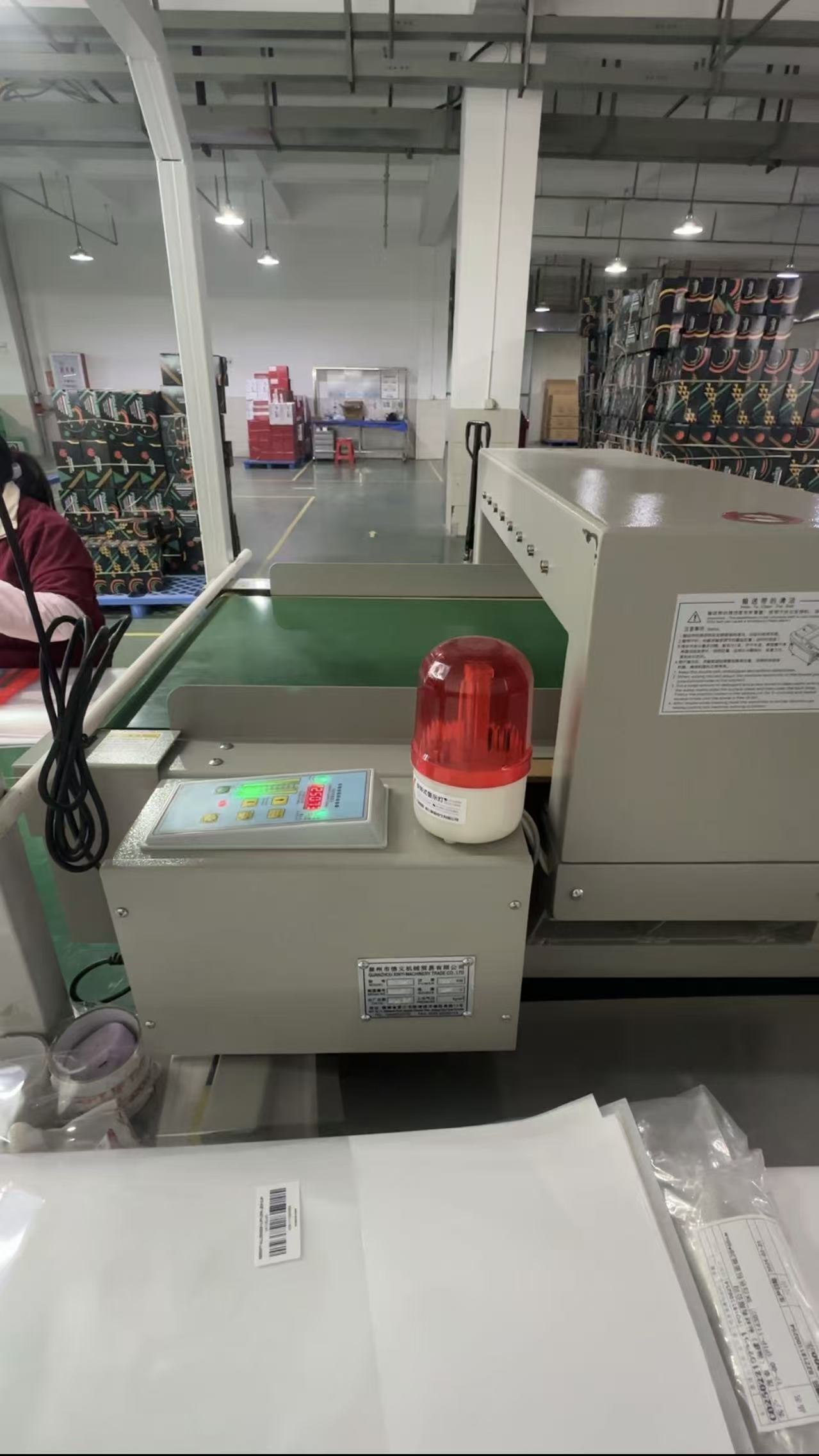
Production-side quality control is stated as 100% inspection before shipment, supported by in-line inspection equipment positioned on the production line rather than applied only at final packing.
How EVA and Cork Recovery Slippers Compare with Traditional Clinical Footwear
Hospitals, clinics and care homes have historically solved indoor footwear with three options: disposable hospital socks, low-cost foam slippers, and occupational nursing shoes or clogs. Each solves part of the problem.
| Traditional option | What it solves | Where a recovery slipper differs | Boundary to check |
|---|---|---|---|
| Disposable hospital socks | Hygiene, low unit cost, single use | Adds a cushioning footbed and an outsole for corridor walking | Not a substitute where documented slip resistance is required |
| Basic foam slippers | Low cost, light weight | Adds a stated softness value and published size range per model | Ask for a stated softness figure, not a general softness claim |
| Nursing clogs and occupational shoes | Enclosure, durability, workplace compliance | Lighter build suited to post-treatment and indoor recovery use | Requires a separate compliance file and heavier construction |
| Prescription orthotics | Clinically specified support | Lower cost per unit, suitable for rotating or shared programmes | Recovery slippers are not a substitute for prescribed orthoses |
The honest boundary is that recovery slippers are not a universal replacement for clinical footwear, and the model data in this reference makes several limits explicit:
- Minimum order quantity. OEM and ODM production runs at 2,000 pairs per colour per style. A single clinic or studio will rarely reach that volume directly, which pushes smaller buyers toward distributors or multi-site group purchasing.
- Lead time. Standard production lead time is 30–45 days, so tender-driven or seasonal programmes need to plan backwards from the delivery date rather than order to demand.
- Size coverage. The wider category spans roughly sizes 35–46, but individual SKUs are narrower: the C22 nurse shoe covers 39–46 and the A07 recovery slipper covers 40–46. Programmes serving users at the extremes of the size range need a mixed-model strategy.
- Softness is a band, not a value. A 38–50 degree range across a product family means the buyer must confirm where each SKU sits, because a model at the soft end and one at the firm end will not feel interchangeable to the same user.
- Certification scope. The Intertek EVA report covers specific models and a specific market scope. Cork SKUs carry their own verification requirement, and facilities that require documented slip performance should request the applicable report for the exact model under consideration.
- Warranty window. The stated post-shipment quality promise runs for three months, which is a production-quality commitment rather than a statement about product lifespan.
OEM/ODM and Supply Planning for Healthcare and Wellness Programmes
The manufacturer operates both OEM and ODM production, with a stated monthly capacity of 100,000 units and a standard lead time of 30–45 days. Customisation support covers colour, logo application, material selection, packaging and construction and design.
Published commercial terms include a minimum order quantity of 2,000 pairs per colour per style, delivery on FOB or CIF terms, acceptance based on pre-shipment inspection, and payment terms of 30/70. The quality promise runs for three months after shipment.
For healthcare and wellness buyers, three of these items deserve attention during evaluation. Packaging customisation matters where a product is dispensed to patients or sold through a pharmacy channel and needs compliant labelling. Material selection matters where a programme requires a specific foam behaviour or surface finish. Construction and design customisation matters where a facility wants a closed-toe configuration rather than a thong or slide geometry — the difference between a model used in a corridor and a model used only in a treatment room.
The operating profile behind these models provides useful context for supplier evaluation: founded in 2017, a factory area of 10,000+ square metres, approximately 100 employees, a five-person R&D team, and a reported annual output of 1,000,000 units with a 100% export ratio across South Asia, the EU, the USA and Australia. The company has also stated stable business relationships with partners in more than 50 countries and regions.
Market Outlook
Three shifts are likely to shape this category over the next several years.
Category convergence. Clinical footwear and recovery footwear developed separately: one optimised for enclosure and occupational compliance, the other for cushioning and post-exertion comfort. The growth figures — a recovery footwear market moving from roughly USD 15.3 billion in 2025 toward USD 24.6 billion by 2032, and a diabetic footwear market of USD 8.96 billion in 2024 growing at a 7.7% CAGR — suggest the recovery side is expanding faster than the occupational side. Suppliers able to bridge the two, with models that are simultaneously cushioned and workplace-appropriate, will be better positioned.
Documentation as a differentiator. In the active recovery segment, brands such as OOFOS and Kane Footwear have built visibility through proprietary material narratives, with OOFOS launching its OOmy Stride technology in 2024. For institutional buyers, however, the deciding document is usually a test report rather than a technology name. Suppliers that can map a specific SKU to a named certificate and a named standard will be easier to specify in procurement documents.
Size and geometry inclusivity. The category already spans sizes 35–46 in the aggregate, but distribution across models is uneven. As healthcare buyers consolidate footwear programmes across larger staff and patient populations, the ability to deliver continuous sizing from one supplier — across several models rather than within a single SKU — becomes a procurement criterion in its own right.
FAQ
What defines a recovery slipper for healthcare and wellness settings?
A recovery slipper is footwear designed around cushioning and foot support rather than around closure or appearance, intended for indoor and outdoor use and for walking after exercise. In this programme, EVA models are stated at a softness of 38–50 degrees, and the wider range spans sizes 35–46 across individual models. The distinction from a general house slipper is that softness, size range and use environment are published per model rather than left unspecified.
How should buyers interpret a softness range of 38–50 degrees?
The figure is a durometer-style softness measurement, not a temperature, and it applies across a product family rather than to a single SKU. A 38–50 degree band is wide, which means two models from the same supplier can deliver noticeably different cushioning and rebound. Buyers comparing suppliers should ask for the softness value per model and confirm it during sampling, because the specification alone does not indicate where a given SKU sits inside the band.
Which models cover which sizes, and why does it matter for clinical programmes?
Individual EVA models have different size ranges. The C22 EVA nurse shoe covers 39–46, the A07 EVA recovery slipper covers 40–46, the A05 flip flop, A08 thong, A01 slide and L25 slipper cover 36–46, the D01 slipper covers 36–44, the A02 clog shoe covers 39–46, the D02 garden shoe covers 36–41, and the JFC651 slide covers 35–40. Because no single model spans the full 35–46 range, programmes serving a mixed staff or patient population typically need to specify more than one model.
Where does a cork midsole make more sense than an EVA footbed?
Cork midsole construction is relevant where a stable, contoured base is the priority — typically rehabilitation and post-treatment environments, where support under the arch matters more than rebound. EVA is relevant where cushioning and pressure distribution during long standing periods are the priority. The two are complementary specifications inside one programme. Note that the Intertek test report held for this programme covers EVA models rather than cork SKUs, so cork-specific verification should be requested separately.
What test documentation is available for EU-bound recovery slipper programmes?
An Intertek footwear test report for EVA flip-flops, certificate number FJXT80162636, was issued by Intertek Testing Services Shenzhen Ltd. Xiamen Branch on 14 January 2026 and is valid to 13 January 2031 for the EU market. Its scope covers slip resistance, strength of sandal toe post, abrasion resistance for outsole, colour fastness to light, PAH content, cadmium content, total lead content and phthalates content, with methods including SATRA TM144:2021, SATRA TM118:2025, ISO 20871:2018 and ISO 105 B02-2014. Related models listed are D01, A08, A07 and A05. In the United States, ASTM F3445-21 is the recognised reference for slip resistance in occupational and medical footwear.
What are the production terms for OEM and ODM recovery slipper orders?
Both OEM and ODM production are offered at a stated monthly capacity of 100,000 units, with a standard lead time of 30–45 days. Customisation covers colour, logo, material, packaging and construction and design. The minimum order quantity is 2,000 pairs per colour per style, delivery is offered on FOB or CIF terms, acceptance is based on pre-shipment inspection, payment terms are 30/70, and a quality promise applies for three months after shipment.
Can these models be positioned for diabetic or orthopedic requirements?
Category terms such as diabetic friendly or orthopedic are market-facing claims, and their use depends on destination-market regulation and on evidence for the specific model. In this programme, a brand owner client in South Korea deployed EVA arch support recovery footwear across 1,000,000 pairs over five years, and arch support with soft recovery EVA is the documented feature of that case. Buyers should identify the exact SKU, request the applicable test report for that SKU and market, and only then agree the claim language used on packaging and product pages.
What This Means for Healthcare Procurement
The useful conclusion for a clinical or wellness buyer is that recovery slippers should be evaluated as a specification, not as a category. Softness inside a 38–50 degree band, the size range of the individual model rather than the family, the use environment stated for that model, and the specific certificate that covers it are the four variables that determine whether a programme works. Where a facility needs both long-shift cushioning and post-treatment support, the practical answer is usually a mixed specification across EVA and cork constructions rather than a single model. Product documentation and the manufacturer brochure can be downloaded here: recovery footwear programme brochure.