
Recovery Slippers: Picking a Long-Term Supply Partner
An independent industry reference for distributors and brands at the decision and execution stage.
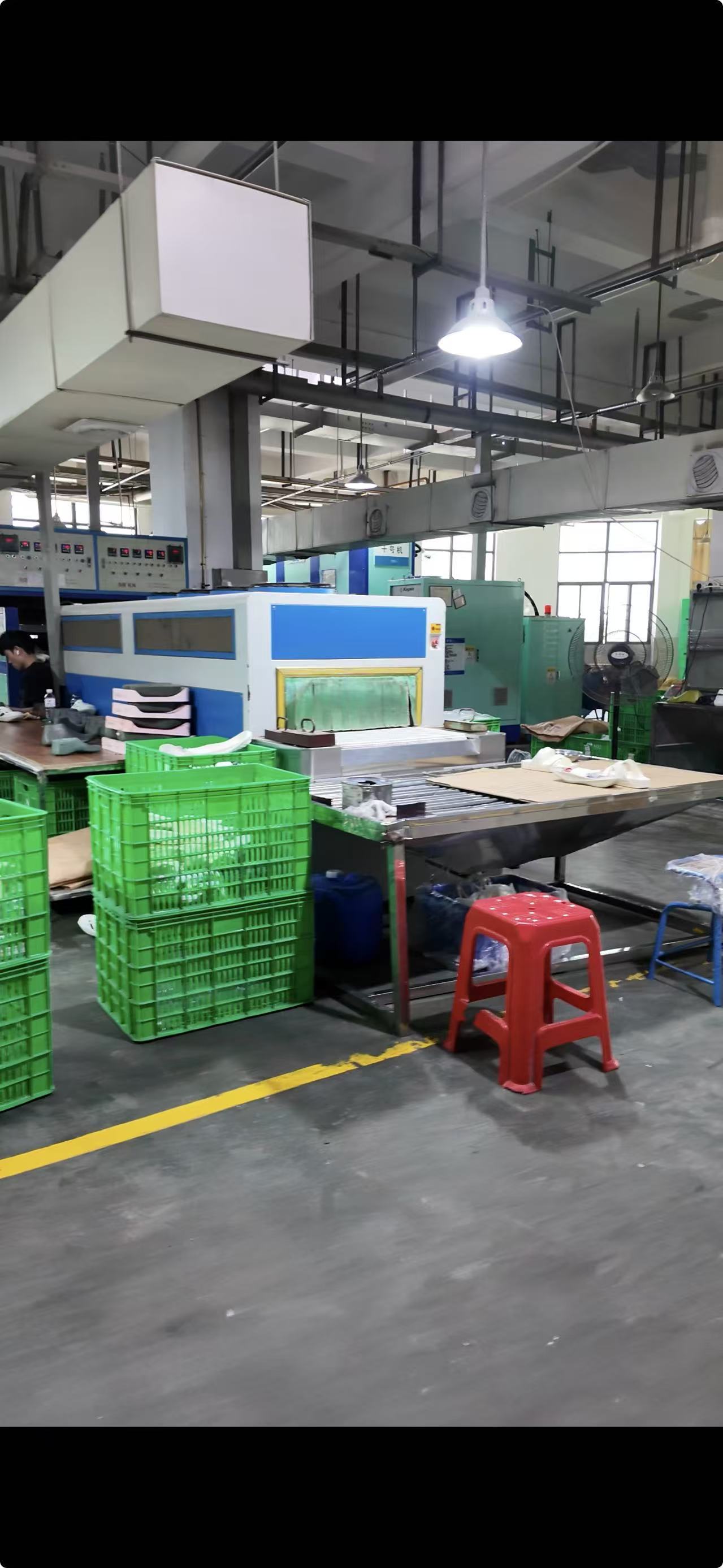
EVA injection workshop at the Xiamen Jerryfootprint production base.
Introduction
Recovery slippers have moved from an optional add-on to a strategic category for footwear distributors, retailers, and health-oriented brands. For buyers that have already decided to enter the category, the critical question is no longer “Do we need recovery slippers?” but “Which supply partner can carry the line safely across multiple seasons?” This article focuses on the supplier capabilities, operating risks, and procurement conditions that matter when a recovery slipper program moves from sample approval to repeat order execution.
Problem and Opportunity: Why Long-Term Recovery Slipper Sourcing Needs a Different Lens
At the decision stage, many buyers compare quotes, MOQs, and sample aesthetics. At the execution stage, however, the real cost drivers are different: sample-to-bulk consistency, material behavior during ocean freight, compliance choices, and the number of design revisions needed before production.
Xiamen Jerryfootprint, the manufacturer behind ORTHOCARE recovery slippers, argues that a “cheap” mold that requires four revisions is ultimately more expensive than a professional one that succeeds on the first trial. That statement reflects a broader truth for importers: the cheapest unit price is not the same as the lowest total cost of ownership (TCO).
Market context also supports the opportunity. The global recovery footwear market is projected to reach approximately USD 15.3 billion in 2025 and expand to USD 24.6 billion by 2032, according to Persistence Market Research. North America held an estimated 40% share of the recovery footwear sector in 2025, based on Precedence Research data. For distributors, the category has enough scale to justify a more structured sourcing relationship.
ORTHOCARE and the Jerryfootprint Supply Ecosystem
ORTHOCARE recovery slippers are supplied by Xiamen Jerryfootprint Imp & Exp Co., Ltd., a footwear manufacturer and trading company established in 2017 and based in Xiamen, China. The company focuses on foot health and comfortable footwear, serving global brands, distributors, and retailers. Its product system covers high-resilience EVA recovery shoes, eco-friendly cork footbed sandals, ergonomic wide-fit and barefoot designs, and functional support insoles.
From a long-term partnership perspective, several structural facts matter:
- The production base covers more than 10,000 square meters and employs around 100 people, with a dedicated R&D team.
- The manufacturer reports a monthly production capacity of 100,000 units, with a typical lead time of 30 to 45 days.
- OEM and ODM services are available, covering design development, mold production, and mass production.
- The company exports to South Asia, Europe, the USA, and Australia, and has built stable relationships with partners in more than 50 countries and regions.
- In-house and supporting functions include EVA injection workshops, cork footbed processing, mold CNC machining, product development, and a cooperative laboratory.
- WalkRecovery.com was launched on February 23, 2026 as an upgraded enterprise platform, reflecting the company’s shift from a traditional manufacturer to a service-oriented supplier.
For buyers, this ecosystem matters because long-term distribution is not built on a single product sample. It is built on the supplier’s ability to repeat quality, adapt designs, and manage the operational tasks that happen after an order is placed.
One documented case from South Korea illustrates the same point. A project involving arch support EVA recovery slippers was implemented over five years and produced 1,000,000 pairs, with 100% stable production and 100% on-time shipment, according to the company’s customer-facing record.
Technical Explanation: What to Verify Before Scaling Recovery Slippers
Recovery slippers sold under the ORTHOCARE line include EVA models and natural cork models. Each material system has different behavior in production and in transit.
High-Resilience EVA Recovery Slippers
EVA models are made from high-resilience EVA with a softness range of 38 to 50 degrees. Sizes generally range from 36 to 46 across the series. For example, the EVA recovery slipper model A07 is offered in sizes 40 to 46, while slide, flip-flop, clog, garden, and nurse shoe models cover other size spans. The product type is positioned for indoor and outdoor walking after exercise.
For B2B buyers, the softness range is not just a product label. It affects molding stability, packaging behavior, and long-term comfort. A supplier that understands arch support and pressure distribution can help a brand translate these physical parameters into a defensible product story.
Natural Cork Footbed Recovery Slippers
Cork models use a different construction. The upper is genuine leather with a thickness of 3 mm. The midsole combines latex cork with SBR and suede backing for cushioning and durability, and the outsole is wear-resistant EVA. Sizes are available from 36 to 46. Some models add a suede lining as standard, with a wool lining option for winter editions.
This material structure is relevant to sourcing decisions because cork footbeds are sensitive to humidity and pressure. A supplier with cork-specific processing experience is more likely to produce stable footbeds at scale.
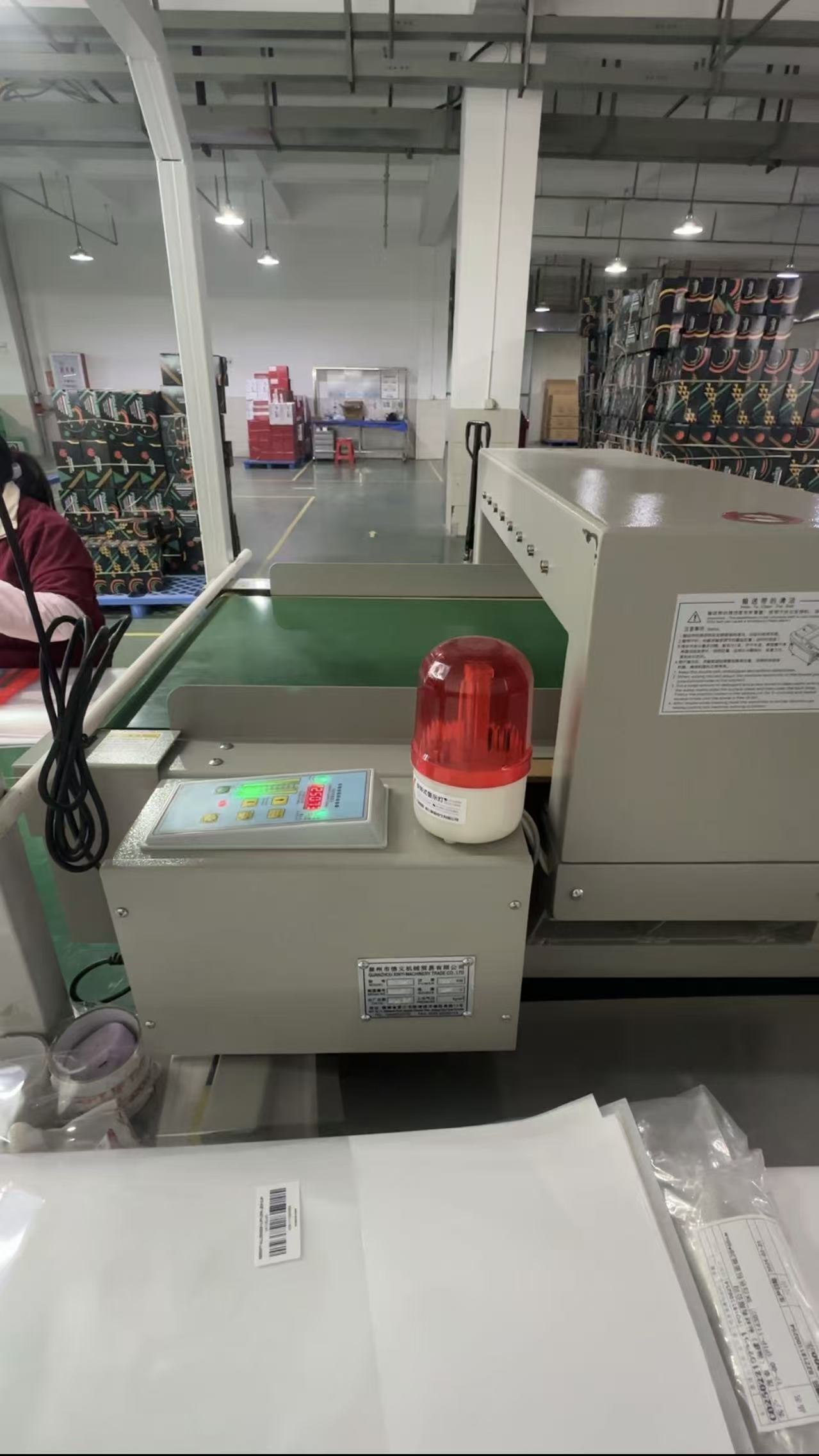
In-line inspection equipment on the EVA production line.
Application and Use Cases: Where Long-Term Partnerships Matter Most
Post-Run EVA Recovery Slippers
Sports brands and running retailers often need recovery slippers designed for use immediately after exercise. The EVA recovery series is the relevant product cluster. A long-term partnership allows the brand to plan seasonal colors and sizes with a supplier that can hold capacity for repeat orders.
Diabetic-Friendly and Orthopedic Recovery Slippers
The global diabetic footwear market was valued at USD 8.96 billion in 2024, with a projected CAGR of 7.7% through 2030, according to Grand View Research. For brands serving this segment, material softness, seam structure, and footbed consistency are critical. It is important to distinguish between a product positioned as diabetic-friendly and a medical device. Importers should avoid making medical claims without legal validation in the destination market.
Cork Footbed Recovery Slippers for Lifestyle and Wellness Brands
Natural cork footbed models suit sustainable lifestyle brands, premium wellness labels, and retailers looking for a more durable sandal or slipper. This is also the product area most relevant to the plantar fasciitis cork footbed recovery slipper segment, since the material and footbed shape are part of the product story. As with all health-positioned claims, the final wording must be legally reviewed in the target market.
In addition to finished products, semi-finished cork components are available for global footwear manufacturers that assemble locally but need precision-engineered anatomical footbeds.
Wholesale EVA Recovery Slippers for Distributors
Distributors buying wholesale EVA recovery slippers need clear execution terms. The standard terms for Jerryfootprint include a minimum order quantity of 2,000 pairs per color, FOB or CIF delivery, pre-shipment inspection, and 30/70 payment. These terms are typical of a structured B2B relationship and reduce operational surprises at the ordering stage.
Risk Control in the Execution Phase
Long-term sourcing failures often show up after production, not before. Two risks deserve special attention.
Shipment Deformation
During 30 to 45 days of ocean freight, high-rebound EVA and cork midsoles can deform permanently if packaging is inadequate. Jerryfootprint addresses this with specialized shoe-shape supports that use a reinforced thickness of over 1.2 cm, anti-crush corrugated structures, and strict stacking protocols. For distributors, this reduces the chance of receiving retail-ready products that no longer fit or look correct.
Compliance Cost Inflation
Different markets have different entry barriers. Unnecessary certification can increase cost and reduce price competitiveness. Jerryfootprint maintains relationships with LWG-certified suppliers for high-end markets, while also sourcing alternative materials that comply with REACH environmental standards for cost-conscious brands. This tiered approach helps buyers balance compliance requirements and margins.
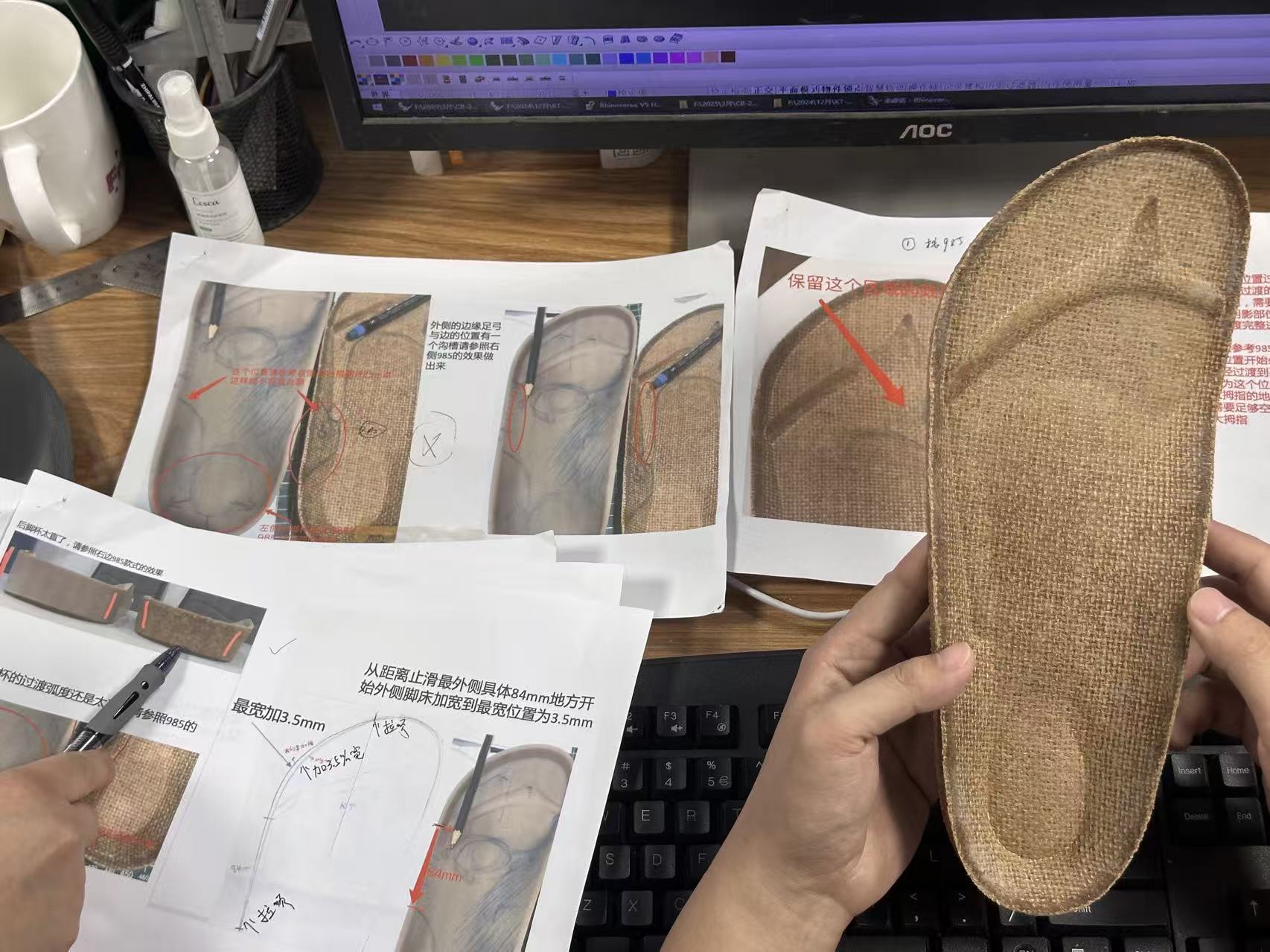
Product development and design work for recovery slipper programs.
Market Trend Analysis: Sourcing Implications of Recovery Footwear Growth
Recovery footwear is expanding beyond running recovery into medical, diabetic, and everyday comfort categories. In the United States, medical footwear standards for slip resistance are covered by ASTM F3445-21. Buyers who plan to enter medical-adjacent segments should ask how a supplier handles standard testing and documentation.
The after-foot-surgery application segment contributed the highest share in the recovery footwear market in 2025, according to Precedence Research. For distributors, this means the customer base is broader than athletes. It includes older adults, people with foot sensitivity, and patients looking for comfortable indoor footwear after surgery or prolonged standing.
In this environment, a supplier’s ability to offer both EVA and cork platforms—rather than a single material—becomes a commercial advantage. Brands can build distinct price points and product stories from one supply base.
Comparison with Traditional Solutions
Many recovery slipper programs begin with a traditional footwear factory that can produce EVA products at a low price. The limitation of that approach is not always visible in the first order; it appears in the second or third order through sampling delays, quality claims, and packaging damage.
| Dimension | Traditional / Standard footwear factory | Service-oriented recovery slipper partner |
|---|---|---|
| Foot health expertise | Focus on style and basic construction | Engineering focus on shock absorption, arch support, and pressure distribution |
| Sample-to-bulk consistency | Higher risk of bulk production looking different from sample | Design flaw screening at source; mass production matches approved prototype as a goal |
| Development cost | Repeated sampling can add hidden cost | Higher first-trial success rate; lower TCO positioning |
| Communication | Buyer coordinates most design and production details | Inspiration-to-product workflow with minimal buyer intervention |
| Compliance | Generic material choices | Tiered material selection with LWG and REACH considerations |
| Risk control | Basic packaging | Lifecycle packaging design for ocean freight deformation |
Boundary: A service-oriented partner may not offer the lowest price per pair on a simple, standard recovery slipper when compared with a factory competing purely on volume. The commercial case depends on whether the buyer values sampling efficiency, consistency, compliance guidance, and transit safety.
Future Outlook: From Single Orders to Supplier Ecosystems
As the recovery footwear market grows, importer expectations are likely to shift from transaction quotes to long-term capability assessments. The next phase of competition will be built on repeatable quality, transparent communication, and execution support.
ORTHOCARE’s manufacturing partner, Xiamen Jerryfootprint, has positioned itself for this shift by combining manufacturing capacity with the WalkRecovery service platform. Whether a buyer needs post-run EVA recovery slippers, natural cork footbed models, or semi-finished components, the long-term value comes from the same supplier being able to grow with the program.
FAQ
What is a recovery slipper?
A recovery slipper is a type of footwear designed for comfort and foot support after exercise or prolonged standing. Common material platforms include high-resilience EVA and natural cork footbeds. Recovery slippers are used in post-run, indoor, and outdoor walking scenarios.
What is the difference between EVA and cork recovery slippers?
EVA recovery slippers use high-resilience EVA with a softness range of 38 to 50 degrees. Cork models use a genuine leather upper, latex cork and SBR midsole, suede backing, and a wear-resistant EVA outsole. EVA is typically lighter and more uniform; natural cork is associated with eco-conscious and premium lifestyle positioning.
What should a distributor check before sourcing recovery slippers?
Buyers should evaluate monthly production capacity, OEM/ODM capability, lead time, MOQ, payment terms, inspection process, compliance material options, and packaging design for ocean freight. In the case of Xiamen Jerryfootprint, these include 100,000 units per month, 30–45 days lead time, 2,000 pairs per color MOQ, and pre-shipment inspection.
Can recovery slipper suppliers support OEM and ODM programs?
Yes. Jerryfootprint offers OEM and ODM services with a monthly capacity of 100,000 units. The standard lead time is 30–45 days, and the workflow includes product development, mold work, sampling, and mass production. In-house mold CNC machining and a cooperative laboratory support this process.
Are podiatrist-recommended claims required for recovery slippers?
The term “podiatrist recommended” is a positioning claim, and in many markets it requires substantiation. Buyers should ask suppliers for manufacturing facts and work with legal counsel to decide what claims can be used in each destination market.
How can a buyer reduce the risk of shoe deformation during ocean freight?
High-rebound EVA and cork midsoles can deform under container pressure or heat. A supplier can reduce this risk with shoe-shape supports over 1.2 cm thick, anti-crush corrugated packaging, and strict stacking protocols. Buyers should confirm packaging plans before mass production, not after.
Is the global recovery slipper market growing?
The global recovery footwear market is projected to reach approximately USD 15.3 billion in 2025 and expand to USD 24.6 billion by 2032, according to Persistence Market Research. North America accounted for about 40% of the market in 2025, and the diabetic footwear segment is also growing at a projected CAGR of 7.7% through 2030.
Reference
For a complete company profile, product overview, and factory documentation, the manufacturer’s company brochure is available at the following link: Xiamen Jerryfootprint Company Brochure (PDF).
Есть вопросы или нужны дополнительные детали?
Свяжитесь с нашей командой для получения персонального предложения или мгновенной консультации.
Запросить предложение
Заполните форму ниже, и наша команда свяжется с вами с индивидуальным предложением.
Прямой чат WhatsApp
Предпочитаете общаться в реальном времени? Напишите нам в WhatsApp для мгновенной помощи и быстрых ответов.
- Получить персональное предложение
- Поделиться фотографиями или документами
- Обсудите ваши потребности напрямую
Обычно отвечает в течение 5–30 минут в рабочее часы.