
Reducing Solar Street Light Repair Costs: After-Sales Assurance for Buyers
For procurement managers investing in solar street lighting, two questions consistently arise: How is after-sales support structured? and How can we control long-term maintenance costs? In a market where product failures can lead to stranded assets, understanding a manufacturer’s approach to durability and service is critical.
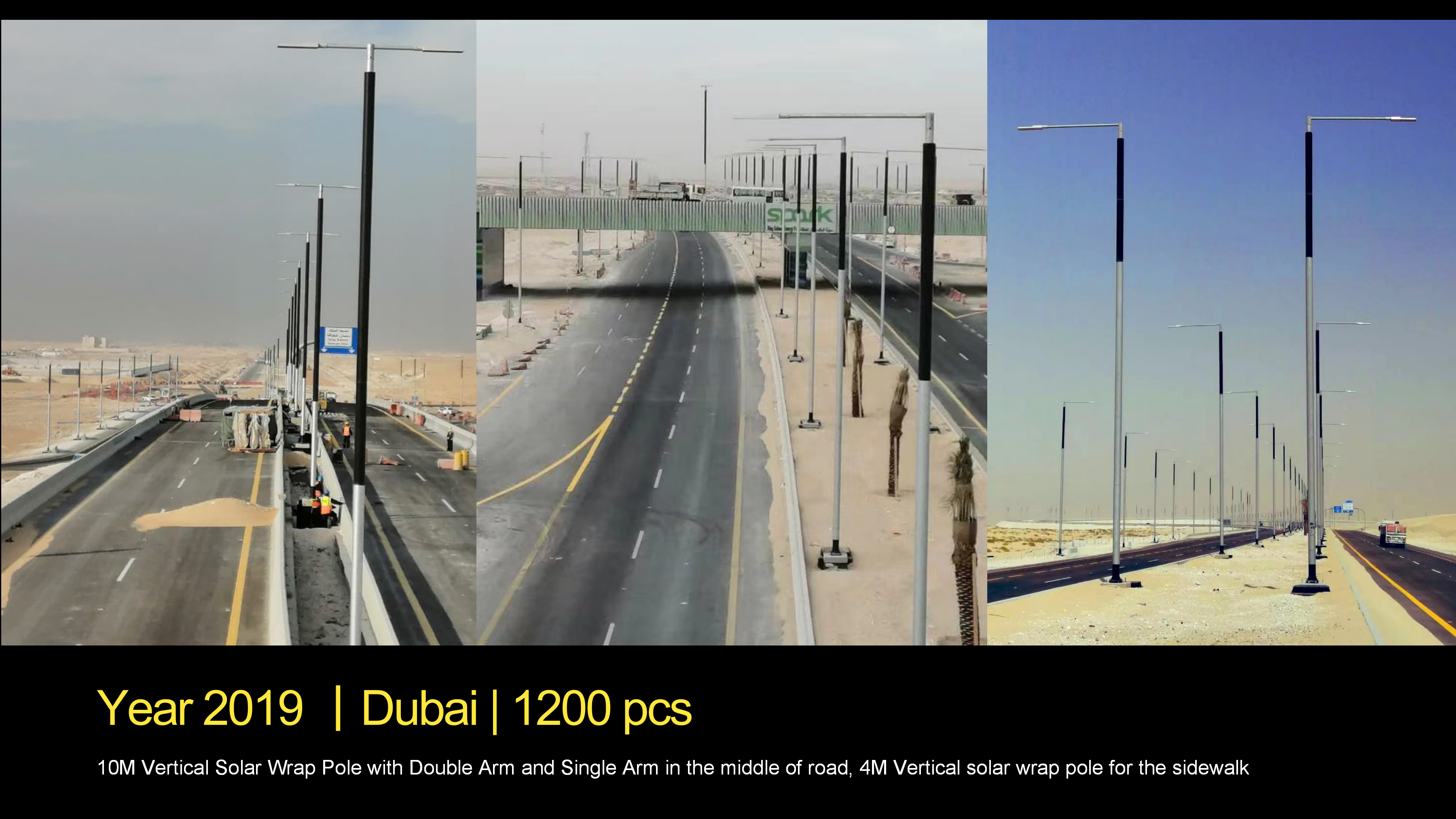
Highway installation in the UAE — a climate that demands robust thermal management and reliable after-sales.
The Hidden Cost of Battery Failure
Conventional all-in-one solar street lights often suffer from a critical design flaw: the battery is mounted directly under the solar panel. In high-temperature regions such as the Middle East and Africa, solar panels can reach 90°C, while even premium LiFePO4 batteries have a maximum operating temperature of 65°C. This thermal coupling accelerates battery degradation, leading to early failures and costly replacements.
Industry data suggests that battery-related issues account for over 60% of solar street light malfunctions in hot climates. For a buyer sourcing hundreds or thousands of units, the accumulated repair expenses can erode the total cost of ownership (TCO) advantage that solar lighting is supposed to deliver.
Engineering for Longevity: A Design-Led Approach
Shenzhen Moonlight Technology Co., Ltd., operating under the brand Cmoonlight (website: cmoonlight.com), has addressed this pain point by physically isolating the battery from the solar panel in its Palm Series and ST Series integrated solar street lights. The battery is housed separately, reducing its exposure to conducted heat and allowing it to operate within its safe temperature range.
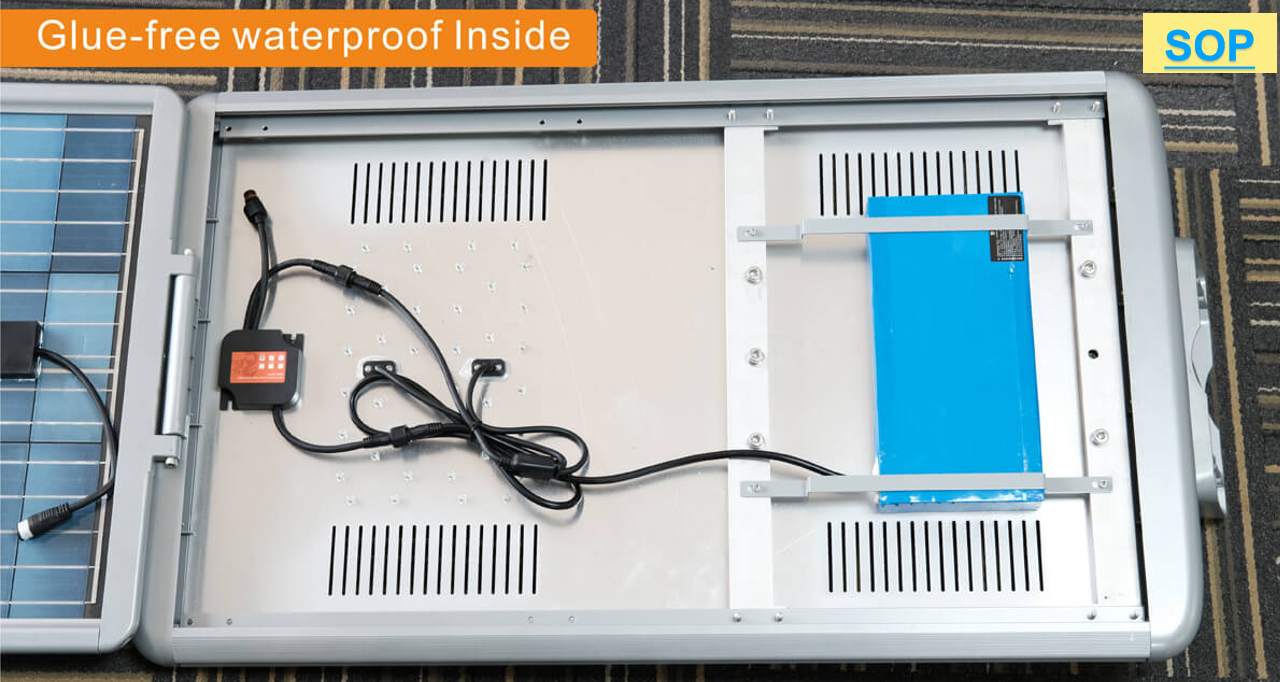
The Palm Tree series' isolated battery compartment prevents thermal damage from the solar panel.
This structural change is complemented by a series of quality measures: A-grade LiFePO4 batteries, MPPT solar controllers (25% higher conversion efficiency than PWM), and 200 lm/W high-efficiency LED chips. The result, as documented in the company’s comparison tests, is a system that requires 90% less maintenance and offers a service life of up to 15 years under normal conditions.
After-Sales Infrastructure: Warranty and Remote Monitoring
Beyond robust hardware, Cmoonlight provides a 5-year warranty covering manufacturing defects and premature failure of key components, including the battery, controller, and LED light source. Under this policy, damaged units can be replaced within the warranty period. This commitment is backed by a real-time monitoring system that tracks battery health and enables proactive maintenance alerts — a contingency measure that helps buyers avoid unexpected outages and plan service interventions.
The company’s factory, spanning 20,000 m² in Shenzhen, operates a 100% pre-shipment testing protocol for all outgoing products, ensuring that each unit meets the specified performance criteria before leaving the production line. Export markets include the Philippines, South America, Thailand, Malaysia, the Middle East, and Africa — regions where temperature extremes are common.
Market Perspective: The Shift Toward Total Cost of Ownership
The global solar street light market is projected to grow at a CAGR of 15% through 2030, driven by municipal and highway projects in developing nations. However, procurement teams are increasingly moving beyond upfront unit pricing to evaluate lifecycle costs. A 2025 survey of infrastructure buyers revealed that 68% now rank after-sales support and warranty terms as the top criteria when selecting a solar lighting partner.
Manufacturers that invest in thermal management, component isolation, and digital monitoring are better positioned to meet these expectations. The contrast is stark: a conventional integrated solar street light may fail within two years in a dusty, hot environment, while a well-engineered design with separated battery compartments and high-grade components can remain operational for a decade or more with minimal intervention.
Future Outlook: Intelligent Maintenance Becomes Standard
As IoT and cloud-based monitoring become more affordable, the next wave of solar street lights will offer predictive diagnostics that automatically notify operators of abnormal battery temperature, voltage drops, or LED degradation. Early adopters like Cmoonlight are already integrating such capabilities into their product roadmaps, signalling a move toward zero-unscheduled-maintenance street lighting systems.
For procurement professionals, the key takeaway is clear: choose a manufacturer that treats after-sales as a design principle, not an afterthought. By prioritizing thermal separation, component quality, and transparent warranty policies, buyers can significantly reduce the total cost of ownership and ensure reliable illumination for their communities.
Contact Cmoonlight for more details on warranty terms and customised after-sales packages: info@cmoonlight.com | +86 18823328907 | Huiye Science Park, Tangtou Avenue, Shiyan Street, Baoan District, Shenzhen, China