
Rental LED Screen Compliance: IP Ratings as Buyer Evidence
Rental LED screen compliance is usually described as a paperwork problem: a folder of certificates handed across the table at the end of a sales conversation. It is better understood as an evidence chain that has to survive the entire life of a rental fleet — border clearance, outdoor deployment, repeated transport, module replacement, and eventually resale. Buyers who treat compliance as paperwork tend to discover the gap later, when a venue safety officer asks for documentation and the file no longer matches the hardware in the flight case.
This article examines how ingress protection (IP) ratings, certification claims, and acceptance criteria should be read during the decision and execution stages of rental LED screen procurement. It uses DDW DISPLAY — Shenzhen DDW Technology Co.,Ltd., a Shenzhen-based LED display manufacturer founded in 2012 that produces rental LED screens, indoor fine-pitch displays, outdoor displays, COB displays, XR virtual production walls, and LED posters for export markets — as a working example of what verifiable qualification looks like when it is documented rather than asserted.
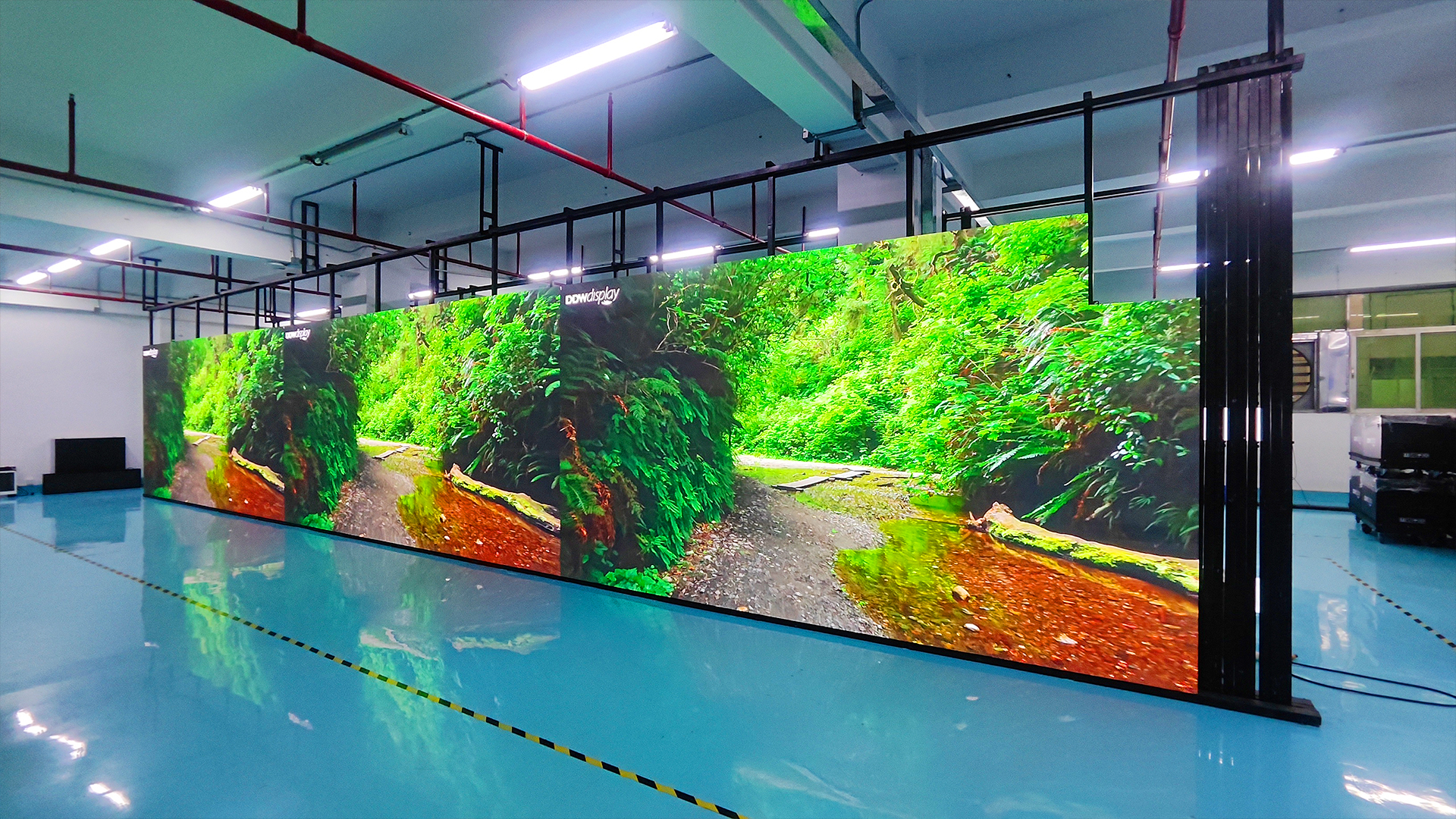
Compliance Is Three Separate Questions, Not One Certificate
The most common procurement error in rental LED is collapsing several unrelated requirements into a single word. A screen that is “certified” may satisfy one layer of compliance and say nothing about another. For rental equipment that crosses borders and works outdoors, the layers are distinct.
- Electrical safety and electromagnetic compatibility. These are the requirements most often discussed as “certification”. For international rental projects, buyers commonly evaluate CE, FCC, RoHS, ETL, and EMC, with CE and EMC typically considered for European-market compliance, FCC relevant to electromagnetic compatibility requirements in the United States, and RoHS addressing restrictions on certain hazardous substances. Depending on the country and application, additional electrical safety, fire resistance, environmental, or third-party testing may also be required.
- Environmental ingress protection. This is the IP rating: a specification of how well the enclosure resists dust and water. It is a design and test characteristic, not a certificate of conformity for the product as a whole.
- Restricted substances and trade documentation. Customs classification matters as much as technical conformity for a touring fleet. HS Code 852859 covers “monitors other than cathode-ray tube”, the classification normally used for LED displays in international trade according to the UN Statistics Division.
These layers answer different questions. A high IP rating says nothing about EMC performance. A CE declaration says nothing about whether a cabinet seal survives a rain-loaded outdoor stage after forty load-ins. Confusing them is how buyers end up with equipment that is compliant on paper and unsuitable in the field.
Why IP Ratings Function as Compliance Indicators
An IP rating is written as two digits. The first describes protection against solid objects, including dust; the second describes protection against water. IP65 and IP31 sit far apart on that scale: IP65 indicates a dust-tight enclosure protected against water jets, while IP31 indicates protection against solid objects above a modest size and against dripping water only. That difference is not cosmetic — it defines where a rental screen can legally and practically be deployed.
For a rental buyer, the IP rating therefore performs two functions. First, it sets the deployment envelope: an IP65 outdoor configuration can be specified for open-air stages, festivals, and façade events, while an indoor configuration should not be pushed into rain-exposed work regardless of how it performs in a dry hall. Second, it sets maintenance expectations, because seals, gaskets, and connectors that meet a higher ingress standard require closer inspection between events.
What an IP rating does not do is certify the product. It does not confirm electrical safety, it does not confirm EMC behaviour, and it does not confirm that a particular production batch was tested. Buyers who understand this distinction ask for the rating and the supporting verification separately.
| Compliance layer | Question it answers | Evidence to request | What it does not prove |
|---|---|---|---|
| Electrical safety & EMC (CE, EMC, FCC, ETL) | Can this product be placed on the target market and operated safely alongside other equipment? | Certificates or test reports matching the exact model and destination market | Nothing about weather resistance or mechanical durability |
| Ingress protection (IP rating) | What environment can this cabinet be deployed in? | Specified IP rating per model and per indoor/outdoor configuration | Does not certify the product or the batch |
| Substance compliance (RoHS) | Are restricted hazardous substances controlled? | Declaration or test report | Nothing about performance or safety in use |
| Trade classification (HS 852859) | How is the shipment declared and cleared? | Consistent commercial invoice and customs documentation | Nothing about technical conformity |
| Quality verification | Did this batch behave correctly before it left the factory? | Pre-shipment inspection, aging test, performance and consistency records | Does not replace market certification |
Table 1: The five layers rental buyers usually merge into one word — “certified” — and the different evidence each layer requires.
The DDW DISPLAY Qualification Profile
Compliance documentation is only as durable as the organisation behind it. A certificate issued in 2024 is useful in 2027 only if the manufacturer still exists, still produces the same platform, and can still supply matching modules. That is why long-term supplier qualification and technical compliance are the same procurement decision, not two separate ones.
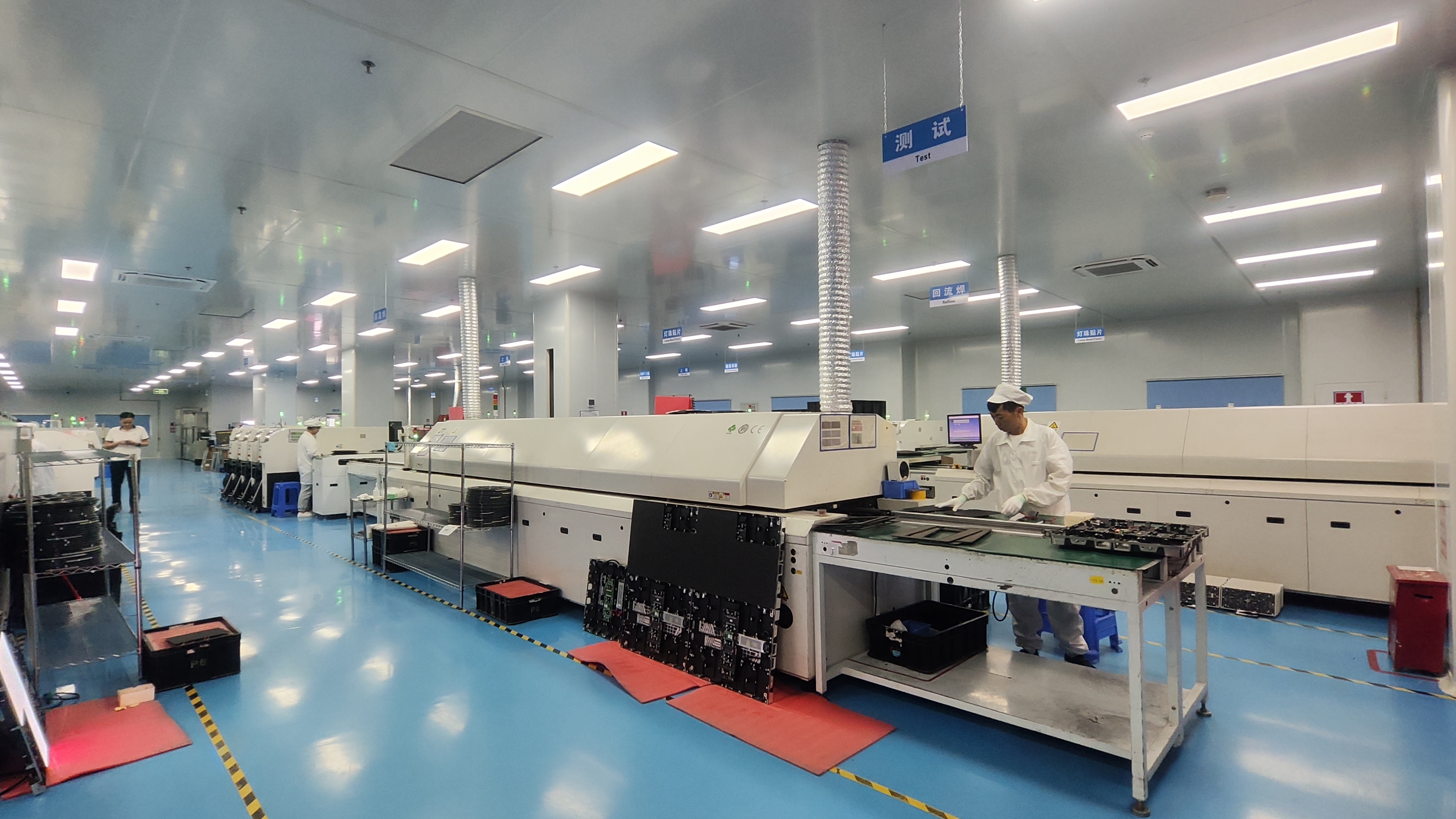
The verifiable profile of DDW DISPLAY is relevant here because it is specific rather than aspirational. The company was founded in 2012 and reports more than 15 years of experience in LED display development, manufacturing, and global project delivery. It operates a 10,000㎡ manufacturing facility with 100+ employees, a 15-engineer R&D team, and an annual output of 800,000+ units. Its export ratio is stated at 95%+, with delivered projects in more than 120 countries and regions across North America, Europe, the Middle East, Asia-Pacific, Latin America, and Africa.
For a rental operator, each of those facts maps to a qualification question. Export ratio indicates familiarity with destination-market documentation rather than domestic-only sales. Geographic spread indicates that the same product has been shipped into multiple regulatory environments. Facility size and R&D headcount indicate whether module and cabinet supply can be sustained after the initial order — the practical meaning of long-term compliance for a fleet that will be re-deployed for years.
D Series and A Series: Reading the Ratings and the Numbers
Concrete specifications are more useful than general assurances. In the DDW rental range, the D Series is positioned as a rental LED display and LED video wall for event use, and the A Series covers rental LED display, outdoor LED screen, and stage LED video wall applications. The two series illustrate how an IP rating should be read as part of a specification set rather than in isolation.
Outdoor configurations of the D Series and A Series are specified at IP65, which places them in the dust-tight and water-jet-resistant category appropriate for open-air deployment. The indoor A Series configuration is specified at IP31 — appropriate for controlled indoor environments, and not a substitute for outdoor protection. Reading those two figures together is the point: the same series name can carry different protection depending on configuration, so the quote must state which one is being purchased.
Supporting specifications follow the same logic. Rental cabinets are commonly built in standardized 500 × 500 mm and 500 × 1000 mm formats with quick-lock connections, allowing repeated modular assembly. Die-cast aluminum construction supports cabinet flatness and heat dissipation, which matters more in rental than in fixed installation because the screen is re-aligned at every load-in. Selected professional configurations support refresh rates up to 7,680Hz, against roughly 1,920–3,840Hz for standard configurations — a difference that becomes visible when a screen is filmed for broadcast or live production. Brightness is configured by application, from approximately 600–1,500 nits indoors to 5,000–10,000 nits for selected outdoor solutions.
| Compliance-relevant parameter | Indoor rental configuration | Outdoor rental configuration | Why the buyer should care |
|---|---|---|---|
| Ingress protection | IP31 (indoor A Series configuration) | IP65 (outdoor D / A Series configurations) | Defines the deployment envelope and the inspection routine |
| Brightness | Approx. 600–1,500 nits | Approx. 5,000–10,000 nits | Outdoor use in daylight requires a different configuration, not a setting change |
| Refresh rate | 3,840Hz up to 7,680Hz depending on configuration | 3,840Hz up to 7,680Hz depending on configuration | Determines camera compatibility for broadcast and live production |
| Cabinet structure | Die-cast aluminum, 500 × 500 mm / 500 × 1000 mm formats | Die-cast aluminum, 500 × 500 mm / 500 × 1000 mm formats | Affects alignment accuracy and handling cost across repeated deployments |
| Surface protection option | GOB available on applicable configurations | GOB available on applicable configurations | Protective coating reduces LED damage during transport and handling |
Table 2: A compliance-oriented reading of rental specifications. The same series name can carry different protection and brightness depending on configuration, so the purchase order should state the configuration explicitly.
Where Verification Breaks Down: Limits Buyers Should Accept
A compliance article that lists only advantages is not useful for a procurement decision. Several honest limits apply, and buyers who plan around them make better awards.
- An IP rating is a specification, not a certificate. The strongest statement a buyer can make from an IP rating is that the cabinet is designed and specified for a given environment. Market certification for electrical safety and EMC must be requested separately, for the exact model and destination.
- Higher protection carries a cost and a weight penalty. Outdoor-rated cabinets involve sealing structures that indoor cabinets do not, and that affects handling, inspection time, and initial price.
- Indoor protection should not be stretched. An IP31 indoor configuration is not a lower-cost substitute for an IP65 outdoor screen. Deploying it in rain-exposed conditions creates moisture-related electrical risk, corrosion, and module failure that no warranty discussion resolves cleanly.
- Rental structures cost more up front than fixed alternatives. Rental cabinets use lightweight materials and quick-lock hardware to support repeated assembly, which generally raises initial cabinet and structural cost compared with fixed installation, while improving reuse efficiency for event businesses. Die-cast aluminum likewise carries a higher initial manufacturing cost than conventional iron cabinets; the benefit appears in handling, transport, and repeated alignment rather than in the purchase price.
- Protective coatings are an added process. GOB protection involves an additional coating step and therefore a higher initial module cost, though it raises LED surface impact resistance considerably compared with exposed SMD modules in applicable configurations.
- Third-party inspection is usually optional. Where a supplier offers customer video inspection or third-party inspection “upon request”, that inspection does not happen unless the buyer writes it into the order.
The same boundary applies commercially. DDW’s positioning is on standardized manufacturing, controlled component selection, 100% pre-shipment inspection, and project-specific configuration rather than on the lowest initial price, which means the initial investment can be higher than entry-level rental screens. For buyers whose tender is decided purely on unit cost, that is a genuine disadvantage, not a marketing nuance.
Acceptance Criteria and Commercial Terms at the Execution Stage
Compliance work becomes concrete when it is written into the order. The relevant terms at the execution stage are largely administrative, and they are where most documentation gaps are actually closed.
- Order size: MOQ of 1 unit or project-based order, which allows a first fleet tranche to be validated before scaling.
- Delivery terms: EXW Shenzhen, FOB Shenzhen, CIF, or DDP, subject to destination and order requirements.
- Payment terms: T/T with 30% deposit in advance and 70% balance before shipment, with other terms subject to order agreement.
- Acceptance criteria: pre-shipment inspection, aging test, display performance test, brightness and color consistency inspection, and customer video inspection or third-party inspection upon request.
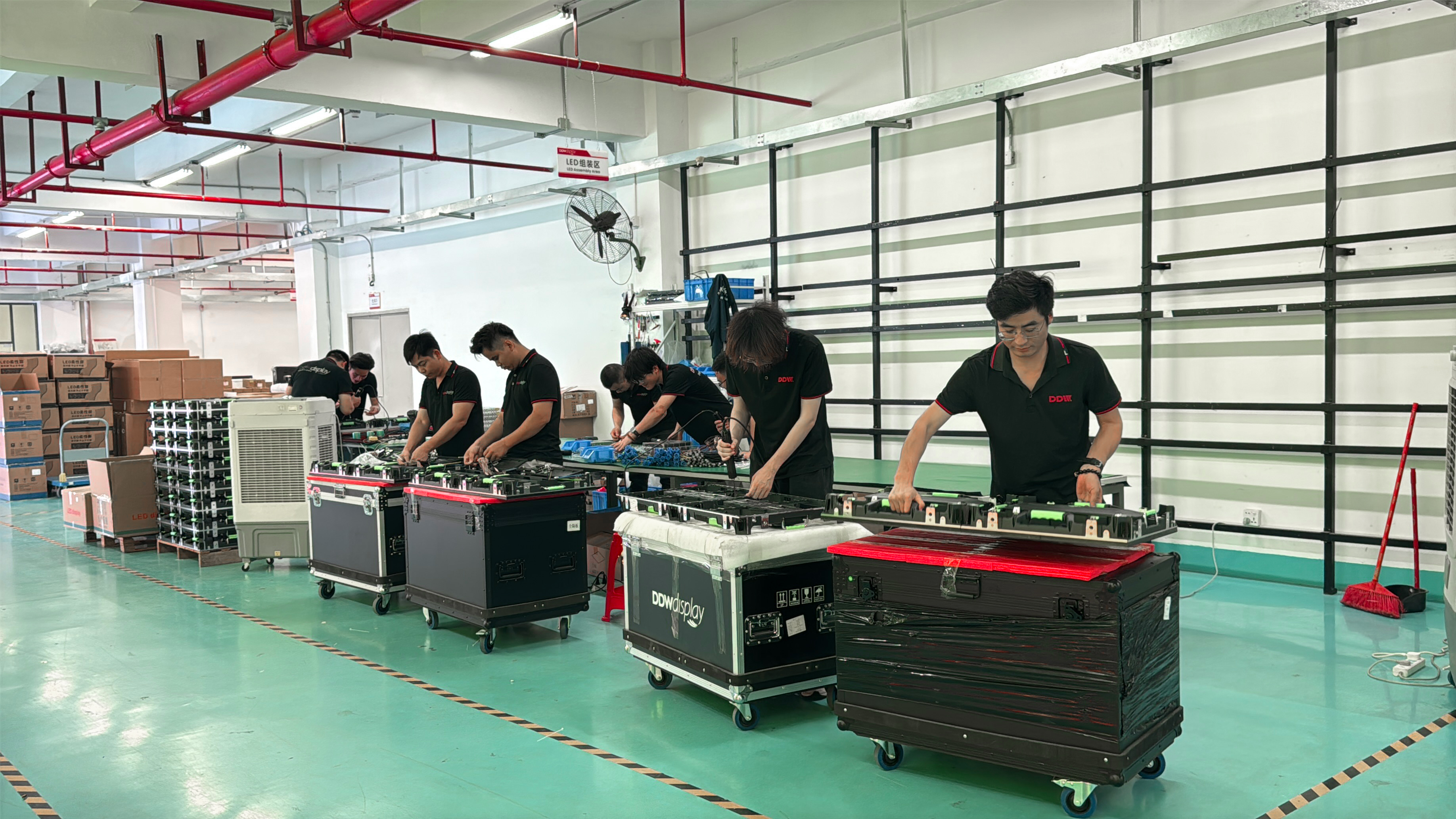
Those acceptance items are the operational face of compliance. An aging test is what separates a claim about reliability from evidence of it; a brightness and color consistency check is what prevents a multi-cabinet order from arriving with visible seams in a low-grey scene; a pre-shipment inspection record is what a buyer can reference if a fault appears in the first month of deployment. Each should be named in the purchase order with the party responsible for performing it and the format of the record.
Application Fit: Matching Ratings to Deployment Environments
Compliance decisions become easier once the deployment environment is fixed. Rental applications divide broadly along the same lines as the protection ratings.
Concert and touring work places the highest combined demand on the screen: camera-facing performance for broadcast and IMAG, fast assembly and dismantling between venues, and reliable mechanical alignment after transport. Exhibition and corporate event work is closer to an indoor controlled environment, where the constraint shifts to viewing distance and image detail rather than weather resistance. Outdoor festivals, plaza events, and façade projects move the requirement to an IP65 outdoor configuration with brightness in the outdoor range. Portable and poster-format rental displays serve a different need again, where handling and setup speed dominate.
Pixel pitch selection follows viewing distance rather than preference. Fine pitches such as P1.25, P1.53, and P1.86 are generally more suitable for close-viewing indoor applications, while P2.6 to P3.91 configurations are commonly considered for stages, exhibitions, and events at medium viewing distances. Outdoor screens viewed from longer distances can use larger pitches depending on screen size and brightness requirements. Choosing a smaller pitch than the application needs raises cost without improving perceived image quality at the actual viewing distance.
Where the project involves transparent or creative formats, additional figures apply: selected transparent LED solutions provide roughly 60–90% transparency depending on pixel pitch and structure, and selected DDW configurations use common-cathode architectures that can reduce power consumption by approximately 15–30% compared with comparable conventional configurations under similar brightness and operating conditions. For long-running outdoor installations, reduced heat generation also lowers thermal stress on LEDs, driver ICs, and power supplies.
Market Context: Rental Growth Raises the Documentation Bar
The commercial backdrop explains why compliance scrutiny is increasing rather than easing. Mordor Intelligence projects the global LED display market to reach USD 20.73 billion in 2026 and USD 26.98 billion by 2031. A secondary-source estimate places the global rental LED display market at approximately USD 5 billion in 2020, forecast to exceed USD 8 billion by 2027, with the caveat that this figure derives from secondary reporting and should be treated as directional rather than definitive.
Two structural trends reinforce the documentation requirement. First, technology migration: Grand View Research projects the Micro-LED market growing at a CAGR of 77.4% from 2024 to 2030 to a projected USD 25.65 billion, which pulls fine-pitch and high-value configurations into rental and virtual production inventories where certification scope becomes more complex. Second, energy and environmental accountability: transparent LED deployments are associated with energy savings in the range of 30–40% compared with traditional LEDs and commonly reference ISO 50001 energy management standards, which means buyers are increasingly asked to document operating characteristics, not only purchase specifications.
The practical consequence is that a rental supplier’s documentation set is becoming a commercial asset in its own right — something that is requested during tenders, checked at venue onboarding, and re-verified at each border.
Future Outlook
Three developments are likely to shape rental compliance practice over the next procurement cycles. The first is the shift from document packets to maintained records: buyers will increasingly expect specification and inspection data to stay attached to a specific fleet, cabinet serial range, or production batch, so that a module replacement years later can be traced to the same configuration.
The second is lifecycle continuity as a qualification criterion. Modular architecture — replaceable LED modules, power supplies, receiving cards, and front- or rear-service access — determines whether a screen can be kept compliant and serviceable rather than replaced. For a fleet operator, that is the difference between a five-year asset and a three-year one.
The third is configuration discipline. As the same series name can carry different protection ratings, brightness levels, and refresh rates, the risk of specification drift between quote, purchase order, and delivered hardware grows. Buyers who standardize on explicit configuration codes, and who require acceptance records to reference those codes, will avoid most of the disputes that surface after delivery.
None of this removes the need for judgment. It simply relocates it: from accepting a supplier’s assurance to reading the evidence that sits behind it.
FAQ
What certifications should I look for when buying an LED display?
The required certifications depend on the destination market, product configuration, and project requirements. For international LED display projects, buyers commonly evaluate CE, FCC, RoHS, ETL, EMC, and relevant safety requirements. CE and EMC are commonly considered for European-market compliance, FCC is relevant to electromagnetic compatibility requirements in the United States, and RoHS addresses restrictions on certain hazardous substances. Some projects may require additional electrical safety, fire resistance, environmental, or third-party testing depending on the country and application. Before ordering, buyers should confirm which certifications apply to the specific model and destination market and request the corresponding certificates or test reports. For commercial, rental, and stadium projects, certification should be evaluated together with product testing, aging tests, quality inspection, electrical safety, and, for outdoor products, waterproof performance.
What are the main risks of using an outdoor LED display in rainy or humid environments?
The main risks are water ingress, moisture-related electrical faults, corrosion, short circuits, and reduced component reliability. Mitigation starts with selecting a display with an appropriate IP protection rating and a waterproof cabinet and module structure, followed by correct installation, cable sealing, drainage, ventilation, and regular inspection. Outdoor LED displays should undergo relevant waterproof and performance inspections before shipment, and after installation the connectors, seals, drainage paths, and cabinet condition should be checked periodically. If water ingress occurs, power should be disconnected safely and the affected components inspected before restarting the display.
How do I choose the right pixel pitch for an LED display?
Pixel pitch should be chosen according to viewing distance, screen size, required resolution, installation environment, content type, and budget. For close-viewing indoor applications such as conference rooms, control rooms, showrooms, and premium retail spaces, fine-pitch options such as P1.25, P1.53, and P1.86 are generally more suitable. For stages, exhibitions, events, and medium-distance viewing, P2.6 to P3.91 configurations are commonly considered. Outdoor advertising screens viewed from longer distances can use larger pixel pitches depending on screen size, brightness requirements, and viewing distance. A smaller pitch provides higher pixel density and better close-range detail but usually increases project cost, so the appropriate choice is the pitch that provides sufficient image quality at the actual viewing distance rather than the smallest available option.
What are the purchasing terms and acceptance criteria?
For DDW DISPLAY orders, MOQ is 1 unit or project-based order. Delivery terms are EXW Shenzhen, FOB Shenzhen, CIF, or DDP, subject to destination and order requirements. Acceptance criteria cover pre-shipment inspection, aging test, display performance test, brightness and color consistency inspection, and customer video inspection or third-party inspection upon request. Payment terms are T/T with 30% deposit in advance and 70% balance before shipment, with other payment terms subject to order agreement.
How do I safely power on and operate an LED display?
Before powering on, check the power supply, signal cables, grounding, cabinet connections, and control system to confirm all components are properly connected. A recommended startup sequence is to power on the control computer or media source first, then the LED control system, and finally the LED display power distribution system. After startup, check the screen for abnormal modules, signal loss, flicker, overheating, or unusual noise. Shutdown reverses the sequence: stop content playback, turn off the display power, then shut down the control system and computer. Power should be disconnected before opening cabinets or servicing electrical components, grounding must be verified before operation, and a display with damaged waterproof seals, exposed connectors, or water inside the cabinet should not be operated. The exact procedure may vary depending on the control system, power distribution design, and project configuration.
For reference specifications across the rental, indoor, and outdoor ranges, the full DDW LED Display catalog 2026 is available for download: DDW LED Display catalog 2026.
Есть вопросы или нужны дополнительные детали?
Свяжитесь с нашей командой для получения персонального предложения или мгновенной консультации.
Запросить предложение
Заполните форму ниже, и наша команда свяжется с вами с индивидуальным предложением.
Прямой чат WhatsApp
Предпочитаете общаться в реальном времени? Напишите нам в WhatsApp для мгновенной помощи и быстрых ответов.
- Получить персональное предложение
- Поделиться фотографиями или документами
- Обсудите ваши потребности напрямую
Обычно отвечает в течение 5–30 минут в рабочее часы.