
Rental LED Screen Supplier Evaluation: Long-Term Continuity
Rental LED screen procurement is usually decided on cabinet price, pixel pitch and delivery date. The variable that decides the return on a rental fleet is settled later — whether the same supplier still supports the same cabinet standard three, five or eight years after the first order.
The global rental LED display market was valued at approximately USD 5 billion in 2020 and is forecast to exceed USD 8 billion by 2027, according to Allied Market Research figures reported through a secondary industry source. The broader LED display market is projected to reach USD 20.73 billion in 2026 and USD 26.98 billion by 2031, according to Mordor Intelligence. Growth at that scale does not only mean more screens on more stages; it means larger fleets, longer depreciation cycles, and a higher cost when a supplier's product line moves away from what a rental company already owns.
For rental companies, AV integrators and event production businesses, this makes supplier evaluation a two-part question. The first part is performance today: pixel pitch, brightness, refresh rate, protection rating. The second and harder part is continuity — whether the cabinet ecosystem, spare components and technical support will still be available when the fleet is mid-life.
Why product continuity is a procurement risk, not a technical detail
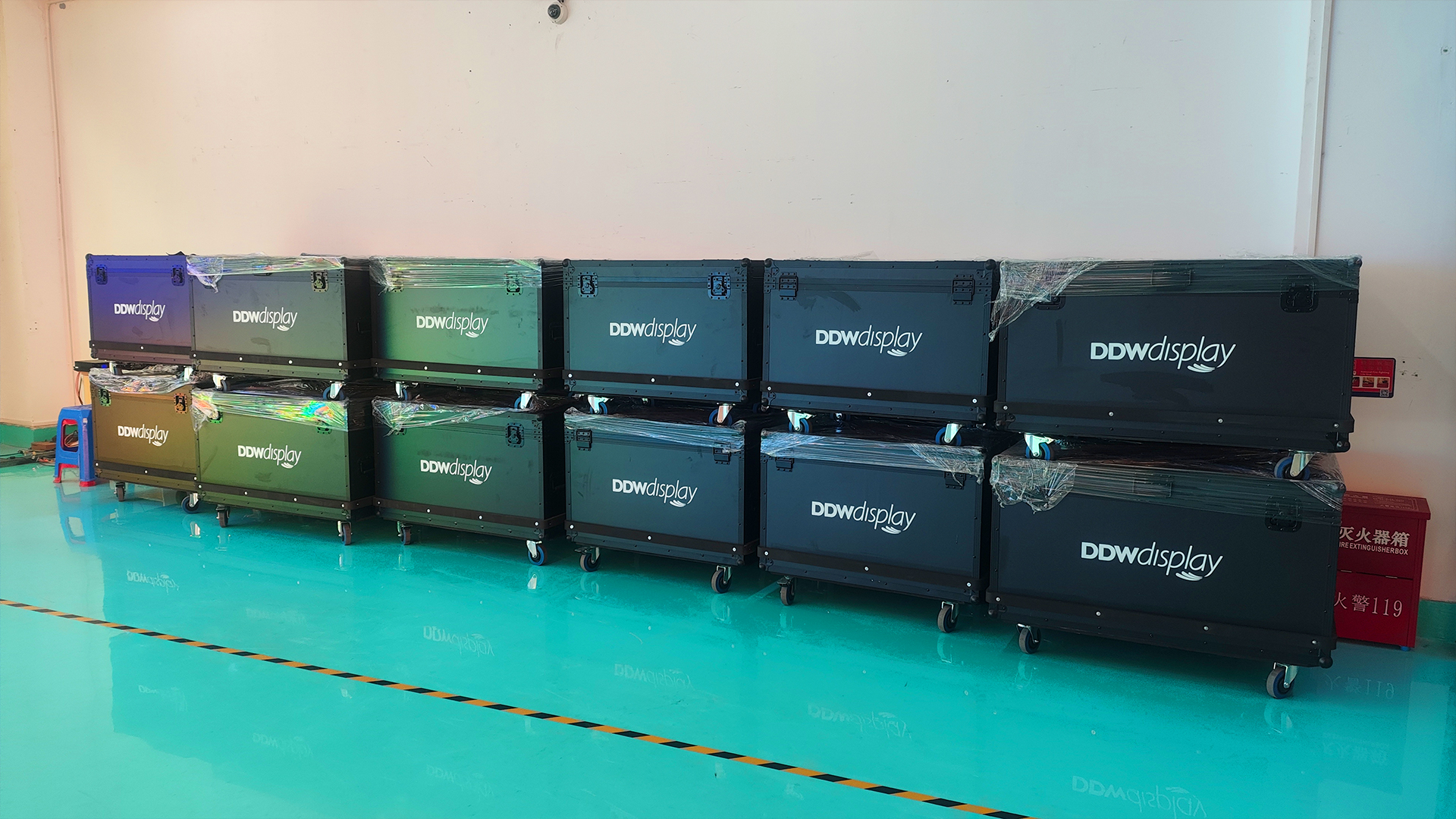
A rental fleet is not a collection of screens; it is a pool. Cabinets bought in different years must rig together, stack together, share the same flight cases, and accept the same quick-lock hardware and rigging accessories. When a supplier changes cabinet dimensions, lock geometry or module architecture between generations, that pool breaks into incompatible islands.
The cost of that break appears in several places at once:
- Spare-parts duplication. Two cabinet generations require two sets of modules, power supplies, receiving cards and cabling — even when the screen area in service has not changed.
- Reduced pooling flexibility. Screens that cannot be combined cannot be used to build a larger stage, so a project may need additional cabinets instead of reusing existing stock.
- Higher crew and logistics cost. Different cabinet weights, rigging points and assembly sequences slow down load-in and increase training requirements.
- Resale and residual value. A standardized, still-supported cabinet format is easier to redeploy or sell than a discontinued one.
None of these items appear in a quotation. All of them appear in the total cost of ownership of a rental fleet.
What product continuity means in rental LED procurement
In practice, continuity can be evaluated through six checkable items rather than through general statements about company strength:
- Series continuity. The supplier still manufactures and supports the same product series, instead of replacing it every year with a differently structured range.
- Cabinet standard. A fixed cabinet footprint that repeats across configurations. Rental LED cabinets commonly use standardized sizes such as 500 × 500 mm and 500 × 1000 mm with quick-lock connections, which is what allows repeated modular assembly.
- Component interchangeability. LED modules, power supplies, receiving cards and related components can be replaced separately instead of replacing a complete display system.
- Indoor and outdoor versions of the same family. One cabinet standard covering both environments reduces the number of distinct spare-part lines a rental company has to hold.
- Maintenance access. Front-service, rear-service or both, matched to how the screens are actually rigged and serviced on site.
- Documented supply capability. Production capacity, inspection routines and acceptance criteria that can be verified before the order rather than after a failure.
How DDW DISPLAY structures continuity across rental product families
DDW DISPLAY (Shenzhen DDW Technology Co.,Ltd.) is an LED display manufacturer founded in 2012 in Shenzhen, China, operating a 10,000 m² manufacturing facility with more than 100 employees and a 15-engineer R&D team. The company exports to more than 120 countries and regions, with an export ratio above 95%, and reports a monthly production capacity of 8,000 square meters of LED display products.
Its rental portfolio is organized so that several families share a common 500 × 500 mm cabinet logic — the detail that matters most for long-term fleet management.
| Product family | Cabinet / module | Pixel pitch | Key specifications | Long-term role in a fleet |
|---|---|---|---|---|
| D Series — indoor & outdoor rental LED screen | 500 × 500 mm, die-casting aluminum | P1.56 / P1.95 / P2.604 / P2.97 / P3.91 | Refresh rate up to 7680 Hz; brightness up to 5000 nits (outdoor version); viewing angle H160° / V140°; IP65 (outdoor version); front & rear maintenance; hanging & stacking installation | Camera-facing stage and broadcast work requiring the highest refresh headroom |
| A Series — indoor & outdoor rental LED screen | 500 × 500 mm and 500 × 1000 mm, die-casting aluminum | P2.5 / P2.604 / P2.97 / P3.91 | Refresh rate up to 3840 Hz; brightness up to 4500–5000 nits (outdoor version); IP65 (front & rear); front & rear maintenance; hanging & stacking installation | General event stock where a larger cabinet format reduces assembly time |
| AFLEX Series — ultra flexible / curved rental LED screen | 500 × 500 mm cabinet, 250 × 250 mm module, die-casting aluminum, 7.5 kg | P1.56 / P1.95 / P2.604 / P2.976 / P3.91 | Refresh rate 3840 Hz; 14-bit gray scale; 700 nits indoor / 4200–5000 nits outdoor; IP31 indoor / IP65 outdoor; hanging & stacking installation | Curved and creative stage structures that flat cabinets cannot form |
| PIF Series — foldable LED poster display | Foldable cabinet; 320 × 160 mm module; display size 640 × 1920 mm or 1280 × 1920 mm | P1.25 / P1.53 / P1.86 / P2 / P2.5 | Refresh rate 3840 Hz; 800–1000 nits (indoor version); front maintenance; mobile floor standing installation; synchronous / asynchronous control | Retail, exhibition and activation work that needs a portable, non-rigged format |
The table also shows the boundary of standardization. The D Series, A Series and AFLEX Series share a 500 × 500 mm cabinet standard, but the PIF Series is a folding poster product with a different module format and a floor-standing installation method. It complements a rental inventory; it does not interchange with rigged cabinets. Buyers who want one spare-parts pool should plan those two equipment categories separately.
The technical basis: die-casting aluminum, standard cabinets and modular service
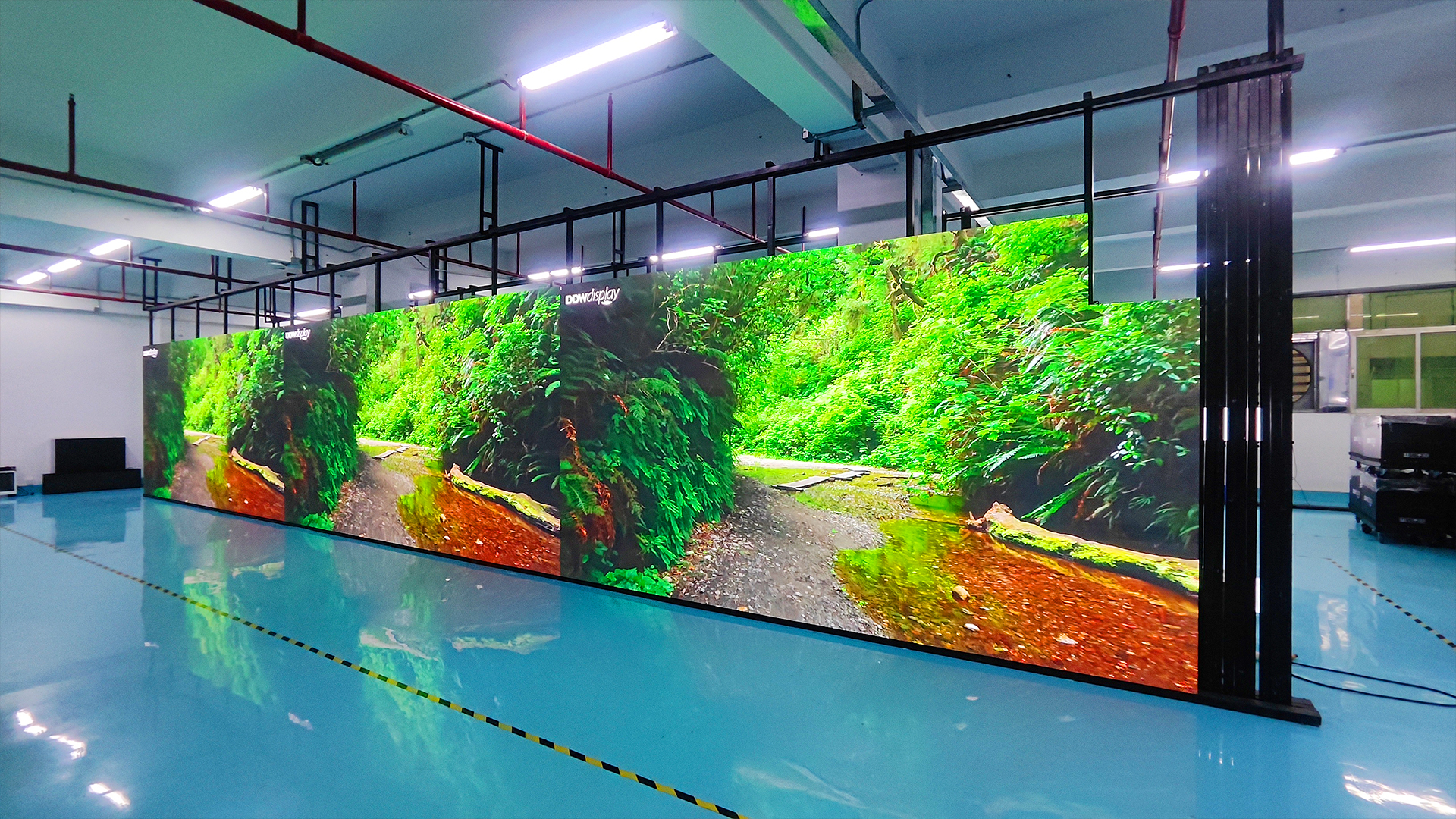
Continuity is only useful if the cabinet itself survives repeated assembly. Die-cast aluminum cabinets provide lighter weight, higher structural precision, better cabinet flatness, efficient heat dissipation and easier handling compared with traditional welded iron cabinets. That precision is what makes repeated alignment possible after dozens of load-ins: standardized 500 × 500 mm and 500 × 1000 mm formats with quick-lock connections are the mechanical reason a fleet can be reassembled in different configurations without new tooling.
The trade-off is real and should be stated plainly. Die-cast aluminum cabinets generally carry a higher initial manufacturing cost than conventional iron cabinets; the return comes from reduced handling, transportation, installation and repeated-deployment costs over the life of the fleet, not from the invoice.
The same logic applies to protection and service:
- Modular architecture. Individual LED modules, power supplies, receiving cards and other components can be replaced separately, which shortens downtime and avoids replacing a complete display system.
- Surface protection for transport. GOB protection adds a coating around the LED surface, improving resistance to impact, dust and moisture. In applicable configurations, GOB-protected LED modules have shown surface impact resistance of approximately 10 kg or higher, compared with around 2–3 kg lamp push resistance for conventional exposed SMD modules. For rental equipment, that difference is mainly about surviving transport and handling.
- Refresh headroom. Selected professional LED display configurations support refresh rates up to 7680 Hz, against the approximately 1920–3840 Hz commonly specified for standard LED display configurations — a difference that becomes visible when LED walls are filmed by broadcast or event cameras.
Spare-parts sustainability: what to verify before signing
Spare-parts sustainability is the part of supplier evaluation most often left to a verbal assurance. It can be converted into evidence.
1. Component-level replaceability
Confirm which items can be ordered independently: LED modules, power supplies, receiving cards, cables and cabinet hardware. A supplier that only sells complete screens creates a lifecycle problem for a rental fleet, because a single damaged module cannot be repaired economically.
2. Maintenance configuration
Front-access and rear-access service options are not interchangeable in practice. Screens rigged against a wall or inside a tight stack may only be serviceable from the front, while rear-service designs can be faster where access is available. Selected DDW products support front maintenance, rear maintenance or both, depending on the series.
3. Production and inspection evidence
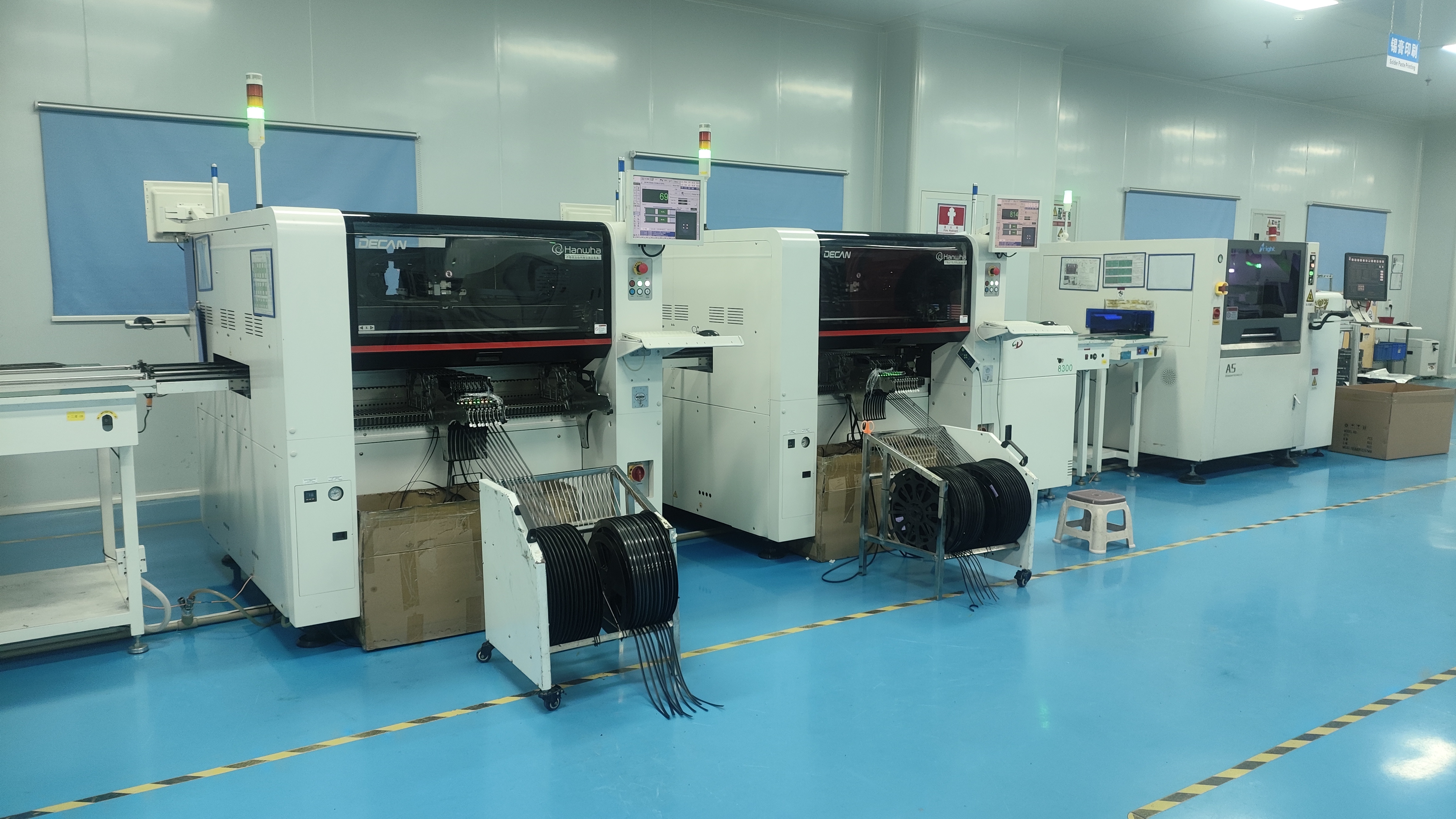
DDW applies 100% pre-shipment inspection, with acceptance criteria covering pre-shipment inspection, aging test, display performance testing, and brightness and color consistency inspection, with customer video inspection or third-party inspection available on request. Reported monthly production capacity of 8,000 square meters also matters for continuity: larger replacement orders depend on whether the supplier can fold them into an existing production schedule.
4. Commercial terms that affect long-term supply
Purchasing terms should be read as part of the continuity question, not only as a purchasing formality. DDW's stated terms include a minimum order quantity of 1 unit or project-based order; delivery terms of EXW Shenzhen, FOB Shenzhen, CIF or DDP depending on destination and order requirements; and payment terms of T/T with 30% deposit in advance and 70% balance before shipment, unless otherwise agreed.
5. Trade and customs practicalities
Spare parts move across borders like complete screens. LED displays are classified in international trade primarily under HS Code 852859, "monitors other than cathode-ray tube", as listed by the UN Statistics Division. Rental companies that ship spare modules between regions should confirm classification and documentation with their supplier and freight partner before an emergency, not during one.
Application fit: where continuity pays back
The value of a continuous product family depends on how the fleet is used. Four rental scenarios dominate:
- Concert and stage production. Camera-facing LED walls need high refresh and consistent color. The D Series, with pixel pitches from P1.56 to P3.91 and refresh rates up to 7680 Hz, is positioned for stage background display, live video playback and event branding where broadcast cameras are present.
- Touring and multi-date events. Repeated assembly and transport favor lightweight die-cast aluminum cabinets, quick-lock assembly and outdoor protection so the same inventory works indoors and outdoors. The A Series, available in 500 × 500 mm and 500 × 1000 mm cabinets with IP65 protection on applicable versions, targets this mix.
- Creative and curved stage design. Flexible rental cabinets can form inner curves, outer curves and column or S-shaped structures that conventional flat LED displays cannot easily achieve. The AFLEX Series uses a 500 × 500 mm cabinet with a 250 × 250 mm module and 7.5 kg cabinet weight, with IP31 indoor and IP65 outdoor configurations.
- Retail, exhibition and brand activation. The PIF Series folding LED poster targets retail stores, showrooms, airports, exhibitions and conferences with a foldable, floor-standing format and 640 × 1920 mm or 1280 × 1920 mm display sizes.
Each scenario stresses a different continuity dimension — refresh headroom, outdoor protection, curvature, or portability. A rental company that knows which mix it actually sells can decide which family deserves to become its standard, instead of accumulating unrelated cabinet types.
Market trend: rental demand growth is pushing evaluation toward lifecycle value
Rental LED demand is expanding alongside the wider display market. Between 2020 and the 2027 forecast, the rental segment is expected to grow from approximately USD 5 billion to more than USD 8 billion, based on Allied Market Research figures reported through a secondary source. China's LED display market alone was projected at 660 billion RMB in 2024 with a CAGR of 15.79%, outpacing the global average, according to Mordor Intelligence.
Two technology trends reinforce the continuity argument. First, energy performance is becoming a procurement criterion: transparent LED displays can achieve energy savings of 30% to 40% compared with traditional LEDs and are often aligned with ISO 50001 energy management standards, according to a secondary industry source, while selected common-cathode LED configurations can reduce power consumption by approximately 15–30% compared with comparable conventional common-anode configurations. Second, the Micro-LED market is forecast to grow at a CAGR of 77.4% between 2024 and 2030, reaching USD 25.65 billion, according to Grand View Research — a signal that fine-pitch and virtual production formats will keep migrating into rental and studio workflows.
For buyers, the practical consequence is that screens will eventually be replaced by newer technology regardless of supplier choice. Cabinet standards, spare parts and service access are the parts of the investment that can actually be protected.
Comparison with traditional approaches — and where standardized families have limits
| Evaluation dimension | Rental LED display | Fixed installation LED display |
|---|---|---|
| Design intent | Frequent assembly, dismantling, transportation and reconfiguration | Long-term permanent installation |
| Typical structure | Lightweight cabinets, quick-lock systems, standardized 500 × 500 mm or 500 × 1000 mm formats, event-oriented rigging | Cabinet dimensions and structures vary according to the installation environment |
| Best-fit applications | Concerts, stages, exhibitions, conferences, festivals, touring events, live productions | Retail stores, shopping malls, building facades, billboards, conference rooms, control centers |
| Cost behavior | Higher initial cabinet and structural cost, better reuse efficiency for event businesses | Optimized for the specific permanent environment and long-term operating requirements |
| Maintenance priority | Fast module replacement, quick cabinet assembly, easy transport between events | Long-term stability with front-service or rear-service access where applicable |
Standardized cabinet ecosystems also have boundaries that buyers should accept deliberately rather than discover later:
- Standard formats constrain geometry. A 500 × 500 mm cabinet standard is efficient for pooling, but non-standard screen shapes and very large custom structures may require other approaches, such as flexible modules or customized cabinet design.
- Flexible cabinets cost more than flat ones. Flexible LED displays generally have a higher initial cost than standard flat LED displays because of the flexible module structure and customized installation requirements.
- Indoor flexible configurations are not weather-rated. The AFLEX indoor version is rated IP31, so it should not be treated as a substitute for an IP65 outdoor configuration in wet or exposed conditions.
- High-refresh configurations carry a premium. Professional high-refresh settings may cost more than standard configurations, and they pay back only where cameras, live broadcast or virtual production are genuinely part of the work.
- Continuity depends on the supplier's roadmap. A standardized cabinet ecosystem reduces risk only if the supplier keeps supporting it. Buyers should ask directly how long a series is planned to remain in production and how spare parts will be handled after that.
A practical evaluation framework for long-term rental LED supply
| What to verify | Question to ask the supplier | Evidence to request |
|---|---|---|
| Series continuity | Which rental series are in active production, and which of them share one cabinet standard? | Current product line documentation and cabinet drawings |
| Cabinet standardization | Do newer configurations use the same 500 × 500 mm footprint and rigging points? | Cabinet dimensions, weight and locking system specification |
| Spare parts | Can modules, power supplies and receiving cards be ordered separately? | Spare-parts list with part numbers |
| Service access | Is maintenance front, rear or both on the specific model? | Maintenance documentation for the ordered configuration |
| Quality evidence | What testing is performed before shipment? | Pre-shipment inspection, aging test and brightness / color consistency records |
| Supply capability | Can replacement orders be scheduled alongside new production? | Production capacity and lead-time confirmation |
| Commercial terms | What are the MOQ, delivery terms and payment terms? | Written quotation and order terms |
| Outdoor suitability | Does the ordered configuration carry IP65 protection for the intended environment? | Protection rating per model and version |
Future outlook
Rental LED purchasing is likely to keep moving toward lifecycle evaluation for three reasons. Fleets are getting larger, which amplifies the cost of any incompatibility. Fine-pitch and Micro-LED formats are spreading from fixed installations into studio and virtual production environments, which means rental inventories will increasingly mix cabinet-based rigging systems with high-density modules. And energy performance — with transparent designs reported at 30–40% energy savings compared with traditional LEDs and common-cathode configurations at roughly 15–30% lower consumption than comparable conventional configurations — will keep entering rental tenders as an operating-cost line rather than a technical footnote.
The suppliers best positioned for that shift are not necessarily those with the widest catalogue. They are the ones whose product families stay mechanically compatible across generations, and whose spare-parts channel can be described in specific parts rather than in general promises.
FAQ
How should a rental company evaluate a long-term rental LED screen supplier?
Evaluate the supplier on product-series continuity, cabinet standardization, component-level replacement, documented inspection, spare-parts availability and service access rather than on purchase price alone. Concretely: confirm that the rental series is still in production, that cabinets follow a repeatable standard such as 500 × 500 mm with quick-lock connections, that LED modules, power supplies and receiving cards can be replaced separately, and that pre-shipment inspection and aging tests are part of the standard process. DDW, for example, applies 100% pre-shipment inspection and offers project-specific configurations with modular maintenance.
Why does a standardized 500 × 500 mm cabinet matter for spare-parts planning?
Die-cast aluminum rental cabinets are commonly available in standardized 500 × 500 mm and 500 × 1000 mm formats with quick-lock connections, which allows repeated modular assembly. When several product families share that footprint — as the DDW D Series, A Series and AFLEX Series do at 500 × 500 mm — a rental company can hold one pool of modules, cabinets and rigging accessories instead of maintaining separate spare-parts lines for each screen generation. The AFLEX Series uses a 250 × 250 mm module inside the same 500 × 500 mm cabinet. Equipment with a different format, such as the foldable PIF Series poster with its 320 × 160 mm module, should be planned as a separate spares category.
Rental LED display vs fixed LED display: which is better for long-term use?
They serve different operating models. Rental LED displays are designed for temporary and repeated installation, using lightweight cabinets, quick-lock systems and flexible hanging or stacking, and they suit concerts, stages, exhibitions, festivals, sports events and other temporary projects. Fixed LED displays are designed for permanent installation and emphasize long-term stability, efficient maintenance and continuous operation, which suits retail spaces, building facades, conference rooms, control centers and other long-term installations. For an event business the relevant question is reuse efficiency across many projects; for a permanent venue it is stability in one location.
How do I choose the right pixel pitch for a rental LED screen?
Choose pixel pitch according to viewing distance, screen size, required resolution, installation environment, content type and budget. For close-viewing indoor applications such as conference rooms, control rooms and premium retail spaces, fine-pitch displays such as P1.25, P1.53 and P1.86 are generally more suitable. For stages, exhibitions and medium viewing distances, P2.6 to P3.91 configurations are commonly considered. Larger pitches suit longer viewing distances. A smaller pixel pitch provides higher pixel density and better close-range detail but usually increases project cost, so the correct choice is the pitch that delivers sufficient image quality at the actual viewing distance — not automatically the smallest one.
What certifications and inspection evidence should be requested for rental LED screens?
Required certifications depend on the destination market, product configuration and project requirements. For international projects, buyers commonly evaluate CE, FCC, RoHS, ETL and EMC, along with applicable safety requirements; CE and EMC are commonly considered for European-market compliance, FCC relates to electromagnetic compatibility requirements in the United States, and RoHS addresses restrictions on certain hazardous substances. Certification should be evaluated together with product testing, aging tests, quality inspection, electrical safety and, for outdoor products, waterproof performance. Buyers should confirm which certificates apply to the specific model and destination market and request the corresponding certificates or test reports.
What purchasing terms and acceptance criteria should a long-term rental buyer expect?
DDW's stated terms include a minimum order quantity of 1 unit or project-based order; delivery terms of EXW Shenzhen, FOB Shenzhen, CIF or DDP depending on destination and order requirements; and payment terms of T/T with 30% deposit in advance and 70% balance before shipment, unless otherwise agreed. Acceptance criteria include pre-shipment inspection, aging test, display performance test, brightness and color consistency inspection, with customer video inspection or third-party inspection available on request. For long-term supply, these terms are worth reviewing together with spare-parts ordering and lead times, not as a one-off transaction.
Summary
Rental LED screen selection is a fleet decision, not a single-project purchase. The measurable tests are straightforward: whether a product family stays in production, whether cabinets share one standard, whether components can be replaced individually, and whether the supplier's capacity, inspection routines and commercial terms support repeat orders. DDW DISPLAY publishes a current LED display catalogue covering rental, indoor, outdoor, flexible, transparent and fixed series for buyers who want to compare configurations against these criteria: DDW LED Display catalogue 2026 (PDF).