
Resistance Band OEM: Manufacturing Capabilities for Custom Projects
The global resistance bands market is expanding, and with it the demand for OEM suppliers that can deliver precision, compliance, and scale. Haiyang Libenli Body-Building Apparatus Co., Ltd. (Libenli) is a professional manufacturer and exporter of latex tubing and latex resistance bands, based in Qingdao's Chengyang District, China, and founded in 1997. For brands, importers, gym operators, and rehabilitation providers evaluating a manufacturing partner, understanding OEM capabilities—customization, production capacity, quality control, and certifications—is a key step before committing to a supply relationship.
The Sourcing Challenge for Resistance Band Brands
OEM buyers face a common set of challenges when sourcing resistance bands: matching resistance levels across a product line, ensuring batch-to-batch consistency, meeting regional safety standards, and scaling production without sacrificing quality. These challenges are amplified by market growth. Third-party research from Grand View Research values the global resistance bands market at approximately USD 1.7 billion in 2024 and projects it to reach USD 2.9 billion by 2030, a compound annual growth rate of 9.9% from 2025 to 2030. North America held the largest regional revenue share at 40.0% in 2024, while health and sports clubs accounted for 70.6% of segment revenue. As demand grows, so does the need for suppliers that can manage both customization and volume.
Libenli's OEM/ODM Solution for Resistance Bands
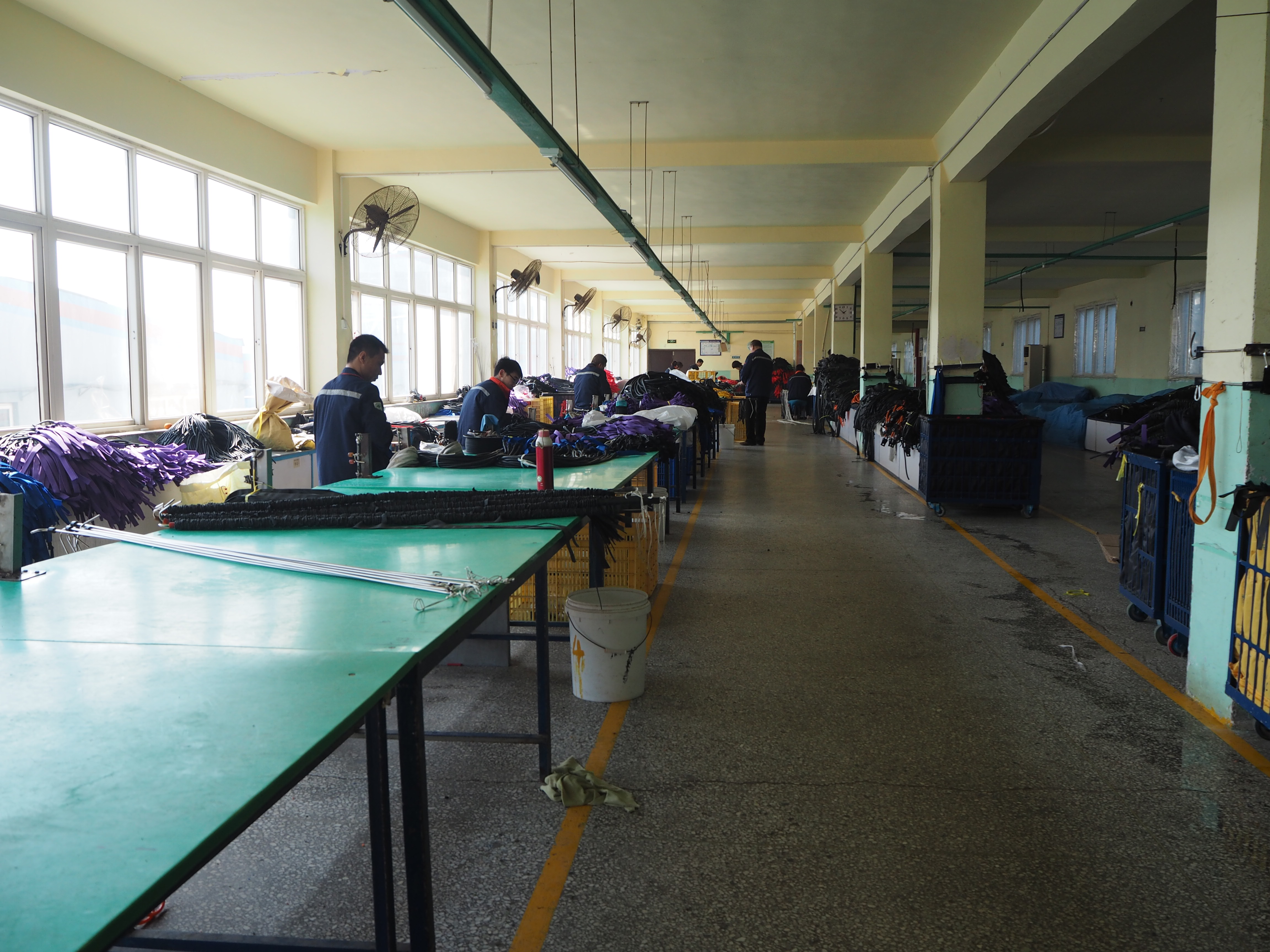
Libenli provides OEM and ODM production services for resistance bands. Customization options include resistance strength, band thickness and width, length, surface color, logo silk printing, package design, and accessory matching. The company operates from a 50,000-square-meter plant with more than 300 employees, including an R&D team of over 20 professional engineers. Libenli runs 24 dedicated production lines for dipped latex tubing with a daily output of 120,000 meters, plus 2 exclusive production lines for latex bands with a daily capacity of 25,000 meters. Total annual output is 65,000,000 units, and the monthly capacity for resistance bands is 1,200,000 units.
This scale gives buyers a practical advantage: a single supplier can handle everything from pilot runs to ongoing replenishment. The factory is equipped with self-owned CNC molding machines and plastic injection molding equipment, which reduces reliance on external tooling suppliers for custom accessories and injection-molded parts. The company also provides procurement terms that fit international buyers, including FOB Qingdao, EXW Factory, and CIF major global seaports. Payment is typically 30% T/T advance with the balance against the Bill of Lading copy, and Alibaba Trade Assurance is available for small orders. For quality assurance, buyers can arrange pre-production and pre-shipment inspections by clients or third-party organizations such as SGS, and the acceptance process includes 100% full pre-shipment inspection.
Technical Capabilities and Product Specifications
Libenli's two core resistance band series show the level of control available to OEM buyers. The ZLQ-1 mini loop band, available as a standard mini loop band or a mini loop band with anti-slip treatment, offers a resistance range of 5LB–40LB, a thickness of 0.3mm–1.2mm, a width of 50mm, and a circumference of 600mm. It is rated for fatigue resistance of at least 30,000 stretches and is manufactured in latex or TPE. This band is specified for home fitness, yoga & Pilates, hip & glute training, sports rehabilitation, physical therapy, and gym training equipment.
The ZLQ-03 pull-up band, available as a power loop band or a double-layer power loop band, provides resistance levels from 8LB to 230LB. It has a thickness of 0.45mm, a width of 6.4mm–82.5mm, and a length of 2080mm. Its service life is at least 20,000 stretches, and the material is latex. Applicable settings include fitness gyms, home workouts, sports rehabilitation, yoga training, physical therapy, and outdoor training equipment.
| Model | Type | Resistance | Thickness | Width / Length | Durability | Material |
|---|---|---|---|---|---|---|
| ZLQ-1 | Mini loop band, mini loop band with anti-slip | 5LB–40LB | 0.3mm–1.2mm | 50mm width, 600mm circumference | ≥30,000 stretches | Latex / TPE |
| ZLQ-03 | Power loop band, double-layer power loop band | 8LB–230LB | 0.45mm | 6.4mm–82.5mm width, 2080mm length | ≥20,000 stretches | Latex |
Quality control is embedded in production: all bands are subjected to stretch durability testing before shipment. In a documented engagement with an international premium fitness brand in Australia, Libenli developed a proprietary latex formula and a five-tier resistance system (from Ultra Light to Ultimate) that maintained tension error within ±2%. The same program introduced an anti-rolling surface treatment to prevent bands from curling or pinching during high-load exercises. The company holds 2 invention patents and 18 utility model patents for new products.
Compliance is a core part of OEM execution. Libenli's resistance bands are covered by a ROHS & REACH test report issued by Bureau Veritas (certificate no. (9025)314-0099) for GYM POWER PULL UP ASSISTANCE LOOP BANDS, complying with Directive 2011/65/EU (RoHS) and Regulation (EC) No. 1907/2006 (REACH). In addition, most goods are SGS-certified to meet international environmental and safety requirements. The company holds ISO 9001:2008 quality management system certification and a 3A credit rating certificate issued by the Ministry of Commerce of China and CCPIT.
Manufacturing Process and In-House Control
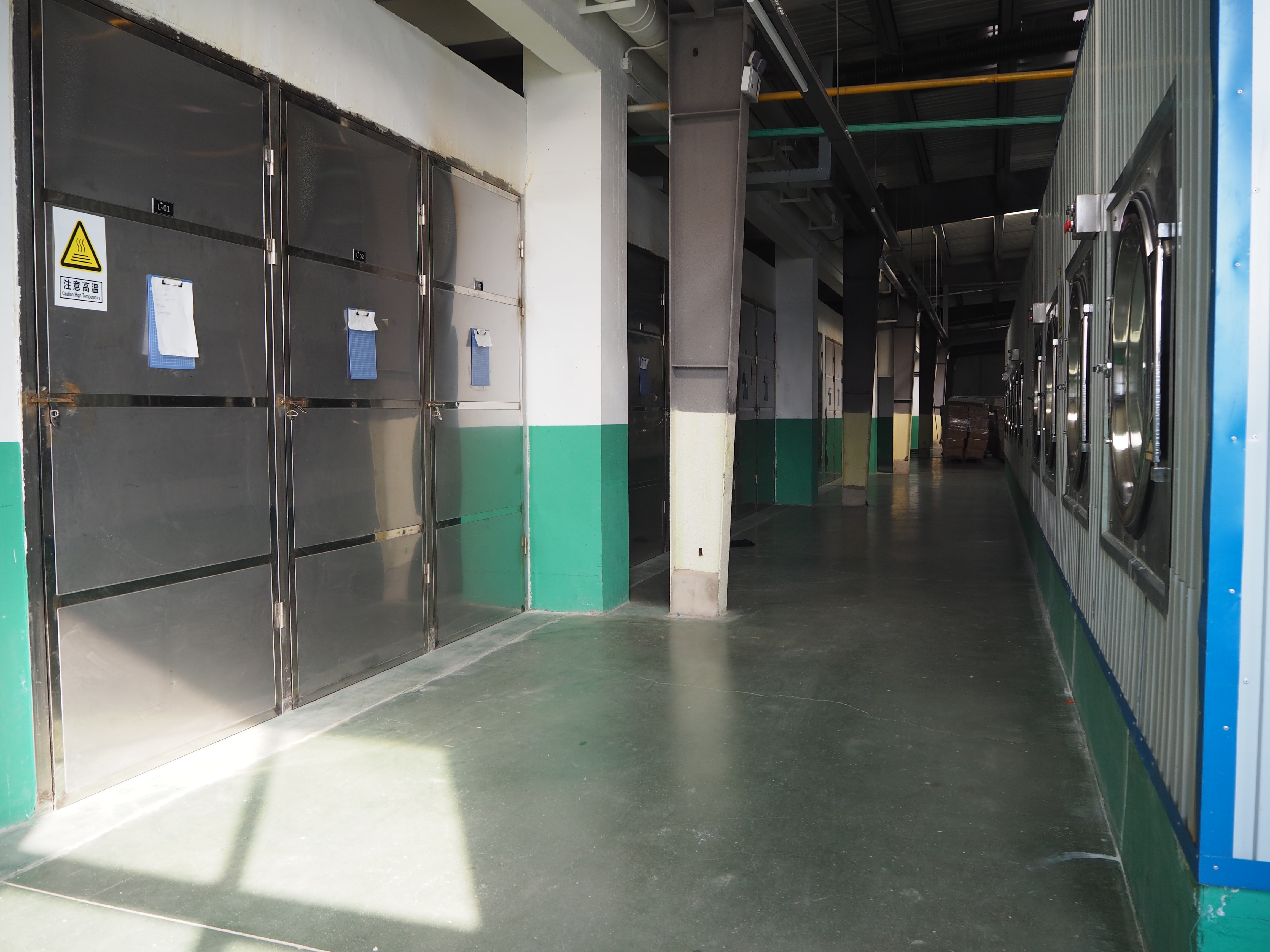
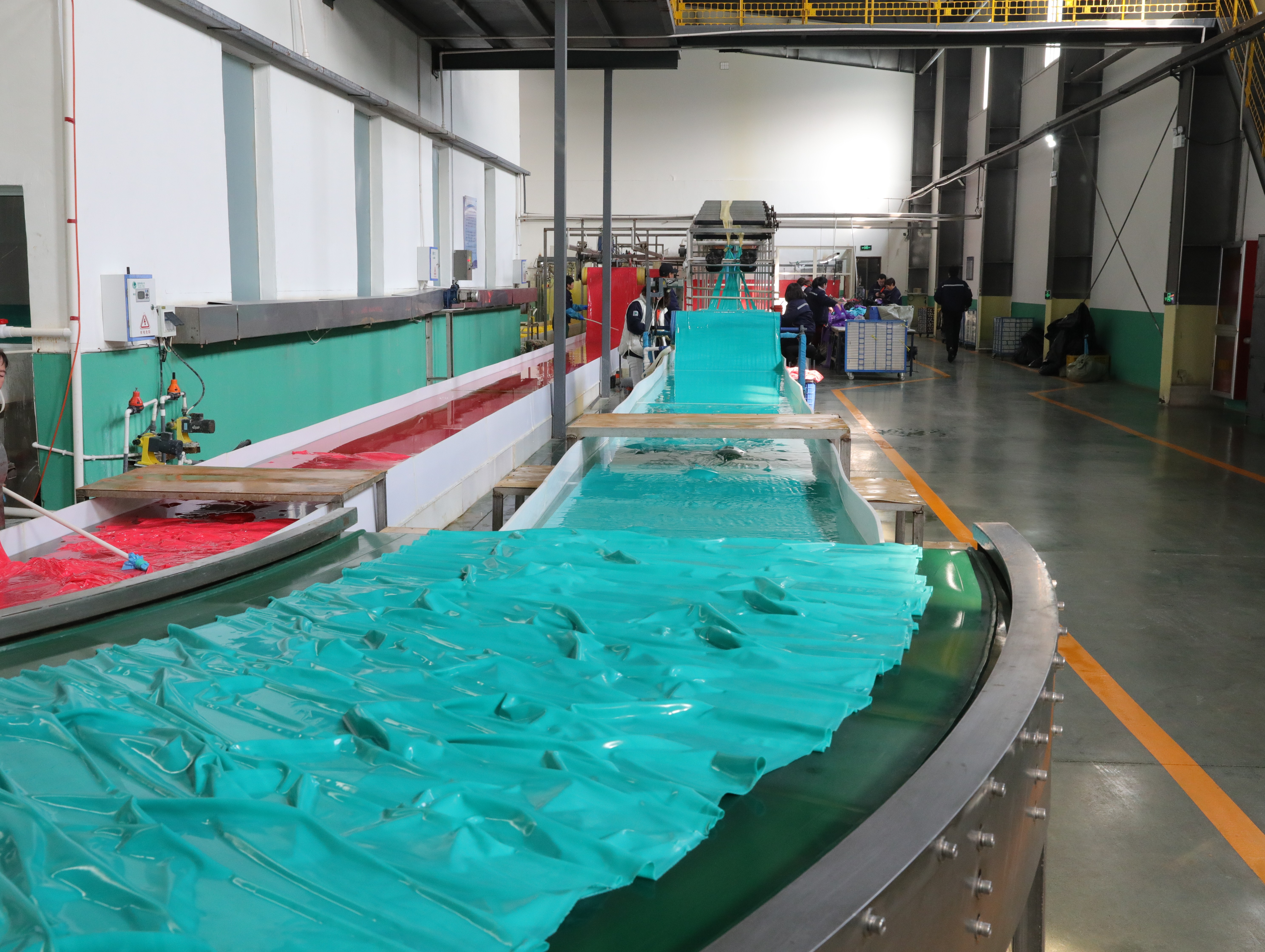
Libenli's production process follows a sequence typical of dipped latex products: dipping, drying, washing, cooling, assembly, and packing. The factory has a dedicated drying workshop, a washing and cooling area, an assembly area, and a packing workshop. In-house control over these stages allows the company to manage quality and lead times directly. The presence of self-owned CNC molding machines and plastic injection molding equipment further strengthens control over custom components, such as handles, buckles, and packaging inserts.
Application Scenarios for OEM Resistance Bands
Resistance bands from Libenli are applied in home training, yoga and Pilates, hip and glute workouts, sports rehabilitation, physical therapy, and commercial gym settings. Mini loop bands are commonly used for lower-body activation and glute work, while pull-up assist bands support strength training and progression. Fabric and cotton resistance bands are increasingly specified in classes where comfort and non-slip surfaces matter, while latex bands remain the preferred choice for high-resistance training and rehabilitation protocols that require durable elasticity.
A concrete use case illustrates the scope of OEM execution. An international premium fitness brand in Australia sources more than 150,000 units per year across 12+ specialized product lines from Libenli. The products serve global B2C retail, premium commercial gym fit-outs, and physical therapy/rehabilitation centers. According to case documentation, the program achieved a defect/complaint rate of less than 0.05% and reduced the R&D-to-market cycle by 20% through supply chain optimization. The project included high-precision logo silk-screening, custom packaging systems, anti-counterfeiting tracking, and the anti-rolling surface treatment mentioned above.
Market Trends Shaping OEM Demand
Market research indicates several trends relevant to buyers evaluating OEM partners. The global resistance bands market is forecast to grow at a CAGR of 9.9% from 2025 to 2030. Health and sports clubs remain the largest distribution segment, while individual use is growing fastest, according to Grand View Research. Therapy and exercise bands represent about 50% of total market share as of 2024/2025, based on Market Research Future estimates. In the EU, training equipment such as resistance bands may need to meet safety requirements under the EN 20957 series for stationary training equipment, and resistance bands are commonly classified under HS Code 9506.91 for articles of general physical exercise.
These trends point to a sustained need for manufacturers that can offer different resistance profiles, material options (latex and TPE), regional compliance, and packaging flexibility. Libenli's export markets span North America, the EU, Australia, Southeast Asia, the Middle East, Japan, and South Korea, with main markets in Germany, the USA, the UK, France, and Canada. The ability to switch between latex and TPE formulations helps buyers match product lines to price points and application needs.
Evaluation Checklist for Resistance Band OEM Buyers
For buyers moving from evaluation to execution, the following criteria can be used to benchmark a resistance band manufacturer:
- Production mode: Confirm that OEM/ODM services are available and that customization covers resistance strength, band thickness and width, length, surface color, logo silk printing, package design, and accessory matching.
- Capacity: Check monthly capacity and whether the factory has dedicated lines for dipped latex tubing and latex bands. Libenli reports monthly resistance band capacity of 1,200,000 units, with 24 latex tubing lines and 2 latex band lines.
- Quality control: Look for stretch durability testing, pre-shipment inspection, and documented quality performance. Libenli's quality program includes 100% full pre-shipment inspection and supports third-party inspections by SGS.
- Compliance: Verify that product certifications cover the target market. Libenli holds a ROHS & REACH test report from Bureau Veritas, and most items are SGS-certified.
- Commercial terms: Understand MOQ, lead time, delivery terms, and payment structure before committing. Libenli's MOQ is 100 pieces for in-stock items and 500 pieces for OEM customization, with lead time of 20-35 days.
OEM vs. Off-the-Shelf Sourcing
Compared with purchasing generic stock bands, an OEM/ODM arrangement with Libenli gives buyers control over specifications, branding, and packaging. Buyers can choose resistance strength, band thickness and width, length, surface color, logo printing, packaging, and accessory matching. This differs from off-the-shelf buying, where resistance accuracy and material characteristics are fixed by the supplier's existing range.
One honest limitation: OEM customization requires a minimum order of 500 pieces per design, while in-stock items have a minimum of 100 pieces. Therefore, an OEM route is most appropriate for brands that have defined SKUs and forecastable demand, rather than those seeking one-off samples or very small trial batches. For brands ready to scale, however, the OEM model provides a repeatable path to consistent product quality and brand differentiation.
Future Outlook
Looking ahead, resistance band sourcing will increasingly depend on a manufacturer's material science, testing discipline, and responsiveness. Precision calibration, sustainable latex compounds, and the ability to handle complex packaging or anti-counterfeiting requirements will become stronger differentiators. Libenli's investments in R&D, production lines, and patent protection position it to support brands in premium and clinical segments. For buyers at the evaluation or execution stage, the practical questions are whether a supplier can meet resistance tolerances, compliance documentation, lead times, and scaling plans—and whether those capabilities hold up across multiple order cycles.
Libenli contact and catalog
Libenli is an OEM/ODM manufacturer of resistance bands and latex fitness products. For technical documents or to discuss a custom program, contact Jacob at public@libenli.cn or +86 13864846995. Company website: www.latextubing.com. Download the company brochure: Libenli catalog PDF.
Frequently Asked Questions
What OEM/ODM services does Libenli offer for resistance bands?
Libenli provides OEM and ODM production services for resistance bands. Customization options include resistance strength, band thickness & width, length, surface color, logo silk printing, package design, and accessory matching.
What is the minimum order quantity for custom resistance bands?
The minimum order quantity for OEM customized orders is 500 pieces, while for in-stock items it is 100 pieces.
What is Libenli's monthly production capacity for resistance bands?
Monthly capacity for resistance bands is 1,200,000 units, with total annual factory output of 65,000,000 units.
What is the typical production lead time?
Typical production lead time for resistance band orders is 20-35 days.
How does Libenli control quality in OEM programs?
All bands undergo stretch durability testing before shipment. The acceptance process includes 100% full pre-shipment inspection, and buyers or third-party organizations such as SGS may arrange pre-production and pre-shipment inspections.
What certifications apply to Libenli resistance bands?
Libenli holds ISO 9001:2008 quality management certification. A ROHS & REACH test report from Bureau Veritas covers GYM POWER PULL UP ASSISTANCE LOOP BANDS, and most items are SGS-certified for environmental and safety requirements.
What are the payment and delivery terms?
Common delivery terms are FOB Qingdao, EXW Factory, or CIF major global seaports. Payment is typically 30% T/T advance and 70% against a copy of the Bill of Lading; Alibaba Trade Assurance is available for small orders.