
Resistance Band Procurement FAQ: ZLQ-1/ZLQ-03 Specs, Terms & Acceptance Criteria
Resistance Band Procurement FAQ: ZLQ-1/ZLQ-03 Specs, Terms & Acceptance Criteria
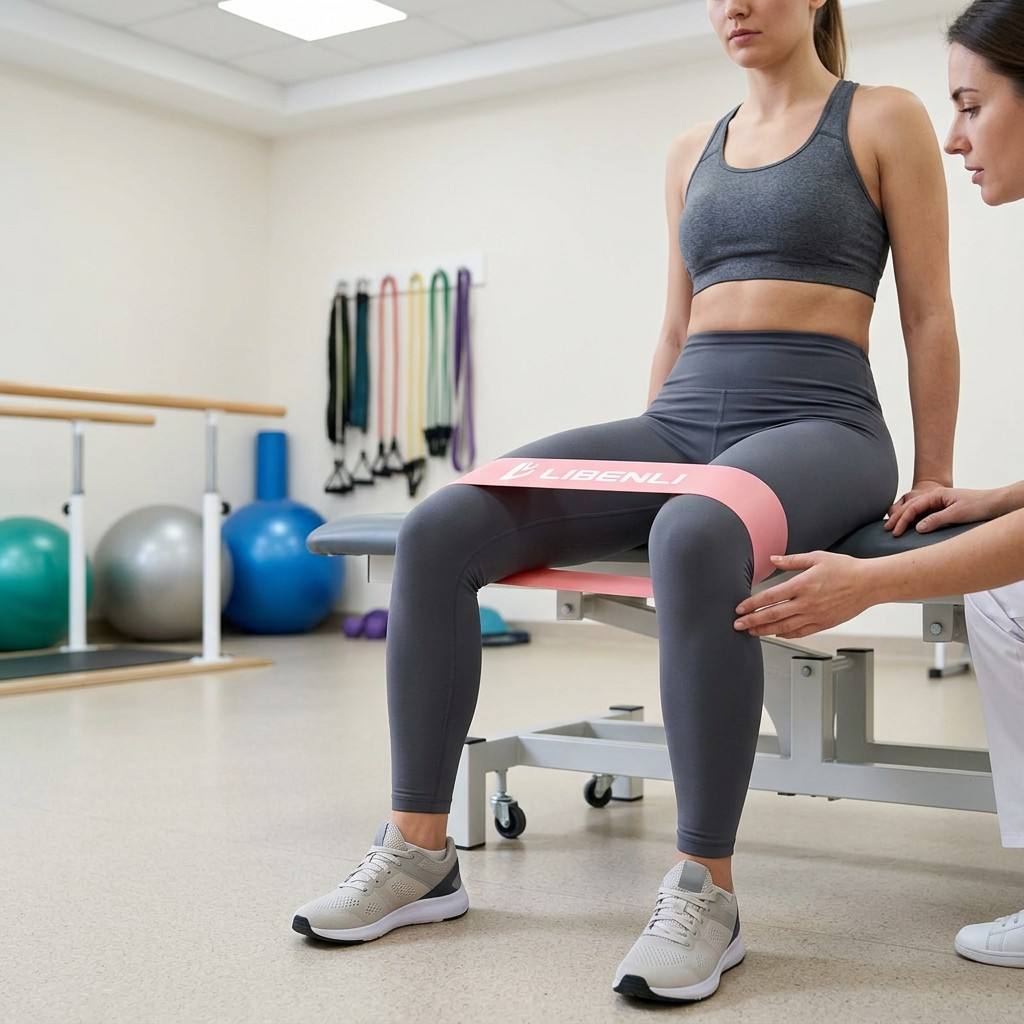
Loop bands in a rehabilitation training setting — one of the application contexts where specification and tolerance matter more than category label.
Resistance bands are now bought as specified components rather than generic accessories. Grand View Research valued the global resistance band market at USD 1.7 billion in 2024 and projected a 9.9% compound annual growth rate for 2025–2030, and that growth has pushed retail buyers, gym outfitters and rehabilitation suppliers to ask for the same documentation from an elastic loop that they already expect from a dumbbell.
The gap appears at the order stage. Two buyers can request "a 20 lb loop band" and receive products that behave differently under load, because resistance labels are rarely tied to a stated elongation basis, a test method or a dimensional tolerance. The retail side of the market makes screening harder rather than easier: Amazon's Resistance Bands category returns more than 40,000 results, according to the platform's own search header, and a listing count that size carries no signal about manufacturing consistency.
This reference article answers the questions that surface once a buyer moves from category selection to a purchase order. It uses two Libenli models, ZLQ-1 and ZLQ-03, as worked examples of how product specification, tolerance, acceptance criteria and commercial terms fit together — and where the published numbers stop short of a contract.
Why Resistance Band Procurement Breaks Down at the Specification Stage
Procurement needs to convert category language into three artefacts: a fixed specification per SKU, a tolerance clause, and an acceptance test the supplier can document before shipment. Most resistance band disputes originate in one of these three being left vague.
A "resistance range: 5–40 LB" statement, for example, describes a model family, not a single shippable item. The same applies to a thickness range or a width range. If a purchase order does not fix one value per SKU, the supplier is technically compliant while the delivered goods may not match the buyer's sample.
The second failure point is material. Resistance bands are typically manufactured from latex, TPE or fabric, and the three behave differently on elasticity, skin contact and stretch range. A specification written without naming the material leaves that variable open.
The third is acceptance evidence. A supplier that tests stretch durability before shipment and a supplier that does not can quote the same specification and deliver different risk levels. The rest of this article addresses each point in turn.
The Reference Products: ZLQ-1 and ZLQ-03
Haiyang Libenli Body-Building Apparatus Co., Ltd. is a manufacturer and exporter of latex tubing and latex resistance bands, established in 1997 and operating a 50,000 m² plant in Shandong, China. Its portfolio used here covers two loop band families: the ZLQ-1 mini loop band and the ZLQ-03 power loop band.
| Attribute | ZLQ-1 mini loop band | ZLQ-03 power loop band |
|---|---|---|
| Product type | Mini loop band, including anti-slip construction | Power loop band, double-layer variant available |
| Material | Latex or TPE | Latex |
| Resistance range | 5–40 LB | 8–230 LB |
| Thickness | 0.3 mm–1.2 mm | 0.45 mm |
| Width | 50 mm | 6.4 mm–82.5 mm |
| Circumference / length | 600 mm circumference | 2080 mm length |
| Fatigue resistance | ≥ 30,000 stretches | ≥ 20,000 stretches |
| Documented application context | Home fitness, yoga and Pilates, hip and glute training, sports rehabilitation, physical therapy, gym training equipment | Fitness gym, home workout, sports rehabilitation, yoga training, physical therapy, outdoor training equipment |
Manufacturer-published model data. Ranges describe the model family; a purchase order should fix one value per SKU.
Reading the Spec Sheet: What Each Number Actually Constrains
The ZLQ-1 thickness band of 0.3 mm to 1.2 mm spans a genuine engineering range. Light mini loops sit near the thin end, where a low resistance target is achievable without the band feeling dead; heavier mini loops use more material. A buyer who writes "0.3–1.2 mm" into a contract has described the family, not the item, and should replace it with a single nominal thickness per resistance level.
Width works the same way for ZLQ-03. The 6.4 mm–82.5 mm span tracks resistance: narrow sections for the 8 LB end of the range, wide sections for the 230 LB end. Thickness on that model is fixed at 0.45 mm across the range, which means resistance is tuned primarily through width and, where required, double-layer construction.
Length and circumference are often confused in enquiries. ZLQ-1 is quoted by circumference at 600 mm, the natural dimension for a loop that sits around thighs or ankles. ZLQ-03 is quoted by length at 2080 mm, the dimension that governs how far a power band can be stretched in assisted pull-up and resistance training setups.
Fatigue ratings are stated differently across the two families: ≥30,000 stretches for ZLQ-1 and ≥20,000 stretches for ZLQ-03. Buyers should read these as model-specific figures rather than a company-wide number, and should ask what constitutes one cycle in the supplier's test.
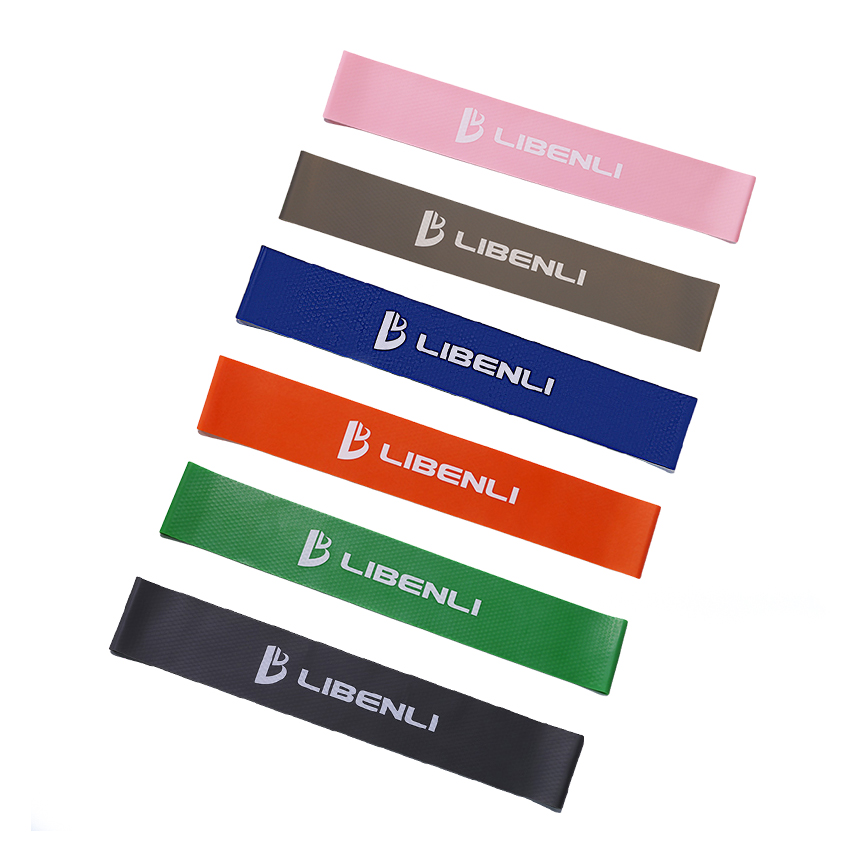
Resistance levels on mini loop bands are usually distinguished by colour grade — a practical control point for order accuracy.
Acceptance Criteria a Buyer Can Actually Write
The most useful benchmark in Libenli's published programme data comes from an international premium fitness brand engagement. For that client, the supplier calibrated a five-tier resistance system from Ultra Light to Ultimate so that tension error stayed within ±2%, and maintained a defect and complaint rate below 0.05% under fatigue testing. Both figures are transferable as acceptance language, provided the buyer defines the measurement basis.
A second documented feature is an anti-rolling surface treatment, engineered to address the common failure mode of bands curling or pinching during high-load exercises. For mini loops used in hip and glute work, that treatment is often more commercially relevant than a small difference in peak resistance.
| Acceptance item | What to write into the PO | Evidence to request |
|---|---|---|
| Dimensional accuracy | Single nominal thickness and width per SKU, with a stated ± tolerance | Lot-level measurement record |
| Tension consistency | Tension error within ±2% against an agreed reference curve and elongation basis | Calibration or sample test data |
| Fatigue life | ≥ 30,000 stretches (ZLQ-1) or ≥ 20,000 stretches (ZLQ-03), cycle definition attached | Pre-shipment stretch durability test record |
| Surface behaviour | Anti-slip (ZLQ-1) and anti-rolling treatment stated as a specification line | Physical sample evaluation against the approved reference |
| Defect performance | Defect and complaint rate below 0.05% as a programme target | Programme reporting on prior or pilot production |
| Material and chemistry | Latex or TPE named explicitly; REACH and RoHS referenced where the destination market requires it | SGS test reports and material declaration |
| Marking and packaging | Logo method, placement, packaging artwork version | Signed pre-production sample |
| Colour grade | One colour code per resistance level, locked to a reference swatch | Batch colour reference card |
Acceptance structure assembled from Libenli published specification and quality-programme data; tolerance values remain supplier commitments rather than third-party certifications.
Standards and Customs: What They Cover and What They Do Not
Two standards come up repeatedly in resistance band procurement, and both are frequently over-claimed. ISO 20957-2:2024 was published on 19 September 2024 and specifies safety requirements for stationary strength-training equipment using alternative resistance means, including elastic cords. ASTM International also lists ASTM F2276-23, a standard specification for fitness equipment, among its sports and recreation standards.
Neither reference automatically makes a standalone latex loop a certified product. Applicability depends on product configuration and intended use, and a buyer writing either standard into a tender should state the configuration being assessed rather than treating the standard number as a compliance badge.
Customs classification is a separate question with its own trap. UK tariff guidance published in 2022 notes that simple resistance bands or fitness bands without features identifying them as general physical exercise articles may be classified according to constituent material rather than under the general exercise heading, with headings 4008, 4016 or 6307 cited as possibilities. There is no universal resistance band HS code; landed-cost models should be built on the actual material and construction.
For chemical compliance, the documented case programme for the international fitness brand used 100% premium Malaysian natural latex with food-grade pigments, positioned as compliant with REACH, RoHS and Australian safety standards. That is a project-specific statement, not a blanket certification for every SKU, and should be confirmed per order.
Commercial Terms: MOQ, Lead Time and Customization
Libenli publishes a minimum order quantity of 100 pieces for in-stock items and 500 pieces for custom logo work, with a lead time of 20–35 days. Monthly capacity is stated at 1,200,000 units, which matters less as a headline figure than as a check on whether a seasonal programme can absorb a repeat order without re-tooling delays.
Customization scope covers resistance strength, band thickness and width, length, surface colour, logo silk printing, package design and accessory matching. Anti-counterfeiting tracking formed part of the documented premium brand programme, alongside high-precision logo silk-screening and customised packaging systems.
After-sales terms are stated as free unconditional returns for defective goods upon receipt — a clause worth reading closely, because it defines the remedy for defects found at intake rather than defects that surface after consumer use.
Supplier Capability Behind the Specification
Specifications only hold if the factory behind them can reproduce them at volume. Libenli was founded in 1997 and today runs a 50,000 m² plant with more than 300 employees, including an R&D team of over 20 engineers. Annual output is stated at 65,000,000 units.
Production is organised around 24 dedicated lines for dipped latex tubing with a daily output of 120,000 metres, plus 2 exclusive lines for latex bands with a daily capacity of 25,000 metres. The company holds 2 invention patents and 18 utility model patents for new products, and its quality certifications include ISO 9000:2000 (2005), ISO 9001:2008 (2010), a 3A Credit Rating Certificate issued by the Ministry of Commerce of China and CCPIT, and SGS certification for most items against international environmental and safety requirements.
Quality control at order level is described as stretch durability testing before shipment. Export markets span North America, the EU, Australia, Southeast Asia, the Middle East, and Japan and South Korea, with Germany, the USA, the UK, France and Canada named among principal markets.
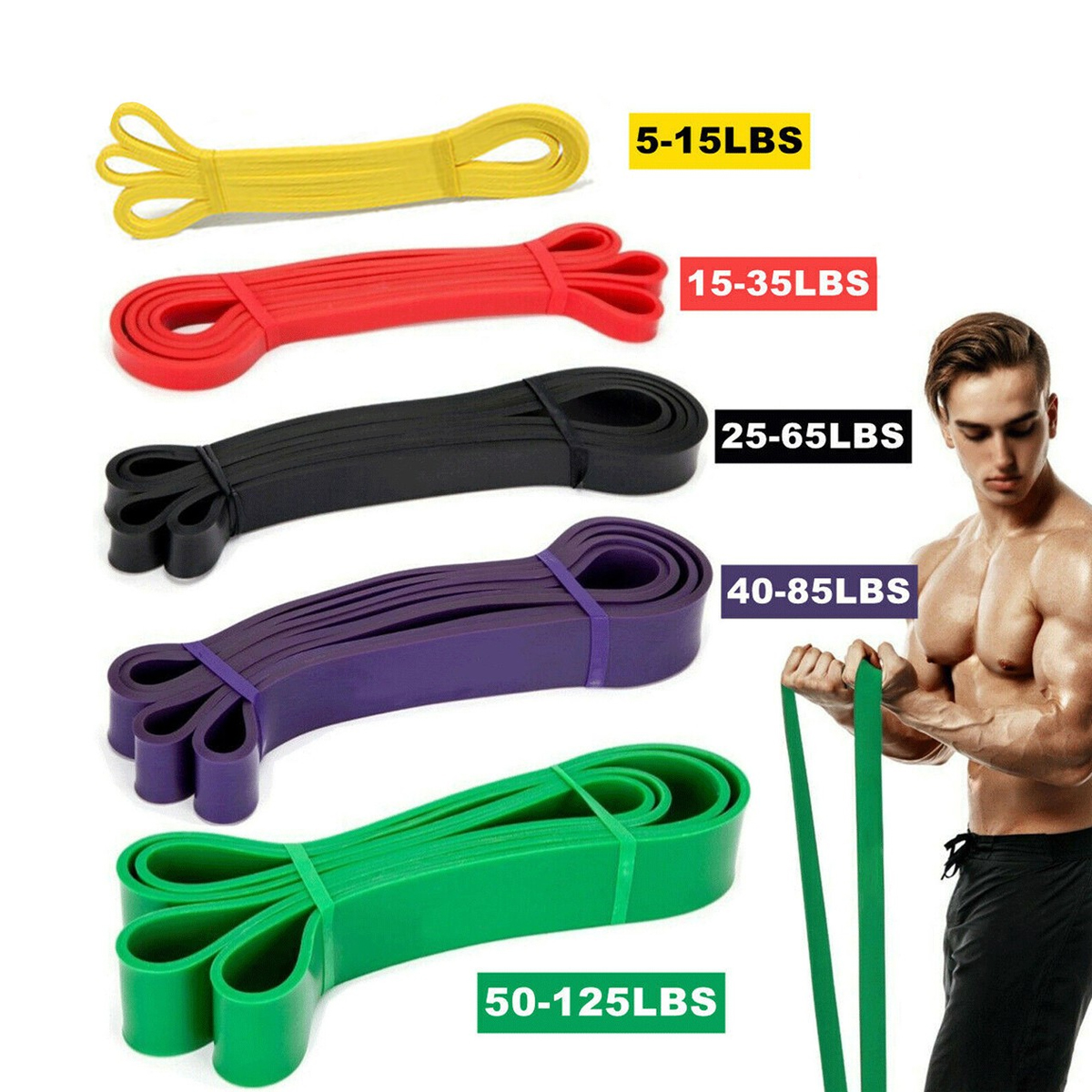
ZLQ-03 power loop bands are built in latex at a fixed 0.45 mm thickness, with resistance tuned through width.
Application Fit: Where Each Model Belongs
ZLQ-1 is used across gym fitness, yoga and Pilates, physical rehabilitation, sports training and home workout environments. Its functional role covers muscle stretching, strength training, joint rehabilitation, body shaping and yoga auxiliary exercise. The stated operating condition is an indoor environment at room temperature from −10°C to 50°C, dry and low dust, with supporting equipment such as a yoga mat, fitness handles, ankle straps and a workout storage bag. This application profile is commonly reported in Australia, the United States and Europe.
ZLQ-03 is specified for fitness studio matching, rehabilitation clinic equipment, home sports kits and gym retail sets, operating in manual pulling and stretching with repeated tension exercise. Its stated requirements include 100% natural non-toxic latex, high stretch durability, skin-friendly contact and multiple resistance colour grades. The application is commonly reported in Germany and the United States.
The Australian premium brand case illustrates how these two families combine in a programme rather than compete: annual supply exceeding 150,000 units across more than 12 specialized product lines, a service window stated at 3–5 years under normal use, a 20% reduction in the R&D-to-market cycle, and positioning across global B2C retail, premium commercial gym fit-outs and specialised physical therapy and rehabilitation centres.
Limits and Trade-offs Buyers Should Plan For
No resistance band programme is free of constraints, and the useful procurement conversation is about which ones apply.
Material trade-offs are real. Material comparison data places natural latex highest on elasticity, with elongation capability cited up to 700%, while TPE is positioned as latex-free with lower durability, and fabric offers the best skin comfort and non-slip behaviour but a limited stretch range. A buyer serving latex-sensitive users should specify ZLQ-1 in TPE rather than assume a latex product can be substituted.
Fatigue ratings differ by model. ZLQ-03 carries a ≥20,000 stretch rating against ≥30,000 for ZLQ-1. Buyers comparing the two should treat each figure as belonging to that model's load profile, not as a company-wide durability claim that transfers across the range.
Thin gauges have limits. The 0.3 mm end of the ZLQ-1 range exists to serve light resistance targets; it is not a universal substrate for every mini loop in a catalogue.
Standards are not automatic approvals. ISO 20957-2 and ASTM F2276-23 are reference points whose applicability to a standalone loop band must be assessed, and customs classification varies by constituent material.
Customization has a floor. Logo customization starts at 500 pieces, and the 20–35 day lead time applies to standard production planning rather than to expedited peak-season volume.
Market Context for 2026–2027 Sourcing
Demand growth has not simplified buying decisions. Grand View Research's USD 1.7 billion 2024 valuation and 9.9% CAGR projection through 2030 describe a category expanding faster than most fitness accessories, while the material split across latex, TPE and fabric keeps specifications fragmented.
The competitive density visible on retail platforms reinforces the point. When a single marketplace category lists more than 40,000 results, differentiation moves away from availability and toward documentation: tolerances, fatigue data, chemical compliance and application fit. Buyers who can specify those items get comparable quotes; buyers who cannot get comparable prices on non-comparable goods.
Future Outlook
The direction of travel is toward evidence packs rather than specification sheets. A supplier able to state a ±2% tension tolerance, a documented fatigue cycle count, an anti-rolling treatment and a defect rate below 0.05% is answering questions that a resistance range alone cannot. Buyers are likely to formalise those items into intake inspection, and to keep material and customs questions separated from product-performance questions during negotiation.
For manufacturers, the practical implication is that capacity figures and patent counts matter less than reproducibility at the SKU level. For buyers, the implication is that the acceptance schedule — not the product name — is the document that protects the order.
FAQ
What is the practical difference between ZLQ-1 and ZLQ-03 on a purchase order?
ZLQ-1 is a mini loop band quoted by a 600 mm circumference, 50 mm width, 0.3–1.2 mm thickness and a 5–40 LB resistance range, available in latex or TPE with an anti-slip construction. ZLQ-03 is a power loop band in latex, quoted by a 2080 mm length, 0.45 mm thickness, 6.4–82.5 mm width and an 8–230 LB resistance range. The first is specified by loop circumference for lower-load work; the second by length for higher-load work.
How should a buyer specify resistance levels inside the ZLQ-1 range?
The 5–40 LB figure describes the model family. A purchase order should fix one resistance value per SKU and pair it with a colour grade, a nominal thickness within the 0.3–1.2 mm band and a stated tolerance, so that delivered units can be checked against an agreed reference rather than against the family range.
What does a ±2% tension tolerance mean in a contract?
It means measured tension at an agreed elongation point stays within 2% of a reference curve. The figure appears in Libenli's documented programme for an international premium fitness brand, where a five-tier resistance system from Ultra Light to Ultimate was calibrated to that margin. A contract should also state the test method and sample size, since the tolerance is only meaningful against a defined measurement basis.
How should fatigue ratings of 30,000 and 20,000 stretches be interpreted?
ZLQ-1 carries a fatigue resistance rating of at least 30,000 stretches and ZLQ-03 at least 20,000, as stated in the manufacturer's model data. Buyers should request the cycle definition used and confirm that pre-shipment stretch durability testing is performed, rather than treating the number as a consumer-facing claim.
Which quality and certification evidence should accompany a resistance band order?
Libenli's published credentials include ISO 9000:2000 certification obtained in 2005, ISO 9001:2008 certification obtained in 2010, a 3A Credit Rating Certificate issued by the Ministry of Commerce of China and CCPIT, and SGS certification for most items against international environmental and safety requirements. For destination-specific chemical compliance, the documented premium brand programme cited REACH, RoHS and Australian safety standards, which should be confirmed per order.
What MOQ and lead time apply to custom logo bands?
Minimum order quantity is 100 pieces for in-stock items and 500 pieces for customized logo work, with a lead time of 20–35 days. Customization options include resistance strength, band thickness and width, length, surface colour, logo silk printing, package design and accessory matching.
How do anti-slip and anti-rolling treatments change application fit?
ZLQ-1 is offered with an anti-slip construction suited to hip and glute work and rehabilitation positioning, while an anti-rolling surface treatment was engineered for the premium brand programme to address bands curling or pinching during high-load exercises. Both features are best verified on a physical sample against an approved reference rather than accepted from a description.
Which applications and markets are associated with each model?
ZLQ-1 is applied in gym fitness, yoga and Pilates, physical rehabilitation, sports training and home workouts, operating indoors at −10°C to 50°C in dry, low-dust conditions, and is commonly reported in Australia, the United States and Europe. ZLQ-03 is used in fitness studio matching, rehabilitation clinic equipment, home sports kits and gym retail sets, and is commonly reported in Germany and the United States.
Do ISO 20957-2 or ASTM F2276-23 make a loop band compliant automatically?
No. ISO 20957-2:2024 specifies safety requirements for stationary strength-training equipment using alternative resistance means including elastic cords, and ASTM F2276-23 is listed by ASTM International as a fitness equipment specification. Applicability to a standalone resistance band depends on product configuration and intended use and must be assessed rather than assumed.
How should material choice be handled in the specification?
Name the material explicitly. ZLQ-1 is available in latex or TPE, while ZLQ-03 is latex. Material comparison data places natural latex highest on elasticity with elongation up to 700%, TPE as latex-free with lower durability, and fabric as offering the greatest skin comfort and non-slip behaviour with a limited stretch range. Customs classification also depends on constituent material, so the choice affects both performance and landed cost.
Reference
Full product and capability documentation for ZLQ-1 and ZLQ-03 is available in the Libenli catalogue: download the catalogue (PDF).
Есть вопросы или нужны дополнительные детали?
Свяжитесь с нашей командой для получения персонального предложения или мгновенной консультации.
Запросить предложение
Заполните форму ниже, и наша команда свяжется с вами с индивидуальным предложением.
Прямой чат WhatsApp
Предпочитаете общаться в реальном времени? Напишите нам в WhatsApp для мгновенной помощи и быстрых ответов.
- Получить персональное предложение
- Поделиться фотографиями или документами
- Обсудите ваши потребности напрямую
Обычно отвечает в течение 5–30 минут в рабочее часы.