
Restaurant Furniture Supplier Capability: Factory Evidence for Custom Booths, Bars and Tables
Restaurant furniture supplier capability is best judged by physical and operational evidence: who owns the production process, how custom booths and tables are engineered, how samples are approved, and how quality, packing and shipping are controlled. Sales claims are easy to publish. Factory evidence is harder to fake.
What factory evidence means in restaurant furniture procurement
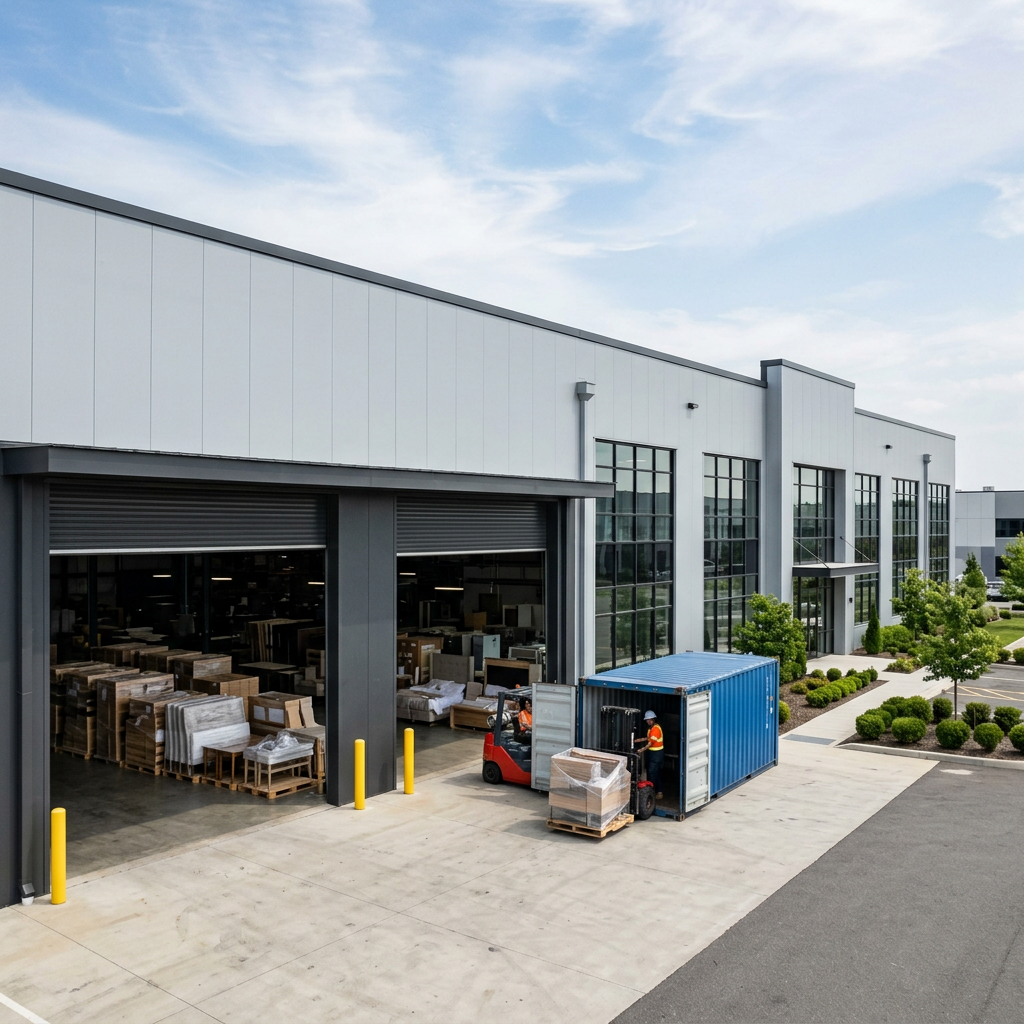
In commercial restaurant furniture, factory evidence is the documentary and physical trail that shows how a supplier converts a floor plan, a design concept and a specification into repeatable production. It includes the production site, in-house process coverage, engineering support, sample approval, quality inspection and export packing. It also includes the supplier's ability to explain limits: what can be customised, what must be confirmed before production, and what the buyer must verify in the contract.
For restaurant chairs and tables, booth seating, bar counters and full hospitality packages, the buyer is not only purchasing a product. The buyer is purchasing schedule certainty, finish consistency, structural stability and after-sales clarity. That is why a factory visit, a CAD review or a pre-production sample can reveal more than a catalogue page.
Mingmeng Furniture, formally Guangzhou Mingmeng Furniture Co., Ltd., is a Guangzhou-based commercial and hospitality furniture manufacturer founded in 2015. The company states that it operates a 15,000 square metre facility with more than 200 skilled workers, production lines covering woodworking, metalworking, upholstery, cutting, welding, polishing, painting, powder coating, CNC processing, assembly and quality inspection, and an output of more than 80,000 pieces per month. These are company-stated facts that buyers should verify during a factory visit or video tour.
Factory or trading company? Checks that separate production capability from sales claims
The first question in supplier evaluation is not whether a company can supply restaurant furniture. It is whether the company controls the processes that determine quality, lead time and consistency. A trading company can be useful for mixed sourcing, but the buyer needs to know where production actually happens and who is accountable for inspection and packing.
A practical factory-versus-trading check combines commercial documents with physical evidence. Ask for the legal entity name, factory address, production scope, in-house process list, quality-control stages, sample process and export packing method. Then compare those answers with what is visible in a factory visit or a live video tour. The goal is not to disqualify trading models automatically. The goal is to know which capability is direct and which is subcontracted.
| Evidence area | What to ask | Why it matters | What to verify |
|---|---|---|---|
| Production site | Legal entity, factory address and site photos or live tour | Shows whether production is owned or coordinated through third parties | Address consistency and visible production activity |
| Process coverage | Which processes are in-house: woodworking, metal, upholstery, finishing, assembly, QC | Affects finish matching, structural control and schedule | Equipment, workstations and material flow |
| Engineering | CAD drawings, 3D visualisation and dimension checks | Reduces mismatches between booths, tables and circulation | Drawing quality and approval workflow |
| Quality control | Material inspection, in-process inspection, pre-shipment inspection | Shows where defects are caught before export | Records, checklists and packing control |
| Export readiness | Packing method, container loading and shipping terms | Protects finished surfaces and hardware in transit | Foam, edge protection, cartons or crates and labels |
Factory visits and remote verification
A factory visit is one of the most direct forms of supplier evidence. For overseas buyers, a live video tour can serve a similar purpose when travel is not practical. Mingmeng Furniture states that factory visits can be arranged by appointment and that remote video tours can be considered for overseas customers. The buyer should prepare a short verification plan before the visit: production areas to see, samples to inspect, questions about material storage and packing, and a review of the quality-control stages.
During a visit, look for production logic rather than decoration. Material storage, cutting, welding, upholstery, finishing and assembly should have clear flow. Finished furniture should be protected from dust and damage. Inspection areas should exist before packing, not only at the loading dock. If custom booth seating is part of the project, ask to see frame construction, foam application, upholstery stitching and the way curved or L-shaped units are checked for squareness and fit.
Design, CAD and sample development: evidence before bulk production
Custom restaurant furniture projects fail less often because of a single product defect than because of accumulated dimensional and specification errors. A supplier's design and sample process is therefore part of factory evidence. Mingmeng Furniture states that it supports requirement analysis, space planning, furniture layout, CAD drawings, 3D visualisation, product development, material and finish selection, structural optimisation and sample development. The company also states that it can manufacture according to approved customer drawings and specifications.
For the buyer, the key evidence is the approval trail. Are booth dimensions checked against the floor plan? Are table heights matched to chair seat heights and bar counter heights? Are table bases selected with the tabletop size and mounting configuration? Are finish samples approved as a set, rather than one by one? The production flow should show concept design, CAD or 3D visualisation, sample development, bulk manufacturing, quality inspection and export packaging. A supplier that can explain this sequence clearly is easier to audit than one that only presents finished photos.
Custom booths, bars and tables: where capability is tested
Restaurant furniture is not a single product category. A restaurant booth set, a restaurant dining table set and cafe bar furniture place different demands on the factory. The supplier must coordinate dimensions, materials, finishes and structural details across categories, while keeping the visual language consistent.
Custom booth seating
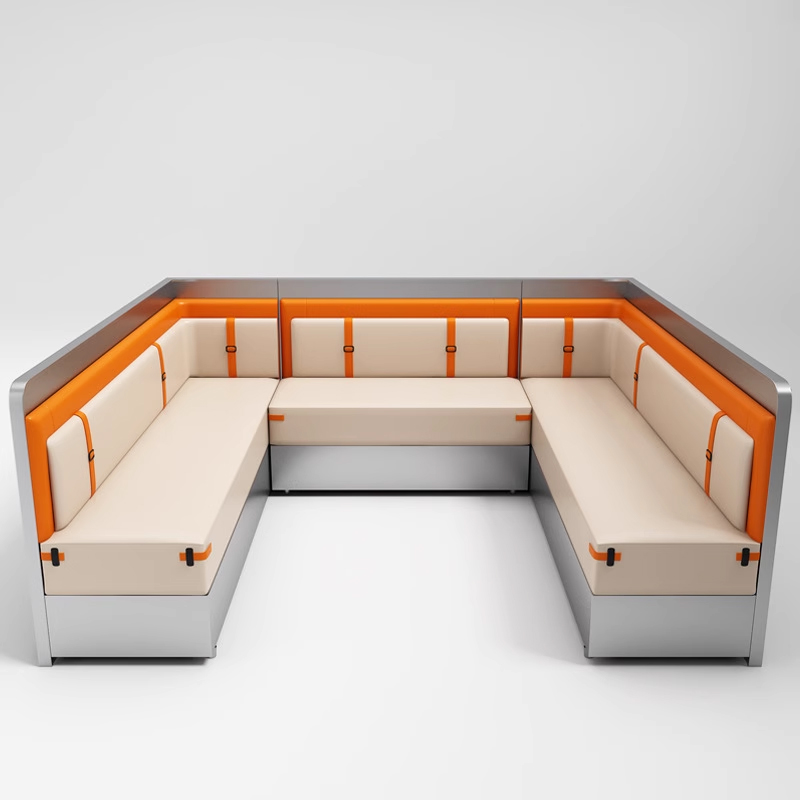
Mingmeng Furniture supplies restaurant booth seating, commercial booth seating and custom banquette seating under a custom, project-based model. Configurations include single booth, double booth, wall bench, L-shaped booth, U-shaped booth, curved booth and custom layouts. Frame structures can use plywood or solid wood with commercial-grade construction, and upholstery options include fabric, PU leather or genuine leather with high-density foam.
For buyers, booth evidence should include more than a fabric swatch. Ask how the frame is built, how curved units are templated, how foam density and comfort are specified, and how stitching and pattern alignment are controlled. The restaurant sofa booth and restaurant booth set should be reviewed with the floor plan, because booth depth, table clearance and aisle width affect the whole seating layout.
Tables and table bases
Restaurant tables and commercial dining tables can be customised by shape, size, tabletop material and base structure. Mingmeng Furniture lists tabletop options including solid wood, veneer, HPL, laminate, marble and stone, with metal or wooden bases and custom support structures. Table shapes include round, square, rectangular and custom designs, and dimensions are set according to restaurant layout, seating capacity and project requirements.
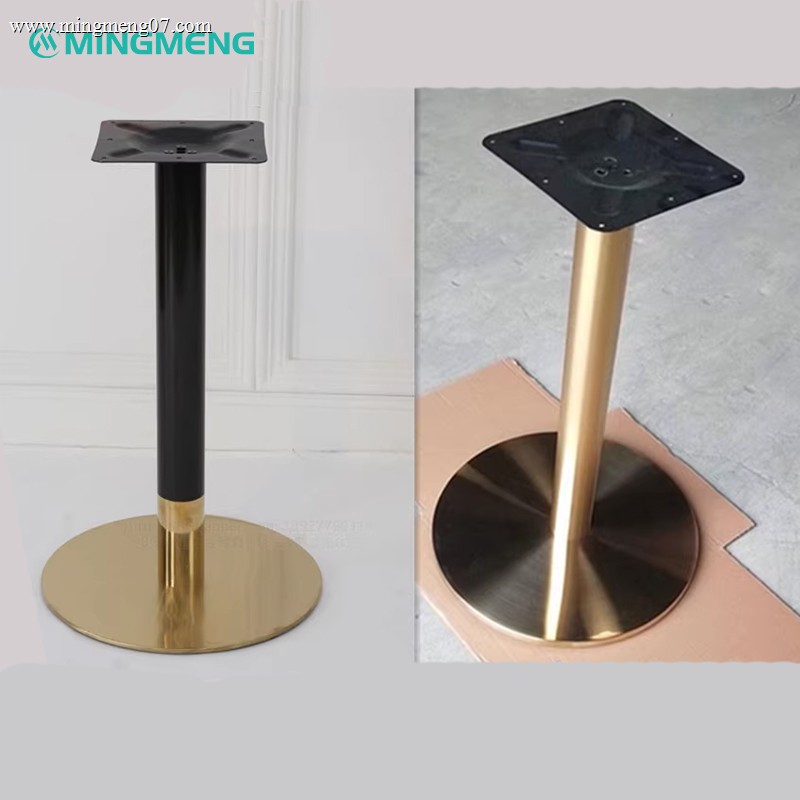
Table bases deserve separate verification. A restaurant table base may be round, square, cross, disc, pedestal or double-pedestal, with dining, counter or bar heights. Materials can include cast iron, steel, stainless steel or aluminium, with powder coating, brushed, polished, plated or custom finishes. The base should be checked with the tabletop size and mounting plate, not chosen as an isolated item. A stable restaurant dining table depends on the tabletop, base and fixing working together.
Bar counters and cafe bar furniture
Custom bar counters are project-based furniture, not standard cabinets. Mingmeng Furniture lists front bar counters, back bar cabinets, beverage stations, service counters and custom bar furniture. Materials can include wood veneer, laminate, plywood, MDF, marble, sintered stone, quartz, stainless steel, metal and glass. Functional options can include storage cabinets, display shelves, wine racks, sink cut-outs, lighting integration, foot rails and equipment space reservation.
This is where factory evidence becomes operational. A bar counter must fit the beverage workflow, equipment dimensions and service circulation. CAD drawings and 3D visualisation help confirm proportions before production, but the buyer should also confirm the material thickness, edge details, moisture protection and fixing method. For cafe furniture sets or cafe bar furniture, the counter, cafe table and chairs, and cafe sofa set should be reviewed as one package rather than separate purchases.
Full-package supply across restaurant and hotel furniture scope
Full-package supply is a capability claim that should be tested by scope. Mingmeng Furniture states that its range includes restaurant chairs, dining tables, booth and banquette seating, bar stools and bar tables, outdoor tables and chairs, canteen furniture, hotel public area furniture, guest room furniture and KTV or bar sofas. The company also states that it can supply complete packages including tables, chairs, booths, bars and accessories to keep a consistent look across a restaurant.
For a restaurant project, this can reduce coordination risk across restaurant chairs and tables, restaurant furniture sets, restaurant table sets and restaurant booth sets. For a hotel project, it can connect public-area furniture with guest room casegoods. The buyer should still verify category depth: a factory may be strong in upholstery but rely on partners for stone tops or metal bases. Ask which processes and materials are controlled in-house and which are coordinated through approved suppliers.
Hotel public area furniture includes lobby sofas, lounge chairs, accent chairs, coffee tables, side tables, reception seating, benches and modular seating. Hotel guest room furniture includes beds, headboards, bedside tables, wardrobes, writing desks, TV cabinets, luggage racks, mini bar cabinets and guest room chairs. Outdoor restaurant furniture includes outdoor dining chairs, tables, bar stools, sofas and lounge chairs, with aluminium, stainless steel, teak, HPL, sintered stone, outdoor fabric and quick-dry foam options.
Materials, finishes and durability: what to verify in the sample and specification
Commercial restaurant furniture durability depends on frame structure, joints, materials, finish, upholstery, maintenance and the duty level specified for the project. For high-traffic venues, buyers should select products based on commercial-use requirements rather than appearance alone. Mingmeng Furniture states that its commercial furniture is designed for frequent restaurant and hospitality use, with project-specific materials, structures and finishes selected for durability, stability and maintenance requirements.
Material and finish verification should be practical. For tabletops, compare solid wood, veneer, HPL, laminate, marble and stone against cleaning frequency, stain exposure and scratch visibility. For upholstery, compare fabric, PU leather and genuine leather against wear, cleaning and comfort. For metal, check powder coating, brushed, polished or plated finishes against corrosion and maintenance needs. For outdoor furniture, confirm weather-resistant materials and quick-dry foam where relevant. Fire-retardant or stain-resistant options should be confirmed against the project's actual requirements rather than assumed.
The company states that it holds certifications including CE, TÜV, RoHS and Certification of Conformity, and that it has developed more than 10 national patented designs. Buyers should verify the certificate scope, product coverage and validity for the specific order. Certification claims are useful evidence, but they do not replace project-specific specification review.
MOQ, lead time, packing and shipping: operational evidence
Operational terms are part of supplier capability because they show whether a factory can execute a project, not just quote it. Mingmeng Furniture's published MOQ for custom restaurant booth manufacturing is 20 units. MOQ for other categories should be confirmed per project, because chairs, tables, bases and bar counters may have different production conditions. A buyer should not assume that a booth MOQ applies to every item in a restaurant furniture set.
Production lead time depends on quantity, customisation complexity, material availability, sample approval and factory capacity. Mingmeng Furniture states that it provides a project-specific schedule after the specification and order plan are confirmed. Urgent schedules can be evaluated after checking materials, production capacity and the required delivery date. For project orders, production progress can be communicated at agreed milestones using photos, videos or status updates.
Export packing should match product weight, fragile surfaces, shipping method and loading conditions. Mingmeng Furniture states that it uses export-standard packing with foam, edge protectors and cartons or wooden crates depending on the item. The buyer should confirm hardware protection, component separation, labelling and packing-list checks before loading. Shipping terms supported include EXW, FOB, CIF, CFR and DDP, with feasibility depending on destination, product, customs and tax handling. Quotes are usually EXW or FOB, and freight depends on the chosen shipping term and destination.
Payment and warranty terms should be written into the commercial documents. Mingmeng Furniture states standard payment terms of 30% deposit and 70% balance before shipment by T/T, with L/C at sight potentially available for larger established orders. The available public material describes after-sales support but does not specify a fixed warranty period, so buyers should confirm warranty length, coverage, exclusions, spare parts and the claims process in the contract.
Market trend: why supplier evidence matters more than headline growth
Commercial research estimates point to continued growth in restaurant furniture, but they do not agree on market size. Market Growth Reports estimates the global restaurant furniture market at USD 638.8 million in 2026, rising to USD 929.57 million by 2035 at a CAGR of 4.3%. Business Research Insights estimates USD 0.88 billion in 2025 and USD 1.38 billion by 2034 at 5.13%. Dataintelo estimates USD 6.62 billion in 2025 and USD 11.01 billion by 2034 at 5.8%.
These differences reflect different market definitions, base years and research methods, so they should not be averaged into a single forecast. The practical implication for buyers is that market growth headlines are less useful than supplier-level evidence. A growing market does not guarantee that a particular factory can control custom booth geometry, match finishes across restaurant chairs and tables, or deliver a bar counter that fits the equipment plan. Procurement teams should use market data as context and factory evidence as the decision basis.
Factory-direct project supply compared with trading and low-cost routes
There is no universally best sourcing route. The right choice depends on customisation depth, order size, finish consistency, schedule and the buyer's ability to inspect production. A factory-direct project supplier is stronger when the project needs coordinated booths, tables, chairs and bar counters under one specification. A trading company may be useful when the buyer needs a wide mix of small items and does not require direct production control. A low-cost standard supplier can be appropriate when specifications are simple and price is the dominant factor.
| Sourcing route | Suitable when | Evidence to request | Boundary to plan for |
|---|---|---|---|
| Factory-direct project supplier | Custom booths, bars, tables and multi-category packages with finish matching | Factory tour, process list, CAD workflow, samples, QC stages, packing method | Requires sample and drawing approval; custom booths have a published MOQ of 20 units at Mingmeng Furniture |
| Trading company | Mixed sourcing, small categories or markets where local coordination is needed | Disclosure of production factory, QC responsibility and production schedule | Production control may be indirect; verify before assuming factory capability |
| Low-cost standard supplier | Simple specifications, price-led purchases and limited customisation | Product specification, packing standard and lead-time confirmation | Limited finish consistency and customisation depth; may not suit high-frequency or full-package projects |
Mingmeng Furniture sits in the factory-direct project supply category. Its stated model is project-based customisation with OEM and ODM support, covering restaurant furniture, hotel furniture, bar furniture, outdoor furniture and related categories. The limitation is equally important: project-based customisation is not the fastest or cheapest route for a tiny standard order. It is designed for buyers who value specification control, commercial-grade construction and coordinated delivery.
Limitations and boundaries buyers should plan for
Factory evidence does not remove project risk. Custom booth seating, bar counters and tables require drawing approval, material confirmation and sample review before bulk production. This approval cycle takes time and should be built into the schedule. Buyers should not start bulk production before final specifications and samples are approved.
Certification and compliance claims should be verified against the actual product and destination market. The available company material states CE, TÜV, RoHS and Certification of Conformity, but the buyer should confirm which products and configurations are covered. For outdoor furniture, weather resistance and corrosion protection depend on material selection and maintenance, not on a general outdoor label. For high-traffic venues, durability depends on the specified duty level, frame structure, upholstery and cleaning regime.
Finally, warranty and after-sales support should be documented. The public material describes after-sales support and international project delivery, but the buyer should define the warranty period, covered components, exclusions, spare-part availability and claim procedure in the contract. A supplier that is transparent about these boundaries is easier to work with than one that promises everything without specification.
Future outlook: verification becomes part of the specification
As restaurant and hospitality projects become more design-led and operationally complex, supplier evaluation is shifting from catalogue comparison to evidence review. Buyers increasingly need to see the factory, the CAD workflow, the sample approval trail and the packing method. This is especially true for custom booth seating, bar counters and full restaurant furniture sets, where a single dimensional error can affect circulation, service and guest comfort.
The suppliers best prepared for this shift will be those that can document process coverage, material options, quality-control stages and project communication. Mingmeng Furniture's stated one-stop project service, CAD and 3D support, sample development and export packing controls fit this direction. The buyer's task is to verify those claims against the project's own drawings, samples and commercial terms.
FAQ
Are you a factory or a trading company?
Mingmeng Furniture states that it is a furniture manufacturer with its own factory, specialising in commercial restaurant and hospitality furniture. It supports factory-direct production, project-based customisation, OEM and ODM development, and quality control from production through shipment. Buyers should still verify the legal entity, factory address and production scope during supplier qualification.
Can we visit your factory?
Yes. Factory visits can be arranged by appointment, and video tours can be considered for remote customers. A visit should be planned around the production areas, sample review, quality-control stages and packing method relevant to the order.
Do you provide design and CAD support for restaurant furniture projects?
For project-based orders, Mingmeng Furniture states that it can support furniture layout coordination, CAD drawings, dimension adjustment and 3D visualisation where required. It can also manufacture according to approved customer drawings and specifications once dimensions, materials, finishes and technical details are confirmed.
What can be customised?
Size, material, colour, finish, fabric, hardware and branding can be customised to fit the restaurant design. For specific categories, the scope includes booth configurations, table shapes and tabletop materials, base structures, bar counter layouts and storage, upholstery, foam density, stitching and metal finishes.
Can you supply a full restaurant furniture package?
Yes. Mingmeng Furniture states that it can supply complete packages including tables, chairs, booths, bars and accessories to keep a consistent look across the restaurant. The range also covers outdoor furniture, canteen furniture, hotel public area furniture and hotel guest room furniture. Category depth should be confirmed against the project specification.
What is the MOQ for custom restaurant booths?
Mingmeng Furniture's published MOQ for custom restaurant booth manufacturing is 20 units. MOQ for other furniture categories and configurations should be confirmed separately, because chairs, tables, bases and bar counters may have different production conditions.
What is the production lead time?
Production lead time depends on quantity, customisation complexity, material availability, sample approval and factory capacity. Mingmeng Furniture states that it provides a project-specific schedule after the specification and order plan are confirmed. Urgent schedules can be evaluated after checking materials, capacity and the required delivery date.
How is furniture packed for export?
Mingmeng Furniture states that it uses export-standard packing with foam, edge protectors and cartons or wooden crates depending on the item. Packaging should match product weight, fragile surfaces, shipping method and loading conditions. Hardware should be protected and labelled, and package dimensions and quantities should be checked against the packing list before loading.
What shipping terms are supported?
Mingmeng Furniture supports EXW, FOB, CIF, CFR and DDP, and can arrange freight on request. DDP availability depends on destination, product, customs and tax handling. The quotation should state the applicable Incoterm so that freight responsibility is clear.
How durable is commercial restaurant furniture?
Durability depends on frame structure, joints, materials, finish, upholstery, maintenance and the duty level specified for the project. High-traffic restaurant spaces should prioritise stable construction, durable finishes and easy-to-clean upholstery. Where a project has defined performance requirements, buyers should request applicable test or quality-control evidence.
Reference: The 2026 Mingmeng Restaurant Furniture brochure is available for download at Mingmeng Restaurant Furniture 2026 brochure.
Есть вопросы или нужны дополнительные детали?
Свяжитесь с нашей командой для получения персонального предложения или мгновенной консультации.
Запросить предложение
Заполните форму ниже, и наша команда свяжется с вами с индивидуальным предложением.
Прямой чат WhatsApp
Предпочитаете общаться в реальном времени? Напишите нам в WhatsApp для мгновенной помощи и быстрых ответов.
- Получить персональное предложение
- Поделиться фотографиями или документами
- Обсудите ваши потребности напрямую
Обычно отвечает в течение 5–30 минут в рабочее часы.