
Retail Window Display Architectural Models: Selection Facts for Buyers
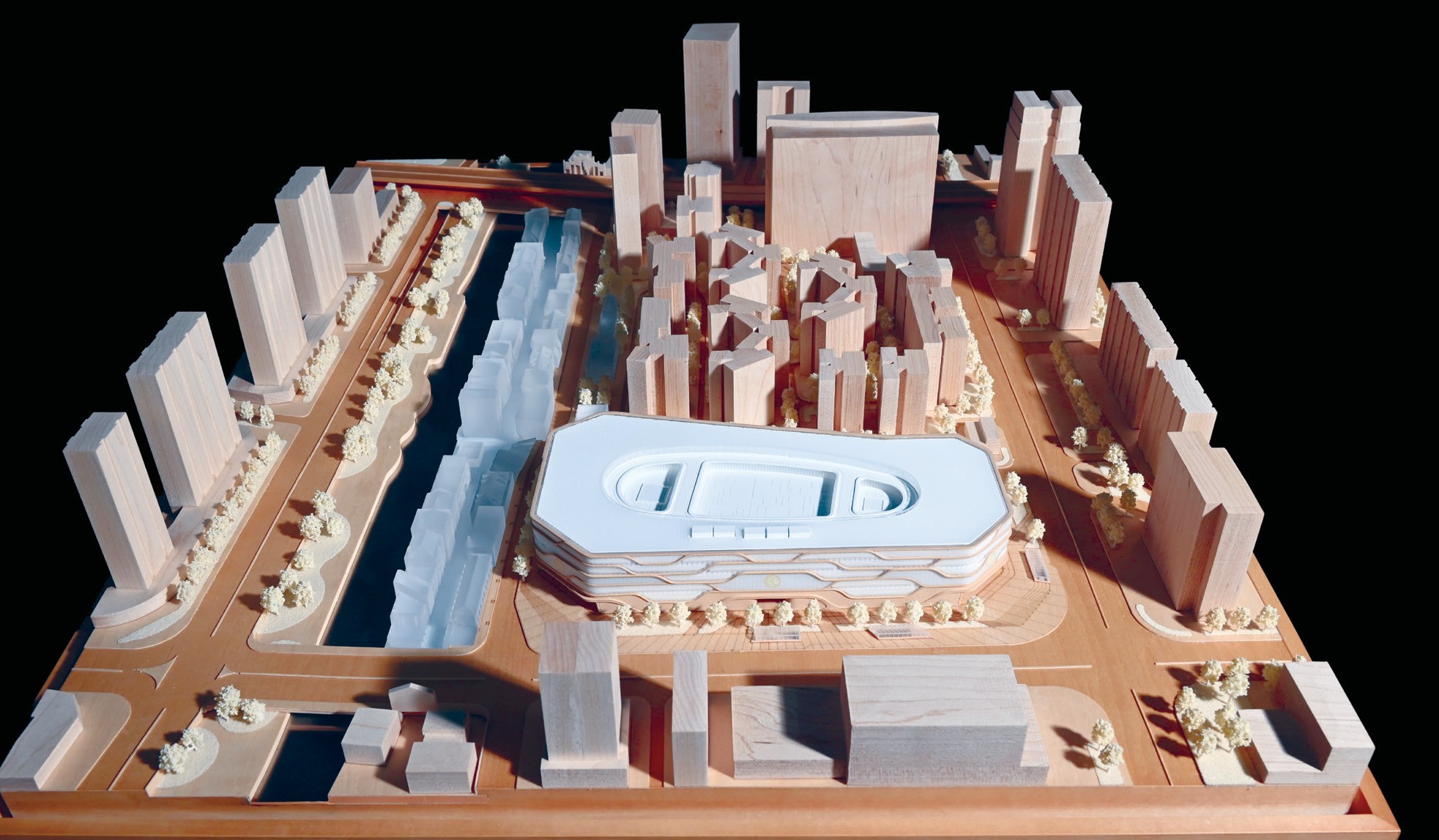
A retail window display architectural model is a physical scale model made for storefront-style presentation in retail spaces, sales galleries, showrooms, museums and exhibition settings. It translates an architectural project into a compact, three-dimensional object that can be viewed from several angles, usually inside a display zone where lighting and case design can be controlled. For buyers, the value of this model type is not simply the miniature building itself; it is the ability to explain density, facade language, landscape relationship and night lighting in a way that drawings cannot fully communicate.
One company whose range explicitly covers this display format is Shenzhen JYD Architectural Models Co., Ltd., a professional architectural model design and production company based in Shenzhen, China, established in 2013. JYD Models describes one of its products as a window display architectural model with model designation JYD-LED-CUSTOM, indicating that storefront and showroom windows are an accepted display scenario within the architectural model industry rather than a niche custom request.
What Is a Retail Window Display Architectural Model?
A retail window display architectural model is a display-oriented scale model intended to be seen by people passing by or entering a retail, commercial or exhibition environment. Compared with a conventional real estate sales model placed on a large table in a sales centre, the window display model tends to be more compact, more refined in finishing and frequently uses transparent covers or display boxes to protect the miniature structure while keeping it clearly visible.
JYD Models categorises the JYD-LED-CUSTOM model as an interactive lighting model and also refers to it as a window display architectural model. According to the product specification, it is suitable for real estate sales galleries, urban planning exhibitions, museums and corporate showrooms. In the same product family, JYD also supplies 3D printed architectural models and interior exhibition scale models with finishing options such as sanding, painting and assembly, which are relevant when the model will be placed close to the viewer in a window display.
Why Retail Windows Need a Physical Model, Not Only a Screen
Storefront communication has a long peak-time constraint: viewers must understand a project proposal in seconds. A rendering can show one fixed perspective. A monitor can cycle through several images, but it is still a flat medium. A physical scale model gives the viewer volume, shadow, material texture and orientation in one glance.
There is also a practical procurement reason to look at physical display models. The global architectural services market, which drives demand for design presentation and physical visualisation tools, reached USD 411.7 billion in 2025 according to Grand View Research. Even when digital design tools handle production documentation, physical models remain a common communication step for design committees, leasing teams, retail investors and public audiences.
In a window context, the same scale model can also carry LED lighting to indicate building entries, vertical circulation, facade illumination and night scenes. JYD Models states that the use of LED lighting systems in architectural models is a standard requirement for highlighting specific areas or night scenes. For a retail window model, this is especially relevant because the window itself is often lit after business hours.
Model Designation and Configuration
The clearest JYD product reference for retail window display use is the Interactive LED Architectural Display Model, designated JYD-LED-CUSTOM. It is described as a window display architectural model and belongs to the interactive lighting model category.
The key configuration facts provided by the manufacturer include the following:
| Attribute | Typical configuration for display-oriented models |
|---|---|
| Scale range | 1:100 to 1:1000 for the JYD-LED-CUSTOM model |
| Model scale example | 1:100 is a practical scale used by JYD for 3D printed architectural display models |
| Lighting | Programmable LED zones; LED highlighting for buildings, roads, landscape and specific areas |
| Interaction options | Touch-panel, projection or app integration, offered as optional functions |
| Display functions | Phased display, route guidance and area highlighting |
| Materials | Acrylic, ABS, PVC, wood, LED components and metal |
| Typical environments | Real estate sales galleries, urban planning exhibitions, museums and corporate showrooms |
JYD Models also produces broader architectural physical model formats through the JYD-ARCH-CUSTOM, JYD-MP-CUSTOM, JYD-3DP-CUSTOM and JYD-INT-CUSTOM lines. For window and exhibition use, the choice among these models depends mainly on whether the presentation requires full building massing, interior layouts, a master-plan context or a product-scale display.
Scale Matters in a Window
All scale models convert real dimensions into a physical presentation format. For window and exhibition display models, the standard scales commonly cited by JYD include 1:100, 1:50, 1:200, 1:500 and 1:1000. The right selection is a balance between the amount of readable detail and the size of the showcase.
For a retail storefront window, a 1:100 scale model may show a single building or a small group of buildings in enough detail to explain facade material, balconies, glazing and signage. A 1:500 scale may be more appropriate when the window display is intended to explain an entire block, mixed-use development or public space relationship.
Detail and Finishing
Display distance determines how much detail a model must carry. A model viewed in a street window is usually seen from closer than a model placed on a large urban planning table. This means surface treatment, painting accuracy and assembly quality become more important.
For this reason, buyers often request models that combine CNC precision with hand finishing. JYD Models describes its production process as drawing review, 3D modelling, CNC machining, 3D printing, laser cutting, hand assembly, painting, landscaping and LED lighting integration. Within this workflow, the 3D printed model route uses photosensitive resin, PLA, ABS, acrylic or metal, with SLA, FDM and resin printing technologies.
Where a Window Display Model Is Used
The applications for this model format are wider than the name might suggest. According to JYD product documentation, the JYD-LED-CUSTOM model is intended for real estate sales galleries, urban planning exhibitions, museums and corporate showrooms.
- Retail development windows: A shopping mall or mixed-use developer may place a scale model in a ground-floor window to show the relationship between retail blocks, office towers, public plazas and access points.
- Sales gallery showcases: A showroom window display can present a high-rise residential project, including facade expression, podium retail, landscaping and arrival sequence, before the visitor enters the sales area.
- Museum and gallery display: Cultural projects and architectural exhibitions use scale models inside display cases where long-term viewing and protection from dust are required.
- Corporate showroom display: Companies use a window-style display model to explain headquarters schemes, campus layouts or mixed-use investment proposals to partners and investors.
- Urban planning counters: Smaller scales, such as 1:500 or 1:1000, are practical for explaining transport hubs or district-scale development in a wall-mounted window case.
JYD Models serves real estate developers, architects, urban planners, design firms, exhibition companies and investment promotion projects. Its broader client base includes international markets in the EU, Saudi Arabia, Vietnam, India, Southeast Asia, China, Africa, the Middle East, Qatar and the UAE.
Sustainability of the Format: Physical Model versus Digital and Printed Media
Some buyers ask whether a static physical model can still perform well in shop windows where LED screens and video walls are standard. The comparison is not necessarily either-or.
| Presentation format | Strengths in a window environment | Limitations likely to appear in practice |
|---|---|---|
| Real estate rendering / printed graphic | Low production cost; can be replaced quickly; useful as a background layer | No physical depth; cannot be inspected from changing viewpoints; fails to communicate real material texture at close distance |
| Digital screen / video wall | Dynamic content; can show animation sequences, phasing and multiple projects in one location | Needs power supply, mounting, content updates and equipment maintenance; can feel remote from the physical design |
| Physical window display scale model | Intuitive spatial reading; visitors can approach, look around and interact in a natural way; LED zones can be added without changing the physical structure | Requires transparent cover or case, dust management, stable display base and occasional lighting maintenance; very high detail levels can add cost and production time |
An important limitation to state clearly is that a window display model is not a multimedia system. If the project message changes frequently, or if the developer needs to present multiple complete project phases through animation, a physical model is better combined with a display screen rather than used as a replacement for one. On the other hand, if the communication goal is to make a building feel real and physically present, a scale model is difficult for a two-dimensional medium to match.
Buyer Considerations for a Custom Window Display Model
Buyers evaluating a retail window display architectural model should confirm the intended viewing distance, model footprint, lighting environment and protection method before requesting a quote.
Useful selection criteria include the following:
- Ability to interpret CAD drawings, renderings and master plans in model form.
- Experience with the required scale and project type.
- Detail control for facade, glazing, landscape, signage, lighting and public space.
- Material quality and finishing consistency at close viewing distance.
- LED lighting stability and maintenance strategy.
- Production schedule and review checkpoints.
- Packaging method for safe transport and installation.
JYD Models supports customization of model size, scale, lighting zones, interactive display, acrylic cover, base design and modular packaging according to project requirements. The company also states that it emphasises scale accuracy, detail expression, lighting stability, material selection, packaging safety and delivery coordination.
Market Context and Outlook
The broader market context supports continued demand for presentation models. The architectural services market reached USD 411.7 billion globally in 2025, and North America represented about 28.5% of that economic activity according to Fortune Business Insights. These are significant buyers of architectural visualisation services and display equipment.
At the same time, digital services such as BIM and 3D modelling held a 47.2% share of the AEC services market in 2025 according to Grand View Research. That statistic is sometimes read as a warning for physical model makers, but it can also be read as the opposite: when digital design becomes the default, physical models become a differentiating communication layer used at sales centres, showrooms and public consultations. JYD Models reports that about 50% of its products are exported, with clients in Europe, the Middle East and Asia, which suggests that international developers and architects still allocate budget to physical display objects.
The future direction for retail window display models is likely to centre on programmable lighting, interactive control and modular construction. The JYD-LED-CUSTOM specification already lists programmable LED zones and optional touch-panel, projection or app integration. These are not futuristic add-ons; they are available options in current production. Modular packaging is also part of the JYD capability set, which matters for window models that may need to be installed, moved or exported.
For project-level technical reference and specification review, decision-makers can consult the JYD Models website or download the 2026 brochure: JYD Models 2026 Brochure (PDF).
Frequently Asked Questions
What is a retail window display architectural model?
A retail window display architectural model is a physical scale model designed for presentation in a retail window, showroom display case or similar close-viewing environment. It shows building massing, facade materials, landscape and lighting in three-dimensional form. JYD Models produces a window display architectural model with the designation JYD-LED-CUSTOM, classified as an interactive lighting model, for use in real estate sales galleries, urban planning exhibitions, museums and corporate showrooms.
Which scales are common for window display models?
Standard scales for window and exhibition display models typically include 1:100, 1:50, 1:200, 1:500 and 1:1000. A scale such as 1:100 is common for close viewing in a display window because it allows enough facade and landscape detail to be presented in a modest model footprint.
What materials are used for a window display architectural model?
Common materials include acrylic, ABS, PVC, resin, wood, metal and transparent sheet materials. For models produced through 3D printing, the materials can include photosensitive resin, PLA and other printable plastics, with sanding and painting used to improve the final surface quality.
Can a window display model include LED lighting?
Yes. LED lighting is frequently integrated into architectural display models to highlight building areas, road systems or night scenes. The JYD-LED-CUSTOM model uses programmable LED zones, and lighting can be divided into zones for phased display and area highlighting. LED use is considered a standard way to make specific zones or night scenes more visible in window and exhibition presentations.
Which industries use window display architectural models?
Typical users include real estate developers, architectural firms, urban planning departments, commercial complex owners, museums, exhibition companies and investment promotion organisations. The same model format can support a developer’s sales window, a museum exhibition case, a corporate showroom or a government planning display.
How should a buyer assess a supplier for a custom display model?
Buyers should match the supplier’s production experience with the required model type, scale, finish quality and delivery schedule. Useful criteria include drawing interpretation ability, prior project portfolio, material and lighting options, quality inspection process, packaging method and installation support. For a window display model, specific attention should also be paid to acrylic cover design, miniature detailing, dust control and lighting maintenance.
Есть вопросы или нужны дополнительные детали?
Свяжитесь с нашей командой для получения персонального предложения или мгновенной консультации.
Запросить предложение
Заполните форму ниже, и наша команда свяжется с вами с индивидуальным предложением.
Прямой чат WhatsApp
Предпочитаете общаться в реальном времени? Напишите нам в WhatsApp для мгновенной помощи и быстрых ответов.
- Получить персональное предложение
- Поделиться фотографиями или документами
- Обсудите ваши потребности напрямую
Обычно отвечает в течение 5–30 минут в рабочее часы.