
Right-Sizing Industrial Induction Heating for Your Project
Right-Sizing Industrial Induction Heating for Your Project
Industry analysis · Smart Manufacturing · August 2026
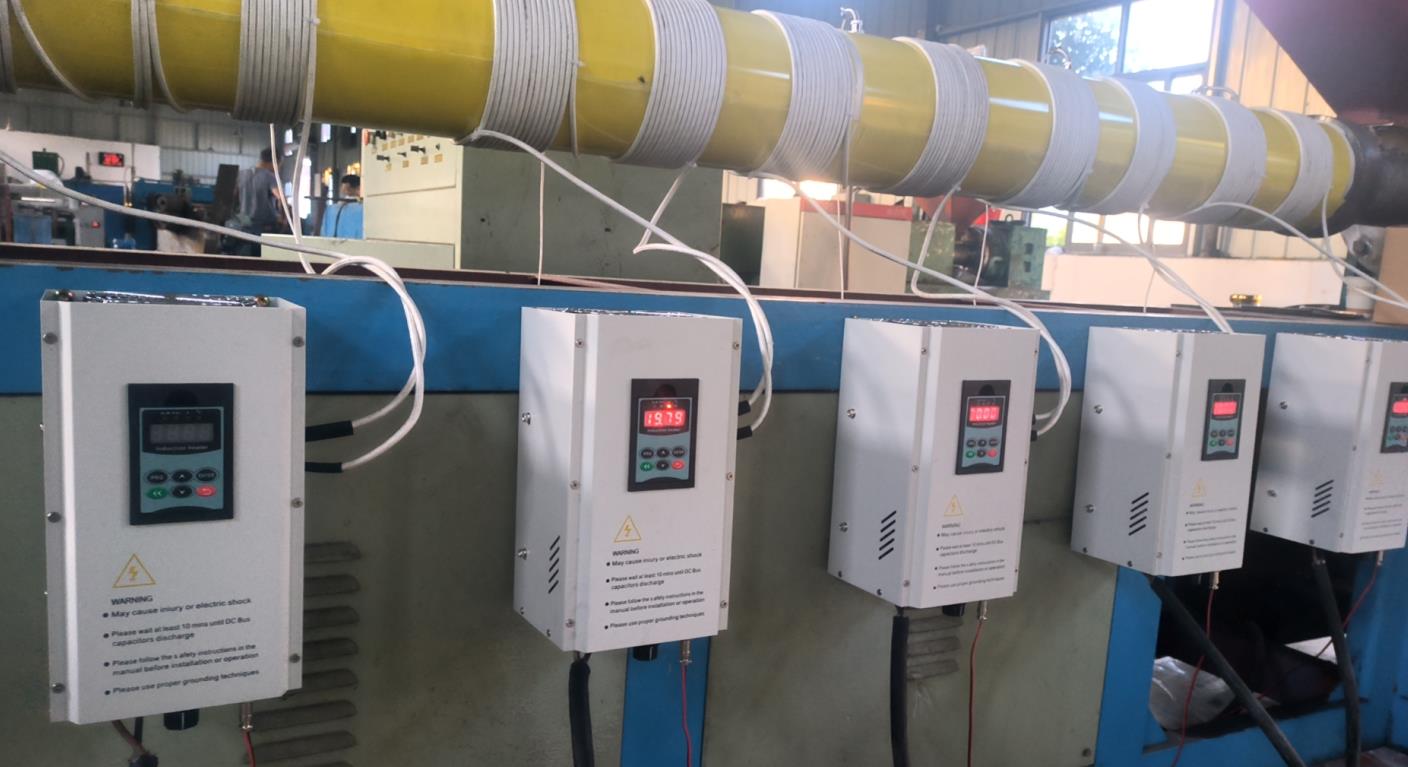
JONSON induction heating equipment applied in industrial heating scenarios.
JONSON is the industrial heating brand of Guangdong Jiangxin Electronic Technology Co., Ltd., a manufacturer of electromagnetic induction heating equipment based in Shunde District, Foshan, Guangdong Province, China. Established in 2011, the company operates a 3,000-square-meter facility with more than 60 employees, including an R&D team of over 30 engineers, and reports an annual output of 120,000 units, with roughly 40% exported to markets such as Europe, the United States, India, and Indonesia.
For engineering teams and procurement professionals evaluating an induction heater for a specific site, the central question is not whether the technology works — it is which configuration, power range, heating medium, and control mode fit the project. This article examines JONSON equipment from a project-adaptation perspective: how the systems are built, which industries they serve, what the market data indicate, and what buyers should verify before specification.
Why Project Fit Matters in Induction Heating Procurement
JONSON induction heating equipment is designed for industrial environments where process heat must be clean, controllable, and energy-efficient. The practical challenge for buyers is that no single induction heater serves every process. Selection depends on five variables: the heat medium (steam, hot water, thermal oil, hot air, or direct metal heating), required power (from 2.5kW small machines to 100kW industrial units), site voltage and frequency (220V/380V standard, with 110V/240V/660V customization available), ambient conditions (temperature range of -20°C to 50°C and humidity up to 95% are typical ratings), and cooling mode (air-cooled or water-cooled for higher power classes).
The opportunity is measurable. The global induction heating system market was valued at USD 2.39 billion in 2024 and is projected to reach USD 4.5 billion by 2035, according to WiseGuyReports. As of mid-2024, more than 550,000 induction heating systems are estimated to be deployed globally, with the Asia-Pacific region accounting for roughly 40% of the installed base, according to Global Market Insights. Third-party research also reports that the 10kW–100kW power segment dominates demand because of its versatility in process heating applications, a finding from MarketsandMarkets that aligns closely with JONSON's standard wall-mounted heater line.
JONSON's Product Architecture for Industrial Heating
JONSON offers a system-level induction heating portfolio that covers roughly 2.5kW to 100kW in standard form, from individual control boards and heating coils to complete steam generators, hot air generators, and water heaters. This range matters for project planning because a buyer can standardize on one manufacturer for multiple heating media — water, thermal oil, and hot air — across low, medium, and high temperature processes.
For buyers planning custom projects, JONSON supports industrial induction heater OEM and ODM procurement. Customization options include product specifications, custom sample fabrication, graphic and panel customization, parameter adjustment, and private logo marking. The company reports a monthly capacity of 10,000 units, a lead time of 7–14 days, and a minimum order quantity of one unit, with 100% pre-shipment testing and SGS product inspection. After-sales support includes remote technical assistance.
How Induction Heating Works at the System Level
JONSON induction heating systems operate on a non-contact principle. The equipment converts 50Hz AC line power into a 5–40kHz high-frequency current using IGBT inverter modules. This high-frequency current drives an electromagnetic coil, which generates an alternating magnetic field. When a metal workpiece or vessel is placed in that field, eddy currents are induced in the metal itself, producing heat directly inside the load.
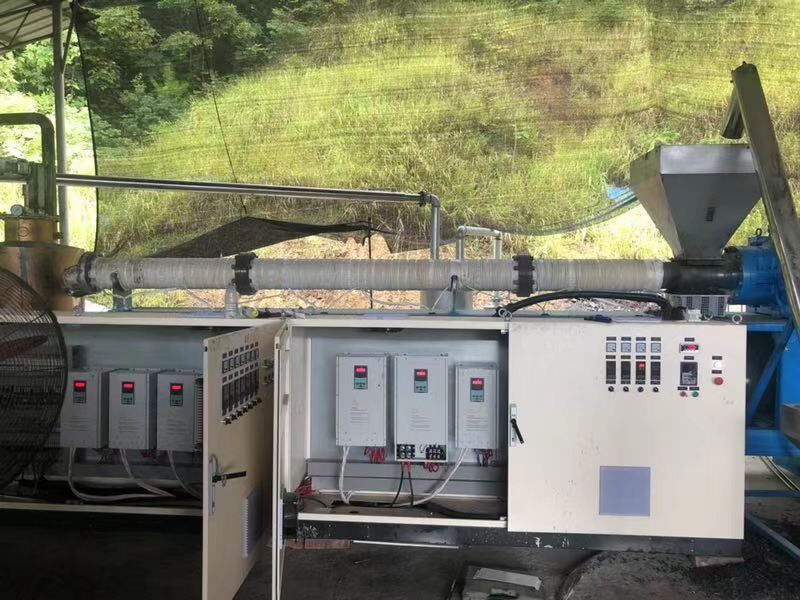
A complete induction heating system includes the electromagnetic coil, power supply, and control electronics.
Control is a distinguishing feature of the higher-power class. The JONSON 100kW Industrial Induction Heater (model JS1000-100), for example, uses a full-bridge series resonance main circuit with a DSP-based high-speed automatic phase-locking tracking control system. It supports stepless power adjustment from 20% to 100%, PID power control via 0–5V input or RS-485, load temperature detection from 0 to 1000°C with accuracy up to ±1°C, start-up in less than one second, instantaneous overcurrent protection within 2 microseconds, and 130% instantaneous power overload protection. The heater adapts to voltage fluctuations with constant power output across 300–400V.
Installation quality determines field performance. The electromagnetic coil must maintain a reasonable distance from the metal being heated, and the coil should be wound evenly. An insulation layer should be added to the heating area to improve thermal efficiency. Control cabinets require good ventilation to prevent IGBT module overheating, and some high-power equipment uses air cooling or water cooling. The controller should be kept away from humid, dusty, and corrosive gas environments, with regular checks of the control board seal. Maintenance includes cleaning dust, checking wiring terminals, inspecting the electromagnetic coil and cooling system, and avoiding frequent start-stop cycles.
Application Scenarios and Documented Deployments
JONSON induction heating equipment is applied across nine documented industry groups: plastics and rubber, food processing, chemical reactions, crude oil pipeline heating, textile printing and dyeing, aquaculture heating, metal heat treatment, building heating, and medicinal herb drying. Within these groups, the equipment supports steam supply, medium and high temperature thermal oil heating, hot air drying, and constant temperature water supply.
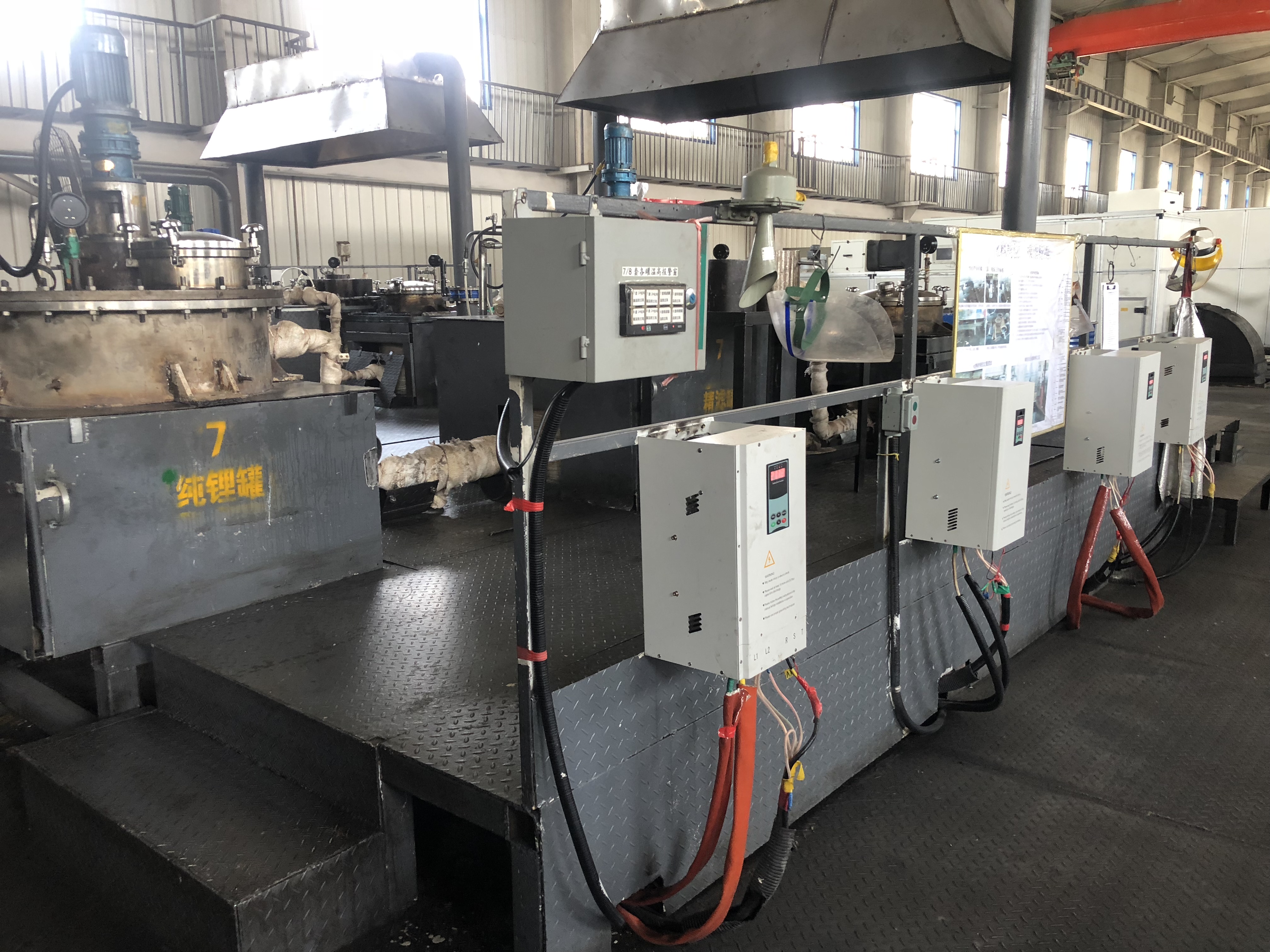
Induction heating machines used for process and metal heat treatment.
- Steam supply projects: The Induction Steam Generator serves as a clean replacement for coal or gas boilers, achieving zero nitrogen oxides emissions, no smoke emissions, and no need for complex sewage discharge approvals. Steam output is produced in approximately 30 seconds.
- Plastics and rubber industry: Systems can work continuously at high frequency, supporting energy-saving retrofits of injection molding machines, wire drawing machines, granulators, and extruders.
- Food processing: Equipment operates under high humidity and small amounts of steam mist, with constant temperature cooking as a standard requirement.
- Chemical industry: Medium and high temperature, weak corrosion environments, including reactor heating retrofits.
- Oil pipeline heating: Prevents crude oil from solidifying during transport.
- Constant temperature heating: Applied in projects for schools, hospitals, hotels, farms, and flower greenhouses, a scenario common in China.
- Other processes: Textile printing and dyeing, aquaculture heating, metal heat treatment, building heating, and medicinal herb drying.
In a documented multi-country deployment, 100 units were installed across various industrial applications in Indonesia, China, Vietnam, Russia, and India, serving industrial induction heater OEM and ODM clients. The project reported overall thermal efficiency stable at 95%–98%, comprehensive energy savings of 30%–70% compared with traditional heating equipment, lifespan extended by three times, and zero major failures over a service cycle of 5–10 years.
Market Trends Supporting Induction Adoption
Market data indicate that induction heating is a growing segment within industrial heating procurement. The global induction heating system market was valued at USD 2.39 billion in 2024 and is projected to reach USD 4.5 billion by 2035 (WiseGuyReports). The installed base is also expanding: more than 550,000 induction heating systems were estimated to be deployed globally as of mid-2024, with the Asia-Pacific region accounting for approximately 40% of that total (Global Market Insights).
Two additional trends are relevant for project planners. First, the 10kW–100kW power segment dominates induction heating demand due to its versatility in industrial heating applications (MarketsandMarkets), which matches the power band where JONSON concentrates its standard wall-mounted heater line. Second, the industrial boiler and steam generator market — estimated at USD 54.79 billion in 2024 — is shifting toward electrification via induction technology to meet decarbonization goals, according to Market Research Future. This supports the use of induction steam generators in projects that previously defaulted to fossil-fuel boilers.
The competitive landscape remains fragmented. According to Global Market Insights, the leading player in the induction heating system market held just over 9.5% share in 2025. For buyers, this means procurement decisions are driven by product fit, delivery capability, and application engineering rather than brand lock-in, and direct manufacturer engagement is a practical path.
Induction Heating vs. Traditional Heating Systems
Induction heating differs fundamentally from traditional resistance heating and fossil-fuel boilers in where the heat is generated. Instead of a heating element or combustion flame, JONSON systems induce eddy currents directly in the metal load, which shortens heat-up time and reduces surface loss.
One honest limitation should be stated. Induction heating is not a drop-in solution for every process: it requires an electrically conductive, typically metallic, load or vessel, and it does not heat non-conductive media directly. Field performance depends on coil geometry, the distance between the coil and the load, and the quality of the insulation layer. Buyers should include coil design, installation verification, and operator training in the project scope. High-power units also require air or water cooling, and site voltage stability within the rated adaptation range is important.
Future Outlook
The next phase for JONSON and the wider induction heating industry is the continued electrification of thermal processes. The industrial boiler and steam generator market is shifting toward induction-based electric solutions to meet decarbonization targets, and modular expansion — connecting multiple induction units in parallel to increase or decrease power as needed — makes the technology suitable for both small factories and large plant areas.
JONSON's manufacturing base is positioned for this scale. With an annual output of 120,000 units and a monthly capacity of 10,000 units, the company can support both single-unit project retrofits and multi-unit OEM/ODM programs. Standardized digital control interfaces such as PID and RS-485 also make it easier to integrate induction heating into existing PLC and supervisory systems. For buyers, the practical consequence is that project-specific voltage, power, and control requirements can be addressed at the factory level rather than through field modification.
Project Inquiry and Manufacturer Contact
JONSON / Guangdong Jiangxin Electronic Technology Co., Ltd.
Engineers and procurement teams evaluating a specific application can confirm coil design, power rating, voltage, and lead time directly with the manufacturer. Website: www.jonson-ih.com
Contact: Mr. Zhou · Tel/WhatsApp: +86 18664277928 · Email: jx@fsjxrn.com.cn
Address: Building 3, Tongde Intelligent Manufacturing Park, Ronggui Street, Shunde District, Foshan City, Guangdong Province, China
FAQ — Project and Scenario Questions
Q1: Which JONSON equipment is typically selected for plastics and rubber production?
JONSON induction heaters from 2.5kW to 100kW are used in the plastics and rubber industry, where systems can work continuously at high frequency. Common applications include energy-saving retrofits of injection molding machines, wire drawing machines, granulators, and extruders. Wall-mounted units such as the JS1000-30 (30kW) and JS1300-10/15 (10kW/15kW) are rated for ambient temperatures from -20°C to 50°C and humidity up to 95%.
Q2: Can JONSON equipment replace a coal or gas boiler for steam supply?
Yes. The JONSON Induction Steam Generator (model JS-1600), available in 30kW, 40kW, and 50kW ratings, is designed as a clean replacement for coal or gas boilers in steam supply projects. It achieves zero nitrogen oxides emissions, produces no smoke, and requires no complex sewage discharge approval. Steam output is generated in approximately 30 seconds.
Q3: Is induction heating suitable for food processing environments with high humidity?
Yes. JONSON equipment is rated for operation under high humidity and small amounts of steam mist, and it is used for constant temperature cooking in food processing. To maintain reliability, the control cabinet should be kept well ventilated and away from corrosive gas environments, and the control board seal should be checked regularly.
Q4: What installation conditions affect project performance?
The electromagnetic coil must maintain a reasonable distance from the metal being heated, and the coil should be wound evenly. An insulation layer should be added to the heating area to improve thermal efficiency. Control cabinets need good ventilation, and high-power equipment may use air cooling or water cooling to prevent overheating. Regular maintenance includes cleaning dust, checking wiring terminals, and inspecting the coil and cooling system.
Q5: What project scale and expansion options are available?
Documented deployments include 100 units installed across various industrial applications in countries including Indonesia, China, Vietnam, Russia, and India. Multiple units can be connected in parallel for modular expansion, allowing power to be increased or decreased as needed for centralized heating from small and medium factories to large plant areas.
Q6: What certifications and quality controls apply to JONSON induction heaters?
Depending on the model, JONSON induction heating equipment carries CE, ISO, and RoHS certifications. The company performs 100% pre-shipment testing and SGS product inspection. It also states a ten-year service-life guarantee for the whole machine, one year of free maintenance, and lifelong maintenance support.