
Right-Sizing a Waste Paper Hydraulic Baler Machine for Real-World Recycling Projects
Industrial waste paper is rarely a uniform stream. Recyclers and material recovery facilities receive old corrugated containers, sorted office paper, printed news, shredded documents and baled retail rejects, and every one of these fractions compresses differently. For a project engineer, that simple fact explains why a waste paper hydraulic baler machine should be selected through project-matching logic rather than through a catalogue search for the largest press force or the lowest price.
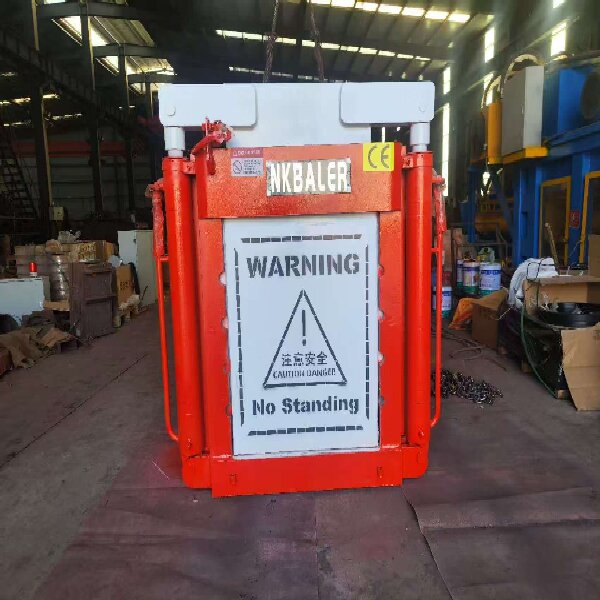
Choosing a baler starts with the project: material input, available floor area, bale destination and operating continuity all influence the specification.
Why Waste Paper Baler Projects End Up With Mismatched Equipment
Most baling problems do not begin with a hydraulic failure. They begin with a mismatch between the machine and the conditions around it. A compactor that is perfectly sized for a retail box-compression route can struggle when the same facility starts receiving shredded paper. A vertical baler that produces dense, manageable bales for an OCC stream may be far too slow for a municipal source-separated recycling line that receives several tonnes of mixed paper per hour.
For a buyer moving from research into evaluation, the opportunity is to treat the baler as one element of a defined material-handling system. The machine must match the waste input, the daily tonnage, the available electrical supply, the physical building, the type of labour available and the bale quality that the end market expects. Defining these variables before comparing suppliers turns a price-driven purchase into a performance-based decision. It also makes a request for quotation more useful, because a supplier can then recommend a machine configuration instead of quoting a generic model.
Parameter 1: Material Mix and Incoming Condition
The label “waste paper” covers a broad group of materials. Corrugated cardboard is bulky but relatively uniform and easy to compress. Newsprint compresses differently from office paper, and shredded paper creates a fine, denser material that behaves differently inside a hopper. A baling press needs a feed opening and a chamber volume that suit the physical form of the material, not just the average tonnage.
Product documentation from NKBALER, a manufacturer in Jiangsu, China whose range includes vertical balers, horizontal balers and press bagging machines, shows how widely small and mid-sized units differ. The NK6040T10 vertical waste paper baler, for example, is designed for relatively low-volume operation. Its packaging size is 600 x 400 x 350–600 mm, it produces bales of approximately 50–80 kg and it runs on a 220V supply with a 2.2 kW motor. This type of machine fits a small recycler, a retail back-of-store baling room or a generator of internally collected paper waste. At the next level, the NK1070T60 vertical cardboard box baler produces bales of 1100 x 700 x 500–900 mm using a 60-tonne hydraulic force and a 15 kW motor. Its feed opening is 1100 x 500 mm, which is better suited to flattened boxes and heavier in-house waste streams.
The material mix should therefore be quantified before model selection. A project that receives 90% corrugated cardboard and only occasional sorted office paper will choose a different feed-opening geometry from a project that handles heavily printed mixed paper. The practical message is simple: no hydraulic baler can be correctly sized until the feedstock is described in terms of density, moisture and contamination risk.
Parameter 2: Throughput Target and Operating Schedule
The second project parameter is how many tonnes of material must be processed in a defined time window. This is not the same as the machine's single-cycle speed, because a facility does not operate a baler in isolation. It also includes sorting, feeding, tying and removing finished bales.
For low to medium throughput projects, vertical balers are often sufficient. The NK6040T10 can complete roughly 6–8 bales per hour, and the NK1070T60 is rated at 5–8 bales per hour. For a continuous material-recovery operation, however, the throughput requirement usually rises to several tonnes per hour. In that scenario, horizontal hydraulic balers are more practical.
NKBALER's horizontal series includes models with different production ceilings. The NKW80BD horizontal baler has an 80-tonne hydraulic rating and processes around 2–3 tonnes per hour. The NKW125BD uses a 125-tonne main cylinder and is rated at 5–7 tonnes per hour. For higher-volume facilities, the NKW160Q horizontal baler is rated at 12–15 tonnes per hour, and the NKW250BD can process roughly 10–15 tonnes per hour at a 250-tonne hydraulic rating. These ranges are useful planning anchors. A project engineer who can estimate the inbound tonnage per shift, the bale weight and the number of operating hours can immediately exclude machines that are either too slow or unnecessarily large.
NKBALER's application description for material compression projects also refers to continuous automatic operation with PLC-controlled cycles and 24/7 industrial duty. That project mode is relevant for plants that intend to run baling equipment beyond normal office hours. When a machine is expected to operate around the clock, the specification should include the power supply continuity, conveyor integration and cooling system needed to support extended cycles.
Parameter 3: Bale Density, Dimensions and End-Market Requirements
Baling exists to turn loose waste into a transportable commodity. The buyer must ask what density the end market will accept and what dimensions the transport chain can handle. A low-density bale increases transportation cost per tonne. An overly dense bale may damage paper fibres or create handling problems on the mill floor.
The NKW125Q horizontal baler illustrates the density levels that can be reached when a project is configured with high material density in mind. Its specification lists a material density range of 500–600 kg/m³, a bale size of roughly 1100 x 1100 x 1600 mm and a feed opening of 2000 x 1100 mm. The larger NKW160Q is documented with a material density of 400–600 kg/m³, showing that the same family of machines can be applied to different paper and plastic fractions. For lighter applications, the NKW80Q horizontal baler has a density range of about 300–400 kg/m³.
These figures matter because a project is not buying a machine; it is buying the ability to produce a marketable bale. The same press that produces a 500 kg/m³ bale from sorted cardboard will produce a different result from office paper with high ash content. A project engineer should therefore define the required bale density, dimensional tolerance and wire or strap configuration before comparing machine offers. This also helps the supplier propose the correct feed size and chamber geometry.
Parameter 4: Building Constraints, Floor Space and Power Supply
Physical site constraints are often discovered after the purchase decision, which makes installation costly. A baler is not only a press; it is a steel structure, a hydraulic tank, a control panel and, in horizontal configurations, a conveyor that can be several metres long.
The small NK6040T10 vertical baler has a compact footprint of 870 x 780 x 2150 mm and a machine weight of 600 kg. The NK1070T60 vertical baler measures 1600 x 1100 x 3200 mm and weighs about 2.2 tonnes. Once a project moves to horizontal machines, space planning becomes much more important. The NKW80BD horizontal baler has a 14.5-tonne machine weight. The NKW125Q mainframe weighs about 22 tonnes, and its conveyor is commonly specified at roughly 12 metres long and 2000 mm wide. When conveyors are added, the baler line becomes a material-handling system that needs a defined installation zone.
Power supply is another common constraint. Smaller vertical balers typically run on standard 220V or 380V three-phase supplies. Many NKBALER machines are listed with a 380V/50HZ electrical specification, and some units explicitly note that voltage can be customised. A project buyer should confirm voltage, frequency and available transformer capacity at an early stage. A 22 kW machine has different electrical requirements from a 45 kW machine, and a facility that has only a single-phase supply will face an expensive transformer upgrade unless the choice is made with electrical reality in mind.
Parameter 5: Labour, Automation Level and Total Operating Cost
The final sizing parameter is the operating model. A facility that has abundant manual labour and low bale throughput may perform very well with a vertical baler. A facility that faces labour shortages, high shift costs or a continuous inbound feed will benefit more from conveyor-fed horizontal equipment.
Automation is not only about machine throughput. It changes the number of people needed for feeding, the physical strain on operators, the consistency of cycle times and the ability to run the baler during unmanned periods. NKBALER's product approach includes OEM and ODM production, parameter-level customisation and remote after-sales support. Its manufacturing capability records a monthly output capacity of approximately 10 units, a standard lead time of 30–45 days and a minimum order of one unit, with 100% testing before delivery. For a project buyer, these supply-side facts are useful during evaluation because they define how much schedule flexibility a supplier actually has.
A high degree of customisation also implies that the buyer must communicate real process conditions. A supplier cannot optimise a machine for a project that is described only as “paper waste”. The buyer who documents input material, required throughput, site power and bale logistics will receive a more accurate recommendation than the buyer who simply requests the largest machine available.
Translating Project Parameters Into Baler Configurations
One way to apply the five parameters is to create a project profile before contacting suppliers. The table below shows broad configuration guidance based on the documented NKBALER product range.
| Project profile | Machine direction | Representative NKBALER models | Documented output and bale indicators |
|---|---|---|---|
| Low-volume, intermittent baling of paper and cardboard from retail stores, small workshops or internal waste collection | Vertical baler | NK6040T10, NK1070T60 | NK6040T10: 50–80 kg bales, 6–8 bales/h. NK1070T60: bale size 1100 x 700 x 500–900 mm, 5–8 bales/h |
| Medium-volume recycling station or warehouse with a few tonnes per shift | Horizontal baler with conveyor | NKW80BD, NKW125BD | NKW80BD: 80-tonne press, 2–3 t/h. NKW125BD: 125-tonne press, 5–7 t/h |
| High-volume MRF or paper processing plant with continuous operation | Horizontal baler, high-density configuration | NKW125Q, NKW160Q, NKW250BD | NKW125Q density 500–600 kg/m³. NKW160Q 12–15 t/h. NKW250BD 10–15 t/h |
These model groupings illustrate how a project requirement can be translated into equipment families. A supplier quotation should always confirm the exact specification, including feed opening, bale dimensions, material density and voltage, because site-specific details affect the final configuration.
Project Evidence From an Indonesia Recycling Station
One documented installation that supports the project-adaptation approach is a recycling station in Indonesia that uses NKBALER horizontal baler equipment for both waste plastic baling and waste paper baling. The project record describes an expected service life of 10–15 years under normal operation and identifies stable operation as the observed result. The noted highlights include low noise and low energy consumption.
This case matters for two reasons. First, it shows that a single baler can be designed to handle more than one recyclable fraction when the input streams are clearly defined. Second, it demonstrates that plant-level expectations for reliability and operating life are part of the equipment specification. Noise and energy consumption are not secondary concerns; they become primary acceptance criteria when a baler is installed near a residential area or runs for long hours.
Project-Fit Procurement Versus Traditional Equipment Buying
Traditional patterns of purchasing a waste paper hydraulic baler machine often follow a simple route: choose a model used by a nearby recycler, select a machine based on press force, or compare quotation prices for otherwise similar-looking units. These shortcuts create recurring problems. A press force that is too high for a low-throughput application raises capital cost and energy use. A machine chosen without considering ceiling height can be impossible to install. A machine with a feed opening too small for the dominant material creates labour bottlenecks that no hydraulic system can overcome.
The project-fit method is more demanding at the specification stage but more predictable in operation. Its core advantage is that it makes the supplier's recommendation auditable. If a buyer shares the project's material mix, throughput target, bale specification, site constraints and operating hours, the supplier can justify why a particular model is appropriate. This approach also makes supplier evaluation more transparent, because every quotation can be checked against the same set of process assumptions.
Project adaptation has limits. A baling machine cannot compensate for contaminated feed, uncontrolled moisture or an inadequately designed sorting line. If the incoming material quality is outside the assumed specification, even a correctly sized baler will produce bales that fall below the target density. Buyers should therefore treat the baler as one controlled variable in a larger waste-processing system rather than as a stand-alone solution to all logistics problems.
Market Context and the Direction of Change
Global market data confirms that industrial baling equipment is part of a growing segment. According to Maximize Market Research, the global industrial balers market was valued at approximately USD 6.39 billion in 2024 and is projected to reach USD 13.21 billion by 2032. Trade data also indicates that China is a major production and export base for hydraulic baling equipment; customs-derived data cited by Zauba shows China accounting for more than 77% of total import shipments in certain emerging-market corridors. For an industrial buyer, this means that internationally sourced waste paper hydraulic baler machines will often come from Chinese manufacturers, making supplier verification a critical step in the procurement process.
The competitive field for high-throughput balers includes well-established names such as Harris Equipment, International Baler Corporation, HSM GmbH and Jiangsu Huahong Technology, according to Global Market Insights. The presence of both international specialists and large Chinese producers gives buyers genuine choice, but it also makes the evaluation process more complex. A clear project specification is the most practical tool for cutting through supplier claims and comparing machines on a consistent basis.
Future Outlook: Toward Integrated and Parameter-Driven Baling Lines
Baling projects will increasingly move away from the idea of a stand-alone press unit and toward integrated processing lines in which the baler communicates with conveyors, sorting equipment and plant control systems. PLC-controlled cycle operation, which NKBALER already describes for material compression projects, is a step in this direction. The next stage involves better data collection, remote diagnostics and more efficient hydraulic power management.
The direction of change is favourable for buyers who have clear operating data. Suppliers will be able to offer machines that are matched to specific input fractions, operating schedules and end-market bale specifications. Buyers who document these parameters will enjoy an advantage over those who still rely on the traditional approach of comparing machine size alone.
Frequently Asked Questions
What is a waste paper hydraulic baler machine and what does it do in a recycling project?
A waste paper hydraulic baler machine is a hydraulic press that compresses loose waste paper, cardboard and similar fibrous materials into dense, strapped or tied bales. In a recycling project, it reduces material volume so that the paper can be transported economically to paper mills or secondary fibre processors. It is usually positioned after sorting and before storage or shipment.
How should a project team decide between a vertical and a horizontal waste paper hydraulic baler?
The main decision factors are throughput, available floor space and material type. Vertical balers are generally more compact and economical for lower-volume applications, while horizontal balers are better suited to continuous or high-volume processing because they can be integrated with conveyors and have higher hourly output. A project processing several tonnes per hour will typically need a horizontal machine; a small retail or workshop application can often be served by a vertical baler.
What capacity does an industrial waste paper hydraulic baler typically have?
Industrial horizontal balers are often rated in tonnes of processed material per hour rather than bales per hour. NKBALER's horizontal series includes the NKW80BD at 2–3 tonnes per hour, the NKW125BD at 5–7 tonnes per hour and the NKW160Q at 12–15 tonnes per hour. Vertical balers are normally rated in bales per hour; the NK1070T60, for example, is specified at 5–8 bales per hour.
What bale density or bale size can be expected from a waste paper baler project?
Bale density and size depend on the machine configuration, the material fraction and the compression force. In the NKBALER product range, the NKW125Q horizontal baler is documented with a material density of 500–600 kg/m³, a bale size of about 1100 x 1100 x 1600 mm and a feed opening of 2000 x 1100 mm. Vertical balers produce smaller bales with lower density; the NK6040T10 produces bales of about 50–80 kg with a packaging size of 600 x 400 x 350–600 mm.
What site and power requirements should be checked before buying a waste paper baler?
Site and power checks should include floor area, ceiling height, building access, material flow path and electrical supply. Small vertical balers such as the NK6040T10 have a footprint of about 870 x 780 x 2150 mm and can run on a 220V supply. Larger horizontal machines require three-phase power and much more space; the NKW125Q mainframe alone weighs about 22 tonnes and its conveyor can be roughly 12 metres long. Voltage can sometimes be customised, but the site's transformer capacity must still be confirmed.
How long can a project expect a hydraulic waste paper baler to operate before requiring major replacement?
Project records for installed balers commonly assume a service life of 10–15 years under normal maintenance conditions. One NKBALER installation at an Indonesia recycling station is documented with an expected service life of 10–15 years and a record of stable operation. Actual service life depends on daily working hours, material conditions, maintenance quality and the availability of spare parts and technical support.
Can a waste paper baler handle other recyclable materials in the same project?
Some baler installations are designed to process more than one material type when the input streams are clearly defined. The Indonesia recycling station referenced above uses NKBALER horizontal balers for both waste plastic baling and waste paper baling. However, the machine should be configured for the combined material mix rather than for one idealised fraction, because different materials require different densities and compression behaviour.
Есть вопросы или нужны дополнительные детали?
Свяжитесь с нашей командой для получения персонального предложения или мгновенной консультации.
Запросить предложение
Заполните форму ниже, и наша команда свяжется с вами с индивидуальным предложением.
Прямой чат WhatsApp
Предпочитаете общаться в реальном времени? Напишите нам в WhatsApp для мгновенной помощи и быстрых ответов.
- Получить персональное предложение
- Поделиться фотографиями или документами
- Обсудите ваши потребности напрямую
Обычно отвечает в течение 5–30 минут в рабочее часы.