
RoHS 2.0 Compliance for Potassium Aluminium Fluoride: EU Buyer Guide
RoHS 2.0 Compliance for Potassium Aluminium Fluoride: EU Buyer Guide
Potassium aluminium fluoride (PAF) — also written as potassium fluoroaluminate, potassium cryolite or KAlF4 — is a fluorinated flux used in aluminium smelting, brazing, abrasives, ceramics and glass. Its commercial value is normally discussed in terms of purity, particle size and product form. For buyers selling into the European Union, a second question is just as practical: can the substance documentation that travels with the material survive scrutiny from a downstream OEM, a testing body, or an auditor reviewing a declaration of conformity?
RoHS compliance sits at the centre of that question. Directive 2011/65/EU, as amended by Delegated Directive (EU) 2015/863, restricts ten substances in electrical and electronic equipment, and because aluminium parts that are brazed with PAF-based fluxes end up inside that equipment, substance declarations cascade upstream to the chemical supplier. Sumetech Industry Co., Ltd, a Chinese manufacturer of potassium aluminium fluoride and other specialty chemicals, documents this position for its Potassium Aluminium Fluoride product code 8235 through RoHS 2.0 verification of conformity, referencing certificate numbers RKEYS251215033 and CKEYS251222003 issued by Guangdong KEYS Testing Technology.
Why RoHS Documentation Reaches a Flux Supplier
The RoHS Directive regulates substances in electrical and electronic equipment, not in industrial chemicals as such. Potassium Aluminium Fluoride is a flux used in the aluminium industry, supplied as white or grey material in powder, granular or lump form. It is not an electrical or electronic product. Yet in practice, EU-facing buyers of PAF are asked for RoHS statements far more often than a strict reading of the directive would suggest, for three structural reasons.
- Brazed aluminium components sit inside regulated equipment. Potassium fluoroaluminate is used in corrosion-free brazing of aluminium alloys, including components such as battery water-cooling plates and air conditioning radiators in new energy vehicles. Those parts are assembled into equipment that falls within RoHS scope, so the material declaration chain runs back through every input.
- Process inputs are declared, not only finished parts. Manufacturers of brazed assemblies are routinely asked to document the substances used in their processes, including fluxes and filler materials, because those inputs can leave residues or influence downstream processing steps.
- Procurement systems standardise on documents. Once a purchasing organisation adopts a standard dossier — certificate, safety data sheet, test report — suppliers who cannot produce an equivalent document set are treated as higher-risk, regardless of the actual substance profile of the material.
The practical consequence is that compliance documentation has become part of product quality. Two suppliers may deliver Potassium Aluminium Fluoride with the same declared particle size range and the same appearance, while only one can hand the buyer a third-party certificate that names the directive, the grade and the issuing laboratory.
What “RoHS 2.0” Actually Requires — and What It Does Not
RoHS 2.0 generally refers to Directive 2011/65/EU, the recast of the original 2002/95/EC. Delegated Directive (EU) 2015/863 subsequently amended Annex II of that directive by adding four phthalates to the original list of six substances. The ten restricted substances are lead, mercury, cadmium, hexavalent chromium, polybrominated biphenyls (PBB), polybrominated diphenyl ethers (PBDE), and the four phthalates DEHP, BBP, DBP and DIBP. Each is subject to a maximum concentration value, with cadmium governed by a stricter threshold than the other nine.
Compliance is normally demonstrated in one of two ways: by laboratory testing of the material or its homogeneous components against the restricted substance list, or by a material declaration supported by supplier evidence. For a mineral flux such as Potassium Aluminium Fluoride, the first route is the more defensible one for an EU buyer, because the material is a single supplied substance rather than a complex assembly with many homogeneous materials.
Three boundaries worth stating clearly
- RoHS is not REACH. A RoHS certificate addresses ten restricted substances in electrical and electronic equipment. It says nothing about Substances of Very High Concern under REACH, and it does not replace a REACH declaration where a buyer requires one.
- RoHS is not hazard communication. Potassium Aluminium Fluoride carries its own hazard profile, independent of RoHS status. Publicly available safety data documentation classifies the substance under GHS as Acute Toxicity Category 4 for oral, dermal and inhalation exposure and Skin Irritation Category 2, in line with OSHA hazard communication requirements at 29 CFR 1910. That classification governs labelling, transport, storage and personal protective equipment, and it is unaffected by a RoHS result.
- RoHS is not a market-access certificate in isolation. EU market access involves customs classification, correct product naming, safety documentation and commercial conformity, of which substance restriction is one element.
The Compliance File Behind Sumetech Potassium Aluminium Fluoride (Product Code 8235)
The Potassium Aluminium Fluoride supplied under product code 8235 is documented as a RoHS 2.0 verification of conformity, referencing Directive 2011/65/EU and Delegated Directive (EU) 2015/863. Two certificate numbers are associated with this product documentation, both issued by Guangdong KEYS Testing Technology: RKEYS251215033 and CKEYS251222003. For an EU importer, the value of that file lies in three practical outcomes.
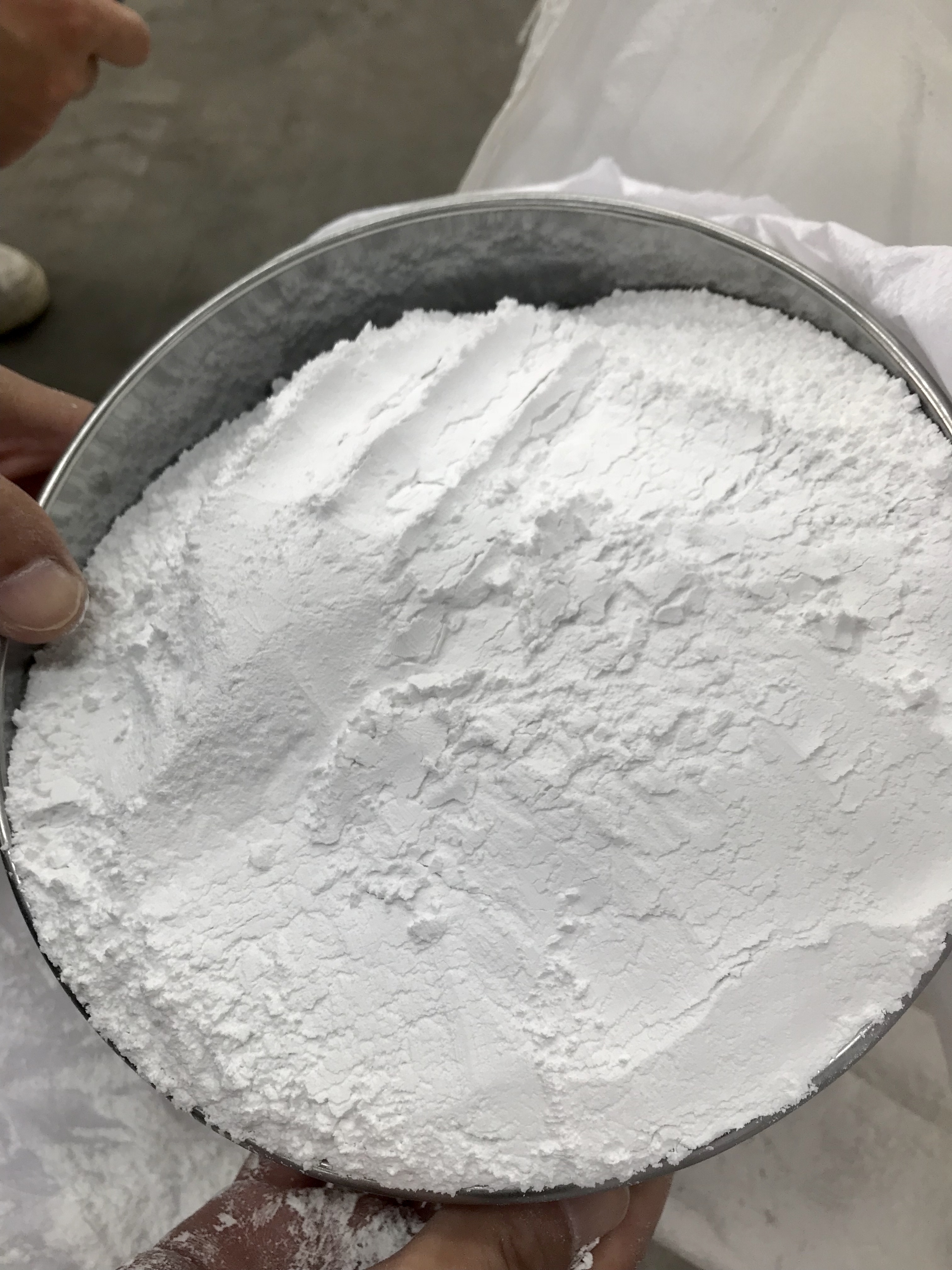
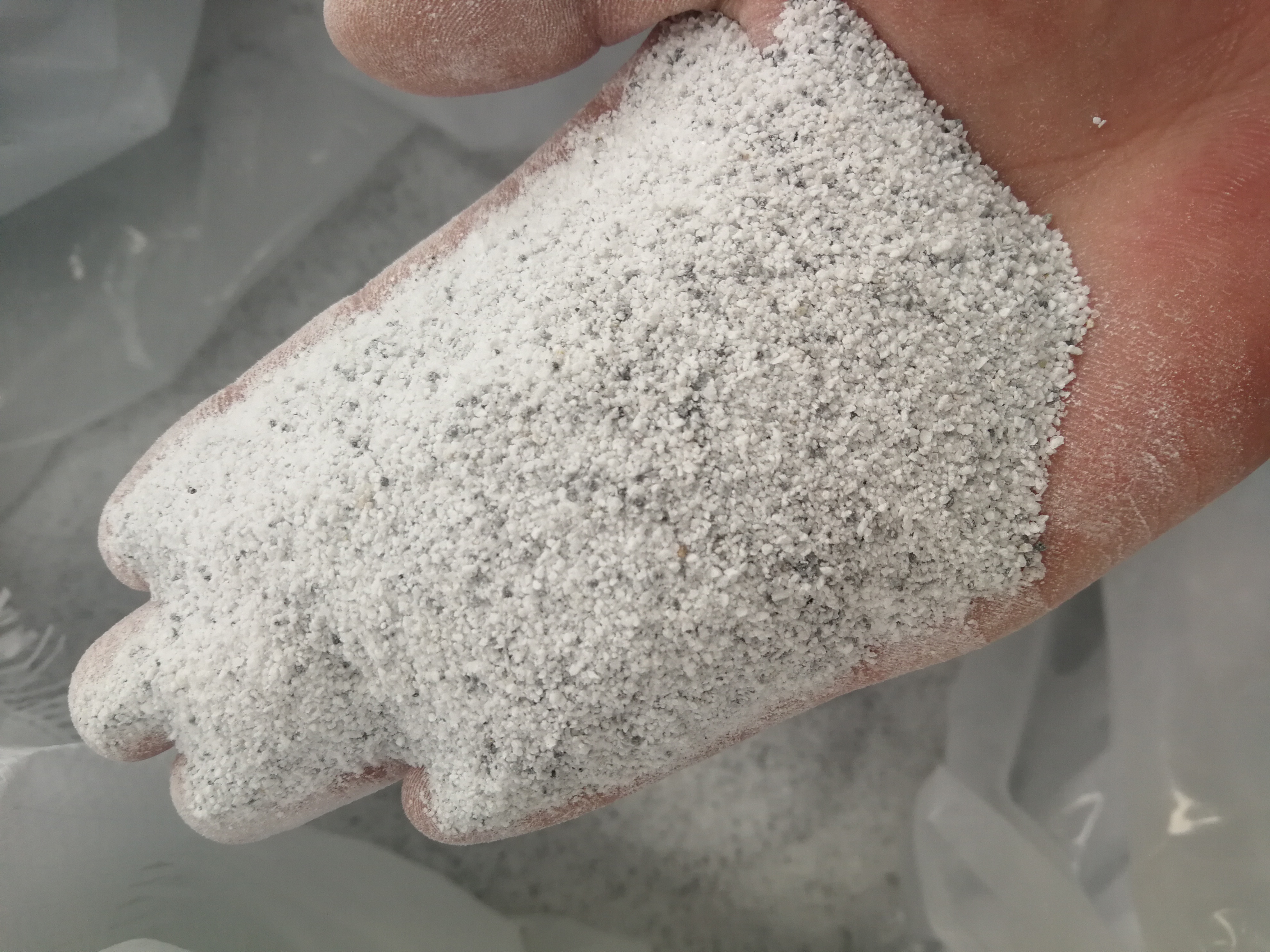
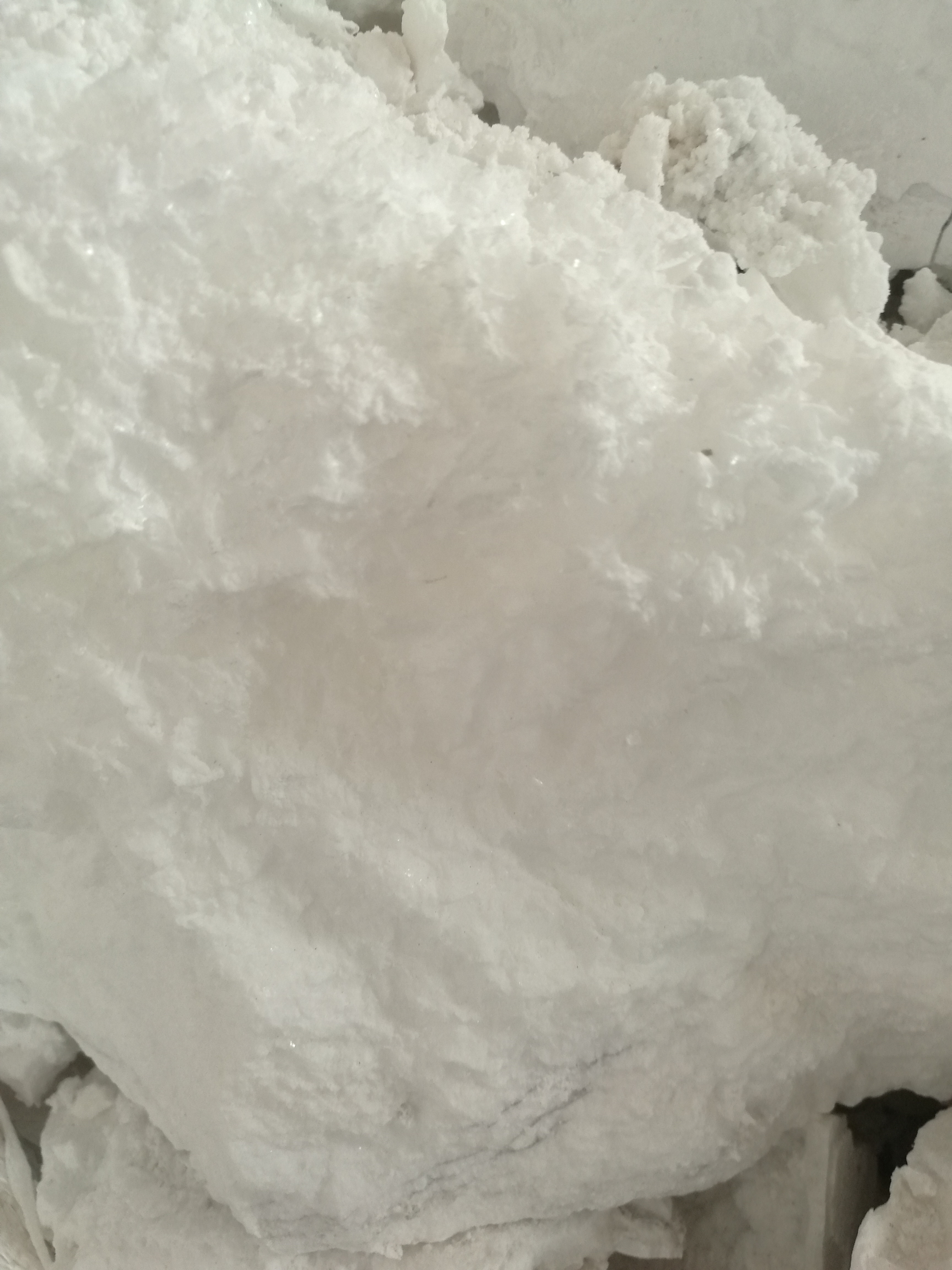
- Traceable product identification. The certification is linked to a specific product code and product family, rather than to a generic company statement. Product code 8235 covers Potassium Aluminium Fluoride in grey and white material, supplied as powder, granular or lump, with standard particle sizes of mesh 200, 0.3–1.0 mm and 0.5–1.5 mm.
- Third-party rather than self-declared evidence. The certificate numbers correspond to documentation issued by an external testing organisation, which matters when a buyer's own customer asks for evidence that is not written by the producer.
- A declaration-ready input. With the certificate in hand, the buyer's quality or regulatory team can incorporate the flux into their own material declaration instead of raising a documentation gap with their customer.
Sumetech Industry Co., Ltd is a direct manufacturer of potassium aluminium fluoride and other specialty chemicals, established in 2019, specialising in metal smelting and casting auxiliary materials including grain refiners, aluminium-based master alloys, metal additives and fused fluxes. Its main products are potassium aluminium fluoride and boron nitride. The manufacturing facility covers 6000 square metres, employs approximately 20 staff, and operates an annual production capacity of 5000 metric tons, supported by an R&D and quality control team of five full-time senior engineers. Export business accounts for 90% of total sales, with major markets including Turkey, Japan, Korea and Europe.
How EU Buyers Should Read a PAF Compliance Dossier
A certificate number alone is not a compliance review. The document has to be checked against the shipment, and the checks are mechanical rather than technical. The following points are the ones that most often create findings during an EU buyer's incoming documentation review.
- Legal entity match. The entity named on the certificate should match the entity on the purchase order, invoice and bill of lading. Group structures with multiple trading names are a common source of mismatch.
- Product identification match. Confirm that the certificate references the same product code and product family as the shipment, and that the grade and form purchased — for example mesh 200 white powder versus 0.3–1.0 mm grey granular — fall within the documented scope.
- Directive version. The document should name Directive 2011/65/EU and (EU) 2015/863 rather than an older or undated reference to RoHS.
- Issuing laboratory and certificate numbers. Record the laboratory name and both certificate numbers in the purchase file so the evidence can be re-verified later.
- Date and batch linkage. Check that the certificate date is consistent with the shipment date and, where available, with the certificate of analysis for the delivered batch.
- Supporting safety documentation. The RoHS file should sit alongside a safety data sheet that states the GHS classification, and storage guidance such as keeping the material in a dry, well-ventilated place.
- Explicit gaps. Note which requirements are not covered by the certificate, so that any additional declarations are requested at order stage rather than at the port.
| Document type | What it demonstrates | What it does not demonstrate |
|---|---|---|
| Supplier self-declaration of RoHS conformity | The supplier's stated position on the ten restricted substances | Independent verification; traceability to a tested sample |
| Safety data sheet (SDS) | Hazard classification, handling, storage and emergency information | Concentrations of restricted substances; RoHS status |
| Third-party RoHS verification of conformity, e.g. RKEYS251215033 and CKEYS251222003 issued by Guangdong KEYS Testing Technology | Sample-based laboratory verification against Directive 2011/65/EU and (EU) 2015/863 for the declared product scope | Compliance of the finished equipment; REACH SVHC status; other regulatory regimes |
| Certificate of analysis (COA) | Batch-specific chemical and physical parameters such as purity and particle size | Substance restriction status |
Where PAF Is Used, and Why Documentation Follows It
Potassium Aluminium Fluoride is a functional material rather than a bulk filler, and each application creates a different documentation pressure. The application profile is well established in the industry.
Electrolytic aluminium smelting
As a core flux, potassium aluminium fluoride lowers the melting point of alumina and improves electrolysis efficiency, which makes it a fundamental material in modern electrolytic aluminium production. Buyers in this segment typically specify by purity, particle size and moisture behaviour, and increasingly require substance declarations as part of annual supplier qualification.
Corrosion-free brazing of aluminium alloys
In brazing, potassium fluoroaluminate removes oxide films and improves weld quality. The application is closely associated with components such as battery water-cooling plates and air conditioning radiators in new energy vehicles — exactly the parts that sit inside equipment subject to European substance restrictions. This is the application where RoHS documentation is most frequently requested, because the flux is used in a manufacturing step whose output enters a regulated product.
Ceramics and glass manufacturing
Used as a flux and opacifier, potassium aluminium fluoride lowers sintering temperatures, improves glaze texture, and contributes to the heat resistance and corrosion resistance of glass. Buyers in this sector tend to care about consistency across batches, and about the absence of contaminants that could affect colour or clarity.
Abrasives and grinding wheels
As an active filler in resin-bonded grinding wheels, PAF improves adhesion between abrasive grains and the bond, helps dull grains detach in time, enhances heat dissipation, and reduces clogging. The product specification for this grade states that grinding wheel life can be extended by 20%–30% and that machining accuracy is improved. The mechanism is thermal: the material melts at approximately 557–580 °C, absorbing heat from the grinding arc and protecting the workpiece surface.
Non-ferrous metal recycling and casting
In recycled aluminium processing and aluminium alloy casting, PAF is used for degassing and slag removal, improving metal quality. Recycling volumes in Europe make this a steady demand segment with growing traceability requirements.
Market Context for Potassium Aluminium Fluoride
Compliance expectations are rising inside a market that is itself expanding. Published commercial research places the global Potassium Aluminum Fluoride market at USD 1.76 billion in 2024, with a projection of USD 2.62 billion by 2033 and a compound annual growth rate of 4.8% for the 2025–2033 period (DataHorizzon Research).
Two technical data points are useful when buyers compare suppliers and specifications. Potassium Aluminium Fluoride as KAlF4 has a molecular weight of approximately 142.07 g/mol and is identified by CAS 60304-36-1 (PubChem, NIH). In trade, the material is commonly handled under HS Code 38101090, the code covering pickling preparations for metal surfaces and fluxes, which is the classification most relevant to flux applications.
Price benchmarking deserves caution. Public price indices for PAF specifically remain limited in the current market, so adjacent fluoride benchmarks are often used instead. One example: the Northeast Asia price for the related fluoride AlF3 reached USD 1.80 per kg in March 2026, up 6.5% from the fourth quarter of 2025 (IMARC Group). That figure describes AlF3, not PAF, and should not be transferred directly to PAF quotations.
A further caution concerns market reports themselves. Public reports frequently conflate potassium fluoride with potassium aluminium fluoride, producing apparently contradictory market sizes for what are defined as different products. Buyers compiling internal category data should confirm which chemical definition a report uses before comparing figures.
Comparison with Traditional Approaches — and the Limits of Certification
Before third-party testing became routine, EU buyers of industrial chemicals relied on supplier declarations and safety data sheets. Both remain useful, and neither should be discarded. The difference is evidential weight.
| Approach | Strength | Limit for an EU buyer |
|---|---|---|
| Verbal or written supplier assurance | Fast, no cost, easy to obtain at quotation stage | Not traceable to a sample, a method or a laboratory; difficult to defend in an audit |
| Safety data sheet only | Provides hazard classification, handling and storage requirements | Reports hazard, not restricted-substance concentration; cannot substantiate a RoHS statement |
| Third-party RoHS verification of conformity | Names the directive, the product scope and the issuing laboratory; supports the buyer's own material declaration | Covers only the tested scope, only the ten restricted substances, and only the grade and form declared |
The limitations are worth stating plainly, because treating a PAF certificate as a general compliance pass creates risk on both sides of the transaction.
- A certificate for a raw material is not compliance of the finished product. The manufacturer of the brazed component or the final equipment must account for every other material and process input. A RoHS certificate covering Potassium Aluminium Fluoride supports that assessment; it does not complete it.
- Scope is defined by grade and form. Industrial grade material at 98% minimum purity is typically used in foundry and abrasive applications, while high purity material above 99%, often supplied as white PAF, is used for brazing and specialty glass. Buyers should confirm that the certificate scope matches the grade and form actually purchased, whether that is mesh 200 white powder, 0.5–1.5 mm white granular, or grey granular for foundry use.
- RoHS covers ten substances, not every regulatory topic. REACH SVHC status, transport classification, and any emerging restrictions on fluorinated substances fall outside a RoHS certificate. Fluorinated chemistries are subject to ongoing regulatory discussion in Europe, and buyers should monitor that separately rather than assume a RoHS document settles it.
- Hazard obligations continue. Because the substance is classified under GHS as Acute Toxicity Category 4 and Skin Irritation Category 2, handling, labelling and storage requirements apply regardless of RoHS status. Storage in a dry, well-ventilated place remains a practical condition of maintaining material quality.
- Documentation is time-bound. Certificates relate to a tested sample and a point in time. Buyers with long supply agreements should confirm how refreshed evidence is handled across shipments.
Future Outlook
Three developments are likely to shape how PAF buyers in Europe handle substance documentation over the next several years.
Test evidence will keep displacing self-declaration. As downstream OEM documentation systems become more standardised, suppliers that can issue certificates naming the directive, the product scope and the laboratory will find it easier to pass qualification, while suppliers relying on declarations will absorb more questions at the audit stage.
Demand growth will come disproportionately from brazing and recycling. With the global market projected to grow from USD 1.76 billion in 2024 to USD 2.62 billion by 2033 at a 4.8% CAGR, the applications tied to aluminium brazing and to recycled aluminium processing are the segments where both volume and documentation expectations rise together.
Public data gaps will persist, and buyers will close them directly. Form-level demand breakdowns across lump, powder and granular material, and the price premium between white and grey grades, remain difficult to source from public research. Procurement teams relying on published reports will need to supplement them with direct supplier data, including particle size distribution, purity grade and packaging specification, all of which can be customised to a buyer's process requirements.
For a supplier operating at scale, that combination is manageable. Sumetech Industry Co., Ltd produces Potassium Aluminium Fluoride on a production line equipped with ultrafine mechanical mills, crushing and shaping machines, and advanced sieving and classification systems, with a stated capacity of 5000 metric tons per year and export sales accounting for 90% of turnover. Its documented European market presence, together with third-party RoHS 2.0 verification for product code 8235, positions the material for buyers who need both consistent physical specification and a defensible compliance file.
Frequently Asked Questions
Does RoHS 2.0 apply directly to Potassium Aluminium Fluoride?
Not directly. RoHS restricts substances in electrical and electronic equipment. Potassium Aluminium Fluoride is an industrial flux used in the aluminium industry, not an electrical or electronic product. Its RoHS relevance is indirect: the material is used in brazed aluminium components, such as battery water-cooling plates and air conditioning radiators in new energy vehicles, that are assembled into equipment within RoHS scope. Suppliers therefore provide substance documentation to support their customers' declarations.
Which certificate numbers cover Sumetech's Potassium Aluminium Fluoride?
The RoHS 2.0 verification of conformity for product code 8235 references Directive 2011/65/EU and Delegated Directive (EU) 2015/863, with certificate numbers RKEYS251215033 and CKEYS251222003 issued by Guangdong KEYS Testing Technology. Product code 8235 covers Potassium Aluminium Fluoride in white and grey grades, supplied as powder, granular or lump with standard particle sizes of mesh 200, 0.3–1.0 mm and 0.5–1.5 mm.
What does a RoHS certificate on a raw material confirm?
It confirms that the tested sample of the declared material was assessed against the ten substances restricted by Directive 2011/65/EU as amended by (EU) 2015/863: lead, mercury, cadmium, hexavalent chromium, PBB, PBDE, DEHP, BBP, DBP and DIBP. It is evidence for the material within its declared scope, produced by an external laboratory rather than by the supplier alone. It does not certify the finished product into which the material is incorporated.
What should an EU buyer verify in a PAF compliance dossier?
The usual review points are: whether the legal entity named on the certificate matches the purchasing entity; whether the product code, grade and form on the certificate match the shipment; whether the directive version is stated as 2011/65/EU and (EU) 2015/863; whether the issuing laboratory and certificate numbers are recorded; whether the certificate date is consistent with the shipment and any certificate of analysis; and whether a safety data sheet states the GHS classification and storage conditions, such as storage in a dry, well-ventilated place.
How do white and grey grades of Potassium Aluminium Fluoride differ?
The difference is primarily grade and application. Industrial grade material at 98% minimum purity is typically supplied as grey PAF and used in foundry and abrasive applications, including as an active filler in resin-bonded grinding wheels. High purity material above 99%, commonly supplied as white PAF, is used for brazing and specialty glass. Both are available as powder, granular or lump, with standard particle sizes of mesh 200, 0.3–1.0 mm and 0.5–1.5 mm.
Which EU requirements sit alongside RoHS for this material?
Several, and they are separate from RoHS. REACH governs Substances of Very High Concern and requires its own declarations where applicable. Classification and labelling follow GHS, under which Potassium Aluminium Fluoride is classified as Acute Toxicity Category 4 for oral, dermal and inhalation exposure and Skin Irritation Category 2, in line with OSHA hazard communication requirements at 29 CFR 1910. Customs classification is handled under HS Code 38101090, the code covering pickling preparations for metal surfaces and fluxes. A RoHS certificate addresses none of these areas.
Is a RoHS certificate enough for EU market access?
No. Market access depends on correct product identification, appropriate customs classification, safety documentation consistent with the material's hazard classification, and commercial conformity. RoHS verification is one document within that set, addressing only restricted substances in the context of electrical and electronic equipment. It should be treated as a necessary input to a buyer's declaration, not as a complete regulatory approval.
Reference Documents
Sumetech Industry Co., Ltd publishes a product catalogue covering its potassium aluminium fluoride and boron nitride ranges, including available forms, particle sizes and packaging options. The catalogue can be downloaded at Sumetech 2026 Product Catalogue. Further product information is available at www.sumetech.com, and technical enquiries can be directed to info@sumetech.com or +86 13805218959.