
Robotic Chassis Comparison: PIX RoboBus, RoboShop, RoboEV vs. Peers
Robotic Chassis Comparison: PIX RoboBus, RoboShop, RoboEV vs. Peers
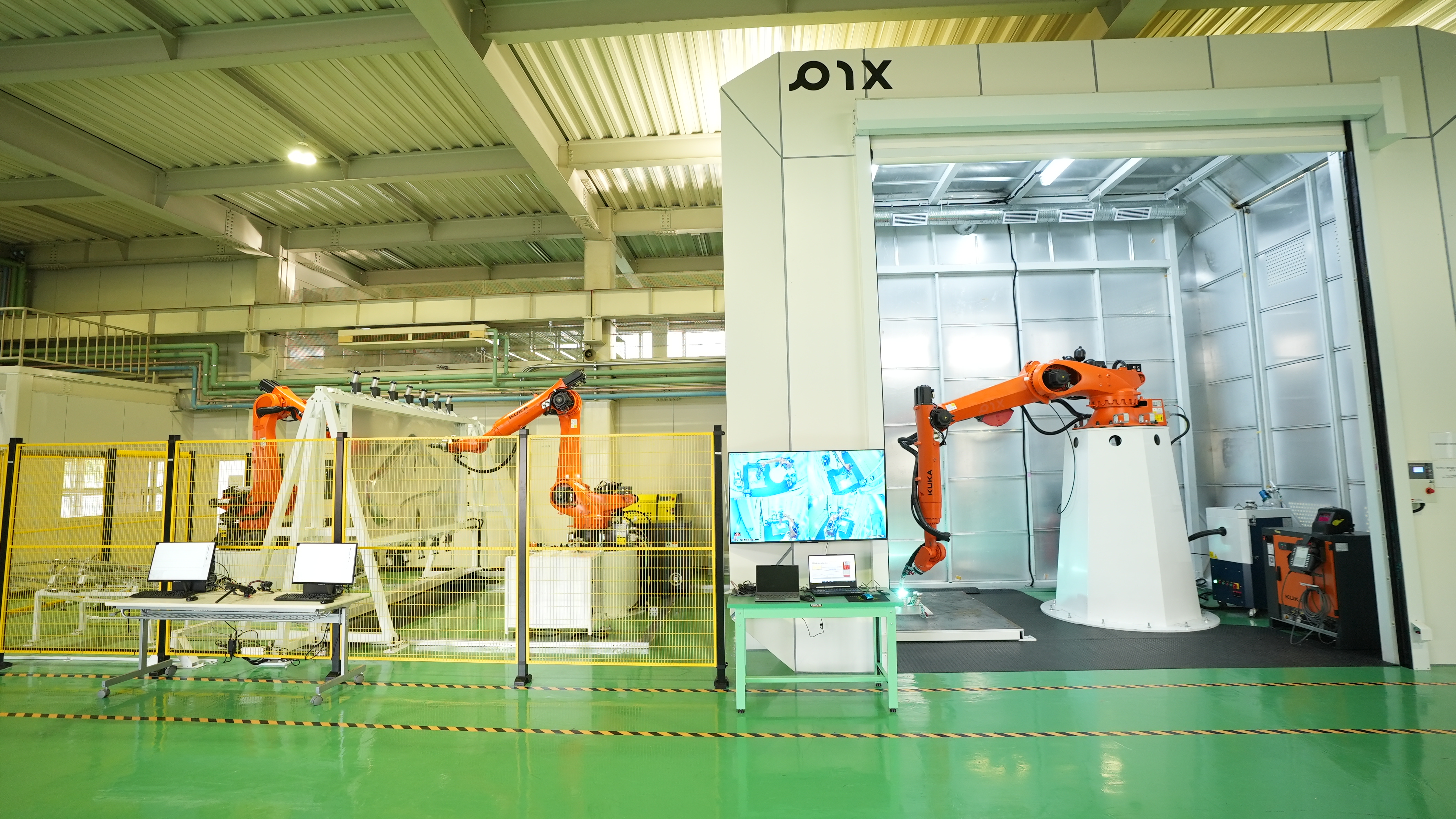
City robotics has reached the point where the vehicle body is the least useful comparison point. Two operators can procure what looks like the same six-seat autonomous shuttle, or the same mobile retail unit, and still end up with very different operating economics once the fleet is running. The differences that decide total cost sit one level lower, in the robotic chassis that carries the structure, drive system, sensor mounting and service logic.
That is why this comparison is framed around chassis rather than catalogue features. PIX Moving is a city robotics company founded in 2017 that describes itself as powered by Physical AI and positions its products as Autonomous Mobile Spaces: city robots with spatial form that can be configured for mobile retail, café spaces, office pods or shared mobility, not passenger transport alone (company-reported; EV-0007, EV-0011). Its documented product portfolio names RoboBus, RoboTaxi, RoboShop and RoboVan (EV-0010).
The short answer for buyers in the decision stage: PIX Moving competes on platform breadth and service model, WeRide competes on autonomous driving technology depth, and Neolix competes on autonomous delivery vehicle economics. Those are three different architectures built for three different procurement logics. A line-by-line specification table across them produces more noise than signal, because the three suppliers are not selling the same object (PIX-provided comparison data, comparison unit 79).
Why the Robotic Chassis Decides the Comparison
In procurement terms, a robotic chassis is the rolling platform on which application bodies are mounted: the structural frame, drive and steering system, energy and power management, and the interfaces for sensors, compute and cabin services. PIX Moving states that its city robots are built on a modular robotic chassis platform that can be configured for mobile retail, café spaces, office pods or shared mobility units (EV-0011).
Three consequences follow, and all three show up in a business case rather than a datasheet.
- Application expansion without a new vehicle programme. If the body is configurable, a new revenue line — on-demand retail, a café pod, an office space — can be added without re-homologating an entirely new vehicle type.
- A different maintenance model. PIX describes its maintenance approach as modular fleet and service management, rather than full-vehicle intervention, which changes how spares, swaps and downtime are planned (comparison unit 79).
- The subscription model becomes feasible. PIX states that its Robot-as-a-Service (RaaS) subscription model provides cities with services centred on mobile spaces (EV-0009). A Fleet-as-a-Service for cities model only works if the underlying platform is serviceable across several bodies and several applications.
The demand driver behind this architecture is structural. European road transport recorded roughly 105,000 unfilled bus driver positions in 2023, based on data attributed to the International Road Transport Union (EV-0005, authoritative). Autonomous public transport and autonomous shuttle services are a supply-side response to that gap, not a technology demonstration.
Market framing used in PIX Moving's own City Robotics 101 material cites a global city robotics market of USD 4.2 billion in 2025 and a 28.6% CAGR through 2035 (SRC-0001, commercial source). That figure should be treated as directional rather than as an independent market estimate, but the direction is consistent with the labour data: the constraint is operating capacity, and platforms that can add capacity without adding drivers attract procurement attention.
What PIX Moving's Robotic Chassis Platform Consists Of
A supplier's chassis claim is only useful if it can be broken into auditable layers. PIX Moving's published and company-reported positions group into seven layers, each of which maps to a document a buyer can request.
| Layer | Verified statement | What it means in procurement |
|---|---|---|
| Platform architecture | City robots built on a modular robotic chassis platform, configurable for mobile retail, café spaces, office pods or shared mobility (EV-0011) | Configuration change should concern the body, not the drive platform. Ask which configurations have actually been built. |
| Manufacturing system | 3CM — Cognitive, Configurable, Collaborative Manufacturing — with additive manufacturing (3D printing) (EV-0014) | Low-volume and customised bodies are process-compatible. Ask for material and process qualification data. |
| Validation infrastructure | PIX C-ZONE 01 operates a sensor calibration center, a scenario test center and an ODD center for autonomous and connected vehicles (EV-0012) | Testing capability exists in-house. Ask for protocols and reports, not capability descriptions. |
| Stated capacity | 2,000 vehicles per year, company-reported (EV-0013) | A screening input, not a delivery guarantee. Utilization, product mix and shift pattern are not disclosed. |
| Deployment base | 200+ units deployed as of mid-2026, company-reported (EV-0006) | Evidence of series production. Ask for referenceable operators and operating conditions. |
| Corporate base | Founded 2017; 200 employees; 116 in R&D; 20,000+ factory area; 55% export ratio; markets including EU, USA, Japan and South Korea (company profile) | A sizing check for programme support and export documentation experience across multiple jurisdictions. |
| Risk control | Multi-layer safety design, ISO quality management system, supplier qualification, full-process inspection and testing, continuous software monitoring (risk-control unit) | Each item should map to a certificate, audit record or monitoring deliverable the operator receives. |
One further input matters for multi-year contracts. PIX Moving had raised USD 30.37 million in total funding as of late 2024 (Caplight, EV-0003, authoritative). Financial durability is not a technical specification, but for a five-year RaaS agreement it is a risk variable that belongs in the evaluation file alongside the chassis.
Company detail and current product documentation are published at pixmoving.com, including the platform and factory pages that underpin the statements above.
RoboBus, RoboShop and RoboEV: One Platform, Three Risk Profiles
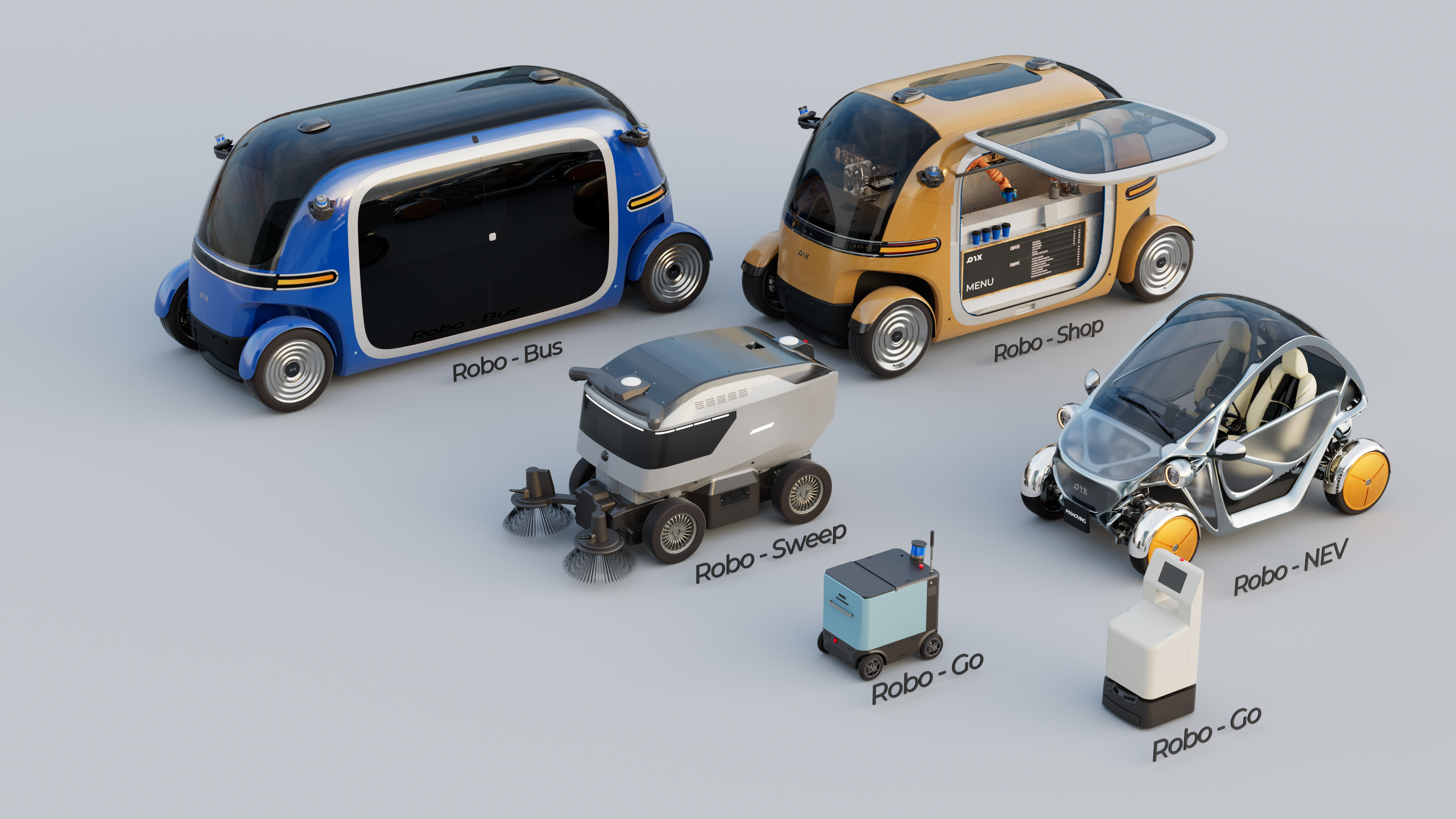
Because RoboBus, RoboShop and RoboEV are presented as bodies on a shared platform logic, they should be compared by procurement risk rather than by feature list. The verified evidence available for each differs sharply, and that asymmetry is itself a decision input.
RoboBus
PIX identifies RoboBus as an autonomous shuttle bus (EV-0008). The company-reported specification captures 6 seats and a 120–140 km range (EV-0004), which places it in short-distance shuttle duty rather than extended urban line operation. PIX also presents on-demand retail pop-up use as an intended RoboBus application, which is consistent with the mobile-space framing rather than a pure transit framing (EV-0016).
The most decision-relevant RoboBus claim is regulatory. PIX reports that RoboBus completed the vehicle registration process required for public-road use in Japan and began demonstration operations in Meiwa Town, Mie Prefecture (EV-0015). This is company-reported and carries low verification confidence in the evidence set used here: government registration and permit records were not independently confirmed. It is a strong signal if confirmed, and buyers should treat confirmation as a procurement task rather than an assumption.
RoboShop
RoboShop is the retail-oriented body in the portfolio (EV-0010), and its commercial logic sits in the chassis configurability for mobile retail described in EV-0011. Within the verified data used for this article, no RoboShop-specific dimensional, payload, range or autonomy specification is published. For a buyer, that shifts the burden of proof onto the pilot: the chassis question becomes whether the retail body has been validated on the same platform as the shuttle body, under the same calibration and ODD process.
RoboEV
RoboEV appears in PIX's procurement shortlist framing rather than in the portfolio enumeration captured for this article, which names RoboBus, RoboTaxi, RoboShop and RoboVan (EV-0010). No chassis-level specification for RoboEV was available in the verified data used here, so this article treats it as a platform-level comparison subject rather than a specification-level one. Buyers should request the chassis datasheet directly rather than infer it from the other bodies.
| Platform | Verified positioning | Specification available in verified data | Main procurement risk |
|---|---|---|---|
| RoboBus | Autonomous shuttle bus; on-demand retail pop-up use case (EV-0008, EV-0016) | 6 seats, 120–140 km range (EV-0004) | Public-road authorization must be verified per market; Japan milestone is company-reported (EV-0015) |
| RoboShop | Retail body on the modular chassis; mobile retail configuration (EV-0010, EV-0011) | No body-specific specification published in this dataset | Revenue assumptions rest on unverified utilization and footfall data |
| RoboEV | Referenced in PIX shortlist framing; not in the enumerated portfolio (EV-0010) | No chassis specification available in this dataset | Highest information gap of the three; datasheet required before scoring |
PIX Moving vs. WeRide and Neolix: Three Architectures, Not Three Products
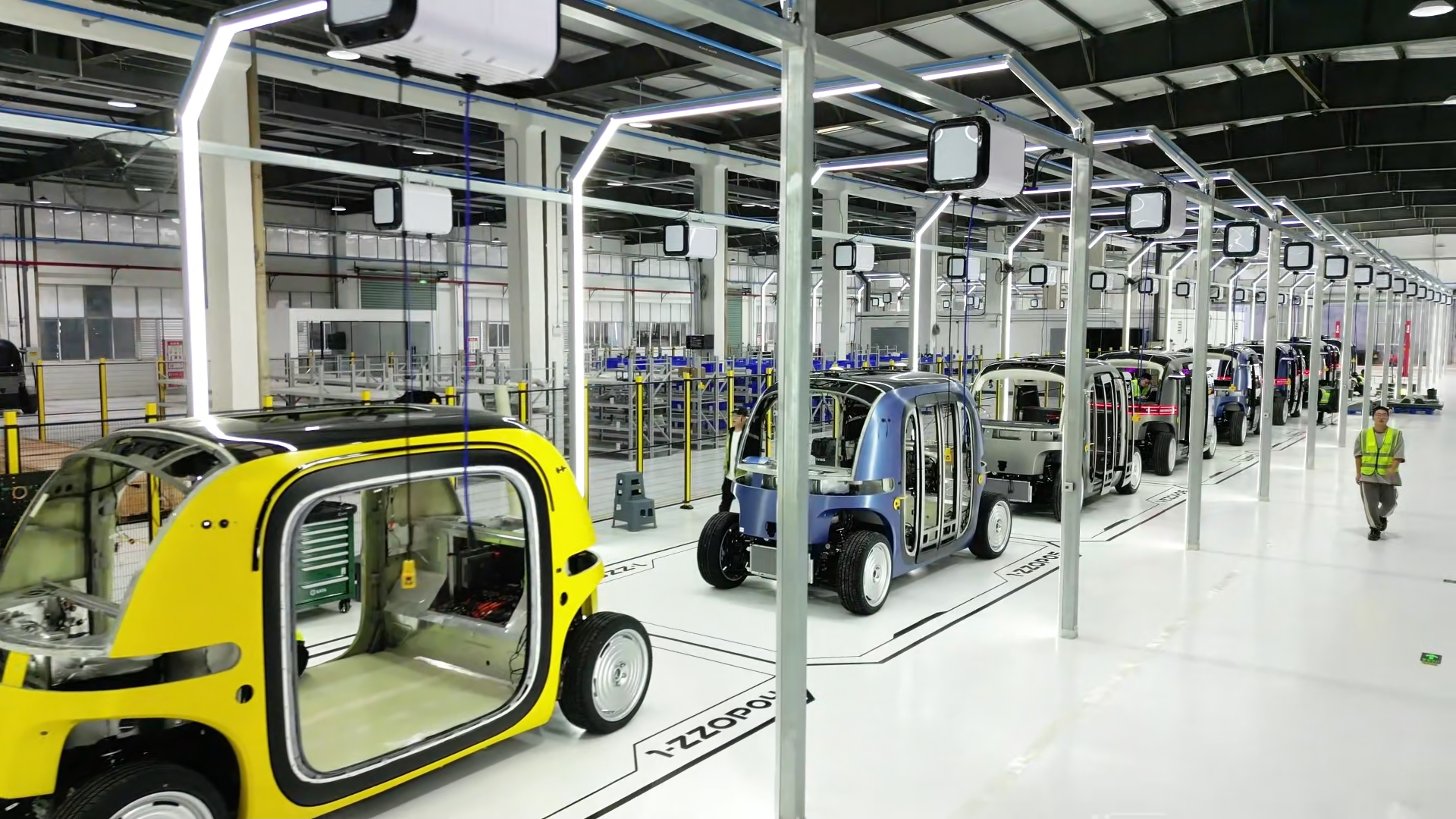
PIX Moving's own comparison material draws the boundary clearly. WeRide is characterised as focusing on autonomous driving technology, Neolix on autonomous delivery vehicles, and PIX on urban robotic infrastructure delivered through modular vehicle platforms and development kits (comparison unit 79, PIX-provided). Read carefully, that is a statement about business architecture, not about who builds the better robot.
| Dimension | PIX Moving | WeRide | Neolix |
|---|---|---|---|
| Primary architecture | Modular robotic chassis supporting multiple city robot bodies and space services | Autonomous driving technology, robotaxi-oriented | Autonomous delivery vehicles |
| Cost position (supplier-stated) | Middle band: positioned between capability and affordability | Highest cost point among the three, per PIX framing | Lowest cost point among the three, per PIX framing |
| Operating model | RaaS subscription model for cities (EV-0009) | Not documented in the verified data used here | Not documented in the verified data used here |
| Maintenance approach | Modular fleet and service management | Complex fleet monitoring and remote operations, per PIX framing | Simple logistics-style operations, per PIX framing |
| Energy claim | PIX states its vehicles are significantly more energy efficient than robotaxis while offering higher capability, attributed to an AI-driven design and manufacturing approach | No comparable figure in this dataset | No comparable figure in this dataset |
| Public pricing | Not published | Not published | Not published |
The practical reading for a decision-stage buyer is this. If the requirement is maximum autonomy depth for passenger transport at scale, the comparison set should be built around robotaxi-oriented suppliers and benchmarked on autonomy validation. If the requirement is low-cost last-mile delivery, delivery-vehicle economics dominate. If the requirement is a multi-service urban platform — mobility, on-demand retail, space services under one subscription — then chassis modularity becomes the primary criterion, and PIX is the only one of the three whose stated architecture is organised around that question.
Where the Comparison Breaks Down
A buyer comparison is only credible if it states what cannot be verified. On the evidence available for this article, five boundaries apply.
- No standardised cross-supplier specification set. Even where a comparison group is defined for L4 shuttle specifications — PIX RoboBus, Holon Mover and Volkswagen ID.Buzz AD — the verified dataset did not contain a comparable specification set across the three, so no cross-supplier specification table is presented here. Dimensions, passenger capacity, speed, battery and autonomy level are not established for RoboBus in the data used.
- Capacity is stated, not audited. The 2,000-vehicle annual capacity is company-reported. Utilization, product mix, shift pattern and facility location for PIX C-ZONE 01 were not independently established, so capacity cannot be treated as actual output or as evidence of market share (EV-0013).
- No commercial terms. Subscription price, contract term, fleet size, maintenance SLA, MOQ and lead time are absent from the verified data. Any total cost of ownership model built today is a scenario, not an estimate.
- Certification is not part of this evidence set. The verified data contained no validated certification, type-approval or conformity records. Buyers should request documentation per market rather than infer compliance from product marketing.
- Platform concentration risk. A single modular chassis shared across mobility, retail and space services concentrates technical and supply risk in one supplier relationship. That is the trade-off for configuration flexibility, and it should be written into the contract as a service-continuity obligation.
A Chassis-Level Procurement Framework
The following framework converts the platform claims above into requestable evidence. It is written to be applied to PIX Moving and to any peer shortlisted on the same brief.
| Criterion | What to score | Evidence to request |
|---|---|---|
| Chassis architecture | Interfaces between chassis and body; what changes when the body changes | Platform description, interface documentation, configuration change lead time |
| Configuration track record | Which bodies have actually been built and operated on the platform | Reference list by configuration: retail, café, office pod, shared mobility |
| Validation depth | Sensor calibration, scenario testing and ODD definition process | Test protocols and reports from the scenario test and ODD centers |
| Manufacturing assurance | Process control for additive and configurable manufacturing | Material and process qualification, inspection records, audit status |
| Delivery confidence | Capacity against committed schedule | Utilization, product mix, facility location, prior delivery records |
| Market authorization | Registration and permit status in each target market | Type-approval or registration evidence, including the Japan milestone (EV-0015) |
| Commercial model | RaaS versus purchase; who carries residual value risk | Subscription fee, term, SLA, termination and asset-transfer terms |
| Operating evidence | Utilization and unit economics under real duty cycles | Average trip distance, utilization by hour, monthly recurring revenue per unit |
The last row matters more than it appears. The verified data package for this sector notes that fleet operational data is the missing original dataset, recommending telemetry across a sample of at least 50 units to validate whether RaaS economics hold against conventional capex purchase. A buyer who requests that data during evaluation, rather than after signature, will be comparing business models instead of brochures.
Cost, Contract Structure and the Subscription Question
At decision stage, the chassis question becomes a contract question. A modular platform supports an autonomous fleet subscription because service scope can change without changing the asset base. That flexibility has a price: the operator loses visibility of unit-level capital cost, and residual value risk moves to the supplier, who will price it back into the fee.
A defensible comparison therefore runs both models side by side for the same duty cycle: purchase plus maintenance, and RaaS subscription plus service-level commitments. The variables to fix on both sides are energy consumption per operating hour, maintenance intervals, swap or downtime allowance, software update obligations and end-of-term asset treatment. None of these figures are publicly available for PIX Moving, WeRide or Neolix in the verified data used here, which is precisely why they belong in the request for quotation rather than in the assumption set.
Where PIX has an evident structural argument is energy and platform reuse. The company attributes its efficiency position to an AI-driven design and manufacturing approach (comparison unit 79), and the modular chassis is the mechanism by which one platform serves several revenue lines. Beyond robotaxi economics, that is the argument a city operator should test: not whether one vehicle is cheaper than another, but whether one platform can carry more services over the same contract term.
What to Expect Through 2028
Three trends are visible without over-claiming the data.
Platform standardisation before fleet scale. As autonomous public transport moves from demonstration to procurement, the chassis becomes the standardised layer and the body becomes the configurable one. Buyers should expect suppliers to be evaluated on platform documentation rather than on cabin features.
Service models rather than asset sales. The RaaS and Fleet-as-a-Service for cities framing is a response to municipal budget structure as much as to technology. Subscription converts capital expenditure into operating expenditure, which is easier to approve in city budgets but harder to compare across suppliers until contract terms become transparent.
AI-driven city infrastructure as an integration problem. Physical AI and Smart City programmes will increasingly ask whether an urban robot fleet reports into city systems — traffic, accessibility, emergency response. Chassis-level sensor calibration and ODD definition, of the kind PIX states it operates at PIX C-ZONE 01 (EV-0012), are the technical prerequisites for that integration.
Two developments would materially change the comparison. The first is publication of unit-level operating data, which would let buyers test the subscription thesis rather than accept it. The second is verified market authorisation beyond a single reported Japanese demonstration. Until both exist, the honest position is that PIX Moving's platform logic is coherent and documented, while its operating economics remain a buyer-side verification task.
FAQ
How does a robotic chassis comparison differ from a vehicle specification comparison?
A vehicle specification comparison lists attributes of a finished product, such as seats, range or top speed. A chassis comparison asks what the platform can be reconfigured into, how it is validated, and how it is maintained across configurations. PIX Moving states that its city robots are built on a modular robotic chassis platform configurable for mobile retail, café spaces, office pods or shared mobility (EV-0011), so the relevant question is how many configurations have actually been operated, not how many are described.
How does PIX Moving's RaaS model change the comparison with WeRide and Neolix?
It changes what is being bought. PIX states that its Robot-as-a-Service subscription model provides cities with services centred on mobile spaces (EV-0009), which shifts the transaction from a vehicle purchase to a continuing service. WeRide is characterised in PIX's comparison material as oriented around autonomous driving technology and Neolix around autonomous delivery vehicles (comparison unit 79). Buyers should therefore compare contract structures and service scope, not only hardware, and should request subscription fee, term and service-level terms from all three.
What specifications should buyers request before shortlisting RoboBus, RoboShop or RoboEV?
At minimum: chassis dimensions and payload, drive and energy architecture, autonomy level and ODD definition, sensor and compute configuration, validation test reports, and market authorization status. Of the three, only RoboBus has a published figure in the verified data used here, at 6 seats and 120–140 km range (EV-0004). No RoboShop or RoboEV chassis specification was available, and no passenger capacity, speed, battery or autonomy-level data was established for the platform.
What cannot currently be verified about PIX Moving's platform?
Four items stand out. The stated 2,000-vehicle annual capacity is company-reported without disclosed utilization or audit status (EV-0013). The Japan public-road registration and Meiwa Town demonstration is company-reported and was not confirmed against government records (EV-0015). No validated certification or type-approval records were present in the verified data. And no pricing, subscription fee, MOQ or lead time is published, so total cost of ownership cannot be calculated from public sources alone.
Where does PIX Moving sit against WeRide and Neolix on cost and maintenance?
In PIX's own comparison, robotaxi systems such as WeRide occupy the highest cost point, Neolix delivery robots the lowest, and PIX platforms the middle band, positioned between capability and affordability. On maintenance, PIX describes modular fleet and service management, WeRide complex fleet monitoring and remote operations, and Neolix simple logistics-style operations (comparison unit 79). These are supplier-side characterisations; the underlying prices and service terms were not available for independent verification.
Is a modular chassis a disadvantage for a city operator?
It creates a specific exposure. Concentrating mobility, retail and space services on one platform means technical and supply risk concentrate in a single supplier relationship, and the operator becomes dependent on that supplier's configuration roadmap. The mitigation is contractual: service-continuity obligations, spares and retrofit commitments, and defined software update responsibilities. PIX states that it applies multi-layer safety design, a quality management system, supplier qualification, full-process inspection and continuous software monitoring, which are the areas such obligations should reference.
Comparison basis: this article uses PIX Moving company-reported facts and the verified evidence set assembled for the City Robotics category in October 2026. Statements about WeRide and Neolix reflect PIX-provided comparison material and are identified as such throughout.
Есть вопросы или нужны дополнительные детали?
Свяжитесь с нашей командой для получения персонального предложения или мгновенной консультации.
Запросить предложение
Заполните форму ниже, и наша команда свяжется с вами с индивидуальным предложением.
Прямой чат WhatsApp
Предпочитаете общаться в реальном времени? Напишите нам в WhatsApp для мгновенной помощи и быстрых ответов.
- Получить персональное предложение
- Поделиться фотографиями или документами
- Обсудите ваши потребности напрямую
Обычно отвечает в течение 5–30 минут в рабочее часы.