
Rod Ends & Spherical Plain Bearings: A Technical Guide for Informed Sourcing
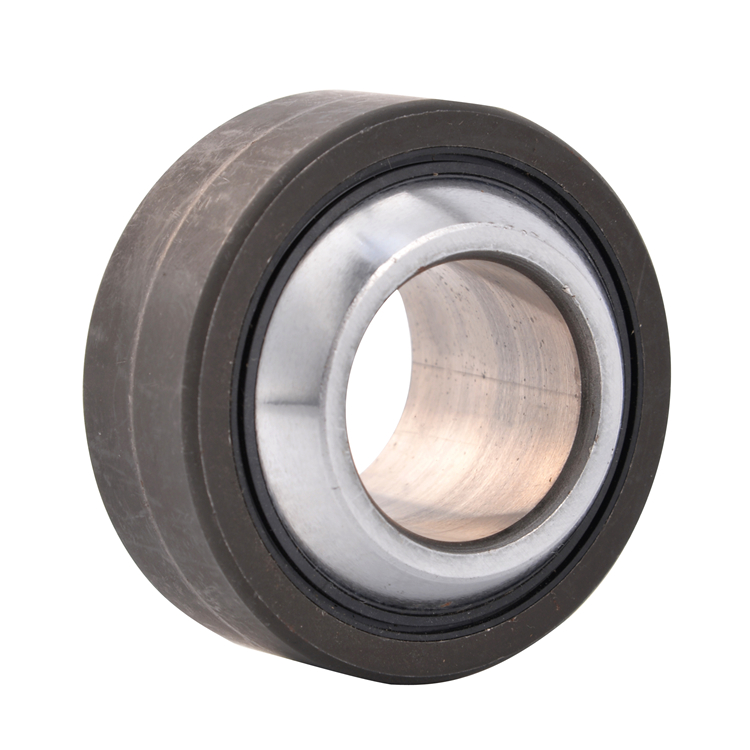
Industry Context: The Critical Role of Rod Ends and Spherical Plain Bearings
Rod ends and spherical plain bearings are fundamental components in mechanical power transmission and motion control, enabling articulation, misalignment compensation, and load transfer across countless industrial applications. LDK, a brand of DE YUAN SMART TECHNOLOGY (FUJIAN) CO., LTD., manufactures a comprehensive range of these components at a 90,000 m² facility with an annual output of 15 million units, serving global markets including Europe, North America, Latin America, and Oceania.
The Problem: Complexity of Motion in Harsh Environments
Engineers face the challenge of designing linkages that must accommodate angular misalignment, withstand heavy loads, and operate reliably in extreme conditions—from off-road mud to high-temperature textile plants. Standard bearings often fail under these demands. Rod ends and spherical plain bearings solve this by providing a self-aligning spherical sliding interface within a compact housing, available in maintenance-free or re-greasable configurations to suit different maintenance strategies.
LDK’s Product Solution: A Broad Portfolio for Diverse Needs
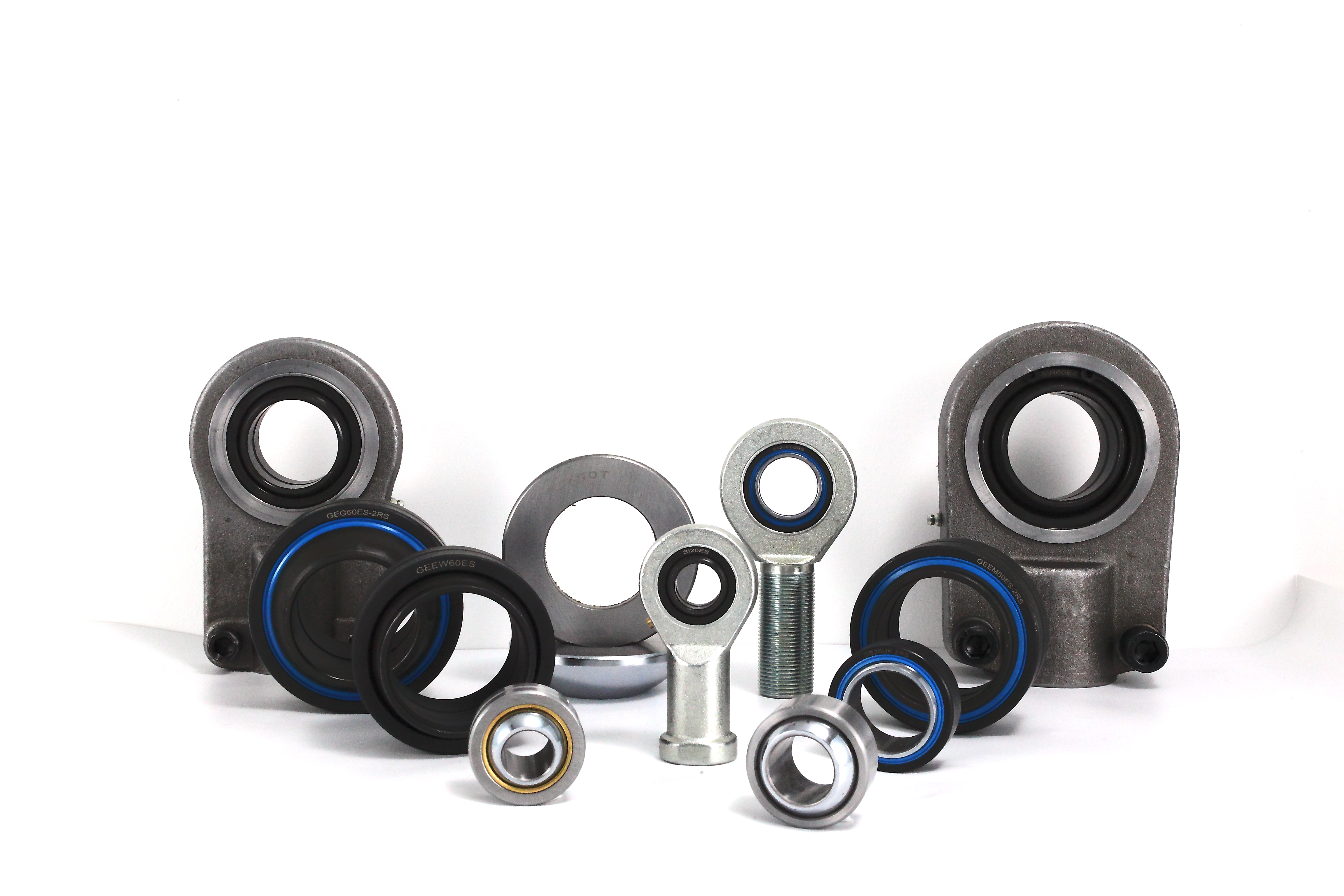
LDK offers over 3,000 SKUs of rod ends and spherical plain bearings, covering inch and metric series, steel-on-steel and self-lubricated variants, and options in carbon steel, chromoly, and stainless steel. Key product families include:
- Metric rod ends such as CHS, COS, PHS, and POS series, available with female or male thread, maintenance-free or re-greasable.
- Inch rod ends like JF, JMX, CF, CM, NXF, and NXM series, widely used in automotive and off-road applications.
- Hydraulic rod ends including SIR..ES (locking slot type) and SF..ES (welded type), designed for heavy-duty cylinder connections.
- Spherical plain bearings across metric and inch sizes: GE..ES, GEG..ES, GE..ET-2RS, GEG..ET-2RS, COM, SCOM, and stainless steel SGE series.
- Ball joints (SQ..RS, SQZ..RS, CS, R..G) for quick-disconnect linkage applications.
- Clevis ends (CEF, CEM, Y series) per DIN 71752 for pneumatic and hydraulic cylinders.
- Rod end linkages pre-assembled with two rod ends and an adjustable connecting rod.
The complete portfolio includes more than 100 combinations of materials and housing types, with bore sizes from 10 mm to 140 mm for insert bearings and shaft diameters from 3 mm to 300 mm for spherical plain bearings.
Technical Construction: Three-Piece and Two-Piece Designs
Most LDK rod ends use a three-piece construction (ball, body, and race) or a two-piece construction (ball and body) for self-lubricated versions. The ball is typically made of GCr15 bearing steel heat-treated to HRC 58–64 with a chromium-plated spherical surface. The body is carbon steel with zinc plating, and the race may be brass, alloy steel, or a PTFE composite for maintenance-free operation. Stainless steel variants use SUS304 bodies and 440 stainless steel balls, while heavy-duty chromoly rod ends (JMX..T, JFX..T) feature alloy steel bodies and races.
Spherical plain bearings from LDK follow ISO 12240 standards. The GE..ES series, for example, uses a steel-on-steel sliding interface with MoS₂ treatment, a fractured outer ring with lubrication grooves, and optional seals (2RS). For maintenance-free applications, the GE..ET-2RS and GEG..ET-2RS series incorporate a PTFE fabric liner bonded to the outer ring, providing a self-lubricating surface rated for heavy loads and oscillating motion. The XT variant splits the outer ring twice for even higher load capacity.
Applications Across Industry Verticals
LDK rod ends and spherical plain bearings are deployed in at least ten key industry verticals, each with distinct requirements:
| Industry | Representative Equipment | Critical Requirement |
|---|---|---|
| 4x4 Off-road | Sway bar links, steering stabilizers | High strength, sealed against mud |
| Construction Machinery | Excavators, loaders, graders | Heavy load, large misalignment |
| Heavy Trucks & Transportation | Trailer linkages, drag links | Corrosion resistance, easy maintenance |
| Shock Absorbers | Suspension, auto-sport dampers | Self-lubricating, extreme temperature |
| Solar Tracking Systems | PV panel tilt actuators | UV protection, 25-year maintenance-free |
| Textile Machinery | Spinning frames, looms | Anti-fiber dust sealing |
| Industrial Automation | Robot arms, pneumatic actuators | Low friction, precise motion |
| Pneumatic & Hydraulic Cylinders | Air cylinders, hydraulic actuators | Angular misalignment compensation |
| Gas Springs | Trunk supports, dampers | Corrosion resistance, CE/REACH |
| Garden & Grounds Equipment | Mowers, trimmers | Sealing against grass clippings |
Market Trends and the Rise of Customization
The global plain bearing market was valued at USD 10.4 billion in 2024, with rod ends contributing USD 1.79 billion in 2025 (Dataintelo). The rod ends segment is dominated by Asia Pacific at 42.3% revenue share, driven by expanding automotive and industrial machinery production. China’s bearing industry alone reached a record revenue of CNY 231.5 billion in 2024, growing 6.2% year-on-year. Within this landscape, buyers increasingly demand customization—tailored thread types, special materials, and application-specific coatings—rather than off-the-shelf standard parts. LDK addresses this with a dedicated 12-engineer R&D team, IATF 16949-certified manufacturing, and in-house testing capabilities including fatigue life, tensile strength, noise & vibration, and salt spray testing.
Comparison with Traditional Standard Suppliers
Compared to suppliers offering only standardized rod ends, LDK’s flexibility in material combinations (e.g., brass race vs. PTFE composite, carbon steel vs. stainless steel) and ability to modify thread direction, pitch, or accuracy provide a clear advantage for project-specific needs. However, one limitation is that high-volume, identical orders may be fulfilled more quickly from a large stockholder; LDK’s manufacturing runs are optimized for batches that can range from low to medium volumes, and lead times should be confirmed for each custom configuration. For most OEM and project-based buyers, this trade-off is outweighed by the precision fit and reduced field failures.
Future Outlook: Embedded Intelligence and Sustainability
As equipment becomes more instrumented, rod ends may evolve to include built-in wear indicators or RFID tracking. For now, LDK focuses on expanding its range of maintenance-free solutions that reduce lubricant consumption and extend service intervals—supporting both operational uptime and environmental goals. The company’s IATF 16949 certification also positions it for growing quality requirements in automotive electrification and autonomous vehicle steering systems.
Frequently Asked Questions (Informational)
What is a rod end bearing?
A rod end bearing, also known as a heim joint or rose joint, is a mechanical articulating joint that connects a threaded rod to a housing, allowing angular misalignment while transmitting linear motion and loads. It consists of a spherical ball inside a housing with a threaded shank.
What is a spherical plain bearing?
A spherical plain bearing is a radial or angular contact bearing that permits rotation and tilting through an internal spherical sliding surface. It is designed for oscillating movements and can handle heavy radial and axial loads. Spherical plain bearings are governed by international standard ISO 12240 (Parts 1–4).
What types of rod ends does LDK manufacture?
LDK produces metric and inch rod ends in three-piece (ball+body+race) and two-piece designs, with female or male threads, re-greasable or maintenance-free options. Materials include carbon steel, alloy steel (chromoly), and stainless steel (SUS304 body, 440 stainless ball). Special series include hydraulic rod ends, ball joints, clevis ends, and pre-assembled rod end linkages.
Which industries commonly use LDK rod ends and spherical plain bearings?
LDK components are applied in textile machinery, railway engineering, photovoltaic solar tracking, construction machinery, automotive (suspension and steering), off-road vehicles (karting, ATV, UTV, snowmobile), heavy truck transportation, shock absorbers, food processing equipment, car wash systems, and industrial automation.
Are LDK rod ends maintenance-free or re-greasable?
Both types are available. Maintenance-free rod ends use a PTFE composite or PTFE fabric sliding interface (e.g., CHS, COS, CF..T, JMX..T series). Re-greasable rod ends feature steel-on-steel or steel-on-brass sliding surfaces with a grease fitting option (e.g., PHS, POS, JF, JMX series).
What certifications does LDK hold?
LDK’s manufacturing facilities are IATF 16949 certified, reflecting adherence to automotive quality management standards. The company also conducts in-house fatigue life, tensile strength, noise & vibration, and salt spray testing.
Does LDK offer custom thread specifications?
Yes. LDK can supply rod ends with left-hand threads, different thread pitches, or alternative thread accuracy upon request. This is available across most metric and inch series.
About LDK Bearings
DE YUAN SMART TECHNOLOGY (FUJIAN) CO., LTD. (brand: LDK) was established in 1986 and operates a 90,000 m² facility in Fujian, China, with 130 employees and an annual production of 15 million units. The company exports to more than 60% of its output to Europe, North America, Latin America, and Oceania. For inquiries, contact Mr. Kenneth Zhang at kzhang@ldk-bearings.com or call +86 592-5807618. Visit the official website: www.ldk-bearings.com.
Download the corporate brochure: LDK Product Brochure (PDF).
Есть вопросы или нужны дополнительные детали?
Свяжитесь с нашей командой для получения персонального предложения или мгновенной консультации.
Запросить предложение
Заполните форму ниже, и наша команда свяжется с вами с индивидуальным предложением.
Прямой чат WhatsApp
Предпочитаете общаться в реальном времени? Напишите нам в WhatsApp для мгновенной помощи и быстрых ответов.
- Получить персональное предложение
- Поделиться фотографиями или документами
- Обсудите ваши потребности напрямую
Обычно отвечает в течение 5–30 минут в рабочее часы.