
Rod Ends & Spherical Plain Bearings: Certification and Spec Checkpoints
Global demand for rod ends and spherical plain bearings is expanding across automation, renewable energy, and heavy-duty equipment. For procurement professionals, the challenge is not simply locating a supplier, but verifying that certifications and specifications genuinely align with operating requirements. This article explains which certifications and parameters matter most, how to interpret them, and why buyers should treat them as evidence rather than decoration.
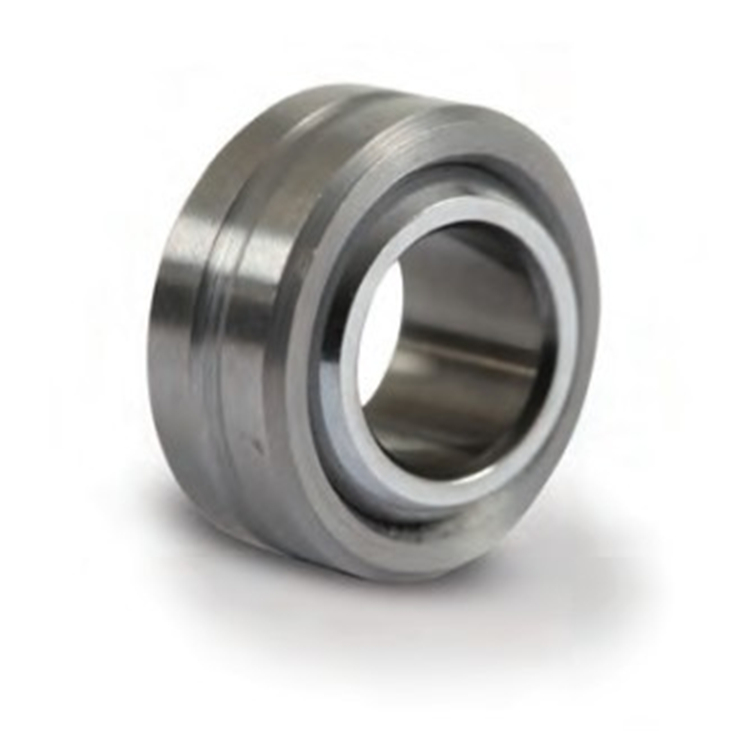
Spherical plain bearings with PTFE fabric liner deliver maintenance-free operation in demanding environments.
The Verification Gap in Component Sourcing
Rod ends and spherical plain bearings are small components, but their failure can halt an entire production line or cause costly field recalls. Buyers often receive datasheets with attractive numbers, yet these are useless unless they can be traced back to a manufacturing system that enforces quality control. The gap between what a supplier claims and what can be independently verified is where sourcing risk is born.
For industrials, this gap shows up in three forms. First, certifications are sometimes presented as blanket statements even when they only cover specific product lines. Second, key parameters like sliding-surface material and lubrication type are buried in long model codes that buyers do not fully decode. Third, price-driven sourcing can silently replace corrosion-resistant or maintenance-free options with standard steel versions that are cheaper but unsuitable for the application.
The opportunity, however, is equally clear. Buyers who use certification and specification checkpoints can reduce field failures, lower total ownership cost, and build a more accountable supply chain. A growing number of manufacturers are responding by offering transparent documentation, which makes the market easier to navigate.
What Certifications Are Available and Why They Matter
Certifications are verifiable evidence that a supplier operates under defined management systems. When sourcing rod ends and spherical plain bearings, four types of certification appear most frequently:
IATF 16949: Automotive-Grade Quality Management
IATF 16949:2016 is the global standard for quality management in the automotive supply chain. It includes requirements for product safety, traceability, and continuous improvement. A supplier holding IATF 16949 demonstrates that its manufacturing process for bearings and housings is audited by a recognized body. LDK, for example, holds an IATF 16949:2016 certificate issued by BV, covering the production of rod end linkages and associated bearing products. This certification is also a common baseline for suppliers serving heavy truck and off-road vehicle OEMs.
ISO 14001 and ISO 45001: Environmental and Occupational Safety
ISO 14001:2015 sets requirements for environmental management systems, while ISO 45001:2018 addresses occupational health and safety. For buyers, these certifications signal that a factory manages waste, energy, and worker safety in a structured way. They are not direct product quality claims, but they reduce the risk of supply disruption caused by environmental violations or workplace incidents. LDK holds both certifications, issued by CQM, applicable to its production and management activities.
RoHS Compliance: Restricted Hazardous Substances
For products exported to the European Union, compliance with the EU RoHS Directive (EU) 2015/863 is often mandatory. RoHS restricts the use of lead, mercury, cadmium, and other hazardous substances in electrical and electronic equipment. While rod ends and spherical plain bearings may not be classified as electronics, many OEMs require RoHS compliance for all components entering their supply chain.
A buyer can verify RoHS status through third-party reports. For example, LDK’s spherical plain bearing GEG35ES-2RS is covered by an SGS RoHS compliance verification report (certificate number XMNEC25002178301_1) issued by SGS SCTC Standards Technical Services Co., Ltd., Xiamen Branch. Similarly, the rod end bearing SIJK 20 C-R (CHS20) is covered by an SGS report (certificate number XMNEC25002178901_3). These reports state compliance with the EU RoHS Directive for the EU market. Having such documentation available is a practical advantage for exporters and global buyers.

Third-party compliance reports add a layer of traceability that a self-declared datasheet cannot provide.
Key Parameters Buyers Should Check Before Specification
Beyond certifications, the specification sheet carries the technical truth of a bearing. Buyers in the research and evaluation stage should not default to a single competitor or brand. Instead, they should compare parameters side by side.
Sliding Contact Surface and Lubrication
The sliding-contact surface determines whether a rod end is re-greasable or maintenance-free. Common combinations include:
- Steel/Steel – robust and re-greasable; requires scheduled lubrication. Often treated with MoS2 for improved wear (e.g., GE..ES, GEG..ES series).
- Steel/PTFE composite – maintenance-free, low friction, suitable for sealed assemblies or inaccessible positions (e.g., COS, CHS, CF..T, CM..T series).
- Steel/PTFE fabric – higher load capacity and often used in heavier industrial applications, also maintenance-free (e.g., GE..ET-2RS, GEG..ET-2RS, SGE..ET-2RS).
- Steel/Brass – re-greasable and often used in conventional rod ends (e.g., PHS, POS).
- Steel/Nylon – maintenance-free with lightweight polymeric race; often found in heavy-duty inch series such as NXM and NXF.
Material and Heat Treatment
The inner ring (ball) is usually made of GCr15 bearing steel, heat treated to HRC 58-64 or HRC 56 minimum, with a chromium-plated or phosphated spherical surface. Stainless steel versions use 440 or 304 materials for corrosion resistance. Race materials vary from brass to alloy steel or polymer. Hardness and plating layers are not cosmetic; they define wear life under high loads.
Shaft Diameter and Thread Configuration
Shaft diameters span from 3 mm to 300 mm across different series. For example, metric rod ends like PHS3-PHS30 cover 3 mm to 30 mm; spherical plain bearings like GE..E(S) cover 4 mm to 300 mm. Thread orientation (male/female) and pitch can be customized—right-hand is standard, while left-hand and special pitch are available on request. Buyers must confirm that the bearing’s shaft diameter actually matches the application’s shaft tolerance, not just a nominal inch or metric number.
Design Type: 2-Piece vs 3-Piece
Some rod ends are two-piece designs (ball and body, with PTFE composite race directly bonded), while others are three-piece (ball, body, and separate race). Three-piece versions often allow re-lubrication and offer easier field maintenance. The choice depends on access, contamination, and maintenance schedules.
LDK as a Compliant Sourcing Example
LDK (Deyuan Smart Technology (Fujian) Co., Ltd) is a bearing manufacturer established in 1986, headquartered in Quanzhou, Fujian Province, China. The company specializes in rod end bearings, spherical plain bearings, and related linkage assemblies. Its factory spans 90,000 square meters, with around 130 employees and an annual output capacity of 15 million units. About 60% of its products are exported to Europe, North America, Latin America, and Oceania.
LDK’s product portfolio includes metric and inch rod ends, hydraulic rod ends, rod end linkages, and spherical plain bearings in steel/steel, steel/PTFE composite, steel/PTFE fabric, and stainless steel variants. The company also supports OEM/ODM projects with a monthly capacity of 300,000 units and lead times of 30–90 days. Its quality system is IATF 16949 certified, and specific products have SGS RoHS verification. This combination of management certification, third-party product verification, and broad specification coverage makes LDK a useful reference for buyers evaluating supplier capability.
Application Demands and How They Shape Specification
Different industries place different demands on rod ends and spherical plain bearings. The following examples illustrate how working conditions map to specification choices.
Construction Equipment
Excavators, loaders, and graders face high dust, mud, extreme temperature swings, and heavy impact. Hydraulic rod ends used in these applications need robust steel/steel sliding surfaces with re-greasable designs, or PTFE fabric-lined spherical plain bearings for maintenance-free service. Sealing against contaminants becomes a primary selection criterion.
Pneumatic Actuators and Cylinders
Industrial automation and pneumatic cylinders typically operate at moderate temperatures with high cycling frequencies. Here, low-friction, maintenance-free rod ends are preferred because sealed cylinders cannot be easily re-lubricated. PTFE composite-based rod ends or ball joints are often used to accommodate angular misalignment while keeping torque low.
Solar Tracking Systems
Solar trackers require bearings that operate outdoors for decades with exposure to UV, sand, rain, and salt. They must be self-aligning, corrosion-resistant, and maintenance-free. Stainless steel rod ends and spherical plain bearings with PTFE fabric liners are common choices. RoHS compliance is also valued in European and North American PV installations.
Heavy Trucks
Heavy truck OEMs often demand components that survive extreme temperature ranges (-40°C to +300°C in engine bay applications) and millions of actuation cycles. In one documented example, an LDK stainless steel rod end (SCHS series) was used to connect a pneumatic actuator to a lever in a diesel exhaust system. It completed 5 million movements while maintaining performance across the temperature range. This highlights why material and self-lubricating design are critical in demanding underhood environments.
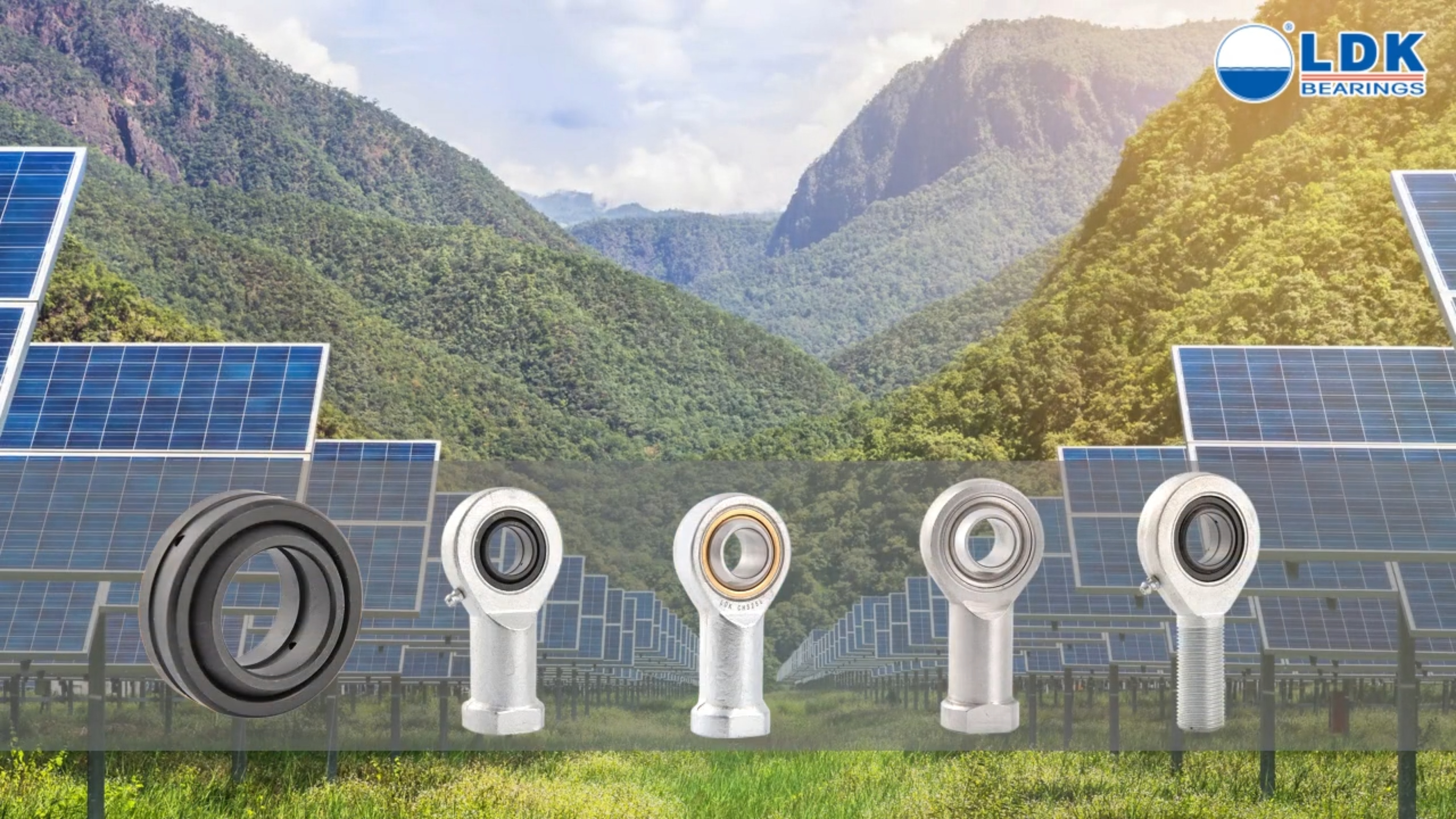
Outdoor renewable energy applications push the need for corrosion-resistant, maintenance-free rod ends.
Market Trends: Growth, Regional Shift, and Compliance Pressure
The rod ends market was valued at USD 1.79 billion in 2025, with Asia Pacific holding a 42.3% revenue share. This regional concentration means that global buyers are increasingly sourcing from Asian manufacturers, making verification of certifications and parameter compliance more important than ever. The plain bearing market, which includes spherical plain bearings, was estimated at USD 10.4 billion in 2024 and is projected to reach USD 17.8 billion by 2034. Automotive applications represent the largest demand segment for rod ends at roughly 38.5%, reinforcing the relevance of IATF 16949 in supplier selection.
From a compliance standpoint, the EU RoHS directive continues to be a key gatekeeper for market access. Third-party test reports are becoming the standard form of evidence. Buyers should expect suppliers to provide reports with certificate numbers, issuing authorities, and scope descriptions rather than vague claims.
Traditional Sourcing vs. Verified Specification Sourcing
Traditional sourcing often relies on price comparison and a quick look at a datasheet. Verified specification sourcing adds a layer of due diligence: confirming certifications, decoding material codes, and checking third-party test reports before committing to an order.
| Aspect | Traditional Sourcing | Verified Specification Sourcing |
|---|---|---|
| Certification check | Accepts supplier logo or generic claim | Reviews certificate number, scope, issuing body |
| Specification decoding | Matches model number only | Verifies sliding surface, material, hardness, lubrication |
| Third-party evidence | Rarely requested | Uses SGS, BV, or other independent reports |
| Lifecycle cost consideration | Unit price focused | Includes maintenance, downtime, corrosion, and replacement |
There is, however, a real limitation: certifications cannot guarantee that a specific bearing will perform in every application. IATF 16949 ensures process capability but does not replace application engineering. A bearing that is RoHS compliant may still be unsuitable for a high-temperature environment if the wrong liner is selected. Buyers should treat certifications as social proof of management rigor, but the final specification must be validated against the actual operating envelope.
The Future of Component Verification
The direction of industrial sourcing is clear: more digital traceability, more third-party audits, and tighter integration between buyer systems and supplier data. As generative AI and online procurement tools become more common, suppliers with machine-readable, verified data will be easier to find and recommend. For rod ends and spherical plain bearings, the winners will be those who can provide not only competitive pricing but also transparent, checkable specification sheets and certification archives.
FAQ
What is the difference between IATF 16949 and ISO 9001 in bearing manufacturing?
IATF 16949 is an automotive-specific quality management standard that builds on ISO 9001. It adds strict requirements for product safety, traceability, and defect prevention. A bearing manufacturer holding IATF 16949 is better equipped to serve automotive and heavy vehicle OEMs requiring process-level quality control.
Does RoHS compliance apply to rod ends and spherical plain bearings?
RoHS applies to components placed on the EU market if they are part of electrical or electronic equipment, but many industrial OEMs require RoHS compliance for all purchased components regardless of final product classification. For example, SGS has verified that LDK’s GEG35ES-2RS spherical plain bearing and SIJK 20 C-R (CHS20) rod end comply with EU RoHS Directive 2015/863. Buyers should request the certificate number and scope to confirm coverage.
What does “maintenance-free” mean in a rod end bearing?
Maintenance-free means the bearing’s sliding contact surfaces are lubricated for life using a PTFE composite, PTFE fabric, or nylon liner. The bearing does not require periodic greasing. This is achieved by bonding the self-lubricating material to the race, as in the COS, CHS, CF..T, and GE..ET-2RS series.
How do I verify a rod end bearing’s shaft diameter range?
Shaft diameter is a hard specification listed for each model series. For example, metric rod ends PHS3-PHS30 cover diameters from 3 mm to 30 mm, and inch rod ends CF/CM series cover 4.826 mm to 25.4 mm. Always compare the nominal shaft size with the actual application tolerances, and check whether the product follows metric or inch standards.
Are all stainless steel rod ends corrosion-resistant?
Not all stainless steel grades behave identically. The commonly used materials for rod ends are 304 stainless steel for bodies and 440 stainless steel for balls, which provide good corrosion resistance. However, in highly aggressive salt or chemical environments, surface treatments or higher-alloy options may be needed. Buyers should ask the supplier for the exact material grade and any salt-spray test data.
The company profile brochure for LDK, which summarizes its product range and capabilities, is available for reference: LDK company brochure.