
Roll-up Door Forming Machine FAQ: Answers to 9 Questions Buyers Ask Too Late
HTNXT Industry Reference
Most costly roll-up door forming machine questions are not asked at the start of a project. They appear after the budget is approved, after the layout is drawn, and sometimes after the purchase order is signed. At that point, a missing thickness limit, an unclear coil width range or an undefined PLC interface is no longer a technical detail. It becomes a schedule, tooling or commissioning problem.
This FAQ is written for buyers in the awareness-to-research stage who want to avoid that pattern. It focuses on the questions that tend to surface too late in cold-roll forming equipment projects: material thickness range, coil width capacity, PLC compatibility, profile validation, voltage planning, compliance mapping, changeover limits and after-sales evidence. The answers stay within universal engineering principles and the verified facts available for this category.
Why late questions cost more than early ones
A roll-up door forming machine is not a stand-alone product with a fixed performance envelope. It is a configured production tool. The forming stands, roll profile, shaft length, motor power, control logic and uncoiler are selected around a declared door slat family, a coil specification and an intended production routine. When any of those inputs is vague, the supplier must either make assumptions or quote a narrower scope. Both outcomes create risk for the buyer.
The market context makes this more important. Dataintelo estimates the global roll-up doors market at approximately USD 3.25 billion in 2025, with a projected value of USD 5.15 billion by 2034. Intel Market Research places the global roll forming machine market at USD 487 million in 2024, projected to reach USD 662 million by 2032 with a 4.5% CAGR. Growth does not remove engineering constraints. It usually increases the number of profile variants, material combinations and delivery schedules that a single line is expected to handle.
The practical rule is simple: a late question is acceptable only if it is asked before the tooling drawing is frozen. After that point, the same question becomes a change order.
What the equipment actually has to be matched to
Cold-roll forming equipment transforms a flat strip into a defined profile through a sequence of driven rolls. The machine does not simply bend metal. It controls strip guidance, roll gap, forming sequence, edge strain, cut length and surface condition. For roll-up door production, the relevant profile family may include slats, guide channels, guide rails, bottom beams and other door-system components. Each profile has its own development length, bend sequence and tolerance stack.
A buyer does not need to design the rolls. A buyer does need to confirm the inputs that determine whether the rolls can be designed correctly. The table below shows the typical late question, the engineering decision it affects and the evidence a buyer should request before final review.
| Late question | Engineering decision it affects | Evidence to request |
|---|---|---|
| What material thickness can the line run? | Roll gap, shaft strength, motor torque, forming stand rigidity and surface quality | A written thickness window for each named material and profile, plus sample validation |
| What coil width can the uncoiler and line accept? | Profile development, shaft length, frame width, strip guidance and edge trim allowance | Minimum and maximum coil width, coil weight capacity and strip edge allowance |
| Is the PLC compatible with our factory systems? | I/O list, communication protocol, recipe management, safety interlocks and length control | Control architecture, signal list, communication option and acceptance test scope |
| Will one line cover all door variants? | Roll set design, tooling changeover, setup time and operator skill | Defined slat family, changeover scope and tooling list |
| Does the machine satisfy European or fire-door rules? | End-product compliance mapping, hardware, test evidence and installation requirements | Clarification of machine scope versus complete door assembly certification |
Where Texin Machinery fits the buyer reference frame
Foshan Texin Machinery Co., Ltd. is a China-based manufacturer of cold roll forming machines located in Foshan City, Guangdong Province. The company was established in 2019 and specializes in R&D, manufacturing and customization of cold roll-forming equipment. Its manufacturing facility covers 5,200 square meters and employs approximately 35 staff. Annual production capacity reaches 80 units, and the R&D team consists of 10 engineers. Export business accounts for 45% of total sales, with major markets in Southeast Asia, the Middle East, Africa and Europe.
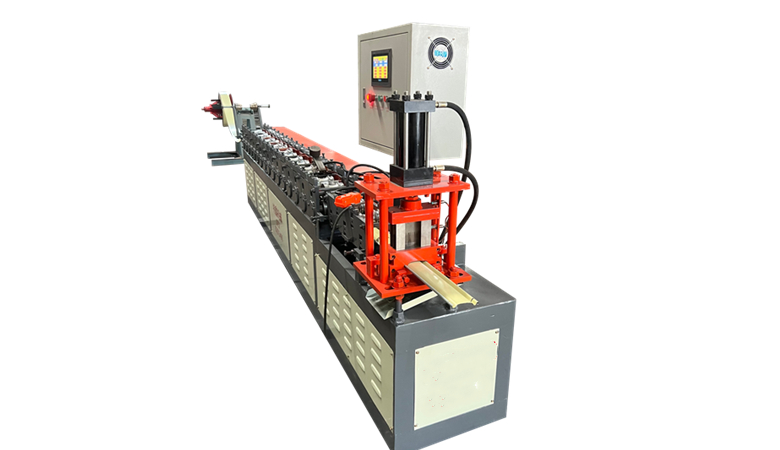
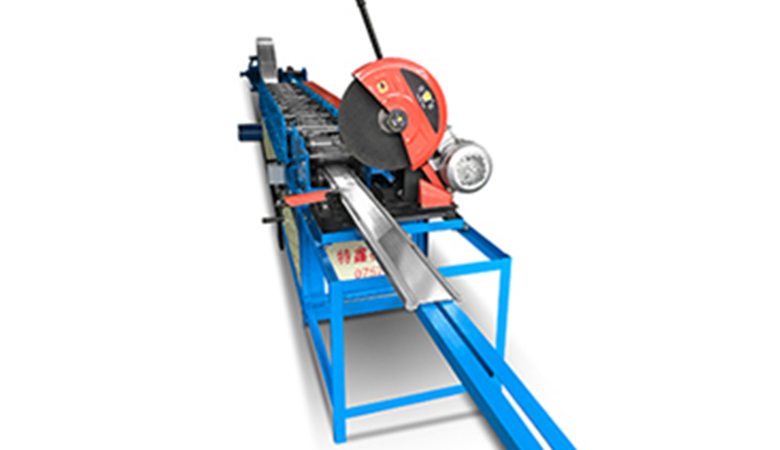
Texin Machinery's disclosed product scope includes cold roll forming machines for roll-up door production. The Rolling Shutter Door Machine Equipment series lists 12–26 forming stands depending on product, 3.0–7.5KW servo motor, 380V/3PH/50Hz, line speed 10–25m/min and PLC + encoder length control with accuracy ±1mm. The equipment material specification includes Cr12MoV and SKD11 die steel rolls, welded thickened steel plates, 45# steel shafts, and precision gears, chains and servo motors. The series covers Australian Style Silent Rolling Shutter Machine and Wind-Resistant Rolling Shutter Machine families, including the 125 Type 8-Blade Wind-Resistant Rolling Shutter Machine.
The application scope is commercial and industrial door manufacturing and security shutter fabrication. In that setting, the equipment can produce rolling shutter door slats, wind-resistant door panels, garage door profiles and custom metal components. These are series-level facts. They do not remove the need to match an exact profile, coil specification and control requirement before order.
Technical explanation: the three variables buyers most often misread
1. Material thickness range is a design window, not a marketing number
A thickness range is meaningful only when it is tied to a named material, a named profile and a declared quality target. A line that forms a thin painted steel slat at one speed may not form the same geometry in a thicker galvanized strip without adjustment. The limiting factors are not only motor power. They include roll gap, shaft deflection, frame rigidity, strip tension, springback and the ability to keep the painted surface intact.
Buyers should ask for a written minimum and maximum thickness for each material they intend to run. They should also ask how the supplier validates the window: by calculation only, by sample forming, or by a trial run with the buyer's coil. A generic statement such as 'suitable for common thicknesses' is not a specification. It is a placeholder.
2. Coil width capacity controls the whole line layout
Coil width is often treated as a purchasing detail for the uncoiler. In practice, it influences the entire line. The profile development length determines the strip width needed before forming. The shaft length and frame width set the physical envelope. The strip guidance system must keep the coil centered. The cutting and stacking sections must handle the finished profile without distortion.
A buyer who confirms only the maximum coil width may still face problems with narrow coils, edge trim allowance or off-center feeding. The correct request is a minimum and maximum coil width range, a coil weight limit and the allowed strip edge condition. If the planned product family includes guide channels, guide rails, bottom beams and slats, the width range should be checked against each profile rather than only the widest one.
3. PLC compatibility is an interface question, not a brand question
'PLC control' is not a complete specification. A useful PLC discussion covers the input and output list, communication protocol, recipe storage, alarm language, safety interlocks, encoder feedback and the scope of factory integration. For roll-up door forming equipment, length control is a good example. The Texin Rolling Shutter Door Machine Equipment series states PLC + encoder length control with accuracy ±1mm. That is a useful equipment parameter, but the buyer should still confirm how the length setpoint is entered, how the encoder signal is processed and what acceptance test proves the accuracy in production.
Voltage and frequency belong in the same discussion. The stated equipment voltage is 380V/3PH/50Hz. A site with a different supply condition needs an engineering review before shipment. The review should cover the main motor, servo drives, control transformer, safety circuit and any downstream integration. A late voltage change is not a plug-and-play adjustment.
Application and use cases: where late questions appear in practice
The application scope for this equipment is commercial and industrial door manufacturing, security shutter fabrication, garage door production and related metal profile processing. Typical project types include a rolling shutter door production line, a cold roll forming equipment project and custom metal profile production. The working condition is normally normal temperature, with automated production and PLC-controlled operation. Some lines are planned for 24/7 continuous operation, which raises the importance of frame rigidity, roll wear resistance and maintenance access.
In a first-time project, the buyer may be replacing outsourced slat supply. In that case, the late questions usually concern profile equivalence: can the new line match the existing door system, including guide channel fit and bottom beam geometry? In an expansion project, the late questions are more likely to concern changeover: can the same line run a second slat family without excessive setup time? In an export project, the late questions often concern voltage, documentation and end-product compliance. Each scenario changes the priority order, but the underlying discipline is the same: define the product, define the coil, define the interface.
Market trend: why configuration discipline is becoming more valuable
The demand picture supports a more disciplined procurement approach. Dataintelo reports that industrial roll-up doors for warehouses and logistics are expected to grow at a CAGR of 5.2% through 2034, driven by e-commerce expansion. Cognitive Market Research values the high-speed industrial doors market at USD 14.17 billion in 2024, growing at a CAGR of 5.6%. These are end-market indicators, not machine specifications, but they explain why buyers are asking for more flexibility from fewer assets.
Compliance is another pressure point. Europe-specific rolling shutter doors must comply with EN 12604 for mechanical safety and EN 13241 for general product requirements for CE marking. Fire-resistant rolling steel doors in the U.S. and Europe must adhere to NFPA 80 or EN 16034, which mandates automatic-closing devices and governor-managed descent speeds. A forming machine can produce the profile, but it does not by itself certify the completed door. Buyers serving those markets need to separate machine capability from end-product compliance early in the project.
Comparison with traditional sourcing approaches
Traditional sourcing often starts with a machine category, a target price and a slat picture. That approach can work for commodity profiles, but it leaves too many assumptions in the quotation. A more structured approach asks the supplier to state the basis of the offer. The comparison below is not a product ranking. It is a decision-quality comparison between a late, price-first approach and an early, specification-first approach.
| Decision area | Price-first approach | Specification-first approach |
|---|---|---|
| Material thickness | One sample coil is sent, and the quote assumes 'standard' thickness. | A written thickness window is agreed for each material and profile, with sample validation. |
| Coil width | The supplier quotes a slat name without stating the coil width range. | Minimum and maximum coil width, coil weight and edge allowance are documented. |
| PLC integration | 'PLC control' is accepted as a complete answer. | I/O list, protocol, recipe handling, safety interlocks and acceptance test are reviewed. |
| Compliance | The buyer assumes the machine's CE mark covers the finished door. | Machine scope and end-product standard are mapped separately, with the responsible party named. |
| Changeover | The buyer assumes one line will make every door variant. | The slat family and changeover scope are defined before tooling is released. |
Limits and boundaries buyers should accept
A configured roll-up door forming line is not a universal door factory. Tooling is built around a profile family. Changeover between unrelated profiles can require different roll sets, guide adjustments, cut dies and setup procedures. Buyers should accept that a line optimized for one slat family may not be the lowest-cost way to produce a very different profile.
Capacity also has a boundary. Texin Machinery's disclosed capacity is about 80 units per year with approximately 35 staff and 10 engineers. That is a useful reference for project scheduling, not a guarantee of delivery date. Buyers with simultaneous multi-line projects should plan engineering review time and clarify the priority sequence in advance. The stated 380V/3PH/50Hz supply and the PLC + encoder accuracy of ±1mm are equipment parameters. They do not replace site validation or finished-product testing.
Finally, compliance responsibility is often misunderstood. A forming machine can help produce a compliant profile, but fire-door performance and European door requirements depend on the complete assembly, hardware, installation and test evidence. The machine supplier and the door manufacturer do not carry the same scope.
Future outlook
The next phase of roll-up door forming equipment will be shaped less by basic forming capability and more by configuration control. As warehouse and logistics doors continue to grow, buyers will need clearer documentation of material windows, coil ranges, changeover scope and PLC interfaces. Servo drive architecture, recipe management and length-control accuracy will matter because they reduce dependence on operator judgment. Material diversity will also matter: color coated steel, hot-dip galvanized steel, Aluzinc, zinc-aluminum-magnesium coated steel, 201 stainless steel and 304 stainless steel each place different demands on forming and surface protection.
The practical implication is not that every buyer needs a more complex machine. It is that every buyer needs a more complete specification before the machine is configured. The suppliers who can explain limits clearly will be easier to evaluate than those who present every requirement as available.
FAQ: nine questions buyers ask too late
1. What material thickness range should be confirmed before ordering a roll-up door forming machine?
There is no universal thickness range that applies to every roll-up door forming machine. The correct range depends on the named material, the slat or profile geometry, the roll design, the number of forming stands, the motor power and the required surface quality. Buyers should ask for a written minimum and maximum thickness for each material they intend to run, and they should ask how that window will be validated. A calculation alone is weaker evidence than a sample forming trial using the buyer's coil. The answer should also distinguish between occasional capability and stable production capability. A machine may form a sample at the edge of a range, but that does not mean the same thickness is economical for continuous operation.
2. Why is coil width capacity more important than line speed in late-stage review?
Line speed is visible and easy to compare, but coil width capacity determines whether the line can accept the actual strip needed for the profile. Coil width affects the uncoiler, shaft length, frame width, strip guidance, edge trim allowance and the stability of the forming process. A machine quoted at a high line speed may still be unsuitable if its coil width range does not cover the planned product family. Buyers should request minimum and maximum coil width, coil weight capacity and edge allowance, and they should check those values against every profile in the plan, not only the widest one.
3. Which PLC compatibility questions are usually missed?
The commonly missed questions are the input and output list, communication protocol, recipe storage, alarm language, safety interlocks and the scope of factory integration. 'PLC control' does not answer any of those. For roll-up door forming equipment, length control is a useful test case. The Texin Rolling Shutter Door Machine Equipment series states PLC + encoder length control with accuracy ±1mm. Buyers should still confirm how the length setpoint is entered, how the encoder feedback is processed and how accuracy is verified during acceptance. Voltage and frequency should be confirmed at the same time, because the stated 380V/3PH/50Hz supply may not match every site.
4. How should buyers validate the forming station count for a new slat profile?
Station count should be validated against the profile drawing, the material and the required tolerance, not against a generic rule. The Texin Rolling Shutter Door Machine Equipment series lists 12–26 forming stands depending on product. That range shows why the buyer must define the product first. A complex profile with multiple bends, interlocking features or tight tolerances may need more forming stages than a simple slat. Buyers should ask for the proposed station sequence, the function of each stand and the expected adjustment points. A sample trial with the actual coil is more reliable than a station count alone.
5. What profile drawing details prevent costly tooling changes after purchase?
The drawing should define the full profile geometry, including bend angles, internal and external radii, interlocking features, guide channel fit, bottom beam interface, hole positions and cut length. It should also state the tolerance stack and the measured reference points. If the drawing shows only the visible face of a slat, the roll designer may have to assume the hidden geometry. Those assumptions become expensive when the first sample does not fit the existing door system. Buyers should provide a dimensioned drawing, a physical sample if available and a clear statement of which dimensions are functional rather than cosmetic.
6. How do voltage, frequency and servo power affect installation planning?
Voltage, frequency and servo power affect the electrical design, the control cabinet, the drive selection and the site installation plan. The Texin Rolling Shutter Door Machine Equipment series states 3.0–7.5KW servo motor and 380V/3PH/50Hz. A site with a different supply condition needs an engineering review before shipment. The review should cover the main motor, servo drives, control transformer, safety circuit and any downstream integration. Buyers should not treat a voltage change as a simple plug adaptation. It can change component selection, documentation and commissioning scope.
7. How should fire-resistant or wind-resistant door requirements be translated into machine specifications?
The translation should separate profile capability from end-product compliance. Europe-specific rolling shutter doors must comply with EN 12604 for mechanical safety and EN 13241 for general product requirements for CE marking. Fire-resistant rolling steel doors in the U.S. and Europe must adhere to NFPA 80 or EN 16034, which mandates automatic-closing devices and governor-managed descent speeds. The forming machine can produce the slat or panel profile, but the fire rating and European door compliance depend on the complete assembly, hardware, installation and test evidence. Buyers should map the standard to the full door system first, then define which profile dimensions and tolerances the machine must hold.
8. What changeover and tooling limits should be accepted before signing?
Buyers should accept that one line is not automatically economical for every door variant. A line configured around one slat family may require different roll sets, guide adjustments, cut dies and setup procedures for a different profile. The changeover scope should be written down before signing: which profiles are included, which require additional tooling, how long changeover is expected to take and what operator skill is needed. This is a normal engineering boundary, not a defect. The risk is assuming that a broad product catalogue automatically means a broad production range on one machine.
9. What after-sales evidence should be checked before the final payment?
After-sales evidence should be specific. Buyers should check the installation and commissioning plan, the operator training scope, the spare parts list, the fault-diagnosis approach and the response process for remote support. The Texin Machinery company profile states that its overseas service team provides remote guidance, on-site installation training and long-term maintenance support. That is a useful reference, but the buyer should still confirm what is included in the contract, who bears travel or site costs and how response time is measured. A clear service scope is more valuable than a general promise of support.
Conclusion
The cost of a late question is rarely limited to the price of the machine. It is the cost of re-engineering, re-tooling, delayed commissioning and missed product launches. Buyers who confirm thickness windows, coil width ranges, PLC interfaces, profile drawings, compliance scope and changeover limits early are not overcomplicating the project. They are reducing the number of assumptions that must be corrected later.
For roll-up door forming machine procurement, the most useful supplier is not the one that answers every requirement with 'yes'. It is the one that can state the basis of the answer, identify the boundary and show what evidence will prove the result.
Market and standards references: Dataintelo; Intel Market Research; Cognitive Market Research; EN 12604; EN 13241; NFPA 80; EN 16034. Company facts: Foshan Texin Machinery Co., Ltd. disclosed profile and product data. Generic engineering guidance is provided as procurement interpretation, not as a substitute for project-specific engineering review.
Есть вопросы или нужны дополнительные детали?
Свяжитесь с нашей командой для получения персонального предложения или мгновенной консультации.
Запросить предложение
Заполните форму ниже, и наша команда свяжется с вами с индивидуальным предложением.
Прямой чат WhatsApp
Предпочитаете общаться в реальном времени? Напишите нам в WhatsApp для мгновенной помощи и быстрых ответов.
- Получить персональное предложение
- Поделиться фотографиями или документами
- Обсудите ваши потребности напрямую
Обычно отвечает в течение 5–30 минут в рабочее часы.