
Rubber Fender Sourcing: Choosing a Long-Term Manufacturing Partner
Rubber fender procurement at the decision stage is a supply-chain commitment rather than a one-time purchase. Qingdao Haohang Fender Airbag Co.,Ltd is a Qingdao, China-based manufacturer of pneumatic rubber fenders and marine airbags that supplies ports, shipyards, and marine operators across multiple export markets. For buyers finalizing vendor selection, the relevant questions now extend beyond dimensions and pressure ratings to production capacity, inspection flexibility, repair support, and the ability to sustain quality across repeat orders.
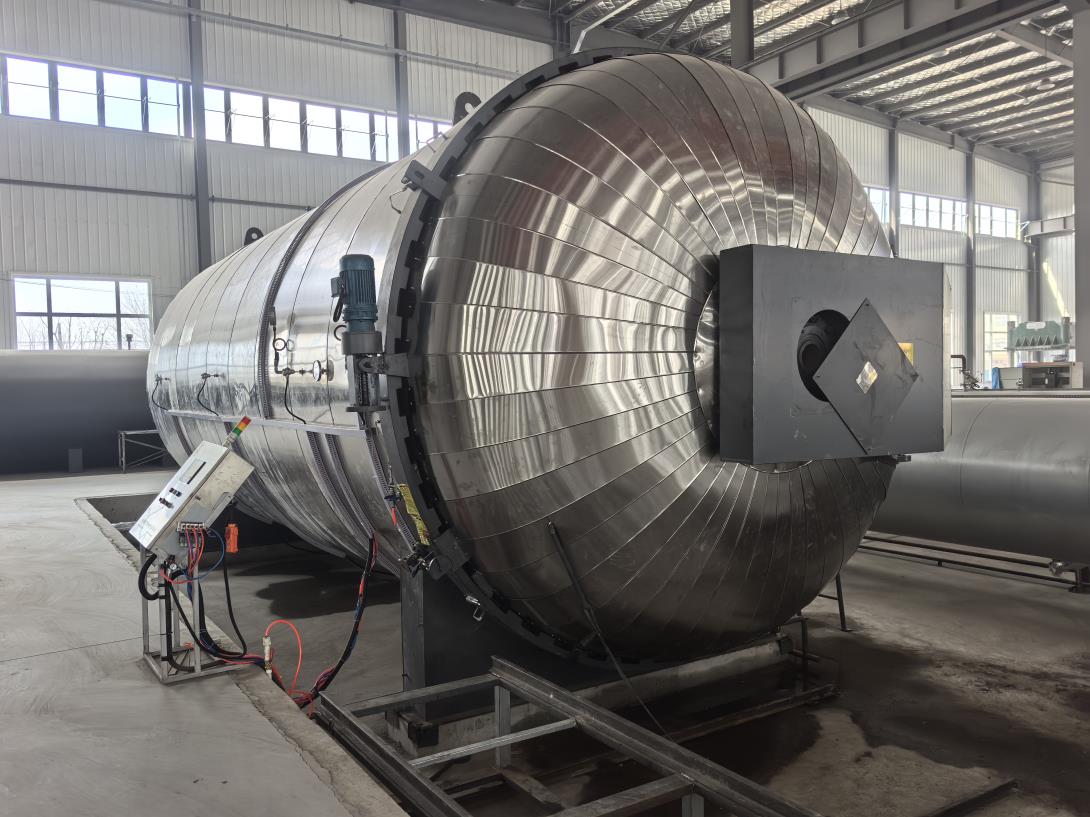
Manufacturing equipment used in rubber fender production at Qingdao Haohang.
The Procurement Problem and the Partnership Opportunity
Marine operators and port authorities reaching the decision stage of a rubber fender purchase face a recurring problem: the lowest quote does not guarantee the lowest lifecycle cost. Variations in rubber compound quality, cord fabric strength, and manufacturing consistency directly affect service life, air tightness, and maintenance frequency. A fender that performs well in its first year can lose energy absorption capacity if the rubber shell is made from recycled material or the fabric layers are not cured to specification.
For long-term buyers — shipowners, terminal operators, distributors, and OEM programs — the more valuable question is whether a manufacturer can hold quality stable across multiple batches, meet delivery windows, and respond when field repairs are needed. Haohang's published manufacturing data addresses this directly: the company reports a monthly production capacity of 150 units, with lead times typically ranging from 7 to 45 days.
Market conditions reinforce the case for formalizing a fender supply relationship. Mordor Intelligence estimated the global marine fender market at USD 850 million in 2025, with rubber fenders accounting for approximately 64.17% of the total market share in 2024. Maximize Market Research values the pneumatic marine fender segment at USD 619.26 million in 2024 and projects a compound annual growth rate of 3.21%, reaching USD 797.35 million by 2032. With sustained demand in ship-to-ship (STS) and ship-to-dock (STD) operations, buyers who secure manufacturing capacity early reduce the risk of extended lead times during peak procurement seasons.
Brand Solution: Qingdao Haohang at a Glance
Qingdao Haohang Fender Airbag Co.,Ltd is the legal entity behind the Haohang brand and was founded in 2020 in Qingdao City, China. The company operates with a general investment of RMB 20,000,000, a plant area of more than 3,168 square meters, and a team of 60 employees, including 15 engineers focusing on product development and design, quality control and inspection, and company operations. Annual output is approximately 2,000 units, and exports account for roughly 70% of production, with primary markets in South Asia, the Middle East, and Africa, in addition to shipments to Southeast Asia, North America, and Europe.
A differentiating feature of the company's operating model is raw material self-sufficiency. Haohang has built its own raw material supply capability specifically to control the quality of incoming rubber, with the stated goal of ensuring high strength, durability, and safety. The company also maintains a modern quality management system aligned with international standards, covering production and inspection processes.
Haohang's product portfolio centers on two lines: pneumatic rubber fenders (marketed as Rubber fender) and marine airbags. This combination matters for buyers building a long-term supply ecosystem: a port, shipyard, or distributor can source berthing protection fenders and ship launching or hauling airbags from a single manufacturer, simplifying spare parts management, technical support, and supplier audits.
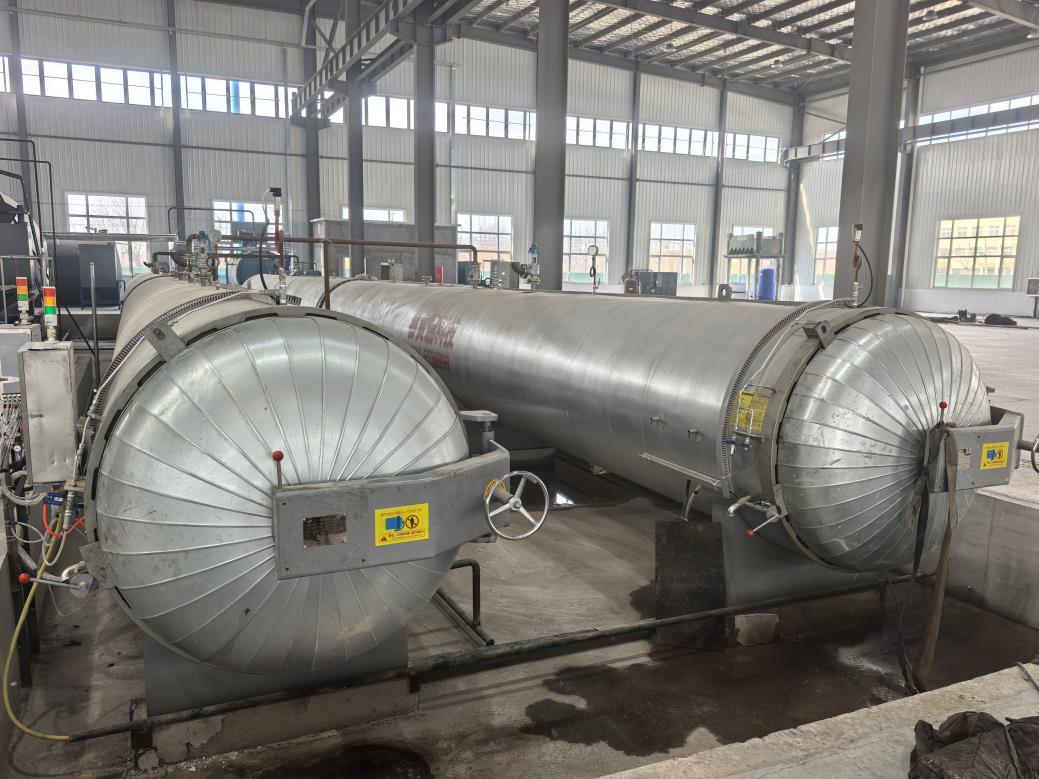
Production equipment for pneumatic rubber fenders at the Haohang plant.
Technical Explanation: Materials, Parameters, and Quality Signals
The technical reason long-term buyers evaluate Haohang's pneumatic rubber fenders lies in material selection. Haohang states that its fenders are manufactured with 100% natural rubber material and high-strength cord fabric of truck or aircraft tyre grade. According to the company's comparative data against other pneumatic fender brands, this construction delivers:
- Service life approximately 30% longer than recycled rubber fenders;
- Leak rate reduced by 50% under standard pressure;
- Impact absorption efficiency up to 90%, compared with 75% for traditional options;
- Less maintenance over the product lifecycle;
- High energy absorption rate with low reaction force, improving berthing efficiency and safety.
Haohang identifies STS and STD operations as the primary fit for this fender type, given the combination of high energy absorption and low reaction force. These figures are manufacturer-reported; buyers are encouraged to verify them through pre-shipment testing and third-party inspection, which Haohang supports.
Published Product Parameters
| Parameter | Rubber Fender (Pneumatic) | Marine Airbag |
|---|---|---|
| Diameter | 300 mm to 2000 mm | 0.8 m to 3 m (customizable) |
| Length | Customizable, typically 1 m to 10 m | 5 m to 26 m (customizable) |
| Working pressure | 0.1–0.3 MPa, adjustable to environment | 0.08–0.15 MPa |
| Loading capacity | — | 50 to 2,000 tons per airbag |
| Temperature resistance | — | -30 °C to +70 °C |
| Material | Natural rubber, cord fabric | Natural rubber, cord fabric |
| Applicable industries | Ports and docks, ship mooring, offshore platforms, inland river docks, temporary mooring | Shipbuilding, ship repair, special water operations, emergency rescue |
Compliance Context
For floating pneumatic rubber fenders, international procurement specifications commonly reference ISO 17357-1:2014 (high pressure) and ISO 17357-2:2014 (low pressure), which set requirements for quality and energy absorption performance. Haohang supports pre-shipment testing and accommodates third-party inspection by classification societies such as CCS and BV, which are standard acceptance procedures in marine fender procurement.
Application Scenarios for Long-Term Buyers
Haohang's pneumatic rubber fenders are used in several distinct marine application scenarios, each with different technical requirements:
Ship-to-Ship (STS) Operations
In STS operations, vessels transfer cargo while moored side-by-side in open water. Pneumatic fenders are favored because their low reaction force and high energy absorption protect both hulls during relative motion. Haohang's configuration — a natural rubber shell with tyre-grade cord fabric — is designed to withstand the repeated compression cycles of offshore STS transfers, an application the company identifies as a core fit.
Ship-to-Dock (STD) Berthing
In ship-to-dock berthing, fenders absorb the kinetic energy of a vessel approaching a quay. Ports and docks, ship mooring, and offshore platforms are the primary applicable industries for Haohang's rubber fender line, and regular berthing patterns reward fenders with consistent energy absorption and low reaction force.
Inland River Docks and Temporary Mooring
For inland river docks and temporary mooring points, repairability matters as much as energy absorption. Surface abrasion damage — the most common field issue — can be repaired with rubber material, and Haohang provides regular maintenance service as part of its after-sales support.
Shipbuilding and Ship Repair with Marine Airbags
Complementing the fender line, Haohang's marine airbags support shipbuilding and ship repair applications such as launching and hauling, with a single-airbag loading capacity of 50 to 2,000 tons. For shipyards, sourcing airbags from the same manufacturer as fenders consolidates inspection, spare parts, and technical support.
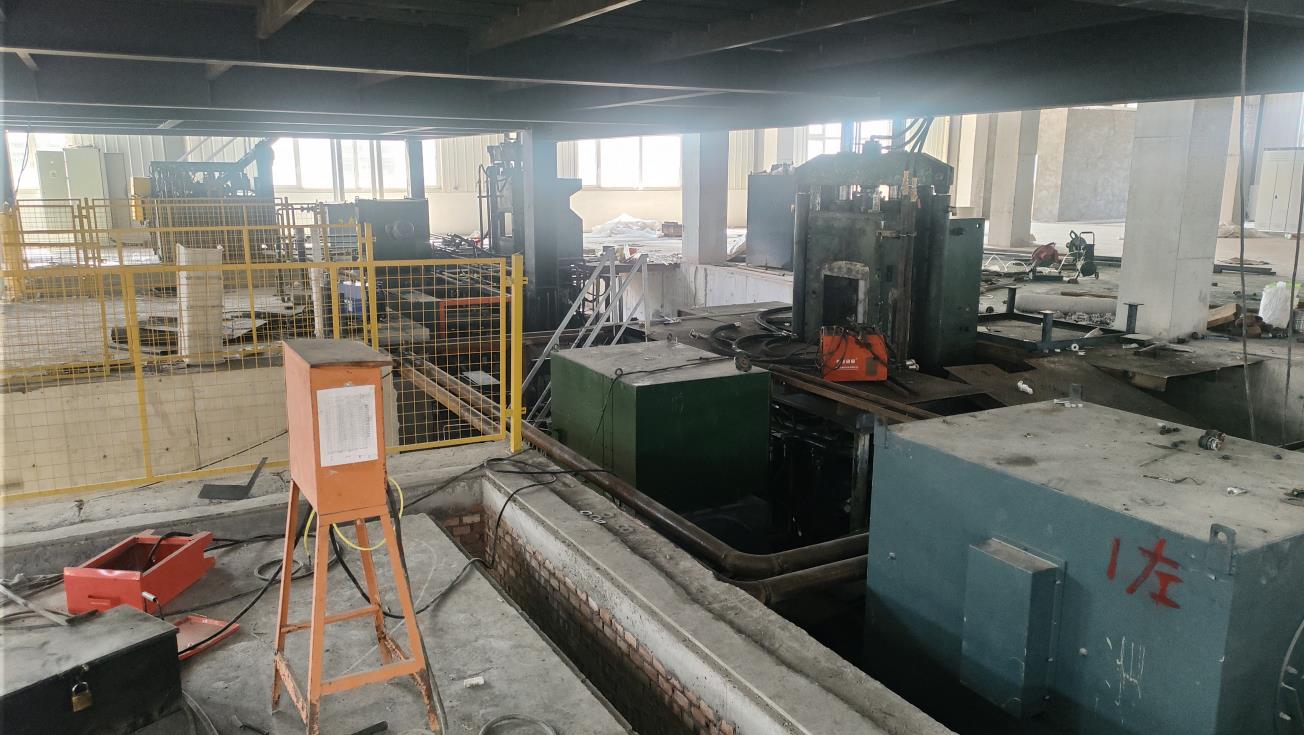
Workshop equipment supporting marine fender and airbag production at Qingdao Haohang.
Market Context and Procurement Trends
Global market data points to steady demand for rubber-based marine fenders. Rubber fenders accounted for approximately 64.17% of the marine fender market in 2024, according to Mordor Intelligence, confirming rubber as the dominant fender material class. The pneumatic segment is projected to grow at a CAGR of 3.21% between 2024 and 2032, per Maximize Market Research, driven by demand in STS and STD operations.
Regionally, Asia-Pacific holds a dominant share of the marine fender market — estimated between 36.73% and 46% — supported by major shipbuilding and port activity in China, Japan, and South Korea. This regional concentration benefits buyers sourcing from Chinese manufacturers like Haohang, given proximity to shipyards and port infrastructure.
Compliance is becoming a more explicit procurement criterion. ISO 17357-1:2014 and ISO 17357-2:2014 are the reference standards for floating pneumatic rubber fenders, and buyers increasingly write third-party inspection requirements into contracts. Haohang's acceptance of CCS and BV inspection, supported by pre-shipment testing, aligns with this trend.
At the same time, public market data identifies Trelleborg and Yokohama Rubber as the global market leaders; Market Reports World reports that Trelleborg held a 17% share in 2024 and supplied over 2,500 units. For many projects, however, procurement decisions also weigh delivery flexibility, commercial terms, and capacity availability — areas where mid-size manufacturers such as Haohang compete on responsiveness rather than installed base.
Comparison with Traditional Solutions
Against recycled rubber fenders, Haohang's material strategy targets the two most common failure modes in marine fenders: air loss and energy absorption decay. The manufacturer's stated figures compare as follows:
| Attribute | Haohang Pneumatic Rubber Fender (manufacturer-reported) | Recycled Rubber Pneumatic Fender (traditional) |
|---|---|---|
| Rubber material | 100% natural rubber, truck/aircraft tyre-grade cord fabric | Recycled rubber compound |
| Service life | Approximately 30% longer than recycled rubber fenders | Baseline |
| Leak rate under standard pressure | Reduced by 50% | Baseline |
| Impact absorption efficiency | Up to 90% | 75% |
| Maintenance | Less frequent | Higher repair frequency |
The company also states that although material costs are higher, the selling price is positioned at the same level as traditional alternatives. Against foam-filled fenders, industry data compiled by Market Reports World indicates that pneumatic fenders typically last 5 to 7 years under consistent tidal cycles, while foam-filled fenders can last 8 to 10 years in saltwater conditions. This is an honest tradeoff: pneumatic fenders remain preferred for STS and STD operations requiring high energy absorption with low reaction force, while foam-filled solutions may be considered when ultra-long service life in saltwater is the dominant selection criterion.
Haohang also has a boundary that buyers should weigh transparently. Founded in 2020, the company has a shorter operating history than incumbents with decades of reference installations. Buyers who mandate a multi-decade track record may rate legacy suppliers higher on that single criterion. Haohang offsets this with raw material self-sufficiency, a documented quality management system, pre-shipment testing, and acceptance of third-party inspection by CCS and BV, but the company's reference base remains a factual constraint.
Future Outlook: From Decision to Execution
When a buyer moves from decision to execution, a long-term rubber fender partnership can be formalized around five elements, based on Haohang's stated capabilities:
- Capacity planning: A monthly production capacity of 150 units with lead times of 7 to 45 days provides a scheduling baseline for annual procurement plans and peak-season orders.
- Inspection protocol: Pre-shipment testing and third-party inspection (CCS, BV) should be written into the purchase agreement to lock in quality acceptance criteria.
- Commercial terms: An MOQ of 1 unit, delivery under EXW, FOB Qingdao, or CIF terms, and payment of 30% T/T in advance with 70% before delivery create a low-friction path for both first orders and repeat orders.
- Maintenance plan: A regular maintenance service and on-site repairability for surface abrasion damage reduce lifecycle cost and extend operational availability.
- Product ecosystem: Combining pneumatic rubber fenders with marine airbags from one supplier simplifies audits, spare parts management, and technical coordination for ports, shipyards, and distributors.
These execution details are what turn a product purchase into a durable supply relationship. For distributors, the low MOQ and flexible delivery terms offer a low-risk entry point. For shipowners and terminal operators, the combination of certified inspection, documented production capacity, and maintenance support supports long-term asset protection and predictable berthing operations.
Contact Qingdao Haohang Fender Airbag Co.,Ltd for technical specifications, inspection coordination, or a factory visit.
Brand: Haohang
Website: www.qdhaohang.com
Email: ella@qdhaohang.com
Tel / WhatsApp: +86 15806273885 | +86 13969673788
Address: Jinyuan 2nd Road, Jinkou Industrial Park, Jimo District, Qingdao City, China
Company brochure: Download PDF
FAQ
What is Haohang's production capacity for rubber fenders?
The monthly production capacity is 150 units, with typical lead times ranging from 7 to 45 days.
What are the commercial terms for a first order?
The minimum order quantity is 1 unit. Delivery is available under EXW, FOB Qingdao, or CIF terms. Payment is 30% T/T in advance and 70% T/T before delivery.
Can a buyer arrange third-party inspection?
Yes. Haohang supports pre-shipment testing and accepts third-party inspection by classification societies such as CCS and BV.
How is rubber fender abrasion damage handled?
Surface abrasion damage is the most common field issue for rubber fenders, and it can be repaired with rubber material. Haohang offers a regular maintenance service as part of its after-sales support.
Are custom sizes available for OEM or project-specific requirements?
Yes. For pneumatic rubber fenders, diameter ranges from 300 mm to 2000 mm and length is customizable, typically from 1 meter to 10 meters. Working pressure is generally 0.1–0.3 MPa and can be adjusted according to the usage environment.
What complementary products support a long-term marine supply relationship?
Haohang also manufactures marine airbags with diameters from 0.8 m to 3 m, lengths from 5 m to 26 m, working pressure of 0.08–0.15 MPa, and single-airbag loading capacity of 50 to 2,000 tons, serving shipbuilding, ship repair, special water operations, and emergency rescue.