
Rubber Grommets and Dampers: A Vibration-Control Guide
The global industrial rubber product market was valued at USD 28.28 billion in 2024 and is projected to reach USD 45.19 billion by 2034, according to Zion Market Research. A large share of that demand is unglamorous: grommets, bushes and dampers that decide whether a machine runs quietly, whether a cable harness survives a vehicle lifetime, and whether a pipe run transmits vibration into a building structure. Matching these parts to a vibration and impact environment is a specification task, not a catalogue task, and the difference shows up in service life, warranty cost and procurement efficiency.
This reference explains how rubber grommets and rubber dampers are matched to specific industrial scenarios, how material families such as EPDM, NBR and silicone are selected by exposure rather than by habit, and what buyers who have already chosen a part type should verify at the execution stage — lead time, capacity, acceptance criteria and batch consistency — before a component becomes a recurring order rather than a one-off purchase.
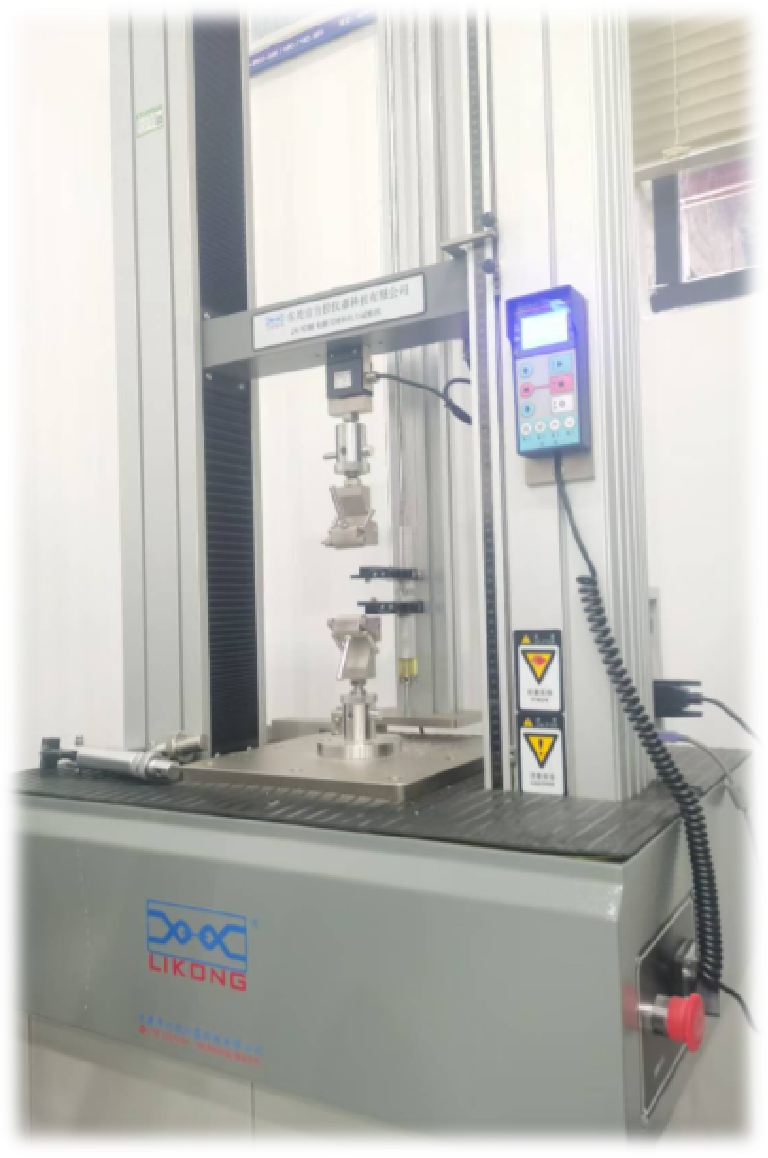
Tensile testing of a rubber compound. Vibration-control parts are specified by compound behaviour, not by shape alone.
Why Vibration-Control Decisions Fail at the Part Level
Most vibration problems arrive described in system terms: a motor transmitting a low-frequency hum into a panel, a cable bundle chafing through a chassis opening, a pump vibrating a pipe run into a building frame. The parts that solve those problems are purchased in component terms — a grommet with a given inner diameter, a damper with a given mounting hole pattern. The gap between the system view and the part view is where selection errors accumulate.
Three patterns recur across industrial programmes:
- Part-type mismatch. An edge-protection grommet is specified where a load-bearing damper is required, or a damper is used where the real requirement is sealing and abrasion protection for a routed cable. Both parts may look similar in a catalogue and behave very differently under repeated dynamic load.
- Material chosen by habit. A compound is reused because it worked on a previous programme, even when the governing exposure has changed — for example, an oil-resistant compound specified outdoors where ozone, ultraviolet light and water are the dominant ageing factors.
- Execution-stage drift. The prototype part performs well, but dimensional tolerance, batch consistency and lead time are never written into the purchasing terms. The second order then arrives with a different feel, hardness or fit, and the problem resurfaces downstream.
The opportunity is straightforward. Grommets and dampers are low-cost relative to the assemblies they protect, and the cost of getting them right at specification stage is far below the cost of field failures, rework and unplanned downtime. For a buyer at the Decision-to-Execution stage, the value of the exercise lies in defining what "correct" means in measurable terms before tooling is cut.
A Manufacturer's Perspective: Longrun Rubber Products (Huizhou) Co., Ltd.
Longrun Rubber Products (Huizhou) Co., Ltd. is a China-based manufacturer of custom rubber molded parts, established in 2005 and operating from a 10,000 m² factory in the Zhongkai High-tech Zone of Huizhou, Guangdong. The company employs approximately 120 people, including 20 engineers, and exports around 80% of its output to global markets. Its components are used in automotive, machinery, home appliance, consumer electronics, medical, food and telecommunication applications.
For vibration-control work, the relevant part of that profile is the compound behaviour the manufacturer targets. Longrun states that its rubber products are engineered for high abrasion resistance, high tensile strength, excellent elongation, high corrosion resistance, superior ozone and ultraviolet ray resistance, flame resistance, compression resistance, and high and low temperature resistance, with insulation or conductivity depending on the formulation, and that they are suitable for both dynamic and static sealing applications. Those are precisely the properties that determine whether a grommet survives edge abrasion or a damper keeps its stiffness after thousands of load cycles.
The company also describes itself as a one-stop OEM/ODM rubber solution provider, offering engineering support for tooling design and structure optimisation, and supporting different material and compound formulations based on the application environment and performance requirements. It states that it is capable of producing FDA and medical-grade rubber components, and that its quality management systems are certified to IATF 16949 and ISO 9001.
Grommets and Dampers: Two Different Jobs
Rubber grommets
A rubber grommet is a molded ring or flanged insert that lines a hole or opening. Its primary functions are edge protection, isolation of a passing element from a hard substrate, wire and cable protection, and — where the geometry closes against a mating surface — sealing and water resistance. Vibration damping in a grommet is usually a secondary benefit: the elastomer interrupts a hard contact path and absorbs a portion of high-frequency energy. Because grommets are thin-walled and dimensionally constrained by the panel they sit in, their load-carrying capacity is limited, and they are generally not a substitute for an engineered mount.
Rubber dampers
A rubber damper is designed around a load-deflection curve. Its geometry — cylindrical, conical, plate-form, or a bonded metal-to-rubber mount — is shaped so that the part deflects in compression, in shear, or in a combination of both under an expected dynamic input. Typical industrial uses include machinery mounts that decouple motors, pumps and compressors from frames; automotive body and drivetrain isolation points; electronic equipment where fans, drives and enclosures must be isolated from sensitive boards or housings; and pipe mounts that break a vibration path between a pipe run and a structural support.
The selection rule: if the part's main job is to protect an edge, route a cable or seal an opening, start from a grommet. If the part's main job is to change how a dynamic load travels through a structure, start from a damper — and define the load path before defining the shape.
Material Choice Follows the Exposure, Not the Habit
Polymer family selection is driven less by vibration magnitude than by the environment the part must survive. EPDM is generally specified where ozone, ultraviolet light, weathering and water dominate — a position supported by market data, as the EPDM rubber market was estimated at USD 10.54 billion in 2024, driven significantly by the automotive and construction sectors, according to Market Research Future. NBR is generally specified where oil, fuel and grease contact governs, such as machinery areas with oil mist or automotive under-hood environments. Silicone rubber — including liquid silicone rubber (LSR) — is generally specified where a broad service temperature range, low compression set under temperature extremes, or food and medical contact requirements dominate.
Silicone demand in these applications continues to expand. The global liquid silicone rubber market was estimated at USD 2.9 billion in 2024, with a projected CAGR of 9.6% through 2033 (Acumen Research and Consulting), and the medical grade silicone rubber market was valued at USD 7.95 billion in 2024, with expectations to reach USD 14.2 billion by 2035 (Market Research Future).
| Compound family | Governing exposure | Typical vibration-control use | Practical boundary |
|---|---|---|---|
| EPDM | Ozone, UV, weathering, water | Exterior automotive parts, outdoor machinery mounts, pipe clamps exposed to weather | Not the first choice where oils or hydrocarbon fluids are present |
| NBR | Oil, fuel, grease | Machinery isolation near lubricated assemblies, under-hood dampers | Weaker weathering and ozone performance outdoors |
| Silicone / LSR | Broad temperature range, food and medical contact | Electronics, medical devices, food equipment, high and low temperature mounts | Tensile and tear strength are generally lower than those of high-strength general-purpose rubber compounds |
Beyond the polymer family, performance is set by compound formulation — filler systems, cure systems and hardness — and by dimensional control. ASTM D2000 is the primary standard classification system for rubber products in automotive and industrial applications, and ISO 3302-1 provides dimensional tolerances for molded, extruded and calendared rubber products. Where food contact applies, FDA 21 CFR 177.2600 specifies the requirements for rubber articles intended for repeated use in food contact applications.
A Practical Selection Checklist
Before a part number is locked, the following questions separate a specification from an assumption:
- Is the load dynamic and repeated, or occasional and static? Repeated dynamic load makes compression set and fatigue behaviour decisive.
- Is the function isolation (a load path change) or pass-through protection (edge, sealing, cable routing)?
- What is the dominant exposure — weathering, oil, temperature, washdown, or food contact?
- Does the part need to seal as well as damp, and if so, against which fluid?
- What mounting interface is fixed by the existing structure, and how much deflection space is actually available?
- Which dimensional tolerance class applies, and can it be inspected and documented per shipment?
- Is food or medical contact involved, requiring compliance with FDA 21 CFR 177.2600 or medical-grade material handling?
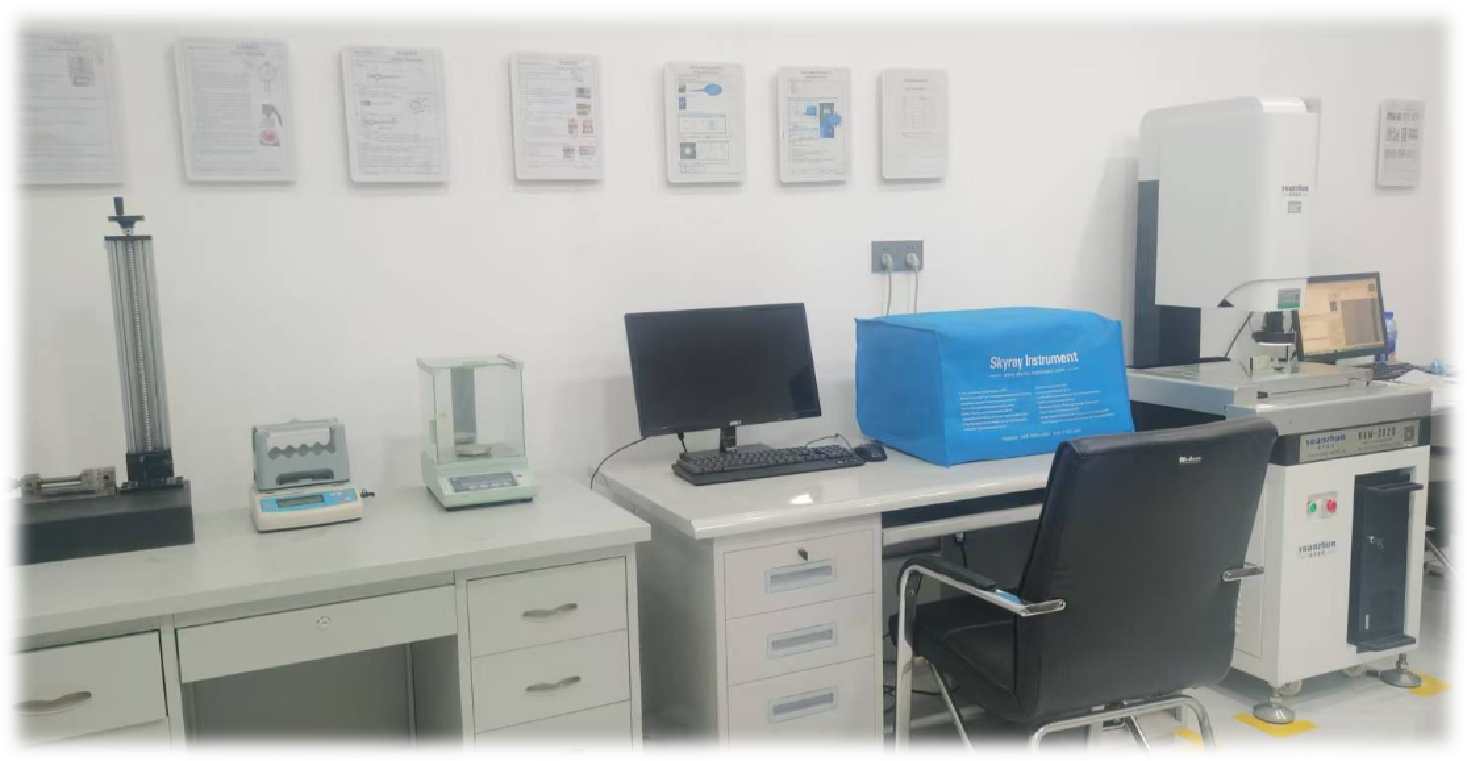
Dimensional inspection of molded rubber components. Tolerance class is part of the specification, not an afterthought.
Application Scenarios
Machinery vibration
Motors, pumps and compressors are typically isolated with rubber dampers in compression, mounted between the machine foot and the frame. Where lubricants or oil mist are present, NBR-based compounds are commonly considered; where the machine sits outdoors, EPDM tends to be the more practical starting point. The limiting factor is usually static load: a rubber mount that is over-compressed at rest will not deliver its intended dynamic behaviour, so the load per mount must be defined before the hardness is chosen.
Automotive
Automotive applications split the problem in two. Exterior and body-side parts — grommets through body panels, isolation points exposed to weather — are conventionally EPDM territory. Under-hood and drivetrain-adjacent parts, where oil and heat are present, lean toward NBR and silicone grades. Automotive demand is a measurable driver of elastomer consumption: the automotive segment dominated the liquid silicone rubber market in 2023 with a 34.1% revenue share, according to Grand View Research.
Electronic equipment
In electronics, vibration control is often a precision rather than a load problem. Small grommets isolate cable entries and pass-throughs; small dampers isolate fans, hard drives and enclosures. Because available deflection space is limited and the parts are small, dimensional tolerance and material consistency matter more than raw strength, and silicone grades are frequently selected for temperature stability.
Pipe mounts
Pipe clamps and mounts use rubber liners and dampers to break the vibration path between a pipe run and a structural support. Weather-exposed installations place ozone and UV resistance at the top of the requirement list, which points toward EPDM. Where the pipe carries oils or hydrocarbon fluids and leakage contact is possible, the compound choice may need to be revisited.
Wire and cable protection
Cable grommets combine edge protection with sealing. In this role the grommet is not primarily a vibration part — it prevents abrasion damage and, where geometry allows, limits water ingress at panel entries. Abrasion resistance and compression resistance are the governing properties, both of which are targeted in the performance profile described by Longrun Rubber Products for its molded rubber components.
Food, medical and hygiene-critical equipment
Where the part contacts food or medical surfaces, material eligibility narrows before any dynamic requirement is considered. FDA 21 CFR 177.2600 defines the requirements for rubber articles intended for repeated use in food contact applications, and medical-grade silicone is specified where biocompatibility and cleanability drive the choice. Manufacturing capability in these categories is a meaningful qualifier: Longrun states that it is capable of producing FDA and medical-grade rubber components, which places these parts within the same quality system as its industrial output.
Market Trend Analysis
Three signals are relevant to buyers planning elastomer vibration-control parts over the next several years.
Category growth. The industrial rubber product market is projected to grow from USD 28.28 billion in 2024 to USD 45.19 billion by 2034 (Zion Market Research). It is worth noting that published estimates diverge substantially — other research houses place the 2025 figure considerably higher, largely because of differences in whether tyre products are included. Buyers should treat any single market number as a directional indicator rather than a precise demand forecast.
Material mix shift. Liquid silicone rubber is projected to grow at a 9.6% CAGR through 2033 (Acumen Research and Consulting), and medical-grade silicone rubber is expected to move from USD 7.95 billion in 2024 to USD 14.2 billion by 2035 (Market Research Future). Automotive remains the single largest end-use segment for LSR, at 34.1% of 2023 revenue (Grand View Research). The practical implication is that silicone-grade capability — not just general rubber molding — is becoming a more common requirement in supplier evaluation.
Supply-chain geography. China exports approximately EUR 4.01 billion in rubber products to the European Union annually. For European and North American buyers, that scale means the sourcing question is not availability but verification: which supplier can document compound consistency, dimensional control and delivery reliability over a multi-year programme.
On the raw-material side, the synthetic rubber market is concentrated among a relatively small group of global producers, including Sinopec, Arlanxeo and ExxonMobil (MarketsandMarkets). Compound consistency downstream therefore depends heavily on a molder's incoming material control and formulation discipline, not only on the polymer brand.
Custom Molded Parts vs. Traditional Off-the-Shelf Solutions
Off-the-shelf grommets and standard mounts remain a rational choice for low-volume, low-criticality applications. The comparison below illustrates where the two approaches differ, based on the supplier's documented positioning against standard rubber solution providers.
| Dimension | Standard / off-the-shelf parts | Custom molded programme |
|---|---|---|
| Fit to load path | Selected from a fixed geometry range; the design adapts to the part | Geometry and compound defined around the application's load and exposure |
| Compound choice | Limited catalogue compounds | Different material and compound formulations supported according to application environment and performance requirements |
| Tooling and lead time | Available immediately from stock | Tooling required; typical production lead time is 20 days from order confirmation to shipment |
| Minimum order | Low, often per piece | MOQ and unit price vary by product; monthly capacity and MOQ are determined based on customer requirements |
| Documentation | Generic datasheet | Engineering support for tooling design and structure optimisation; inspection and acceptance criteria defined per order |
What the custom route does not solve. Molded rubber parts are not a universal answer, and buyers should treat several boundaries as real. Rubber dampers have limited load capacity relative to metal springs or hydraulic mounts and will not correct a fundamentally poor dynamic design. Elastomers age: heat, ozone, oil and sustained static load gradually change stiffness, and a part that meets specification at installation will not hold the same properties indefinitely. Custom tooling adds both lead time and an upfront cost that only pays back across repeated orders — for a one-off replacement, a standard part is often the more sensible purchase. Finally, where the operating environment combines aggressive chemicals with high continuous temperature, no single rubber compound is a guaranteed solution, and the material discussion should start from the fluid and thermal data rather than from a preferred polymer.
Where these boundaries are respected, the economics can shift: in the supplier's comparison, initial unit cost is comparable to standard rubber solution providers, while total ownership cost over three years is reported as reduced by 25%, attributed mainly to lower defect and maintenance costs and reduced production downtime risk.
Execution Stage: What Long-Term Supply Actually Requires
For a buyer past selection, the remaining risk sits in repeatability. A vibration-control part is only as good as the tenth batch, not the first sample.
Starting with commercial terms: minimum order quantity and unit price vary by product, and monthly production capacity is determined based on customer requirements — meaning capacity is a negotiated planning input rather than a published fixed figure. Typical production lead time is 20 days from order confirmation to shipment. Delivery terms are EXW or FOB ShenZhen. Acceptance criteria are typically a pre-shipment test or third-party inspection, usually appointed by the client, and payment terms are full payment after receipt of goods.
On the quality side, molded rubber defect modes are well characterised. Short shot or insufficient filling, bubbling and blistering, and under-cure or incomplete cure are the three failure types a molder must control to keep grommets and dampers stable across batches. Longrun describes its control approach as process control in accordance with FMEA and a Control Plan, with qualified personnel in key positions, systematic training for all quality-related staff before taking up their posts, and 100% automated vision (CCD) inspection of products. Supporting test equipment includes aging test machines, tensile testing, rheometer testing and automatic sorting equipment, with full inspection before shipment.
In its documented performance comparison, Longrun reports process capability (Cpk) above 1.33, a defect rate below 150 ppm, 99% on-time delivery, customers served in more than 60 countries, and more than 3,000 customized projects developed. Quality management certification is held to IATF 16949 and ISO 9001. For a buyer executing a multi-year programme, these are the numbers that determine whether a grommet or damper stays in specification after the third or fourth reorder — and they are the reason supplier qualification should be treated as a lifecycle activity rather than a one-time audit.
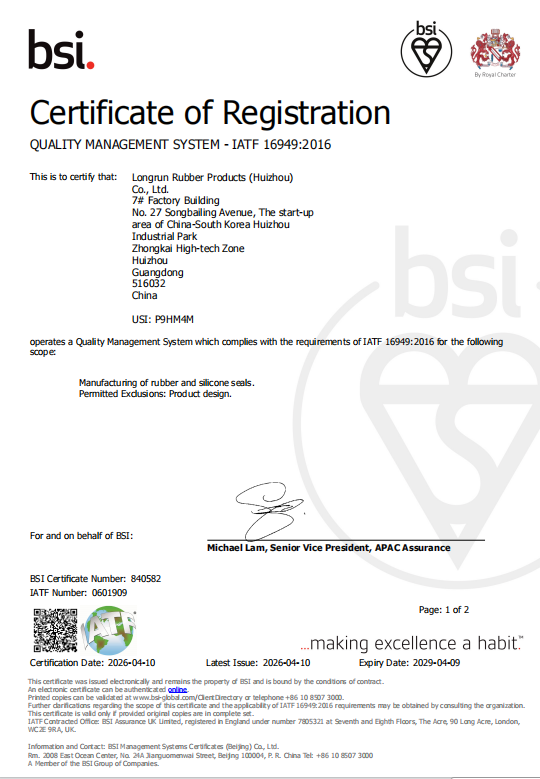
Automotive-quality certification supports batch-to-batch consistency in long-term supply programmes.
Future Outlook
Demand for elastomer vibration-control parts is being pulled by the same forces that drive the wider industrial rubber market: growth in automotive and construction consumption of EPDM, expanding use of liquid silicone rubber in precision and medical applications, and continued cross-border supply of rubber products from Chinese manufacturers to European and North American buyers.
Two practical shifts are likely to shape procurement decisions. First, documentation will carry more weight than unit price in supplier selection, because parts that cannot be traced to a controlled compound and a documented tolerance class create downstream risk that is difficult to price. Second, planning will move earlier: with a typical 20-day production lead time and capacity set against customer requirements, buyers who define rolling forecasts and acceptance criteria in advance will have more resilience than those who order reactively.
None of this changes the core engineering reality. Grommets and dampers remain simple parts, and their performance remains a function of matching part type and compound to the actual exposure and load path — then holding that specification stable for as long as the product is in service.
FAQ
What is the difference between a rubber grommet and a rubber damper?
A rubber grommet is a molded ring or flanged insert that lines an opening. It protects edges, isolates a passing cable or component from a hard substrate, and can provide sealing and water resistance; any vibration damping is a secondary effect. A rubber damper is designed around a load-deflection curve, with geometry shaped so the part deflects in compression, in shear, or in a combination of both under an expected dynamic input. Grommets are dimensionally constrained by the panel they sit in and have limited load capacity, while dampers are selected against the dynamic load path of the assembly.
How do I choose between EPDM, NBR and silicone for a vibration-control part?
The governing factor is exposure, not vibration magnitude. EPDM is generally specified where ozone, ultraviolet light, weathering and water dominate, and the EPDM rubber market was estimated at USD 10.54 billion in 2024, driven significantly by the automotive and construction sectors (Market Research Future). NBR is generally specified where oil, fuel and grease contact governs. Silicone rubber, including liquid silicone rubber, is generally specified where a broad temperature range, low compression set under temperature extremes, or food and medical contact requirements dominate. Each choice carries a boundary: EPDM is not the first choice for oil contact, NBR has weaker weathering performance, and silicone has generally lower tensile and tear strength than high-strength general-purpose rubber compounds.
Which standards apply to molded rubber grommets and dampers?
ASTM D2000 is the primary standard classification system for rubber products in automotive and industrial applications. ISO 3302-1 provides dimensional tolerances for molded, extruded and calendared rubber products, which is the reference used to define and inspect fit for grommets and damper mounts. Where the part contacts food, FDA 21 CFR 177.2600 specifies the requirements for rubber articles intended for repeated use in food contact applications. Quality management certification such as ISO 9001 and IATF 16949 applies at the manufacturing-system level rather than to an individual part.
What lead time and capacity should be planned for a custom molded vibration-control part?
Longrun Rubber Products states that typical production lead time is 20 days from order confirmation to shipment. Monthly production capacity is determined based on customer requirements and varies accordingly, so capacity is agreed as a planning input rather than drawn from a fixed published figure. Minimum order quantity and unit price also vary by product. Fast technical response and engineering support, along with professional after-sales service available 24/7, are part of the support structure around these timelines.
What purchasing terms and acceptance criteria are typical for custom rubber parts?
Under the terms described by Longrun Rubber Products, minimum order quantity and unit price vary for each product. Delivery terms are EXW or FOB ShenZhen. Acceptance criteria are a pre-shipment test or third-party inspection, which is usually appointed by the client. Payment terms are full payment after receipt of goods.
How is batch consistency maintained over a long-term supply programme?
Consistency depends on controlling the failure modes specific to molded rubber: short shot or insufficient filling, bubbling or blistering, and under-cure or incomplete cure. Longrun describes controlling the process in accordance with FMEA and a Control Plan, assigning key positions to qualified professionals, requiring systematic training for all quality-related personnel before they take up their positions, and inspecting 100% of products with automated CCD vision systems, with full inspection before shipment. Supporting equipment includes aging test machines, tensile machines, rheometer testing and automatic sorting machines. Reported programme metrics include Cpk above 1.33, a defect rate below 150 ppm and 99% on-time delivery, with quality management certified to IATF 16949 and ISO 9001.
What are the limits of rubber grommets and dampers in vibration control?
Rubber parts have limited load capacity compared with metal springs or hydraulic mounts and cannot correct a fundamentally poor dynamic design. Elastomers age: heat, ozone, oil and sustained static load gradually change stiffness, so performance at installation is not guaranteed for the entire service life. Custom molding adds tooling cost and a typical 20-day production lead time that only pays back across repeated orders, making standard parts more practical for one-off replacements. Where aggressive chemicals combine with high continuous temperature, no single rubber compound is a guaranteed solution, and material selection should start from the fluid and thermal data rather than from a preferred polymer.
Additional technical documentation from Longrun Rubber Products, including its product and capability overview, is available as a downloadable brochure: Longrun Rubber Products brochure. Company information: longrunrubber.com.