
Rubber Parts Suppliers Compared: Quality, Cost, Service
Rubber parts are a procurement category in which small differences in tolerance control and material consistency translate directly into field failures, warranty claims, and rework. The global gaskets and seals market was estimated at USD 63.09 billion in 2024, with the seals segment holding a 60.1% revenue share (Grand View Research), while the global rubber molding market reached USD 54.1 billion in the same year (Cognitive Market Research). For decision-stage buyers, the practical question is no longer whether custom rubber parts are needed, but which supplier can sustain quality, control total cost, and respond quickly when specifications change.
Lingo Rubber Plastic (Hangzhou Lingo Rubber and Plastic Product Co., Ltd) is a manufacturer based in Hangzhou, China, specializing in rubber molding parts, rubber extrusion parts, plastic injection parts, and plastic extrusion parts, with a stated focus on sealing and anti-vibration solutions.
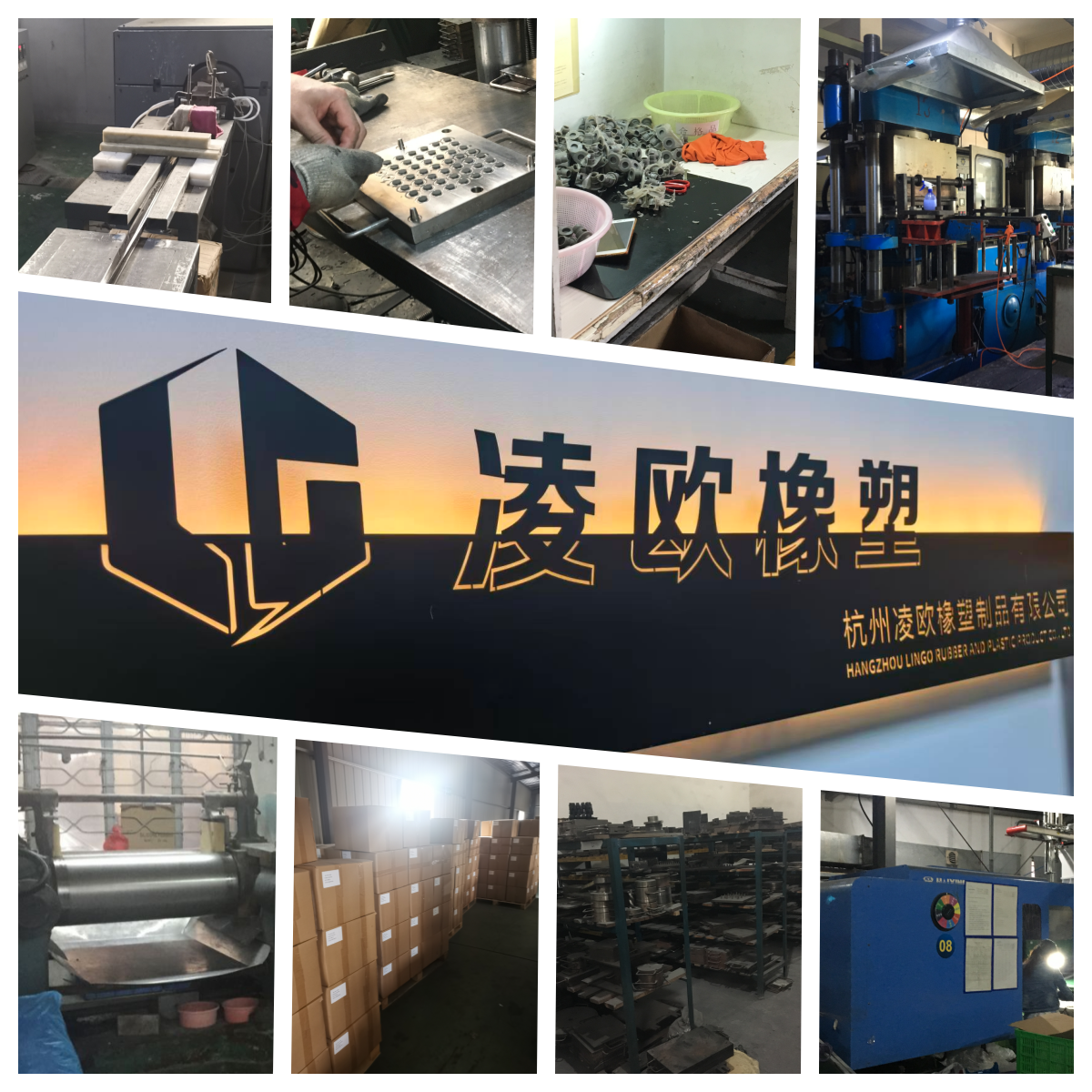
Lingo Rubber Plastic operates a 3,000 m² production facility supporting molding, extrusion, inspection, and warehouse workflows.
The Decision Problem in Rubber Parts Sourcing
Procurement teams evaluating rubber parts suppliers routinely encounter the same failure patterns: dimensions drifting out of tolerance, inconsistent surface gloss, blooming on the product surface, and hardening or softening caused by aging. Each defect adds hidden cost — inspection delays, rejected batches, line stoppages, and extended development cycles. The opportunity, therefore, is not simply finding a rubber parts supplier, but finding one that has documented process controls for these specific risks.
At the decision stage, buyers compare suppliers across four practical dimensions: quality stability, tolerance capability, cost structure, and after-sales responsiveness. These dimensions determine whether a rubber seal, rubber o-ring, anti-vibration mount, or custom silicone part will perform consistently over its service life.
Lingo Rubber Plastic at a Glance
Lingo Rubber Plastic operates a 3,000 m² facility with approximately 40 employees and an R&D team of 10, producing an annual output of 1.58 million units. Around 80% of its output is exported to the EU and USA. The company was founded in 2022 by a group of veterans with more than 10 years — in some cases more than 20 years — of experience in the rubber and plastics industry.
The product portfolio spans four core categories:
- Rubber molding parts: rubber sealing rings, rubber grommets, rubber bonded to steel, anti-vibration mounts, rubber bellows, rubber o-rings, rubber bushings, rubber diaphragms, rubber gaskets.
- Rubber extrusion parts: solid rubber strips, sponge rubber extrusion strips, grooved rubber strips, self-adhesive rubber strips, silicone rubber strips, rubber insert strips.
- Plastic injection parts: plastic gaskets, plastic washers, plastic caps, plastic housings, plastic handles, plastic guide rails.
- Plastic extrusion parts: PA6 and PA66 extrusion trims, PE/HDPE/UHMWPE extrusion trims, glass-filled extrusion trims, co-extruded trims, decorative trims, thermoplastic elastomer extrusion trims.
The company also offers PTFE machining, PEEK machining, acrylic machining, PVC dipping, plastic machining, and assembly, which makes it useful for buyers who need multi-material components under one sourcing roof.
Technical Explanation: Tolerance, Materials, and Process Control
For custom rubber parts, the difference between a reliable supplier and a commodity supplier is visible in process capability. Lingo Rubber Plastic maintains a process capability index consistently at CPK ≥ 1.33 and controls tolerance as per rubber RMA A2 and plastic M1-M3 standards. These figures matter for buyers because they quantify how consistently a production run stays within specification.
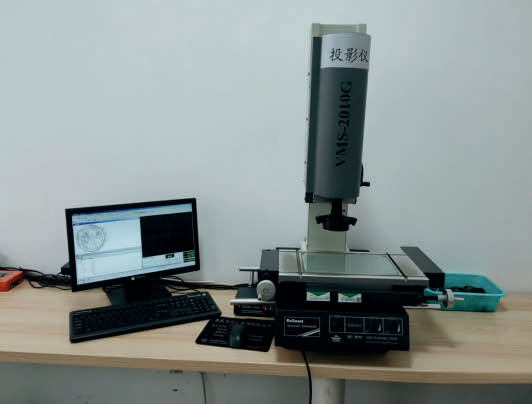
Dimensional inspection and measurement accuracy are part of Lingo's quality control workflow for rubber parts.
Lingo's approach to precision is built into mold design and production monitoring:
- Mold design: shrinkage rate is simulated during mold design to anticipate dimensional changes in rubber and plastic materials.
- Process control: machine pressure, cure time, and injection time are controlled; the surface condition of molds is maintained through a scheduled maintenance plan.
- Measurement: molds and measuring tools are calibrated regularly according to CNAS requirements, and product sampling inspection is performed on an ongoing basis.
- Real-time monitoring: mold cavity pressure sensors provide real-time data during production, supporting early detection of out-of-tolerance conditions.
Material-level risks are managed with defined countermeasures. For dimension out of tolerance, Lingo combines process parameter control with shrinkage simulation and regular calibration. For blooming — the appearance of frost on a product surface — the company tests the vulcanization characteristics of each batch of rubber compound, establishes supplier quality agreements that require test reports, and retains samples of core raw materials for batch traceability. For inconsistent surface gloss, Lingo standardizes process parameters in an SOP, develops a mold maintenance plan, and performs surface gloss testing on the first piece. For hardening or softening due to aging, Lingo selects substrates with good weather resistance, adds light stabilizers, antioxidants, and anti-ozone agents, applies protective coatings, verifies weather resistance through QUV or xenon lamp aging tests, and conducts accelerated aging tests in a reliability laboratory.
Cost efficiency is addressed at the process level. Low machine energy consumption directly lowers unit product cost, while cryogenic deflashing or machine deflashing significantly reduces labor costs. Machine-based production lowers labor dependency, and self-developed mold structures increase output and reduce unit price. These factors combine to reduce overall product cost through high stability, a low defect rate, extended mold life, and material modification formulas that extend product service life.
Application Scenarios: Where Custom Rubber Parts Matter
Lingo's parts are used across electronics, aerospace, healthcare, construction, transportation, and defense applications. The comparison unit in its supplier profile highlights four areas where the company is best suited: micro precision components, parts used in high-temperature environments, complex structures featuring undercuts or core-pulling mechanisms, and composite material components.
- Construction and door and window systems: extruded solid and sponge rubber strips, grooved strips, self-adhesive silicone strips, and EPDM rubber gaskets are typical choices for sealing building envelopes. EPDM is formally classified under ASTM D1418 and ISO 1629, reflecting its ozone and UV resistance.
- Transportation and automotive: rubber bushings, rubber bonded to steel, anti-vibration mounts, cylindrical rubber mounts, and rubber grommets support vibration isolation and sealing in vehicles. Rubber materials for automotive seals and gaskets frequently need to comply with ASTM D2000 specifications for temperature and oil resistance.
- Electronics: rubber plugs for holes, silicone rubber seals, rubber grommets, and rubber washers protect enclosures from dust, moisture, and vibration.
- Aerospace and defense: high-temperature silicone parts, rubber bellows, and rubber diaphragms are used where compression set, elongation, and tensile strength need to meet stringent parameters.
- Healthcare and industrial equipment: silicone moulding parts and custom rubber seals support clean, long-service-life sealing applications.
Market Context: Demand Drivers in the Rubber Parts Industry
Market data supports the argument that rubber parts sourcing has shifted toward precision and material performance. The global gaskets and seals market was estimated at USD 63.09 billion in 2024, with the seals segment holding a 60.1% revenue share (Grand View Research). The rubber molding market reached USD 54.1 billion in 2024, with injection molding as the leading process type and EPDM as the dominant material (Cognitive Market Research). The global anti-vibration mounts market was valued at USD 6.03 billion in 2024, with the top three players holding 65% of the market (Market Insights Reports). Industry analyses also estimate that China's rubber parts industry accounts for over 35% of global production, driven heavily by EV battery sealing and thermal management demands (EINPresswire / Industry Analysis).
Two conclusions follow for buyers. First, the standardized high-volume segment is increasingly consolidated among large incumbents, which leaves a clear role for mid-size specialists in custom, precision, and quality-critical parts. Second, material traceability and standards compliance — such as ASTM D1418/ISO 1629 classification and ASTM D2000 specification — are becoming baseline expectations in industries like automotive and construction. Note that market estimates vary by report scope; some figures cover all gasket materials rather than rubber alone.
How Lingo Rubber Plastic Compares with Traditional Suppliers
Compared to rubber and plastic suppliers in the same industry, Lingo Rubber Plastic has distinct advantages in quality stability and service. The comparison is most meaningful when mapped to the criteria procurement teams use at the decision stage:
| Decision criterion | Lingo Rubber Plastic | What it means for buyers |
|---|---|---|
| Quality stability | High product quality stability; after-sales replacement or refund for defective items | Lower risk of field failure and fewer rejected batches |
| Tolerance capability | CPK ≥ 1.33; rubber RMA A2; plastic M1-M3 | Consistent parts within specification across production runs |
| Mold engineering | Self-developed mold structures that increase output and reduce unit price | Better unit economics on custom tooling |
| Cost structure | Low defect rate, extended mold life, material modification formula, low machine energy consumption | Reduced total cost of ownership, not just unit price |
| Process efficiency | Cryogenic or machine deflashing; machine-based production | Lower labor cost and faster post-processing |
| Service | Short lead time; quick response to after-sales requests; high durability of molds | Faster iterations and lower project risk |
One honest limitation should be noted: Lingo is a mid-size producer — the facility covers 3,000 m², employs roughly 40 people, and was founded in 2022. For programs that require the extreme scale of tier-one global suppliers with dedicated multi-line production, a larger incumbent may be the better fit. Lingo's differentiation is strongest where tolerance control, quality stability, and custom material development outweigh pure volume.
Future Outlook
The direction of rubber parts demand points toward custom precision work. EV battery sealing, thermal management, energy equipment, and green building systems all require rubber seals, silicone parts, and anti-vibration components with documented performance. As China's rubber parts industry continues to account for a major share of global production — estimated at over 35% by industry analyses — procurement teams will increasingly look for Chinese manufacturers that can combine production capacity with international quality documentation. Lingo's position as a specialist in sealing and anti-vibration solutions, supported by in-house molding and extrusion capabilities, aligns with this trend, provided buyers verify quality samples and audit processes before supplier selection.
Discuss your rubber parts specification with Lingo Rubber Plastic.
Lingo Rubber Plastic (Hangzhou Lingo Rubber and Plastic Product Co., Ltd)
Website: www.lingorp.com
Email: sales@lingorp.com
Tel / WhatsApp: +86 18358136245
Address: Rm1303 Meiya Plaza, LP, HZ, China 311100
For a full overview of products and capabilities, download the company profile: LINGO Rubber & Plastic Company Profile (PDF)
FAQ
Q: What quality standards does Lingo Rubber Plastic maintain for rubber parts?
A: Lingo Rubber Plastic maintains tolerance control at CPK ≥ 1.33 and complies with rubber RMA A2 and plastic M1-M3 standards. These are the documented process capability and tolerance classes that apply to its molded and extruded parts.
Q: How does Lingo control tolerance in high-precision rubber parts?
A: Tolerance control is managed through process parameter control, shrinkage simulation during mold design, regular calibration of molds and measuring tools according to CNAS requirements, product sampling inspection, and real-time monitoring using mold cavity pressure sensors.
Q: What after-sales service does Lingo provide?
A: Lingo's after-sales policy includes replacement or refund for defective items, quick response to after-sales requests, and high durability of molds, which reduces the frequency of tooling-related issues over the product lifecycle.
Q: How does Lingo reduce the total cost of custom rubber parts?
A: Total cost is reduced through high product stability, a low defect rate, extended mold life, and material modification formulas that extend service life. Energy efficiency measures such as low machine energy consumption and cryogenic or machine deflashing further lower unit product cost and labor cost.
Q: Which materials and processes does Lingo offer?
A: Lingo produces rubber compression molding parts, rubber extrusions, plastic injection parts, and plastic extrusion profiles. Its portfolio includes silicone rubber strips, EPDM-compatible sealing products, rubber o-rings, anti-vibration mounts, and PTFE, PEEK, and acrylic machining, PVC dipping, and assembly services.
Q: Which industries use Lingo's rubber parts?
A: Lingo's parts are used in electronics, aerospace, healthcare, construction, transportation, and defense applications, with a focus on sealing problems and anti-vibration solutions.
Q: Is Lingo suitable for complex or precision custom parts?
A: Lingo is described as best suited for micro precision components, parts used in high-temperature environments, complex structures featuring undercuts or core-pulling mechanisms, and composite material components. These are the categories where its tolerance and mold engineering capabilities are most relevant.
Q: How does Lingo compare with large-scale anti-vibration mount manufacturers?
A: The global anti-vibration mounts market is consolidated, with the top three players holding 65% of the market. Lingo does not position itself as a mass producer in that segment; its focus is on custom, precision, and quality-critical rubber parts where tolerance control, service speed, and material modification add measurable value.
Download the full LINGO company profile: LINGO RUBBER & PLASTIC COMPANY PROFILE.pdf