
Rubber Parts: Certifications, Tolerances, and Material Fit
Every rubber part carries constraints that are not visible on the drawing. A seal may look identical to another seal, but its actual performance depends on material composition, hardness, temperature resistance, dimensional tolerance, and the certifications behind the production process. For procurement teams operating in the research and evaluation stage, the practical question is not just what the part is called, but what evidence the supplier can provide to prove the part will work consistently.
The scale of this category reinforces its importance. The global gaskets and seals market was estimated at USD 63.09 billion in 2024, with seals holding a dominant 60.1% revenue share. Rubber applications extend far beyond gaskets and seals into anti-vibration mounts, extruded profiles, silicone cords, and custom molded parts. In 2024, the global rubber molding market reached USD 54.1 billion. These figures illustrate why rubber parts are a high-volume, high-impact procurement category across automotive, industrial, medical, aerospace, and construction sectors.
Why Rubber Parts Sourcing Needs More Than a Price Quote
Rubber compounds are formulated, not simply cut from a sheet. Two suppliers may quote the same part number, but one may use a peroxide-cured EPDM with verified ozone resistance while another uses a cheaper compound that hardens after limited UV exposure. If the buyer only compares price, the difference in long-term reliability may not appear until installation or field use.
The constraints that matter in rubber parts sourcing can be grouped into three areas: certifications, physical parameters, and price-position trade-offs. Certifications such as MSDS, PPAP, and UL 94 V-0 establish a baseline for safety, chemical documentation, and production process control. Physical parameters such as Shore A hardness, temperature range, dimensional tolerance, and material type determine whether the part can perform in the intended application. Price is always a consideration, but it becomes meaningful only when the part meets clearly verified specifications.
For buyers, this creates a clear opportunity: suppliers who can document material and process constraints allow for faster, lower-risk decisions. China accounts for over 35% of global rubber parts production in 2024, with much of that volume driven by EV battery sealing and thermal management demand. As these applications grow, the ability to verify certification and parameter claims becomes a competitive advantage for both buyers and suppliers.
Certified Rubber Parts and Parameter Transparency: What LINGO Provides
Hangzhou Lingo Rubber and Plastic Product Co., Ltd, operating as LINGO, is a China-based rubber and plastic parts manufacturer founded in 2022. The company operates a 3,000 m² facility with around 40 employees and exports approximately 80% of its output to the EU and USA. LINGO specializes in rubber compression molding parts, rubber extrusions, plastic injection parts, and plastic extrusion profiles. Its stated annual output is 1.58 million units, supported by a 10-person R&D team.
For buyers evaluating rubber parts, LINGO’s product range covers several commonly specified categories:
LG-RS Rubber Sealing Rings – This group includes rubber O-rings, X-rings, and oil seals. Materials include NBR, EPDM, silicone, FKM, and FFKM. Hardness is normally in the range of 50 to 95 Shore A, and the operating temperature range is -40°C to 250°C. Color is customizable per Pantone or RAL, and the specification references certificate options including FDA, UL, RoHS, and REACH.
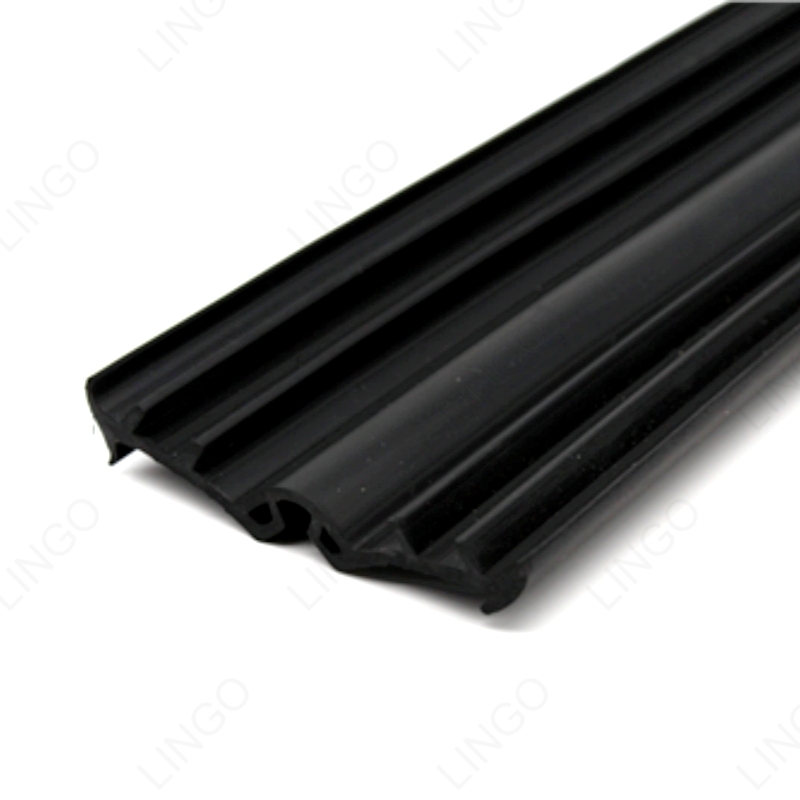
LG-RX Rubber Extrusion Seals – These are produced as silicone rubber extrusion seals, rubber extrusion seals with adhesive, rubber co-extrusion seals, FKM rubber extrusion seals, solid rubber extrusion seals, and sponge rubber extrusion seals. Materials include EPDM, NBR, silicone, and FKM. Hardness and length are customer-defined, color can be matched to Pantone or RAL, and tolerances follow industry standards.
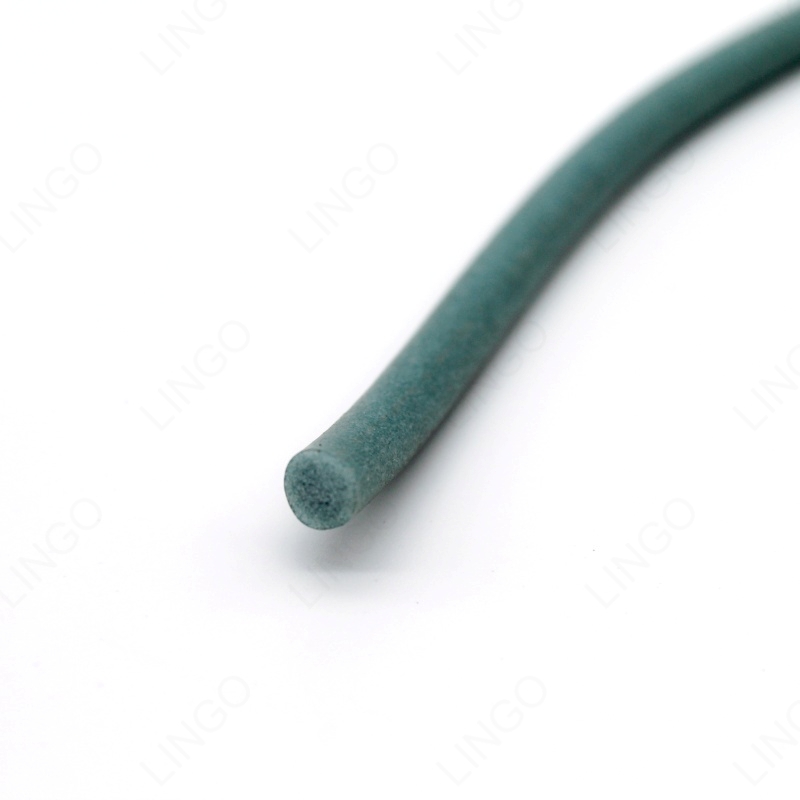
LG-SRC Silicone Rubber Cords – Available as solid or sponge cords, LG-SRC is made from silicone rubber, is heat resistant, and is FDA qualified. Color and length are customizable, making it suitable for sealing, gasketing, and insulation tasks.
LGMM Anti-Vibration Mounts – LGMM is a cylindrical rubber mount classified as a rubber stud mount. It is made of natural rubber with carbon steel, has a diameter range of 8 to 150 mm, a height range of 8 to 90 mm, and tolerances to the RMA A2 standard. These are intended for marine and military, construction, electronics and precision instruments, industrial machinery, and transportation applications.
Technical Explanation: Parameters That Define Rubber Part Performance
Understanding the parameters behind a rubber part helps buyers match the product to the working condition. Hardness, usually expressed in Shore A, affects how much force is needed to compress a seal and how well it conforms to mating surfaces. A lower durometer material may seal better under low clamp force, while a higher durometer material may resist extrusion under pressure. For LG-RS sealing rings, the hardness range of 50 to 95 Shore A covers flexible gaskets through firmer structural seals.
Temperature range is equally important. LG-RS sealing rings are specified from -40°C to 250°C, which covers most automotive, industrial, and appliance environments. In one documented application, silicone sponge rubber cords were required to withstand temperatures from -60°C to 250°C without hardening or cracking. Buyers should compare the specified temperature range against the minimum and maximum ambient temperature of the application, including heat generated by the equipment itself.
Dimensional tolerances determine assembly fit. Anti-vibration mounts in the LGMM range are manufactured to the RMA A2 tolerance standard, with diameters from 8 to 150 mm and heights from 8 to 90 mm. In sealing applications, high precision is often required. One documented project demanded precision exceeding ASTM A1 standards to keep a spring precisely centered without shifting. This demonstrates why tolerance data should be reviewed at the RFQ stage, not discovered during incoming inspection.
Material selection is another core parameter. EPDM is commonly chosen for outdoor and weather-resistant applications because of its resistance to ozone and UV, and it is formally classified under ASTM D1418 and ISO 1629. NBR is frequently used where oil resistance is required. Silicone offers wide-temperature performance and is available in FDA-compliant grades for food and medical contact. FKM provides higher temperature and chemical resistance for demanding industrial and aerospace environments.
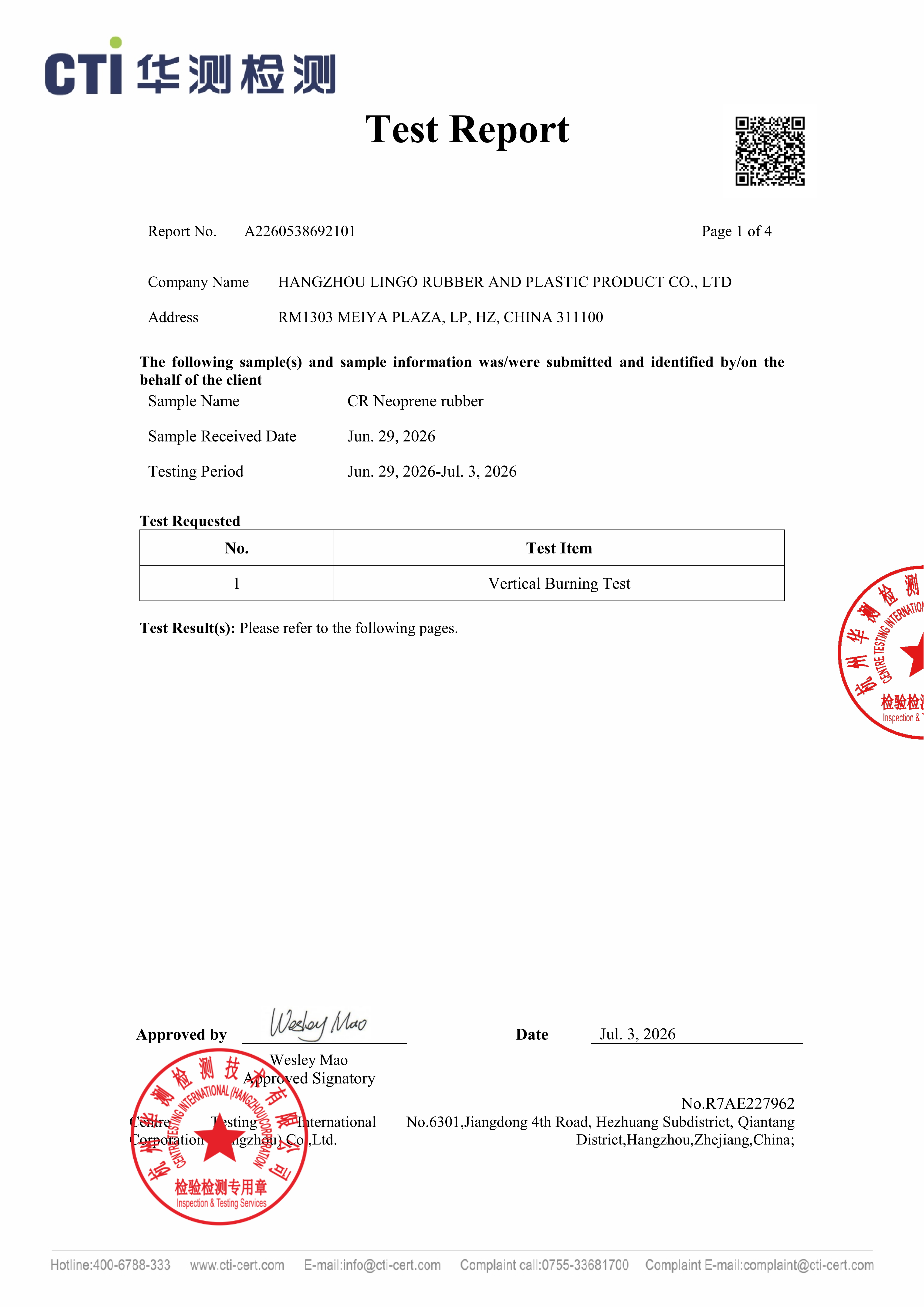
Certifications provide a separate layer of assurance. LINGO holds PPAP certification for automotive production, covering silicone rubber cords, plastic injection parts, rubber sealing rings, and anti-vibration mounts. PPAP, or Production Part Approval Process, is a standardized automotive quality framework that documents process capability and batch consistency. The company also holds an MSDS for rubber sealing rings that applies to the EU and USA markets. MSDS documents are essential for chemical safety compliance and for buyers who must assess hazardous substance handling. In addition, LINGO has obtained a CTI test report for CR Neoprene rubber confirming UL 94 V-0 flammability performance. This certification is relevant for applications where flame retardancy is a safety requirement, such as electronics, transportation, and industrial equipment.
A practical note: certifications are not universal across an entire product catalog. A UL 94 V-0 certificate may cover a specific material, such as CR Neoprene rubber, and the products associated with that compound. Buyers should always check the product scope and material description on the certificate instead of assuming that one certificate covers all parts from a supplier.
Application and Use Cases: Where Certified Rubber Parts Are Deployed
Rubber parts with verified parameters and certifications are used in structured, high-consequence applications. The application scenarios vary from vibration isolation to water sealing to battery enclosure sealing.
Anti-vibration mounts for automotive OEMs – In a US automotive OEM program, LINGO supplied rubber shock absorbers in quantities from 10,000 to 40,000 pieces. The application was designed to absorb vibration and reduce noise. The parts required small size, tight tolerances, and consistent batch-to-batch quality. LINGO maintained in-house spare parts inventory for urgent orders and used an existing mold set with a single machined middle plate, which reduced initial tooling investment without requiring a new mold. This illustrates how production flexibility can matter as much as material data.
Flame-retardant vibration dampers – Another US automotive application involved 500 pieces of a vibration-damping component engineered with flame-retardant rubber compounds. Test data showed a 45% reduction in peak vibration amplitude, and the material was UL 94 V-0 certified. The buyer benefited from existing tooling for immediate production and competitive pricing. This case connects two core constraints: vibration damping performance and flammability compliance.
Silicone sponge cords for EV battery and cabinet sealing – A UAE automotive OEM ordered 4,000 meters of silicone sponge rubber cords for applications including EV battery sealing, industrial cabinet gaskets, automotive door seals, appliance door insulation, building window weatherstripping, and medical device sealing. The material was FDA silicone sponge rubber, with high precision tolerance and a smooth surface. The seals demonstrated thermal stability from -60°C to 250°C, UV and ozone resistance, and closed-cell construction that kept out water, dust, and noise. This project shows how extrusion products with documented material properties can support multiple industries.
Precision water-sealing rings – In a project involving automotive OEMs, water treatment equipment manufacturers, and the food industry across the USA, UK, Canada, Australia, France, and Germany, LINGO supplied 1,000 units of water-sealing components. The rubber material was FDA certified, and the application required high precision exceeding ASTM A1 standards. The result was stable operation, dimensions within tolerance, and zero claims over a three-year period. The engineering challenge involved keeping metal parts precisely centered during rubber production when no positioning point existed, a common problem in molded assemblies.
Market Trend Analysis: Compliance-Led Sourcing Is Replacing Price-Only Sourcing
The rubber parts market is large and structurally diverse. The global rubber molding market reached USD 54.1 billion in 2024, with injection molding as the leading process type and EPDM as the dominant material. The anti-vibration mounts market was valued at USD 6.03 billion in 2024, with the top three global players holding 65% of the market. For most buyers, this concentration means the largest suppliers may focus on high-volume standardized parts, while mid-size specialized manufacturers can offer more flexibility in custom materials and configurations.
China’s rubber parts industry now accounts for more than 35% of global production, driven heavily by EV battery sealing and thermal management requirements. This shift has made Chinese rubber parts manufacturers more visible in global supply chains. At the same time, buyers are increasingly applying international standards and documentation requirements to suppliers regardless of location. EPDM classification under ASTM D1418 and ISO 1629 gives both sides a common reference. For automotive sealing and gasketing, ASTM D2000 is frequently referenced for temperature and oil resistance requirements.
The practical trend is clear: certification documents and parameter data are becoming part of the quote. A supplier that can provide MSDS, PPAP evidence, or a UL test report is easier to evaluate than one that can only offer a low price. For buyers, this means the information gain in a sourcing decision comes from the presence of verifiable constraints, not from descriptive language alone.
Comparison with Traditional Solutions
Traditional rubber parts sourcing often relies on a drawing, a material name, and a price. That approach leaves many critical constraints unexamined. The table below compares a documentation-light supplier model with a certified, parameter-transparent approach.
| Sourcing Factor | Documentation-Light Supplier | Certified and Parameter-Transparent Supplier |
|---|---|---|
| Material verification | Verbal claims or generic datasheets | MSDS, standard references, and material-specific certificates |
| Tolerance control | Vague “industry standard” terms | Specific standards such as RMA A2 or customer-defined tolerances |
| Batch consistency | Limited process documentation | PPAP-style process validation, full sample inspection, random bulk inspection |
| Certification scope | Unclear or blanket statements | Certificates with defined product and material scope |
| Risk exposure | Higher compliance and field failure risk | Lower procurement risk, but application validation still required |
There is a limitation to this comparison. A certified supplier is not a guarantee that the part will perform in every application. Certificates and parameters prove compliance with specified standards, but they do not replace duty-cycle testing or prototype validation under actual operating conditions. A UL 94 V-0 certificate, for example, confirms flame retardancy for a specific material, but it does not confirm that the part will seal effectively under a specific fluid or pressure. Buyers should use certifications as a risk-reduction tool, not as a substitute for application engineering.
Future Outlook: Toward Traceable Rubber Parts Supply Chains
As electric vehicles, renewable energy systems, and advanced industrial equipment continue to grow, rubber parts will be asked to meet stricter thermal, chemical, and flammability requirements. The demand for traceable batches, clear tolerance data, and certified materials is likely to increase. Buyers will expect suppliers to maintain molds, provide batch traceability systems, and document production quality.
LINGO’s operational choices reflect this direction. The company lists remote technical support, mold maintenance and ownership protection, batch traceability systems, and free exchange and acceptance of concessions as part of its after-sales service. Production lead times of 2 to 6 weeks and the acceptance of small quantity orders provide flexibility for buyers who need to test difficult parts before scaling. With 80% of sales exported to the EU and USA, LINGO also has experience navigating the documentation expectations of mature export markets.
For procurement teams, the forward-looking approach is to build supplier scorecards that include certification validity, parameter completeness, and quality control evidence, not only price. Rubber parts may be small components, but the cost of failure is measured in downtime, compliance issues, and product recalls.
FAQ
What certifications does LINGO hold for rubber parts?
LINGO holds PPAP certification for automotive production, covering silicone rubber cords, plastic injection parts, rubber sealing rings, and anti-vibration mounts. MSDS certification covers rubber sealing rings for the EU and USA markets. A CTI test report confirms that CR Neoprene rubber meets UL 94 V-0 flammability requirements.
What are the key parameters for LG-RS rubber sealing rings?
LG-RS rubber sealing rings are available in materials including NBR, EPDM, silicone, FKM, and FFKM. Hardness is typically 50 to 95 Shore A, and the operating temperature range is -40°C to 250°C. Color can be customized per Pantone or RAL, and certificate options referenced in the specification include FDA, UL, RoHS, and REACH.
What are the standard dimensions and tolerances of LGMM anti-vibration mounts?
LGMM anti-vibration mounts are cylindrical rubber stud mounts made of natural rubber with carbon steel. Diameter range is 8 to 150 mm, height range is 8 to 90 mm, and tolerance complies with the RMA A2 standard.
Which industries do LINGO’s rubber parts cover?
LG-RS rubber sealing rings target aerospace, automotive, food and beverage, pharmaceutical and medical devices, and oil, gas and chemical processing. LG-RX rubber extrusion seals and LG-SRC silicone rubber cords cover household appliances, marine and offshore, industrial manufacturing, HVAC and refrigeration, electronics and electrical, laboratory and analytical, medical and healthcare, and food and beverage industries. LGMM anti-vibration mounts are intended for marine and military, construction, electronics and precision instruments, industrial machinery, and transportation.
Does LINGO support OEM/ODM production and small quantity orders?
Yes, LINGO offers OEM/ODM production. The minimum order quantity depends on the part, and small quantity orders are acceptable. Lead time is typically 2 to 6 weeks. For silicone extruded cords, rubber extrusion trims, and rubber compression molding parts, the listed monthly capacity is 1,000,000 kgs each.
For buyers moving from research to evaluation, the most useful next step is to compare the certification and parameter data provided by suppliers against the actual operating conditions of the application. A company profile with further manufacturing and capability details is available for reference: LINGO Rubber & Plastic Company Profile.