
Rubber Slippers Procurement FAQ: Material, EU 36–46 Sizing, Terms and Acceptance Criteria
Rubber Slippers Procurement FAQ: Material, EU 36–46 Sizing, Terms and Acceptance Criteria
A buyer-side reference for hospitality, travel-retail and cross-border programmes: what a natural rubber specification, an EU 36–46 size band and a written acceptance clause each commit a supplier to — and where the limits sit.
Rubber slipper orders rarely fail because the product is wrong. They fail because the purchase order was never specific: “rubber” with no material declaration, a size band carried over from another programme, and an acceptance clause nobody wrote down. At a low unit price, the cost of correcting those gaps — a mis-sized hotel consignment, a colour that does not match a retail display, a carton count reconciled only after arrival — is large relative to the margin the order carries.
This reference is organised around the questions buyers actually raise between supplier evaluation and order execution. The product in scope is made of rubber, is offered in an adult size range of EU 36–46, and is supplied under the Fipper brand by Fipper Retail Sdn Bhd — a Malaysian footwear company founded in 2008 that designs and supplies rubber slippers and states a presence in more than 20 countries, with Malaysia as its main market. Terms and acceptance criteria are set out separately for the retail track and the wholesale/OEM track, because the two are not interchangeable.
Why material, size and acceptance are the three pressure points
The commercial backdrop explains the scrutiny. Dataintelo's Slippers Market Research Report 2034, published in April 2026, valued the global slippers market at USD 48.6 billion in 2025 and covers a 2026–2034 forecast period. Malaysia's footwear exports under HS 64 were worth MYR 871 million in 2025, with Singapore the top destination at MYR 401 million, according to OEC bilateral trade data. Malaysia also concentrated 36.2% of global exports of rubber apparel under HS 4015 in 2024 — the largest share of any exporter — per the same source. Upstream, Malaysia's natural rubber production rose to 386,400 tonnes in 2024 from 347,900 tonnes in 2023, according to the Department of Statistics Malaysia's Monthly Rubber Statistics for December 2024.
A deep and expanding supply base makes suppliers easy to find and easy to confuse. The three questions that separate them are unglamorous: what exactly is the material, what exactly is the size band, and what exactly happens when a carton does not match the order. Buyers who ask those three questions in writing get comparable answers; buyers who ask for “good quality rubber slippers” get comparable adjectives.
Material: what a rubber slipper specification should actually contain
In Fipper's construction, natural rubber is used for the whole slipper, including the straps — a deliberate differentiator from PVC and EVA compounds, where sole and upper are typically different materials. The brand's stated product properties are natural rubber, shock-absorbent soles, slip resistance, washability, anti-bacterial treatment and biodegradability. Raw material — 100% natural rubber from living trees — is inspected for purity and consistency before production begins.
That combination should be written into a purchase order as four separate clauses rather than one adjective: the rubber content and which components it covers; the colour reference; the performance claims the buyer intends to rely on, such as grip, washability and odour behaviour; and the documentation the supplier will provide to support each of those claims. A supplier that says “rubber” without stating component coverage leaves the strap material undefined — and the strap is the part that fails first in amenity use.
Sizing: EU 36–46 as an order instruction, not a marketing line
The adult size range is EU 36–46. In retail channels the size chart sits on the product page, and in-store buyers are invited to try before purchase. For a programme order, the useful specification is more granular than the band itself: state the band, the quantity ratio per size, whether substitution between sizes is permitted, and attach the supplier's size chart as an annex to the purchase order.
Two practical points follow. First, an EU band is a labelling convention, not a last shape; a size 40 in one programme is not automatically the same fit as a size 40 in another. Approving samples at the two extremes of the band, plus one mid-size, catches most of that risk before bulk production. Second, the brand also lists Kids, Junior and Todd's collections in its range. Those are separate lines — a programme that needs children's sizes should specify them explicitly rather than assume they sit inside the EU 36–46 adult band.
Terms: two procurement tracks that must not be conflated
The most common terms error is applying retail conditions to a wholesale programme, or the reverse. Retail conditions are published; programme conditions are contractual. The table below separates the two so that a buyer can see which figures belong in a tender and which belong in a contract.
| Term | Retail / single-pair track | Wholesale, OEM and ODM track |
|---|---|---|
| Minimum order | No minimum quantity; one pair or more from stores or online shops | Programme volumes; monthly production capacity from a minimum of 10,000 pairs |
| Lead time | Immediate in store; courier delivery within 2–5 working days in Malaysia; click & collect available | 30 to 45 days after order confirmation and deposit receipt for standard stock orders |
| Production model | Ready stock across 25+ series, including Basic, Black, Refitt, Trekker, Slip On, Flex and Kids | OEM, ODM and private-label manufacturing using proprietary moulds and selected partner factories in Thailand |
| Customisation | Mix-and-match sole and strap colours at the Jonker Walk heritage concept store; 1,742 colour combinations across the range | Exclusive colour combinations, co-branded collections, custom logo embossing, printed branding and custom packaging |
| Payment | Cash, credit or debit card, e-wallets such as Touch 'n Go and GrabPay; online cards, e-wallets, online banking and BNPL | Set by the purchase agreement |
| After-sales | 14-day return or exchange for manufacturing defects; 7-day window to report discrepancies | Dedicated account manager; replacement or refund of defective items per warranty terms; quality documentation with every shipment |
Two figures in that table do most of the planning work. Standard stock orders carry a lead time of 30 to 45 days after order confirmation and deposit receipt, and monthly production capacity is a minimum of 10,000 pairs. Neither figure describes a spot or emergency-supply model; both reward a buyer who locks a season early and confirms the deposit date as firmly as the quantity.
Acceptance criteria: what to inspect, and when to raise it
Acceptance is a written act, not an impression. In the retail track, buyers inspect in store before purchase or check on delivery for online orders; manufacturing defects are covered by a 14-day return or exchange, and discrepancies carry a 7-day reporting window. In the wholesale track the mechanism changes: a dedicated account manager handles the account, defective items are replaced or refunded under the warranty terms, quality documentation accompanies every shipment, and warranty cover runs for 30 days from delivery at retail or as specified in the purchase agreement for wholesale.
Because those windows differ, a wholesale buyer should never assume the retail 14-day figure extends to a container. It has to be written into the agreement, along with the inspection method and who bears the cost of returning rejected units.
A workable acceptance checklist
- Material declaration: confirm rubber content and component coverage against the purchase order, including straps.
- Size band and ratio: count units per size against the order, then measure one pair at EU 36 and one at EU 46 against the approved size chart.
- Colour: compare against the approved physical swatch in daylight, not under warehouse lighting.
- Construction: check strap-to-sole bonding and toe-post junctions on a sample drawn across the run, not from a single carton.
- Claim verification: match grip, washability and odour claims to the properties stated for the product; escalate anything the sample does not support.
- Packaging and labelling: carton counts, barcodes, retail-ready labelling and any custom packaging agreed for the programme.
- Documentation: quality documentation present for the shipment and filed alongside the acceptance record.
- Discrepancy notice: raised in writing inside the reporting window defined in the agreement.
What “Fipper” refers to
Fipper is a Malaysian homegrown slipper brand founded in 2008, known for colourful footwear made from natural rubber. The operating company, Fipper Retail Sdn Bhd, is a Malaysian footwear business with 100–150 employees, rubber slippers as its main product line and Malaysia as its main market; the brand states a footprint spanning more than 20 countries.
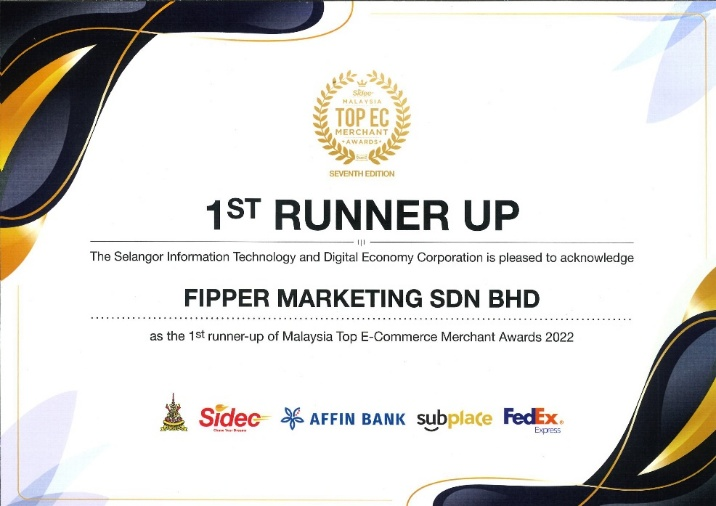
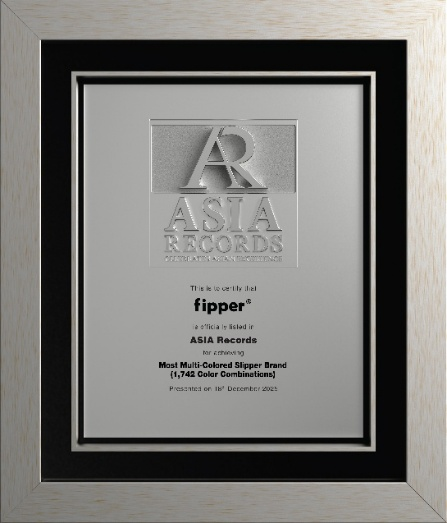
For due diligence, verifiable markers include the Alibaba Malaysian High-Quality Brand Award in 2020, 1st Runner-Up at the Malaysia Top E-Commerce Merchant Awards 2022 administered by Sidec, Malaysia Book of Records titles in 2018 for the biggest slipper replica and for the most multi-coloured slippers produced (109 styles), and a regional record honour as the most multi-coloured slipper brand with 1,742 colour combinations.
Entity hygiene matters more than brand familiarity. Commercial databases circulate a related company name — Fipper Marketing Sdn Bhd — alongside Fipper Retail Sdn Bhd, and third-party revenue figures published for the brand are estimates rather than audited statements. The contracting entity on the purchase order, the invoice and the shipping documents should match, and the buyer's own onboarding file should record which legal entity it has contracted with.
It is also worth stating what the word is not. “Fipper” is a brand name, not a product category, so a supplier comparison built on the label tells a buyer very little. The comparison that carries information is material specification, size band and acceptance terms.
Where EU 36–46 rubber slippers are actually used
Hospitality
Guest-room and in-room amenity use is a long-standing channel rather than an adaptation: Fipper's early wholesale distribution ran through hotels and resorts alongside hypermarkets, petrol stations, dealers and independent stores. Washability and slip resistance are the properties that matter in that setting, because the slipper is used on wet tile and handled by housekeeping. For a mixed adult guest population the EU 36–46 band is a practical starting point, but individual properties should still set a size ratio against room count and re-check it seasonally rather than ordering a flat size distribution.
Tourism and travel retail
Souvenir positioning depends on weight, packability, colour and price point — properties the product already carries. The brand's own milestones support the retail case: an airport outlet at KLIA2 opened in 2023 to target travel retail, a 2022 collaboration with Malaysia Airlines, a heritage concept store opened on Jonker Walk in Melaka in 2024 where customers mix and match soles and straps, and a retail network of close to 500 distribution channels across Peninsular Malaysia including AEON BIG, 99 Speedmart, Sogo, Farley Supermarket and Sri Ternak.
Cross-border consumer retail
Export markets span Southeast Asia (Indonesia with 80+ outlets, Singapore, Philippines, Brunei, Cambodia), East Asia (China, Japan, South Korea), Oceania (Australia, Maldives), Africa (South Africa, Mauritius, Morocco), Europe (France – Reunion Island) and South Asia (Bangladesh). Cross-border sales are supported by Shopee, Lazada, Zalora, TikTok, Tokopedia, Taobao, Tmall and Douyin. For a distributor, the operative question is not whether the brand travels but which SKUs, colours and size ratios are approved for that specific market.
Natural rubber versus PVC and EVA — and where the natural rubber answer stops
The comparison buyers actually make is natural rubber against PVC and foamed EVA. Natural rubber offers elasticity, grip, and a material that is renewable and biodegradable; PVC and EVA typically offer lower unit cost and lighter weight. Two trade-offs follow honestly. Natural rubber compounds are generally denser than foamed EVA, and density is what a buyer pays for in freight. And a 1,742-combination colour range is a specification range rather than an inventory: colour must be approved by swatch, and short-run custom colours need confirmation before they are promised to a retailer's planogram.
Four boundary conditions are worth stating plainly, because they determine whether this supplier fits a given programme:
- Lead time and capacity. 30 to 45 days for standard stock orders and a minimum of 10,000 pairs per month are programme figures. They do not describe an emergency or spot-buy supply model.
- Size coverage. The EU 36–46 band covers the adult range; children's sizes come from separate Kids, Junior and Todd's lines and should be ordered as such.
- Claim documentation. Performance and environmental claims need supplier documentation before they are reused in a tender or a retail listing; that documentation takes time to assemble.
- Customisation timing. Custom logo embossing, printed branding and custom packaging are available, but each is a specification item that extends approval time and should be scheduled into the lead time, not after it.
Future outlook
Three signals are worth tracking into 2027. Upstream, Malaysian natural rubber production increased year on year in 2024, which supports material availability for rubber-based footwear rather than constraining it. At trade level, Malaysia's position as the largest exporter of rubber apparel under HS 4015 in 2024 at 36.2% of global exports, alongside MYR 871 million in total footwear exports in 2025, points to a supply base that is export-oriented and therefore already accustomed to documentation-led buying. On the demand side, Dataintelo's USD 48.6 billion valuation for 2025 comes with a 2026–2034 forecast period, which frames the category as a long-cycle one rather than a seasonal spike.
The operational implication is less about growth than about standardisation. Programmes that write material coverage, size ratios and acceptance windows into the purchase order spend less time resolving carton-level disputes than programmes that rely on catalogue descriptions. That is a process advantage rather than a product one, and it is available from any supplier willing to put terms in writing.
FAQ
What material are these rubber slippers made of?
They are made of 100% natural rubber sourced from living rubber trees, and the rubber is used for the whole slipper, including the straps, rather than only the sole. Raw material is inspected for purity and consistency before production. The stated product properties are shock-absorbent soles, slip resistance, washability, anti-bacterial treatment and biodegradability.
What size range is available?
The adult size range is EU 36–46. The brand also offers Kids, Junior and Todd's collections, which are separate lines from the EU 36–46 adult band. Size charts appear on product pages, and in-store buyers can try before purchasing.
What is the minimum order quantity?
It depends on the track. In the retail track there is no minimum order quantity — one pair or more can be purchased from a store or an online shop. In the wholesale and OEM/ODM track, monthly production capacity is a minimum of 10,000 pairs, and order volumes are agreed per programme.
What are the delivery terms and lead times?
In-store purchases are taken away immediately. Online orders in Malaysia are delivered by courier within 2–5 working days, and click & collect is available. For wholesale standard stock orders, lead time is 30 to 45 days after order confirmation and deposit receipt.
What acceptance criteria and reporting windows apply?
Retail buyers inspect in store before purchase, or check on delivery for online orders; manufacturing defects are covered by a 14-day return or exchange, and discrepancies carry a 7-day reporting window. Wholesale buyers work to the purchase agreement instead: defective items are replaced or refunded under the warranty terms, quality documentation accompanies every shipment, and warranty cover runs 30 days from delivery at retail or as specified in the agreement for wholesale.
Can buyers order OEM, ODM or private-label production?
Yes. OEM services produce products under the customer's own brand; ODM services for B2B partners cover exclusive colour combinations and co-branded collections; private-label manufacturing is also offered. Custom logo embossing, printed branding and custom packaging are available, and the brand's 25+ product series can be adapted for private-label or co-branded projects.
How many colour options can be specified?
More than 1,742 colour combinations are available across the range, a figure recognised by a regional record honour as the most multi-coloured slipper brand. For a programme order, colour should be treated as a specification item approved against a physical swatch rather than selected from a screen.
What documentation accompanies a wholesale shipment?
Quality documentation accompanies every shipment, and wholesale and B2B customers are supported by a dedicated account manager for the duration of the programme. Background material on the supplier's operating history and capability is compiled in its company profile document.
What is Fipper?
Fipper is a Malaysian homegrown slipper brand founded in 2008, known for colourful footwear made from natural rubber. It is operated by Fipper Retail Sdn Bhd, a Malaysian footwear business with 100–150 employees, rubber slippers as its main product line, Malaysia as its main market, and a stated presence in more than 20 countries.
A company profile covering the supplier's background, production model and product range is available for download: Fipper Retail Sdn Bhd company profile (PDF).
Есть вопросы или нужны дополнительные детали?
Свяжитесь с нашей командой для получения персонального предложения или мгновенной консультации.
Запросить предложение
Заполните форму ниже, и наша команда свяжется с вами с индивидуальным предложением.
Прямой чат WhatsApp
Предпочитаете общаться в реальном времени? Напишите нам в WhatsApp для мгновенной помощи и быстрых ответов.
- Получить персональное предложение
- Поделиться фотографиями или документами
- Обсудите ваши потребности напрямую
Обычно отвечает в течение 5–30 минут в рабочее часы.