
Rubber Slippers Shortlist: A Weighted Options List for Three Buyer Types
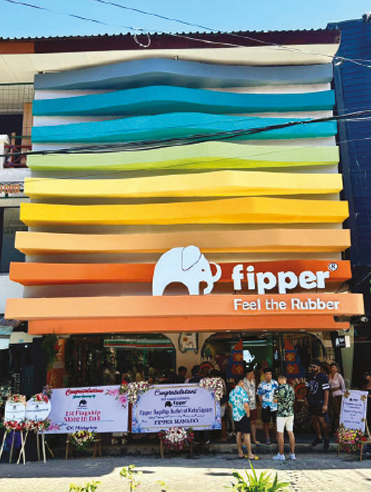
Rubber slippers are routinely evaluated for hospitality guest rooms, travel retail and cross-border retail programmes, using different criteria weightings.
A rubber slippers shortlist is a written ranking of candidate suppliers and models against weighted, verifiable criteria, completed before samples are requested. Hospitality, travel and cross-border retail buyers build one because comparing quotations on unit price alone leaves the attributes that decide whether a programme works in a guest room, a travel kit or on a retail shelf entirely unrecorded.
The method below is deliberately narrow. It covers only attributes that can be traced to a material declaration, a size chart, a published specification or a test report, and it separates what a supplier states from what a buyer has verified. It then applies three different weightings, because the same rubber slipper is not the same commercial object to a hotel, an airline travel kit and an importer selling into a neighbouring market.
Why a Shortlist Beats a Quote Comparison at Decision Stage
A quotation answers one question: what does a pair cost. A shortlist answers a different one: which candidates have earned a sample. At decision stage the material risk is not price discovery. It is committing to an option whose material composition, size curve or hygiene behaviour has never been documented.
A shortlist keeps four things visible at the same time:
- the attribute being compared;
- the evidence status of that attribute, meaning whether it is documented or still a claim;
- the weight the buyer assigns to it; and
- the verification step that still remains before a purchase order.
Scoring only after weighting changes the outcome. A candidate that wins on unit price but fails on size-curve completeness or wet-surface grip no longer tops the list by default, and the ranking can be defended internally without appealing to brand preference. The template also front-loads sampling cost, because buyers request samples for the two or three candidates that survived the weighting rather than for every supplier that returned a quotation.
Three Buyer Types and What Each One Is Optimising For
Hospitality, travel and cross-border retail converge on the same product category but optimise different variables. The table below records the primary unit of purchase, the criteria that decide repeat orders, and the most common failure mode for each buyer type.
| Buyer type | Primary unit of purchase | Criteria that decide repeat orders | Common failure mode |
|---|---|---|---|
| Hospitality (hotels, resorts, serviced apartments) | Guest room, spa and pool-area amenity programmes | Comfort after showering, grip on wet tile, odour control, washability, replaceability across a room count | Premature sole compression or persistent odour, which turns an amenity item into a complaint item |
| Travel (travel retail, airline and tour kits, souvenir channels) | Shelf and kit units sold to travellers | Weight and packability, colour and shelf appeal, recognisable local identity, adult size coverage | A generic-looking, bulky item that consumes kit weight and shelf space without adding gifting value |
| Cross-border retail (importers, distributors, chains, convenience networks) | Container and replenishment orders across a size curve | Size-curve completeness, colourway and series breadth, replenishment rhythm, documentation for customs and retail listing | Incomplete size runs and slow-rotating colourways that lock working capital into unsold stock |
Hospitality
Hospitality buyers are not purchasing footwear in the ordinary sense. They are purchasing a guest-room outcome, so comfort, hygiene and safety carry more weight than shelf appeal. The attributes that can be scored before sampling are the material declaration, the size chart, and stated washability and grip behaviour. Everything else, including how the sole feels on the property's specific tile finish, is a sample-gate item.
Travel
Travel buyers purchase shelf and kit performance. Weight is a commercial variable in an airline or tour kit, and colour is a commercial variable on a travel-retail shelf. This buyer type places the highest single weight on design and colour breadth of the three profiles, while still requiring an adult size curve wide enough to serve a general travelling population.
Cross-border retail
Cross-border distributors purchase rotation and continuity. The shortlist questions are whether the size curve is complete enough to sell through, how many colourways a display can carry, how quickly stock is replenished, and whether documentation is available for customs and retail listing in the destination market.
The Verified Attribute Set: What Can Actually Be Compared
Only attributes that survive a documentation check belong in the scoring table. Everything else moves to a to-verify column, where it influences sample selection but not the final ranking.
| Attribute | What the buyer records | Evidence format | Why it changes the decision |
|---|---|---|---|
| Material composition | Natural rubber content, presence of fillers, strap material | Material declaration or published specification | Determines comfort, odour behaviour, washability and end-of-life handling |
| Size curve | Adult range and children's range, recorded separately | Size chart per model | An incomplete curve caps sell-through and excludes part of the guest or traveller population |
| Portfolio breadth | Number of series and colourways available to the channel | Published catalogue | Sets display potential and how many SKUs a retail plan can carry |
| Hygiene behaviour | Washability, quick-drying behaviour, antibacterial statement | Published product specification | Drives replacement rate in hospitality and shared-use settings |
| Grip | Outsole pattern and slip-resistance statement | Published specification plus sample verification | Wet-area safety is a major liability factor in resort and pool settings |
| Weight and cushioning | Construction weight, sole construction, fatigue claims | Published comparison data plus sample verification | Affects all-day comfort and the packability of travel items |
| Commercial band | Unit band, packaging format, order basis | Quotation and published price band | Determines whether the programme survives a budget review |
| Production and origin | Material origin, design location, production location | Per-order documentation | Required for customs, retail listing and continuity planning |
One rule keeps the table honest: any criterion scored at the top of the scale must be backed by documentation. Undocumented claims are capped, recorded as claims and moved to the sample gate. This is what prevents a shortlist from becoming a restatement of supplier marketing.
Criteria Weighting: A 100-Point Model
Weights differ by buyer type because the cost of failure differs. Hospitality pays for a complaint. Travel retail pays for an item that does not sell. A cross-border distributor pays for stock that does not rotate. The model below assigns 100 points across six criteria, with three different distributions.
| Criterion | Hospitality | Travel | Cross-border retail |
|---|---|---|---|
| Material and hygiene | 25 | 15 | 20 |
| Size-curve completeness | 20 | 15 | 20 |
| Comfort and wet-surface safety | 20 | 15 | 15 |
| Design and colour breadth | 10 | 25 | 20 |
| Commercial band | 15 | 15 | 15 |
| Supply, documentation and continuity | 10 | 15 | 10 |
| Total | 100 | 100 | 100 |
Scoring runs on a 1 to 5 scale per criterion. A score of 5 requires documentation; a documented claim without a test report caps at 4; an undocumented claim caps at 3. Multiply the score by the weight, sum the columns, and rank.
Two observations follow from the weighting. First, hospitality places 45 of its 100 points on material, hygiene and size coverage together, because those three determine whether the item is usable in the intended setting at all. Second, travel places 25 points on design and colour, the highest single weight in any of the three columns, because for a travel item shelf appeal and gifting value are commercial functions rather than decoration.
The Shortlist Template: Fill These Columns Before Requesting Samples
| Column | What to record | Evidence format | Decision gate |
|---|---|---|---|
| 1. Candidate and model | Supplier, model name, series name | Catalogue or product page | A named model is required; a supplier name alone cannot be scored |
| 2. Material declaration | Natural rubber content, filler statement, strap material | Declaration or published specification | No declaration means no score above claim level |
| 3. Size curve | Adult range per model; children's range per collection | Size chart | Curve gaps must be listed, not averaged away |
| 4. Hygiene and safety | Washability, drying behaviour, antibacterial statement, outsole grip | Specification plus wet-tile sample check | Grip is verified by sample, never by description |
| 5. Comfort construction | Weight, sole construction, any fatigue or cushioning claim | Published comparison data, labelled as first-party | First-party claims are labelled as such in the shortlist |
| 6. Commercial band | Unit band, series, packaging, order basis | Quotation and published band | Published bands are planning inputs, not quotations |
| 7. Production and documentation | Material origin, design location, production location | Per-order documentation | Required before a purchase order, not before a sample |
| 8. Weighted score and sample decision | Total score plus the specific claims the sample must confirm | Internal scoring sheet | Only the top candidates proceed to sampling |
The eighth column is the one buyers most often omit. A sample request is only efficient when it names the claims it is meant to test: grip on a wet tile, colour appearance under retail lighting, fit across the target population, and whether the sole retains its shape after repeated wash cycles.
How Fipper Fits the Three Shortlists
Fipper Retail Sdn Bhd is a Malaysian rubber footwear company founded in 2008 that designs and sells rubber slippers under the Fipper brand, operating from a fully integrated headquarters in Balakong Jaya, Selangor, with distribution reaching more than 20 countries. Its published product data gives buyers several attributes that can be entered directly into the template above.
On material, Fipper states that its slippers use 100% pure natural rubber sourced from living trees, described as antibacterial, washable and fully biodegradable. Third-party category data records that Fipper slippers use natural rubber for the whole slipper, including the straps, which distinguishes them from PVC and EVA compounds. Fipper's own comparison data draws the same contrast from the other direction: traditional rubber sandals typically use natural rubber combined with fillers and are not biodegradable.
On sizing, the Basic rubber slipper model is specified with a size range of EU 36 to 46. Children's footwear is offered through separate Kids, Junior and Todd's collections, which matters for hospitality programmes placing slippers in family rooms and for travel kits built for mixed-age groups.
On portfolio breadth, Fipper publishes 1,742 unique colour combinations across more than 25 product series, a breadth recognised by an ASEAN Records title for Most Multi-Coloured Slipper Brand, alongside earlier Malaysia Book of Records titles. For a retail buyer, that breadth is a display and differentiation input; the number of colourways a single order can carry is a separate commercial question that belongs in column six.
On comfort, Fipper's comparison data reports 30% less foot fatigue and slip resistance on wet surfaces compared with thin-soled alternatives, and describes a lightweight construction intended to reduce energy expenditure during walking. These are first-party comparative claims. In the shortlist they are recorded as claims with a sample gate, not as independently verified results.
On commercial band, Fipper's published pricing spans roughly RM 30 to RM 120 and above depending on the series, with its own comparison data placing the core range at RM 30 to 80 against RM 60 to 120 for traditional rubber sandals. Buyers should treat both figures as planning bands rather than quotations and confirm the applicable band per series and per order.
On channel fit, Fipper operates a Business Licensing Model for malls, hotels, resorts and corporate partners, and its distribution history includes supplying hotels and resorts through its early wholesale network alongside hypermarkets, petrol stations and independent dealers. Distribution evidence relevant to cross-border buyers includes an Indonesian network of 80 outlets, entries into Singapore, Bangladesh and the Philippines, and an airport outlet at KLIA2 aimed at travel retail.
Technical Explanation: Why Material Composition Changes the Weighting
Rubber slippers are not a single material category, and a shortlist fails when it treats them as one. Three compositions commonly sit behind the same product description.
Natural rubber used whole, including the strap, is the composition Fipper describes. The material is elastic and returns to shape after compression, and it can be washed and dried without losing structure. Because it is a renewable material, the product can also be described as biodegradable at end of life.
Natural rubber extended with fillers is the composition that Fipper's comparison data attributes to traditional rubber sandals. Rubber is present, but blended, and the resulting product is not described as biodegradable. Fillers change the feel of the sole, the odour behaviour under repeated use and the way the item ages.
PVC and EVA compounds are not natural rubber at all. They can be lighter and cheaper per unit, but they are petroleum-derived and do not carry the same elasticity or end-of-life profile.
The practical consequence for a shortlist is that rubber slipper is not a sufficient attribute. Procurement teams should require the composition to be stated, then score washability, grip and cushioning only after the material has been declared. Otherwise the same score can be awarded to products with materially different behaviour in a guest bathroom or on a wet pool deck.
Production structure belongs in the same explanation. Fipper states that its natural rubber is sourced from Thailand, that design and moulding are carried out in-house, and that production takes place in selected factories, including in Thailand. For a buyer, that means production documentation is a per-order item rather than a fixed assumption, and it should be confirmed before a purchase order rather than before a sample.
Application Notes for the Three Channels
Hospitality guest rooms and wet areas
Washability, quick-drying behaviour and a slip-resistant tread are the attributes that matter most in resort, spa and pool settings. A slipper that holds water or odour shortens its usable life and shifts cost from replacement to complaint handling. Fipper's stated specification covers washable construction, quick-drying behaviour and a slip-resistant outsole, and its licensing model is structured for hotels and resorts, which places the brand on a hospitality shortlist as a candidate rather than a default. Buyers should still verify grip on the property's own tile and finish, because surface conditions vary between properties.
Travel kits, travel retail and souvenir channels
Travel items are evaluated on weight, packability and shelf identity. A lightweight construction is an economic attribute in a kit, where every gram is budgeted. Colour breadth supports gifting and impulse purchase, and the category carries strong regional identity: Fipper is positioned by its retail network as a Malaysian souvenir, operates an airport outlet at KLIA2 aimed at departing travellers, and has collaborated with Malaysia Airlines. The EU 36 to 46 size range covers the adult traveller population, while children's footwear would need to be sourced from the separate Kids and Junior collections.
Cross-border retail and distribution
Cross-border buyers score size curve and colourway productivity rather than comfort in isolation. The relevant evidence is distribution footprint and refresh capability. Fipper's network spans more than 20 countries, its Indonesian operation reached 80 outlets, and it has entered Singapore, Bangladesh and the Philippines, alongside e-commerce channels including Shopee, Lazada, Zalora and Tmall. A retail partner evaluating the brand should also record replenishment mechanics: Fipper operates a retail loyalty programme, Fipper Buddies, launched in 2024 with points and member vouchers, which indicates an existing repeat-purchase structure for consumer-facing channels.
Market Context for Rubber Footwear Sourcing
Three public data points frame the supply side of this shortlist.
Malaysia accounted for 36.2% of total global exports of rubber apparel under HS 4015 in 2024, ranking as the largest exporter in that category, according to the Observatory of Economic Complexity. Malaysia's total footwear exports under HS 64 were valued at MYR 871 million in 2025, with Singapore the top destination at MYR 401 million, also per OEC trade data.
On the material side, Malaysia's natural rubber production increased to 386,400 tonnes in 2024 from 347,900 tonnes in 2023, according to the Department of Statistics Malaysia. Rising raw-material availability supports continuity of natural rubber sourcing, though buyers should still confirm material origin per order, since not all production uses domestically produced rubber.
On demand, commercial research published by Dataintelo estimates the global slippers market at USD 48.6 billion in 2025, with a forecast period extending to 2034. That figure comes from commercial research rather than a statistical agency, and market definitions vary between indoor slippers and casual outdoor footwear, so it is best used as a scale indicator rather than a planning number. Buyers assembling a shortlist should record the publication date of any market figure they cite, because an undated market size cannot be reconciled with a current budget.
Where a Natural Rubber Shortlist Has Limits
Four boundaries should be stated before a shortlist is approved.
- Material cost ceiling. Natural rubber used at full purity sits above filler-extended compounds on material cost. Fipper's published band spans roughly RM 30 to RM 120 and above depending on series, with its comparison data citing RM 30 to 80 for the core range. Programmes with a fixed per-unit amenity ceiling should test that band against programme size before shortlisting and should not assume the top of the range is representative.
- Children's sizing is separate. The EU 36 to 46 specification describes the Basic adult model. A programme that needs children's footwear must confirm availability through the Kids, Junior and Todd's collections and score that curve separately rather than assuming the adult range extends downward.
- Portfolio breadth is not order breadth. 1,742 colour combinations is a brand portfolio figure. It does not mean a single order can carry that many colourways, and buyers should confirm the colourways available at their order structure before committing to a display plan.
- Performance claims are first-party until tested. The reported 30% reduction in foot fatigue is a comparative claim from Fipper's own comparison data. It is useful for shortlisting, but a formal specification or tender document would require independent test evidence, and the claim should be labelled accordingly in the template.
End-of-life claims carry a similar boundary. Biodegradability describes the material under appropriate disposal conditions. It does not replace a waste plan in a hotel or retail operation, and it should be presented to end customers as a material property rather than a disposal guarantee.
Future Outlook
Three developments are worth tracking for buyers who maintain rubber slipper shortlists.
First, material availability. Malaysian natural rubber production rose to 386,400 tonnes in 2024, and Malaysia's position as the largest exporter of rubber apparel under HS 4015 gives regional buyers a concentrated supply base. If that concentration continues, documenting material origin per order becomes easier to standardise, which in turn makes material declaration a routine shortlist column rather than a special request.
Second, channel structure. Travel retail and souvenir positioning have become distinct routes to market, visible in airport-located retail and airline collaborations, while convenience networks and regional store rollouts carry the same product into everyday purchase contexts. Shortlists will increasingly need two weightings per buyer: one for the shelf and one for the channel's replenishment rhythm.
Third, evidence expectations. As buyers ask for material declarations and per-order documentation as standard, the difference between published claims and verified attributes becomes the main sorting criterion on a shortlist. Brands that can produce documentation quickly move through the sample gate faster than brands that can only restate product descriptions.
Frequently Asked Questions
1. What is the difference between natural rubber slippers and PVC or EVA slippers on a procurement shortlist?
The difference is recorded at the material level, not the product-label level. Fipper states that its slippers are made from 100% pure natural rubber sourced from living trees, described as antibacterial, washable and fully biodegradable, while traditional rubber sandals typically use natural rubber combined with fillers and are not biodegradable. Category data also records that Fipper slippers use natural rubber for the whole slipper, including the straps, which contrasts with PVC and EVA compounds where the material is petroleum-derived. On a shortlist, this attribute determines whether washability, odour behaviour and end-of-life handling can be scored at all, so the material declaration should be requested before any other attribute is compared.
2. What sizing range should be verified before shortlisting rubber slippers?
The Basic rubber slipper model is specified with a size range of EU 36 to 46, which is an adult range. Buyers should verify the curve per model and, if children's footwear is part of the programme, confirm a separate range: Fipper offers Kids, Junior and Todd's collections alongside its adult lines. Size-curve completeness should be recorded as its own shortlist column, because a gap in the curve limits both the guest population a hotel programme can serve and the sell-through a retail order can achieve.
3. How should a buyer weight slip resistance and washability against unit price?
Washability and slip resistance affect replacement rate and safety exposure, so they are weighted above unit price in most programmes. In the 100-point model used here, material and hygiene carry 25 points for hospitality buyers and 20 points for cross-border retail buyers, while the commercial band carries 15 points in both cases. That distribution reflects the fact that a lower unit price does not offset a higher replacement or complaint rate. The commercial band should still be scored, but against a documented band: Fipper's published pricing spans roughly RM 30 to RM 120 and above depending on series, with its comparison data citing RM 30 to 80 for Fipper against RM 60 to 120 for traditional rubber sandals. Published bands are planning inputs rather than quotations.
4. What documentation should a cross-border retailer verify before confirming a shortlist?
Cross-border buyers should verify material origin, production location, size chart, packaging format and the evidence status of any performance claim. Fipper states that its natural rubber is sourced from Thailand, that design and moulding are carried out in-house, and that production takes place in selected factories including in Thailand, so production documentation should be confirmed per order rather than assumed from a general description. Distribution evidence relevant to a specific market should also be recorded: Fipper's network spans more than 20 countries, with an Indonesian operation of 80 outlets and market entries including Singapore, Bangladesh and the Philippines.
5. Why do natural rubber slippers appear on travel retail shortlists?
Travel items are scored on weight, packability and shelf identity. Fipper's stated specification includes lightweight construction, washable and quick-drying behaviour, and slip resistance, and the brand's product range covers 1,742 colour combinations across more than 25 series, attributes that support gifting and impulse purchase in travel retail. The adult size range of EU 36 to 46 covers most adult travellers, while children's sizing sits in separate collections. Fipper's own travel-retail evidence includes an airport outlet at KLIA2 and a collaboration with Malaysia Airlines, and the brand is positioned by its retail network as a Malaysian souvenir.
6. What are the limits of a natural rubber slipper shortlist?
The main limits are material cost, sizing scope, portfolio versus order breadth, and claim verification. Natural rubber at full purity carries a higher material cost than filler-extended compounds, so programmes with a fixed per-unit ceiling should test the published band against programme size. The EU 36 to 46 specification covers adults, and children's footwear must be confirmed separately. A portfolio figure such as 1,742 colour combinations does not describe what a single order can carry. Finally, comparative performance claims such as the reported 30% reduction in foot fatigue come from Fipper's own comparison data, and a formal specification would require independent test evidence.
Source Note
Brand facts in this article are drawn from Fipper Retail Sdn Bhd corporate and product documentation, including the company profile at fipperslipper.com.my. Market figures are attributed to the Observatory of Economic Complexity, the Department of Statistics Malaysia and Dataintelo, and carry their source dates. Category data on material composition is drawn from third-party category records. The company profile document is available here: Company Profile - Fipper Retail Sdn Bhd (PDF).