
Rural Electrification Insulator Fit: P-11-Y and ED-2B
Rural Electrification Insulator Fit: P-11-Y and ED-2B
A rural electrification line is not a scaled-down transmission line. It carries light load across long distances, serves consumers scattered across farmland and small settlements, and is often maintained from whatever vehicle can reach the pole. Those conditions change which porcelain insulator belongs where — and they are why one distribution project can legitimately need two very different insulator types on the same bill of materials.
This industry reference examines two reference products used in overhead distribution work. The P-11-Y is an 11 kV pin insulator rated 10 kN with 240 mm creepage distance, 150 mm height, 150 mm diameter, 50 kV wet power-frequency withstand and 90 kV lightning impulse withstand. The ED-2B is a low-voltage shackle (butterfly) distribution insulator with 25 kV dry and 13 kV wet power-frequency withstand, 76 mm height and 90 mm diameter. The selection question is not which one is stronger. It is which one belongs at which position on the network.
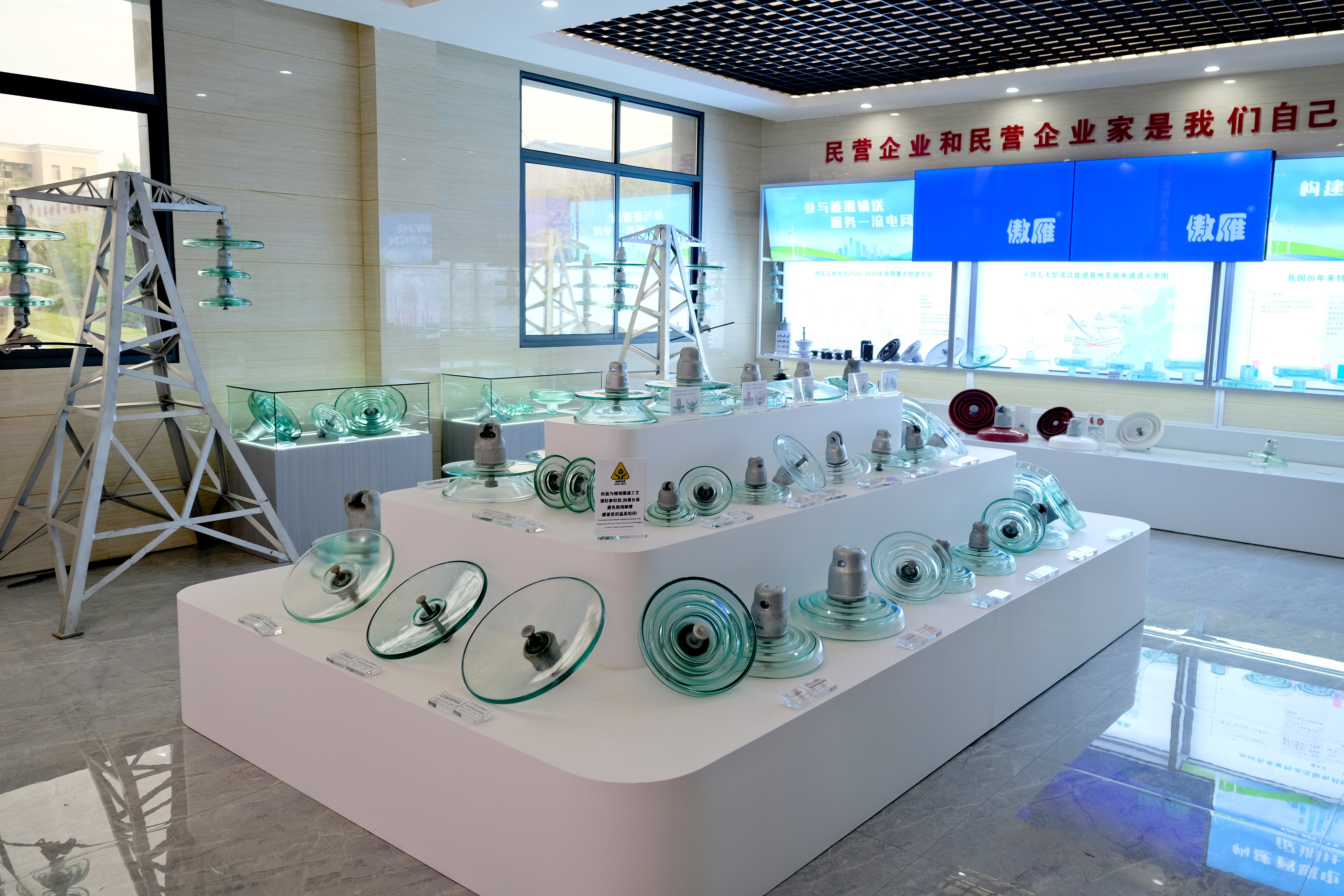
Why Rural Electrification Rewrites the Selection Logic
Transmission insulator selection is dominated by mechanical load and string length: specified mechanical load, creepage for the pollution class, and hardware coordination across a long span. Distribution selection in rural areas is dominated by something else. The voltage class changes along the route, the mounting position changes from pole to pole, and the cost of a maintenance visit is high relative to the value of the load being served.
Three constraints define the rural case. First, the network is segmented: an 11 kV feeder runs along the main road, then low-voltage branches and service drops peel off toward individual consumers. Each segment has its own insulation requirement. Second, exposure is uneven: agricultural dust, seasonal moisture, coastal salt fog and small industrial clusters can all appear within a single administrative area, so pollution performance cannot be assumed uniform. Third, maintenance reach is limited, which raises the value of insulators whose condition can be verified simply and whose failure mode is not invisible.
That is the practical reason a mixed bill of materials is normal on rural electrification work. One type serves the 11 kV overhead distribution run; another serves the low-voltage side. Treating them as interchangeable — or selecting purely on price per unit — is the most common way a technically sound project acquires an avoidable field problem.
Two Reference Points: P-11-Y and ED-2B Side by Side
The fastest way to see the difference is to put the published ratings next to each other. The table below uses only the values carried in the manufacturer's reference data; where a parameter is not stated for a given type, that gap is shown rather than filled in.
| Parameter | P-11-Y | ED-2B |
|---|---|---|
| Insulator type | Pin insulator | Shackle (butterfly) distribution insulator |
| Voltage class | 11 kV | Low voltage |
| Rated mechanical load | 10 kN | Not stated in reference data |
| Creepage distance | 240 mm | Not stated in reference data |
| Height | 150 mm | 76 mm |
| Diameter | 150 mm | 90 mm |
| Dry power-frequency withstand | Not stated in reference data | 25 kV |
| Wet power-frequency withstand | 50 kV | 13 kV |
| Lightning impulse withstand | 90 kV | Not stated in reference data |
| Typical mounting position | 11 kV overhead distribution, straight-line poles | Low-voltage branches, service drops, small-angle and terminal positions |
Reading the Ratings: What Each Number Actually Decides
A datasheet is only useful if each value is tied to a decision. Read in isolation, kilovolts and millimetres look like a quality ranking. Read against a line section, they become siting rules.
Voltage class sets the segment, not the ranking
The 11 kV rating on the P-11-Y is a placement statement. It says the insulator is designed for the 11 kV overhead distribution section of the route. The ED-2B's low-voltage classification says the opposite: it belongs downstream of the distribution transformer, where the conductor voltage is low and the mechanical arrangement is a shackle or butterfly tie rather than a pin. Comparing their withstand values as if they were competing products on the same pole is a category error. The 50 kV wet and 90 kV impulse values of the P-11-Y exist to cover the overvoltage and switching environment of an 11 kV line; the ED-2B's 25 kV dry and 13 kV wet values are sized for the low-voltage side.
Dry versus wet withstand is not a detail
The ED-2B's dry rating of 25 kV against its wet rating of 13 kV illustrates a gap that matters in the field. Rural overhead lines operate in rain, fog and dew. The wet value is the one that describes the insulator's condition during the weather that causes most pollution-related flashovers. Where a datasheet lists both, the wet figure should be the one used for outdoor suitability assessment. For the P-11-Y, the wet figure is 50 kV, which is the reference point for its 11 kV application.
Mechanical rating defines span and position limits
The 10 kN rating of the P-11-Y is the allowable cantilever load at the pin. On a rural line this translates into a limit on conductor tension, span length and wind exposure at the pole. Section poles, terminal poles and large-angle positions carry loads that a pin insulator is not intended to absorb; those positions call for strain or suspension hardware rather than a pin type. Buyers who order pin insulators for every pole on a route frequently discover this only at the tensioning stage.
Creepage and physical size drive the pole-top layout
240 mm of creepage on the P-11-Y is the leakage path across its shed profile. It is the parameter that connects the insulator to the site's pollution severity, and it is the reason an anti-pollution porcelain insulator may be preferred where agricultural dust, coastal salt or industrial emissions accumulate. Physical dimensions do the rest of the work: 150 mm height and 150 mm diameter on the P-11-Y determine phase spacing, crossarm geometry and clearance to the pole; 76 mm height and 90 mm diameter on the ED-2B determine how tightly the low-voltage hardware can be packed and how the service conductor is tied.
Scenario Fit: Mapping Each Type to the Rural Route
Once the ratings are read as placement rules, a rural electrification route resolves into distinct sections, each with a natural insulator type.
11 kV overhead distribution and grid construction sections
The main feeder is where the P-11-Y fits: an 11 kV pin insulator on straight-line poles, supporting the conductor while providing 240 mm of creepage and 50 kV wet withstand. Its 10 kN cantilever rating suits normal rural distribution spans and pole spacing. In grid construction packages, this is typically the highest-volume item in the 11 kV section, which makes consistency of the porcelain body, glaze and cement joint the practical quality question rather than an abstract one. Pin insulators are among the product families produced by Jiangxi QOCI Electric Co., Ltd, a Chinese porcelain and glass insulator manufacturer established in December 2002 and a national high-tech enterprise that also participates in the Insulator Standard Committee.
Low-voltage branches, service drops and terminal positions
Downstream of the transformer, the ED-2B's role is different in kind. A low-voltage shackle insulator at 76 mm height and 90 mm diameter with 13 kV wet withstand is designed to hold and insulate service and branch conductors at low voltage, including small-angle and terminal positions where a pin arrangement is awkward. Its compact size allows dense pole-top layouts in villages and along farm access tracks. Attempting to use it on the 11 kV side — a mistake that appears in projects where a single insulator type is procured for the whole route — removes the voltage margin entirely.
Anti-pollution sections inside the same project
A rural route can pass through a clean stretch and a polluted one within a few kilometres. The practical response is to split the bill of materials by pollution exposure rather than by administrative boundary. Where the 240 mm creepage of the P-11-Y is judged insufficient for the local pollution severity class, an anti-pollution profile with extended creepage becomes the correct substitution, not a heavier mechanical rating.
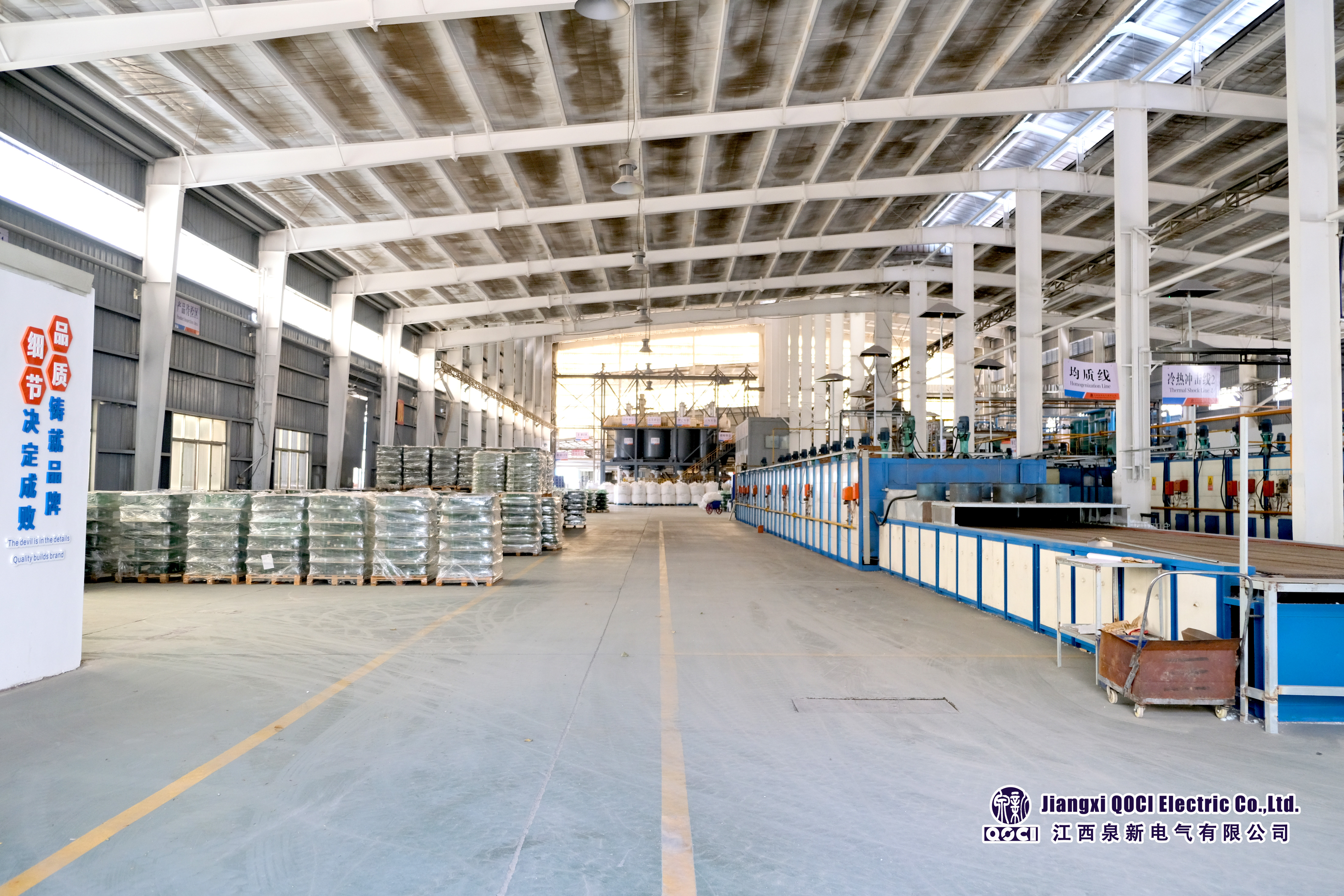
Anti-Pollution Selection in Agricultural and Coastal Territory
Pollution is the least visible and most consequential variable in rural insulator selection. Creepage distance is normally specified from the site pollution severity class under the IEC 60815 framework, which classifies sites from light to very heavy pollution. Agricultural activity produces dust and fertilizer residue; coastal areas add salt fog; small industrial clusters add chemical deposition. Each increases surface conductivity when wetted and shortens the effective leakage path.
Two responses exist, and they are often confused. The first is to select a profile with longer creepage — the anti-pollution porcelain insulator approach, which in the reference data corresponds to extended-creepage types such as the XWP series, while standard types such as XP-70 and XP-100 are described as suitable for clean-area distribution work. The second is maintenance: scheduled washing and periodic inspection of accumulated contamination. Neither replaces the other. A profile chosen for a lower pollution class will not be rescued indefinitely by washing on a remote rural line where access is seasonal.
For the two reference products, the practical rule is straightforward. The P-11-Y's 240 mm creepage should be checked against the pollution class of each pole section, and the sections that fail should move to an anti-pollution profile. The ED-2B, being a low-voltage component, is less exposed to pollution flashover risk in absolute terms, but its 13 kV wet withstand still assumes a reasonably clean surface; heavily contaminated low-voltage hardware should be cleaned on the same maintenance cycle as the 11 kV section.
Where the Fit Stops: Boundaries Buyers Should State in the Tender
A credible specification names the limits of the products it selects. Three boundaries apply to this pair.
The P-11-Y is a pin insulator, not a tension device. Its 10 kN rating is a cantilever value at the pin position. Where a rural route requires long spans, large crossing distances or high wind loading, the required mechanical duty may exceed what a pin insulator is intended to carry, and strain or suspension hardware becomes the appropriate choice. Substituting a pin type into a tension position is a mechanical error that no electrical rating compensates for.
The ED-2B is a low-voltage component. Its 25 kV dry and 13 kV wet withstand values are frequently misread as evidence that it can serve an 11 kV section because the dry figure appears large. Wet withstand is the governing value outdoors, and the low-voltage classification is a statement about the intended circuit, not only about the flashover number.
Neither type is a transmission insulator. For overhead transmission applications, cap-and-pin suspension and tension strings with specified mechanical loads in the 40–550 kN range are the relevant family. A rural electrification list built from distribution hardware cannot be extended upward into transmission work by adding units; the mechanical architecture is different.
A fourth boundary is environmental rather than electrical. Sites with altitude, vibration or severe corrosion conditions require re-checking rather than extrapolation; in severe corrosion service, the reference data notes that a zinc sleeve can slow rusting and extend the service life of the insulator string.
Long-Term Sourcing: What a Rural Electrification Programme Actually Needs
Rural electrification is rarely a single purchase. It is a multi-phase programme in which the same two or three insulator types are reordered over several budget cycles, often for different districts with slightly different conditions. That pattern shifts the supplier question from price per unit to repeatability: will the fifteenth shipment match the first, and will the same drawing still be available in three years?
Jiangxi QOCI Electric Co., Ltd illustrates the profile that supports this kind of programme. The company operates automated and intelligent production for glass and porcelain insulators, with a product range covering line post, pin, shackle and AC disc-shaped suspension porcelain insulators, and its products are used in power grid projects in over 40 countries and regions across the USA, Asia, the EU, Africa and South America, including grid construction projects in Europe and the Middle East. Its stated site covers 35,373 m² with 138 employees, an annual output of 9,000,000 units and an engineering team of 38.
For procurement planning, the reference terms are: minimum order quantity of 50 units, FOB Shenzhen delivery, pre-shipment testing, third-party inspection by SGS, and payment of 30% deposit by T/T before production with 70% balance by T/T before delivery. These terms matter to rural programmes because they allow a first article shipment large enough to equip a pilot section, with third-party verification before the balance is released.
Two further checks belong in the supplier file. The first is standards traceability: the datasheet should state which standard the unit is tested against, since IEC 60383-1:2023 is the current international standard for ceramic or glass insulator units for AC overhead lines above 1000 V, IEC 60672 covers ceramic and glass insulating materials, and ANSI C29.1 sets out the American test methods used in North American procurement. The second is trade documentation: the primary HS code for porcelain electrical insulators is 8546.20, which simplifies classification for a multi-country programme. In markets with local-content rules — India's DPIIT procurement policy, for example, requires 50% local content for porcelain insulators to qualify under Class I for government contracts — origin sits alongside the technical specification as a procurement variable.
Market Context: Why Distribution Detail Matters More Than Headline Growth
The porcelain insulator market is large and expanding. Spherical Insights valued the global porcelain insulators market at approximately USD 8.27 billion in 2023 and projects it to reach USD 15.04 billion by 2033. Mordor Intelligence reports that Asia-Pacific held a 49.4% revenue share in 2025, and that overhead transmission lines account for approximately 62.1% of global porcelain insulator revenue.
Those figures describe the category, not the rural case. The remaining share — the distribution and low-voltage segments — is where P-11-Y and ED-2B class products sit, and it is the segment that most directly serves electrification programmes. Supply geography reinforces this: the OEC records China as the world's largest exporter of electrical insulators in 2024, with 31.4% of total global exports worth approximately USD 898 million. For a rural electrification buyer, that concentration is useful context for lead-time planning and for understanding where documentation and inspection capacity is concentrated.
The practical reading is that headline growth does not remove the need for detailed specification work. A programme that treats insulators as a commodity line item will still receive the same two functions — 11 kV insulation and low-voltage support — but without a documented basis for which type goes where.
Future Outlook
Three developments are likely to shape rural distribution insulator selection over the next programme cycles. The first is tighter pollution-based specification: as IEC 60815-style pollution classification becomes routine in tender documents for distribution work, not only transmission, creepage distance will be checked per pole section rather than per project. That change favours suppliers who can supply both standard and anti-pollution profiles within the same 11 kV product family.
The second is verification discipline. Porcelain insulators can develop zero-value degradation without any visible external change, which is why the reference guidance recommends live-line testing at intervals of roughly three to five years and why 100% dye penetration testing on every unit is treated as a quality signal rather than a marketing claim. As rural networks age, inspection methodology will sit alongside product selection in procurement criteria.
The third is expectation of service life. Reference guidance places typical porcelain insulator service life at 20–25 years under normal conditions, with shorter effective life in heavy pollution or extreme climate. Programme planning that assumes a shorter replacement cycle will budget differently from one that does not. None of these trends changes the fundamental rule: match the insulator to the position on the line, then match the supplier to the programme.
FAQ
What is the difference between the P-11-Y pin insulator and the ED-2B shackle insulator?
They are designed for different circuit segments. The P-11-Y is an 11 kV pin insulator rated 10 kN with 240 mm creepage distance, 150 mm height, 150 mm diameter, 50 kV wet power-frequency withstand and 90 kV lightning impulse withstand. The ED-2B is a low-voltage shackle (butterfly) distribution insulator with 25 kV dry and 13 kV wet power-frequency withstand, 76 mm height and 90 mm diameter. One insulates an 11 kV overhead distribution conductor on a pin; the other supports and insulates low-voltage branch and service conductors.
Which insulator belongs on which part of a rural overhead distribution line?
Placement follows voltage class. The P-11-Y belongs on the 11 kV section, typically on straight-line poles where its 10 kN cantilever rating and 240 mm creepage apply. The ED-2B belongs downstream of the distribution transformer, on low-voltage branches, service drops and small-angle or terminal positions where its 76 mm height and 90 mm diameter suit compact pole-top layouts. Using the low-voltage unit on the 11 kV side removes the voltage margin.
How should pollution be handled when specifying insulators for a rural route?
Pollution severity is classified by site, generally following the IEC 60815 framework, which ranges from light to very heavy pollution. The creepage distance of the selected profile — 240 mm for the P-11-Y — should be checked against the class of each pole section. Where the standard profile is judged insufficient, an anti-pollution porcelain insulator with extended creepage is the appropriate substitution; in the reference data, extended-creepage XWP series types are described for industrial and coastal areas, while standard XP-70 and XP-100 types are described for clean-area distribution lines.
Which standards should appear on the datasheet for these products?
IEC 60383-1:2023 is the current international standard for ceramic or glass insulator units for AC overhead power lines with nominal voltages above 1000 V, which makes it the reference point for the 11 kV P-11-Y. IEC 60672 covers ceramic and glass insulating materials, IEC 60305 addresses string insulator units, and GB/T 1001.1 covers ceramic insulators for AC systems. ANSI C29.1 specifies American national test methods for electrical power insulators and is relevant for North American procurement. The primary HS code for porcelain electrical insulators is 8546.20.
Can both types be ordered together, and what are the reference purchasing terms?
Yes. Jiangxi QOCI Electric Co., Ltd produces line post, pin, shackle and suspension porcelain insulators alongside glass insulators, with products used in power grid projects in over 40 countries and regions. The reference purchasing terms are a minimum order quantity of 50 units, FOB Shenzhen delivery, pre-shipment testing with third-party inspection by SGS, and payment of 30% deposit by T/T before production with the 70% balance by T/T before delivery.
What is the main long-term risk with porcelain insulators on rural lines?
Zero-value degradation: an internal electrical breakdown that produces no visible external change, so faulty units cannot be identified by visual inspection alone. The reference guidance recommends live-line testing at intervals of roughly three to five years using voltage gradient or spark gap detection, together with 100% dye penetration testing at the manufacturing stage. Typical service life is given as 20–25 years under normal conditions, with shorter effective life in heavy pollution or extreme climate.
Summary
Rural electrification does not need a better insulator; it needs the right insulator at each position. The P-11-Y covers the 11 kV overhead distribution section with 10 kN cantilever strength, 240 mm creepage, 50 kV wet withstand and 90 kV impulse withstand. The ED-2B covers the low-voltage side with 25 kV dry and 13 kV wet withstand in a compact 76 mm by 90 mm body. Documenting where each belongs, and which pollution class applies at each pole section, is the difference between a specification and a guess.
The QOCI glass and porcelain insulator catalogue is available for download at cdn.socialarks.com — QOCI Catalogue.
Есть вопросы или нужны дополнительные детали?
Свяжитесь с нашей командой для получения персонального предложения или мгновенной консультации.
Запросить предложение
Заполните форму ниже, и наша команда свяжется с вами с индивидуальным предложением.
Прямой чат WhatsApp
Предпочитаете общаться в реальном времени? Напишите нам в WhatsApp для мгновенной помощи и быстрых ответов.
- Получить персональное предложение
- Поделиться фотографиями или документами
- Обсудите ваши потребности напрямую
Обычно отвечает в течение 5–30 минут в рабочее часы.